Sunday, December 21, 2025
Home Blog Page 2711

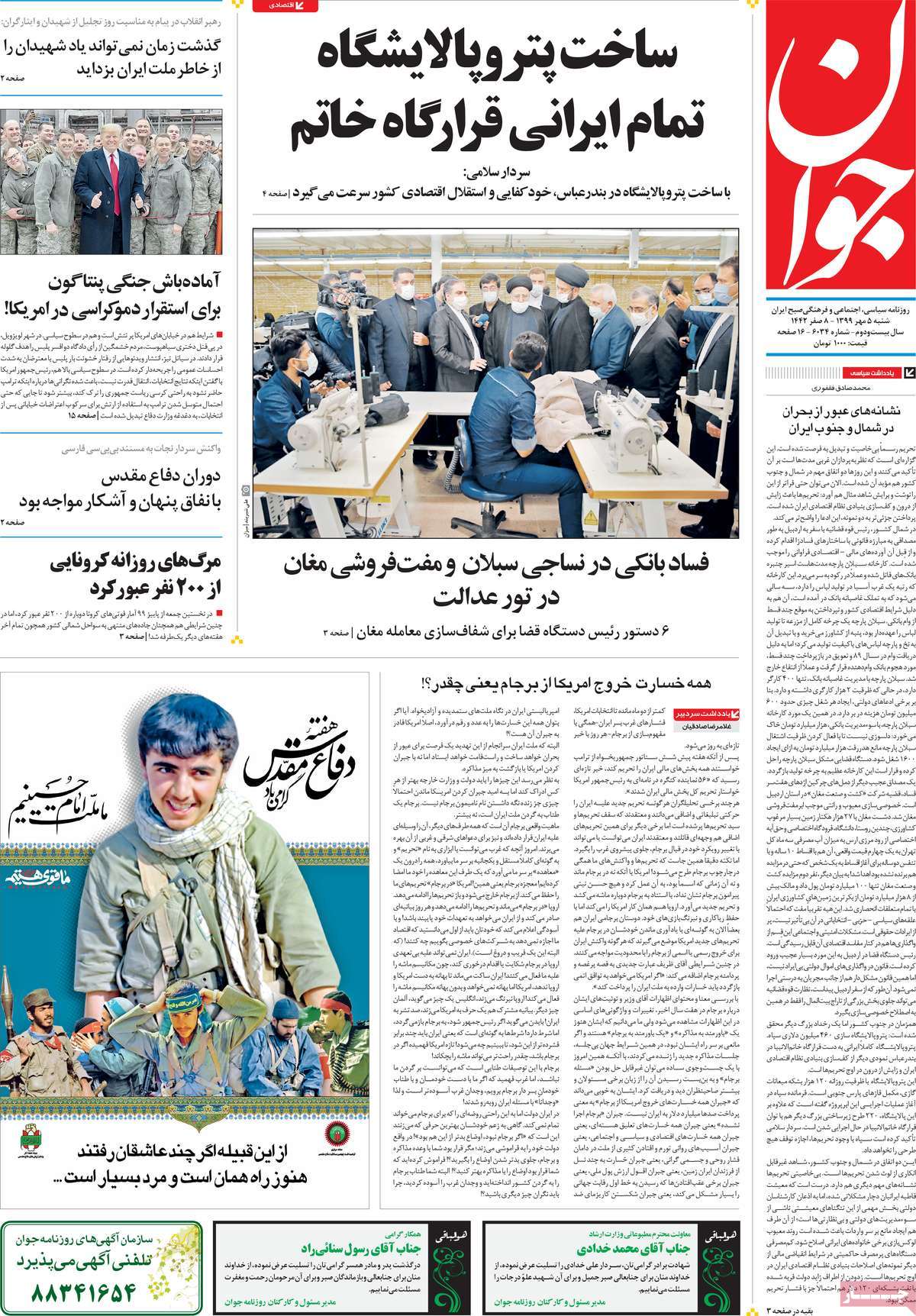
Iran Says Not Looking to Developments in US

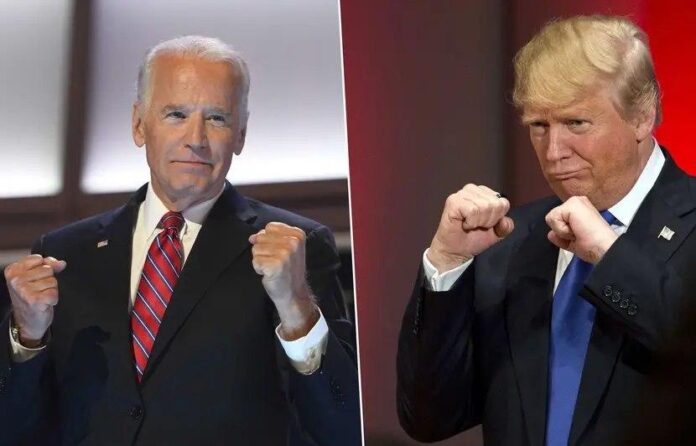
Speaking in a Tuesday press conference, Ali Rabiei said it is the future US president, whoever he might be, that should look to developments in Iran.

“With reliance on logic and perseverance, the [Iranian] government will not look to developments in the United States; accordingly, the one who comes to power at the White House should look to Iran,” he said.

“The [Iranian] government has not been waiting, and will not wait for the developments in the US [presidential] election. Moreover, reliance on domestic potential and increasing our power inside the country will disappoint the enemy and create new opportunities for us, even in the economic area,” he added.

“Despite the tyranny of sanctions, our economic indicators over the past few years prove this important reality,” he said.

His comments came after Ayatollah Seyyed Ali Khamanei, the Leader of Iran’s Islamic Revolution, urged the government not to wait for the results of the US elections.

IAEA Not to Bow to Foreign Pressure over Iran: DG Grossi

IAEA Not to Bow to Foreign Pressure over Iran: DG Grossi

Rafael Mariano Grossi made the comment in a joint press conference, in Tehran, with Head of the Atomic Energy Organization of Iran (AEOI) Ali-Akbar Slahehi.

“The IAEA is not swayed by any third party, but naturally there is some pressure which the agency will not bow to,” said the visiting IAEA chief.

He said there has been no negative change in relations between the IAEA and Tehran, and the agency’s approach vis-à-vis Iran has not changed at all.

However, the IAEA director underlined that there have always been technical questions over IAEA-Tehran relations for further transparency.

Grossi reiterated that he will not allow certain elements to take advantage of the agency to achieve their own objectives.

He said Iran is one of the locations where numerous inspections have been carried out; nevertheless, he added, there are cases which need clarification.

The IAEA director said the agency and Iran have constructive cooperation.

He said all reports published by the agency are systematic and released with special sensitivity.

Grossi described Iran-IAEA ties as significant.

Slaehi, for his part, weighed in on the relationship between Iran and the IAEA.

“A new chapter has opened between Iran and the International Atomic Energy Agency,” he said.

Salehi expressed hope Grossi’s visit to Iran will be fruitful.

“With this trip, our cooperation will further expand. I hope the outcome of this visit will please both sides, so much so that the two sides will fulfill their responsibilities, with the the agency acting in accordance with the [IAEA’s] Statute and the Islamic Republic of Iran in line with the Safeguards Agreement and the Additional Protocol,” Salehi said.

He described his talks with Grossi as “very constructive.”

“It was decided that the agency move forward with its work professionally and independently, and Iran, too, act within the framework of its obligations,” said the AEOI director.

5 Reasons Why Non-History Majors Should Study Civil War

5 Reasons Why Non-History Majors Should Study Civil War 1

Although this is a historical event, it is not limited to history only. Students majoring in sociology, politology, liberty arts and many other disciplines often have to seek information about this event and look for great Civil War essay topics because they need to explore the influence of the Civil War and the effects it had within their terrain. And what can be a better source of information than academic works of high quality? That is one of the reasons why Civil War research papers are highly in-demand.

In this article, we will elaborate on other reasons why you should study such major events and why schools and colleges need to prioritize it in their history course.

1.   It Abolished Slavery

Slavery arose as one of the forms of discrimination and white supremacy in the US. It was an inhumane and offensive form of lifestyle. One of the crucial impacts Civil War had was getting rid of this dominance and completely changing the way of life Americans had. Along with this change, abolishing slavery required changes on governmental and constitutional level. Art of those times has become a great source of inspiration to fight against racism still active in society today. Moreover, it planted the seeds of antiracism in every other country around the world. Learning about the Civil War is a chance to be educated about history and its wrongdoings to understand what long-lasting effects it has on the nation.

2.   It Created a New Industrial America

Among the many Civil War impacts, one of the other historical importance was the development of industrial sectors, especially in the South. People made everything from scratch, and anything that needed production was done in the north or abroad. One of the reasons you should study history is to understand how the Civil War pushed the creative sector of the South to launch itself into the significant economic world. Today, the South has welcomed its share of big industry, manufacturing, technology, and business. Thus, this time is significant for the people in technical majors and not just students majoring in history.5 Reasons Why Non-History Majors Should Study Civil War 2

3.   Literature

Among what long-lasting effects the Civil War has on the nation, literature is a highly prominent one. During the civil war, people of all ages, social status, beliefs, and genders wrote about what they saw. There are many journals, diaries, memoirs, and art that still survives today and are taught to write and research students of related majors. Learning about this through history classes has proven beneficial to people majoring in literature and English as well.

4.   Understand Beliefs and Convictions

While the effects of the Civil War were among the most heartbreaking incidents for thousands of families, this event can help to understand what kinds of beliefs and convictions compel people to break apart. This event can increase many thought-provoking discussions and lessons about the readiness of a person to risk everything for their principles. The discussion is one of the reasons why you should study history. In many ways, it teaches every individual to respect their principles and voice against injustice. Thus, self-reliance is what long-lasting effects the civil war has on the nation.

5.   Relevancy

Most information from a history degree is beneficial and relevant in the world today. The Civil War is one of the few events that is still actively being told and retold. Whether in the lands that are currently protected by the Civil War Preservation Trust or media-based subculture in different networks, every American is reminded of its impact almost every day. Because it is so highly relevant in everyday life, it is something that everyone and not just those majoring in history, should prioritize in understanding.

Every historical event has some impact on the present-day world. To understand the present better, every student should prioritize learning about such major events as the Civil War which has reshaped our society and made it as we know it today.

Fresco Art Key Contributor to Traditional Persian Architecture

Fresco Art Key Contributor to Traditional Persian Architecture 18

Methods and materials used in frescoes have been consistent with both the traditional Iranian architecture and the country’s climatic conditions. The wall paintings are dependent on available materials as well as the Iranian architecture, and have been depicted in different ways in different eras.

The Parthian era was one of the epochs when the stucco art was booming, but when paintings and murals were also used to decorate monuments. From the Safavid era onwards, oil paint was used to draw large frescoes and murals. The knowhow to use this method had been adapted from the Europeans.

Colourful Windows; An Inseparable Part of Persian Architecture

However, frescoes do not only refer to figurative paintings in the Persian architecture; rather, frescoes represent the relationship between the wall painting and the environment, architecture and audience as three factors which give value to wall paintings in the Persian architecture.

The status of the fresco art in traditional Iranian architecture has a direct role in visually organizing architectural environments as these paintings in different monuments established a form-based, semantic and conceptual relationship with the surrounding environment as well as the dominant architecture and the audience.

The outstanding frescoes and murals in the traditional Iranian architecture include those on Sheikh Lotfollah Mosque or Ali Qapu Palace as two icons of religious and non-religious frescoes and murals.

The following are images of some other wall paintings on Iranian monuments.


Tehran Hosts ‘Tough-Skinned’ Art Exhibition

Tehran Hosts ‘Tough-Skinned’ Art Exhibition

“Tough-skinned” exhibition was held in Shirin Gallery, central Tehran, earlier this month.
According to a statement by the gallery “we learned from the history of our land and the circulation of time not to fear our inexistence, nor be happy about our existence… but to wait for another morning breeze in the heart of darkness. That’s how we became tough-skinned.”

What follows are Honar Online News Agency’s photos of this exhibition, which ended on August 12:

Pompeo Seeks to Flood Region with Even More US Arms: Zarif

Pompeo Seeks to Flood Region with Even More US Arms: Zarif

“Outlaw [Mike] Pompeo has no qualms about violating his own country’s laws,” Iranian Foreign Minister Mohammad Javad Zarif said in a tweet on Monday.

“Standing next to the World’s number one nuclear threat, he declares his desire to flood our region with even more US weapons — all while trying to impede lawful normalization of Iran‘s defence cooperation with the world,” Zarif added.

His comments came after Pompeo said following his meeting with Israeli Prime Minister Benjamin Netanyahu in Jerusalem al-Quds that the US will find a way to balance helping its military ally, the United Arab Emirates, without weakening Israel’s qualitative military edge (QME).

Pompeo’s remarks came amid controversy over whether the US will sell F-35 stealth jets to Abu Dhabi, after the Emirati officials unveiled their plan to totally normalize their country’s relations with Israel.

In his Monday tweet, Zarif shed more light on the US administration’s plan to sell more weapons to the West Asian countries by mentioning a July 24 article by the New York Times in which the prestigious American daily had revealed the Trump administration’s plan to sell “large armed drones” to Saudi Arabia and the UAE.

The New York Times noted that the Trump administration’s decision has been opposed internally by arms control officials and lawmakers trying to limit the proliferation of such drones, especially in countries like Saudi Arabia and the UAE.

BONTECH Technology Tower Opened in Tehran

BONTECH Technology Tower Opened in Tehran

Iranian Vice President for Science and Technology Sorena Sattari, Mayor of Tehran Pirooz Hanachi, and a number of other officials attended a ceremony held in Tehran on Monday to inaugurate the BONTECH technology tower.

The project, funded by the private sector, has been implemented in the “Sharif Innovation Area” that is supposed to contribute to urban development and public culture.

In comments at the event, Sattari hailed Sharif Innovation Area as a successful model for other provinces and universities in Iran, saying the new technology tower is an outstanding example of interaction between the academic centres and the private sector.

The vice-president also noted that technology towers would result in the promotion of technology and innovation ecosystem.

The society should sense the palpable results of formation of technology ecosystems and see new technological services in the daily life, Sattari added.

Describing Sharif Innovation Area as a model of urban development, the Iranian vice president said such a model could be used for reconstruction of aging urban structures.

Iranian, French FMs Discuss Lebanon Crisis, JCPOA

Iranian, French FMs Discuss Lebanon Crisis, JCPOA

Minister of Foreign Affairs of the Islamic Republic of Iran Mohammad Javad Zarif and Minister of Europe and Foreign Affairs of France Jean-Yves Le Drian held a telephone conversation on Monday evening.

In the phone call, the senior diplomats discussed the issues relating to Iran-France bilateral relations, the latest developments of the JCPOA, and the situation in Lebanon in the wake of the recent blast in Beirut’s port.

Earlier this month, Iranian President Hassan Rouhani and his French counterpart Emmanuel Macron had discussed the Lebanon blast in a phone conversation.

During the talks, the French president called on Iran to help resolve the Lebanese political crisis, and invited the Islamic Republic to join the international action group to help resolve Lebanon’s problems.

Rouhani, in turn, said it is very important that “we all help the Lebanese judiciary to find the root causes of this incident.”

Referring to Iran’s aid delivery to Lebanon immediately after the incident, Rouhani said, “Lebanon needs more unity among political groups and we must all help create this unity. Lebanon today needs a strong government, and the Lebanese parliament and all parties must work together in this regard.”

Iranian, Turkish Diplomats Meet in Geneva

Iranian, Turkish Diplomats Meet in Geneva

Senior assistant to the Iranian Foreign Minister, Ali Asghar Khaji, and the delegation accompanying him in a meeting of the Astana Peace Process, held a meeting with Deputy Foreign Minister of Turkey Sedat Onal on the sidelines of the third meeting of Syria’s Constitutional Committee in Geneva on Monday.

In the meeting, the two diplomats highlighted the principles of respect for Syria’s national sovereignty, unity, and territorial integrity agreed upon by the Astana Peace Process member states, and stressed the need to keep supporting the political process and Syrian-Syrian dialogue within the framework of the Constitutional Committee and the fight against terrorism.

Pointing to his last week’s visit to Syria and his meetings with the Syrian president and other officials, Khaji expressed Iran’s readiness to continue supports for the meetings of the Constitutional Committee without foreign interference.

For his part, Onal voiced Turkey’s preparedness to continue negotiations within the framework of the Astana Process and to hold consultations with Iran on this issue and other regional subjects.

The Iranian and Turkish diplomats finally expressed hope that Syria’s Constitutional Committee would go ahead with its plans successfully.

Iran, Russia Coordinate Efforts at Astana Peace Process Meeting

Iran, Russia Coordinate Efforts at Astana Peace Process Meeting

Senior assistant to the Iranian Foreign Minister, Ali Asghar Khaji, and the delegation accompanying him in a meeting of the Astana Peace Process held a meeting with Alexander Lavrentiev, the Russian president’s special envoy for Syria, on the sidelines of the third meeting of Syria’s Constitutional Committee in Geneva on Monday.

In the gathering, held at the office of Iran’s diplomatic mission in Geneva, the two sides discussed the developments in Syria’s Constitutional Committee and its third meeting, which is underway under the auspices of the three guarantor states of the Astana Process, the United Nations Secretary-General’s Special Envoy for Syria, and the Syrian parties.

Khaji and Lavrentiev emphasized the necessity of supports for the Constitutional Committee to help it go on and meet with success.

The Iranian diplomat highlighted the success achieved by the Astana Peace Process, and called for the continuation of consolations and coordination among the guarantor states of the Astana format.

For his part, Lavrentiev pointed to the role of the Astana Process in the settlement of the crisis in Syria, stressing the need to hold summit meetings in Tehran after a meeting of senior experts in Kazakhstan’s capital Nur-Sultan.

The two sides finally underlined the need for closer consultations to ensure the Constitutional Committee’s success in its mission.