Monday, December 22, 2025
Home Blog Page 2699

Iranian Diplomat Visits Afghanistan to Discuss Peace Process

Iranian Diplomat Visits Afghanistan to Discuss Peace Process

During the trip, which was made a few days ago, Taherian and the delegation accompanying him met with high-ranking officials of the government of the Islamic Republic of Afghanistan, including President Mohammad Ashraf Ghani, Head of High Council for National Reconciliation Dr. Abdullah Abdullah, and acting Minister of Foreign Affairs Mohammad Haneef Atmar.

He also held talks with National Security Advisor of Afghanistan Hamdullah Mohib, former Afghan president Hamid Karzai, Special Representative and Head of the United Nations Assistance Mission in Afghanistan Deborah Lyons as well as some other Afghan political leaders.

In all these meetings, the Iranian diplomat highlighted the national unity of the political forces of Afghanistan and the importance of establishing peace as a prelude to security and measurable sustainable development.

For their part, the high-ranking officials of Afghanistan, especially the president of the country, appreciated the support of the Islamic Republic of Iran for the peace process within the framework of the republic and the constitution, and called for the continuation of this strategy and further consultations between the two countries.

In her meeting with Taherian, Special Representative of the UN Secretary-General for Afghanistan Deborah Lyons hailed Iran’s support for the UN in assisting the Afghan peace process in the context of intra-Afghan talks, and called for continued reinforcement of the role of regional countries, especially those of Afghanistan’s neighbours, in different fields, especially in supporting the Afghan nation and government.

Daily Rise in Iran’s COVID-19 Cases at Highest Level in Two Weeks

Daily Rise in Iran's COVID-19 Cases at Highest Level in Two Weeks

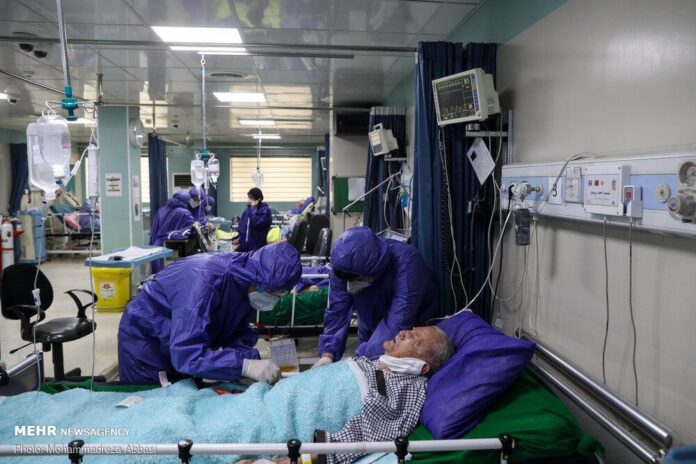
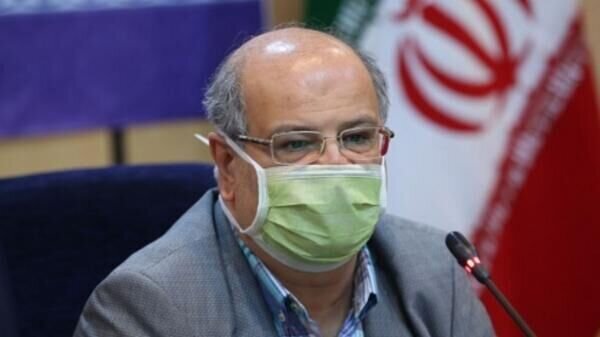
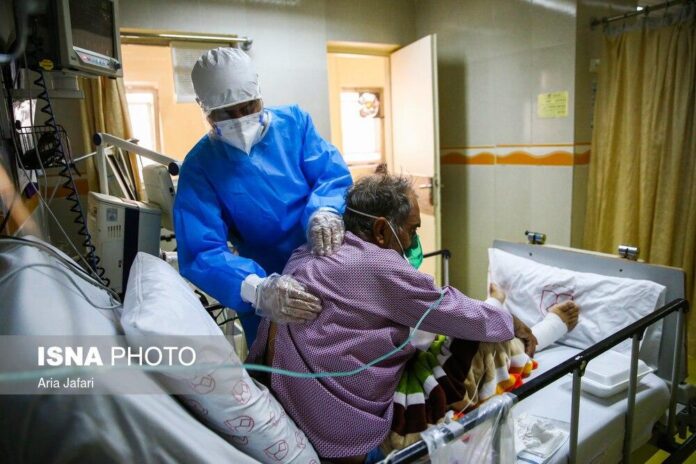
In a press briefing on Tuesday, Sima-Sadat Lari said the virus has killed 132 patients since Monday noon, increasing the overall death toll to 22,542.

So far, she added, 337,414 patients have recovered from the disease or been discharged from the hospital.

Lari said 3,713 patients are also in critical conditions caused by more severe infection.
The spokeswoman noted that 3,431,646 COVID-19 tests have been taken across the country so far.

She said the high-risk “red” zones include Tehran, Qom, Mazandaran, East Azarbaijan, Isfahan, Yazd, Khorasan Razavi, North Khorasan, Semnan, Gilan, Zanjan, Qazvin, and Kerman provinces.

The “orange” zones also include Lorestan, Ardabil, Golestan, Markazi, Alborz, Hormozgan, Ilam, Fars, Bushehr, West Azarbaijan, Chaharmahal and Bakhtiari, Kermanshah, South Khorasan, Kohgiluyeh and Boyer-Ahmad, and Khuzestan provinces, she added.

Iranian, Indian Top Diplomats Meet in Tehran

Iranian, Indian Top Diplomats Meet in Tehran

In the Tuesday meeting held at the Iranian Ministry of Foreign Affairs, the two top diplomats conferred on the latest developments in bilateral ties as well as the most pressing regional and international issues.

The evolving situation in Afghanistan, where an intra-Afghan dialogue is set to get underway, is also expected to have been discussed in the talks between Jaishankar and Zarif.

The Indian minister will later leave Iran for Russia where he will attend a meeting of the foreign ministers of the Shanghai Cooperation Organisation (SCO).

Jaishankar is the second senior Indian minister to visit Iran in less than a week. Defence Minister Rajnath Singh had earlier made a stopover in Tehran on Sunday for talks with his Iranian counterpart Brigadier General Amir Hatami on bilateral cooperation and regional security issues.Iranian, Indian Top Diplomats Meet in Tehran 2

The back-to-back visits to Tehran by the Indian cabinet ministers come close on the heels of reports that China and Iran are close to an agreement for a 25-year strategic partnership in trade, politics and security. They also come at a time when India is attempting to work more closely with Iran to increase the economic viability of the strategic Chabahar port.

Jaishankar last visited Iran in December 2019 and had spoken to Zarif in April. This will be his first visit abroad since foreign travel by ministers was curtailed by the COVID-19 pandemic.

In addition to participating in the SCO foreign ministers’ meeting in Moscow on September 10, Jaishankar is expected to hold bilateral meetings with some counterparts.

Iran’s History in Photos: House of General Amini

House of General Amini 1

The mansion includes several houses, a court, a bathhouse and a Hussainiya – religious mourning place. Its exterior view is undeniably similar to the mansion of Eram Garden in Shiraz.

It was built by Brigadier General Mohammad Hossein Khan Amini Sedehi – a commander of army of Zel-ol-Sultan, the ruler of Isfahan during the reign of Nasser al-Din Shah Qajar.

Made of raw clay and brick, the beautiful building enjoys eye-catching decorations such as stucco, wood cravings, mirror work, ceiling fabrics and sash windows. The roof of its porch is set on columns with heads in the shape of artichoke leaves, ornamented with stucco and delicate carvings.

What follows are IRNA’s photos of the house, which registered in the list of National Heritage sites in 2001:

Iran Leader: Charlie Hebdo’s Offensive Cartoon Shows West’s Enmity towards Islam

Charlie Hebdo's Offensive Cartoon Shows West's Enmity towards Islam

“The great and unforgivable committed by a French magazine, which insulted the Prophet of Islam (PBUH) once again revealed the enmity and vicious grudge of the Western world’s political and cultural apparatus towards Islam and the Muslim community,” Ayatollah Khamenei said in a message on Tuesday.

He said the French politicians’ resort to “freedom of speech as a pretext for not condemning the great crime is totally rejected, wrong, and demagogic.”

“Deeply anti-Islamic policies of Zionists and arrogant governments are behind such hostile moves, which are made every now and then,” Ayatollah Khamenei added.

“At this juncture, they may have made such a move to divert the attention of West Asian nations and governments away from the inauspicious plots the US and the Zionist regime have in their minds for the region,” he noted.

The Leader called on Islamic nations, especially those in the West Asia, to remain vigilant about the issues of this “sensitive” region, and to never forget the enmities of Western politicians and leaders towards Islam and Muslims.

Iran in Photos: Murals of Tehran

Murals of Tehran

Tehran has no shortage of murals; however, these artworks, despite their bright colours, are sometimes not noticed in the midst of the numerous crises faced by the capital city.

The murals are even half destroyed sometimes, which turns them into a visual annoyance instead of beauty.

What follows are Honar Online News Agency’s photos of some paintings on the walls of Tehran:

History Shows Iran Won’t Give in to Bullying: President

History Shows Iran Won’t Give in to Bullying: President

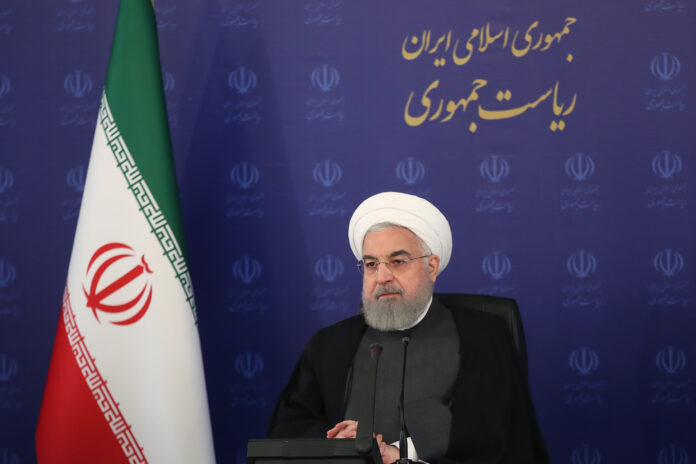
Speaking in a Monday meeting with Swiss Foreign Minister Ignazio Cassis in Tehran, President Rouhani said relations between countries should be based on international regulations and the UN Security Council resolutions.

“The United States has sought to eliminate the Islamic Republic and interfere in Iran’s internal affairs for many years, and Mr [Donald] Trump has made a miscalculation by thinking that he could overthrow the Islamic Republic within three months by putting pressure on Iran and waging an economic war,” Rouhani said.

The president said Iran has been – and will remain – committed to international rules and multilateral agreements.

“Any day that the United States decides to admit to its mistakes, make up for its unlawful actions and return to Resolution 2231 and the JCPOA, the path is clear for them,” he noted.

The President emphasised, “Today, it is clear to the Americans that they have made a mistake and will not achieve their goal through pressure and sanctions.”

He described the US sanctions and economic war against the Islamic Republic, the assassination of a high-ranking Iranian military official in another country, as well as the violation of the Iranian airspace as clear examples of Washington’s economic terrorism, terrorist operations and air terrorism.

“We expect all friendly and free countries in the world not to remain silent in the face of terrorism and the unlawful actions committed by the United States over the years,” he added.

Rouhani stated that Iran expected the European countries to take decisive and explicit action against the US economic terrorism, which has even prevented the entry of medicine into Iran during the outbreak of coronavirus.

He further called for a more active participation in Switzerland’s financial channel and its more effective and useful role.

The president further referred to Switzerland as an important country in Europe, and hailed the good and friendly relations between the two countries over the past years.

He also highlighted the significance of the development of Tehran-Bern relations in various fields including science, health, agriculture, and environment, among others.

Rouhani also referred to the global outbreak of the novel coronavirus in many countries around the world, and expressed hope that the two states would share their experiences in the fight against COVID-19 and develop their cooperation in this regard.

In turn, Swiss Foreign Minister Ignazio Cassis referred to the 100th anniversary of the establishment of political and diplomatic relations between the two countries, and described the relations between Iran and Switzerland as very good and sincere. He also stressed the development and deepening of these relations in all fields.

“All countries around the world need to know that there is a strong legal system in the world so that they can live in security; therefore, it is important that everyone, especially powerful countries, fully comply with international rules and regulations,” said the Swiss foreign minister.

We are aware of the problems caused by the US sanctions on the Iranian people, said Cassis, adding, “The Swiss financial channel has been designed and launched to solve these problems and we will try to increase the useful role of this channel.”

“We are still with Iran to solve the problems and we will try to play our part,” he said, adding, “During this visit, I had very good meetings with the officials of the Islamic Republic, which can be the basis for developing and strengthening relations between the two countries in different fields.”

No Russian Arms Transferred to Armenia via Iran: Embassy

'No Russian Arms Shipment Transferred to Armenia via Iran'

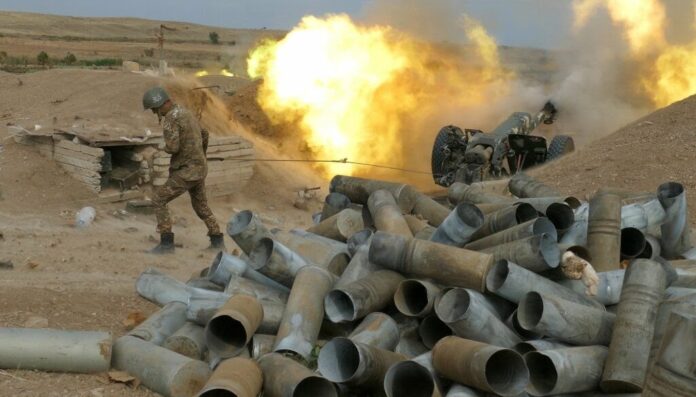
In a statement released on Monday, the Iranian Embassy in Baku slammed as “baseless and false” the media reports claiming that Iran has allowed for the shipment of Russian military equipment to Armenia through Norduz border crossing situated northwest of the country.

Denouncing such false news as acts of sabotage by the hostile forces and those opposed to close relations between Iran and Azerbaijan, the embassy said such measures are aimed at harming the growing cooperation and friendly relations between Tehran and Baku.

Baku had earlier voiced concern about reports of large arms shipments from Russia to Armenia during and after the fighting.

Last month, Azeri President Ilham Aliyev complained to his Russian counterpart Vladimir Putin about Moscow’s arms sales to Armenia amid the outbreak of fighting between Azerbaijan and Armenia.

Iran, New Zealand Discuss Closer Political-Economic Cooperation

Iran, New Zealand Discuss Closer Political-Economic Cooperation

In the Monday webinar, co-chaired by Iranian Deputy Foreign Minister Seyyed Abbas Araqchi and his New Zealand counterpart, various topics were discussed, including the bilateral political and economic issues, the sanctions, the latest developments surrounding the JCPOA, sharing of experiences in addressing the COVID-19 pandemic, and the stances of the two countries on the regional and international issues.

In the videoconference, the Iranian deputy foreign minister commended the New Zealand government for supporting the JCPOA, and welcomed New Zealand’s membership in the International Atomic Energy Agency’s Board of Governors.

Araqchi also expressed Iran’s readiness to maintain and enhance the trade ties with New Zealand with new mechanisms in a situation affected by the sanctions and the coronavirus outbreak.

Iranian, Swiss Top Diplomats Hold ‘Fruitful’ Talks in Tehran

Iranian, Swiss Top Diplomats Hold ‘Fruitful’ Talks in Tehran

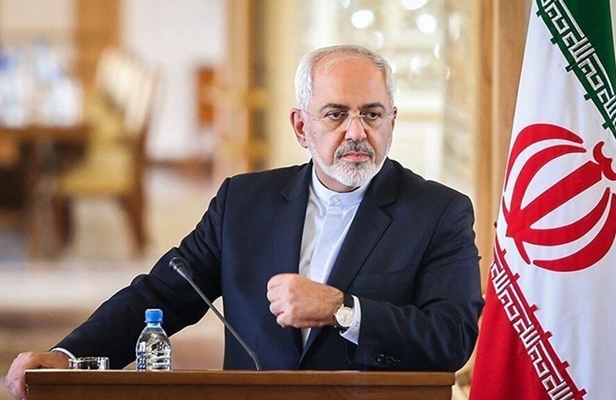
In the Monday talks, the two sides held “excellent talks on bilateral, regional and global issues,” according to a tweet by Zarif.

They conferred on the latest developments in bilateral relations, regional and international issues including those related to Syria, Yemen, trade ties between Tehran and Bern, the Swiss financial channel, and the JCPOA, a statement by the Iranian side said.

They also exchanged views on the US’ hostile policies and its sabotage of Iran’s normal political and economic relations with the world.

Foreign Minister Zarif expressed pleasure with hosting the Swiss top diplomat on the 100th anniversary of the establishment of bilateral relations between Iran and Switzerland, and appreciated the European country’s efforts to promote mutual ties with Iran.

Zarif, at the same time, said a return to normal foreign trade is an important priority for Iran and the world.

The Swiss official, in turn, highlighted historical relations between the two countries, and underlined his country’s commitment to the JCPOA and expansion of ties with Iran in all aspects.

In his Monday tweet, Zarif said he was “pleased to host Swiss FM Ignazio Cassis on centennial of diplomatic relations — ties that endure based on mutual respect.”

“While appreciating Swiss efforts to mitigate US sabotage, a return to normal trade is global priority,” the Iranian top diplomat added.

The Swiss top diplomat also said in a tweet that he had held “fruitful” talks with Zarif on “peace, economic development and human rights.”

“I’m glad we could establish together the Swiss Humanitarian Channel for the transfer of food and medical supplies to the people of Iran,” he added.

Earlier in the day, Iran’s Foreign Ministry Spokesman Saeed Khatibzadeh said Cassis is in Iran on “a routine trip” that had been scheduled to take place earlier, but was delayed due to the new coronavirus’ outbreak.

“We enjoy good and extensive relations with Switzerland,” he said of the European country that represents US interests in Iran.

Khatibzadeh, however, asserted that despite the “media speculations” trying to link Cassis’ trip to the US, “our policies concerning Washington remain the same.”

As a case in point, he cited the US pressure that delayed Switzerland’s setting up of a financial channel that would circumvent the American sanctions targeting the Islamic Republic, for 20 months.

Swiss authorities managed to accommodate a first official transaction under the SHTA in late July. That proved critical for both Switzerland and Iran as it was a first time since the re-imposition of US sanctions in 2018 that funds belonging to the Central Bank of Iran (CBI) had got round the US sanctions and were processed by a European bank.

Switzerland has secured a special waiver from Washington to allow the SHTA to work. That comes despite repeated claims by the US government that Iran’s humanitarian needs, including medicine, are exempt from the unilateral bans imposed on the country.