Monday, December 22, 2025
Home Blog Page 2693

Iranian, Afghan Top Diplomats Discuss Peace Process

Iranian, Afghan Top Diplomats Discuss Peace Process

In the telephone conversation, Foreign Minister Zarif and Hanif Atmar talked about the latest status of negotiations among the Afghan parties within the framework of the peace process and the role of the neighbouring countries in the process.

The two senior diplomats also discussed the issues relating to bilateral relations between Iran and Afghanistan in various fields within the context of the comprehensive document on strategic cooperation.

During the phone call, Foreign Minister Zarif expressed satisfaction with the launch of intra-Afghan negotiations and voiced Iran’s readiness to provide whatever help necessary for the peace process in Afghanistan.

Tehran has already reaffirmed its commitment to supporting the peace process in Afghanistan under the guidance and ownership of Afghan people, expressing hope that the intra-Afghan dialogue would yield results with the inclusion of all Afghan groups.

In comments on Tuesday, Iran’s government spokesman Ali Rabiei said Tehran welcomes the beginning of intra-Afghan dialogue between the Afghan government, the country’s political groups and the Taliban.

“Iran hopes that the talks will yield its desired results without foreign interference and in a context of comprehensive understanding among Afghans, and will result in the establishment of permanent peace and stability in the country and security in the region,” he added.

He also expressed the Islamic Republic’s preparedness to use its maximum capacity to advance the peace process if the Afghan government and other parties involved would ask.

‘Iran Must Praise Kuwait, Saudi for Rejecting Peace with Israel’

‘Iran Must Praise Kuwait, Saudi for Rejecting Peace with Israel’
Kuwait's emir Sheik Sabah Al Ahmed Al Sabah, right, shakes hands with Iranian President Hassan Rouhani, left, during an official reception ceremony at the Saadabad Palace in Tehran, Iran, June 1, 2014. / Photo by AP

Seyyed Hadi Borhani, a professor of Israel Studies at Tehran University, says the always-negative approach adopted by Iran so far has led Israel to introduce Tehran as an enemy of the Arabs. It’s time for Iran to praise Kuwait and even Saudi Arabia for not joining the trend of making peace with Israel, which is considered a joint enemy of the Muslim world.

What follows are highlights of the remarks he made in a recent interview with Iranian news website Entekhab:

Kuwait is a small country on the shores of the Persian Gulf, surrounded by several major countries in the region including Iran, Saudi Arabia and Iraq. The total area of this Arab country is about 17,000 square kilometres, which is a small figure compared to the 1.5 and 2 million square kilometre areas of Iran and Saudi Arabia. The population of Kuwait, in proportion to its area, is not comparable to the population of its neighbouring countries.

The power of the neighbours has always been a concern for this small country and has led Kuwait to make an alliance with great world powers and a security and military coalition with them. In fact, if there was no such alliance, Iraq (which occupied Kuwait in 1990) would have swallowed and digested it by now.

Despite Kuwait’s small size and limited power and its vulnerability to pressure from major powers (especially the United States), it pursues an independent policy towards Palestine, which is admired by observers and analysts. The latest example of this courageous and principled policy is Kuwait’s stance on the UAE-Israel compromise. At this point, Kuwait opposed the policy of normalisation of ties with Israel and the passage of Israeli planes over the country, declaring that it would be the last Arab country to establish relations with Israel.

The Kuwaiti parliament also criticised the UAE-Israel agreement. Kuwait’s position on the UAE agreement can be considered the best position adopted in the Persian Gulf Cooperation Council and probably the most independent position in the entire Arab world.

Kuwait’s position on this issue is even stronger and more serious than the positions of Iran’s allies and members of the Axis of Resistance, including Iraq, Syria and Lebanon.

The independent and free positions of Kuwait on the Palestinian issue are not limited to this and are rooted in the history of this country. The positions of the Kuwaiti government and its parliament have always been considered as free positions on this issue during the past years.

Shortly after Donald Trump’s move to propose the deal of the century, Speaker of the Kuwaiti parliament, Marzouq al-Ghanim, said at a meeting of Arab Parliaments in Jordan that “In the name of the Arab nation, I declare that the deal of the century is born dead and its real place is the dustbin of history.”

The anti-Israel stance of the Speaker of the Kuwaiti Parliament is not limited to this and has a long history. Marzouq al-Ghanim is perhaps the most active and serious speaker of the world parliament against Israel’s policies.

The importance of this Kuwaiti policy becomes clear when we consider the country’s inability to provide security using its own limited domestic resources, as well as its dependence on US and Western powers for its security.  Also, consider the relatively bad behaviour of some Palestinian organisations towards Kuwait during the occupation of this country by Iraq. Unfortunately, these organisations committed a shameful mistake by supporting Saddam’s regime during the occupation. That came as, throughout its history Kuwait has always supported the Palestinian liberation and has hosted about half a million Palestinian refugees and displaced persons.

Given these facts, Kuwait’s resistance to the US pressure, as well as its move to forgive Palestinian organisations and the continuation of an independent policy based on support for the Palestinian cause and people, can be considered a historic move.

A fundamental question regarding Kuwait’s policy towards Palestine is why and how Kuwait is supporting their cause. What are the reasons or factors that differentiate Kuwaiti policies from the policies of other countries in the region, especially the UAE, Bahrain, Oman and Saudi Arabia?

Answering this question requires independent research, but it seems that the influence of several factors in this case is clear. In addition to the experience, foresight and maturity of the Emir of Kuwait, who has always been praised by many leaders in the region, including Hezbollah leader, Sayyed Hassan Nasrallah, two important factors seem to be effective in this regard:

First, Kuwait is superior to all Persian Gulf Cooperation Council countries in terms of democracy and democratic governance.

Kuwait’s parliament is a serious, old and deep-rooted assembly that can represent a significant part of the Kuwaiti people and their demands and opinions.

The history of the Arab Middle East clearly shows that wherever the views of the people and their will have been the focus of attention, respect and influence, any interaction with Israel has been opposed.

‘Iran Must Praise Kuwait, Saudi for Rejecting Peace with Israel’
Kuwait’s emir Sheik Sabah Al Ahmed Al Sabah, left, meets with Iran’s Leader Ayatollah Seyyed Ali Khamenei in June 2014.

The second factor is probably the high level of education in Kuwait. Kuwait is a country that has been paying serious attention to the issue of education and culture for many years, and therefore its benefit from science, art, and expertise is commendable and undeniable. Therefore, one can expect the people of Kuwait and its elites to know the history of the region, the history of Palestine and the policies of Israel more deeply and accurately than other nations in the region do.

For this reason, Kuwait has nurtured numerous writers and elites who have been prolific and influential in various fields, including the study of Palestine.

In comparison, the UAE does not have these two factors. It does not have a serious democracy, nor does it benefit from Kuwait’s public knowledge of the Palestinian issue.

Iran’s Stance on Arabs’ Normalisation of Ties with Israel

After the ill-fated move of the United Arab Emirate in establishing relations with Israel, The Islamic Republic of Iran adopted a decisive and calculated policy to put pressure on the UAE and condemn it for making such a decision. This action by Iran is necessary, but may be insufficient.

Iran has a long history of condemning such acts and putting pressure on Arab countries. Almost all of Iran’s interaction with the subject has been a negative one. The positive dimension of this policy does not seem to resonate much in Iranian policies of dealing with Arab countries. This has made Iran’s official policy to seem like an anti-Arab one. It is as if Iran is looking for an excuse to denounce the Arab countries and their positions. This has helped Iran’s regional enemies or rivals to abuse the situation and portray Iran’s regional policy as an anti-Arab one.

Israel is trying hard to convince the Arab countries that Iran is the enemy of the Arab states and unfortunately (to some extent) it has succeeded in doing this. Iran’s positive interaction with positive and constructive positions of Arab countries, such as Kuwait’ policy regarding Palestine, can neutralise these efforts and put Iran’s regional policy in a reasonable and balanced direction.

This policy could encourage other Arab countries to follow the Kuwaiti-Qatari model of relations with Iran and take a stand against Israel.

At present, there seems to be some kind of inattention to such a policy, and the Islamic Republic’s regional policy is pursued more through pressure and coercion. For example, in the wake of the UAE-Israel compromise, Saudi Arabia has shown considerable resistance to the US and Israeli pressure to join Abu Dhabi and the peace agreement. Perhaps this policy should have been met with limited encouragement or a specific reward.

Contrary to this expectation, the attacks of the allied forces of Iran (the Ansarullah of Yemen) against the Saudi positions increased during this period and a heavy attack was carried out against the Abha airport in Saudi Arabia. Due to Riyadh’s resistance against the US pressures, Iran-backed forces could wait until the Arab League summit.

This patience, along with sending the necessary messages, could have encouraged Saudi Arabia to resist more (against US pressure) and play a positive role in the Arab League summit. Had such a move taken place, the possibility of taking a tougher stance against US pressure and taking a softer stance against Iran at the summit would have increased.

This problem (tendency to deal negatively with Arab countries) in Iran, of course, is not limited to the government and official bodies. It has been seen many times that as soon as a mistake is made by an Arab country, it is severely attacked by the public and media. Arab embassies in Tehran have been attacked, flags set on fire, or rallies have been held against Arab rulers.

However, a rally in praise of a right action or an admirable stance of an Arab country has never been held in Tehran.

Hoping for such a day, the author of this text offers a wreath on the occasion of Kuwait’s independent and courageous stance on the Palestinian issue.

Trump Administration Doesn’t Care about Afghan People: Iran

New US Sanctions Not to Affect Iran’s Activities: Spokesman

Rabiei made the remarks in response to a question, raised in his weekly press briefing on Tuesday, about the US administration’s competence to lead the Afghan peace process considering the country’s history in Afghanistan.

The spokesman said the US invaded Afghanistan on the pretext of establishing security and fighting narcotics in the country. However, they have failed in both missions as admitted by American officials and commanders and their European partners.

“Now we are witnessing the growing presence and activity of ISIS in that country,” he added.

Rabiei said Iran views the presence of foreign forces in Afghanistan as one of the main reasons for the continuation of war in the country, and believes that the responsible withdrawal of these troops can serve as a major step to create peace and security in Afghanistan.

In Iran’s view, he said, the US-Taliban negotiations are not equal to Afghan peace talks. However, Iran would not oppose any move that would contribute to establishment of peace in Afghanistan.

Rabiei said Tehran welcomes the beginning of intra-Afghan dialogue between the Afghan government, the country’s political groups and the Taliban.

“Iran hopes that the talks will yield its desired results without foreign interference and in a context of comprehensive understanding among Afghans, and will result in the establishment of permanent peace and stability in the country and security in the region,” he added.

He also expressed the Islamic Republic’s preparedness to use its maximum capacity to advance the peace process if the Afghan government and other parties involved would ask.

A Look at Iranian Newspaper Front Pages on September 15

A Look at Iranian Newspaper Front Pages on November 18

Iranian Newspapers

Abrar Newspaper:

1- German Envoy Summoned to Iran’s Foreign Ministry

A Look at Iranian Newspaper Front Pages on September 15


Arman-e Melli Newspaper:

1- Biden: Return to JCPOA, Continuation of Sanctions

2- Third Wave of Coronavirus Beginning in Some Provinces

3- UAE Seeking to Annex Part of Omani Territory

A Look at Iranian Newspaper Front Pages on September 15


Ebtekar Newspaper:

1- Ambiguities in Afghan Peace Talks

2- Entrepreneurship Hindered by Sanctions, COVID-19

3- Motorcycle Accidents Increased amid COVID-19 Outbreak: Police

A Look at Iranian Newspaper Front Pages on September 15


Etemad Newspaper:

1- Judiciary Chief Vows to Fulfil His Promise Regarding Political Crime

2- Epidemics of Iran in Past 150 Years

A Look at Iranian Newspaper Front Pages on September 15


Ettela’at Newspaper:

1- Velayati: Reactionary Leaders of Arab World to Be Disgraced

2- Iran Nuclear Chief: We’ve Achieved Stable Isotope Technology

A Look at Iranian Newspaper Front Pages on September 15


Iran Newspaper:

1- Iran-IAEA Challenge Resolved Thanks to Prudence of Iran’s Senior Leaders

2- Iraq Not to Accept Any Foreign Pilgrim during This Year’s Arba’een

A Look at Iranian Newspaper Front Pages on September 15


Javan Newspaper:

1- Biden Delivers Coup de Grace to Those Hopeful about JCPOA

2- Expel Interventionist Spy: German Envoy to Tehran Must Be Expelled over His Meddlesome Comments Regarding Execution of MurdererA Look at Iranian Newspaper Front Pages on September 15


Kayhan Newspaper:

1- Arab Countries Must Await Third Wave of Revolution, Collapse of Their Deals with Israel

2- We Didn’t Respond to Europe’s Failure to Fulfil JCPOA Commitments, Now They’ve Become More Impudent

3- US Police Beat to Death a Black Man before Eyes of His Family

A Look at Iranian Newspaper Front Pages on September 15


Khorasan Newspaper:

1- Corona in Third Round

A Look at Iranian Newspaper Front Pages on September 15


Mardom Salari Newspaper:

1- IAEA Chief: We Reached Deal with Iran on Safeguards Executive Affairs

A Look at Iranian Newspaper Front Pages on September 15


Shahrvand Newspaper:

1- Hot Market of Online Weapons Sales in Iran

A Look at Iranian Newspaper Front Pages on September 15


Shargh Newspaper:

1- Nouri al-Maliki Visits Tehran

2- Horrible Story of Captivity in Somalia

  • Interview with Iranian Sailor Captured by Somali Pirates for 6 Years

A Look at Iranian Newspaper Front Pages on September 15

350,000 Iranians Recover from COVID-19: Ministry

350,000 Iranians Recover from COVID-19: Ministry

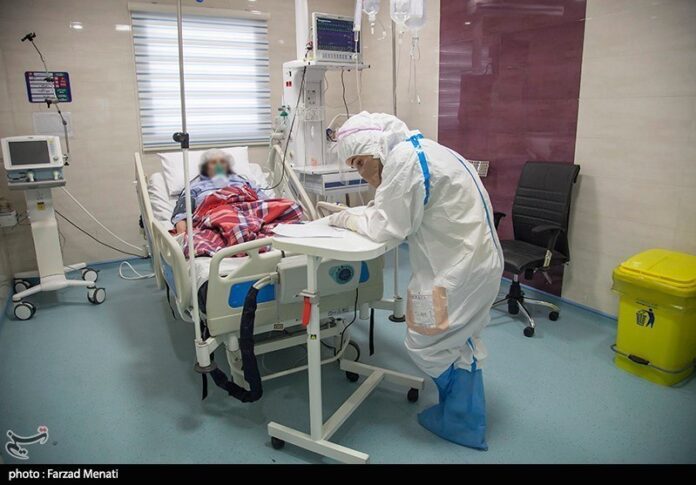
In a press briefing on Tuesday, Sima-Sadat Lari said the virus has killed 140 patients since Monday noon, increasing the overall death toll to 23,453.

She said 407,353 patients have contracted the novel coronavirus so far, including 2,705 new cases identified in the past 24 hours.

Lari said 3,811 patients are also in critical conditions caused by more severe infection.

The spokeswoman noted that 3,613,891 COVID-19 tests have been taken across the country so far.

She said the high-risk “red” zones include Tehran, Qom, Mazandaran, East Azarbaijan, Isfahan, Yazd, Khorasan Razavi, North Khorasan, Semnan, Gilan, Zanjan, Qazvin, and Kerman provinces.

The “orange” zones also include Lorestan, Ardabil, Golestan, Markazi, Alborz, Hormozgan, Ilam, Fars, Bushehr, West Azarbaijan, Chaharmahal and Bakhtiari, Kermanshah, South Khorasan, Kohgiluyeh and Boyer-Ahmad, and Khuzestan provinces, she added.

Iran Says Welcomes Barter Oil Trade amid Sanctions

Iran Says Welcomes Barter Oil Trade amid Sanctions

Speaking at a Tuesday session of the Iranian Parliament, Bijan Namdar Zangeneh said Iran has made considerable progress in the natural gas and petrochemical sector.

He said one of the achievements has been an increase in the production of oil and natural gas in jointly-owned fields.

“The most important fields are the one in the West of the Karoon river and that in South Pars,” he added.

The minister noted agreements have also been concluded to develop jointly-owned oil fields.

He said Iran’s oil exports have also increased four-fold over the past eight years.
“We welcome investment in the petrochemical sector as well,” he noted.

Namdar Zangeneh also touched upon Iran’s efforts to find a way round oil sanctions.
“We sought help from whoever we could in order to avoid sanctions. We are facing an unequal battle against the Iranian nation, and we are at the frontline,” said the oil minister.

He also said projects have been under way to supply natural gas to different parts of the country.

Iran, Turkey Convene Transportation Commission

Iran, Turkey Convene Transportation Commission

The online meeting of Iran-Turkey Joint Transportation Commission was co-chaired by Iran’s Deputy Minister of Roads and Urban Development Shahram Adamnejad and Turkey’s Deputy Minister of Transportation and Infrastructure Selim Dursun.

Iranian and Turkish ministerial officials in charge of air, rail, road and sea transport also took part in the videoconference.

In the online conference, which followed the negotiations that Iran’s Minister of Roads and Urban Development and Turkey’s Minister of Transportation and Infrastructure held earlier this year, the two sides discussed the ways to enhance cooperation between the two neighbors in the transport sector.

The videoconference was held in a friendly atmosphere with mutual understanding and involved negotiations on air, rail, road and sea transport, as well as combined transport.

Participants in the webinar also agreed to convene the tenth meeting of Iran-Turkey Joint Transportation Commission in 2021. Iranian and Turkish diplomatic channels are going to decide how and when the next meeting will be held.

Iran, Azerbaijan to Boost Transportation, Rail Cooperation

Iran, Azerbaijan to Boost Transportation, Rail Cooperation

That was discussed in a videoconference meeting between Iranian Minister of Roads and Urban Development Ahmad Eslami and Minister of Roads, Communications and Advanced Technologies of the Republic of Azerbaijan Ramin Gholizadeh.

During the discussions, the two sides underlined the need to further develop infrastructure and rail links in the region.

The two sides recalled the determination of both presidents to increase transit and transportation cooperation, expressing hope the two countries will expand their cooperation by implementing joint ventures.

The also underlined the need to construct a joint bridge for cars on the Astarachai river in Astara as well as to complete and put into service the Astara-Astara rail terminal.

Iran Warns Regional Arab States against Normalizing Ties with Israel

Iran Warns Regional Arab States against Normalizing Ties with Israel

Secretary of Iran’s Supreme National Security Council Ali Shamkhani dismissed normalization deals between certain regional Arab rulers and the Israeli regime as an act of betrayal and dangerous.

“The Muslim world will never allow the plan [to set the stage for Israeli presence in the region] to materialize,” said Shamkhani in a meeting with former Iraqi Prime Minister Nouri Maliki.

Shamkhani said the struggles of the resistance front will “root out the US and the Zionist regime [of Israel] in the region.”

The Iranian official also elaborated on the US strategy aimed at creating divisions and insecurity in the region, urging regional countries to band together and cooperate to tackle such plots.

Shamkhani further urged Iraqi people and groups to remain vigilant and united against enemy conspiracies.

“The enemies of unity and progress of Iraq seek to turn the country’s future elections into an arena for differences, conflict and finally insecurity,” said Shamkhani.

He also touched upon Washington’s all-out efforts to undermine regional countries and maintain the security of the Israeli regime.

“With the so-called ‘peace’ plan, the Israeli regime is trying to secure its domination on the territory between the Nile and the Euphrates,” he noted.

Iran Warns Bahrain, UAE over Any Israeli-Instigated Tension in Persian Gulf

Maliki, in turn, praised Iran’s outstanding role in fighting terrorism and establishing stability and security in the region, urging Tehran and Baghdad to work together on key regional and international issues.

He emphasized the necessity of boosting solidarity in the Muslim world and preventing measures that would deal a blow to the identity of Islamic countries.

“As we turned away the evil spectre of terrorism from Iraq and the region, we will be able to tackle threats to holy Quds and the Palestinian existence through the cooperation of Islamic countries,” he said.