Sunday, December 28, 2025
Home Blog Page 255

Iran’s president calls for stronger multi-layered protection of national data in cyberspace

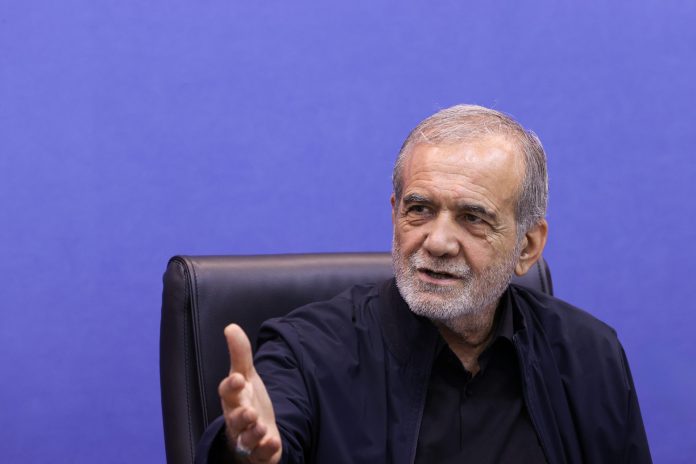
Masoud Pezeshkian

Speaking at a meeting of the Supreme Council of Cyberspace on Tuesday, Pezeshkian underlined the council’s vital role in enhancing service quality and addressing pressing security concerns, particularly under what he called the current sensitive conditions.

He said a comprehensive evaluation is needed to determine the extent to which outlined goals in the cyberspace sector have been achieved and to identify and resolve obstacles to their implementation.

The president also emphasized the importance of addressing existing gaps and strengthening the resilience of national infrastructure.

During the session, the National Cyberspace Center’s security division presented a detailed report on recent cyber threats and the country’s success in repelling them.

Pezeshkian instructed the council’s secretariat to continuously update protocols and re-engineer cyber defense processes.

Iran has been the target of numerous cyberattacks by the United States and Israel, particularly during the latter’s 12-day war of aggression against Iran last month.

On June 13, Israel launched an unprovoked war against Iran, assassinating many high-ranking military commanders, nuclear scientists, and ordinary civilians.

More than a week later, the United States also entered the war by bombing three Iranian nuclear sites in a grave violation of the United Nations Charter, international law, and the Nuclear Non-Proliferation Treaty (NPT).

At the beginning of the war, the Israeli regime launched multiple coordinated cyberattacks targeting Iran’s banking network and state television.

In response, the Iranian Armed Forces targeted strategic sites across the occupied territories, including the regime’s cyber capital, Beer al-Sabe, considered to be the stronghold of the Israeli regime’s cyber industry and a central hub in its global cyber warfare apparatus.

According to Israeli media reports, a missile fired by Iran successfully evaded the regime’s multi-layered air defense systems. Despite initial detection, the missile intercept systems failed to neutralize the projectile.

On June 24, Iran ultimately succeeded in halting the war through its retaliatory operations against the Israeli regime.

Iranian striker Taremi nominated again for AFC Best Player of World Cup qualifiers round

Mehdi Taremi

Following the conclusion of the third round of qualifiers, the AFC invited fans to vote for the best player of the stage.

Taremi, 32, was named as one of 12 nominees for his standout performances that helped Iran secure qualification for the World Cup for the fourth consecutive time.

The AFC praised the Iranian striker’s consistency, stating on its website: “Mehdi Taremi once again proved why he is among the top forwards in Asia.”

Taremi, who currently plays for Inter Milan, scored five goals during the third-round matches, placing him among the top scorers of the stage. In addition to his scoring record, he also provided four assists, underlining his vital contribution to the attacking strength of Team Melli, Iran’s national soccer team.

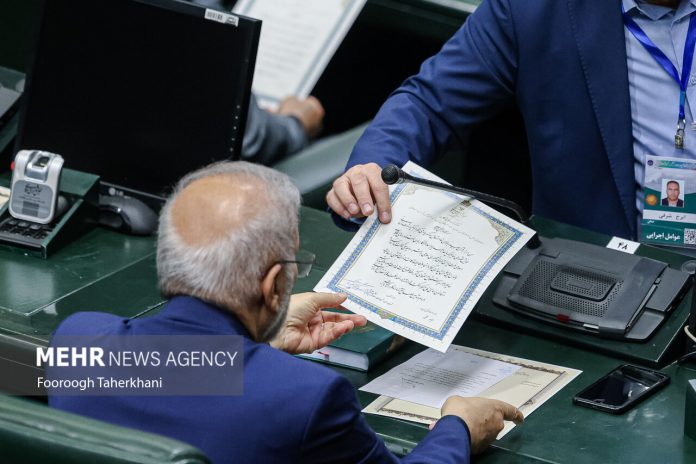
Iran’s parliament elects three legal experts to Guardian Council

In the open session, lawmakers reviewed the qualifications and programs of six candidates nominated by the judiciary for the legal expert positions. Following individual presentations and discussions, a paper ballot vote was held.

Out of the 269 lawmakers present, Hadi Tahan Nazif received the highest number of votes with 257, followed by Gholamreza Molaei-Beygi with 226, and Seyed Behzad Poursaeed with 178 votes. The three individuals were elected to serve as the Council’s legal members for a new term.

The Guardian Council consists of 12 members: six Islamic jurists appointed by the Leader and six legal experts nominated by the judiciary and approved by Parliament.
The Council plays a central role in Iran’s legislative process and electoral oversight, including approving candidates for presidential and parliamentary elections.

Journalist: Iranian parl’t reportedly considers Hormuz Strait closure amid Western pressure

IRGC Boat

Hossein Shariatmadari, editor-in-chief of Kayhan newspaper, welcomed the reported initiative, stating it would be a “legal and powerful tool” to respond to ongoing “hostilities and sanctions” by the US, the UK, France, Germany, and Israel.

In an editorial published on Wednesday, he cited past military actions and sanctions against Iran, as well as recent threats to trigger the so-called “snapback” mechanism under the defunct 2015 nuclear deal, as justification.

Shariatmadari argued that blocking the strait to Western-linked vessels is Iran’s “minimum response” to the aggression. He referred to past remarks by Iranian officials and commanders, including a letter from the late General Qassem Soleimani supporting similar warnings.

The Strait of Hormuz is one of the world’s busiest oil transit chokepoints. According to CNBC, its closure could drive oil prices above $250 per barrel.

The article ends with a sharp call for Iranian policymakers to take a decisive action.

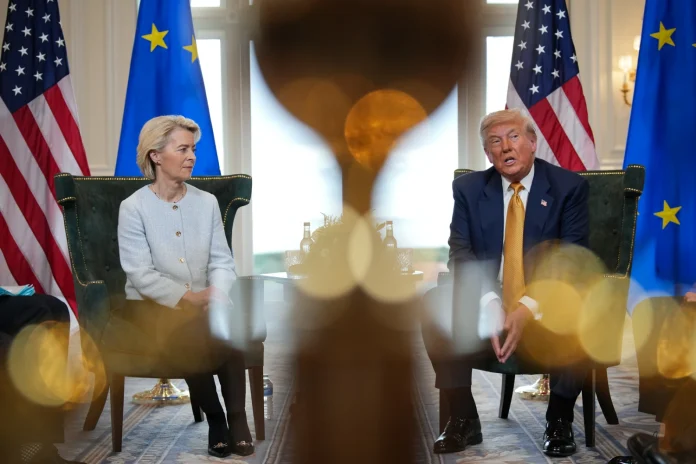
EU delays measures against Israel on Gaza war despite pressure to act 

Gaza War

The ministers were in Brussels to discuss an EU-Israel agreement brokered last week to increase the number of trucks and distribution of food entering Gaza as well as the opening of several other crossing points. They also examined an exhaustive list of 10 options, including the suspension of visa-free travel and the blocking of imports from the Jewish settlements, in response to Israel’s breach of the EU-Israel Association Agreement.

“Israel needs to take more concrete steps to improve the humanitarian situation on the ground,” Kallas told reporters, adding that Israel had already improved access and supplies of aid to Gaza.

“The EU will keep a close watch on how Israel implements this common understanding and the pledges.”

“The aim is not to punish Israel, the aim is to improve the situation in Gaza,” Kallas continued.

The bloc’s ambassadors will be tasked to update Israel’s compliance of the agreement every two weeks, Kallas said, and the EU would keep the 10 options “on the table” and “stand ready to act if Israel does not live up to its pledges”.

Last week, the Israeli military admitted a “technical error” following a strike that reportedly killed 10 people, including six children, near a Gaza water distribution point.

Some ministers expressed frustration at the lack of action against Israel.

Following Tuesday’s meeting, Slovenian foreign minister Tanja Fajon wrote on X that she regretted there hadn’t been “any consensus” during the meeting to follow up on the review of the EU-Israel Association Agreement.

She added that an “agreement in principle” on improving humanitarian aid “can’t be used as an excuse to inaction”.

“We all have a responsibility to protect civilians,” she added.

Prior to the meeting on Tuesday, some ministers had also sent clear signs that they wanted to take concrete measures against Israel.

Spain’s foreign affairs minister José Manuel Albares told reporters that in accordance with EU and international norms, his country would push for a suspension of the EU-Israel Association Agreement, an arms embargo to Israel and the ban of products from the Jewish settlements.

“This war needs to end, and the Israeli army needs to withdraw,” Albares added.

His French counterpart, Jean-Noël Barrot also said France would be ready to take sanctions targeted at “individuals and entities that are responsible for the extremist and violent colonisation” in the West Bank and to “stop any direct and indirect financial support to the colonisation”.

Iran’s Leader urges legal action over recent Israel-US aggression, praises national resolve

Speaking to top judicial officials on Wednesday, Ayatollah Khamenei stressed that “the collar of the criminal must not be released,” urging long-term legal follow-up even if it takes decades.

Highlighting a national display of strength, the Leader praised the Iranian people for their resolve in the 12-day conflict in June, stating that the confrontation was not merely military but a demonstration of national will and self-confidence.

“A nation that can stand face-to-face against the power of the US and its Zionist proxy in the region is demonstrating a very significant value,” he said.

Ayatollah Khamenei emphasized that Iran will not appear weak in any arena, be it diplomacy or military confrontation, declaring, “We have all the necessary tools: logic and power. Whenever we enter a field, we will do so with full hands.”

He also asserted that divine support has guaranteed Iran’s ultimate success. “Everyone should know that God has promised victory for the Iranian nation under the Islamic system and the guidance of the Qur’an,” he added.

Reflecting on recent regional tensions, the Leader stated that Iran’s adversaries miscalculated in their multi-month planning, but the outcome saw the public rallying behind the government and the Islamic system, contrary to what enemy strategists had anticipated.

He praised the unprecedented unity shown by Iranians across diverse political and religious spectrums during recent events. “People with different appearances, ideologies, and religious inclinations came together in support of Iran. This is a great national unity that must be preserved.”

Addressing internal dynamics, Ayatollah Khamenei advised caution in current circumstances. While calling for public enthusiasm and clarity to counter disinformation, he warned against counterproductive actions such as political infighting and impatience. “Public enthusiasm is essential, especially among the youth, but impatience is harmful,” he said.

The Leader stressed the need to distinguish between actions that are necessary and those that are harmful. “We must avoid amplifying partisan disputes and remain united in defense of Iran and its values,” he said.

EU demands US pay for Ukraine-bound arms

Western weapons flow to Ukraine's military

Trump announced on Monday that he will allow other NATO members to buy American-made Patriot missile defense systems and other weapons for Ukraine – but indicated that US taxpayers will no longer finance Kiev’s war effort.

“The United States will not be having any payment made. We’re not buying it, but we will manufacture it, and they’re going to be paying for it,” the US leader said during a meeting with NATO Secretary General Mark Rutte in the Oval Office, adding “this will be a business for us.”

Speaking to reporters on Tuesday, Kallas welcomed Trump’s announcement but noted that Brussels “would like to see the US share the burden.”

“If we pay for these weapons – it’s our support, it’s European support,” Kallas explained when asked to clarify what she meant by sharing the burden.

“We are doing as much as we can to help Ukraine, and therefore the call is that everybody would do the same. It’s, you know, if you promise to give the weapons but say that somebody else is going to pay – it’s not really given by you, is it?”

Moscow has repeatedly denounced Western arms supplies to Ukraine, saying they only serve to prolong the bloodshed and escalate the conflict without altering its course. Russia remains open to negotiations but has not received a response from Kiev on the timing of the next round.

Russian Foreign Minister Sergey Lavrov stated on Tuesday that EU and NATO leaders have put Trump under “improper pressure” to adopt a hardline stance. Deputy Foreign Minister Sergey Ryabkov stressed that “any attempts to make demands, let alone issue ultimatums, are unacceptable.”

Kremlin spokesman Dmitry Peskov also criticized Trump’s threat to impose “severe” secondary tariffs of up to 100% in 50 days, noting that such ultimatums are “perceived by the Ukrainian side not as a signal toward peace, but as a signal to continue the war.”

Chine reaffirms support for Iran’s territorial integrity, national sovereignty

In a meeting with the Iranian Foreign Minister Seyyed Abbas Araghchi, on the sidelines of the 25th meeting of the Council of Foreign Ministers of the Shanghai Cooperation Organization (SCO), in Tianjin, the top Chinese diplomat stated that China’s principled position is opposition to coercive and unilateral policies, the use of force, and support for diplomacy and dialogue as the means for resolving disputes.

The Chinese foreign minister praised Iran’s goodwill, responsible, and wise approach in preventing further escalation and conflict in the region following the US-Israel aggression.

He also stressed the importance of continued bilateral and multilateral talks to prevent escalation in the region and announced China’s readiness to assist in this regard at international platforms, especially within the UN Security Council.

Iran’s Foreign Minister, Seyyed Abbas Araghchi, in turn thanked China for its principled, constructive, and influential positions in international forums, particularly at the United Nations Security Council, in condemning the aggression by the Zionist regime and US against Iran, especially the recent dangerous attacks on Iran’s peaceful nuclear facilities.

He said the aggression constitutes clear violations of the UN Charter and international law.

Recalling the deep-rooted ties between the ancient civilizations of Iran and China, Araghchi emphasized the serious commitment of the Islamic Republic of Iran to enhancing the comprehensive and friendly relations between the two countries within the framework of their Comprehensive Strategic Partnership.

Araghchi briefed his Chinese counterpart on the latest developments following the aggression and the cessation of hostilities, underscoring the responsibility of the Security Council and all states to uphold their duties in preserving regional and global peace and security.

Iran’s Gas company denies sabotage behind recent blasts, cites domestic causes

Firefighter

According to the head of the Passive Defense Department at NIGC, extensive field inspections and technical assessments have confirmed that all recent incidents were the result of internal factors. “There is no evidence pointing to deliberate sabotage or terrorist activity,” he stated.

Data released by the company indicate a rising trend in gas-related accidents across the country.

In the first half of 2024–25, over 2,196 gas incidents were recorded, with nearly 90% resulting in household explosions or fires.

The leading causes identified include worn or ruptured gas hoses (44%), various gas leaks (18%), the use of non-standard appliances (11%), and leakage from internal piping systems (5%).

Other contributing factors include faulty thermocouples, defective gas valves, and flammable materials placed near heaters.

The company urged citizens to adhere strictly to safety standards and called for improved oversight of gas installations to prevent further incidents.

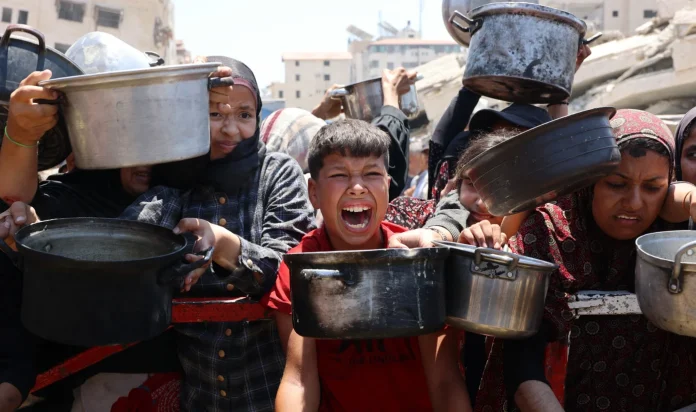
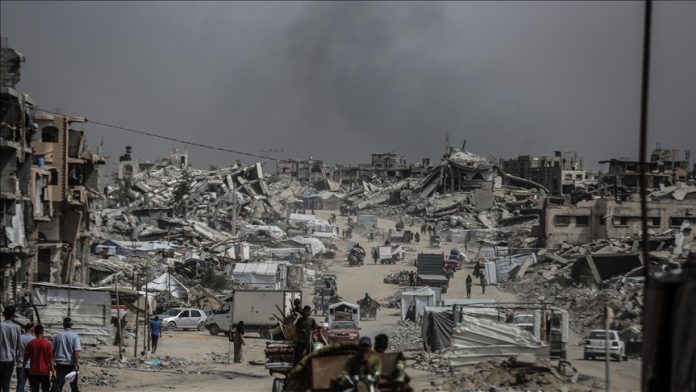
At least 875 Palestinian killed near Gaza aid sites: UN

Thameen Al-Kheetan, spokesperson for the UN rights office, told reporters in Geneva on Tuesday that 674 deaths occurred near GHF distribution sites.

Another 201 people were killed along aid convoy routes operated by the UN and other agencies, according to the official.

“The data we have is based on our own information gathering through various reliable sources, including medical, human rights and humanitarian organisations,” Al-Kheetan added.

The UN has called the GHF’s aid model as “inherently unsafe” and in breach of impartial humanitarian principles.

The foundation, which began operations in late May following an 11-week Israeli blockade, uses private US mercenaries for delivery.

It by passes the UN-led aid system, which Israel claims has been infiltrated by Hamas – an accusation that is not supported by independently verified evidence.

Last week, CNN reported that the main US government agency that distributes foreign aid raised “critical concerns” about a GHF just days before the Donald Trump administration announced $30m in funding for the organisation.

The US Agency for International Development (USAID) in June wrote a 14-page confidential internal assessment criticising a request for funding submitted by the controversial GHF.

GHF was seeking $30m of its $100m operating costs from the State Department.

According to the assessment, which was obtained by CNN, at least nine elements normally required to obtain government funding were not included in the application, such as insufficient planning information ensuring Palestinians would actually receive aid.

One criticism was that the overall plan lacked “basic details” regarding a scheme to give out powdered baby formula in a Gaza area where clean drinking water is not available.

“I do not concur with moving forward with GHF given operational and reputational risks and lack of oversight,” a USAID official stated, concluding it would not be safe to move forward with the GHF organisation.