Tuesday, December 23, 2025
Home Blog Page 252

Palestinian groups say Gaza talks must lead to ending war

The remarks followed a meeting between delegations from both groups, according to a statement by Hamas. The location of the talks was not disclosed.

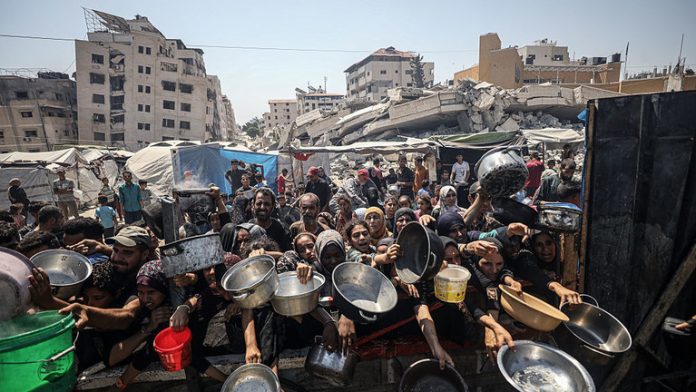
Hamas said the two sides reviewed the “massive sacrifices and ongoing humanitarian suffering” caused by the “genocidal war, starvation, and daily massacres committed by the Israeli enemy (Israel).”

The two groups discussed the status of current negotiations in Doha, affirming that any outcome must lead to ending the war, ensuring the withdrawal of Israeli forces, reopening crossings, and beginning reconstruction.

They also reviewed Israel’s responses to mediation proposals aimed at securing a ceasefire and examined potential strategies for addressing those responses, the statement added.

The latest round of indirect negotiations is currently underway in the Qatari capital, involving Hamas and Israeli delegations, with mediation by Qatar and Egypt and participation from the US.

Hamas said Wednesday it agreed to release 10 living Israeli captives as a sign of “flexibility” to reach a ceasefire and prisoner swap agreement, while Israel remains rigid on key points, including its withdrawal from Gaza.

In contrast, Israel insists on a buffer zone 2 to 3 kilometers (1.2 – 1.9 miles) wide in the Rafah area, and 1 to 2 kilometers in other border areas.

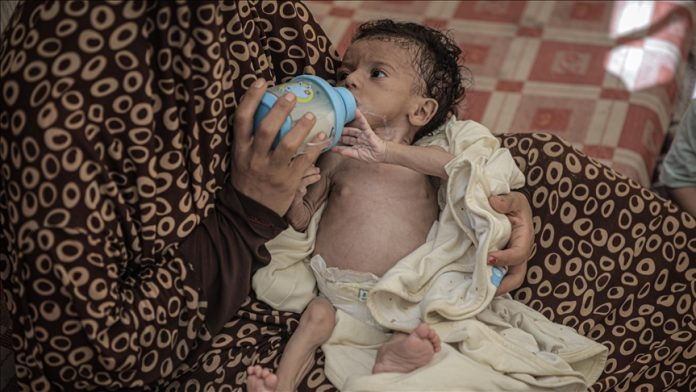
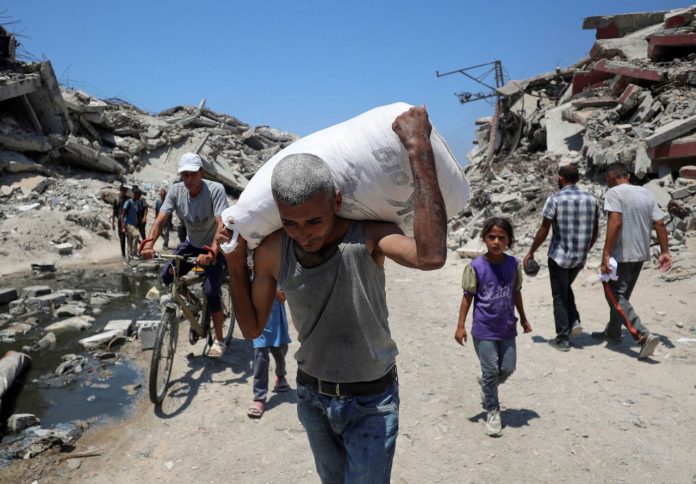
Rejecting international calls for a ceasefire, Israel has pursued a brutal offensive on Gaza since late October 2023, killing over 58,000 Palestinians, most of them women and children. The relentless bombardment has destroyed the enclave and led to food shortages and a spread of disease.

Last November, the International Criminal Court issued arrest warrants for Israeli Prime Minister Benjamin Netanyahu and his former Defense Minister Yoav Gallant for war crimes and crimes against humanity in Gaza.

Israel also faces a genocide case at the International Court of Justice for its war on the enclave.

Iran spox: Resorting to snapback against Tehran has no legal basis; Europe failed in own duties

Esmael baghaei

Speaking to reporters on Monday, Baqaei said: “If the European parties to the Iran nuclear deal, JCPOA, had fulfilled their commitments, we would not be facing such circumstances, and Iran would not have exercised its right to reduce its JCPOA obligations.”

He emphasized that Iran still considers itself a JCPOA member and that its reduction in obligations came in response to the flagrant violations of the deal by the US and other parties.

He noted that the European parties themselves have also committed serious breaches of the agreement and failed to uphold their responsibilities, for which they must now be held accountable.

Baqaei stressed that triggering the snapback mechanism is a political move intended to confront Iran and will be met with an appropriate response from Tehran.

“By resorting to the snapback mechanism, the Europeans are essentially declaring that they no longer see a role for themselves in continued diplomacy regarding Iran’s nuclear issue,” he said.

He added that the Islamic Republic of Iran is currently engaged in dialogue with the relevant parties to safeguard its national interests.

Baqaei also criticized Germany, stating: “The presence of US nuclear weapons on German soil clearly shows that Germany has violated its commitments under the Non-Proliferation Treaty (NPT). Yet we are witnessing double standards — while Iran’s peaceful nuclear facilities come under attack, Germany takes wrongful stances toward Iran.”

Top Iranian commander says military prepared for a decade of war

Mohammad Reza Ashtiani

Brigadier General, Amir Mohammadreza Ashtiani, Deputy Chief of Staff of the Iranian Armed Forces and former defense minister, made the remarks in reference to recent military engagements with Israel and the US, stating that Iran suffered minimal equipment damage during the 12-day conflict in June.

“Our equipment hasn’t sustained significant damage, and we have enough supplies to wage war for ten years if necessary,” he said, according to media.

General Ashtiani stressed that equipment alone does not determine battlefield success, explaining, “What truly matters is morale. They say morale is three-fourths of the fight. Our armed forces are experienced, well-trained, equipped with modern systems, and maintain high morale.”

In contrast, he claimed that Iran’s adversaries lack key components of military strength.

“They may have equipment, but they don’t have the will,” General Ashtiani added.

Iran, UAE security chiefs call for collective efforts for regional security

Ali Akbar Ahmadian

In a telephone conversation on Sunday, Secretary of Iran’s Supreme National Security Council (SNSC) Ali Akbar Ahmadian and the UAE National Security Advisor Tahnoun bin Zayed Al Nahyan discussed leading developments in the region, particularly the recent acts of aggression by Israel and the United States against the Islamic Republic.

Ahmadian praised the UAE’s stance in condemning the strikes, saying, “The security of the Persian Gulf and the interconnected security of all its members require the participation of regional countries.”

He warned that any foreign threat to one nation’s security would jeopardize the stability of the entire region.

The SNSC secretary reiterated Iran’s principled stance on the expansion of relations with its neighboring countries.

The top Emirati security official, for his part, said security in the region should be maintained by regional countries.

He warned that any disruption to the security of one country would have adverse consequences for other regional states.

Al Nahyan reiterated the UAE’s longstanding support for resolving challenges through dialogue.

On the morning of June 13, the Israeli regime launched a premeditated, large-scale military attack on Iranian soil with the green light from the United States.

The Tel Aviv regime conducted indiscriminate strikes on densely populated civilian areas, vital infrastructure, nuclear facilities, and non-combatants. The result was hundreds of fatalities, thousands of injuries, and significant damage to the country’s medical, educational, and industrial facilities in civilian areas.

In response, Iran launched Operation True Promise III, a sweeping counteroffensive that struck critical military, intelligence, and industrial infrastructure across the occupied territories.

The retaliatory strikes were followed by an Iranian missile strike against al-Udeid, a key US airbase in the region, after the US joined the war by bombing three Iranian nuclear facilities.

The Israeli regime was forced on June 24 to declare a unilateral halt to its aggression, which was announced on its behalf by US President Donald Trump.

IRGC reports discovery of suspected Israeli drone components near Tehran

IRGC

In a statement released Sunday, the public relations office of the IRGC said that during a routine patrol operation, Basij forces uncovered parts and equipment believed to be associated with unmanned aerial vehicles (UAVs) linked to the Zionist regime.

According to the statement, the discovery took place as part of ongoing security and intelligence patrols aimed at safeguarding the Parand Industrial Zone and surrounding areas.

The IRGC noted that this is the second instance of such drone-related equipment being found in the area since the start of the Israeli aggression against Iran on June 13.

While the statement did not specify the nature or intended use of the equipment, it emphasized the continued vigilance of local security forces in countering threats attributed to foreign espionage elements.

The 12-day conflict between Israel and Iran, which left casualties and damages on both sides, ended in a ceasefire at the end of June.

Over 30 killed in sectarian clashes in Syria

Syria War

The violence erupted after a wave of kidnappings, including the abduction of a Druze merchant on Friday on the highway linking Damascus to Sweida, witnesses say.

This is the first time sectarian fighting has erupted inside the city of Sweida itself, the provincial capital of the mostly Druze province.

Last April saw clashes between Sunni fighters and armed Druze residents of Jaramana, southeast of Damascus, which later spread to another district near the provincial capital.

“This cycle of violence has exploded in a terrifyng way and if it doesn’t end we are heading toward to a bloodbath,” said Rayan Marouf, a Druze researcher based in Sweida who runs the Suwayda24 website.

The clashes involving Bedouin tribal fighters and Druze militias were centered in Maqwas neighborhood east of Sweida, which is inhabited by Bedouin tribes, and was encircled by armed Druze groups and later seized.

The Syrian ministry of interior announced that its forces will begin direct intervention in Sweida to resolve the conflict, calling on local parties in the Druze city to cooperate with the security forces.

Armed Bedouin tribesmen also launched attacks on Druze villages on the western and north outskirts of the city, residents stated.

A medical source told Reuters that at least 15 bodies had been taken to the morgue at Sweida’s state hospital. Around 50 people were injured, with some transported to Deraa city for medical care.

The violence marked the latest episode of sectarian bloodshed in Syria, where fears among minority groups have surged since rebels toppled President Bashar al-Assad in December, installing their own government and security forces.

Those concerns intensified following the killing of hundreds of Alawites in March, in apparent retaliation for an earlier attack carried out by Assad loyalists.

It was the deadliest sectarian flare-up in years in Syria, where a 14-year war ended last December with Assad fleeing to Russia after his government was overthrown by rebel forces.

US will send Patriot missiles to Ukraine: Trump

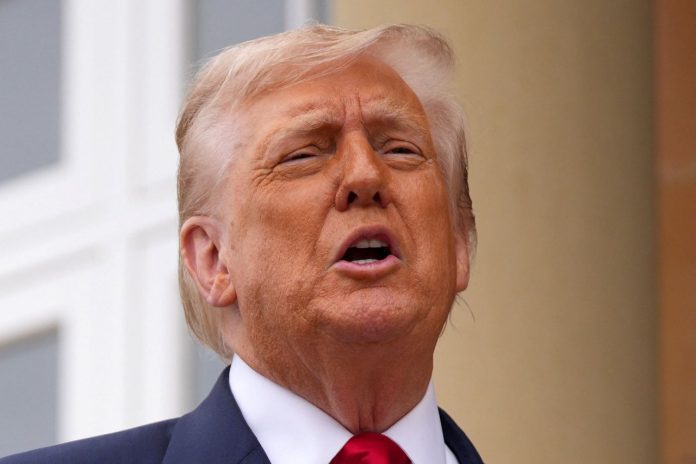
Trump did not give a number of Patriots he plans to send to Ukraine, but he said the United States would be reimbursed for their cost by the European Union. The U.S. president has grown increasingly disenchanted with Putin because the Russian leader has resisted Trump’s attempts to negotiate a ceasefire between Ukraine and Russia.

Ukrainian President Volodymyr Zelensky has asked for more defensive capabilities to fend off a daily barrage of missile and drone attacks from Russia.

“We will send them Patriots, which they desperately need, because Putin really surprised a lot of people. He talks nice and then bombs everybody in the evening. But there’s a little bit of a problem there. I don’t like it,” Trump told reporters at Joint Base Andrews outside of Washington.

“We basically are going to send them various pieces of very sophisticated military equipment. They are going to pay us 100% for that, and that’s the way we want it,” Trump added.

He plans to meet NATO Secretary General Mark Rutte to discuss Ukraine and other issues this week.

Iran FM rebukes Israeli PM in strongly worded tweet: “What exactly is Netanyahu smoking?”

Abbas Araghchi

Araghchi wrote, “Netanyahu pledged victory in Gaza almost two years ago. The end result: military quagmire, facing arrest warrant for war crimes, and 200,000 new Hamas recruits.”

“In Iran, he dreamed that he could erase 40+ years of peaceful nuclear achievements. The end result: every one of the dozen Iranian academics that his mercenaries martyred had trained 100+ capable disciples. They will show Netanyahu what they are capable of,” he further noted.

The foreign minister added Netanyahu’s “arrogance” doesn’t stop there, explaining, “Having miserably failed to achieve any of his war aims in Iran and compelled to run to “Daddy” when our powerful missiles flattened secret Israeli regime sites, which Netanyahu is still censoring, he is openly dictating what the US should or shouldn’t say or do in talks with Iran.”

“Apart from farce that Iran will accept anything a wanted war criminal has to say, the inevitable question arises: what exactly is Netanyahu smoking? And if nothing, what exactly does the Mossad have on the White House?” he concluded.

Iran FM rebukes Israeli PM in strongly worded tweet: “What exactly is Netanyahu smoking?”

Parliamentary commission approves bill to bolster Iran’s military capabilities

Iranian Parliament

Commission spokesman Ebrahim Rezaei announced that the proposal, titled “Strengthening the Defensive Capacity of the Armed Forces in Confronting the Crimes and Aggressions of the Zionist Regime,” was passed in the presence of senior officials from the Ministry of Defense, the Armed Forces General Staff, the Islamic Republic of Iran Army, and the Islamic Revolution Guard Corps (IRGC). The bill has now been referred to the Commission’s Defense Subcommittee for further review.

Backed by 120 lawmakers and introduced by Tehran MP Ali Khezrian, the bill mandates full disbursement of the defense budget for the year 2025–26, as well as payment of any outstanding funds from the previous fiscal year. It obliges the State Planning and Budget Organization and the Ministry of Petroleum to ensure full financing of strategic defense projects.

The bill further requires the Central Bank to allocate resources, including from unblocked foreign assets, to fund emergency defense initiatives by the Armed Forces General Staff.

According to Rezaei, the commission and defense officials unanimously emphasized the urgency of enhanced military preparedness in the face of mounting threats and pledged robust cooperation to ensure full implementation of the bill.

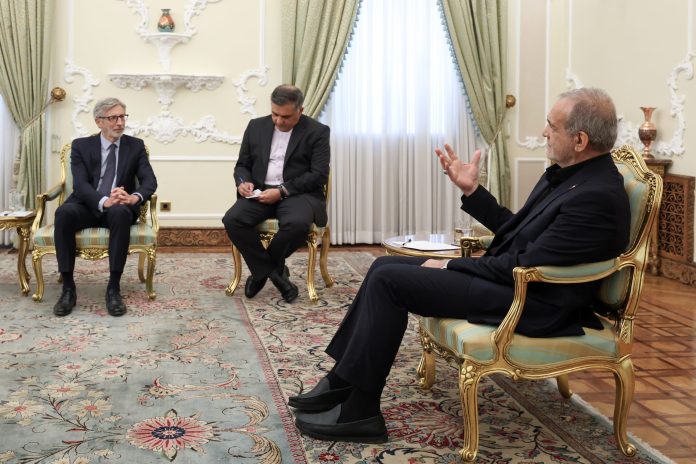
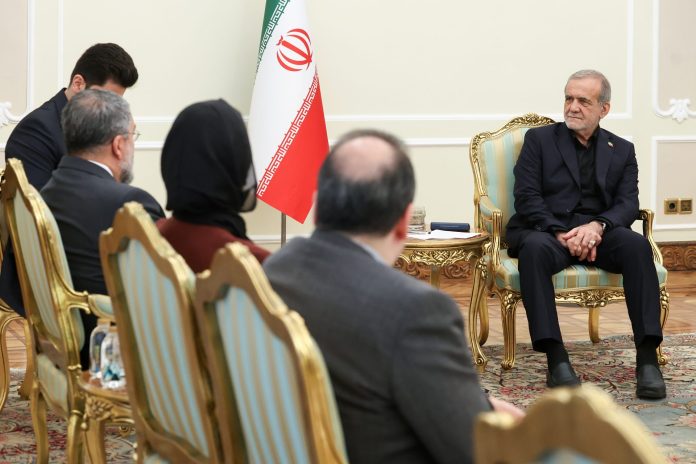
President Pezeshkian: Iran belongs to all citizens—no room for division into ‘insiders’, ‘outsiders’

“We must never divide our people into ‘insiders’ and ‘outsiders,’” Pezeshkian declared.

“Iran belongs to all Iranians—regardless of belief, ethnicity, language, or gender. Disagreement does not equal enmity. We have no right to impose our views on others by force.”

Referring to the recent 12-day war, the President commended the nation’s resilience and collective unity.

“During this difficult time, the people stood firm. Even those who may disagree with us politically, or women criticized for their appearance, took to the streets in protest against the Zionist regime. This is their homeland too,” he said.

He reiterated the importance of people-centered governance: “In both the 8-year war and this 12-day conflict, it was the people—not just the government—who ensured victory. A country cannot be run solely from behind desks; we must harness the strength of our citizens.”

Calling for national unity, Pezeshkian concluded: “The only way to build Iran is through acceptance of diversity, fostering harmony, and joining forces. If we align all capacities and perspectives, we can overcome our challenges and create the Iran we all deserve.”