Tuesday, December 23, 2025
Home Blog Page 251

Iran’s president calls for inclusive role of universities in solving challenges

“If we respect and empower our intellectuals, the country will flourish”, he said during the 40th Summit of Presidents of Major Universities held at the University of Tehran.

While referring to the urgency for transformation in higher education, Pezeshkian called on university leaders to shift their institutions toward being problem-solving centers capable of addressing the country’s complex and interwoven challenges.

He also stressed that modern institutions must engage directly in national development and called for academic participation in government planning.

Pezeshkian warned against pressuring professors and scholars under vague pretexts, urging merit-based appointments and improved human resource management.

He further underscored that without behavior change in public administration, bureaucracies would stagnate.

Among key university missions, he enumerated improving energy efficiency, developing renewable energy, addressing Iran’s water crisis, and promoting performance-based budgeting.

“Real progress,” he said, “happens when knowledge powers our production and industries”.

Iranian official warns senior figures against using WhatsApp

Instagram Whatsapp

Speaking on state television on Sunday, Hassan Meisami emphasized that while ordinary citizens are permitted to use WhatsApp, high-ranking officials must exercise caution and refrain from sharing sensitive or personal information on the platform.

“Senior national and military leaders should under no circumstances use WhatsApp,” Meisami stated.

“For the general public, usage is not prohibited, but necessary precautions should be taken.”

Amid the escalating active conflict last month, Iranian television delivered a directive to the citizens to delete the messaging platform on account of safety and privacy concerns.

The instruction says that the messaging platform is gathering user information to share with Israel.

Iranians were encouraged to refrain from using other location-based applications as well.

Top Iranian commander warns of stronger response if Israel strikes again

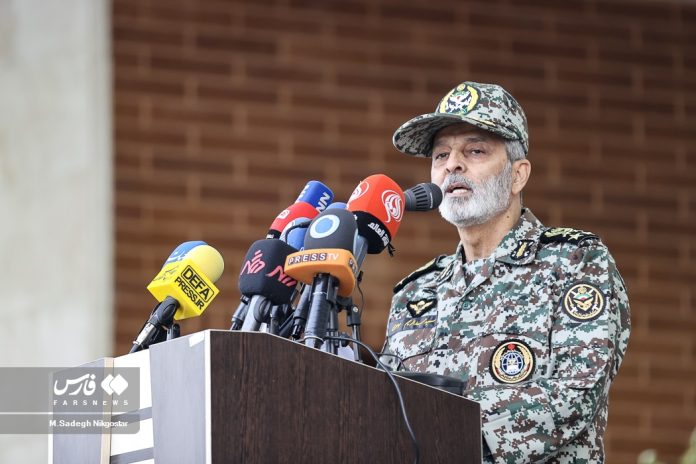
Major General Abdolrahim Mousavi

During a visit to the Islamic Revolution Guard Corps (IRGC) Aerospace Force, Mousavi met with commanders and personnel, praising their role in defending Iran during the 12-day conflict in June.

He highlighted the Aerospace Force’s achievements as more significant than some of Iran’s major operations during the Iran-Iraq War of the 1980s.

“Never before has the territorial integrity of the Islamic Republic faced such a threat,” Mousavi stated. “By the grace of God, our Aerospace Force struck decisively, cutting off the hands of our enemies.”

He paid tribute to the late General Amir Ali Hajizadeh, a key figure in Iran’s missile and drone development, calling his legacy enduring and inspirational for future generations. General Hajizadeh and several other top military commanders were assassinated in Israeli strikes on June 13.

General Mousavi emphasized that Iran’s defense production continues around the clock and affirmed that Iran’s forces will carry forward the mission of fallen commanders until full victory is achieved.

Iran Red Crescent chief: 126 women, 41 children martyred in Israeli aggression; over 8,200 homes destroyed

Speaking at a press conference alongside Foreign Ministry spokesperson Esmaeil Baqaei, Kolivand confirmed that over 8,200 residential units were destroyed across various provinces.

He further noted that five Red Crescent aid workers were martyred, as Israeli forces deliberately targeted ambulances and emergency responders.

Kolivand emphasized the extensive war crimes committed by Israel, including attacks on hospitals and intensive care units, which have been documented and submitted to international bodies such as the International Committee of the Red Cross.

He added that the Iranian Red Crescent, in cooperation with the International Red Cross representative in Iran, inspected several affected areas to verify the scale of the atrocities.

Despite the devastation, including burning homes and casualties among women and children, Kolivand praised the courage and dedication of his colleagues who continued rescue and relief operations throughout the conflict.

More than 80 countries have expressed solidarity with Iran’s Red Crescent regarding these crimes.

German president urges universal military conscription

Germany Army

Compulsory military service was suspended in Germany in 2011. Although inactive, the legal framework for a draft remains intact and can be reactivated by a simple parliamentary majority. A full-scale return, including women, however, would require changes to the constitution.

Speaking to ZDF on Sunday, Steinmeier said Germany must prepare for the possibility that voluntary enlistment will fall short of staffing requirements for the army.

“I am an advocate of conscription because I believe that with the changing security situation in Europe, with the fact that a war is taking place, and with the conclusions we have drawn from it to better protect ourselves, the personnel equipment of the Bundeswehr also needs to be adapted,” he added.

He expressed support for Defense Minister Boris Pistorius’ proposal to expand troop numbers and create a backup draft system. The plan aims for around 5,000 volunteer recruits annually, rising to 30,000 by 2029.

Legislation which is being prepared for cabinet review in August with possible enactment by early 2026 includes provisions to automatically reintroduce conscription if volunteer numbers fall short.

“We need this debate now, preferably with a positive outcome, so that if there are not enough volunteers, we will probably return to a different form of conscription than the one we have already abolished,” Steinmeier stated.

Since the escalation of the Ukraine conflict in February 2022, Germany has been working to strengthen its military, citing what it sees as a security threat from Russia.

Moscow has rejected claims that it plans to attack NATO nations, dismissing them as “nonsense” and accusing Western leaders of intentionally alarming their citizens to justify increased defense budgets.

Macron says France to speed up increase in defense spending, to 64 billion euros in 2027

“Although we planned to double the military budget by 2030, we will do so by 2027,” said Macron, whose speech was broadcast on the page of the Elysee Palace on X.

“An additional 3.5 billion euros will be allocated for defense in 2026, and another 3 billion euros in 2027. Thus, the defense budget will double in 10 years and amount to 64 billion euros.”

The republic’s military spending under the budget for 2025 amount to 50.5 billion euros. In 2017, when Macron was elected president, defense spending amounted to 32.3 billion euros.

The French leader stated that the government will focus on strengthening the army.

“It is necessary to eliminate our vulnerabilities: first of all, to replenish ammunition stocks, including remotely controlled munitions, to make our multiple launch rocket guns and precision weapons more powerful, to provide our combat groups, frigates and air bases with even more drones, as well as the necessary equipment for successful operations,” he continued, adding, “It is also necessary to strengthen the air defense system and means of conducting electronic warfare, as well as to strengthen the capabilities in space.”

Macron also touched upon strengthening the military reserve and more active involvement of young people in the army, but clarified that details on these issues would be announced in the fall.

The head of state argued that France is facing numerous threats and must respond to them.

“Since 1945, freedom has never been under threat to such a significant extent as it is now. Peace on our continent has never depended on the decisions we are currently making,” Macron noted.

E3 tarnished their credibility over support for Israeli aggression: Iran’s deputy FM

Kazem Gharib Abadi

Speaking in a televised interview on Sunday, Kazem Gharibabadi said certain countries supported the Israeli regime during its 12-day war of aggression, specifically naming the three European countries of Britain, Germany and France.

“Aside from these three, I did not see any other country that supported the Zionist regime, and of course, the United States, which was part of this aggression,” he added.

He noted that the trio defended their support for the Tel Aviv regime using “baseless arguments.”

The senior Iranian diplomat explained that representatives of the US and Israel have prepared and submitted letters to the United Nations to justify the aggression against Iran, adding that “the three countries also repeated the same justifications and pretexts.”

The US and the Israeli regime claimed that Iran’s nuclear program posed an imminent threat and was moving towards militarization, he explained.

Therefore, he added, Iran had a legitimate right to self-defense to neutralize the US-Israeli plots.

It is ridiculous that the US claimed in its letter that it did not initiate the war and that it was in a “state of war” with Iran, he emphasized.

“This is completely false from a legal perspective. Iran has never been in a state of war with the United States,” Gharibabadi pointed out.

He noted that the US and Israel claimed that the slogans of “Death to America” and “Death to Israel” showed that Iran has sought to eliminate them and that is the reason they used as a justification to defend their so-called right to self-defense as legitimate.

On the morning of June 13, the Israeli regime launched a premeditated, large-scale military attack on Iranian soil with the green light from the United States.

The Tel Aviv regime conducted indiscriminate strikes on densely populated civilian areas, vital infrastructure, nuclear facilities, and non-combatants. The result was hundreds of fatalities, thousands of injuries, and significant damage to the country’s medical, educational, and industrial facilities in civilian areas.

In response, Iran launched Operation True Promise III, a sweeping counteroffensive that struck critical military, intelligence, and industrial infrastructure across the occupied territories.

The retaliatory strikes were followed by an Iranian missile strike against al-Udeid, a key US airbase in the region, after the US joined the war by bombing three Iranian nuclear facilities.

The Israeli regime was forced on June 24 to declare a unilateral halt to its aggression, which was announced on its behalf by US President Donald Trump.

Gharibabadi said Iran has not yet received a formal note that the EU troika intends to trigger the so-called “snapback mechanism” to reimpose United Nations sanctions, but expects them to do so one day.

He stressed the importance of making necessary arrangements to confront such a policy and respond to it effectively.

“So, we keep ourselves prepared for such scenarios every day,” the Iranian deputy foreign minister continued.

Pointing to the latest remark by German Chancellor Friedrich Merz, who said that his country had submitted a request to the UN to activate the snapback mechanism against Iran, Gharibabadi said the Iranian Foreign Ministry would follow up on the case via Germany’s Ministry of Foreign Affairs.

The snapback mechanism would bring into force six previous Iran-related Security Council resolutions adopted between 2006 and 2010. It would reinstate the expired UN arms embargo that barred countries from supplying, selling, or transferring most military equipment to Iran and prohibited Tehran from exporting any weapons.

It would also impose export controls, travel bans, asset freezes, and other restrictions on individuals, entities, and banks.

Gharibabadi said Iran would not welcome the activation of the snapback mechanism but would instead carry out “every necessary measure to prevent them from resorting to this mechanism.”

However, this does not mean that Iran would compromise on the issue, he explained.

“If they take this action, they will effectively exclude themselves from the realm of interaction and diplomatic engagement with Iran,” the Iranian diplomat emphasized.

He noted that Iran and the E3 have held six rounds of talks because “the atmosphere of engagement is still open” but in case of the triggering of the snapback mechanism, any interaction would be meaningless.

He added the United States in 2018 quit the 2015 nuclear agreement, formally known as the Joint Comprehensive Plan of Action (JCPOA), and the three European countries did not fulfill even one of their obligations.

Therefore, it is “sheer audacity” of the trio to claim that Iran has not fulfilled its commitments, and thus previous resolutions of the Security Council must be reinstated, he continued.

President Pezeshkian assigns task force to tackle dust pollution

Dust Storm

The task force is comprised of experts, academics, and representatives from relevant ministries and executive bodies.

The president’s directive was issued during a cabinet meeting on Sunday, when Shina Ansari, the head of the Department of Environment, presented a detailed report on dust storms as a threat, along with national strategies to address the issue.

The specialized task force will be responsible for developing and implementing operational plans to combat dust storms, as well as leveraging successful international experiences, the president’s website reported.

Describing environmental protection as one of the nation’s most vital priorities, Pezeshkian stressed that safeguarding natural resources and ecosystems is a cornerstone of good governance.

He stressed that all efforts must focus on preserving the land for future generations and passing on a green and sustainable legacy.

Palestinian groups say Gaza talks must lead to ending war

The remarks followed a meeting between delegations from both groups, according to a statement by Hamas. The location of the talks was not disclosed.

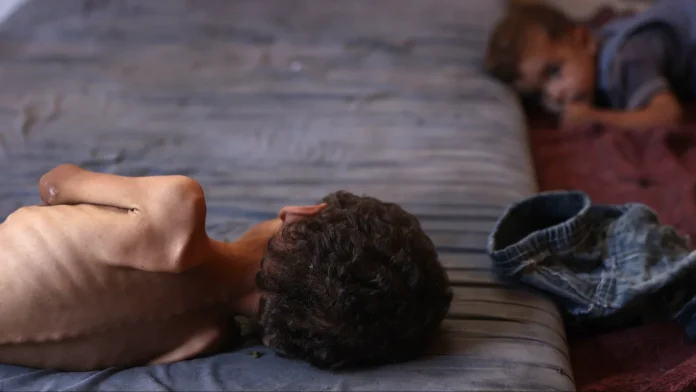
Hamas said the two sides reviewed the “massive sacrifices and ongoing humanitarian suffering” caused by the “genocidal war, starvation, and daily massacres committed by the Israeli enemy (Israel).”

The two groups discussed the status of current negotiations in Doha, affirming that any outcome must lead to ending the war, ensuring the withdrawal of Israeli forces, reopening crossings, and beginning reconstruction.

They also reviewed Israel’s responses to mediation proposals aimed at securing a ceasefire and examined potential strategies for addressing those responses, the statement added.

The latest round of indirect negotiations is currently underway in the Qatari capital, involving Hamas and Israeli delegations, with mediation by Qatar and Egypt and participation from the US.

Hamas said Wednesday it agreed to release 10 living Israeli captives as a sign of “flexibility” to reach a ceasefire and prisoner swap agreement, while Israel remains rigid on key points, including its withdrawal from Gaza.

In contrast, Israel insists on a buffer zone 2 to 3 kilometers (1.2 – 1.9 miles) wide in the Rafah area, and 1 to 2 kilometers in other border areas.

Rejecting international calls for a ceasefire, Israel has pursued a brutal offensive on Gaza since late October 2023, killing over 58,000 Palestinians, most of them women and children. The relentless bombardment has destroyed the enclave and led to food shortages and a spread of disease.

Last November, the International Criminal Court issued arrest warrants for Israeli Prime Minister Benjamin Netanyahu and his former Defense Minister Yoav Gallant for war crimes and crimes against humanity in Gaza.

Israel also faces a genocide case at the International Court of Justice for its war on the enclave.

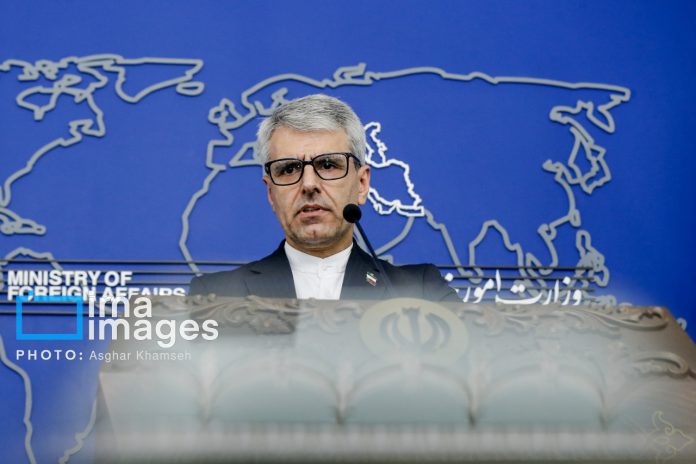
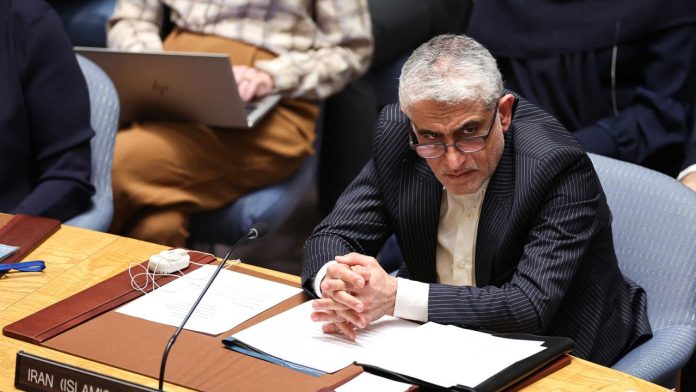
Iran spox: Resorting to snapback against Tehran has no legal basis; Europe failed in own duties

Esmael baghaei

Speaking to reporters on Monday, Baqaei said: “If the European parties to the Iran nuclear deal, JCPOA, had fulfilled their commitments, we would not be facing such circumstances, and Iran would not have exercised its right to reduce its JCPOA obligations.”

He emphasized that Iran still considers itself a JCPOA member and that its reduction in obligations came in response to the flagrant violations of the deal by the US and other parties.

He noted that the European parties themselves have also committed serious breaches of the agreement and failed to uphold their responsibilities, for which they must now be held accountable.

Baqaei stressed that triggering the snapback mechanism is a political move intended to confront Iran and will be met with an appropriate response from Tehran.

“By resorting to the snapback mechanism, the Europeans are essentially declaring that they no longer see a role for themselves in continued diplomacy regarding Iran’s nuclear issue,” he said.

He added that the Islamic Republic of Iran is currently engaged in dialogue with the relevant parties to safeguard its national interests.

Baqaei also criticized Germany, stating: “The presence of US nuclear weapons on German soil clearly shows that Germany has violated its commitments under the Non-Proliferation Treaty (NPT). Yet we are witnessing double standards — while Iran’s peaceful nuclear facilities come under attack, Germany takes wrongful stances toward Iran.”