Tuesday, December 23, 2025
Home Blog Page 2432

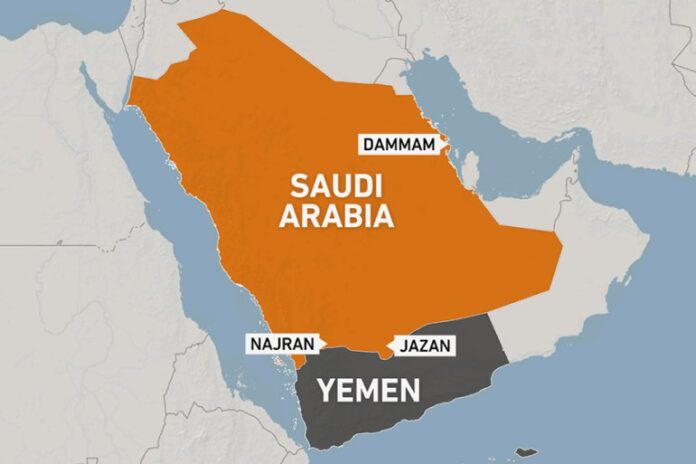
Yemen Ansarullah says attacked Saudi Aramco with ballistic missile

The spokesman added facilities in other locations including Jeddah, on the Red Sea coast, were also attacked. 

Saudi Arabia’s Ministry of Defense claimed it intercepted a ballistic missile and armed drones fired at its oil-rich Eastern Region by Yemen’s Houthi group on Saturday, and two children were injured by the resulting shrapnel.

Source: Reuters

US general warns of civil war in Afghanistan

“My military estimate is… that the conditions are likely to develop of a civil war,” the Chairman of the Joint Chiefs of Staff told Fox News’ Jennifer Griffin on Saturday. 

Following its blitz takeover of Afghanistan, the Taliban now controls most of the country except for last pockets of resistance in the Panjshir Valley. Heavy clashes continue in the strategic region, despite both sides insisting to have advantage and claiming to have inflicted heavy losses on their enemies.

Milley expressed doubt that the Taliban will be able to establish a sustainable government, and warned that power vacuum and chaos could lead to resurgence of Al-Qaeda, the Islamic State (IS, ISIS, ISIL or Daesh) and “other myriad” of terrorist groups.

 In order to keep America ‘safe’, President Joe Biden’s administration previously vowed to continue “over-the-horizon” counterterrorism missions, but Milley admitted that with no troops on the ground and crippled intel gathering capabilities, the US “will have to reestablish some human intelligence networks”.

“And then as opportunities present themselves, we’ll have to continue to conduct strike operations if there’s a threat to the United States,” he noted.

One such opportunity presented itself last week, when a US drone targeted a vehicle in Kabul, which the US Central Command claimed posed an “imminent” threat to the evacuation efforts ongoing at the Hamid Karzai International Airport at the time. It followed a suicide bombing by a local offshoot of Daesh terror group, in which dozens of Afghans and 13 US soldiers were killed, just before the last American troops left the country.

Milley called the raid a “righteous strike” that eliminated “at least one” person who was a “facilitator” for Daesh terrorists. Local media and the Taliban, however, stated that 10 civilians were killed as a result – seven of them children.

High-ranking Iran MP resigns from parliament

Parliament Speaker Mohammad Baqer Qalibaf said during Sunday’s parliamentary session that Ghazizadeh Hashemi’s resignation will be on the chamber’s agenda this week. 

Earlier a member of the parliament’s presiding board said Ghazizadeh Hashemi is stepping down to take the top post in the Foundation of Martyrs and Veterans Affairs.

Ghazizadeh Hashemi has been nominated for the position by President Ebrahim Raisi. 

Ghazizadeh Hashemi ran for president in the June presidential election, but abandoned the race in favor of Raisi.

Report: US seeks to get navy involved in Afghanistan strikes

The withdrawal of American army troops from Afghanistan, which was completed in a chaotic fashion a day before the August 31 deadline, means the United States now has limited options to launch airstrikes on Afghan soil.

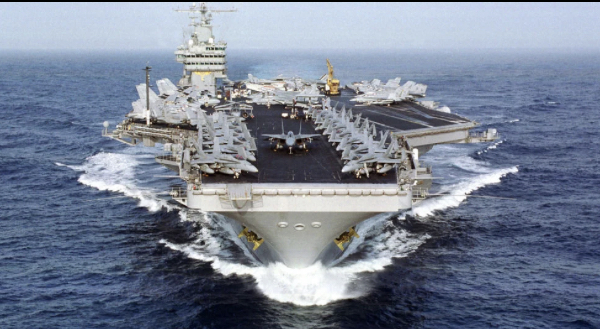
The lack of US-controlled airfields near Afghanistan has prompted military planners at the Pentagon to look at the US Navy as a potential alternative to the army, POLITICO reported, citing informed military sources.

If the plan is finalized, more drones and manned aircraft will be taking off from decks at sea to conduct airstrikes in Afghanistan.

“I think a lot of that mission is going to fall on the Navy,” a Navy official told POLITICO on condition of anonymity as the Pentagon’s plans have yet to be finalized.

The official added that “this is a great example of why we need more money to operate forward — things like this are what we’re built to do, but we need the funding and support to keep doing it, and that hasn’t always been there”.

A fresh round of requests from the US Air Force and Navy to Congress to approve more funding for the plan could meet with opposition from lawmakers who had hoped the end of America’s longest war would finally see the US military focus more aggressively on China.

Defending his decision to hastily press ahead with his ill-planned withdrawal from Afghanistan, President Joe Biden pledged last week that airstrikes will continue in the country, but without American troops on the ground to back them up.

“We will maintain the fight against terrorism in Afghanistan and other countries. We just don’t need to fight a ground war to do it,” Biden said on Tuesday, adding, “We have what’s called over-the-horizon capabilities, which means we can strike terrorists and targets without American boots on the ground, very few, if needed.”

But the Biden administration has yet to detail a plan for how aircraft will collect intelligence on potential targets, or conduct sustained missions from such great distances.

Air Force pilots flying from US bases in Qatar or the United Arab Emirates have for years conducted airstrikes in Afghanistan. But those missions are increasingly cumbersome as the American pilots first have to wind their way through the Persian Gulf around Iran, and back up through Pakistan. That means aircraft spend hours in the air and need refueling at least once before hovering over their intended targets in Afghanistan.

“Land-based fighters in Qatar or Kuwait may not have the time on station to do close-air support missions for special operations forces,” Bryan Clark, a former Navy officer now at the Hudson Institute, told POLITICO.

He stated that could lead to the use of more long-loitering drones, and Navy aircraft flown from decks at sea.

Flying drones and manned aircraft from a carrier in the North Arabian Sea would decrease some of that flight time, allowing pilots to fly over Pakistan before directly entering Afghanistan’s air space. But those deployments will put extra strain on crews and ships, and also require pulling assets from the Pacific, where the Biden administration needs them to counter the influence of China.

The Japan-based aircraft carrier USS Ronald Reagan, which flew F/A-18 Hornets over Kabul during the evacuation operation last month, still remains in the North Arabian Sea alongside the USS Iwo Jima, which launched the 24th Marine Expeditionary Unit into Kabul at the same time.

For decades, the United States has sought to project military power in the Pacific via its aircraft carriers based in Japan. The call to dispatch Reagan to the Middle East this spring worried China hawks in Washington, who bristled at the idea of leaving the entire Pacific region without a fully operational aircraft carrier for months on end.

Several Iraqi police forces killed in Daesh Attack in Kirkuk

Daesh militants attacked federal police forces in the village of Tal Al-Steih. According to reports, several police officers were killed and injured in the terror attack.

US Secretary of State Antony Blinken assured Iraqi President Barham Salih at the end of August that the operation against the Daesh terrorist group is not over, but is just entering a new phase.

There are currently 2,500 US troops in Iraq assisting local forces to counter what remains of the terrorist group.

President Joe Biden stated in July that the US combat mission in Iraq would come to a close by the end of this year. After December 31, 2021, the United States is expected to switch to training and assisting Iraqi forces to counter Daesh terrorists.

Source: Shafaq News

Iran begins 3rd clinical trial of domestic Covid vaccine

The head of the Razi Institute explained that during the third phase of the clinical trial, researchers will compare the efficacy and immunity produced by the Iranian shot with those of China’s Sinopharm.

Ali Es’haghi said over 40,000 volunteers will take part in this clinical test.

Agriculture Minister Javad Sadati said during a ceremony marking the beginning of the third phase that Iran will produce 20,000,000 doses of the vaccine by the beginning of winter.  

“There are currently 1.4 million doses of Razi Cov Pars vaccine at this institute which can be used to start inoculation after authorization for emergency use by the Health Ministry,” the Iranian minister said at the Razi Vaccine and Serum Research Institute in Karaj, near Tehran.

Iran has been domestically producing several coronavirus shots in a bid to combat the outbreak of the respiratory disease.

The Islamic Republic is also producing COVID-19 shots jointly with Cuba, Russia, and Australia.

Iran has also said that it will import between 40 and 50 million vaccine doses in the next two months.

The country is grappling with its fifth wave of the outbreak. Official figures show over 110,000 people have died from the coronavirus in Iran so far.

Assad: Syrians to overcome economic woes imposed by enemy

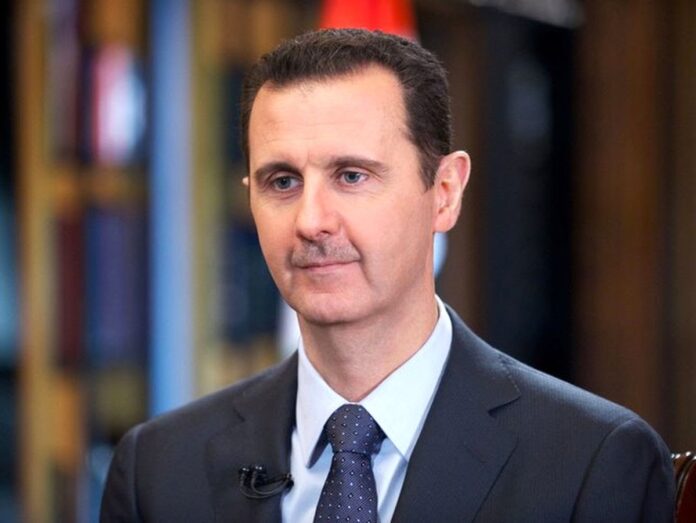
In a meeting with the Secretary General of the Popular Front for the Liberation of Palestine, General Command (PFLP—GC), Talal Naji, in Damascus on Saturday, Assad stated that the aggression forces’ economic blockade against the Syrian people aims to strike the popular structure that has withstood throughout the global war on Syria.

Syria has been subject to rounds of economic sanctions imposed by the United States, especially in recent years as the country is recovering from almost a decade of terrorism and war.

Elsewhere in his remarks, Assad pointed to the strategic impacts of “Operation Al-Quds Sword” – the Palestinian resistance groups’ 11-day retaliatory rocket and missile launches in response to Israel’s brutal bombing campaign of Gaza in May – on the conflict track with the Zionist enemy and hailed the role of resistance forces and Palestinian people, especially in Al-Quds and the occupied territories of 1948, in achieving this remarkable victory.

Tel Aviv launched a brutal bombing campaign against the besieged Gaza Strip on May 10, following Palestinian retaliation against violent raids on worshipers at Al-Aqsa Mosque and the regime’s plans to force a number of Palestinian families out of their homes at the Sheikh Jarrah neighborhood of East Al-Quds.

According to Gaza’s Health Ministry, 260 Palestinians were killed in the Israeli offensive, including 66 children and 40 women. Nearly 2,000 others were also wounded.

In response, Palestinian resistance movements, chief among them Hamas, launched Operation Al-Quds Sword and fired more than 4,000 rockets and missiles into the occupied territories, killing 12 Israelis.

Apparently caught off guard by the unprecedented barrage of rockets from Gaza, Israel announced a unilateral ceasefire on May 21, which Palestinian resistance movements accepted with Egyptian mediation.

Naji, for his part, hailed Syria’s firm stance on support for the Palestinian cause under the leadership of Assad and expressed appreciation for the great sacrifices made by the Arab country’s people and army despite all the difficult and hard circumstances and pressures.

The Palestinian official emphasized that the unity and resistance of the Palestinian people are the only way to respond to divisive schemes.

Assad and Naji also exchanged views about the latest developments in Syria and Palestine and the related Arab and regional issues.

Source: SANA

Report: US post-9/11 wars cost 900,000 lives, $8 trillion

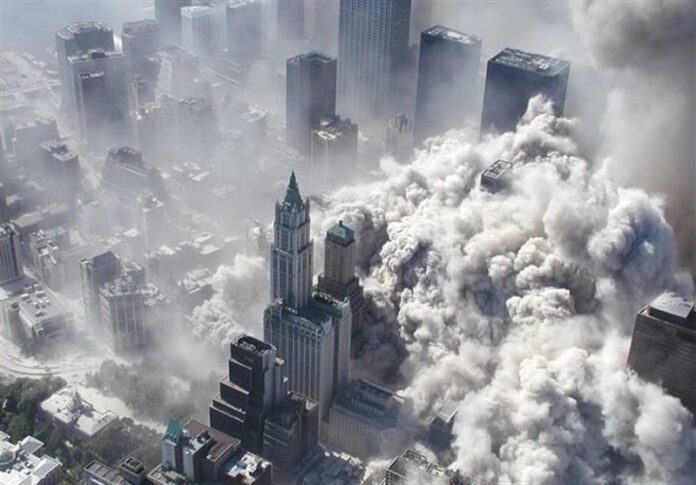
Brown University’s Costs of War Project released a report saying that the total budgetary costs and future obligations of the US post-9/11 wars are “about $8 trillion in current dollars”, Sputnik reported. 

This figure includes more than $2.1 trillion spent by the Pentagon, $1 trillion in interest payments, and $2.2 trillion on future health care obligations through 2050. 

The report also found that about 929,000 people had been killed in the US wars on terror.

“There has been no single US government estimate for the total costs of the post-9/11 wars,” the study points out, explaining the significance of the project, which was launched about 10 years ago to find out how much Washington’s wars in Afghanistan, Iraq and Syria cost the US.

The report highlights that instead of a comprehensive picture, different government agencies used to provide partial estimates of what has been spent over the years.

For instance, the Department of Defense has been required to release estimated costs of the wars in Afghanistan, Iraq and Syria to each taxpayer since FY2017. In March 2021, the Pentagon stated that emergency/overseas contingency operations (OCO) in the aforementioned states cost a total of $1.596 trillion or $8,094 per each American taxpayer through FY2020. However, the DoD admitted that “these amounts exclude non-Department of Defense classified programmes”.

Likewise, the Special Inspector General for Afghanistan Reconstruction August 2021 report concluded that the Department of Defense has spent $837 billion on warfighting over the last 20 years in the Central Asian state. However, if one takes into account about $145 billion allocated by the US government for Afghanistan’s “nation-building effort”, as well as other major costs, including costs of caring for the post-9/11 war veterans, this figure soars to $2 trillion, according to the researchers.        


Thus, in order to calculate the overall federal war expenses, The Costs of War Project looked into “the types of budgetary costs of the US post-9/11 wars, how the post-9/11 operations have been funded, and the long-term implications of past and current operations on spending”.

Harvard University professor Linda Bilmes, the leading researcher, explained during a Wednesday virtual presentation that the Americans “haven’t felt” the burden of the $8-trillion price tag because the wars have been financed through debt. In contrast, during the Korean War (1950-53) and the war in Vietnam (1955-1975) the US used to raise taxes to fund wars which created a noticeable burden for the Americans.

In addition to that, interest rates have been nearly record-low since the 2008 financial crisis which made it easier for the federal government to fund overseas military operations, according to the professor. However, if these rates increase to historical averages of 5.5 percent, the US government might default on its obligations to American veterans, warned Bilmes.

“Most Americans pay lower taxes now than before the wars started,” she said as quoted by The Epoch Times, adding, “If [voters] don’t think about how you pay for that, then it’s easy to continue wars for a long time.”

Costs of War Project co-director Catherine Lutz emphasized the importance of the correct evaluation of the consequences of US wars, stressing that otherwise the country risks entering another endless and wasteful conflict.

“Unless we have a new way of telling the story of what the United States does when it goes to war, we’re going to find ourselves in another Afghanistan,” Lutz highlighted, as cited by the media outlet.

Source: RIA Novosti

Iran MP Urges Govt. to Prevent Return of Samsung, LG

“I have heard Samsung and LG companies are going to return to Iran under strange circumstances,” said Alireza Salimi.

“The day we were in need, Samsung and LG left Iran. It would be unacceptable if, with the window opened by the US, South Koran products are supposed to enter our country, instead of the Iranian money frozen there.”

He added that 500 factories are now manufacturing home appliances inside Iran, which makes the return of foreign companies questionable.

“The government, with its special attention in this area, should take note and know that companies such as Samsung and LG, which have betrayed Iran, should not be easily allowed to return to our country,” Salimi noted.

Parliament speaker Mohammad Baqer Qalibaf also threw his weight behind Salimi on the issue.

“In the field of home appliances industry, both in terms of quantity and quality, great strikes have been taken in our country, and the government and the parliament will never allow domestic products to be weakened, seeing their high quality, and will not allow the manufacturing of Iranian products to be disrupted,” he said.

South Korea froze over $9 billion in Iranian assets after the US withdrew from the Iran nuclear deal in 2018 and re-imposed its unilateral anti-Iran sanctions.

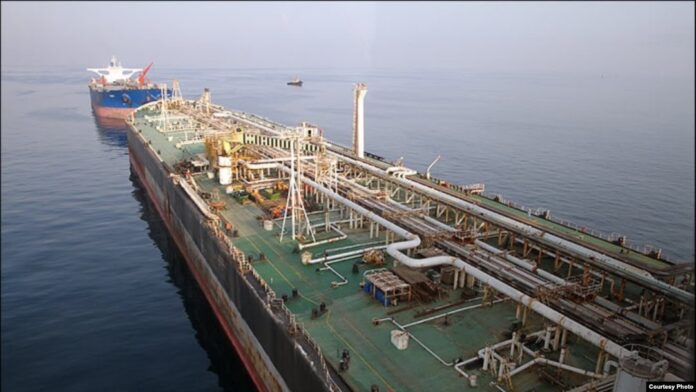
MP: US siege on Lebanon to break, thanks to Iran fuel tanker

“As the Lebanese are preparing to receive Iranian fuel with the arrival of the first ship, the doors of the American blockade have begun to break, and options are opened for Lebanon to alleviate the impact of its crisis, after the American administration was forced to back down from its threats and maximum pressure in the face of the will of the Lebanese people,” Hassan Fadlallah said in a statement on Saturday.

He added that the US administration tried to use the siege to impose its will on Lebanon, before it came to realize  the negative and reverse impacts of its failed policies.

It did not take into account the facts pertaining to Lebanon until it suffered a new political defeat in the face of the declared policy that the Iranian ship is considered Lebanese territory, he added.

“The cargo of this ship will be a precise bullet that will break the financial, economic and political siege imposed on our people, especially as it will reach those who need it through a transparent and publicized mechanism in which there is no place for monopolists, smugglers, policy brokers and American investment associations, who traffic in people’s pain,” Fadlallah said.

Apart from providing Lebanon with its needed fuel, the official stated, the shipment challenged US self-proclaimed right to decide on Lebanon’s official relations with Syria, and its prevention of Lebanon’s electricity and gas imports through Syria.

“It is the veto that we have long demanded to challenge because submitting to it causes severe harm to Lebanon’s economy and national interests,” the lawmaker noted.

Fadlallah added that Hezbollah’s humanitarian initiative is one of the many cards of strength that the resistance possesses to defend the rights of the Lebanese people to a decent life.

It also constituted an unexpected surprise for the US administration which revealed the hollow policy of intimidation with sanctions that does not work, he said.

The first ship containing Iranian fuel reportedly entered Syria’s territorial waters on Thursday to unload its cargo, which will be then transferred to Lebanon via tankers. Informed sources noted that two other Iranian ships will also deliver their cargo to Lebanon through the same mechanism.

Fuel shortages in Lebanon have forced businesses and government offices to close, threatening to cause blackouts at hospitals and halt transportation and other vital sectors in the Arab country.

The plan to buy Iranian fuel, announced by Secretary General of Lebanon’s Hezbollah resistance movement Seyed Hassan Nasrallah in mid-August, is seen as a watershed in the US sanctions, which have severely affected Lebanon and Iran alike.

In his announcement, Nasrallah warned the US and Israel that Hezbollah would consider the tanker and next Iranian ships as “Lebanese territory” from the moment they sail. He later stressed that the Lebanese resistance group did not have any political aspirations by importing fuel from Iran.

In a Friday phone call with Gebran Bassil, the former Lebanese minister of foreign affairs and leader of the Free Patriotic Movement, Iran’s Foreign Minister Hossein Amir-Abdollahian said Tehran is ready to sell more fuel to the Lebanese government and businessmen if need be.

Amir-Abdollahian added Iran sets no limitation to the expansion of mutual relations with Lebanon and is ready to sell more fuel production to “new customers”.

Source: Press TV