Monday, December 22, 2025
Home Blog Page 2337

Sudanese call for dissolution of transitional government

Sudan is grappling with the biggest political crisis in its two-year transition to civilian rule, following a massive demonstration on Saturday that brought thousands of pro-military protesters to central Khartoum, demanding the government to be dissolved.

The military and civilian groups have been sharing power in the east African country in an uneasy alliance since the toppling of long-standing President Omar al-Bashir, who was ousted by the army in April 2019 following weeks of mass protests.

Saturday’s protest was organised by a splinter faction of the Forces for Freedom and Change (FFC), a civilian alliance which spearheaded the anti-Bashir protests and became a key plank of the transition.

Outside the presidential palace, the protesters chanted: “We will stay put where we are… we want the dissolution of this government.”

Saturday’s protest comes after Prime Minister Abdalla Hamdok on Friday unveiled a road map to end what he described as the country’s “worst and most dangerous” political crisis in its two-year transition.

Groups advocating for civilian rule have called for protests on Thursday 21 October.

Support for the transitional government has waned in recent months in the face of its tough economic reforms, which have included the slashing of fuel subsidies and a managed float of the Sudanese pound.

Inflation has skyrocketed, reaching 422 percent in July, before easing slightly in August and September.

Hamdok, a former UN economist, has been facing calls to dissolve his government following the International Monetary Fund’s (IMF) approval of a $2.5bn loan and debt relief agreement that would see Sudan’s external debt reduced by some $50bn.

However the harsh reforms have hit the pockets of many Sudanese who are now struggling with poverty, shortages of medicines and power cuts.

On Saturday evening, demonstrators set up tents outside the presidential palace and chanted “one army, one people” and “the army will bring us bread”.

Abdelnaby Abdelelah, a protester from the eastern state of Kassala, told AFP that the government has overlooked other states beyond Khartoum.

“We want a government that knows about the things going on in the east,” he said.

“We are marching in a peaceful protest and we want a military government,” added Enaam Mohamed, a housewife.

The current government has failed to bring the people “justice and equality”, stated 50-year-old Abboud Ahmed, who wants the military to be in charge.

The IMF-mandated reforms so far have caused food and transportation costs to surge, forcing Sudanese people to make sacrifices.

Since September, demonstrators in eastern Sudan have blocked trade through the key hub of Port Sudan.

On 21 September, the government said it thwarted a coup attempt and placed the blame on sympathisers of the Bashir regime, which was dominated by Islamists and the military.

Since a coup attempt in September, Sudan’s military and civilian power-sharing partners have been locked in a war of words, with military leaders demanding the reform of the cabinet and ruling coalition. Civilian politicians accused the military of aiming for a power grab.

“The coup attempt opened the door for discord, and for all the hidden disputes and accusations from all sides, and in this way we are throwing the future of our country and people and revolution to the wind,” Hamdok noted in a speech on Friday.

Hamdok described the current conflict as not between the military and civilians but between those who believe in a transition towards democracy and civilian leadership and those who do not.

“I am not neutral or a mediator in this conflict. My clear and firm position is complete alignment to the civilian democratic transition,” he added.

Nevertheless he said he had spoken to both sides, and presented them with a road map that called for the end of escalation and one-sided decision-making and a return to a functioning government.

He emphasised the importance of the formation of a transitional legislature, reform of the military, and the expansion of the base for political participation.

Referring to an ongoing blockade of the country’s main port in the East of the country by protesting tribesmen, Hamdok described their grievances as legitimate while asking that they re-open the flow of trade. He also said an international donors’ conference to benefit the region was being organised.

The mainstream faction of the FFC said, “The current crisis is not related to dissolution of the government or not”, adding, “It is engineered by some parties to overthrow the revolutionary forces… paving the way for the return of remnants of the previous regime.”

As tensions have risen, a number of international envoys have rushed to visit the country in order to ease the strains between the military and civilian leadership.

Earlier this month, a United Nations source disclosed that Volker Perthes, special representative of the UN Secretary General for Sudan, has been in Khartoum to undertake a series of meetings with civil and military officials in the transitional government.

However some Sudanese analysts have played down international involvement, saying the only way to protect the transition and democracy was through the people of Sudan who had made the revolution.

Iran announces pilot activity of national cryptocurrency

Ali Salehabadi said a joint committee between the government and the Central Bank will amend the law of the Central Bank for this purpose.

Salehabadi earlier attended a meeting with the Iranian Parliament’s Economic Commission and gave a report to lawmakers on the currency market as well as the economic sector and the banking system of Iran.

The governor of the Central Bank cited the members of the Economic Commission as saying national and foreign cryptocurrencies are now commonplace around the world, and that they demanded a joint working group be formed to determine everyone’s duties regarding cryptocurrencies. Salehabadi noted that the chairman of the Economic Commission emphasized that joint committees should be formed on issues raised by Parliament and the government to solve problems.

To this end, Salehabadi said, there is a need to update the law of the Central Bank.

Injured Iranian eagle flying free after rehabilitation

He said the rare bird of prey was freed in the mountains of the province after recovering from the injury. The official noted that the Golden eagle is the environmental symbol of Alborz but the species is in danger of extinction.

The director-general of Alborz Environment Department added that it is highly important to preserve the environment of animals and rare birds and that necessary measures must be put in place to protect this valuable indigenous bird.

He added that one of the threats the Gold Eagles are facing is the theft of eaglets from their coops and their sale.

Venezuela govt. halts negotiations with opposition

On Saturday, Venezuela’s National Assembly President Jorge Rodriguez announced the withdrawal of the Bolivarian government delegation from the negotiating tables with the opposition sector in Mexico as an act of protest against the extradition of diplomat and member of the delegation Alex Saab to the U.S.

Rodriguez condemned the attitude assumed by Cape Verde’s authorities, who disregarded several rulings from regional and international organizations demanding Saab’s release.

He recalled that the Economic Community of West African States (ECOWAS) Tribunal, the United Nations (UN), and the United Nations Human Rights Committee (OHCHR) demanded the suspension of Saab’s extradition and made a call on violations to the diplomat’s human rights.

The head of the Venezuelan delegation to the dialogues with the opposition regretted the diplomat has been subjected to torture, including refusals to allow family visits and proper medical attention.

“This refusal to halt the process is evidence of Cape Verde and the United States’ collusion in the continuing campaign of persecution against the Bolivarian nation,” Rodriguez said.

“This harmful action against the International Law constitutes a new act of aggression against Venezuela given that Saab is a full member of the dialogue and negotiation process taking place in Mexico,” he added.

Highlighting that Saab’s abduction represents an aggression against the Vienna diplomatic Conventions, Saab’s Special Envoy status, and the representatives to the political talks, Rodriguez informed that the Venezuelan government would not attend the round of negotiations scheduled for Sunday.

The chairman of the Venezuelan parliament held Colombia’s President Ivan Duque, U.S President Joe Biden, and the far-right Venezuelan opposition representatives responsible for any setbacks in the talks due to the diplomatic incident. He warned that these people only want the failure of Venezuelan subnational elections in November.

“Alex Saab’s life is in danger in the hands of a judicial system instrumentalized to attack Venezuela. We demand his immediate release,” Rodriguez stressed to reaffirmed the Bolivarian government’s commitment to continue Saab’s defense in all international human rights instances.

Iranian Majid Air Defense System Capable of Hitting Targets with High Precision

In an article, the Tasnim News Agency reported that Majid was unveiled in a military parade back in April, 2021. It was equipped with rather small missiles as well as an electro-optical system to detect targets. The system was mounted on a tactical vehicle. It was during that event where the general features of the Majid air defense system became known.

The system has a range of 8000 meters and can detect targets at a maximum altitude of 6000 meters. It can get ready to shoot in three seconds. The information shows that Majid is classified among short-range systems and can operate sooner than artillery and shoulder-fired systems.

As mentioned before, Majid is mounted on a tactical vehicle with off-road capabilities, and can be redeployed in a very short time. This can also be carried by transport aircraft.

Majid is fitted with thermal-optical cameras, meaning it can operate in any climatic conditions, especially at a time of electronic warfare.

The Majid air defense system has been developed to tackle targets at low altitude. It means the system should be able to spot the target and shoot quickly. It should also be able to strike the target with great precision.

Such features are important for all air defense systems, but are particularly significant for a system which serves as the last layer of defense in a strategic region.

Majid is likely to be equipped with explosives as images of an explosion are seen in footage showing the moment a target is destroyed by the system.

The missile fired by the system travels a considerable duration of its overall flight time at ultrasonic speed.

US wasted millions of doses of Covid vaccine

At least 15m doses were scrapped in the US between March and September, according to one analysis of Centers for Disease Control and Prevention (CDC) data. A separate investigation found 1m doses were discarded in 10 states between December and July.

States continue tossing unused shots. Louisiana has thrown out 224,000 unused doses of the Covid vaccines – a rate that has almost tripled since the end of July, even as a deadly fourth wave of the virus gripped the state. Some of the lost doses came from opening and not finishing vials, but more than 20,000 shots simply expired.

Thousands of doses are reportedly wasted each day in Wisconsin. In Alabama, more than 65,000 doses have been tossed; in Tennessee, it’s almost 200,000.

The wasted doses represent a small fraction of the number of shots administered in these states – in Louisiana, for instance, 4.4m doses have been given out successfully.

But the news comes as millions of people around the world wait for their first doses. Only 1% of the populations of low-income countries had received first shots as of July, compared with more than half of those living in a handful of high-income countries.

Many of the discarded doses came from pharmacies. In May, two pharmacy chains had wasted more doses than US states, territories and federal agencies combined, for almost three-quarters of tossed doses. Now, at least 7.6m discarded doses come from four major pharmacies: Walgreens, CVS, Walmart and Rite Aid.

There are multiple reasons why doses have been wasted: sometimes a vial is cracked or doesn’t contain as many doses as promised; sometimes needles malfunction; freezers break down or the power goes out. Frequently, people don’t show up for appointments, and the dose set aside for them in a vial isn’t used.

But as vaccinations across the country have stalled after peaking in mid-April, a growing issue is simply that the vaccines are expiring amid vaccine hesitancy in the US that is more widespread than first imagined.

Before June, a little over 2m doses had gone to waste, NBC News reported. But over the summer, those figures surged – alongside the virus itself – sixfold as doses expired and vaccinations flagged.

The Biden administration has pushed to use the US vaccine stockpile for boosters, sometimes clashing with scientific agencies on who needs the added protection of an additional shot.

Officials are also working with vaccine manufacturers to reduce the number of doses in each vial.

In the face of global inequities, it’s not as simple as states donating unused vaccines. The doses already distributed to states can’t be repurposed internationally because of bureaucratic and safety concerns around storing the vaccines correctly.

Joe Biden has vowed to vaccinate 70% of the world in the next year, and has committed to donate several million doses for use abroad. But in the meantime, many countries are struggling to provide shots to the most vulnerable and those working on the frontlines of the pandemic, while Americans refuse the immunizations.

Manufacturers should also scale up production to address global shortages, the administration has said. Moderna, for instance, needs to “step up as a company” when it comes to global production of vaccines, David Kessler, the Biden administration’s chief science officer of the Covid-19 response, said on Wednesday.

Iran MPS Urge Govt. Planning to Best Benefit from SCO Membership

The MPs thanked the government for its look to the east saying Iran’s access to Central Asia and the Sea of Oman, in the north and in the south, is a key potential that can be used in the Shanghai Cooperation Organization.

“The MPs … propose that to obtain a minimum 2.5 percent share in the SCO’s GDP, the esteemed government puts in additional efforts into construction and launching of a railway between [the southeastern Iranian port city of] Chabahar and Central Asia and specifically task the Ministry of Road and Urban Development to implement this critical project,” they said in their letter.

Members of the Shanghai Cooperation Organization officially approved Iran’s full membership in the regional bloc on September 17 on the twentieth anniversary of the establishment of the organization.

The SCO is a political, economic, and security alliance and is the world’s largest regional organization in geographic scope and population, covering three-fifths of the Eurasian continent and accounting for 40 percent of the world population, and more than 20 percent of the global GDP.

UK to ramp up security for MPs following murder of lawmaker

MPs must not be “cowed” by the threat of violence in the wake of the murder of Sir David, home secretary Priti Patel has said.

Patel has ordered a police review of MPs’ security following the killing at a constituency surgery in Sir David’s Southend West seat, and is expected to address the House of Commons on Monday.

Speaking after laying a wreath at the scene of Friday’s tragedy in Leigh-on-Sea, Essex, Patel described Sir David as “a man of the people, killed doing a job that he loved, serving his constituents as an elected democratic member”.

Following Sir David’s death, there have been calls for an end to face-to-face surgery sessions at which MPs meet constituents to discuss their concerns and hear their opinions, usually on Fridays when they are free of parliamentary duties.

Conservative backbencher Tobias Ellwood has urged colleagues to call off in-person surgeries until the completion of the security review, while veteran MP Sir Bernard Jenkin said there was no justification in the age of online video conferences to continue a practice which is “frankly not really necessary”.

Patel would not be drawn on any security changes being planned, but said that MPs must not let violence of the kind seen on Friday “get in the way of our functioning democracy”.

“I’ve convened meetings yesterday, I’ve been with the Speaker of the House and with the police and our security services to make sure that all measures are being put in place for the security of MPs so that they can carry on with their duties as elected democratic members,” she stated.

“I think it’s important for all members of parliament… (that) we carry on doing our duties. We live in an open society, a democracy where we are accessible to the people. That is right and proper,” she added.

“We have measures in place to safeguard our MPs. There have been a lot of lessons that have been learned over recent years following the appalling murder of our former dear colleague Jo Cox. Those measures are always under review,” she continued.

“There is direct communication taking place right now with all 600-plus MPs as to their whereabouts, what they’re doing in their constituencies, to make sure that they are protected, so that they can go around serving their constituencies in that open way, but in a safe way,” she noted.

“It’s important that that continues,” she stated.

Patel said it was “absolutely” possible to balance MPs’ security with the need for constituents to have access to their representatives.

“David was a dear friend of mine, a loyal friend and colleague and man of the people,” she said, adding, “He was killed serving his own constituents and constituency.”

“We will carry on, we live in an open society, a democracy. We cannot be cowed by any individual or any people with motives to stop us from functioning to serve our elected democracy. We have measures in place and we will continue to review and strengthen measures,” she underlined.

“We will continue to absolutely stand by the principles that we are elected by, to serve our constituents in the open way in which we have been doing, but also recognising that there are safety and protection measures that we have to undertake too,” she underscored.

Police forces have contacted all 650 MPs following Sir David’s death to offer reassurance and support, with some deploying officers to public events MPs were attending.

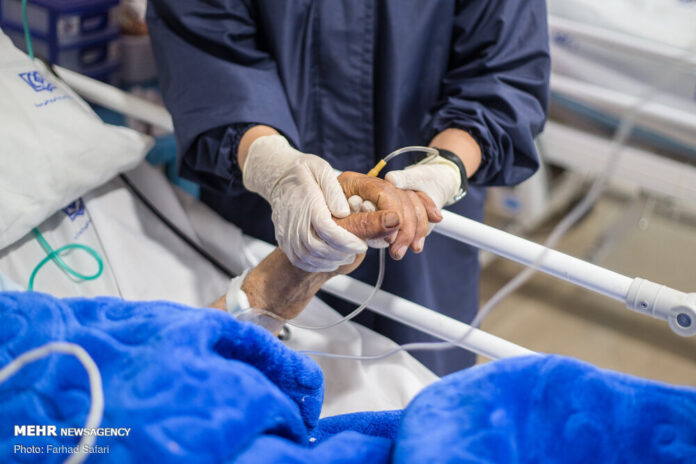
Administering Covid booster shot starts in Iran

Seyyed Mohsen Zahraei said the next group to get the third dose of Covid vaccine are other medical staff. 

He added that after the medical staff, the chemical war disabled and the 50% disabled will get the third dose and then people of all age groups. 

Zahraei said the booster shots are already being administered. The vaccine type depends on the first and second doses. 


Zahraei noted that people can get the booster shot six months after getting their second dose. All people must get the booster shot as the Covic vaccine immunity decreases over time.  

Zahraei also said Iran hopes to vaccinate the majority of people in the next couple of months as a huge quantities of vaccines have been imported from abroad. 

The downward trend of Covid deaths and infections in Iran has been attributed to the rising rate of vaccination that accelerated a couple of months ago. 

Healthcare centers and many hospitals across Iran have been working round the clock to inoculate the entire population. 

Now only less and less cities in Iran are marked red, which is the highest level of risk from Covid. However, officials are raising the alarm over the sixth wave of the pandemic.

Covid has so far killed over 120 thousand people in Iran since the pandemic started. 

China tests ‘nuclear capable hypersonic missile’

China has tested a new space capability with a hypersonic missile, according to the Financial Times (FT).

The report, citing multiple sources familiar with the test, said on Saturday that Beijing launched the nuclear-capable missile in August.

The missile circled the Earth at low orbit before speeding towards its target, according to the sources, “demonstrating an advanced space capability that caught US intelligence by surprise”.

Three people briefed on the intelligence told the FT that the missile missed its target by more than 20 miles (32 kilometres).

However, two added the “test showed that China had made astounding progress on hypersonic weapons and was far more advanced than US officials realised”.

The FT’s sources stated the hypersonic glide vehicle was carried by a Long March rocket, launches of which China usually announces, though the August test was kept under wraps.

Pentagon spokesman John Kirby said he would not comment on the specifics of the report.

But he added, “We have made clear our concerns about the military capabilities China continues to pursue, capabilities that only increase tensions in the region and beyond. That is one reason why we hold China as our number one pacing challenge.”

Along with China, the United States, Russia and at least five other countries are working on hypersonic technology.

Hypersonic missiles, like traditional ballistic missiles which can deliver nuclear weapons, can fly at more than five times the speed of sound.

But ballistic missiles fly high into space in an arc to reach their target, while a hypersonic flies on a trajectory low in the atmosphere, potentially reaching a target more quickly.

Crucially, a hypersonic missile is manoeuvrable, making it harder to track and defend against.

While countries like the US have developed systems designed to defend against cruise and ballistic missiles, the ability to track and take down a hypersonic missile remains questionable.

China has been aggressively developing the technology, seeing it as crucial to defend against US gains in hypersonic and other technologies, according to a recent report by the US Congressional Research Service (CRS).

The reported test comes as US-China tensions have mounted and Beijing has stepped up military activity near Taiwan, the self-ruled US-aligned democracy that Beijing considers a breakaway province.