Monday, December 22, 2025
Home Blog Page 2338

Administering Covid booster shot starts in Iran

Seyyed Mohsen Zahraei said the next group to get the third dose of Covid vaccine are other medical staff. 

He added that after the medical staff, the chemical war disabled and the 50% disabled will get the third dose and then people of all age groups. 

Zahraei said the booster shots are already being administered. The vaccine type depends on the first and second doses. 


Zahraei noted that people can get the booster shot six months after getting their second dose. All people must get the booster shot as the Covic vaccine immunity decreases over time.  

Zahraei also said Iran hopes to vaccinate the majority of people in the next couple of months as a huge quantities of vaccines have been imported from abroad. 

The downward trend of Covid deaths and infections in Iran has been attributed to the rising rate of vaccination that accelerated a couple of months ago. 

Healthcare centers and many hospitals across Iran have been working round the clock to inoculate the entire population. 

Now only less and less cities in Iran are marked red, which is the highest level of risk from Covid. However, officials are raising the alarm over the sixth wave of the pandemic.

Covid has so far killed over 120 thousand people in Iran since the pandemic started. 

China tests ‘nuclear capable hypersonic missile’

China has tested a new space capability with a hypersonic missile, according to the Financial Times (FT).

The report, citing multiple sources familiar with the test, said on Saturday that Beijing launched the nuclear-capable missile in August.

The missile circled the Earth at low orbit before speeding towards its target, according to the sources, “demonstrating an advanced space capability that caught US intelligence by surprise”.

Three people briefed on the intelligence told the FT that the missile missed its target by more than 20 miles (32 kilometres).

However, two added the “test showed that China had made astounding progress on hypersonic weapons and was far more advanced than US officials realised”.

The FT’s sources stated the hypersonic glide vehicle was carried by a Long March rocket, launches of which China usually announces, though the August test was kept under wraps.

Pentagon spokesman John Kirby said he would not comment on the specifics of the report.

But he added, “We have made clear our concerns about the military capabilities China continues to pursue, capabilities that only increase tensions in the region and beyond. That is one reason why we hold China as our number one pacing challenge.”

Along with China, the United States, Russia and at least five other countries are working on hypersonic technology.

Hypersonic missiles, like traditional ballistic missiles which can deliver nuclear weapons, can fly at more than five times the speed of sound.

But ballistic missiles fly high into space in an arc to reach their target, while a hypersonic flies on a trajectory low in the atmosphere, potentially reaching a target more quickly.

Crucially, a hypersonic missile is manoeuvrable, making it harder to track and defend against.

While countries like the US have developed systems designed to defend against cruise and ballistic missiles, the ability to track and take down a hypersonic missile remains questionable.

China has been aggressively developing the technology, seeing it as crucial to defend against US gains in hypersonic and other technologies, according to a recent report by the US Congressional Research Service (CRS).

The reported test comes as US-China tensions have mounted and Beijing has stepped up military activity near Taiwan, the self-ruled US-aligned democracy that Beijing considers a breakaway province.

Report: Israel establishes secret center to survey Iran nuclear activities

The Israeli army has established intelligence and analysis base to monitor Iran’s activities, especially related to its nuclear program, the Walla news website reported.

The highly secret base gathering Israeli intelligence officers and analysts was launched in recent months as a result of reforms in interdisciplinary intelligence. They identify and analyze the covert actions by Tehran allegedly aimed at concealing the nuclear program, according to the report.

Walla said, citing a high-ranking Israeli army officer, that Israel had collected enough information about the Iranian nuclear program, adding that the base employees use artificial intelligence and the latest technologies to collect and analyze data.

The base also plays an important role in identifying the Iranian military presence in Syria and striking pro-Iranian armed formations there, according to the news outlet.

Tehran has reiterated that the Israeli regime is in no position to make statements about Iran’s nuclear energy program.

“This regime is sitting on hundreds of nuclear warheads, is not a member of the NPT, and refuses to join this treaty or any other international monitoring regime,” The Iranian Foreign Ministry spokesman Saeed Khatibzadeh told France 24.

The spokesman explained that the Islamic Republic of Iran is a signatory to the Treaty on the Non-Proliferation of Nuclear Weapons, has fully complied with its obligations, and 15 consecutive reports by the International Atomic Energy Agency show Iran has fully and sincerely adhered to the 2015 nuclear agreement.

Khatibzadeh made the remarks in response to a question about the Israeli prime minister’s claim during his address to the United Nations General Assembly that Iran’s atomic program has quote crossed all red lines.

Iran has also warned the Israeli regime against any miscalculations about, and possible military adventurism against the Islamic Republic, including its nuclear program.

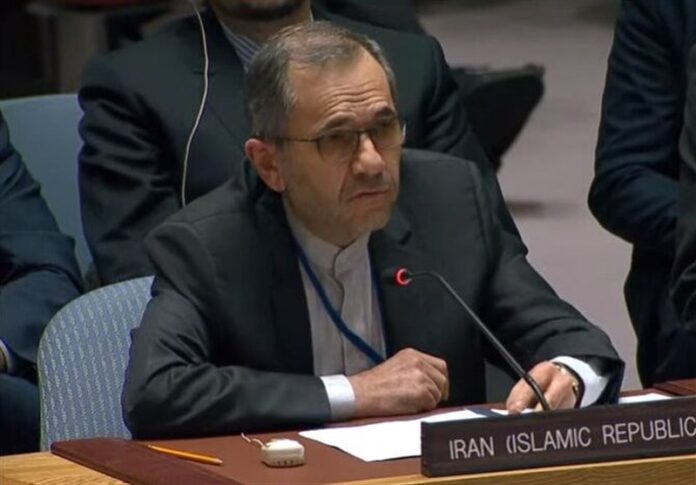
Iranian Ambassador to the United Nations Majid Takht-Ravanchi issued the warning in a letter to the UN Security Council in response to Tel Aviv’s recent threats.

“Over the past months, the number and intensity of the Israeli regime’s provocative and adventuristic threats have constantly increased and reached alarming levels,” wrote the letter.

“Its last case came from the head of the regime’s military, who has threateningly said that operational plans against Iran’s nuclear program were expanding, and that operations to destroy Iran’s capabilities on different fronts will continue at any time,” Iran’s ambassador noted in the letter.

He added Iran has, in several letters, already expressed its objection to the UN Security Council over Israel’s previous threats.

“Such blatant and systematic threats by the Israeli regime against one of the founding members of the United Nations amounts to gross violation of international rights, particularly … the UN Charter,” he continued.

“The fact that the Israeli regime keeps ‘destroying Iran’s capabilities’ undoubtedly proves that this regime was responsible for terrorist attacks against our peaceful nuclear program in the past,” he added.

“Given the evil history of the Israeli regime’s destabilizing methods in the region as well as its covert operations against Iran’s nuclear program, this regime should be tackled and made to halt all its threats and disruptive behaviour,” he said.

Macron decries ‘inexcusable’ 1961 massacre of Algerians in Paris

French President Emmanuel Macron / Photo by Levon Bliss for Forbes

Macron on Saturday condemned as “inexcusable” the massacre of hundreds of Algerian demonstrators in Paris 60 years ago by French police.

Macron, in a statement, recognized and admitted to state violence on Oct. 17, 1961, where 300 peaceful Algerian protesters were killed.

Although he did not issue a formal apology, the presidential office said he admitted that “the crimes committed that night under the authority of (Paris police prefect) Maurice Papon are inexcusable for the Republic.”

France looks at its entire history with lucidity and recognizes its established responsibilities, the statement added.

Until now, French authorities had denied or concealed the role of police in the suppression and killing of peaceful demonstrators.

In a tribute to victims who were killed and drowned in the Seine River, Macron laid a wreath at the foot of the Pont de Bezons near Nanterre in northern Paris, the site of the tragedy. He also interacted with the families of victims who were present.

The protests were launched by the French wing of Algeria’s National Liberation Front (FLN) party against a curfew ordered by Papon prohibiting Algerians from venturing out to the streets in the evening.

In a brutal crackdown, police arrested more than 12,000 Algerians — the largest-ever roundup in a single day — and assaulted several hundred men and women, many of whom were killed and thrown into the Seine.

Historians have called the killings a massacre and the state action a coverup or “lies.”

Events leading up to the violence were promptly denied by police and state authorities.

Former Paris Mayor Bertrand Delanoe and previous President Francois Hollande earlier commemorated the day.

Macron’s homage on the 60th commemoration of the event follows the initiation of a series of symbolic gestures of rapprochement toward Algeria, which was colonized by France for 132 years. The Macron administration agreed to set up a “memories and truth” commission upon the recommendation of historian Benjamin Stora and officially recognized the torture and murder of Algerian revolutionary leader Ali Boumendjel by the French army. Macron also sought “forgiveness” from the harkis and their descendants. Hakri is the common term for Muslim Algerians who served in the French army during the War of Independence from 1954 – 1962.

Last week’s statement on Macron’s comments on the Ottoman empire’s occupation of Algeria prior to France, stirred a row and was slammed by Turkey as a cynical attempt by France to cover up its dark colonialist past.

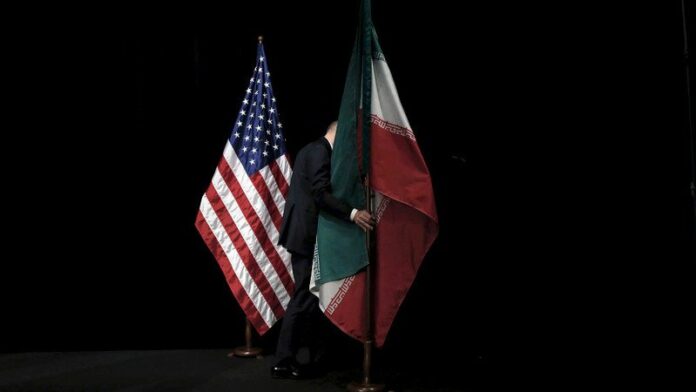
EU diplomat says Iran plans to resume nuclear talks but “not yet ready”

A delicate EU mission to Iran this week failed to secure a commitment from Tehran’s new hardline administration to resume negotiations over reviving a teetering nuclear deal, according to EU officials. 

“They are not yet ready for engaging in Vienna,” one senior EU official said, speaking on the condition of anonymity.

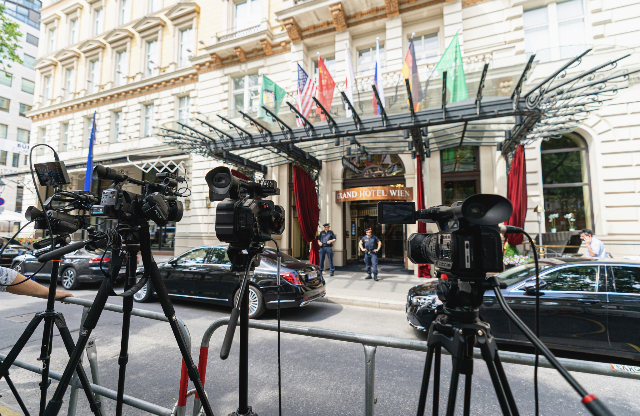
Instead, Iran committed to meeting with EU officials in Brussels in the coming weeks to discuss details of texts on the table at the end of the last round of talks in June, which took place in Vienna.

“It’s not a bad idea that we sit down in a long meeting with the new [Iranian] delegation and we go through all the texts … and we clarify with the new delegation different questions that they can have,” the senior EU official added.

The nuclear talks have been stalled since the election of hardline cleric Ebrahim Raisi to the Iranian presidency in June. Iran has repeated that it was ready to resume talks “soon” but has failed to commit to a date, leaving observers increasingly pessimistic. 

In an effort to jumpstart the process, Enrique Mora, the chief EU coordinator for the Iran nuclear talks, flew to Tehran on Thursday to meet Iranian Deputy Foreign Minister Ali Bagheri Kani for the first time since the new administration took office.

Iran has accelerated its nuclear program significantly in recent months, enriching uranium to higher levels and accumulating enough weapons-grade uranium that experts say it could build a nuclear bomb in just a few months — if it chose to do so.

Those developments combined with Iran’s stalling on talks is stoking concern among other signatories of Joint Comprehensive Plan of Action (JCPOA), as the Iran nuclear deal is formally called, as well as the U.S., which pulled out of the deal under former President Donald Trump. 

The original agreement scaled back international sanctions against Iran in exchange for commitments to curb nuclear activity. 

“We are getting close to a point at which returning to compliance with the JCPOA will not in and of itself recapture the benefits of the JCPOA, and that’s because Iran has been using this time to advance its nuclear program in a variety of ways,” U.S. Secretary of State Antony Blinken said after a meeting Wednesday with Israeli Foreign Minister Yair Lapid in Washington.

Despite the lack of commitment on a date, the senior EU official believed that Tehran has “absolutely decided to go back to Vienna.” 

However, another senior diplomat, who is familiar with the negotiations and who also spoke on the condition of anonymity, urged caution. 

“This seems to be a dead-end situation and I am very concerned,” the official told POLITICO, noting, “I hope I am wrong, but if things continue this way, we will end up nowhere.”

The possibility of upcoming talks in Brussels, the official added, “cannot substitute a resumption of indirect talks between Iran and the United States in Vienna, together with all remaining signatories of the deal.”

The diplomat expressed a widely held fear that Iran is merely stalling for time, saying, “I am left with the suspicion that the Brussels talks could be mere distraction.” 

In addition to Mora’s diplomatic push in Tehran, Blinken held a series of meetings in Washington this week with Iran at the top of the agenda. In addition to Lapid, Blinken met EU foreign policy chief Josep Borrell and the foreign ministers of Saudi Arabia and the United Arab Emirates. 

Underscoring the depth of concern, Blinken suggested the U.S. had not ruled out a military option if Iran doesn’t change course. 

“We will look at every option to deal with the challenge posed by Iran,” he continued.

Experts appear divided over whether Iran is bolstering its nuclear program to gain leverage ahead of a return to the Vienna talks, or if it has lost interest in coming back into compliance and is prepared to endure continued U.S. sanctions.

Iran will eventually come back to negotiations “as it does not want to be seen in the eyes of Russia and China as the inflexible party at fault,” said Ali Vaez, senior advisor and Iran project director at the International Crisis Group. 

“But if it comes to Vienna with new and bolder redlines, deadlock is guaranteed,” he added.

Vaez told POLITICO all parties need to take a fresh approach.

“Each should select two or three priorities that it deems essential to secure and in return show flexibility on the other side’s top requirements,” he said, adding, “They won’t be able to get everything they want, but they might be able to get enough of what they need.” 

Since President Joe Biden came to office in the U.S., there have been six rounds of talks with Iran in Vienna aimed at bringing both countries back into compliance with the 2015 nuclear deal. 

During the talks, the remaining parties to the agreement — Britain, China, France, Germany and Russia — served as intermediaries between the U.S. and Iran.

The nuclear accord is aimed at preventing Iran from building an atomic weapon. Iran insists that its nuclear program is peaceful.

On Thursday, the top Iranian nuclear negotiator said there are serious doubts about the real will of the US to fulfill its obligations under the Iran nuclear deal.

Bagheri made the remark on Thursday in a meeting with Mora in Tehran.

Bagheri also criticized the inaction of the European parties in fulfilling their obligations under the Iran nuclear deal and stressed the need for them to act responsibly.

He emphasized that Iran has always proved to be a responsible player in the international arena, while the behavior of the other side shows that it is far from being a responsible player.

Bagheri added that the side showing more responsibility is closer to the negotiating table.

Referring to the Iran nuclear talks in Vienna, Bagheri noted that achieving tangible results is important for Iran. He said Tehran is always ready for serious negotiations that result in a practical agreement and not merely a paper agreement.

Mora also explained his task as the EU Coordinator, announcing his readiness to cooperate with Iran and other parties in order to continue negotiations to achieve a result acceptable to all parties.

In the end, the two sides agreed that the consultations between them on issues of mutual interest would continue in the coming days in Brussels.

Bilateral relations, regional issues, including developments in Afghanistan and Yemen, as well as talks on lifting sanctions on Iran, were also discussed in the meeting between the Iranian and EU officials.

Analyst: West Should End Sanctions, Excessive Demands to Get Iran Back to Nuclear Deal

Mohammad Marandi, who is a US affairs expert, says the Europeans and Americans are after a nuclear deal other than the one agreed among the P5+1 in 2015.

“They want Iran to agree to a new deal, which contains altered and prolonged obligations, and is also tied to negotiations on regional issues and [Iran’s] missiles. Iran has so far resisted these demands and has not accepted them,” Marandi told IRNA.

“Iran is only ready for revival of the nuclear deal in its previously-agreed form on the condition that all sanctions are effectively removed. The visit by the EU’s deputy foreign policy chief and their repeated and futile insistence shows the weakness of Europe and the US, especially seeing the current crude oil prices of 80 dollars, which will possibly rise to 100 dollars, as well as the instability in Iraq, which is not in the interest of western countries, and can further shoot up oil prices.”

Marandi added that the sanctions on Iran, especially on its oil, are no longer sustainable and the western governments have no other means to pressure Iran.

“The US has withdrawn from Afghanistan and is seeking to draw down its presence in the Middle East and concentrate its focus on China to counter them. This calls for the US reducing its costs in West Asia, and deescalating and controlling tensions and confrontation with Iran comes into play here,” he said.

Marandi noted that things have changed in favor of Iran and the western governments need to fulfill their obligations under the nuclear deal in a verifiable manner if they want to see Iran return to its obligations under the accord.

Several American missionaries kidnapped in Haiti

Haiti officials say up to 17 American missionaries have been kidnapped in Haiti on Saturday, The New York Times reported.

The Christian missionaries were leaving an orphanage and traveling to the airport to drop some members off when they were kidnapped by a gang in Port-au-Prince.

Haitian officials were shocked by the act of abducting such a large group of Americans despite how common kidnappings have become in the country.

There are no other details regarding the kidnapping with the State Department telling the outlet it has no comment on the situation.

The Times notes gang activity and kidnappings have only grown in the country, with gangs taking children on their way to school and open firing at school buses.

Haiti has been in political upheaval for years, with the assassination of its president over the summer exacerbating the issues. 

In Port-au-Prince, some say gangs control half the city as officials fight over control of the government.

Haitian Prime Minister Ariel Henry says the country will have presidential and legislative elections in 2022 following the assassination of President Jovenel Moïse.

Talks on Iran Nuclear Deal to Resume in Coming Days: Iranian MP

Tuesday Talks in Vienna to Focus Merely on JCPOA Legal Discussions: Iran

Behrouz Mohebbi made the comment in a tweet on the sidelines of a closed-door meeting with Foreign Minister Hossein Amir Abdollahian while highlighting the effectiveness of the Strategic Action Plan to Lift Sanctions and Protect Iranian Nation’s Interests passed by the Iranian parliament.

“By the Iranian foreign minister’s own admission, the Strategic Action Plan to Lift Sanctions has drawn the attention of influential world countries,” he said.

“All of them have received a clear and serious message,” he explained.

“The government will begin the talks this week with this powerful tool,” he added.

Iran and world powers, including the US, Russia, China, France, Britain and Germany, struck the JCPOA on July 14, 2015. Under the accord, Iran agreed to scale back some of its nuclear activities in exchange for sanctions relief.

However, the US, under former President Donald Trump, unilaterally withdrew from the deal three years later and reinstated crippling sanctions on the Islamic Republic, although the country had been fully compliant with the agreement.

Iran and the remaining signatories to the JCPOA have already held six rounds of talks in Vienna, which began after the US administration of President Joe Biden voiced willingness to rejoin the nuclear agreement, three years after Trump’s withdrawal.

Negotiators took a break from the talks after Ebrahim Raeisi emerged victorious in Iran’s June presidential election, waiting for Iran’s democratic transition to take place in order for them to be able to continue the talks, as differences on key issues remained unresolved.

Since the beginning of the Vienna talks, Tehran has argued that the US—as the first party that violated the JCPOA—needs to take the first step by returning to full compliance with the agreement. Tehran also says it will resume all of its nuclear commitments under the deal only after the US lifts all the sanctions.

Taliban vows tightened security at mosques after bloody bombings

The Taliban announced their forces will be tasked with providing security at Shia mosques in in the southern city of Kandahar, in the wake of a “brutal attack” on Friday prayers, which killed at least 60 worshippers.

The head of Kandahar’s police, Maulvi Mehmood, said on Saturday that Shia mosques had so far been guarded by local volunteer forces with special permission to carry weapons. But after the Friday attack on the Bibi Fatima mosque, the Taliban would take charge of its protection.

“Unfortunately, they could not protect this area and in future we will assign special security guards for the protection of mosques and Madrasas,” Mehmood stated. 

He made the remarks as hundreds of people gathered on Saturday to bury the victims of the Friday bomb attack.

According to religious authorities, the toll from the bombing had reached 60. Health officials say the casualties could rise further as “some of the wounded are in a critical condition and we are trying to transfer them to Kabul”.

The massacre came just a week after another Shia mosque in Afghanistan’s northern city of Kunduz was targeted in a bombing during Friday prayers, leaving at least 150 people dead and over 200 others injured.

Both tragedies were claimed by a local affiliate of the Daesh Takfiri terrorist group, which has a long history of attacking Afghanistan’s Shia minority.

UN Secretary-General Antonio Guterres condemned the killings as a “despicable attack” and demanded those using violence to restrict Afghans’ religious freedom be brought to justice.

The Friday attack was the fourth since the Taliban took power in mid-August. The Taliban first ruled Afghanistan from 1996 to 2001, when the United States invaded the country and toppled the Taliban-run government on the pretext of fighting terrorism following the September 11 attacks in the US.

27th Shipment of COVID-19 Vaccines Arrives in Iran

The shipment has been provided through the good offices of the Iranian Red Crescent Society (IRCS).

“The order now in place with regards to the continuation of vaccine imports is the result of cooperation among relevant institutions together with effective monitoring and prudence by the first vice president, which saw the IRCS import 4 cargos containing a total of 24 million doses of vaccines over the past week,” said IRCS President Karim Hemmati.

“The IRCS has imported some 76 million 390 thousand doses of the Sinopharm coronavirus vaccine since May,” he said.

He noted 75% of the country’s population have been vaccinated against the COVID-19 virus so far.

“According to the health minister, the country’s senior officials have fortunately reached a consensus on the provision of vaccines and expansion of the inoculation drive,” he said.

“By continuing this trend, we can soon vaccinate the whole population,” Hemmati said.

He urged people to get vaccinated as soon as possible as, according to the National Coronavirus Task Force, the sixth peak of the disease looms large.

Now that mobile vaccination teams are operating across the nation 24/7, he said, all citizens across the country have the chance to get vaccinated and weather the sixth coronavirus surge.

According to the health ministry, more than 48 thousand people have received their first COVID-19 dose so far, with over 23.7 million getting their second jab as well.