Tuesday, December 30, 2025
Home Blog Page 2285

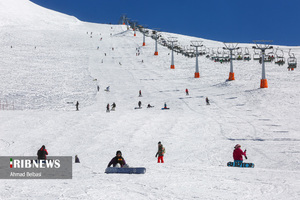
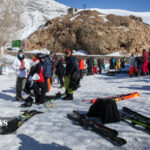
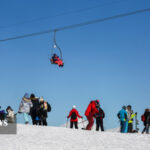
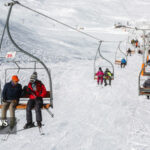
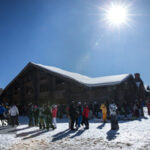
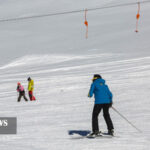
Famous Tehran international ski slope reopens


The resort was reopened on Monday morning in the presence of Ruhollah Emdad, CEO of Tochal Telecabin Company, and Abbas Nazarian, President of Iran’s Ski Federation. 

The resort, which is located at 3,800 meters above sea level, was reopened following the snowfall over the past two weeks.

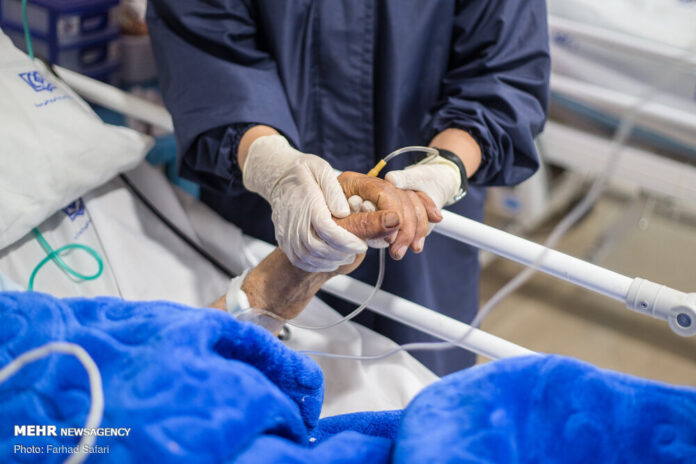
Covid deaths hit lowest since 5th wave of pandemic

The Health Ministry announced on Monday over the past 24 hours, 105 people died of the disease in Iran. The total death toll now stands at 128,272.

There were 7,494 new cases including 1060 hospitalizations. Since the start of the pandemic, 6,045,212 people have contracted Covid in Iran.

The majority of them, that is, 5,708,253 people have recovered from the disease.

Meanwhile, Iran is pushing ahead with its nationwide campaign to vaccinate citizens against the Coronavirus. The number of people who have received the first dose of vaccine has reached 55,860,065. This comes as 42,619,788 people have received the second dose. The number of people who have been given the third dose, also known as the booster shot, is 562,756. The total number of doses administered in Iran is 99,042,609.

Currently, 26 cities are marked red with the highest risk of Covid. 87 cities are orange, 222 yellow and 113 are blue. Blue cities face the least level of risk from Covid.

The high rate of vaccination has been credited for the falling number of deaths and rising number of blue cities. But the government has urged citizens to remain cautious as relaxing health protocols could shoot up new cases of Covid-19.

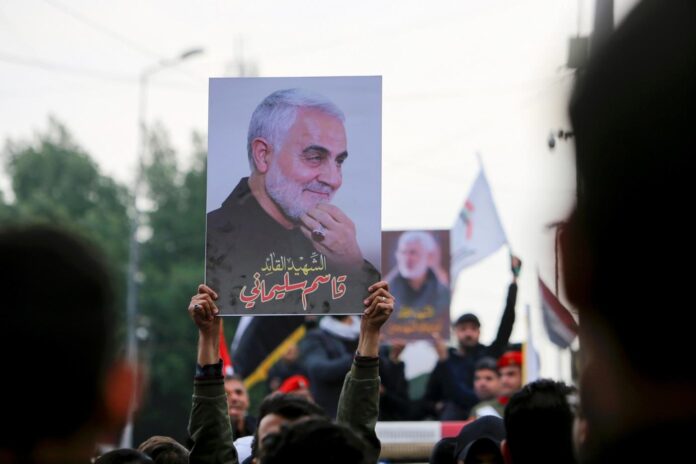
Ccommittee on Gen. Soleimani assassination to meet soon

Secretary of Iranian Judiciary’s Human Rights Council Kazem Gharibabadi made the announcement on Monday, stating that the joint committee on the investigation of the assassinations of Islamic Revolution Guards Corps (IRGC) Quds Force Commander and Iraq’s Second-in-Command of Popular Mobilization Unit (PMU), Abu Mahdi al-Muhandis, will hold the first session on November 24-25 in Iraq.

Earlier in October, Gharibabadi in his meeting with Iraqi Justice Minister Abdul Sattar Muhammad called for speedy identification and trial of those who ordered the assassination of Gen. Soleimani.

He further asked the Iraqi justice minister to investigate into the fast convening of the first session of that Committee to identify the culprits involved in that criminal act and put them to a fair trial in an Iraqi court.

It is worth mentioning earlier this year Iran filed a lawsuit against 47 other American officials identified as playing a role in the assassination of Lt. Gen. Soleimani, asking Interpol to arrest them and bring them to justice.

Former Iran’s IRGC Quds Force Commander and Iraq’s Second-in-Command of PMU were assassinated by the terrorist US forces in Iraq International Airport on January 3, 2020, at the behest of former US President Donald Trump.

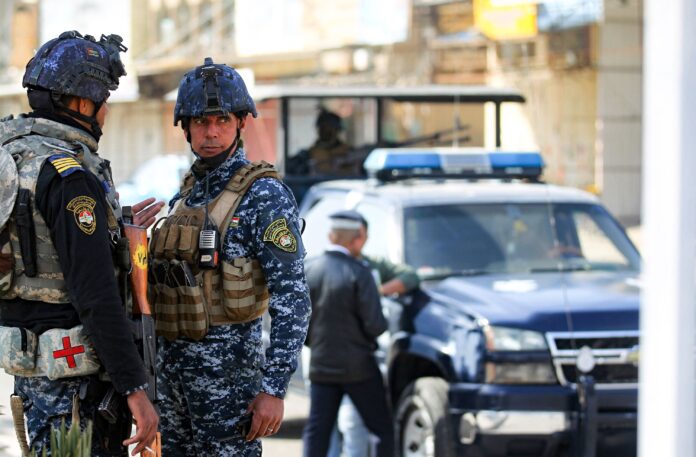
Top Iraqi commander killed in ambush

Iraqi media outlets reported that Haider Hamoud al-Husseinawy was assassinated on Monday while he was heading from his workplace in the town of al-Nukhib in Anbar Province to his home in Dhi Qar Province.

Baghdad Today cited a security source as stating that he was killed by “unknown” gunmen.

Shafaq News has also reported al-Husseinawy “died in mysterious circumstances”. No further details were immediately available.

The assassination was the second of its kind in the past few days.

On Thursday, Abdul-Zahra Nassir al-Maleki, a member of the Iraqi intelligence apparatus, was killed by unknown gunmen.

The assailants, who were riding a motorcycle, opened fire on al-Maleki’s car and fled to an unknown destination.

It comes days after Prime Minister Mustafa al-Kadhimi escaped unhurt from the unclaimed “assassination” attempt on November 7, in which a quadcopter drone armed with explosives targeted his home in the Green Zone.

The explosion blew doors off hinges and smashed concrete stairs on the outside of the building, wounding some of the premier’s security guards.

Iran: IAEA chief to visit Tehran soon

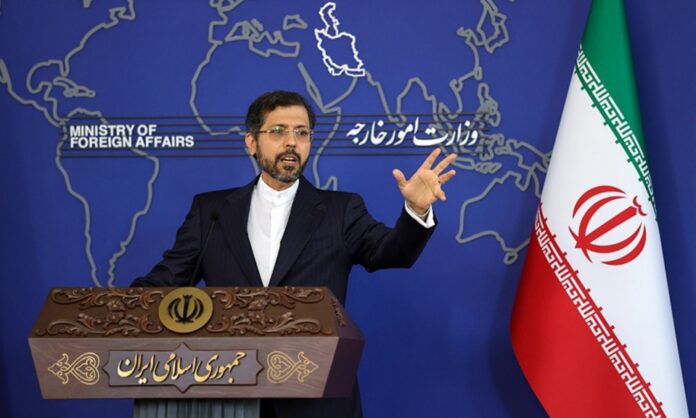
He said Grossi is in close contact with the Atomic Energy Organization of Iran (AEOI) and the Iranian embassy staff in Vienna and that the Islamic Republic has proposed a date for his visit. 

During his weekly presser on Monday, Khatibzadeh also said the IAEA director general will hold talks with AEOI chief Mohammad Eslami and Foreign Minister Hossein Amir Abdollahian. 

Asked about Iran’s advisory role in Syria, the Foreign Ministry spokesman said the media hype by the Zionist regime and also some countries about the matter is not new. 

Khatibzadeh said Iran and Syria have deep, strategic ties and that the commander of the Iranian advisory contingent in Syria was decorated after he successfully completed his mission there. 

The said rumors that Iran and Syria are divided over the commander’s presence in the Arab country are not worthy of attention. 

Khatibzadeh also touched on the upcoming Vienna talks. He said Iran will focus on the removal of the US’s illegal bans in the negotiations and “what matters for us is the lifting of those sanctions”. 

The Iranian Foreign Ministry spokesman also referred to a German official’s statement that the Vienna talks must restart from where they halted inconclusively. He said what’s important for Iran is how the parties to the negotiations will reach a good agreement.

He added that Iran is closely monitoring US President Joe Biden’s behavior and it will accordingly further the Vienna talks. 

Khatibzadeh pointed out that Iran seeks a good deal in Vienna and that the US must change its approach toward Iran to reassure Tehran. 

Khatibzadeh referred to Biden’s recent memo in which he said to US officials that there were sufficient supplies of petroleum to allow a “significant reduction” in the amount purchased from Iran. He said what matters for Iran are the realities on the ground and that what Biden said shows how interconnected the entire world is and no country can be removed from the market. 

He said the US tried hard to eliminate Iran from the global markets but has been less successful day by the day, thanks to Iranian youth who are working diligently and creatively.

“Iran alone as world closed eyes on plight of Afghans”

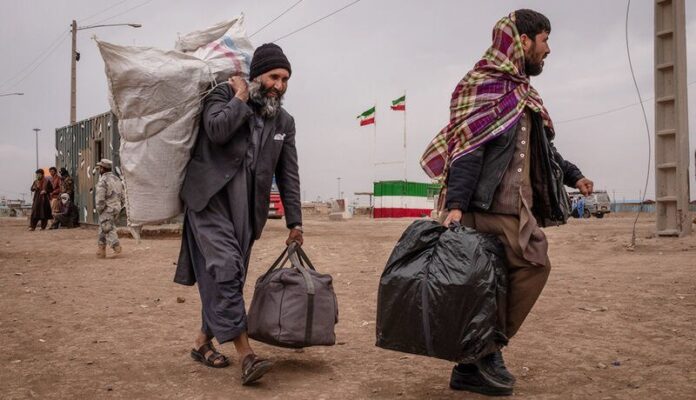
The director general of foreign nationals and migrants of Khorasan Razavi Province said all European countries, as well as Turkey, has closed its borders to Afghan refugees and are not ready to offer any help.

Mohamad Taghi Hashemi also said Iran is also in a difficult condition due to the US sanctions.

Despite this, he said, Iran has been offering monetary and other aid to Afghanistan, including shipments of relief aid and is admitting migrants who qualify as refugee, under international law.

“Since the [recent] political changes in Afghanistan and the change in [the country’s] government, more than 5,000 displaced Afghans have been admitted in Khorasan Razavi province. That’s besides 8,000 Afghan families that have entered Iran on one-month tourist visas and refused to leave after their visas were expired,” he said.

“The European media claims about the situation of Afghan illegal migrants or refugees in Iran are false and inaccurate. If such false claims lead to flooding of help from Europe to Afghanistan, that would be very good. Otherwise, they are sheer mudslinging that should be ended.”

Iran hosts millions of Afghan refugees, who escaped war in their country and sought refuge in Iran over the past decades. Tehran says the international community has failed to offer it the assistance normally extended to countries that host refugees, arguing that it cannot afford such huge influx of migrants amid economic hardship under the US sanctions.

Iran-Turkey to sign cooperation roadmap soon

Hossein Amir Abdollahian, in a joint press conference with his Turkish counterpart in Tehran on Monday, added during Erdogan’s visit  Tehran-Ankara will sign a cooperation roadmap.

Amir Abdollahian added he and Ahmet Cavusoglu, top Turkish  diplomat, held “good” talks over various regional and international issues in Tehran. 

He described the Iran-Turkey ties as historical, friendly and cordial, adding Tehran and Ankara will expand their ties further as they move forward on their path to development. 

The Iranian foreign minister added that Iran and Turkey managed to not only maintain their trade during the Covid pandemic but also to expand it. 

The Turkish foreign minister also slammed the US sanctions against Iran as oppressive. He urged the US to return to the Iran nuclear deal and remove the sanctions it unilaterally imposed on Tehran. 

Cavusoglu expressed hope the Vienna talks will produce good results. 

The Turkish foreign minister described Iran as Turkey’s friend. He also referred to a poem from famous Iranian poet Sohrab Sepehri named “Where is the friend’s house”. He said, “I have always seen Iran as the friend’s house”.

Taliban holds military parade with US-made weapons

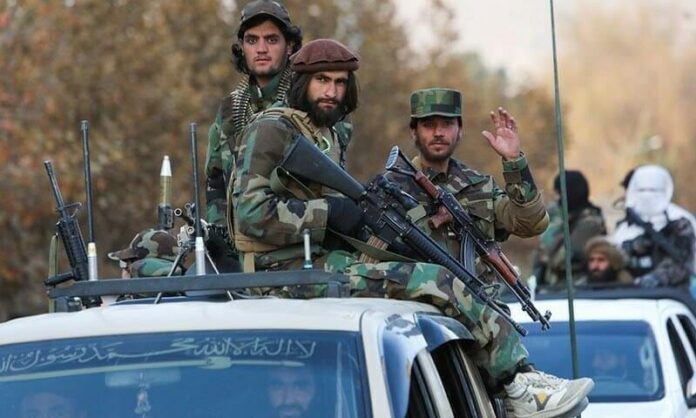
Hundreds of the Taliban fighters boarding US-made armored vehicles and supported by Russian helicopters conducted a military parade on the main street of the Afghan capital.

The parade was held on Darulaman Street on Sunday afternoon.

Spokesperson of Afghanistan Defense Ministry Enayatullah Khwarazmi said that the military show was held by the newly graduated soldiers.

Khawrazmi added that 250 Taliban fighters graduated from 313 central corps in Kabul.

This is the Taliban’s second military parade since they took over Afghanistan on August 15.

Earlier, the Taliban’s special 700-member military unit had graduated in Kandahar and held the military parade in that city.

It comes as the Ministry of Defense of Afghanistan has announced that the efforts for building an Islamic army have been expedited and they will soon have their own army.

Iran envoy: US expanding proxy groups in Afghanistan

Hossein Kazemi Qomi underlined the need for joint fight on terrorism and security cooperation with Afghanistan. 

He added that the Afghan people threw out the occupiers with their resistance. 

Kazemi Qomi was speaking upon arrival in Kabul on Monday for talks with the Taliban. 

He said the Iranian-Afghan border must be safe. 

Kazemi Qomi said the Afghan people in fact triumphed over the evil schemes of the enemy, adding “The Islamic Republic of Iran stood by the Afghan people during the two-decade US occupation and will continue down that path”. 

The Iranian envoy for Afghanistan said it’s now time for reconstruction in Afghanistan and Iran will help the country in this way. 

Kazemi Qomi said both countries are under the oppressive US sanctions but their long border allows them to have lucrative trade cooperation. 

He expressed hope that an inclusive government will be formed in Afghanistan, noting that he will discuss security and trade issues during his stay in Kabul. Afghanistan’s acting Economic Minister Din Mohammad Hanif, who welcomed Kazemi Qomi at the airport, described Iran as a good neighbor and said he hopes ties between Tehran and Kabul will further expand following the visit of the high-ranking Iranian delegation to Afghanistan.

Settler attacks on Palestinians on the rise

In a report published on Sunday, B’Tselem said in 66 percent of the incidents when settlers in the occupied West Bank attacked Palestinians, Israeli forces did not go to the scene.

In 170 of the cases where the army did arrive, troops either chose not to intervene to protect the Palestinians or actively joined the attack.

In just 13 cases, Israeli forces took action to “prevent the settler violence”, according to B’Tselem.

“Settler attacks against Palestinians are a strategy employed by the Israeli apartheid regime, which seeks to advance and complete its misappropriation of more and more Palestinian land,” the rights group announced in its report.

“When the violence occurs with permission and assistance from the Israeli authorities and under its auspices, it is state violence. The settlers are not defying the state; they are doing its bidding,” it added.

Israel, which has occupied the West Bank since 1967, rejects claims that its treatment of the Palestinians amounts to apartheid.

There was no immediate comment by Israel’s security forces on B’Tselem’s findings.

Recent months have seen a steep rise in violence committed by settlers in the West Bank against Palestinians, including against farmers harvesting their olive trees.

“It is evident that there is an increase in the attacks,” Ghassan Daghlas, who monitors settler violence in the northern West Bank, told Al Jazeera last month, describing the violence as “planned and not spontaneous”.

Last week, a group of settlers vandalised many cars in a town near Ramallah, and in September, dozens of settlers attacked a Bedouin village in the southern West Bank, leaving several injured, including a Palestinian toddler.

B’Tselem spokesman Dror Sadot noted the group did not contact security forces for comment on the report because “we understood they do nothing about our accusations”.

The group highlighted five examples in different parts of the West Bank that saw violent settlers take over more than 2,800 hectares (6,919 acres) of land.

It cited the case of Ma’on Farm, erected illegally in the southern West Bank but which together with a sub-outpost now controls some 264 hectares (652 acres), including roads and pasture used by the area’s Palestinian residents.

Shepherd Jummah Ribii, 48, of the Palestinian community of Al-Tuwani, told B’Tselem that assaults by settlers were pushing him away from farming that had sustained his family.

He said settlers attacked him severely in 2018. “They broke my leg, and I had to spend two weeks in hospital and continue treatment at home,” B’Tselem quoted him as saying.

“I had to sell most of our sheep to cover the cost of treatment,” he added.

Farmer Zuhdi Hassan told Al Jazeera he was facing trouble this season largely due to settler attacks, movement restrictions and poor rainfall.

“Normally, I produce about 20 large plastic containers of olive oil, but this year I will only produce about six to seven containers,” said the 57-year-old, adding, “I think next year’s harvest will also be poor because of the settlers and their continued destruction of our trees.”

Hundreds of thousands of Israelis have moved to West Bank settlements that are regarded illegal under international law.

Some settler outposts, including the Ma’on Farm, are also illegal under Israeli law. However, the government has been slow or unwilling to evacuate them.