Thursday, December 25, 2025
Home Blog Page 2238

UAE security chief: Warm ties with Tehran top priority

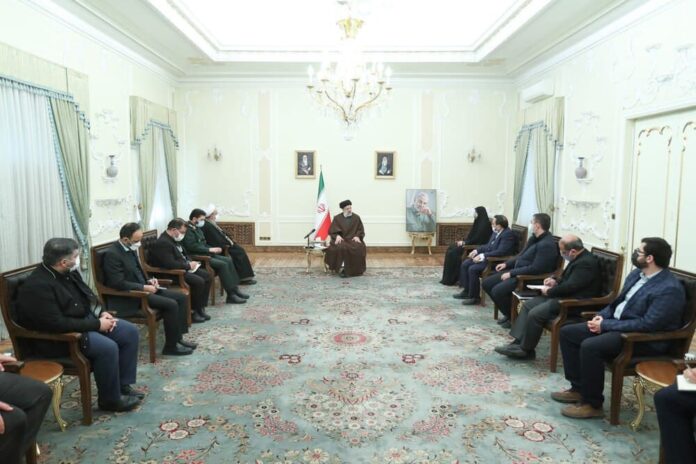
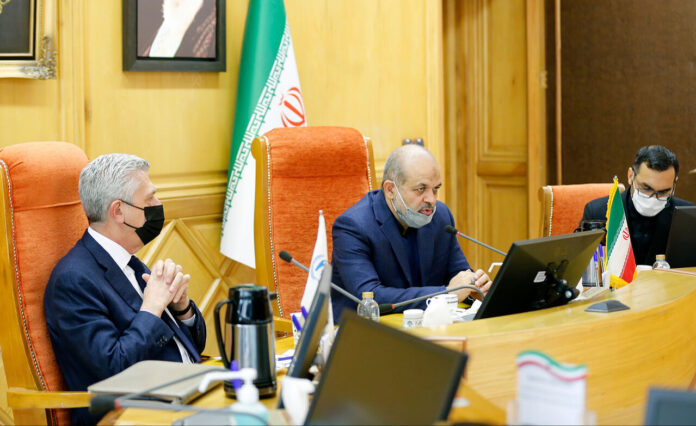
Sheikh Tahnoon bin Zayed Al Nahyan Secretary of the Supreme National Security Council of the United Arab Emirates made the comment during a Monday meeting with his Iranian counterpart Vice Admiral Ali Shamkhani in Tehran. 

“Iran as a vast and powerful country in the region has a unique geopolitical standing and is the crossroad link between the eastern and the western parts of the world,” he said.

“Development of warm and brotherly ties between Abu Dhabi and Tehran is among the priorities of the UAE.”

“It is necessary [for the two sides] to form specialized working groups to carefully outline the areas of cooperation in the different economic domains, identify existing obstacles and remove them,” he said.

Shamkhani also said lasting stability and security is only possible through constant dialogue and cooperation among regional countries. 
“Warm and friendly ties with neighboring countries and exchange of economic, trade and investment potentials is the main priority of the Islamic Republic of Iran’s foreign policy,” Shamkhani said.
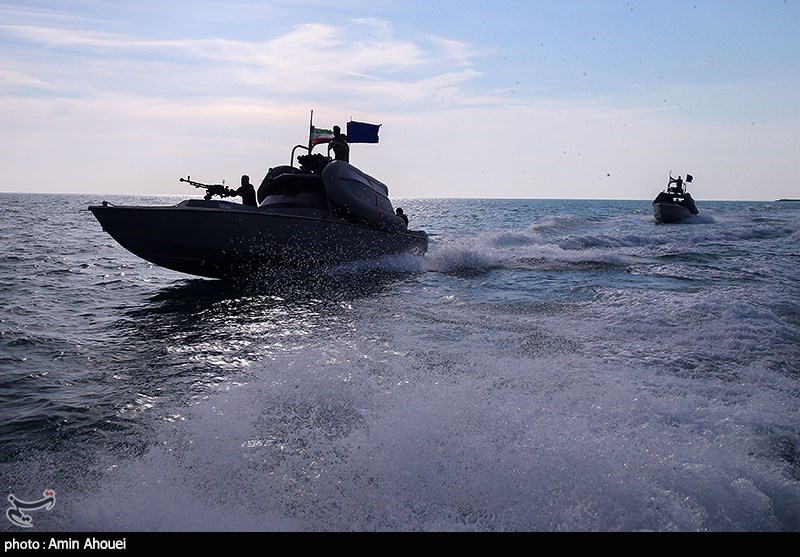
The top security official also underlined that relations among regional countries should not be affected by the meddling policies of the extra-regional countries.

“Persian Gulf countries, if they cooperate and work together, can ensure development and welfare for their own nations, while playing a key role in the economy of the region and the world, as energy hubs,” he said.

“To end disputes, talks and understanding should replace military approaches,” he added. 

Relations between Iran and the United Arab Emirates soured after the Emirates joined Saudi Arabia in its war on Yemen in 2015. Bilateral relations further worsened after Abu Dhabi signed a normalization deal with Israel. However, the two sides have shown signs of a de-escalation in tensions over the recent months.

Iran keeper best player of world handball match in Norway

The competition was held as part of the International Handball Federation’s Women’s World Championship 2021.

The Iranian national team were seen as the underdog against Norway, the reigning European champions and one of the most decorated handball teams in history with three world championships on its records. 

The Iranian team were beaten 41 to 9 and that’s why Iranian goalkeeper Fatemeh Khalili winning the player of the match did matter.

She helped Iran take the lead in the match with her excellent outings, ending the first half with seven saves, after an outstanding outing two days ago against Romania, when she stopped 18 shots.

Russian official: North-South Corridor vital for cooperation with Iran

The corridor is a land route extending from India to northern European countries. An agreement for its construction was signed among Iran, Russia and India in 2000.

“The corridor is the shortest transit route between Europe and south and southeastern Asia and passes from Iran and Russia,” said Vladimir Ubidnev, director of the Iran-Russian Trade Council at Russia’s Chamber of Commerce and Industries told IRNA.

“I can confirm that the north-south international corridor will be the backbone for the development of Iran and the Eurasian Economic Union.”

The mainly rail link extends from China to India and Pakistan and is connected to Russia and Finland through Iran. A 170-kilometer railway between the northern Iranian cities of Rasht and Astara is the only incomplete link in the transit route. 

The Russian official also said Iran’s full membership in the Eurasian Economic Union can help increase trade between the two sides as it eases customs bureaucracy between the country and members of the union, including Russia. 

He also touched on Iran’s recent full membership in Shanghai Cooperation Organization as a great boon to the expansion of the north-south corridor. He said Iran can also use its membership in the organization to diversify routes to its development.

“Iran stance on Vienna talks opens room for more negotiation”

Mikhail Ulyanov was referring to comments by an Iranian senior foreign ministry official who said Iran’s draft proposals are based on the draft of previous 6 rounds of the Vienna talks and that they are in full compliance with the nuclear deal. The official also criticized the minimalist approach of the western parties to the talks to their commitments under the accord.

“The tone of these comments demonstrates that there is a room for further negotiations, to my mind. As I repeatedly said to all our counterparts at the Vienna talks, patience, just patience and we will find common language. Let’s refrain from hasty conclusions,” Ulyanov said in a tweet.

Iran has tabled two sets of proposals during the talks on the removal of sanctions against the country and the nuclear issue. 

Other parties to the talks, Russia, China, Britain, France and Germany, have left the talks in Vienna for consultations with their respected governments over Tehran’s proposals. 

The next round of the negotiations aimed at lifting anti-Iran sanctions is expected to resume next week.

Iran says no to step-by-step approach over nuclear deal

Khatibzadeh added that the Iranian negotiating team has presented two draft documents outlining its demands about the sanctions removal and also how it will reverse its remedial measures. 

He said Iran will negotiate in line with the drafts. Khatibzadeh said any step by step measures are out of the question. 

Khatibzadeh said Iran entered the Vienna talks with a firm determination and it believes a good deal is one which would be in line with the obligations of all parties to the JCPOA.

He added that the number of the Iranian delegation’s members and their qualifications show that the main goal is to authorize them to make decisions about sanctions at the negotiating table.

According to the Iranian Foreign Ministry spokesman, all the provisions of the drafts build on the JCPOA and the drafts of the past six rounds of talks between Iran and the P5+1.

Khatibzadeh also described the approach of the US and the European troika as minimum. Khatibzadeh noted that the other side should also come to the negotiating table with clear proposals. He said Iran’s proposals are definitely negotiable.

Khatibzadeh noted that the other side is mistaken if it merely makes media statements and thinks it can play a blame game.

He added that Iran is in no rush nor will it allow anyone to waste its time and energy in Vienna.

The Iranian Foreign Ministry spokesman also responded to US Secretary of State Anthony Blinken’s claim that Iran is not serious about returning to compliance with its obligations under the JCPOA. He said a country that is not a party to the deal, has ceased abiding by the agreement, has done its best to force others into violation of the JCPOA and has punished those who stuck to it, such a country is in no position to make such statements. Khatibzadeh added that the US had better return to its obligations under the 2015 instead of making such statements which are mainly a blame-game aimed at dodging its own responsibility. 

Elsewhere in his remarks, the Iranian Foreign Ministry spokesman criticized French President Emmanuelle Macron’s claim that Iran’s nuclear issue is not separate from the Islamic Republic’s regional role.

Khatibzadeh said such comments are meant to please regional states who buy arms from France. He said such arms sales are fueling the war on Yemen.

On Israel’s call for the West to pressure Iran over its nuclear program, Khatibzadeh said such anti-Iran statements are made by a regime which has stockpiled nuclear warheads and is not a signatory to any international treaties or safeguards agreements.

Iran’s Foreign Ministry spokesman also spoke of the recent comments by the Arab League’s secretary general against Tehran.

He said the Islamic Republic is a stabilizing force in the region and acts responsibly. Khatibzadeh urged the Arab League to create unity in the Muslim and Arab world, not division.

He added that such irresponsible statements only serve the interests of the Zionist regime.


Iran’s Guardian Council rejects parliament bill on car imports

Hadi Tahan Nazif said the Guardian Council views the car imports permission as being against Clause 2 of the Iranian Constitution’s Article 110.

Tahan Nazif added the council is sending the ratification back to Parliament for correction.

Any bill passed by the Iranian Parliament must be reviewed and approved by the Guardian council to become law.

Iran has banned the importing of cars for the past three years. The ban on car imports has shot up automobile prices, especially foreign cars, in Iran up to ten-fold over the past years.

The parliamentary bill to resume the import of cars aimed to balance the Iranian auto market.

Raisi: lifting sanctions top priority for government

In an interview with the national TV on Sunday night, President Raisi said a taskforce has been formed to neuter the bans.

He added that at the same time, his administration is pursuing the removal of the sanctions but it will not tie the budget of the next fiscal year and Iran’s economy to them.

Raisi referred the Vienna talks last week that are aimed at removing the anti-Iran sanctions. He said the Western governments thought that Iran would not participate in the talks or would not negotiate, but we put forward two documents during the Vienna talks.

Raisi also thanked all Iranians for their help with the vaccination campaign to contain the Covid outbreak in the country.

He said before the vaccination drive gathered steam, people searched for vaccines to get inoculated, but now authorities are after people to inoculate them.

Raisi also expressed pleasure at the downward trend in Covid deaths and infections in Iran. He said 100 days after his oath-taking as president, over 100 million doses of vaccine have been administered to people in Iran.

The president however urged people to observe health protocols so that Iran will avert another wave of Covid.

Elsewhere, Raisi referred to his administration’s efforts to boost ties with other countries, especially neighbors. He said since his visit to Tajikistan several weeks ago, trade with the country has increased by three hundred percent. The president added that after the Shanghai Cooperation Organization summit, the government instructed economic activists to take action to use the capacity of the SCO members to the full.

According to Raisi, during his first days in office, Iran renewed relations with Turkmenistan and signed a gas swap deal with the country, which can resolve Iran’s gas shortages.

The president said his administration’s foreign policy is to have active and maximum relations with neighbors and other world countries.

Raisi said he held in-person meetings and telephone conversations during his first days in office in which he declared Iran’s readiness to develop ties in all areas with the world.


Kyrgyzstan calls for security cooperation with Iran

Masadykov raised the issue at a meeting with Iranian Foreign Minister Hossein Amir Abdollahian in Tehran on Sunday.

Masadykov said Iran and Kygyzstan can work together to fight drug trafficking and to exchange experiences in border security.

The Kyrgyz official and Amir Abdollahian also discussed other issues of mutual interest.

Amir Abdollahian explained the policy of the new Iranian government toward neighbors, saying the recent exchange of delegations between Iran and Kyrgyzstan shows the determination of the two sides to promote cooperation and develop relations.

Amir Abdollahian underlined the need for a long-term horizon for cooperation between the two nations.

He stressed that Tehran and Bishkek should pave the way for expanding ties through establishing direct flights between the two capitals in order to facilitate visits by businesspeople, political delegations and tourists.

Amir Abdollahian also said that cooperation between Iran and Kyrgyzstan in transportation and transit and the pilot operation of the Kyrgyzstan-Bandar Abbas railway corridor to connect Kyrgyzstan to the West Asian region are important for the two countries.

Amir Abdollahian explained the vision of the Islamic Republic of Iran regarding Afghanistan. The Iranian foreign minister stressed the need to form a comprehensive government that would consist of all ethnic groups in Afghanistan with the aim of stabilizing the country and establishing peace there.

Syria: Family of six seriously wounded in US strike

Ahmed Qasoum’s 10-year-old son may never fully recover from the wounds caused by a US drone strike that hit an opposition stronghold in northwestern Syria on Friday, doctors said.

A MQ-9 Reaper drone struck a motorcycle driven by a senior al-Qaeda leader on a road between the cities of Ariha and Idlib that day around 10am, local time.

US Central Command, which heads all Pentagon missions in the Middle East, said the al-Qaeda leader had been successfully killed and admitted “the possibility” that civilians had also been wounded.

“We are initiating a full investigation of the allegations and will release the results when appropriate,” stated Captain Bill Urban in a statement.

Qasoum, 53, and six of his family members were among the civilians hurt in the attack as they drove down the road, unaware of who was on the motorcycle near them, or what was secretly flying overhead.

“The motorcycle was going in front of me and I decided to pass it, when I got parallel to it, I felt a lot of pressure pushing the car to the left of the road,” the father told Middle East Eye.

Photos sent to MEE showed the motorcycle had been ripped into a twisted scrap heap.

“It was horrible,” Qasoum continued, adding, “We didn’t hear any sound of the explosion. The shrapnel hit the left side of the car, tearing through that side, which acted as a sort of filter for a lot of it.”

“My 10-year-old son has had a fractured skull and is now in a very serious condition in the intensive care at a hospital in Idlib. Doctors have told me that he would have nerves problems on his right side in the future,” Qasoum noted, speaking to MEE via WhatsApp.

“My 15-year-old daughter also suffered serious wounds to her head,” he continued, adding, “Doctors removed several pieces of shrapnel. After the surgery, they told me she might be able to walk in a week.”

His wife’s leg was broken, requiring pins to be inserted, and two other family members were also wounded in the strike, Qasoum stated.

Hayat Tahrir al-Sham (HTS), the armed group that controls Idlib, prevented the media from filming the damage at the scene, according to local sources. Local authorities associated with HTS also seized the Qasoum’s family car after the attack under the pretext of checking the car’s papers.

Meanwhile, local authorities have identified the man killed in the strike as a leader known as Musab Kinan, who was reportedly affiliated with Hurras al-Din, which is al-Qaeda’s arm in Idlib.

While some sources claimed that Kinan had been a student at a Turkish language institute in Idlib, others reported that he had been living in deep cover, a common tactic of al-Qaeda elements and leaders in northern Syria, where those in hiding wander around in dirty clothes, posing as construction workers or car mechanics to avoid US drones.

Members of Hurras al-Din have been US targets since the group was formed in 2017, when members of the Nusra Front, which at the time changed its name to Jabhat Fatah al-Sham, defected in Idlib.

Residents of Idlib told MEE that past US operations against the group were sometimes so accurate that they could hit a vehicle from one side and throw it across the street without disrupting traffic or leaving holes in the pavement.

Last month, however, a New York Times investigation revealed that in March 2019 US airstrikes on an Islamic State (IS) group stronghold in Baghour in eastern Syria resulted in the deaths of what is estimated to be at least 64 civilians.

In response to the New York Times report, the Pentagon launched a high-level investigation that will run for 90 days to review the attack and verify whether it will be deemed a war crime.

“We have reservations about the coalition’s investigations, considering that they have admitted to only 30 percent of the number of victims, none of whom have been compensated so far,” Fadel Abdul-Ghany, chairman and founder of the France-based Syrian Network for Human Rights (SNHR), told MEE.

“There are 3,037 civilians, including 924 children, who were killed unjustifiably by the US coalition in Syria, including 140 in Idlib, 782 in Aleppo, 1,133 in Raqqa, 218 in Hasakah, 626 in Deir Ezzor, 133 in Homs,” he said.

“So far, there has been no compensation for civilians, homes that were demolished, or vital centres that were targeted,” he added.

Abdul-Ghany stated that 181 vital centres have been targeted during the US coalition’s operations.

“Victims must be compensated as soon as possible, and we hope that this will be done through an independent local committee, given that the delay, since 2014 until today, decreases the value of material and moral compensations,” he noted.

Last month, five civilians from the same family, including three children and one woman, were killed and six others wounded in Russian airstrikes that targeted a poultry farm housing displaced people on the outskirts of Maarat Misrin, north of Idlib.

Taremi: My goal against Chelsea not accidental

Taremi said when he was in Iran and played for FC Perspolis, he tried to do scorpion kicks multiple times.
I was like “I will finally score a scorpion kick goal one day”, Taremi said.
The Iranian striker of Porto also said he always strove to make an accomplishment he would be proud of after retirement.
I never wanted to be like another player; I only wanted to be myself, he added.
Taremi has been shining at Porto and has netted in landmark matches for the Portuguese football club several times.