Saturday, January 3, 2026
Home Blog Page 2235

Top general: Iran armed forces ready to take part in peace, truce processes

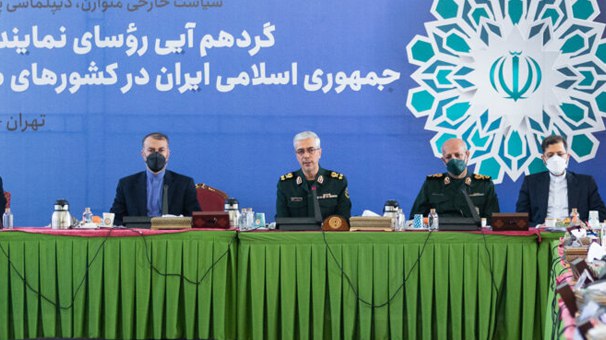
Major General Mohammad Bagheri made the comments during a meeting in Tehran with Iranian envoys in neighboring countries.

He underlined the need for coordination between the strategies and actions of the armed forces and the country’s foreign policy.

“In response to the hostilities against our dear country, a series of measures and strategies were put on the agenda of the defense sector …. which pushed the country’s defense industry to a point, in terms of growth, improvement, maturity and deterrence, that no power now dares to launch an aggression against the Islamic motherland,” Bagheri said.

The general stressed that Iran’s strategies are based on the circumstances and the threats the country could be facing.

“Our forces, despite trust in the country’s deterrence, have never underestimated threats, versus the enemy, and in strategic terms, and proportionate to the situation of the enemy, have the utmost preparedness and awareness in the face of tiniest threats,” he said.

Bagheri also said Iran is ready for closer defense cooperation with other countries, especially among its neighbors.

“Seeing the potential and capabilities created in the armed forces … we are ready to take up roles in peace and truce processes in the region and beyond, which are facing conflict and tensions,” he said.

Iran’s ‘Cinema Verite’ underway in Tehran

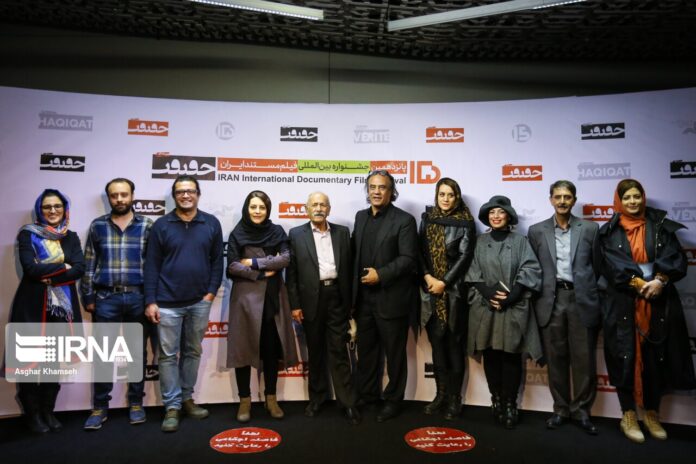
Iranian’s “Cinema Verite” was launched in 2007 and now it is known as the most important documentary cinema event in Iran and the Middle East.

The festival has three categories of short, semi-long and feature-length documentaries with national and international competitions, plus its Avini Award section. 

The event also includes national and international side sections, an international documentary market, and specialized workshops.

This year, 30 short films, 28 semi-long films, and 23 feature films are taking part in the festival.

In the international section, 2,611 films from 73 countries applied to take part in the festival, but finally 12 feature films, 7 semi-long documentaries and 10 short films managed to qualify.

Depicting the history and culture of the Iranian-Islamic society, protecting the national identity based on religious and Iranian ideas, strengthening the Iranian creative documentary cinema, and familiarizing the country’s filmmakers with the latest developments in world documentary cinema are among the goals of this festival.

US says diplomacy best option for Iran nuclear talks

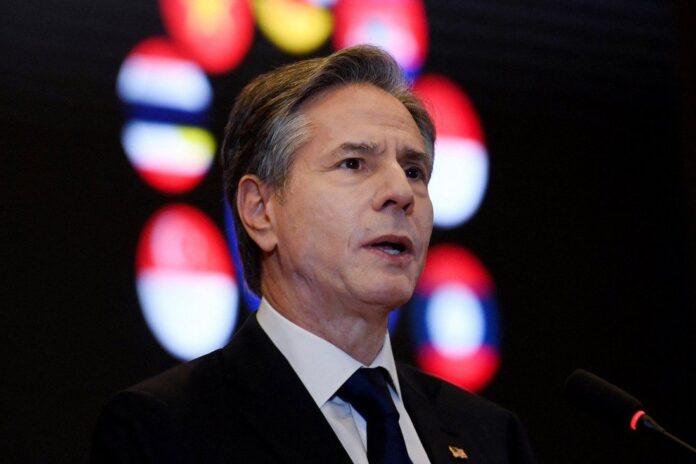
Speaking at a news conference in Indonesia, Blinken stated Washington was actively engaging with its allies and partners regarding alternatives.

“We continue in this hour, on this day, to pursue diplomacy because it remains at this moment the best option, but we are actively engaging with allies and partners on alternatives,” he noted.

The US State Department has announced it is too soon to say whether Iran has returned to nuclear talks with a more constructive approach. State Department deputy spokeswoman Jalina Porter made the comment during a briefing call with reporters on Monday.

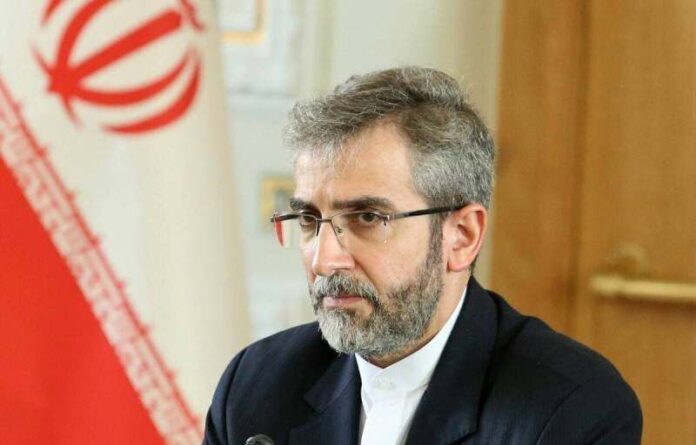
Iran’s top nuclear negotiator, Ali Bagheri Kani, noted over the weekend that good progress had been made in nuclear talks with world powers in Vienna that could quickly pave the way for serious negotiations.

But on Monday, senior British, French and German diplomats claimed major powers and Iran have yet to get down to business at talks on rescuing the 2015 nuclear deal, which will very soon become “an empty shell” without progress.

“As of this moment, we still have not been able to get down to real negotiations,” the diplomats from the so-called E3 said in a statement about the Vienna nuclear negotiations in which they are shuttling between US and Iranian officials.

“Time is running out. Without swift progress, in light of Iran’s fast-forwarding of its nuclear programme, the JCPOA will very soon become an empty shell,” they added, referring to the deal, whose full name is the Joint Comprehensive Plan of Action (JCPOA).

“We are losing precious time dealing with new Iranian positions inconsistent with the JCPOA or that go beyond it,” the E3 diplomats said in their statement.

“This is frustrating because the outline of a comprehensive and fair agreement that removes all JCPOA-related sanctions, while addressing our non-proliferation concerns, is clearly visible – and has been so since last summer,” they added.

Iran on Tuesday accused Western parties to the nuclear deal of “persisting in their blame game”.

“Some actors persist in their blame game habit, instead of real diplomacy. We proposed our ideas early, and worked constructively and flexibly to narrow gaps,” Bagheri Kani wrote on Twitter.

“Diplomacy is a two-way street. If there’s real will to remedy the culprit’s wrongdoing, the way for a quick, good deal will be paved,” he stated.

Iran says won’t accept IAEA demands beyond Safeguards Agreement, NPT

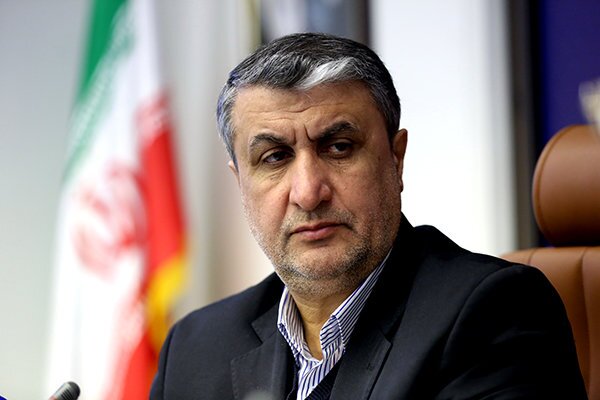
Eslami Iran nuclear chief

“What is being published in media, in the news and elsewhere, is part of the psychological warfare against Iran and has to do with politics. We are encountered by people, who by no means tolerate technological and scientific development of the Islamic Republic of Iran and use the accusations, propaganda and psychological warfare to pretend that Iran has illegitimate objectives and is not committed to nuclear non-proliferation,” Mohammad Eslami said.

Eslami added that Israel is fueling the accusations, which have never been proven. He stressed that this “commotion” will not affect how Iran moves forward with its nuclear program.

“The issue of the Karaj [nuclear] site and other issues, which were mentioned in the Joint Comprehensive Plan of Action [nuclear deal], are beyond the Safeguards Agreement,” he said.

“When they [other signatories to the nuclear deal] do not fulfill their obligations and impose severe and cruel illegal sanctions and expand them every day, that leaves us with no reason to stay committed to the JCPOA obligations they are pressuring us to meet. We act within the framework of the Safeguards Agreement and the NPT and accept nothing beyond that.”

Eslami further stressed that it is impossible for Iran to fulfill its share of the agreement while other parties do not meet their commitments. 

He said these are the issues Iran is discussing with the IAEA to find a path forward.

UN envoy: Iran victim of US and Israel cyber-attacks

Takht Ravanchi made the remarks addressing the First Substantive Session of the Open-ended Working Group on Security of and in the Use of information and telecommunications technologies.

The full text of the Iranian envoy’s statement is as follows:

Mr. Chair,

I congratulate you on your assumption of leadership of our Group and extend my gratitude to the Secretariat for its support in organizing this meeting. I avail myself with the NAM statement made by Indonesia.

We are happy to witness the realization of a request to end parallelism and to lead the ICT process through the OEWG, the UN’s first-ever inclusive, transparent and multilateral intergovernmental process.

Iran has been the victim of a number of cyber-attacks, including the 2010 Stuxnet malware attacks against its critical infrastructure by the US and Israel. Since 2010, these illegal acts have intensified and still continue. We believe that this Group is in the best position to address this irresponsible behavior and build upon the desire to end such reckless activities.

Mr. Chair,

Among other factors, the Group’s success is contingent on consistently adhering to its mandate.

We remain committed to our stances on major concerns, which have been articulated repeatedly during the previous OEWG. Given the ongoing discussions and developments, Iran underlines the following  essential points: respecting the sovereignty of states; non-inference in the internal affairs of the states using ICTs; accountability of platforms and transnational corporations; avoiding action-oriented recommendations without due attention to the said principles; the need for codifying and implementing a legally binding instrument and developing the current international law as well as further norms of responsible state behavior; the non-compulsory designation of repositories; applying ethics and justice to the ICTs; responsible behavior of non-state actors, including digital platforms; ensuring and facilitating the cooperation of the relevant digital platforms and transnational corporations with the states; application of ICTs exclusively for peaceful purposes and rejecting justification of threat or use of force using ICTs; and last but not least, equal status of all national initiatives within the OEWG.

In addition, while the principles of international law as well as the principles and purposes of the UN Charter apply to the ICTs in the context of international security, we believe that the existing international law cannot adequately meet the requirements of cybersecurity such as securing safe cyberspace.

Therefore, to fill numerous legal vacuums in this field, we need a legally binding instrument in which the rights and responsibilities of all stakeholders can be defined in a balanced manner.  In this way, relying on customary international law and limiting the discussions on the implementation of the 11 norms should not overshadow the need for legally binding obligations. Reiterating the mandate given to the previous OEWG as contained in resolution 75/240, we underline the need for further discussions and development of the issues of concern. This includes the consideration of any relevant outcome of the GGE, by members and non-members of the GGE alike.

Reminding of our previous proposals to establish subgroups as envisaged by resolution 75/240, we suggest to commence the discussions on this proposal in the legal subgroup within the OEWG. This, in turn, will contribute to CBMs.

In the context of the said resolution, it is necessary to adopt further new rules, norms and principles on the responsible behavior of non-state actors, including digital platforms.

Given the number of unresolved issues and ambiguities around the developments in ICTs in the context of international security, any recommendation on such

n-oriented outcome is completely premature, and the implementation phase should start only when those issues are resolved. A practical method to address this issue is to start negotiating the outstanding issues reflected in the final report of the previous OEWG and the annex thereof. Our proposal regarding the next rounds of substantive sessions on a rolling text basis of the negotiations remains on the table. It needs to be emphasized that all the national initiatives and proposals should be treated equally.

Finally, it is unfortunate to note that the Host Country has once again failed to issue a visa in a timely manner for the only member of my delegation from the Capital. This is unacceptable. We urge the UN family and the Secretariat to use all available means to call upon the Host Country implement the Headquarters Agreement in good faith.

I thank you, Mr. Chair.

No US troops to be punished for Afghan deadly strike

The strike was launched three days after a deadly suicide bombing outside Kabul airport that killed 13 US military members and scores of Afghan civilians. The US had intelligence that the Islamic State Khorasan, the militant group’s Afghanistan affiliate, was plotting an attack against the airport using a white Toyota Corolla, but they began tracking the wrong vehicle after it showed up at a known Daesh location, according to a Pentagon review.

The review found that the incident did not violate any laws of war but left decisions on punishment up to the commanders. The two senior commanders — Gen. Kenneth McKenzie, the head of US Central Command, and Gen. Rich Clarke, head of US Special Operations Command — both recommended no punishment for the troops involved, according to the officials, who also stated Defense Secretary Lloyd Austin agreed.

Pentagon spokesman John Kirby confirmed the news, which was first reported by The New York Times, at a Monday afternoon news conference.

“It wasn’t an outcome that we came to without careful thought and consideration,” Kirby noted, adding, “There was not a strong enough case to be made for personal accountability.”

The driver of the Toyota, Zemari Ahmadi, worked for a California-based aid organization, Nutrition & Education International.

“This decision is shocking,” stressed Dr. Steven Kwon, the founder and president of the aid group.

“How can our military wrongly take the lives of 10 precious Afghan people, and hold no one accountable in any way?” Kwon asked.

The incident occurred during a chaotic period in Kabul when the US was working to evacuate thousands of Americans, Afghans and other allies in the aftermath of the collapse of the country’s government.

The vehicle driven by Ahmadi – the intended target of the strike — was assessed at the time as an imminent threat to US forces at Hamid Karzai International Airport, 3 kilometers (1.8 miles) away. Multiple issues, including execution errors, confirmation bias and communication breakdowns, led to the mistaken drone strike, according to the review.

The 10 dead Afghan civilians were all members of the same extended family, relatives told NBC News, and included the seven children, some as young as 2 and 3.

In September, McKenzie made a rare public admission that the strike “was a mistake”, and stated he is “fully responsible for this strike and the tragic outcome”.

The Pentagon has vowed to provide condolence payments to the victims’ relatives and help them relocate to the US, but the payments have yet to be made and the family members are still in Afghanistan, officials said.

Iran negotiator calls on Western parties in Vienna to stop blame game

“Some actors persist in their habit of blame game instead of real diplomacy,” Ali Bagheri Kani said in a tweet on Tuesday.

He noted that during the latest round of talks in the Austrian capital, Iran was quick to offer its suggestions and worked constructively and flexibly to narrow the differences.

“Diplomacy is a two-way street. If there is a will to make up for the culprit’s wrongdoing, the way to a good and quick agreement will be paved,” the Iranian chief negotiator added.

Bagheri’s tweet came soon after British, French and German diplomats said Iran had yet to get down to business at the Vienna negotiations, warning that the unraveling Iran nuclear deal will very soon become “an empty shell”.

“As of this moment, we still have not been able to get down to real negotiations,” the European diplomats said in their statement.

 Meanwhile, Iran’s Ambassador to Britain Mohsen Baharvand said in response to the European diplomats’ statement that Iran cannot trust the West.

“If you’re worried about time, start lifting sanctions. At least show us that you are serious; we do not trust you,” Baharvand said in an interview with the BBC. 

Senior diplomats from Iran and the P4+1 group – Russia, China, Britain, France and Germany – have been trying to find a way to revive the Joint Comprehensive Plan of Action by allowing the United States to return the 2015 nuclear deal and remove anti-Iran sanctions.

UN chief calls for removal of US sanctions on Iran

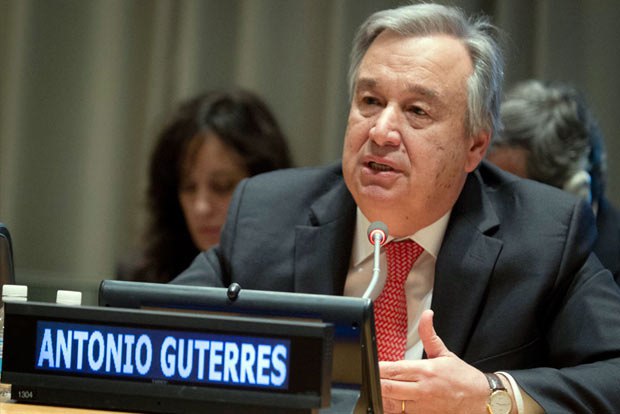
Guterres, in his 12th report to the UN Security Council on the implementation of the resolution 2231, said despite existing difficulties concerning the implementation of the deal, known as the Joint Comprehensive Plan of Action, it remains the best option to resolve the Iranian nuclear issue. 

The UN secretary general says the negotiations for the return of all parties to the accord to their commitments should be sped up. 

He says the US should end its unilateral sanctions against Iran to ensure the economic benefits of the JCPOA for the country. 

The UN chief also says removal of sanctions on Iran’s oil sector will specifically help revive the accord, expressing regret over Tehran’s rollback of its relevant nuclear commitments.

The report also mentions the correspondence by the western governments and Israel on Iran’s missile program and their claims that it breaches the terms of the resolution 2231. 

Guterres also touches on Iran’s response on the legitimate and conventional nature of the defensive missile program of Iran.

The report, together with the six-month report of the facilitator on the implementation of Security Council resolution 2231, will be discussed during the Tuesday meeting of the council. 

The session will be held with the presence of Iran’s ambassador to the UN Majid Takht Ravanchi.

The report comes amid the seventh round of the Vienna talks on removal of the US sanctions on Iran and revival of the nuclear deal.

US security chief to visit Israel to discuss Iran

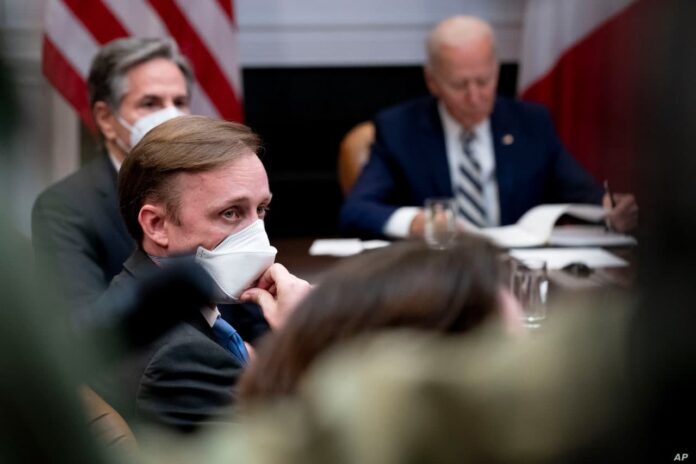
The Israeli government is concerned that the Joe Biden administration could opt for a “less for less” deal if the path back to the original agreement remains stuck. Israeli officials claim such a deal will give Iran sanctions relief without rolling back its nuclear program.

During the Barack Obama administration, Sullivan took part in the secret talks with Iran that led to another interim nuclear agreement, the 2013 Joint Plan of Action.

Sullivan recently floated the idea of an interim agreement to his Israeli counterpart if a return to the 2015 deal proves impossible.

Sullivan is expected to meet Prime Minister Naftali Bennett, Foreign Minister Yair Lapid and Minister of Defense Benny Gantz.

Israeli officials say he’s also expected to visit Ramallah for meetings with Palestinian officials.

The White House declined to comment on Sullivan’s travel plans.