Saturday, January 3, 2026
Home Blog Page 2234

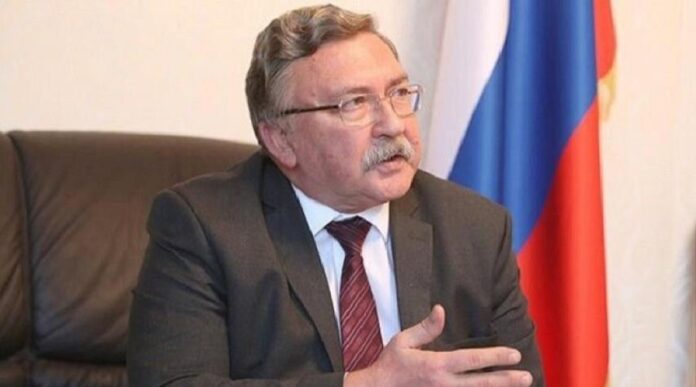
Russia says Radio Farda mistranslated diplomat’s comments on Iran centrifuges

Russia’s embassy in Tehran quoted the Russian ambassador as actually saying, “What should be done with the centrifuges? There is an option to get them out and scrap them. There is also an option to stockpile them in Iran and put them under IAEA guarantees, seal them and so on. We can agree on what option to use”.

The Russian embassy expressed hope that Radio Farda will act more fairly while translating Russia envoys’ comments in future.

It noted that no country has done more than Russia in efforts to preserve the Iran nuclear deal.

The embassy said, “We recommend Radio Farda’s translators to better learn the Russian language”.

Radia Farda had earlier quoted the Russian diplomat as saying that Iran’s centrifuges must be either scrapped, got out of the country or stockpiled under the IAEA supervision.

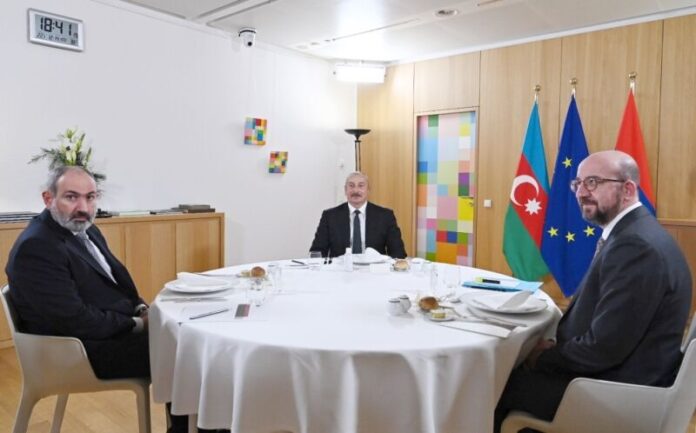
Armenia, Azerbaijan leaders say committed to Karabakh deals

“Prime Minister Pashinyan and President Aliyev reconfirmed that key commitments undertaken in the framework of the two trilateral statements of 9 November 2020 and 11 January 2021 would be honored and that understandings reached in Sochi on 26 November 2021 should be built upon,” Michel said in a statement, released in Brussels after the trilateral talks.

“President Michel stressed that resolving key humanitarian issues is of crucial importance. He welcomed the recent release of ten Armenian detainees by Azerbaijan and the handover of all remaining mine-maps by Armenia. He called for the full and speedy resolution of all outstanding humanitarian issues, such as the release of further detainees and addressing the fate of missing persons, while recognizing that humanitarian gestures by both sides also promote confidence and help create an environment conducive to progress towards peace and reconciliation,” the document reads.

Besides, according to Michel, “the EU will continue to support humanitarian de-mining efforts, including by providing expert advice, and assistance to conflict-affected populations, rehabilitation and reconstruction.”

“The EU will also continue to support confidence building measures between Armenia and Azerbaijan,” he added.

“The leaders discussed key existing and prospective trade and economic partnerships between the EU and both countries. They also discussed the EU’s intention to launch an economic advisory platform to build confidence, contribute to peaceful coexistence and build up economic cooperation in the region,” according to the statement.

Intense clashes between Azerbaijan and Armenia flared up on September 27, 2020, in Nagorno-Karabakh. On November 9, 2020, Russian President Vladimir Putin, Aliyev and Pashinyan signed a joint statement on a complete ceasefire in the conflict zone, which facilitated a complete cessation of hostilities. According to the deal, the Azerbaijani and Armenian sides maintained the positions that they had held. In addition, several regions came under Baku’s control and Russian peacekeepers were deployed to the region.

On January 11, during a meeting in Moscow, the leaders of Russia, Armenia and Azerbaijan made a decision to create a working group consisting of the deputy prime ministers from the three countries that would focus on establishing transportation and economic links in Nagorno-Karabakh.

On November 26, the trilateral negotiations between Putin, Aliyev and Pashinyan marking the first anniversary of the signing of a joint statement on a complete ceasefire and all military operations in Nagorno-Karabakh on November 9, 2020, took place in Sochi. They became the first face-to-face trilateral contract among the countries’ leaders since January this year and lasted for about three hours. Russian President Vladimir Putin praised the talks as productive and constructive and hoped for compliance with the agreements.

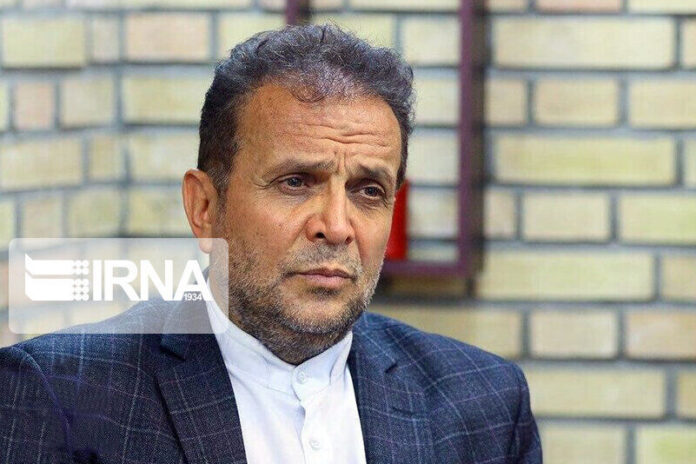
Iranian MP: Tehran to stand firmly in Vienna talks

Mahmoud Abbaszadeh however warned that the West is trying to keep Iran waiting, which is detrimental to investment and economic stability,qqqqqq but Iran will not let others decide its fate.

Abbaszadeh added that the other sides have not shown any determination to lift the sanctions against Iran during the Vienna talks and that all their efforts are aimed at extracting concessions from the Islamic Republic.

The spokesman for the Iranian Parliament’s National Security and Foreign Policy Committee however expressed confidence that Iran’s stance is transparent and righteous and if the country sticks to its guns, the Western side will backtrack on its demands. Abbaszadeh said for over 40 years, they made efforts to insinuate that our problems stemmed from the US and that the only solution was to engage in direct talks with Washington.

He added that in 2015 the Islamic Republic held face-to-face negotiations with the US at the level of foreign ministers but the White House went back on its commitments.

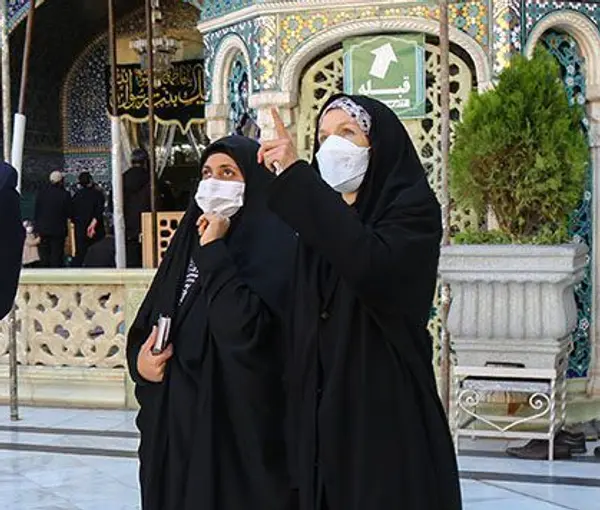
Australian ambassador visits Hazrat Masoumeh’s shrine in Qom, Iran

Ms. Sachs was accompanied by her deputy in the shrine of Hazrat Masoumeh, who was the sister of Imam Reza, the 8th Shia Imam.


The two diplomats were introduced by national experts of the shrine to different parts of the holy site and also the personality of Hazrat Masoumeh. Authorities at the shrine also gave an English copy of the Holy Quran to Ms. Sachs.

The Australian ambassador said it was the first time she was given a copy of the Quran and expressed pleasure at receiving the gift at such a holy site.

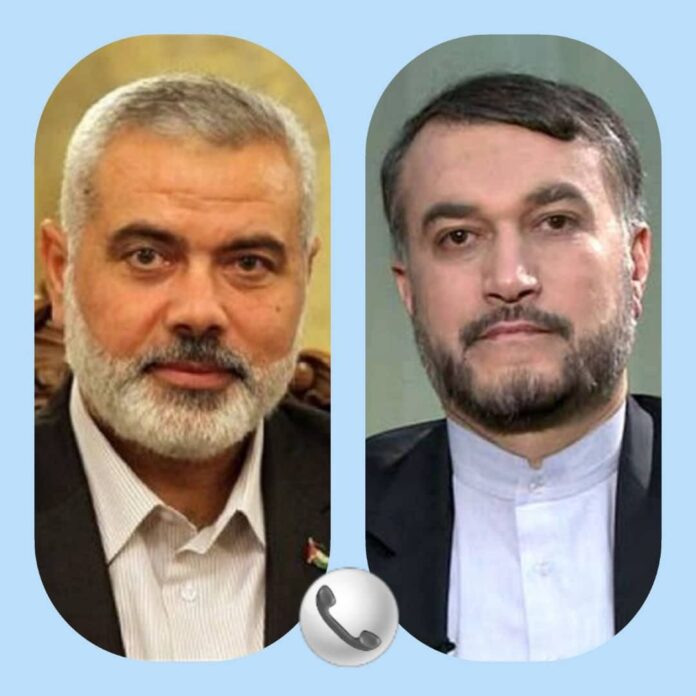
Iran reaffirms support for Palestinian cause

He was speaking during a telephone conversation with the chief of the Hamas political bureau Ismail Haniyeh on Tuesday evening.

He also congratulated Haniyeh on the founding anniversary of the movement.

The Iranian foreign minister described the Hamas resistance movement as a pioneer in the liberation of the holy city of Quds, saying, “Today, the resistance plays a pivotal role in realizing the historical rights of the Palestinian people”.

Amir Abdollahian referred to the British government’s recent move to blacklist Hamas as a terrorist group, describing the decision as politically-motivated and against the Palestinian people.

He added, “The fake Zionist regime is the mother of all calamities and the root-cause of problems in the region and, therefore, the few regional countries that moved toward normalizing ties with this fabricated regime are acting against the security and interests of the region and the Muslim ummah”.

The Hamas political bureau chief also thanked Amir Abdollahian for congratulating the anniversary of the movement’s establishment and hailed the noble personality of martyred General Qassem Soleimani. He said, “We remember General Soleimani with honor and we appreciate the Islamic Republic of Iran’s support for the Palestinian cause and resistance all through the years following the Islamic Revolution’s victory”.

Hanieyh also condemned the move by some regional countries to normalize ties with the Zionist regime, calling it an American-Zionist approach.

He said, “We did not like the doors of Arab countries to be opened to the Zionist murderers who have the blood of the Palestinian people on their hands”.

The head of Hamas’s political bureau said the Zionist regime’s infiltration into the region will cause insecurity and instability and poses a threat to the Palestinian cause and the whole Islamic ummah.

Iran Speaker calls for removal, neutralization of sanctions

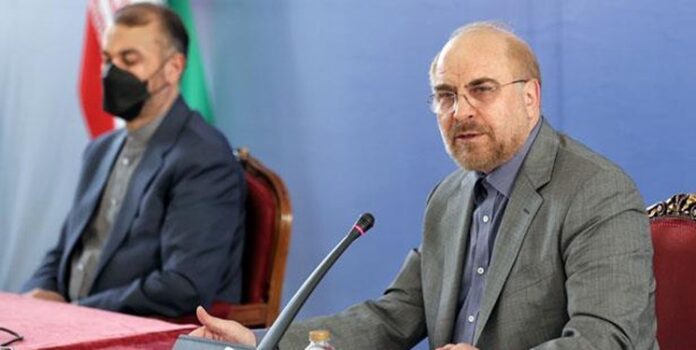
In a meeting with heads of Iranian diplomatic missions in neighboring countries, Ghalibaf said one of the issues that is directly related to ambassadors and the field of diplomacy is the issue of neutralization and lifting of sanctions.

“We should focus on these two issues in the field of foreign policy… and the Foreign Ministry should be in the forefront,” the parliament speaker noted.

He referred to the sanctions removal talks between Iran and the P4+1 group saying a good negotiation can lead to a satisfactory agreement.

“It is important that an agreement within the framework of the JCPOA will lead to economic benefits, so we must all join hands and help each other in the field of lifting sanctions, and of course, we must also work to neutralize sanctions,” Ghalibaf added.

He also said in the current situation and despite the sanctions, by relying on domestic capabilities, Iran can devise a five-year plan to achieve a 2 to 3% growth and economic stability.

Iran president congratulates Olaf Scholz on election as German chancellor

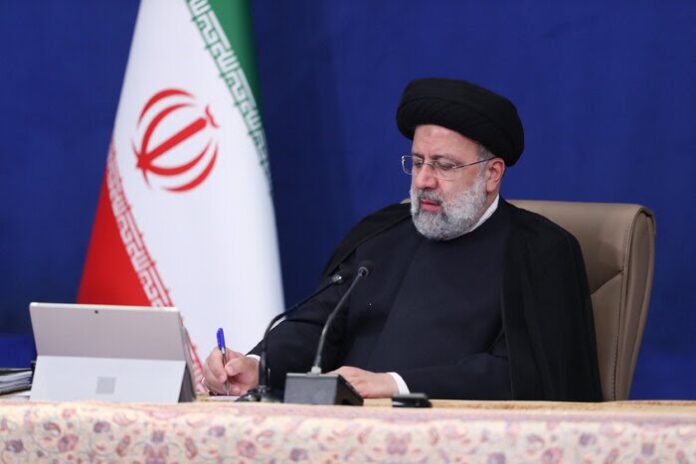
In the message, Raisi said the historical relations between Iran and the Federal Republic of Germany, which are over one hundred and fifty years old and based on large and diverse capacities, have provided a valuable legacy for the further development of political, economic and cultural ties between the two civilized nations.

“I believe that by taking advantage of this opportunity, the two countries can establish useful and valuable cooperation in bilateral relations based on mutual respect and interests”, Raisi added.

The Iranian president noted that the world today faces significant challenges at the international and regional levels and that successfully addressing challenges requires understanding of shared international responsibility and working together to bring peace, stability and prosperity to the world nations.

Raisi said Iran is ready to expand interactions with Germany to that end. He also underlined the determination of the Islamic Republic of Iran to maximize cooperation with all countries, adding, “I hope that relations between the two countries will expand more than ever before during your tenure”.

The president wished success for the new German chancellor and well-being for the German people.

Iran, India, Uzbekistan discuss facilitating product transit through Chabahar port

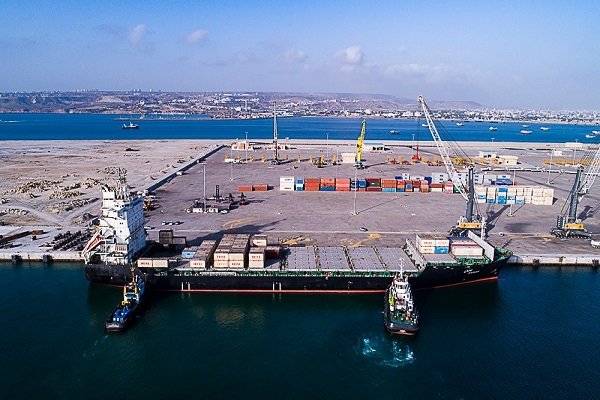
Ali Akbar Safaei was speaking at the second three-way meeting of the Islamic Republic of Iran, the Republic of India and Uzbekistan in Tehran.

He said, “With Uzbekistan joining the Chabahar Memorandum, in the near future we will see the smoothing of the transit route between India, Iran and Uzbekistan”.

Safaei also said over the past few years and with the implementation of the Chabahar Memorandum, traffic in Shahid Beheshti port has increased significantly and Iran hopes that with the full cooperation of India, Afghanistan, Uzbekistan and other Central Asian countries, the activity of Chabahar port will be increased more than ever before. Meanwhile, Sanji Branjan, India’s Deputy Minister of Ports, Shipping and Waterways also said at the meeting the Chabahar Agreement between Iran, India and Afghanistan has allowed Afghanistan to have access to open seas and has enabled the development of the Chabahar port in Iran.

He added that Chabahar port, in recent years, has become a transit hub for the region, connecting India to Central Asian countries.

Also, Abdolsamad Momenov, Deputy Minister of Transport of Uzbekistan said India, Iran and Uzbekistan have a lot of historical and cultural commonalities and trade between them has been going on in the past.

He stressed that trade between Uzbekistan and India has increased significantly in the past year, emphasizing that the port of Chabahar can play a significant role in facilitating transportation and logistics between regional countries.

Iran top negotiator: Serious talks on sanctions removal yet to begin

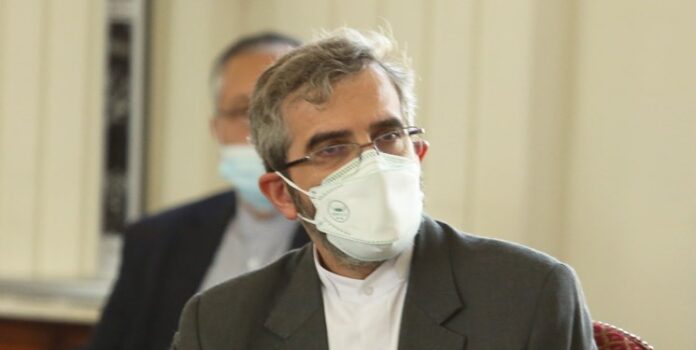
In an interview with Iran’s Press TV English news channel, the deputy foreign minister stressed that any sanctions that are contrary to the Joint Comprehensive Plan of Action must be lifted immediately, whether they were imposed during the administration of former presidents Barack Obama, Donald Trump or the current occupant of the Oval Office Joe Biden.


“The sanctions that have been imposed and re-imposed against the Iranian people are in contradiction with international law, international regulations, international principles, as well as with the…JCPOA and also UN Security Council Resolution 2231,” The chief negotiator stated, adding that all sanctions imposed as part of Trump’s so-called maximum pressure campaign should also be lifted because they were linked to the JCPOA.


Asked about reports that claim Iran is trying to buy time in the ongoing negotiations, Bagheri blamed such accusations on the Israeli regime, saying it is trying hard to prevent the talks from making progress.


Later during the interview, the deputy foreign minister said there is still disagreement over the issues of guarantees and verification.


Iran has repeatedly said that the United States must remove its sanctions in a verifiable manner and offer guarantees that it will not abandon the JCPOA again if it wants to return to the 2015 deal.

“In my opinion, if the other side has a serious will and is practically ready to fulfill all its obligations under the JCPOA without any exceptions, then I really believe that in a short time we will be able to reach a deal agreed by both sides,” the chief Iranian negotiator added.

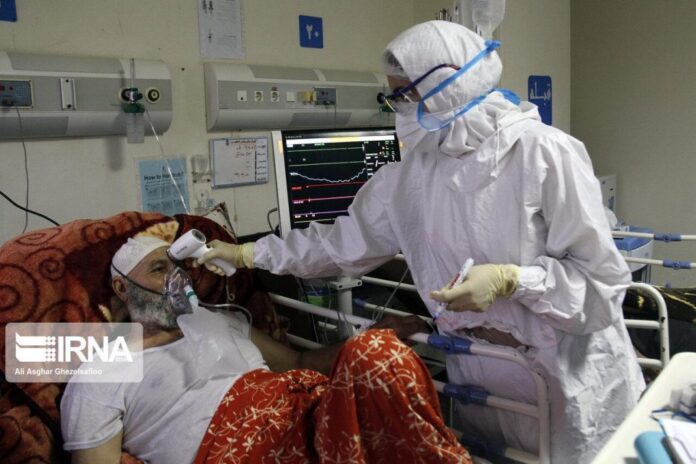
Covid daily death toll jumps in Iran

The total Covid fatalities stand at 130,831. Since Monday, 2,784 new infections of Covid were logged including 433 hospitalizations. The total caseload is 6,160,303 people. The majority of them, that is, 5,980,566 people have recovered from Covid.

Meanwhile, the total number of vaccine doses administered in Iran is now 111,558,663 doses. The shots include 2,971,806 booster shots.

Despite the downtrend in deaths and infections, authorities say the vaccination process will continue forcefully until the entire population is inoculated. Currently there are no red zones in Iran in terms of Covid risk while 321 cities and towns are marked blue, the lowest level of danger from the disease.

Meanwhile, 8 cities are orange and 119 ones are yellow.