Saturday, December 27, 2025
Home Blog Page 2212

IRGC holds third day of massive drills

During the exercises, the Ground Force of the Islamic Revolution Guards Corps successfully carried out possible offensive and defensive scenarios using novel tactics and sophisticated weaponry.

The special units of the IRGC heavily bombed the targets of the hypothetical enemy after doing reconnaissance missions. They also waged heliborne and multi-layer defensive operations against enemy warplanes.

The exercises, which began on Monday, cover the Persian Gulf and the Strait of Hormuz and the three littoral Iranian provinces of Khouzestan, Bushehr and Hormozgan
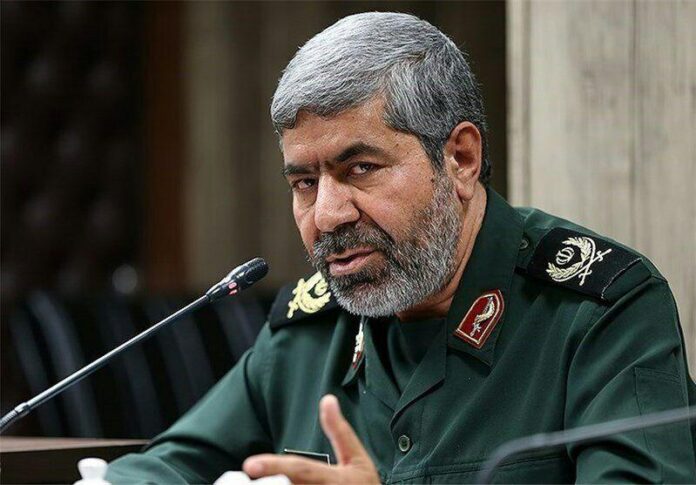
The commander of the IRGC’s Ground Force told reporters at the site of the drills that during the Great Prophet Maneuvers, Iran has updated its defensive doctrine in proportion to new threats.

Brigadier General Mohamamd Pakpour said Iran’s assault and combat drones have made it possible for the country to destroy any target.

Pakpour added,” We, as guards of the Islamic Revolution, have to maintain our preparedness commensurate with the enemy’s assessments”.

He also said Iran has developed the technology of producing drone.

The commander of the IRGC’s Ground Force noted that Iran is now equipped with precision missiles and its electronic war capabilities have improved considerably. Pakpour also said regarding armor, Iran has upgraded the fire control system of its tanks, and the tanks are capable of hitting targets with precision at distances of several kilometers, and the fire control system of our T-72 tanks has been upgraded to the T-90 tank.

The commander of the IRGC’s Ground Force said the IRGC is now able to deploy its rapid reaction force to the war theater in the shortest possible time to carry out operations.

US diplomat arrested in Turkey over selling fake passport

In a statement on Wednesday, the Istanbul Security Directorate confirmed the arrest of an American diplomat who works at the US Consulate in Lebanon’s capital Beirut.

The arrest was made after an incident on November 11 at Istanbul Airport when a Syrian national tried to board a plane to Germany using someone else’s passport. The passport belonged to a US diplomat based in Lebanon.

The police noted in their statement that security camera footage showed the American meeting with the Syrian national in the airport and exchanging clothes. It is believed the passport was handed over during the meeting.

Police searched the American and found $10,000 in an envelope and a passport in his name, according to the security directorate statement.

He was remanded in custody while the Syrian national, who is facing charges of forgery, was released pending trial.

While foreign diplomats frequently have immunity from prosecution in the country they are posted to, the American was accredited as a diplomat in Lebanon, not Turkey, and therefore may face punishment.

Russia says Vienna talks to resume before 2022

The new round of talks between Iran and the P4+1 group will begin in Vienna before the end of 2021, and there is a good opportunity to revive Joint Comprehensive Plan of Action (JCPOA), Lavrov said in an interview with RT on Wednesday.

It comes after negotiators from Iran and the remaining parties to the JCPOA concluded the seventh round of talks in Vienna, aimed at bringing the US back into compliance with the agreement by removing its sanctions against Iran.

Iranian Foreign Ministry Spokesman Saeed Khatibzadeh said Monday Washington has not presented any tangible text to the P4+1 while Tehran has put forth two documents that embody previous texts. He added that if the other sides come to the negotiating table with tangible proposals, an agreement will be reached in the shortest possible time.

Washington has threatened Tehran with considering “other options” if nuclear negotiations fail to restore the 2015 landmark agreement, three years after the US itself pulled out of the deal and imposed draconian sanctions on Iran.

Iran has made countless statements in over three years saying it will reverse its retaliatory steps once the US removes the illegal sanctions in a verifiable manner.

Tehran to host Astana peace talks in February or March 2022

Ali Asghar Khaji, the Iranian foreign minister’s senior adviser on special political affairs, has told Tass News Agency that the necessary arrangements have been put in place for the three-way talks but holding the summit is contingent upon the state of the Covid pandemic.

Asked if there will be a high-level meeting between the foreign ministers of Russia, Iran and Turkey, the Iranian diplomat said, “We have reached an agreement on this as well.

Such a meeting will also happen next year in January or early February, during which preparations will be made for the three-way summit”.

Khaji noted that the Astana peace talks will take place several weeks after the summit of the presidents of Iran, Russia and Turkey.

The last meeting of the three presidents to resolve the Syria crisis was held on July 1, 2020, and they agreed to hold the next meeting in Tehran, but due to the Covid epidemic, the meeting has not been held yet.

Yemen says late Iran envoy entered Sana’a at time world just watching

Irloo’s mission in Yemen as Iran’s envoy was not limited to the diplomatic sector, Hisham Sharaf Abdullah said in an interview with Iran Press in Sana’a.

“Hassan Irloo entered Yemen when no one was with us, and everyone in the world was watching; no one knows how he entered Yemen,” he noted.

Abdullah added that Irloo’s mission in Yemen was not just limited to the diplomatic sector, but he visited hospitals and attended various ceremonies.

“Irloo’s arrival in Yemen was like a missile exploding in the invaders’ media; no one expected him to be in Yemen,” he noted, stating that all the efforts of the aggressors were to find out how the Iranian ambassador had entered Yemen, which strengthened the resistance against the aggressor countries.

He highlighted that during his short stay in Yemen, Irloo did many things that could not be told to the world, but dozens of other ambassadors did not do what he did.

“Despite the stability and security in Sana’a, no ambassador came here but Hassan Irloo,” the Yemeni minister said, adding that Irloo’s story was all about courage, bravery and Jihad, that more of it will be heard a bit later.

The Iranian Foreign Ministry announced on Tuesday that Irloo was martyred because of the coronavirus infection.

The ministry noted that the ambassador, who was a victim of chemical attacks during the Iraqi imposed war in the 1980s, had contracted the coronavirus during his mission in Yemen.

Saeed Khatibzadeh, spokesman for Iran’s Foreign Ministry, said the envoy was transferred to the country in a “bad state” and due to “late cooperation” of some countries.

He contracted the coronavirus at the place of his mission, and passed away early on Tuesday “despite undergoing all stages of treatment to improve his condition”, Khatibzadeh added.

The envoy was transferred from Sana’a to Iran late on Saturday. His repatriation was reportedly delayed by the Saudi authorities.

Irloo officially began his diplomatic mission to Yemen in November 2020, in defiance of the United States’ anger at the two countries’ developing relations.

Iran FM says Baku visit opened new chapter in ties with Azerbaijan Republic

“A new chapter has opened in the relations between the two countries and this will have a positive impact for both nations. We are ready to finalize all previous projects and to lay the basis for new agreements between the two countries,” Amir Abdollahian said in a meeting with the Azerbaijan Republic’s Presient Ilham Aliyef in Baku.

The top diplomat also talked about the presence of the Islamic Republic in the so-called 3+3 mechanism, where also the Azerbaijan Republic is involved, stressing that such cooperation helps strengthen peace and stability in the region.

Amir Abdollahian further underlined that forces from beyond the region have no right to interfere in regional affairs and that regional countries can resolve their issues among themselves.

During the meeting, Aliyef also highlighted the significance of the two countries as neighbors and Muslim nations.

“We are willing to expand bilateral relations in the political, economic and cultural spheres. Key projects between the two countries should be finalized,” he said.

Aliyef also agreed that regional issues should be resolved among regional countries and expressed Baku’s opposition to any interference by extra-regional countries.

The Azerbaijani president also described his recent meeting with his Iranian counterpart Ebrahim Raisi on the sidelines of the summit of the Economic Cooperation Organization in Ashgabat as “fruitful”.

“During the meeting with the Iranian president in Ashgabat, the friendship and brotherhood between Iran and the Azerbaijan Republic were once more reiterated and [both sides] underlined the need for more steps for expansion of ties in the political, economic, trade and cultural arenas,” he said.

The Iranian foreign minister arrived in Baku for a one-day visit Wednesday. He also held talks with his counterpart as well as the Azerbaijani parliament speaker during his visit.

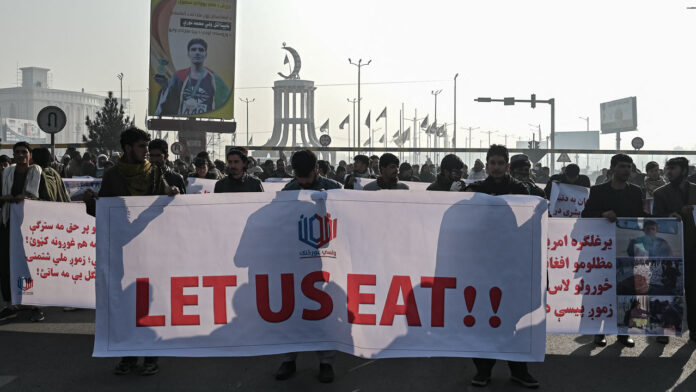
WFP cuts food aid to Yemen due to ‘lack of funds‘

Nearly eight years of war in Yemen has created what the United Nations has called the world’s worst humanitarian crisis.

The violence is projected to kill 377,000 people by the end of the year, according to the UN Development Programme.

Meanwhile, four million people have been internally displaced during the fighting, with WFP targeting 11.1 million for food assistance in November of 2021. In September, the agency warned that 16 million Yemenis were “marching towards starvation”.

“From January, eight million will receive a reduced food ration, while five million at immediate risk of slipping into famine conditions will remain on a full ration,” the UN agency said in a statement on Wednesday.

According to the UN children’s fund (UNICEF), about 2.3 million children under the age of five currently suffer from acute malnutrition in Yemen, with 400,000 expected to suffer from life-threatening severe malnutrition in the coming months.

“WFP food stocks in Yemen are running dangerously low,” WFP Regional Director Corinne Fleischer said in a statement.

“Every time we reduce the amount of food, we know that more people who are already hungry and food insecure will join the ranks of the millions who are starving. But desperate times call for desperate measures,” Fleischer added.

WFP reported that it needs $813m to continue to help the most vulnerable in Yemen through May and $1.97bn during 2022 to continue to deliver food assistance to families on the brink of famine.

On Monday, officials noted aid flights had been halted following air attacks on Houthi targets at the international airport in the Yemeni capital, Sanaa.

Iran logs +2000 new Covid cases, 44 new deaths

The ministry said almost one in six of the patients have been hospitalized.
This comes as 44 Covid patients also lost their lives over the period, taking the total number of deaths to 131,211 in Iran since the pandemic began.
The ministry also noted that many Iranian cities had zero or single fatalities Wednesday, with Tehran Province accounting for most of the deaths, followed by the provinces of East Azarbaijan and Yazd.
That, the ministry said, leaves no city in the red or orange zones – the most serious Covid alert levels. Currently, 395 cities are in the blue zone and 53 in the slightly serious yellow alert.

Report: UAE placed spyware on Khashoggi fiancee’s phone

The Washington Post cited findings from Citizen Lab that found that Hanan Elatr, then the fiance of Khashoggi, was arrested by UAE officials in Dubai in 2018. NSO Group’s Pegasus software was downloaded onto her Android phone in just more than a minute while she underwent hours of questioning, with the phone returned to her days later.

“We found the smoking gun on her phone,” Bill Marczak, a senior research fellow at Citizen Lab, told the Post after examining Elatr’s phones.

Pegasus spyware has been used by governments and other groups to steal data, turn on microphones, and record calls without users’ knowledge. NSO Group has come under fire in recent months for allegations that it developed and sold Pegasus to foreign governments as a tool to spy on dissidents, journalists and others.

As a result, NSO Group was added to the Commerce Department’s entity list last month, effectively blacklisting the company, and The Wall Street Journal reported earlier this month that top executives are considering selling the company.

Khashoggi, who wrote for The Washington Post and was often critical of Saudi Crown Prince Mohammed bin Salman, was murdered in October 2018 at the Saudi Consulate in Istanbul. A US intelligence report concluded earlier this year that the murder was ordered and approved by the crown prince, with Khashoggi’s remains likely dismembered by Saudi agents.

A spokesperson for NSO Group strongly pushed back against the findings outlined by the Post on Tuesday.

“The repeatedly false media reports, recycled again today, are false and technologically impossible,” the spokesperson said in a statement provided to The Hill, adding, “As NSO has previously stated, our technology had no role in the heinous murder of Jamal Khashoggi or any of his family members, including Hanan Elatr.”

Israel’s Ministry of Defense must approve the sale of Pegasus software to foreign governments, and according to information provided by NSO Group to the Post, the software has been sold to 60 government agencies in 40 countries.

A wide swath of allegations have been brought against NSO Group. A data leak in July revealed a list of around 50,000 individuals who may have been targeted by Pegasus since 2016, while Apple issued an emergency update for most of its products in September after Citizen Lab discovered vulnerabilities being exploited by the NSO Group spyware.

Palestinian youth burnt to death at Israeli checkpoint

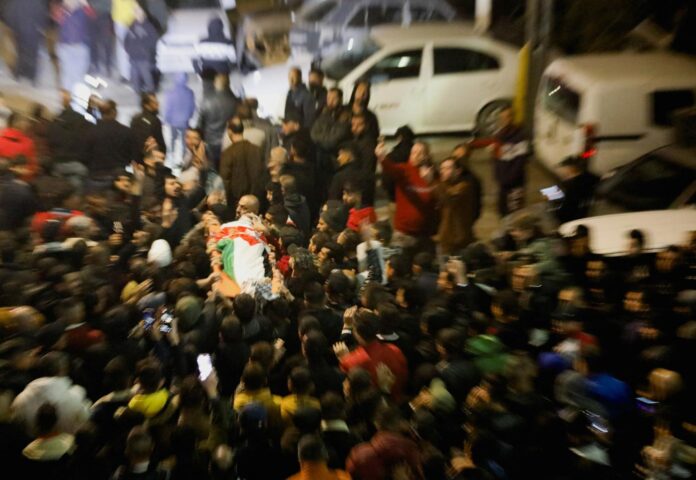
Israeli forces have killed a Palestinian youth in the occupied West Bank city of Jenin after his car was fired at over what they claimed to be a car-ramming attack on their checkpoint.

Palestine’s official WAFA news agency reported the Palestinian, identified as Abd al-Aziz Hekmat Mousa, was killed on Tuesday evening when his car was caught on fire near the Israeli military checkpoint of Dotan in the town of Ya’bad, southwest of the city of Jenin.

Citing local sources, WAFA added the Israeli soldiers had opened fire at the car following an alleged car-ramming attack by the 22-year-old.

Israeli media claimed that the forces opened fire at the driver after he had accelerated toward their guard post and “tried to run over a number of Israeli soldiers”. The vehicle then crashed into a military jeep, causing both to catch on fire.

Israeli reports said the Palestinian driver of the car lost his life inside it after it caught on fire. They also added two soldiers were lightly injured in the incident.

The latest killing comes as the Israeli regime has amended its open-fire rules, allowing forces to shoot Palestinian protesters who throw rocks and stones in the occupied West Bank even if they do not pose an imminent threat. Israel has long been criticized for using excessive and deadly force against Palestinians.