Saturday, December 27, 2025
Home Blog Page 2211

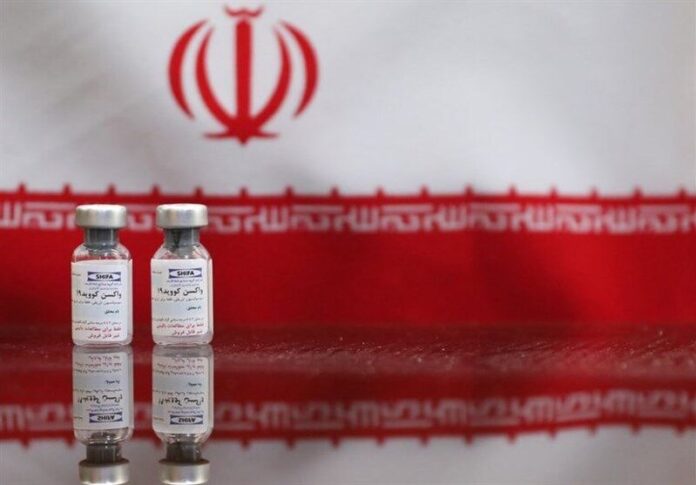
ICRC donates funds for 250k Covid-19 shots for Afghan refugees in Iran

The program is part of cooperation between the ICRC and the Iranian Red Crescent Society.
“Fair access to the vaccine is essential to ending the Covid-19 epidemic. A successful vaccination campaign requires access to the vaccine for all members of the community.

Health officials and the Iranian Red Crescent Society are working hard for a national vaccination program, and we are happy to be able to support these efforts,” the ICRC’s representative in Iran said on Thursday.

The IRCS’s Under-Secretary General for International Affairs Mansoureh Bagheri said “we welcome the donation by our long-time partner, the International Committee of the Red Cross, for such an important humanitarian issue.”

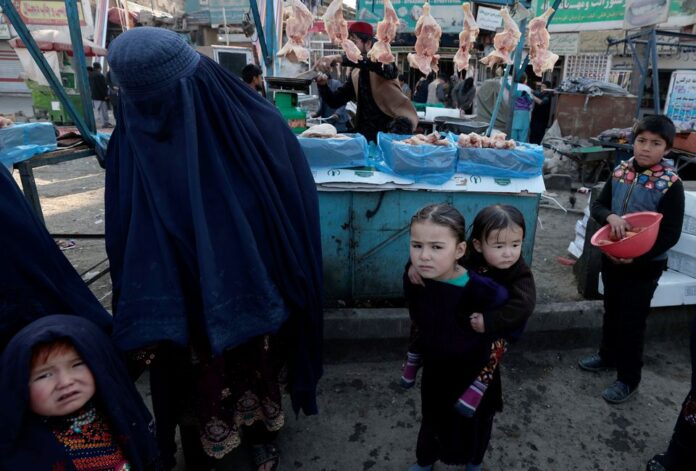
Iran, which hosts millions of Afghan refugees, has in recent months faced an influx of asylum seekers from the neighboring country.

The Islamic Republic says its borders are open to refugees but has complained about lack of international assistance.

It has in recent weeks stepped up calls on international organizations and European countries to fulfill their obligations regarding Afghan asylum seekers.

Raisi: US leaving Iraq due to resistance of Iraqi people

President Raisi made the comment in a Thursday meeting with the visiting Iraqi Foreign Minister Fuad Hussein.

Raisi also said the Islamic Republic has always supported a strong parliament and government in neighboring Iraq.

The president expressed pleasure at the safe parliamentary vote in Iraq, saying protest against elections may happen in any democracy and what matters is that authorities investigate objections to polls in a legal manner.

Raisi said, “We consider any insecurity in Iraq as insecurity in Iran”. He added that threatening Iraq’s stability is not acceptable and Iran’s policy is to support stability in Iraq.

The Iraqi foreign minister also thanked Iran for its decisive support of stability in Iraq. He said Iraqis have always been appreciative of Iran’s support for their government and stability in their country.

Earlier, Fuad Hussein and his Iranian counterpart Hossein Amir Abdollahian took questions at a news briefing.

Amir Abdollahian said Iraq has proved historically that it is not a country that can be occupied.

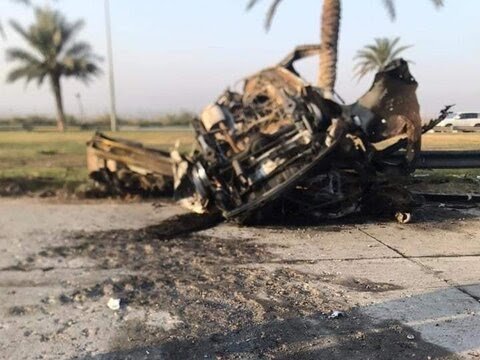
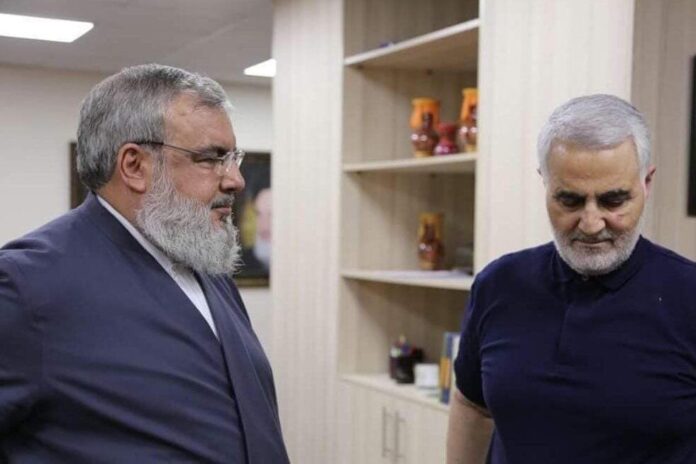
He added that on the second anniversary of the assassination of General Qassem Soleimani and his Iraqi companion Abu Mahid al-Muhandis, he received the good news of the US’s definite withdrawal from Iraq.

Amir Abdollahian also said a joint judicial committee formed by Iran and Iraq will pursue the terrorist act.

The Iranian foreign minister said Tehran is ready to allow Iraqis visa-free visits to Iran and that the top Iraqi diplomat will also pursue the issue in Baghdad.

51 people killed by Covid in Iran

The total Covid fatalities stand at 131,262. Since Wednesday, 1,932 new infections of Covid were logged.  The total caseload is 6,179,817 people. The majority of them, that is, 6,601,343 people have recovered from Covid.

Meanwhile, the total number of doses administered in Iran is now 115,249,231 doses. Despite the downward trend in deaths and infections compared to the time when the fifth wave of Covid killed hundreds and infected thousands daily, authorities say the vaccination process will continue forcefully until the entire population is triple-vaxxed.

Currently there are no red zones in Iran in terms of Covid risk and most cities and towns are marked blue, the lowest level of danger from the disease.

But the Health Ministry has reported a few cases of Omicron, the latest strain of Covid which has spread like wildfire around the world, most notably in the US and Europe.

The new variant is said to be way more contagious than Delta, though less deadly.

Iran, Syria discuss closer cooperation in transportation

In the meeting held in Damascus, Zouhair Khazim touched upon the West’s unilateral sanctions against Syrian people, and described as significant Tehran-Damascus cooperation in the field of transportation in order to counter the sanctions.

The Syrian minister also called for a framework to be set for cooperation between the two countries in the domain of air and land transportation based on legal provisions.

The Iranian delegation, for its part, also discussed the possibility of the establishment of joint air routes as well as support for repair and maintenance projects on roads in addition to making investments for the construction of new roads and bridges in Syria.

Iran has already announced its readiness for the reconstruction and restoration of ancient and historical sites in Syria as well as the construction and equipment of hotels and tourist accommodations in that country.

EU’s Mora says Vienna talks to resume Monday

Enrique Mora

“Vienna Talks to resume on Monday 27 December,” Mora wrote on Twitter on Thursday.

“The JCPOA Joint Commission will meet to discuss and define the way ahead. Important to pick up the pace on key outstanding issues and move forward, working closely with the US. Welcome to the 8th round,” he added.

Tehran and the five remaining parties to the Joint Comprehensive Plan of Action (JCPOA) began the talks in the Austrian capital in April with the aim of removing Washington’s unlawful sanctions after the United States voiced interest to return to the agreement.

During the seventh round of the Vienna talks, first under President Seyed Ebrahim Raisi, Iran submitted two draft proposals to the other parties concerning the removal of sanctions and Tehran’s nuclear commitments.

Iranian Foreign Ministry Spokesman Saeed Khatibzadeh said Monday Washington has not presented any tangible text to the P4+1 while Tehran has put forth two documents that embody previous texts. He added that if the other sides come to the negotiating table with tangible proposals, an agreement will be reached in the shortest possible time.

Iran’s top negotiator and Deputy Foreign Minister Ali Bagheri has noted the ball is in the court of the United States over nuclear dispute, and Washington must remove the anti-Tehran sanctions.

Iran’s Foreign Minister Hossein Amir Abdollahian has also reiterated that there is no way to revive the landmark agreement without removing all anti-Tehran sanctions.

IRGC showcases combat power during large-scale drills: Top general

“The IRGC’s Ground Force guarantees the country’s independence, territorial integrity and national security,” said IRGC Commander in Chief Major General Hossein Salami on the sidelines of the fourth day of the drills on Thursday.

“What was put on display today during the exercises was a combination of the major components of the combat power of the IRGC’s Ground Force, which included robust defense in stationary positions, anti-heliborne operations and the use of combat drones, jumping mines and power of fire by armored units,” he explained.

“The drills featured massive artillery fire as well as operations by the Amphibious Operations Unit of the IRGC Ground Force,” the commander added.

“The exercises involved divers as well as large numbers of vessels taking combat troops to the shore, which was among the most important achievements of the IRGC Ground Force. This has enabled the Force to couple its defense operations with combat tactics,” the top general added.

He said the war games also involved the firing of missiles and rockets as well as artillery units hitting targets with pinpoint accuracy.

The maneuvers have been ongoing in the Persian Gulf region and the Strait of Hormuz, as well as on the coasts of Hormuzgan, Busheher and Khuzestan provinces.

The exercises code-named the Great Prophet 17, are part of military drills Iran holds regularly to improve its combat power.
The five-day maneuvers end on Friday.

Palestinian youth killed by Israeli troops in WB

The Israeli troops shot and killed the Palestinian man in Ramallah on Wednesday night after opening fire at a car he was in, according to local sources.

The Ministry of Health said the Palestinian, identified as Mohammad Issa Abbas, 26, from Amari refugee camp, was shot in the back and arrived at Ramallah hospital in critical condition.

Attempts to save his life have failed and he was pronounced dead, the health ministry added.

The sources stated the soldiers opened fire at a car at a Ramallah neighborhood hitting Abbas in the back.

A Palestinian man has burned to death in his car after he was shot at by Israeli soldiers near a military checkpoint in north of the West Bank on Tuesday. Israeli forces killed a Palestinian youth in the occupied West Bank city of Jenin after his car was fired at over what they claimed to be a car-ramming attack on their checkpoint.

The latest killing comes as the Israeli regime has amended its open-fire rules, allowing forces to shoot Palestinian protesters who throw rocks and stones in the occupied West Bank even if they do not pose an imminent threat. Israel has long been criticized for using excessive and deadly force against Palestinians.

Palestinian President Mahmoud Abbas on Wednesday told a senior US official that Israel’s unilateral actions in the Palestinian territories undermine the world-backed two-state solution.

Abbas made the remarks during a meeting with US National Security Advisor Jake Sullivan in the West Bank city of Ramallah.

On Tuesday, Sullivan arrived in Israel to discuss several issues with both Israeli and Palestinian officials, including the revival of the Middle East peace process which has been stalled since 2014.

Abbas has urged Sullivan to exert pressure on Israel to stop its actions against the Palestinians, implement the signed agreements and launch a real political process in accordance with the legitimate international resolutions.

Abbas, who briefed Sullivan on the latest Israeli actions in the Palestinian territories, called for ending both the Jewish settlement and the Israeli military occupation of the Palestinian territories including East Jerusalem since 1967.

The Palestinian president also asked Sullivan to urge Israel to respect the historical situation in the Old City of East Jerusalem, stop the expulsion of Palestinian residents from the city, halt tax revenue cuts, and stop stifling the Palestinian economy.

Sullivan told Abbas that the United States is committed to the two-state solution and the importance of all parties working jointly to move forward to achieve peace and stability in the region.

On Tuesday, Abbas also met with US Assistant Secretary of State for Near Eastern Affairs Yael Lambert in the West Bank city of Ramallah.

Abbas briefed Lambert over the latest developments in the Palestinian territories, mainly the unilateral Israeli practices against the Palestinians that undermine the two-state solution.

The last direct peace talks between Israelis and Palestinians, sponsored by the United States, lasted nine months and broke down in 2014 over their deep differences on the issues of borders, security, and settlement.

Since then, there have been no diplomatic ties between Israelis and Palestinians because of the Palestinian rejection of the Israeli expansion of settlements and Israeli measures against the Palestinians in East Jerusalem.


US security chief lays out three Iran deal scenarios in Israel

Sullivan sketched out three possible near-term scenarios on Iran’s nuclear program in the meetings, two officials say:

1. An agreement within the next several weeks to return to full compliance with the 2015 deal, which he was skeptical would be achieved.

2. A “freeze for freeze” interim agreement to stop Iran from further accelerating its program.

3. No deal and new sanctions and pressure on Iran.

As the nuclear talks resumed in Vienna, anxiety was growing in the Prime Minister’s Office over the idea that the Joe Biden administration would seek a partial agreement that would provide Iran with sanctions relief without any nuclear rollback.

The idea of a possible “freeze for freeze” agreement was discussed during Sullivan’s meetings with Prime Minister Naftali Bennett, Foreign Minister Yair Lapid and Defense Minister Benny Gantz, all three of whom told Sullivan they oppose such a step, Israeli officials say.

Such a deal could prevent Iran from enriching uranium to weapons-grade levels. But Lapid told Sullivan that Israel already operates as though Iran has 90% enriched uranium, “and we don’t think there is any need to pay them not to do it”, according to one Israeli official.

Tehran denies seeking nuclear weapons, stressing it wants to master nuclear technology for peaceful purposes. Iranian officials have also stressed the country reserves the right to respond to any adventurism by the United States and Israel.

Sullivan met Bennett, Lapid and Gantz on Wednesday following a meeting on Tuesday with President Isaac Herzog.

One senior Israeli official stated Bennett appreciated the fact that Sullivan made the trip despite the many other pressing issues the Biden administration is facing, and saw it as a signal that the White House is attentive to Israel’s concerns. The official added that the meeting was very substantive and could have bearing on both countries’ policies.

“For the first time, both sides really understood each other. Over time, there was ripening on both sides and we feel a bit more reassured after today,” the senior official noted.

Another senior Israeli official concluded after meeting with Sullivan that the Biden administration “is in a better place than we thought” on Iran, and the policy gaps are smaller than previously believed.

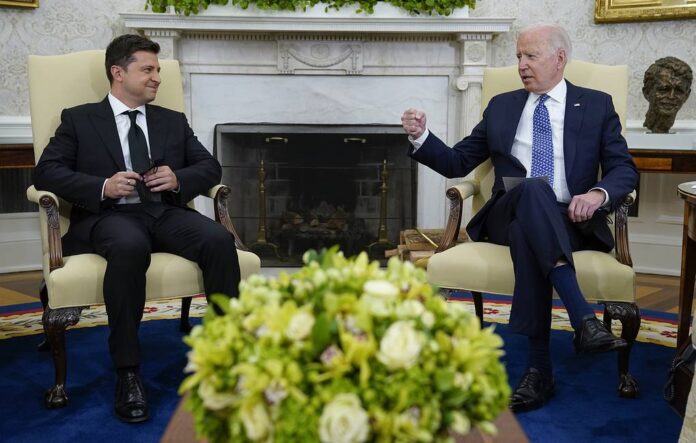
Sullivan told Bennett at the top of their meeting that Biden sent him to Jerusalem on Christmas week because he thought it was important “to sit together and develop a common strategy, a common outlook” on Iran and find a way forward that secures the interests of both US and Israel.

Sullivan also led a meeting of a US-Israel working group on Iran Wednesday along with his Israeli counterpart, Eyal Hulata. They discussed “the need to confront all aspects of the threat posed by Iran, including its nuclear program, destabilizing activities in the region, and support for terrorist proxy groups”, according to a White House statement.

Two Israeli officials who attended the meetings noted Sullivan made it clear that the window for further talks in Vienna could close by the end of January or the beginning of February.

Sullivan expressed skepticism about the chances of reaching a full agreement by then, the officials stated.

Bennett, Lapid and Gantz, meanwhile, argued that an interim agreement would offer a lifeline to the Iranian economy, with some of that money flowing to “Iranian proxies” that threaten Israel.

The Iranians have also rejected the idea of an interim agreement that does not provide full relief from US sanctions, and they contend that they’re negotiating in good faith for a return to the 2015 deal despite US suspicions that they’re only playing for time.

It comes after negotiators from Iran and the remaining parties to the JCPOA concluded the seventh round of talks in Vienna, aimed at bringing the US back into compliance with the agreement by removing its sanctions against Iran.

Iranian Foreign Ministry Spokesman Saeed Khatibzadeh said Monday Washington has not presented any tangible text to the P4+1 while Tehran has put forth two documents that embody previous texts. He added that if the other sides come to the negotiating table with tangible proposals, an agreement will be reached in the shortest possible time.

Iran’s top negotiator and Deputy Foreign Minister Ali Bagheri has noted the ball is in the court of the United States over nuclear dispute, and Washington must remove the anti-Tehran sanctions.

Iran’s Foreign Minister Hossein Amir Abdollahian has also reiterated that there is no way to revive the landmark agreement without removing all anti-Tehran sanctions.

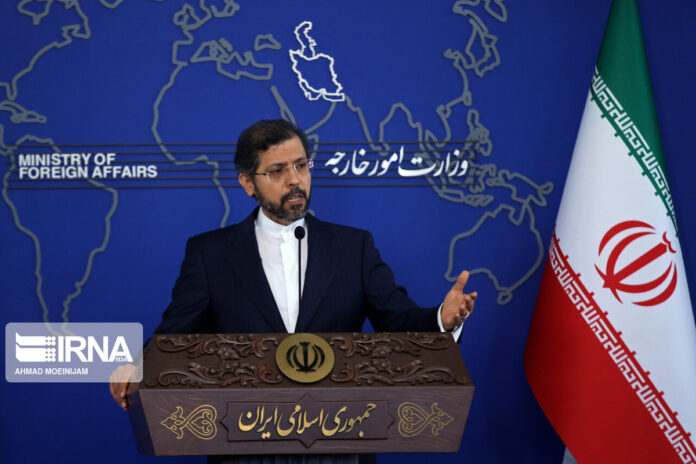
Khatibzade: GCC-UK statement on Iran baseless, repetitive

No Change in Iran’s Borders as Karabakh Peace Deal Unfolds: Spokesman

Saeed Khatibzadeh described the statement as being part of divisive attempts by some notorious quarters which are worried about the development of an atmosphere of interaction and cooperation between regional countries.

Khatibzadeh said the Islamic republic of Iran has always played a responsible role in strengthening peace and stability in the region and, accordingly, has invited regional countries to interaction and dialog.

He added that Western countries have unfortunately always stoked tension and created humanitarian catastrophes in the region through such moves as exports of huge quantities of sophisticated weapons to some regional states.

Khatibzadeh also said contrary to baseless claims made in the statement, Iran will always live up to its commitments under the Nuclear Non-proliferation Treaty and the safeguards agreements and at the same time will enjoy the benefits of peaceful use of nuclear energy in line with the NPT and the safeguards agreements.

The GCC’s (Persia Gulf Cooperation Council) foreign ministers met with Britain’s Foreign Secretary Liz Truss in Chevening, England, on Monday. After the meeting, they issued a joint statement, in which they voiced “grave concern” about Iran’s regional activities and also what they described as nuclear escalation by the Islamic Republic.

Masoud Kimiai paintings exhibit draws droves of visitors

An exhibition displaying the paintings of the famous Iranian director Masoud Kimiai has triggered huge enthusiasm among visitors.

Kimiai, born in Tehran on July 29, 1941, is an Iranian director, novelist and poet, who is best-known for the movie Qesyar, which is among the most iconic movies of the Iranian cinema.

Kimiai is one of the renowned directors in the new wave of the Iranian cinema with critics crediting him as an influential director-author who played an important role in the development of the economy of the cinema in Iran.

Masoud Kimiai paintings exhibit draws droves of visitors

He is also known for creating heroes in his movies.

Earlier this month, the Golestan Gallery in Tehran launched an exhibition of the paintings of Kimiai. It drew droves of visitors to the point that it put pressure on the flow of traffic in the Darous area, where the gallery is located in northern Tehran.

“I am not a painter and painting is not my profession. But, I paint when my inside tells me to do so. I have been painting since I was 17 or 18. I loved [painting] and the painting classes were the best back in school,” Kimiai once says about the exhibition.

For years, Kimiai has been significantly active in fields outside cinema. He is the author of such novels as Glass Corpses, Jealousy about the Life of Ein al-Ghozat and No Big Orchestras for Songs of Dissent as well as the collection of poetry dubbed Wounds of Wisdom, which was published in the early 2000’s.