Saturday, December 27, 2025
Home Blog Page 2210

“80% of Iran’s demands included in Vienna draft”

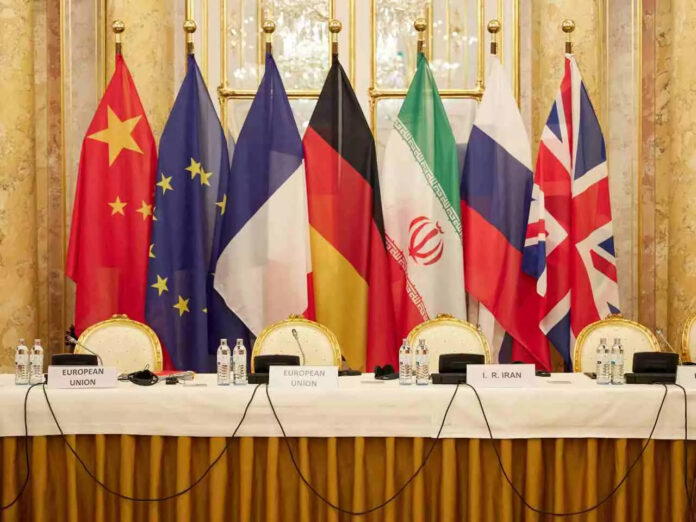
A European source, speaking on condition of anonymity, told the Iranian IRNA news agency, “Firstly, the Vienna talks were supposed to go ahead according to the draft of the previous six rounds. But, Iran’s new negotiating team submitted two written proposals in a new round of talks that began on November 29 in Vienna.”

The source continued, “The Iranian side emphasized that their proposals were based on the six previous rounds’ draft while it contains amendments and new points that after intensive talks between us and the Iranian delegation, the parties were finally able to reach a joint document and agenda of the talks in which 80% Iran’s demands have also been taken into account.”

“Negotiations are naturally very difficult, but as long as they witness a growing trend, they give us hope to continue until reaching a conclusion that is mutually satisfactory,” the source added.

Iran and the P4 + 1 are scheduled to resume talks in Vienna on Monday. The talks last Friday saw a 10-day hiatus for the return of delegations to their respective capitals amid the Christmas holidays in Europe.

Iran’s Foreign Minister Hossein Amir-Abdollahian said on Thursday in a joint press conference with his Iraqi counterpart in Tehran that during the last round of Vienna talks, “We were able to reach a single document and a single agenda [for the talks] after two stages of talks, and this was an important development.”

The Iranian FM also noted about the next round of talks that Iran will pursue serious talks in Vienna with goodwill and seriousness with the hope that it reaches a good agreement and the other parties will adopt the same approach.

In the Thursday joint press conference, Amir-Abdollahian further called for the removal of the sanctions if the western parties are really concerned about Iran’s peaceful nuclear program.

Iran, Russia to sign long-term partnership agreement

The channel said a major item in the 20-year agreement is about military cooperation between Iran and Russia.

The Russian media outlet added that Iran has a 900,000-strong military, making it one of the biggest armed forces of the world.

Meanwhile, Russia’s ambassador to Tehran told the channel that the UN arms embargo on Iran ended in 2020 and Moscow is ready for military cooperation with Tehran.

The Russian Zvezda Television Channel also said Iran is entitled to beef up its defensive military might because the US sells arms to several Middle Eastern countries and has bases in the region and US warships are in the Persian Gulf as well.

The report referred to improvement of relations between Arab states of the Persian Gulf and Iran, saying Tehran has also held several rounds of talks with Saudi Arabia to normalize ties with Riyadh.

According to this report, Iran and Russia have huge potentials to expand their scientific and technological cooperation.

The report also says the 20-year strategic partnership deal between Iran and Russia will be signed during upcoming visit of Iranian President Ebrahim Raisi to Moscow.

Over a month ago, Raisi held a telephone conversation with his Russian counterpart and told Vladimir Putin that Iran was determined to expand trade ties with Russia.

He reiterated Iran’s readiness to sign the long-term cooperation agreement. Putin also welcomed the decision to finalize the agreement and said Russia was ready to do that as soon as possible.

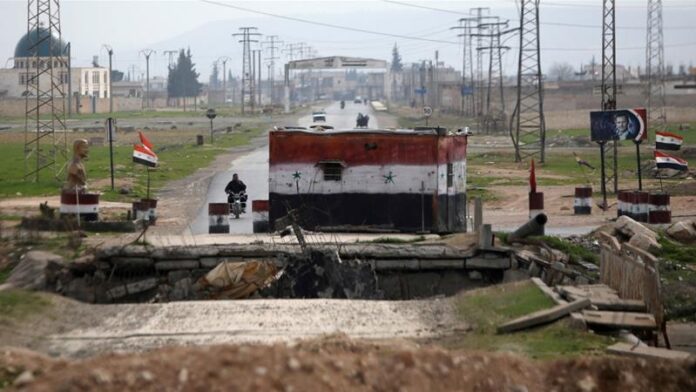
Dozens killed in refugee camp on US-controlled territory in Syria

“Security crisis is unfolding in the Al-Hawl refugee camp on the US-controlled territory in Trans-Euphrates. The tendency of radicalization is observed among its inhabitants. 84 murders and 23 attempted murders of the camp’s inhabitants were registered this year alone,” Mikhail Mizintsev stated.

In his words, the situation in Rukban, another refugee camp on the US-controlled territory, is catastrophic.

“The majority of its residents are destitute, they suffer from food shortages and have no access to education for their children, or to proper healthcare,” Mizintsev added.

The official went on to say that due to the stance taken by Western nations, no progress has been made regarding the delivery of humanitarian cargo through the lines of contact, including to the Idlib de-escalation zone. This situation violates UN Security Council resolution 2585, he continued.

“We urge to stop politicizing humanitarian activities in the Syrian Arab Republic and to start paying due attention to social problems of the population. We need to rule out the use of trans-border mechanism for the benefit of terrorist organizations and their members, who profit from those deliveries,” the official stated.

On Thursday, Russian and Syrian officials urged the US to lift its sanctions on Syria and pull its troops out of the country.

The officials are the heads of the Russian and Syrian offices for the coordination of the return of refugees to Syria, Mizintsev and Hussein Makhlouf, respectively. Mizintsev also heads Russia’s National Defense Management Center while Makhlouf is Syria’s Local Administration and Environment Minister.

They issued a joint statement that said, “Unprecedented sanctions pressure by the US and its European allies as well as the illegitimate deployment of foreign military units on Syria’s territory have a negative impact on the social, economic and humanitarian situation in the country.”

The removal of the sanctions would help the rebuilding of the country, the statement added.

The statement also says some countries seek to politicize humanitarian issues, such as aid delivery.

It added there’s evidence the West plans to continue supporting militant-controlled enclaves and that will mean that some hot spots will remain in the country.

The statement followed a joint meeting of the Russian and Syrian offices for the return of refugees, which took place by a video call earlier on Thursday.

Syria’s Minister of Foreign Faisal Mekdad and expatriates affairs have also stressed Western states are impeding the return of Syrian refugees to their homeland by all means, SANA news agency reported.

He emphasized that Damascus seeks to bring back its displaced people, urging them once again to return to their homes and contribute to rebuilding what have been destroyed by foreign-backed militancy and terrorism since 2011.

Mekdad also noted that a number of Western states do not want the Syrian refugees to return to their homeland and keep on impeding the process by all means.

He added the United States and its proxies are plundering Syrian oil and wheat and simultaneously try to prevent oil and wheat from reaching Syria.

Mekdad stated that Syria will not surrender to those who plot against it, stressing that it will continue to defend its sovereignty, independence, and territorial integrity.

Russia’s Deputy Minister of Defense Gennady Zhidko also said for his part that the reconstruction of Syria’s economy and infrastructure is the main task for building on what has been achieved in the field of combating terrorism.

He also stressed that sanctions by the US and Western countries against Syria impede the return of the Syrian refugees to their homeland.

Since March 2011, Syria has been gripped by a campaign of militancy and destruction sponsored by the US and its allies. However, Syrian government forces, backed by Russia and Iran, have managed to win back control of almost all regions from terrorist groups.

Russia welcomes resumption of Vienna talks next week

Olyanov said the EU deputy foreign policy chief’s announcement that the Vienna talks will resume shows all parties want negotiations to immediately resume. Earlier, Enrique Mora said in a tweet that the negotiations will restart on December 27.

Meanwhile, Iran’s Foreign Minister Hossein Amir Abdollahian has said the Islamic Republic will continue the talks aimed at removing sanctions against the country with seriousness.

He however noted that Tehran will never give excessive concessions to the other sides.

Amir Ambdollahian made the remarks in a joint press conference with his Iraqi counterpart in Tehran on Thursday.

The foreign minister criticized what he called a non-constructive approach adopted by the European signatories to the Iran nuclear deal, JCPOA, during the previous rounds of talks.

He said the European troika did not put forth any initiative in the negotiations while Iran did.

IRGC fires cruise missiles with pinpoint capabilities during drills

The medium range cruise missiles, which were fired from floating and offshore platforms, hit their targets at sea.

Commander of the Islamic Revolution Guards Corps Navy Rear Admiral Alireza Tangsiri said the important capabilities of these missiles are radar evasion, resistance to electronic warfare, precise targeting in tough conditions, high speed, powerful warhead and special radars.

The IRGC forces also exercised drone operations, with one unmanned aerial vehicle simultaneously destroying two targets.

Chief Commander of the Islamic Revolution Guards Corps Major General Hossein Salami said the IRGC forces launched advanced suicide and offensive drones on the fourth day of the drills.

The maneuvers kicked off on Monday and will continue until Friday in the southern provinces of Hormozgan, Bushehr, and Khuzestan.

Gas blast kills two at Tehran flower market

The blast and ensuing fire in Tehran’s southeast destroyed several stores.

Shops at Shahid Mahallati flower market have caught fire several times in the past.

Iran FM: We are ready for next round of talks with Saudis

Tehran Still Ready to Mend Ties with Riyadh Despite ‘Foolish’ Moves

Amir Abdollahian however said Tehran has yet to receive a persuasive response from Riyadh.

The foreign minister also thanked the Iraqi government for its efforts to normalize relations between Tehran and Riyadh. He was speaking at a joint press conference with his Iraqi counterpart in Tehran on Thursday.

Amir Abdollahian added that the Saudis have agreed to issue visas for three Iranian diplomats who will be stationed at the headquarters of the Islamic Cooperation Organization in Jeddah.

Iran and Saudi Arabia have held several rounds of negotiations in Baghdad to normalize their relations.

The Saudis moved first in cutting ties with Iran in early 2016 after Iranians protested the execution of Shia Saudi cleric Sheikh Nimr al-Nimr by holding rallies outside the Saudi embassy in Tehran.

Iranian footballer Azmun selected best player of 2021 in Russia

Azmoun, member of Iranian national team who is the forward of Russia’s giants Zenit St. Petersburg team, won the title of the best football player of the country in 2021 in a poll conducted by the Russian newspaper Sport Express.

Sixteen professional coaches, 16 senior football managers, 16 reporters from the Sport Express newspaper, as well as football fans, took part in the poll on the newspaper’s website.

The Zenit St Petersburg centre-forward also plays for the national team of Iran as a striker.

Blast in Kabul kills one, wounding several people

A spokesman for the Afghanistan’s Interior Ministry said the attacker was shot and killed while trying to enter the passport office premises.

One member of the Taliban who was a witness told Reuters multiple people were injured, and the building and streets around the area were locked down by Taliban security forces.

Large crowds of Afghans have been thronging outside the passport office in a bid to get travel documents in recent days after the service was restarted after weeks of suspension.

Officials stated that Thursdays are reserved as a special day for Taliban officials to visit the passport office to make travel documents.

No group has claimed responsibility for the explosion yet. It is worth mentioning that Daesh has been targeting the Taliban fighters since they recapture power on August 15.

US: Saudi Arabia building ballistic missiles with China’s help

Saudi Arabia is known to have purchased ballistic missiles from China in the past but has never been able to build its own — until now, according to three sources familiar with the latest intelligence.

Satellite images obtained by CNN also suggest the Kingdom is currently manufacturing the weapons in at least one location.

US officials at numerous agencies, including the National Security Council at the White House, have been briefed in recent months on classified intelligence revealing multiple large-scale transfers of sensitive ballistic missile technology between China and Saudi Arabia, according to two sources familiar with the latest assessments.

The Joe Biden administration is now confronted with increasingly urgent questions about whether Saudi’s ballistic missile advancements could dramatically change regional power dynamics and complicate efforts to expand the terms of a nuclear deal with Iran to include restraints on its own missile technology — a goal shared by the US, Europe, Israel and Persian Gulf countries.

Iran and Saudi Arabia are bitter enemies and it is unlikely Tehran will agree to stop making ballistic missiles if Saudi Arabia has begun manufacturing its own.

“While significant attention has been focused on Iran’s large ballistic missile program, Saudi Arabia’s development and now production of ballistic missiles has not received the same level of scrutiny,” Jeffrey Lewis, a weapons expert and professor at the Middlebury Institute of International Studies, told CNN.

“The domestic production of ballistic missiles by Saudi Arabia suggests that any diplomatic effort to control missile proliferation would need to involve other regional actors, like Saudi Arabia and Israel, that produce their own ballistic missiles,” Lewis added.

Any US response could also be complicated by diplomatic considerations with China, as the Biden administration seeks to reengage Beijing on several other high-priority policy issues, including climate, trade and the pandemic.

“It’s all a matter of calibration,” a senior administration official told CNN.

The National Security Council and CIA declined to comment.

Asked if there have been any recent transfers of sensitive ballistic missile technology between China and Saudi Arabia, a spokesperson for China’s Ministry of Foreign Affairs told CNN in a statement that the two countries are “comprehensive strategic partners” and “have maintained friendly cooperation in all fields, including in the field of military trade.”

“Such cooperation does not violate any international law and does not involve the proliferation of weapons of mass destruction,” the statement noted.

The Saudi Government and embassy in Washington did not respond to CNN’s request for comment.

CNN first reported in 2019 that US intelligence agencies were aware that Saudi Arabia was collaborating with China to advance its ballistic missile program.

The Donald Trump administration did not initially disclose its knowledge of that classified intelligence to key members of Congress, infuriating Democrats who discovered it outside of regular US government channels and concluded it had been deliberately left out of a series of briefings where they say it should have been presented.

That fueled Democratic criticism that the Trump administration was too soft on Saudi. Nuclear proliferation experts also say Trump’s lack of response emboldened the Saudis to continue expanding their ballistic missile program.

“Normally, the US would have pressured Saudi Arabia not to pursue these capabilities, but the first indicators that the Saudis were pursuing these capabilities indigenously emerged during the Trump era. The Trump administration, to put it lightly, was not interested in bearing down on Riyadh over these issues,” according to Ankit Panda, a nuclear policy and weapons expert at the Carnegie Endowment for International Peace.

Some lawmakers have been briefed over the past few months on new intelligence about transfers of ballistic missile tech between Saudi Arabia and China, multiple sources told CNN.

The Biden administration is preparing to sanction some organizations involved in the transfers, sources told CNN, though some on Capitol Hill are concerned the White House is not willing to impose significant consequences on the Saudi government for its actions.

Given the current state of negotiations with Iran, the Saudi missile program could make an already thorny problem even more difficult.

“A robust Saudi missile program would introduce new challenges to constraining other missile programs in the region. To take just one example, Iran’s missiles, which are a major concern to the US, would be more difficult to constrain in the future without parallel constraints on a growing Saudi program,” Panda told CNN.

New satellite images obtained by CNN indicate the Saudis are already manufacturing ballistic missiles at a site previously constructed with Chinese assistance, according to experts who analyzed the photos and sources who confirmed they reflect advancements that are consistent with the latest US intelligence assessments.

Satellite photos taken by Planet, a commercial imaging company, between October 26 and November 9 show a burn operation occurred at a facility near Dawadmi, Saudi Arabia, according to researchers at the Middlebury Institute of International Studies, who told CNN this is “the first unambiguous evidence that the facility is operating to produce missiles.”

“The key piece of evidence is that the facility is operating a ‘burn pit’ to dispose of solid-propellant leftover from the production of ballistic missiles,” said Lewis, a weapons expert and professor at the Middlebury Institute of International Studies who reviewed the images.

“Casting rocket motors results in leftover propellant, which is an explosive hazard. Solid-propellant missile production facilities often have burn pits where leftover propellant can be disposed of by burning. Burn operations are, therefore, a strong signature that the facility is actively casting solid rocket motors,” he added.

Still, little is known about the ballistic missiles that Saudi Arabia is building at this site, including important details like range and payload.

Considering the facility in question was built with Chinese assistance and new intelligence assessments showing Saudi Arabia has recently purchased sensitive ballistic missile technology from China, it is possible that the missiles being produced there are of Chinese design, according to Lewis.

But there is also evidence Saudi Arabia has looked to other countries for help with developing a ballistic missile program in recent years, making it difficult to identify exactly which weapons system the Kingdom is now building at this facility, Lewis stated.