Saturday, December 27, 2025
Home Blog Page 2209

Iran slams US for voting against human rights-related UN resolutions

In tweets on Friday, Kazem Gharibabadi, the Judiciary chief’s deputy and secretary general of Iran’s High Council for Human Rights, said the US voted ‘No’ to two important UNGA resolutions in support of the right to food and in condemnation of racism.

“Bad news for human rights,” wrote the Iranian rights official.

One of the documents, he said was a “resolution on condemning all forms of racism. The US and Ukraine voted against, 49 abstained and 130 in favor. This resolution is proposed since 2015 and the US has voted against it every time.”

The resolution, which was adopted on December 16, had been proposed by Russia and 30 other states to condemn all kinds of racist practices, including Nazism and neo-Nazism.
Gharibabadi said the other resolution, which was adopted on the same day, concerned the right to food, “reaffirming that hunger constitutes an outrage and a violation of human dignity, requiring the adoption of urgent measures at different levels for its elimination, with a vote of 186 in favor, 2 against (Israel, US), with no abstentions.”

The resolution expressed concern that the effects created by the world food crisis continued to have serious consequences for the poorest and most vulnerable people.

Russia to US: No alternative to Iran nuclear deal

Russian Foreign Ministry Spokeswoman Maria Zakharova

Zakhrova stated, “This deal has not lost its topicality, and all UN Security Council member nations, including, by the way, the United States, must observe it. We insist on that.”

“As for any possible alternatives to the restoration of the JCPOA, the Russian side insists that there is no alternative to the JCPOA,” she added.

According to Zakharova, Russia’s position has stayed unchanged from the very beginning of the work on the plan.

“Correspondingly, when the United States began to break it down and withdraw from it unilaterally, saying they are special and that it why they quit it, we still insisted that this document had no alternatives,” the spokeswoman noted.

“When Washington changed its position again, this time in favor of this agreement, we stuck to our former position and that is why we take part in these talks as real partners in order to restore this deal as soon as possible,” she continued.

The Joint Comprehensive Plan of Action (JCPOA), also known as the Iran nuclear deal, was signed between Iran, the five permanent members of the United Nations Security Council (Russia, the United Kingdom, China, the United States and France) and Germany in 2015. Under the deal, Iran undertook to curb its nuclear activities and place them under the total control of the International Atomic Energy Agency (IAEA) in exchange for the abandonment of the sanctions imposed previously by the United Nations Security Council, the European Union and the United States over its nuclear program.

The future of the deal was called into question after the United States’ unilateral withdrawal in May 2018 and Washington’s unilateral oil export sanctions against Teheran. Iran argued that all the other participants, Europeans in the first place, were ignoring some of their own obligations in the economic sphere, thus making the deal in its current shape senseless. This said, it began to gradually scale down its commitments under the deal.

The seventh round of talks on the restoration of the Iran nuclear deal finished in Vienna on December 17. It was noted that the parties want to restore the JCPOA in its original edition.

Israeli settler kills elderly Palestinian woman in WB

An Israeli settler rammed his vehicle into a Palestinian elderly at the entrance of Sinjil town, northeast of Ramallah, killing her, according to security sources.

They said that the settler rammed his car into Ghadir Anis Abdullah Fuqaha while the latter was at the entrance of the town, instantly killing her. The assailant fled the scene.

In a post at the official Facebook page of Sinjil Municipality, mayor Hazem Tawafsha stated that 63-year-old Fuqaha was with her husband at the town entrance, close to the bypass Road 60, waiting for a taxi to be picked up to Nablus city, when the settler rammed his car into her before speeding away in a deliberate hit and run attack.

He added that this attack is reminiscent of an attack when a speeding settler driving near the town rammed his vehicle into Enas Shawkat Dar Khalil and Tulin Omar ‘Asfour, five-year-old girls who were walking home from their kindergarten in 2014.

Enas was instantly killed and Tulin sustained a very serious injury and is now struggling with a life-long disability.

Israeli police usually treat such attacks as accidents, even in cases when witnesses claim the ramming attacks were deliberate.

Settler violence against Palestinians and their property is routine in the West Bank and is rarely prosecuted by Israeli authorities.

Settler violence includes property and mosque arsons, stone-throwing, uprooting of crops and olive trees, attacks on vulnerable homes, among others.

There are over 700,000 Israeli settlers living in colonial settlements in the West Bank and East Jerusalem.

China: US should overhaul erroneous policy of maximum pressure on Iran

“China welcomes the upcoming eighth round of negotiations on resuming compliance with the JCPOA (Joint Comprehensive Plan of Action) in Vienna. We hope all parties will adopt a serious attitude, focus on outstanding issues, and continue to advance the negotiations to achieve early results,” China’s Foreign Ministry Spokesman Zhao Lijian stated at a regular press conference on Friday.

“I’d like to reiterate that, as the culprit of the Iranian nuclear crisis, the US should overhaul its erroneous policy of “maximum pressure” on Iran, and lift all illegal sanctions on Iran and “long-arm jurisdiction” on third parties. On this basis, Iran should resume full compliance,” he added.

“China will continue to play an active and constructive role, and work with all parties to bring the JCPOA back onto the right track at an early date. Meanwhile, we will firmly safeguard our legitimate rights and interests,” he continued.

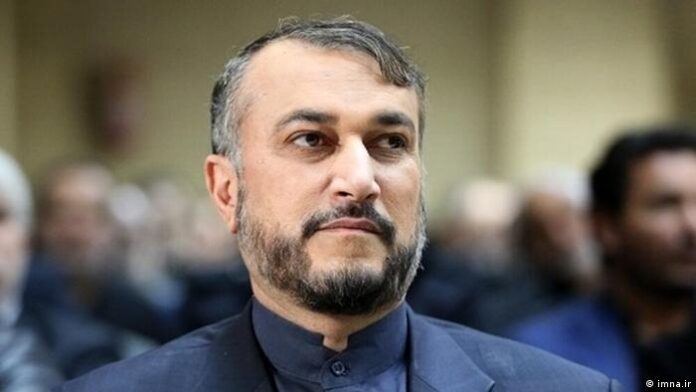
On Thursday, Iran’s Foreign Minister Hossein Amir Abdollahian said Tehran will continue the talks aimed at removing sanctions against the country with seriousness.

He however noted that Tehran will never give excessive concessions to the other sides.

The foreign minister criticized what he called a non-constructive approach adopted by the European signatories to the Iran nuclear deal, JCPOA, during the previous rounds of talks.

He stressed the European troika did not put forth any initiative in the negotiations while Iran did.

Tehran and the five remaining parties to the JCPOA began the talks in the Austrian capital in April with the aim of removing Washington’s unlawful sanctions after the United States voiced interest to return to the agreement.

During the seventh round of the Vienna talks, first under President Seyed Ebrahim Raisi, Iran submitted two draft proposals to the other parties concerning the removal of sanctions and Tehran’s nuclear commitments.

European Union deputy foreign policy chief Enrique Mora said on Thursday negotiations between world powers and Iran on salvaging the 2015 nuclear deal will resume in Vienna on December 27.

Iran military commander: Missile drills a message to Zionists

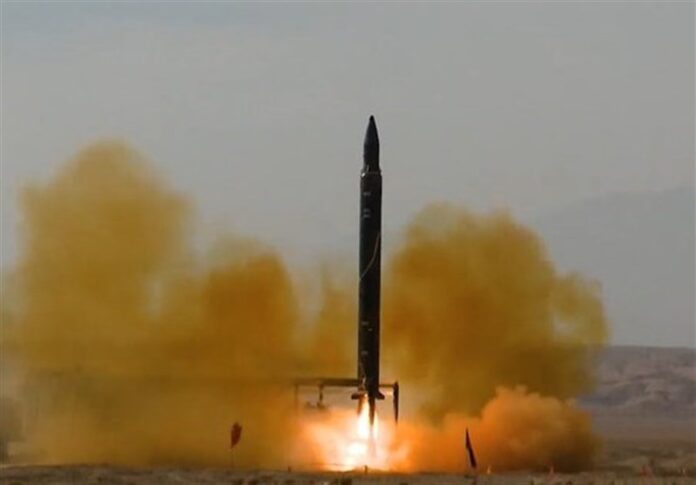
Iran ballistic missiles

General Mohammad Bagheri described the Israeli threats against Iran as empty.
He noted that the drill which saw the simultaneous firing of 16 ballistic missiles at designated targets was among the most successful exercises in Iran.

A number of other military officials also commented on the missile drills. The commander of the Islamic Revolution Guards Corps also said the missile drill was a clear message to the Zionist officials that if they make a mistake, Iran will cut off their hands.

General Hossein Salami also warned that it would suffice to slightly change the angle of the missile launchers.

The commander of the Aerospace Force of the IRGC also said a feature of the maneuvers was the capability of launching multi-direction missile strikes and the maneuverability of Iran’s ballistic missiles.

Brigadier General Amir Ali Hajizadeh added that the enemies can no longer predict from which direction Iranian missiles will come.

Hajizadeh noted that the missile launches by Iranian armed forces during the drills were accurate and the drones also hit the targets with precision.

He added that Iran’s new military capabilities in this regard have rendered useless the expenditure of hundreds of billions of dollars by the enemies on their military power.
Iran has held numerous military maneuvers in recent years amid continued threat by the Israeli regime and the US.

The Great Prophet 17 military drills which ended on Friday, was held in the southern provinces of Hormozgan, Bushehr, and Khuzestan.

Saudi jets heavily bomb residential areas in Yemen

Massive explosions have been reported in the Yemeni capital city of Sana’a after Saudi fighter jets conducted a fresh round of airstrikes on residential area.

They struck the al-Thawra Sports Complex, which is home turf for the Yemeni national football team, early on Friday.

The Saudi fighters also targeted an area close to a hospital, severely damaging several buildings.

A medical source, who preferred not to be named, told Yemen’s al-Masirah television network that the strikes caused panic and fear among patients and medical staff and put the medical center out of service.

“The violent attacks hit the residential area in this street, causing damage to Oliya Hospital and residential houses,” one local resident told al-Masirah.

“The Saudi airstrikes targeted my bus…look at the neighborhood, shattered windows are everywhere…they attacked when everyone was resting at their homes,” another resident noted.

“This is a residential area and there is no military base or camp around here. May God damn the US, Israel and their allies, Saudi Arabia and the United Arab Emirates, an anyone who targets innocent people late at night,” the third resident added.

There were no immediate reports of casualties or extent of damage as a result of the airstrikes, which sent panic-stricken residents of nearby buildings into the streets.

Saudi jets also conducted airstrikes against several buildings on Zubairi Street, as well as a number of sites next to Baghdad School and the Vocational Institute. No reports about possible casualties and the extent of damage caused were quickly available though.

A senior member of Yemen’s Supreme Political Council denounced the air raids against various neighborhoods in the capital Sana’a, calling on the United Nations to launch an investigation into the air raid on the al-Thawra Sports Complex.

“The decision by the coalition of aggression to give a six-hour ultimatum for the evacuation of the stadium resembles what the Zionist entity is doing in the Gaza Strip,” Mohammed Ali al-Houthi wrote in a series of posts published on his Twitter page.

He called on UN experts to visit the bombed sports complex and carry out a careful investigation.

“If they found drones or missiles inside the stadium, as leaders of the Saudi-led coalition allege, we will not hesitate to hand them over to the United Nations. But if they (the experts) could not discover anything, the leaders of the alliance must then commit themselves to stopping the bombing campaign,” he added.

“If they found drones or missiles inside the stadium, as leaders of the Saudi-led coalition allege, we will not hesitate to hand them over to the United Nations. But if they (the experts) could not discover anything, the leaders of the alliance must then commit themselves to stopping the bombing campaign,” Houthi pointed out.

Nasr al-Deen Amer, Deputy Minister of Information in Yemen’s National Salvation Government, called upon all Yemeni journalists and members of the press to visit the al-Thawra Sports Complex, and document the fact that there are no munitions there.

Earlier, the Riyadh-led coalition of aggression had claimed that Yemen’s Ansarullah resistance movement was using the al-Thawra Sports Complex as an arms deports, and demanded that Yemeni forces remove weapons from the stadium in Sana’a.

It declared a six-hour ultimatum, which reportedly went into effect as of 8 p.m. local time (1700 GMT) on Thursday.

Yemen Olympic Committee also appealed to the International Olympic Committee, the Olympic Council of Asia, relevant international organizations and the Security Council to intervene and stop airstrikes against sports facilities in Yemen.

The committee announced in a statement that sports centers in Yemen are civilian facilities, have nothing to do with military applications and do not contain any sort of weapons.

“No weapons or military equipment were stockpiled inside all the sports facilities targeted since the start of the Saudi-led aggression in March 2015. Many Yemeni sports facilities, including stadiums and closed halls, are now in ruins, leaving athletes deprived of exercising and performing their activities. It took many years and huge sums of money for these centers to be built. It is, therefore, not easy to reconstruct them,” the statement read.

The committee called upon sports federations worldwide and all concerned parties to intervene quickly, and to stop Saudi aerial assaults against the remaining Yemeni sports facilities so that Yemeni youths and athletes of Yemen would not find themselves without stadiums.

Moreover, Mohammed al-Bukhaiti, a member of Yemen’s Supreme Political Council, warned the Saudi-led war coalition to brace itself for “heavy and painful” retaliatory attacks.

Bukhaiti told the Arabic service of Russia’s Sputnik news agency that the Yemeni army forces and fighters from the Popular Committees would soon respond strongly to the Saudi-led airstrikes on Sana’a.

He highlighted that the Riyadh regime has reached a stalemate in the war on Yemen, and has been unable to attain any of its objectives, adding that Saudi Arabia has been the target of intense retaliatory rocket and drone strikes in recent years, and has now opted to pound residential buildings and civilian facilities, such as Sana’a International Airport, in Yemen.

Bukhaiti noted that the heavy bombardment of Sana’a airport comes despite the fact that the site remain out of service.

“Saudis have also bombed most of important bridges in Sana’a. All of this shows they are punishing the Yemeni nation with military strikes and siege. Attacks on civilians will not go unanswered. Yemen now has the ability to strike targets deep inside Saudi Arabia. Saudi attacks once again exposed the hypocritical position of the international community, which has so far failed to release a statement in condemnation of attacks by Saudi Arabia and the United Arab Emirates (UAE) on civilian sites,” he pointed out.

Bukhaiti highlighted that the Yemen war has well demonstrated the inefficiency of international mechanisms, which depend on the United Nations and the Security Council.

“The international community needs a new order more than ever, or at least world states should adhere to existing agreements, such as the ban on attacks against civilians,” he added.

Elsewhere in his remarks, Bukhati emphasized that there is definitely a connection between the advance of Yemeni army forces and Popular Committees fighters in Ma’rib with the escalation of Saudi-led airstrikes on Sana’a.

Saudi Arabia, backed by the United States and regional allies, launched the war on Yemen in March 2015, with the goal of bringing the government of former Yemeni president Abd Rabbuh Mansour Hadi back to power and crushing Ansarullah movement.

The war has left hundreds of thousands of Yemenis dead, and displaced millions more. It has also destroyed Yemen’s infrastructure and spread famine and infectious diseases there.

Despite heavily-armed Saudi Arabia’s incessant bombardment of the impoverished country, the Yemeni armed forces and the Popular Committees have grown steadily in strength against the Saudi-led invaders and left Riyadh and its allies bogged down in the country.

World’s ‘most powerful woman’ beats own record in truck-pulling

Mousavi has recently pulled a truck weighing 17,200 kilograms (17.2 tons) for 41 meters in 1:31 minutes, breaking her own record that she had set in 2019 when she towed a 12,380-kg truck for 30 meters.

Speaking to reporters afterwards, Mousavi said she planned to improve the record even further.

“I am very happy that I managed to set a new record. I do not intend to show off my power, but rather I want to show that a human being, even if a female one, is able to do anything only if he/she has the will and works hard,” Mousawi said.

Construction of Iran-Armenia transit route to be completed soon: MP

Lawmaker Jalal Mahmoudzadeh briefed on Friday media about the agenda of a visit by members of the Iran-Armenia Parliamentary Friendship Group to Yerevan, where they held meetings with their counterparts and other officials of the country.

He said the Iranian parliamentary delegation had a meeting with Armenia’s Minister of Territorial Administration and Infrastructure Gnel Sanosyan to share views on ways to expand bilateral trade and speed up the construction of the transit motorway.

“Currently, the 30-kilometer transit route between Iran and Armenia is under construction with the participation of both Iranian and Armenian contractors and is undergoing changes to directions,” he said.

Mahmoudzadeh said that a 20-kilometer section of the route was ready for use, and that the project would be “completed soon.”

In October, Iranian Deputy Transport and Urban Development Minister Kheirollah Khademi announced an agreement between Iran and Armenia for building new transit routes, which would eliminate the need for the two countries to use the roads that pass through Azerbaijan Republic.

He inspected the construction site of the transit route under construction between the northeastern Iranian town of Nordooz and Yerevan. The project, named Tatev, will enable freight between the two countries to run entirely on Armenian land.

Earlier this year, a diplomat dispute broke out between Iran and Azerbaijani Republic over Baku’s decision to set up checkpoints on the road and charge Iranian drivers $130 for transit rights.

The Iranian MP added Armenian members of the Friendship Group would also be invited to Iran in the future for talks with Iranian ministers and businessmen.

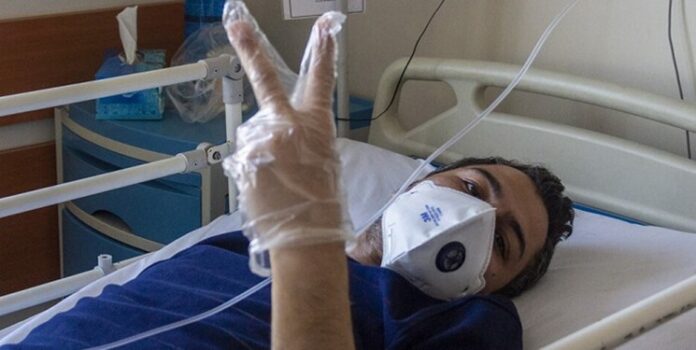
Iran minister urge people to administer covid booster; 44 more deaths

He said relaxing Covid health protocols could endanger people, urging all Iranians to get their third shots. Meanwhile, Health Ministry figures on Friday showed that the Coronavirus killed 44 people in the past 24 hours.

The latest deaths push to 131,306 the total number of fatalities from the disease since the start of the pandemic.

Since Thursday, 1,967 new cases have been registered. The total caseload is 6,181,784. The vaccination campaign is also continuing in the country.

So far, 115,592,804 doses of Covid vaccine have been administered. There are no red and orange cities across Iran now. The colors denote the highest level of risk from Covid. 53 cities are now yellow and 395 others are blue, with the latter showing the lowest level of danger from the disease.

Iran’s Raisi offers Christmas greetings to Pope Francis, all Christians

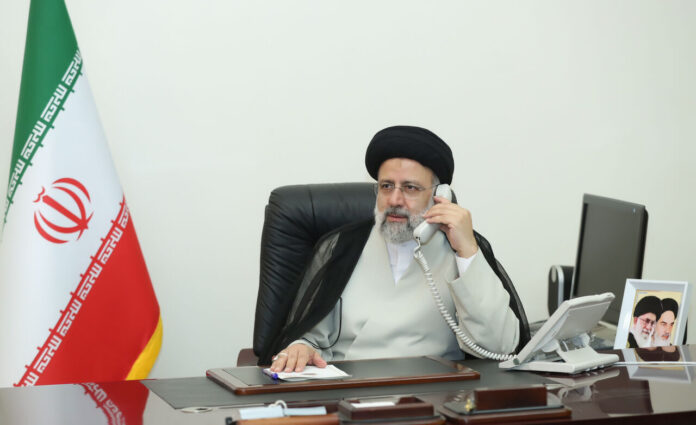
In a message on Friday to Pope Francis, who is the spiritual leader of Catholic Christians, President Raeisi said, “I sincerely congratulate your Excellency and all the Christians of the world on the jubilant birth of Jesus Christ (PBUH), the Prophet of kindness and peace.”

The Iranian president described the Prophet’s birth as an occasion to pay tribute to Hazrat Mary (Peace be upon her), and “a reminder of the moral characteristics of Jesus Christ (PBUH), who is the role model for altruism and the messenger of salvation for the oppressed, in standing against the domineering powers’ oppression and signaling a bright future for humanity.”

Jesus Christ’s birth is the “manifestation of the God’s will and power,” Raisi said, adding that the spiritual status of Hazrat Mary, the Prophet’s mother, shows the lofty position of women in divine religions.

President Raisi also thanked Pope Francis for his efforts toward bringing closer the hearts and views of followers of Abrahamic religions.

On December 25, billions of Christians across the globe will commemorate the birth of Jesus Christ, days ahead of the New Year on January 1, which marks the start of the Georgian calendar.