Thursday, December 25, 2025
Home Blog Page 219

Israel closes almost 90% of cases of alleged war crimes or abuse without charges: Report

Gaza War

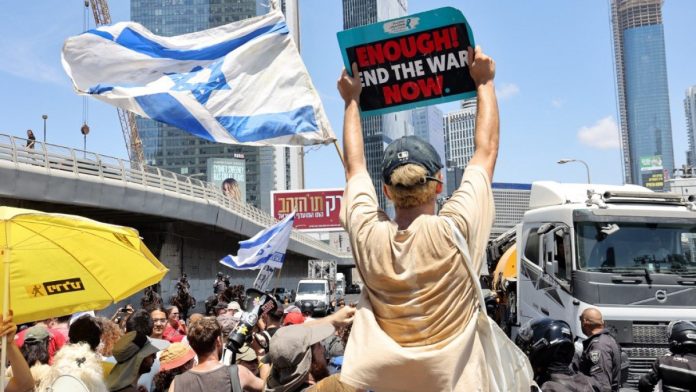
Unresolved investigations include the killing of at least 112 Palestinians queueing for flour in Gaza City in February 2024, Action on Armed Violence (AOAV) said, and an airstrike that killed 45 in an inferno at a tented camp in Rafah in May 2024.

Also unresolved is an inquiry into the killing of 31 Palestinians going to pick up food at a distribution point in Rafah on 1 June.

They were killed after Israeli forces opened fire, witnesses said. Shortly after, the Israel Defense Forces (IDF) said the reports were “false” but the IDF told the Guardian that the incident was “still under review”.

Iain Overton and Lucas Tsantzouris, the team at AOAV, said the statistics suggested Israel was seeking to create a “pattern of impunity” by failing to conclude or find no fault in the vast majority of cases involving “the most severe or public accusations of wrongdoing by their forces”.

The IDF said it “conducts examination and investigation processes regarding exceptional incidents that occurred during operational activity, in which there is a suspicion of a violation of the law” in accordance with its obligations under Israeli and international law.

It operates internal systems to conduct examinations and allegations of war crimes, including criminal investigations by the military advocate general’s police department and fact-finding assessments (FFA) by a separate team in the general staff.

The relatively short passage of time, in investigatory and legal terms, means other unresolved cases may also result in prosecutions, though the two researchers said IDF inquiries had become “more opaque and slow-moving” as the number of civilian casualties in Gaza has mounted.

AOAV said it had found reports of 52 cases in English-language media where the Israeli military said it had conducted or would conduct an investigation after allegations of civilian harm or wrongdoing by its forces in Gaza or the West Bank between October 2023 and the end of June 2025. They involve the deaths of 1,303 Palestinians and the wounding of 1,880.

One case resulted in a prison sentence for an Israeli soldier. An IDF reservist received a seven-month jail term in February after he was convicted by a military court of the aggravated abuse of Palestinian security detainees. He had repeatedly attacked bound and blindfolded prisoners with his fists, a baton and his assault rifle at the Sde Teiman detention centre.

Five other cases ended with violations found. In one, an IDF colonel and a major were sacked in April 2024 and three other commanders reprimanded a few days after seven aid workers from the World Central Kitchen were killed in an airstrike. The IDF said it was a “grave mistake stemming from a serious failure due to a mistaken identification”, though the charity said the rapid investigation lacked credibility.

The remaining 46 cases, representing 88% of the total, seven were closed without any finding of fault, AOAV said. A further 39 remain under review or with no outcome reported, including four deadly incidents over the course of last month when Palestinians were killed near or at various food distribution points on the Gaza Strip.

According to the IDF: “Any report … complaint or allegation that suggests misconduct by IDF forces undergoes an initial examination process, irrespective of its source.” In some instances the evidence is such that a criminal investigation by military police is ordered, while in others an initial investigation takes place.

These are referred to the IDF general staff’s FFA mechanism to determine “whether there is a reasonable suspicion of criminal misconduct”. Critics of the system, such as the Yesh Din human rights group, say FFA investigations can take years and have led to one known prosecution after 664 inquiries relating to previous IDF military operations in Gaza, in 2014, 2018-19 and 2021.

In August 2024, the IDF said the FFA had collected information on “hundreds of incidents” relating to the war in Gaza alone, while the military advocate general’s office had launched 74 criminal investigations.

Of these, 52 related to the deaths and mistreatment of detainees and 13 to the stealing of enemy ammunition, while a minority related to allegations of war crimes in combat situations. Three related to the “destruction of civilian property without military necessity” and six concerning “alleged illegal use of force”.

The IDF statistics differ from the investigations tracked by AOAV because the research group used a different methodology. AOAV reviewed episodes where there were reports of an investigation being or having been conducted and also took in incidents on the West Bank as well as Gaza.

The IDF said that “dozens of military police investigations have been opened” and that “most of these investigations are still ongoing”. The FFA mechanism, meanwhile, had “completed its review in dozens of cases” and these had transferred to the military advocate general for possible criminal investigation.

US gave $3mn in Gaza food aid, contradicting Trump’s $60M claim: WaPo

Gaza War

Citing State Department officials, the report said $30 million had been allocated from the US International Disaster Assistance fund to support food aid in Gaza through the Gaza Humanitarian Foundation (GHF), a controversial US- and Israeli-backed aid group. Of that total, just 10% – around $3 million – has been delivered.

Critics have described GHF aid sites in Gaza as “death traps,” with the UN reporting that Israeli forces have killed over 1,300 Palestinians seeking food at its distribution points since late May. As Gaza teeters on the brink of famine under the ongoing Israeli blockade, its Health Ministry said Saturday that the total death toll from hunger has risen to 169, including 93 children, since Oct. 7, 2023.

According to the WaPo report, State Department spokesperson confirmed that $30 million had been allocated from the department’s International Disaster Assistance fund but declined to address Trump’s comments, which he made during public appearances over the past week.

“We gave $60 million a couple of weeks ago,” Trump told reporters at the White House on Thursday.

“Nobody said anything about it. Nobody said thank you.”

The newspaper also cited a report on internal briefings by US Middle East envoy Steve Witkoff’s aides to congressional committees, adding Israel had agreed to match $30 million from the US. The Israeli government has not confirmed this, and the State Department declined to comment.

Witkoff visited an aid center in southern Gaza on Friday operated by the GHF. He stated the aim was to give President Donald Trump “a clear understanding of the humanitarian situation and help craft a plan to deliver food and medical aid to the people of Gaza.”

6 more die of starvation in Gaza, taking death toll to 175

In a statement, the ministry confirmed that the total number of people who have died from starvation had now risen to 175, including 93 children.

Access to food, water, and medical supplies remains severely limited in the enclave due to an ongoing Israeli blockade, and poor distribution of aid by the controversial Gaza Humanitarian Foundation.

Rejecting international calls for a ceasefire, the Israeli army has killed more than 60,400 Palestinians, most of them women and children, in Gaza since October 2023.

Last November, the International Criminal Court issued arrest warrants for Israeli Prime Minister Benjamin Netanyahu and his former Defense Minister Yoav Gallant for war crimes and crimes against humanity in Gaza.

Israel also faces a genocide case at the International Court of Justice for its war on the enclave.

Iran, Pakistan sign 12 cooperation deals

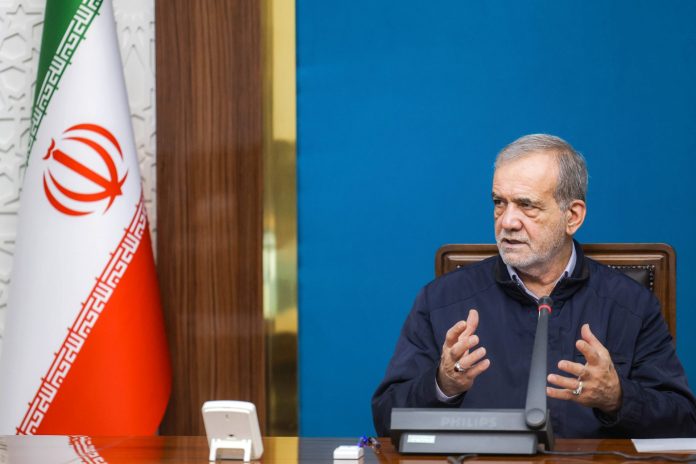
After a visit to Lahore, Iranian President Masoud Pezeshkian and his entourage arrived in Islamabad on Sunday morning and received a formal welcome from Pakistani Prime Minister Shehbaz Sharif.

The two countries held a joint meeting of high-ranking officials to discuss the ways to enhance relations and promote cooperation.

At the conclusion of the meeting, senior Iranian and Pakistani authorities signed 12 agreements that entail cooperation between the two neighbors in the scientific, technological, transportation, judicial, industrial, economic, trade, tourism and agricultural fields.

The agreements lay a framework for the exchange of knowledge, expansion of trade capacities, stronger people-based interaction, and closer regional synergy between Iran and Pakistan.

Saudi Arabia executed 230 people in 2025: AFP

Saudi Execution

The official Saudi Press Agency (SPA) reported that four Somalis and three Ethiopians were executed on Saturday in the southern region of Najran “for smuggling hashish into the kingdom”.

One Saudi man was executed for the murder of his mother, SPA added.

Since the beginning of 2025, Saudi Arabia has executed 230 people, according to an AFP tally of official reports.

Most of those executions — 154 people — were on drug-related charges.

The pace of executions puts the kingdom on track to surpass last year’s record of 338 instances of capital punishment.

Analysts link the spike to the kingdom’s “war on drugs” launched in 2023, with many of those first arrested only now being executed following their legal proceedings and convictions.

Saudi Arabia resumed executions for drug offences at the end of 2022, after suspending the use of the death penalty in narcotics cases for around three years.

It executed 19 people in 2022, two in 2023, and 117 in 2024 for narcotics-related crimes, according to the AFP tally.

Activists say the kingdom’s continued embrace of capital punishment undermines the image of a more open, tolerant society that is central to Crown Prince Mohammed bin Salman’s Vision 2030 reform agenda.

Saudi authorities say the death penalty is necessary to maintain public order and is only used after all avenues for appeal have been exhausted.

Water reserves in 19 major Iranian dams fall below 20%

This raises alarms about water scarcity, especially during the peak of the summer season.

The report also notes that if all of Iran’s dams were considered as a single system, the country’s overall water reserves have dropped by 26% compared to the same period last year.

The findings come amid growing concerns over prolonged drought conditions, declining precipitation, and increased water consumption across urban and rural sectors.

Experts warn that unless water management policies are revised and conservation efforts intensified, the country could face more severe shortages in the near future.

Authorities have yet to announce emergency measures, but calls are mounting for immediate action to prevent disruptions in drinking water supplies and minimize the impact on agricultural productivity.

Iran govt. withdraws controversial internet regulation bill to review freedom of expression concerns

Mobile Internet Iran

President Massoud Pezeshkian announced the decision in a letter addressed to Parliament Speaker Mohammad Bagher Ghalibaf.

The letter, read aloud during Sunday’s parliamentary session, stated that the bill was being returned to the government “for further examination of its provisions in order to promote a regulatory approach and ensure better support for lawful freedom of expression under the Constitution.”

The decision was approved by the Cabinet on July 30, 2025, and formally submitted to the Parliament for legal processing in line with Article 134 of the parliamentary bylaws.

The now-withdrawn bill, titled “Combating the Spread of False Content in Cyberspace,” had raised concerns among civil society groups and digital rights advocates, who feared it could lead to increased censorship and limitations on free expression.

Observers view the withdrawal as a signal of the new administration’s intention to pursue a more balanced approach to internet governance and civil liberties.

Iranian president receives official welcome in Islamabad, plants sapling at PM residence

The welcome ceremony was held at the prime minister’s residence, where both sides reaffirmed their commitment to strengthening bilateral ties.

Following the reception, President Pezeshkian planted a tree sapling in the garden of the prime minister’s compound, symbolizing peace and cooperation between the two neighboring nations.

President Pezeshkian arrived in Pakistan on Saturday, leading a high-ranking delegation of Iranian officials.

His first stop was in Lahore, where he paid tribute at the mausoleum of renowned Persian-language poet Allama Iqbal.

The Iranian president’s itinerary includes meetings with key Pakistani officials, including the President, the Prime Minister, and the speakers of the National Assembly and Senate. He is also scheduled to attend a gathering with members of the Iranian community in Pakistan.

The visit marks President Pezeshkian’s first official trip to neighboring Pakistan since taking office and reflects Tehran’s renewed interest in bolstering diplomatic, economic, and cultural relations with Islamabad.

India to continue buying Russian oil amid US threats: Report

The New York Times, quoting two senior Indian officials, reported that India intends to continue buying discounted oil from Russia.

Similarly, Russian state news agency Tass, citing a source within the Indian government, reported that there are no indications of India halting its oil imports from Russia, and that Indian refineries are still making purchases based on pricing and other economic considerations.

“I understand India no longer is going to be buying oil from Russia,” Trump told reporters.

“That’s what I heard. I don’t know if that’s right or not, but that’s a good step. We’ll see what happens,” he stated.

Trump has accused New Delhi of unfair trade practices and extensive energy and arms relations with Russia.

The US president on Wednesday announced 25% tariffs on India.

Army chief: Iran’s missile, drone capabilities fully operational amid ongoing threats

Addressing senior Army Ground Forces officials, General Hatami warned that Israel’s recent invasion during the 12-day conflict revealed the regime’s deep hostility toward Iran.

He noted that Israel’s attempts to damage the Islamic system had failed due to the “miraculous resilience” of the Iranian people.

“We dealt serious blows to the enemy and prevented it from achieving its objectives,” General Hatami stated.

The top commander pointed out that the military’s readiness, including its defense industry and technological advancements, continues to grow despite challenges.

Referring to the Iranian Leader Ayatollah Seyyed Ali Khamenei’s directive to treat even minor threats as serious, General Hatami urged vigilance and unity. He praised the Army’s role in recent conflicts and its historical record in defending Iran’s borders.

General Hatami also paid tribute to fallen commanders and highlighted the contributions of all military branches during the recent conflict, affirming their preparedness for any future threats.