Friday, December 26, 2025
Home Blog Page 218

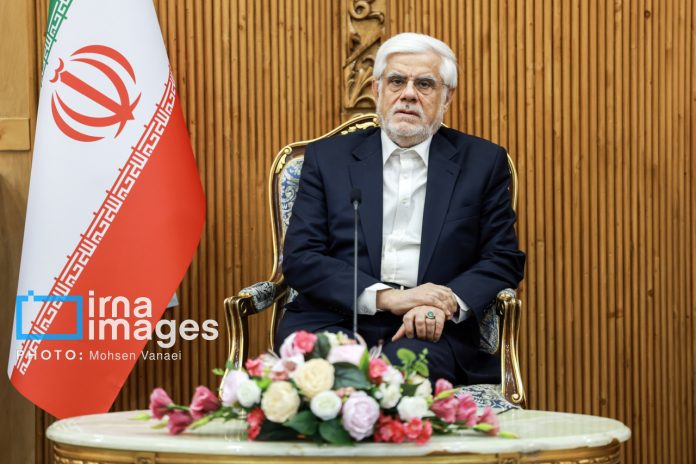
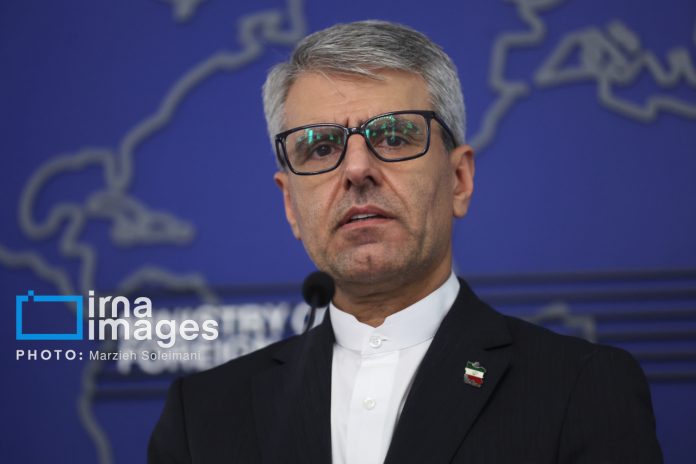
Foreign Ministry Spokesman: IAEA official to visit Tehran

Esmail Baghaei

Esmail Baqaei stressed that Iran remains a member of the Non-Proliferation Treaty (NPT) and the Safeguards Agreement, and as a law-abiding country, it will continue to honor its commitments as long as it retains membership.

He added that Iran’s grievances regarding the IAEA’s politicized conduct are clear, emphasizing that the Agency must act strictly within its technical mandate and avoid succumbing to external pressures.

Baqaei noted that currently no inspectors are present in Iran, and any cooperation with the Agency must be regulated strictly in line with the Iranian Parliament’s resolution.

Regarding the “snapback mechanism” for reimposing anti-Iran sanctions, Baqaei said that the three European countries — the UK, France, and Germany — have no legal right to misuse this mechanism.

He warned that it has become clear to them that resorting to such a tool would certainly have consequences both for the non-proliferation regime and for those three countries themselves.

Baqaei also responded to remarks made by the British foreign secretary against Iran, saying: “He is in no position to make such statements.”

He added that the comments follow the long-standing tradition of that country’s politicians, who, driven by a colonial mindset, are accustomed to making such claims.

Ukraine puts sanctions against dozens of individuals, several entities from Russia, Iran

In his evening address, Zelensky said that the imposed sanctions mark the first of three planned packages that will be imposed in the near future.

“Sanctions have been imposed on the captains of Russia’s shadow fleet, and we will synchronize all of this – all of these packages – with our partners to ensure the pressure is effective across most jurisdictions,” Zelensky added.

Russia’s shadow fleet refers to Moscow’s aging and poorly insured tankers, which Moscow uses to evade sanctions and conduct espionage, among other objectives.

The sanction target citizens of Russia, Iran, Pakistan, Myanmar, China, Bangladesh, India, and Georgia. Russia regularly has vessels registered in other countries as a means to circumvent Western sanctions and oil price caps.

Russia’s shadow fleet has been increasingly targeted by Kyiv and Western sanctions as international partners seek to curb Russian oil revenues, which help fund its war machine.

Zelensky signed a law on July 30 enabling sanctions against vessels and aircraft involved in covert Russian schemes to transport oil, weapons, and military personnel.

More than 100 shadow fleet ships were targeted in the EU’s 18th sanctions package approved in mid-July. Only a few days later, the U.K. sanctioned 135 Russian oil tankers and two shipping companies linked to Russia’s shadow fleet.

Both the EU and the U.K. also agreed to lower the price cap imposed on Russian crude oil from $60 per barrel to $47.60.

Four killed after armed groups attack Syrian security forces

The Syrian Observatory for Human Rights said three Syrian security forces personnel were killed “as clashes erupted with local factions around Tal Hadid in the western Sweida countryside”.

The Observatory also reported the death of a “local fighter”.

Fighting also erupted around the city of Thaala, the Observatory added, “following bombardment of the area with shells and heavy weapons launched from areas under the control of government forces, while the sound of explosions and gunfire was heard in various parts of Sweida city”.

A security source told the outlet the armed groups had violated a ceasefire agreed in the predominantly Druze region, which has seen more than 1,000 killed in fighting over the past month.

Violence in Sweida erupted on 13 July between Bedouin fighters, Druze factions and government forces.

Israel also carried out strikes on Syrian cities, claiming they were coming to the assistance of the Druze.

A US-brokered truce ended the fighting, while the government said it would investigate the clashes, setting up a committee to investigate the attacks.

Since the overthrow of Bashar al-Assad in December, Syria has been rocked by waves of sectarian violence which new President Ahmed al-Sharaa has struggled to manage.

Attacks by Assad loyalists in the coastal province of Latakia provoked a violent sectarian backlash against the minority Alawi population, which the former president and his family were members of.

At least 1,500 Alawis were killed in the subsequent violence, with a Reuters investigation tracing much of it back to officials in Damascus.

Iran sends official letter to UN rejecting legality of snapback mechanism

Kazem Gharibabadi

Ebrahim Rezaei, the spokesperson for the Iranian Parliament’s National Security and Foreign Policy Committee, reported the letter was signed by Foreign Minister Seyed Abbas Araghchi.

During a parliamentary briefing, Deputy Foreign Minister Kazem Gharibabadi outlined recent diplomatic efforts, including meetings in Istanbul with European parties and discussions in New York.

Gharibabadi emphasized that European countries lack the legal standing to trigger the snapback process, as they have not upheld their commitments under the Joint Comprehensive Plan of Action (JCPOA) nuclear deal.

He also confirmed coordination with Russia and China on countering any such efforts, including a recent trilateral meeting.

Iran reaffirmed its adherence to parliamentary law mandating suspension of cooperation with the IAEA, while rejecting any proposal to extend UN Security Council Resolution 2231, mandating the JCPOA.

Gharibabadi warned of the psychological impact of snapback threats, though no new sanctions would be imposed.
Talks with the US remain suspended, with Iran demanding firm guarantees on the part Washington that the attacks last month on Iran’s nuclear facilities would be compensated before any negotiations.

Iran’s top security body approves establishment of Defense Council

The SNSC said on Sunday that the decision was made in line with Article 176 of the Constitution, which outlines national security responsibilities.

The newly formed council will be responsible for developing defense strategies and enhancing the capabilities of the Armed Forces.

The Iranian president will head the council, which also includes the heads of the three branches of government, senior military commanders, and designated ministers relevant to defense affairs.

The council’s formation comes after the Israeli regime on June 13 launched a war of aggression against Iran, assassinating senior military commanders and nuclear scientists in targeted strikes and killing hundreds of civilians.

On June 22, the United States escalated the war by bombing three civilian nuclear facilities in Iran.

In response, the Iranian Armed Forces carried out retaliatory strikes on strategic Israeli positions across the occupied territories and targeted the al-Udeid Air Base in Qatar, the largest American military installation in West Asia.

Through its successful retaliatory operations, Iran managed to impose a halt to the aggression on June 24.

Seddiqi steps down as Tehran Friday Prayer leader amid real estate scandal

In a letter to the Leader of the Islamic Revolution, Ayatollah Ali Khamenei, Seddiqi requested to be relieved of his duties to focus on academic and religious teaching.

The Leader accepted his resignation, thanking him for 17 years of sermons in defense of the Islamic Republic and moral guidance.

Seddiqi’s resignation follows mounting criticism over a real estate controversy involving his family.

In 2025, it was revealed that a 4,200-square-meter orchard in Tehran’s upscale Ozgol district—owned by the Imam Khomeini Seminary, which Seddiqi oversees—had been transferred to a private company where his sons and daughter-in-law were board members.

Iran’s judiciary later confirmed the arrest of his son and daughter-in-law on financial charges, along with four others, though Seddiqi himself was not found culpable.

His continued presence at Friday prayers, particularly his appearance on July 18, drew sharp backlash from media and political figures. Conservative outlets labeled it “ill-timed” and “defiant.” Seddiqi had been under increasing pressure to step aside.

Silk weaving: A living heritage in Iran’s Jargalan

With deep historical roots, this traditional art form continues to thrive, producing high-quality silk fabrics used for a variety of purposes, from full-silk garments and scarves to tablecloths, towels, and decorative clothing trims.

Though the high cost of handwoven silk has reduced its use in daily life, the fabric remains popular for special occasions, especially weddings.

In Turkmen-populated areas, silk retains a strong presence due to the community’s commitment to preserving cultural practices and traditional aesthetics.

Across many villages in Jargalan, large numbers of women are engaged in the intricate process of silk weaving. For them, this craft is more than a cultural legacy, it serves as a vital source of income and economic empowerment.

More in pictures:


China, Russia begin joint drills in Sea of Japan

Russian Navy

Alongside economic and political ties, Moscow and Beijing have strengthened their military cooperation in recent years, and their relations have deepened since Russia invaded Ukraine in February 2022.

The “Joint Sea-2025” exercises kicked off in waters near the Russian port of Vladivostok and would last for three days, China’s defence ministry said in a statement on Sunday.

The two sides will hold “submarine rescue, joint anti-submarine, air defence and anti-missile operations, and maritime combat”.

Four Chinese vessels, including guided-missile destroyers Shaoxing and Urumqi, are participating in the exercises alongside Russian ships, the ministry said.

After the drills, the two countries will conduct naval patrols in “relevant waters of the Pacific”.

China and Russia have carried out annual drills for several years, with the “Joint Sea” exercises beginning in 2012.

Last year’s drills were held along China’s southern coast.

The Chinese defence ministry said Friday that this year’s exercises were aimed at “further deepening the comprehensive strategic partnership” of the two countries.

China has never denounced Russia’s more than three-year war nor called for it to withdraw its troops, and many of Ukraine’s allies, including the United States, believe that Beijing has provided support to Moscow.

China insists it is a neutral party, regularly calling for an end to the fighting while also accusing Western countries of prolonging the conflict by arming Ukraine.

OPEC+ agrees to enhance oil production by 547k barrels per day from September

The group had been curtailing production of oil for several years to support oil prices, but changed course earlier this year after calls by US President Donald Trump to ramp up production.

Saudi Arabia holds significant influence in OPEC+ as the dominant member of the OPEC producers’ cartel, and Russia is the leading non-OPEC member in the 22-country alliance.

Sunday’s announcement means the group has fully unwound previous cuts to oil production.

The decision comes amid increasing US pressure to bring Moscow to the negotiating table to end their ongoing, full-scale invasion of Ukraine.

Our journalists are working on this story and will update it as soon as more information becomes available.

Iranian president stresses regional security, interdependence, invites Pakistani PM to Tehran

In a joint press conference with Pakistani Prime Minister Shehbaz Sharif, President Pezeshkian underscored the shared belief between Iran and its counterparts that regional countries, particularly Muslim nations, must pursue more active, effective, and pragmatic cooperation in countering the expansionist actions of the Israeli regime.

He noted that specific initiatives aimed at strengthening joint efforts for regional stability and security were discussed during the meetings.

Calling for a more balanced international approach, President Pezeshkian urged global institutions, especially the United Nations Security Council, to avoid double standards and to play a proactive role in preventing violations of sovereign borders, curbing the escalation of conflicts, and protecting civilian populations.

In closing, President Pezeshkian extended a formal invitation to Pakistani Prime Minister Shehbaz Sharif to visit Tehran at the earliest opportunity, to continue discussions and build upon the progress made during recent diplomatic engagements.