Friday, December 26, 2025
Home Blog Page 217

Mohammad Hossein Omid appointed as president of University of Tehran

The session took place at the council’s secretariat and focused on evaluating the academic, research, and administrative qualifications of the candidates.

According to the council, Mohammad Hossein Omid was officially approved as the new president of the University of Tehran following a vote by the committee members.

Khosropanah, who also chairs the university presidents’ approval committee, stated that all proposed individuals underwent careful evaluation.

Among those confirmed were Mohammad Hassanzadeh Mahmoudabad (University of Mohaghegh Ardebili), Alireza Afsharifar (Shiraz University), Hamid Taheri (Imam Khomeini International University), Adel Si-o-Seh Mardeh (University of Kurdistan), and others. The appointment of Dr. Fariba Mohammadi as head of the Sports Science Research Institute was also confirmed at the meeting.

More than 600 ex-Israeli security chiefs appeal to Trump to end Gaza war

Gaza War

The appeal was made in a letter sent to Trump by the signatories on Sunday, including former Mossad chief Tamir Pardo, former Shin Bet chief Ami Ayalon, and former deputy Israeli army chief Matan Vilnai, calling for pressure on Prime Minister Benjamin Netanyahu to end the conflict.

“Stop the Gaza War! On behalf of CIS, Israel’s largest group of former IDF (army) generals and Mossad, Shin Bet, Police, and Diplomatic Corps equivalents, we urge you to end the Gaza war,” read the letter shared by Commanders for Israel’s Security (CIS) movement on X.

“You did it in Lebanon. Time to do it in Gaza as well,” they added.

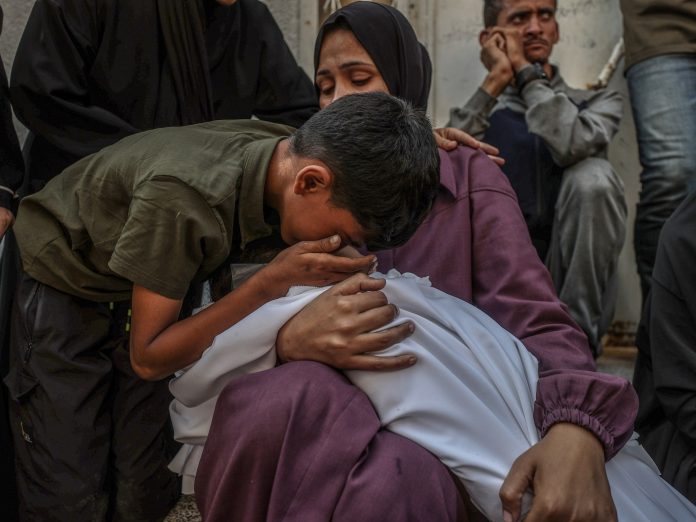
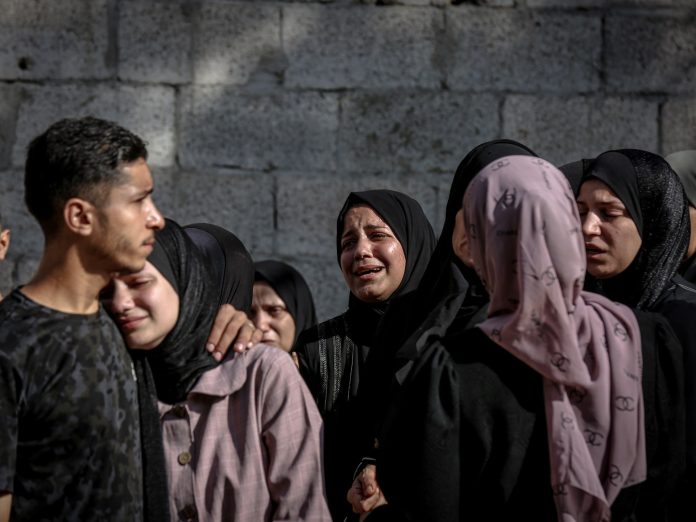
Rejecting international calls for a ceasefire, the Israeli army has pursued a brutal offensive on Gaza since Oct. 7, 2023, killing more than 60,800 Palestinians, most of them women and children. The military campaign has devastated the enclave and brought it to the verge of famine.

Last November, the International Criminal Court issued arrest warrants for Netanyahu and his former Defense Minister Yoav Gallant for war crimes and crimes against humanity in Gaza.

Israel also faces a genocide case at the International Court of Justice for its war on the enclave.

Russia urges caution with nuclear rhetoric after Trump’s submarine order

Kremlin

Kremlin spokesman Dmitry Peskov played down the significance of Trump’s announcement last Friday that he had ordered two subs to be moved to “the appropriate regions” in response to remarks from former Russian president Dmitry Medvedev about the risk of war between the nuclear-armed adversaries.

“In this case, it is obvious that American submarines are already on combat duty. This is an ongoing process, that’s the first thing,” Peskov told reporters.

“But in general, of course, we would not want to get involved in such a controversy and would not want to comment on it in any way,” he added.

“Of course, we believe that everyone should be very, very careful with nuclear rhetoric.”

Peskov stated that Russia did not see Trump’s statement as marking an escalation in nuclear tension.

“We do not believe that we are talking about any escalation now. It is clear that very complex, very sensitive issues are being discussed, which, of course, are perceived very emotionally by many people,” he added.

Peskov declined to answer directly when asked whether the Kremlin had tried to warn Medvedev to tone down his online altercation with Trump.

“Listen, in every country, members of the leadership… have different points of view on events that are taking place, different attitudes. There are people who are very, very tough-minded in the United States of America and in European countries, so this is always the case,” he said.

“But the main thing, of course, is the position of President (Vladimir) Putin,” he continued, adding, “You know that in our country, foreign policy is formulated by the head of state, that is, President Putin.”

Survey shows declining trust in Israeli government, army

Israeli Army

A survey by the Institute for National Security Studies, a Tel Aviv-based research institution, showed that 76% of Israelis have lost trust in Netanyahu’s government, which has been in power since December 2022.

It found that public trust in the government fell from 30% to 23% during Israel’s 12-day war on Iran, which broke out on June 13, while trust in Netanyahu himself dropped from 35% to 30%.

According to the poll, the war on Iran also affected citizens’ trust in the Israeli army, as it dropped from 83% to 77%.

Confidence in Army Chief of Staff Eyal Zamir also fell from 69% to 62%, and in the army spokesperson, from 63% to 56.5%.

The survey showed that 28% of Israelis don’t believe in the possibility of a victory in the Gaza Strip, and only 53% see the army’s main goals of ending Hamas’ rule and returning hostages as totally or mostly achieved.

Tel Aviv estimates that 50 Israeli captives remain in Gaza, including around 20 believed to be alive.

The Israeli opposition and hostages’ families have accused Netanyahu of prolonging the war to appease his far-right coalition partners and maintain power.

The poll also showed that 42% of the Israeli citizens rule out the possibility of achieving Israel’s war goals partially or totally.

According to the survey, 61% of Israelis believe that the army’s current strategy in Gaza doesn’t facilitate the return of hostages from the enclave, while only 20.5% said that the current policy contributes to the elimination of Hamas, and 25.5% think the current strategy helps both to eliminate Hamas and return captives.

The poll also showed that Israeli society is divided over the failure to reach a ceasefire and hostage swap agreement in Gaza. While 52% blame the government fully or partially for the impasse, 45% blame Hamas entirely.

Another split was recorded in the public opinion regarding the disarmament of Hamas, as 52% believe that it is possible, and 41.5% don’t believe it could be achieved.

Hamas stressed on Saturday that it will not give up its arms unless an “independent, fully sovereign” Palestinian state is established.

Rejecting international calls for a ceasefire, the Israeli army has pursued a brutal offensive on Gaza since Oct. 7, 2023, killing more than 60,400 Palestinians, most of them women and children.

Last November, the International Criminal Court issued arrest warrants for Netanyahu and his former Defense Minister Yoav Gallant for war crimes and crimes against humanity in Gaza.

Israel also faces a genocide case at the International Court of Justice for its war on the enclave.

New details emerge about Israeli missile strike on Iranian Supreme National Security Council meeting

According to Jafar Ghaempanah, President Massoud Pezeshkian and other officials were inside the meeting venue when several explosions caused the building to fill with dust and led to a power outage.
The participants were split into smaller groups to locate a safe exit.

President Pezeshkian, who could barely see the light, reportedly only “the size of two palms,” due to the debris, cleared debris to open a passage.

After finding an exit, he helped others escape as well, he noted, adding the group then boarded a damaged vehicle and returned to work shortly after.

Ghaempanah stated that the site was hit two more times following their evacuation. Tragically, several rescue personnel were killed in the subsequent attacks.

The incident marks one of the most direct and high-risk assaults on Iran’s top tier officials during the escalation that started by the Israeli aggression on June 13.

Hamas says open to delivering food to Israeli hostages in Gaza

The statements from Hamas and Netanyahu came after Palestinian groups last week released videos showing two emaciated Israeli captives held in Gaza, where some 2 million Palestinians are struggling to survive the Israeli-induced starvation crisis.

Netanyahu said on Sunday he had spoken to Julian Larson, the head of the ICRC delegation to Israel, requesting the group’s “immediate involvement” in providing food and medical treatment to captives still held in Gaza.

In a post on X, Netanyahu wrote in Hebrew that he told Larson that Hamas was propagating a “lie of starvation” in the enclave, but the reality was that “systematic starvation is being carried out against our hostages”.

Later on Sunday, the spokesman for the Qassam Brigades, Hamas’s armed wing, stated in a statement that Israeli captives held in Gaza “eat what our fighters and all our people eat”.

“They will not receive any special privilege amid the crime of starvation and siege,” the spokesman, known as Abu Obeida, noted.

But, he added, the group is “ready to act positively and respond to any request from the Red Cross to deliver food and medicine to enemy prisoners”.

In order for requests to aid captives to be accepted, “humanitarian corridors must be opened in a normal and permanent manner for the passage of food and medicine to all our people in all areas of the Gaza Strip”, Abu Obeida continued.

Israeli attacks “of all forms must cease during the receipt of packages for the prisoners”, he stressed.

The families of Israeli captives held in Gaza announced on Sunday that Netanyahu’s continued insistence that a “military resolution” was the only solution was “a direct danger to the lives of our sons, who live in the hell of tunnels and are threatened by starvation and immediate death”.

“For 22 months, the public has been sold the illusion that military pressure will bring back the hostages, and today, even before reaching a comprehensive draft agreement, it is said that an agreement is futile,” the families said in a statement.

There are about 50 captives still in Gaza. Fewer than half are believed to be still alive.

Iranian editor criticizes deputy FM for “misinterpretation” of law on IAEA cooperation

IAEA

In an editorial on Monday titled “A Distorted Interpretation of Parliament’s Law on the IAEA”, Shariatmadari responded to comments made by Deputy Foreign Minister Saeed Khatibzadeh, who stated in a Chinese TV interview that Iran’s Supreme National Security Council (SNSC) is the sole authority for managing Iran–IAEA relations, and that cooperation would continue under this framework.

Shariatmadari argued that the law passed by Iran’s parliament in July 2025 explicitly mandates the suspension of all cooperation with the IAEA until two conditions are met: full respect for Iran’s sovereignty and territorial integrity, and recognition of Iran’s nuclear rights under Article 4 of the NPT.

He emphasized that the SNSC’s role is limited to verifying IAEA compliance, not defining bilateral relations.

He further warned that bypassing the law constitutes a criminal offense under Article 19 of Iran’s Penal Code.

Top Trump aide accuses India of financing Russia’s war against Ukraine

“What he (Trump) said very clearly is that it is not acceptable for India to continue financing this war by purchasing the oil from Russia,” said Stephen Miller, deputy chief of staff at the White House and one of Trump’s most influential aides.

Miller’s criticism was some of the strongest yet by the Trump administration about one of the United States’ major partners in the Indo-Pacific.

“People will be shocked to learn that India is basically tied with China in purchasing Russian oil. That’s an astonishing fact,” Miller said on Fox News’ “Sunday Morning Futures.”

Indian government sources told Reuters on Saturday that New Delhi will keep purchasing oil from Moscow despite U.S. threats.

A 25% tariff on Indian products went into effect on Friday as a result of its purchase of military equipment and energy from Russia. Trump has also threatened 100% tariffs on U.S. imports from countries that buy Russian oil unless Moscow reaches a major peace deal with Ukraine.

Miller tempered his criticism by noting Trump’s relationship with Indian Prime Minister Narendra Modi, which he described as “tremendous.”

Dozens dead after migrant boat sinks off Yemen

The International Organization for Migration’s country chief of mission, Abdusattor Esoev, told AFP that “as of last night, 68 people aboard the boat were killed, but only 12 out of 157 have been rescued so far. The fate of the missing is still unknown.”

On Sunday, two security sources in southern Yemen’s Abyan province — a frequent destination for migrant smuggling boats — gave a preliminary toll of 27 killed in the shipwreck.

Despite the war that has ravaged Yemen since 2014, the impoverished country has remained a key transit point for irregular migration, in particular from Ethiopia which itself has been roiled by ethnic conflict.

Each yeah, thousands brave the so-called “Eastern Route” from Djibouti to Yemen across the Red Sea, in the hope of eventually reaching oil-rich Persian Gulf countries.

The vessel that sank off the coast of Yemen’s Abyan was carrying mostly Ethiopian migrants, according to the province’s security directorate.

It said on Sunday that security forces were conducting operations to recover a “significant” number of bodies.

Last month, at least eight people died after smugglers had forced migrants to disembark from a boat in the Red Sea, according to the UN’s migration agency.

The International Organization for Migration says tens of thousands of migrants have become stranded in Yemen and suffer abuse and exploitation during their journeys.

Last year, the IOM recorded at least 558 deaths on the Red Sea route, with 462 resulting from shipwrecks.

Witkoff may visit Russia this week: Trump

“I think next week, Wednesday or Thursday, (he) may be going to Russia,” Trump told reporters on Aug. 3. “They would like to see him. They’ve asked that he meet, so we’ll see what happens.”

Witkoff met with Russian President Vladimir Putin in April despite being appointed as Trump’s envoy to the Middle East. His interactions with Putin, including the use of Kremlin-provided translators and repetition of Russian narratives about the war, drew criticism from officials in Washington and abroad.

Trump reiterated that sanctions would take effect if Russia does not agree to a ceasefire by Aug. 8.

“There’ll be sanctions, but they seem to be pretty good at avoiding sanctions,” he said. “They’re wily characters, and they’re pretty good at avoiding sanctions, so we’ll see what happens.”

On July 29, Trump announced that tariffs on Russian exports would be implemented within 10 days if the Kremlin failed to end its war in Ukraine.

The proposed measures include sweeping secondary tariffs on countries that continue to import Russian oil, gas and other goods — a move that would significantly affect major trading partners such as China and India.