Thursday, January 15, 2026
Home Blog Page 2182

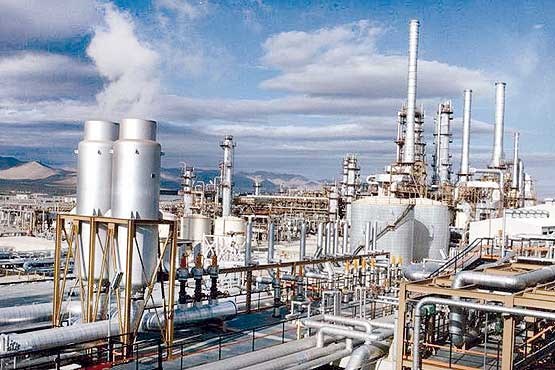
Iran annual petrochemical production capacity to hit 100m tons

Making the prediction in a meeting with the heads of petrochemical companies in Assaluyeh, southern Iran, Morteza Shahmirzaei added the country will have a bright future as it is moving toward development.

He said 68 petrochemical complexes having an annual nominal capacity of around 90 million tons are currently working in the country, reiterating that due to the outlined plans the production is expected to touch 100 million tons by late March 2023.

The deputy oil minister pledged full support for the petrochemical companies of the Pars Special Economic Energy Zone (PSEEZ), saying the NPC will help facilitate operations and remove obstacles to production.

He assured that some problems would be resolved in the shortest possible time through cooperation between the National Petrochemical Company and Pars Special Economic Energy Zone.

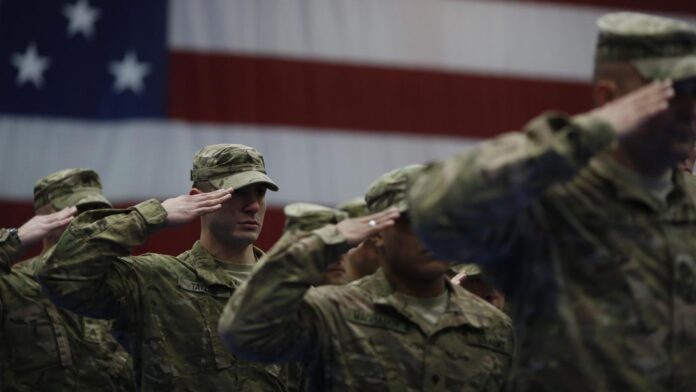
US base in Iraq comes under drone attack

A number of combat drones hit the military compound, which lies 64 kilometers (40 miles) north of Baghdad, on Saturday morning.

There were no immediate reports of casualties and the extent of damage inflicted.

Sirens immediately sounded at the military compound, and the sound of gunfire could be heard from the site.

The drone attack also sent dense plumes of smoke rising above the targeted area.

Alarms and calls in English were also heard, asking the military personnel inside the base to take shelter and stay away from the scene.

Sabereen News, citing an unnamed security source, noted that quadcopter and fixed-wing drones hit an office belonging to American arms manufacturer Lockheed Martin Corporation inside the Balad Air Base, and the aircraft returned to their launch pads after the air raid.

A statement released by the Security Media Cell, affiliated with the Iraqi prime minister’s office, later said three drones approached the southern flank of the air base on Saturday morning.

The statement added that C-RAM and air defense systems detected the aircraft, and fired shots to force them off the airspace above the Balad Air base.

No group has so far claimed responsibility for the attack.

On Thursday, four rockets were fired towards Baghdad’s heavily-fortified Green Zone.

The attacks come as anti-American sentiments have been on the rise in Iraq since the assassination of Lieutenant General Qassem Soleimani, commander of the Quds Force of Iran’s Islamic Revolution Guards Corps (IRGC), and his Iraqi trenchmate Abu Mahdi al-Muhandis, second-in-command of the PMU, as well as their companions in a US drone strike authorized by former US president Donald Trump near Baghdad International Airport on January 3, 2020.

Two days after the attack, Iraqi lawmakers approved a bill that requires the government to end the presence of all foreign military forces led by the US in the country.

Both commanders were highly revered across the Middle East because of their key role in fighting the Daesh Takfiri terrorist group in the region, particularly in Iraq and Syria.

On January 8, 2020, the IRGC targeted the US-run Ain al-Asad in Iraq’s western province of Anbar by launching a volley of missiles in retaliation.

According to the Pentagon, more than 100 American forces suffered “traumatic brain injuries” during the counterstrike on the base.

Iran has described the missile attack on Ain al-Assad as a “first slap”.

US says working on laser weapons in ME, citing Iran activity

“There is a growth in the missile defense force and in cruise missiles and Iranian UAVs and the proliferation of those UAVs throughout the region,” Cooper told a conference at the Centre for Strategic and International Studies (CSIS).

“There has been a dramatic uptick in the UAV activity in the region: it is significantly different,” he added.

In response, the Fifth Fleet is deploying and developing the use of laser, or directed energy weapons on its warships in the region, Cooper said, adding that he was not going to reveal any details of the work.

The US Navy is developing “laser weapons on warships in the region. This is an area we are working on pretty vibrantly. For understandable reasons, I am not going to talk about it”, Cooper continued.

Starting in September of 2021, the Fifth Fleet activated Task Force 59 as its unmanned vehicles and intelligence task force in the region operated out of Bahrain and Jordan. The operation had already “exceeded our every expectation” with unmanned sea vehicles launched out of the port of Akaba in the southwestern tip of Jordan capable of functioning for up to 33 days at a time, Cooper noted.

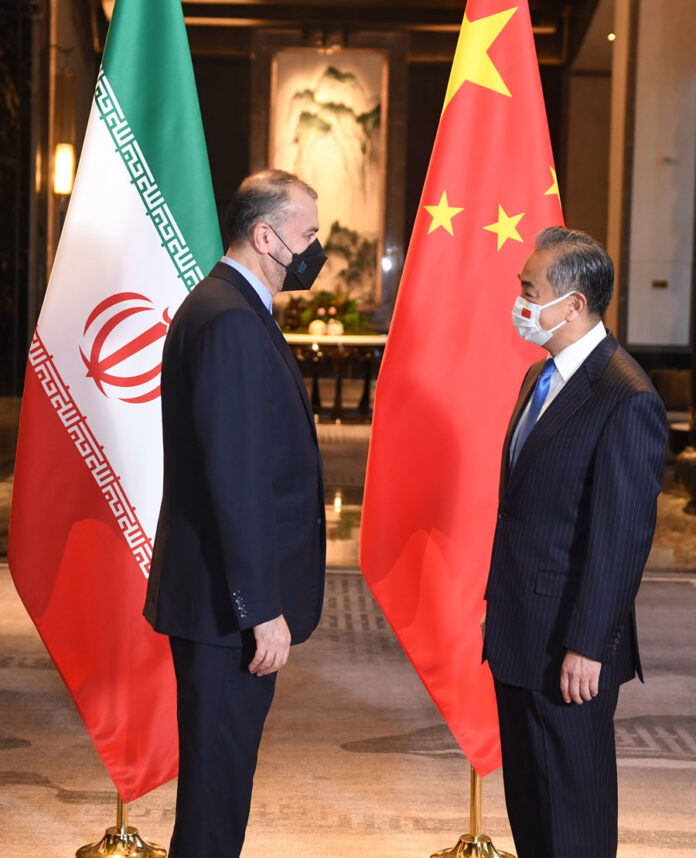
‘Implementation of Tehran-Beijing accord major achievement of FM’s China visit’

Keshavarzzadeh said in his Twitter account on Saturday that the implementation of the Iran–China 25-year Cooperation Program was one of the important achievements of the visit.

Iranian high-ranking delegation consisting of political and economic officials, oil, banking officials, had very good negotiations, he added.

Amir Abdollahian arrived in Wuxi Thursday afternoon local time to hold talks with Chinese authorities on Iran-China 25-year strategic cooperation program.

He stated on Friday that the 25-year agreement with China will become operational as of today.

He made the remarks at the end of his comprehensive talks with his Chinese counterpart during his one-day trip to the country.

Amir Abdollahian further noted that as agreed with the Chinese officials during the conversations, the two countries will start implementation of the comprehensive strategic agreement as of Friday.

Iranian FM further said simultaneous with the talks in China, Iran prepared the necessary grounds for starting the implementation of the agreement on Friday.

He also added that he carried the message of Iran’s President Ebrahim Raisi to his Chinese counterpart Xi Jinping; the message was related to the task of starting implementation of 25-year agreement.

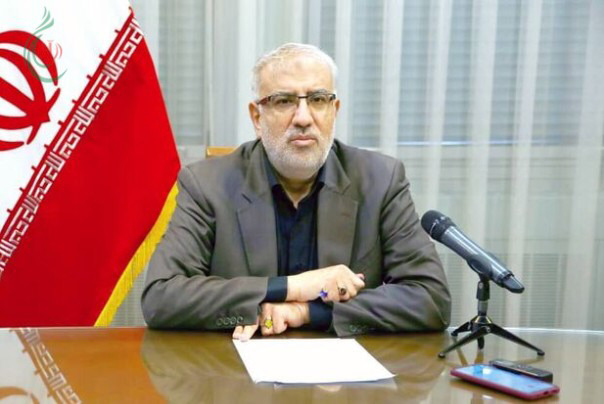
Oil minister promises good news on Iran-Russia energy cooperation

Talking to reporters, Owji said Iran’s Oil Ministry has been elected as the head of Iran-Russia Joint Chamber.

The minister added the negotiations on a Russian energy project are underway and the details will come out when the talks yield results.

Russian Energy Minister Nikolai Shulginov has earlier praised Tehran-Moscow ties, expressing hope that the two countries would take steps toward the expansion of relations, particularly in the economy sector.

“Moscow is keen to boost ties with Tehran and hopes that the two sides will boost bilateral relations in an effort to jointly counter the West’s sanctions.”, the  minister said. 

Shifting to the recent talks with Turkmenistan, Owji said, the two sides signed good memorandums of understanding on the export of technical and engineering services, oil products, and crude oil last week, expressing hope the related contracts would be inked and implemented soon.

He also elaborated on the export of Iran’s gas to Turkey and said, “The two neighboring states’ gas contract will expire in 2026 and a delegation from the Turkish company, BOTAS, is scheduled to discuss it with a delegation of the National Iranian Gas Company (NIGC) this week.”   

In the meantime, Owji said Tehran and Muscat are also holding talks on exporting gas, in particular liquefied natural gas (LNG), to Oman.

Iran Covid: 18 deaths over 24 hours

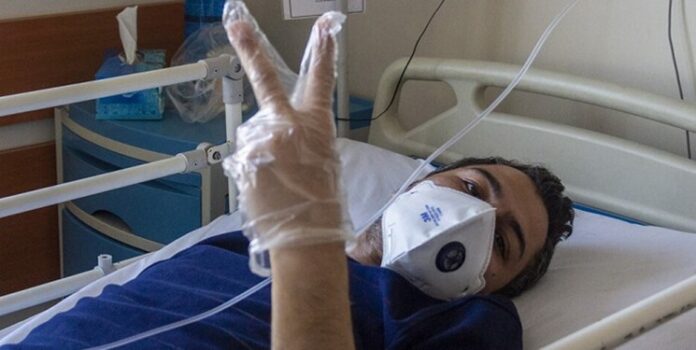
Iranian Health Ministry figures on Saturday showed Covid had killed 18 people in the country in the past 24 hours. 

The Health Ministry also recorded 1421 new cases including 194 hospitalizations. 

Over the 24 hours, 18 Iranian provinces registered no Covid fatality, while ten others saw only one dead each. 

Meanwhile, the number of triple-vaxxed people crossed the 12 million mark while the total number of Covid vaccine doses administered to citizens hit 125,560,035. 

The vaccination campaign has resulted in a downward trend in Coronavirus deaths and infections. 

Meanwhile, Iran has so far been shielded from Covid’s new strain dubbed Omicron, which has also overwhelmed the healthcare sector in many European countries and the US. 

But authorities in the Islamic Republic are warning of a surge in the number of Omicron cases in the country. 

So far around 1,000 people have contracted Omicron throughout Iran.

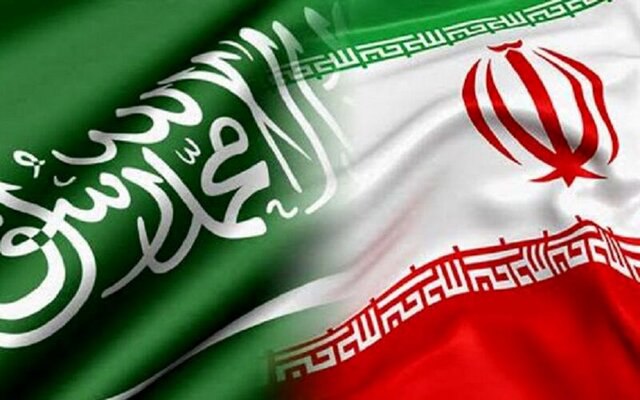
‘Iran, Saudi Arabia preparing to reopen embassies’

That’s according to a member of the Iranian Parliament’s National Security and Foreign Policy Commission. 

Jalil Rahimi Jahanabadi said a rapprochement is in the works between Iran and Saudi Arabia. 

He added that this has important implications for reducing regional tensions and increasing the cohesion of the Islamic world. 

Rahimi Jahanabadi urged the media to beware of what he called the Zionists’ vileness and the extremists’ stupidity. 

“We had four rounds of positive and constructive talks with Saudi officials in Iraq,” Iran’s Foreign Minister Hossein Amir Abdullahian also recently told Al Jazeera. 

He added that what Iran stated as its official position is that whenever the Saudis want the relations between the two countries to return to normal, Iran is ready and welcome the reopening of embassies and consulates. Saudi Arabia unilaterally cut ties with Iran in 2016 after protests happened outside its embassy in Tehran over Riyadh’s execution of dissident Shia cleric Nimr Baqer al-Nimr. 

Iran and Saudi Arabia also have differences over a range of other issues like Riyadh’s war on Yemen.

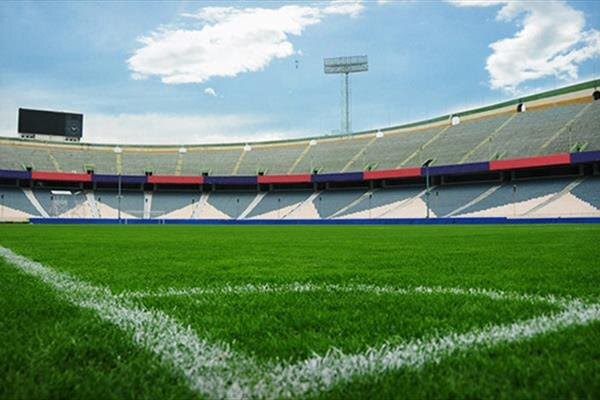
World Cup qualifiers played by Iran open to spectators

The authorization came after Iran’s Ministry of Sports and Yough asked the National Coronavirus Task Force to allow spectators to be present during games by Iran’s national soccer squad.

However, there is a cap on the number of spectators allowed to get in while health protocols must be observed all along.

The Ministry of Sports and Yough is tasked with ensuring that health instructions are observed inside stadiums.

It has been some two years that soccer games have been held without spectators due to the COVID-19 pandemic in Iran.

Now, the virus has been well controlled in Iran due to the nationwide vaccination drive.

Iran Presence at high seas geared to ensuring security: Top Cmdr.

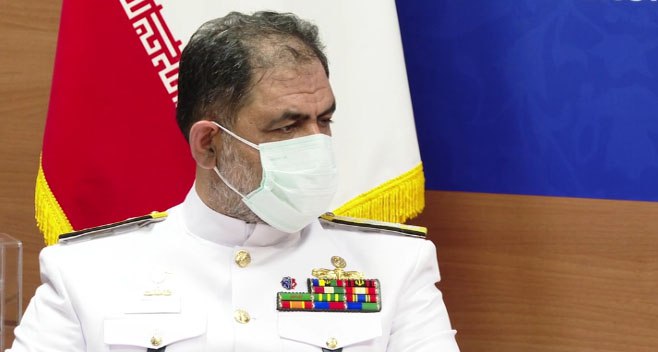
“The most important objective of Iran’s presence in farther distances is to provide marine safety and security, announce that the Islamic Republic of Iran has no limitations for being present in any location given its capabilities, particularly in the marine domain,” said Rear Admiral Shahram Irani, the commander of the Naval Force of the Iranian Army.

He said Iran can be present in locations in question by adopting the necessary measures, adding to that end 

the Navy is working closely with other units of the Armed Forces.

The commander underlined the Naval Force of the Army can also jointly conduct operations and activities with Iran’s Islamic Revolution Guards Corps (IRGC) through mutual coordination.

“This coordination will keep the enemy from disrupting systems and creating insecurity and carrying out acts of terror at the sea,” he added.

Yemen: Detained UAE vessel was carrying weapons

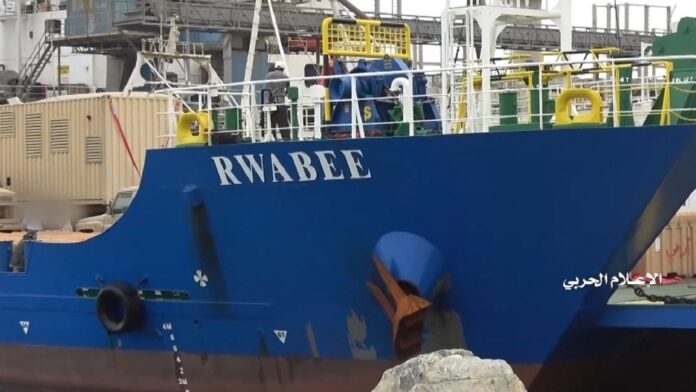
“The Rawabi ship was not carrying dates or toys for children, but weapons to support extremist groups that threaten people’s lives,” Deputy Foreign Minister of Yemen Hussein al-Ezzi said in response to a British drafted United Nations Security Council statement issued on Friday which called for the immediate release of the UAE-flagged cargo vessel.

He added that the ship belongs to a country that is involved in the aggression against Yemeni people and is at war with the country and has entered Yemeni territorial waters illegally.

The Yemeni foreign minister stressed that the UN Security Council statement was issued with financial considerations and has nothing to do with the rules, ethics or safety of navigation.

“It is unfortunate that the UN Security Council has descended into misleading public opinion and acting in solidarity with murderers and outlaws at this shameful level,” al-Ezzi noted.

He also said that the navy had the legal right to target the enemy ship Rawabi but chose not do so, adding that it is very important to respect the sovereignty of Yemen and its territorial waters.

Yemeni naval forces detained the UAE vessel in a surprise operation on January 3 amid intensified attacks by Saudi-led forces against Yemen.

The United Arabic Emirates has been the most important partner of Saudi Arabia in the war on Yemen which began in March 2015.

The devastating military campaign has caused a humanitarian catastrophe in Yemen and claimed hundreds of thousands of lives.