Wednesday, December 31, 2025
Home Blog Page 2109

Sources: Russia proposed interim deal to Iran

Two US officials, one Congressional official, one former US official and four other people familiar with the discussions said Washington is aware of Russia’s proposal to Iran, which comes as concern grows within the Joe Biden administration that time is running out on negotiations between Iran and world powers over a full return to the 2015 nuclear deal, called the Join Comprehensive Plan of Action (JCPOA).

In 2018, Washington pulled out of the pact and reinstated sanctions under the so-called ‘maximum pressure campaign’ against Tehran, effectively depriving Iran of the deal’s benefits by forcing third parties to stop doing business with Iran. Iran remained patient for an entire year, after which it began to take incremental steps away from its nuclear obligations, especially after Europeans failed to salvage the deal under the US pressure.

While the officials and people familiar with the discussions stated Russia’s talks with Iran about an interim deal have been conducted with the knowledge of the US, senior Biden administration officials distanced the US from the Russian effort.

Iran has so far rejected the proposal presented by Russia, the officials and other people familiar with the discussions added.

The Iran Permanent Mission to the United Nations announced on Friday that Tehran does not want an interim deal, and declined to discuss specifics of the Russian proposal.

Any new agreement separate from the JCPOA could trigger a review by Congress.

As such, if an understanding were to be reached on an interim Russian proposal, the US and other governments likely would portray it as a first step toward a full return to the 2015 accord, and not as a new or separate agreement, the sources said.

A senior Biden administration official underlined an interim “arrangement” is not under serious discussion.

“Though we cannot speak for any discussions that may have taken place between Russia and Iran, at this stage we are certain that no such interim arrangement is being seriously discussed,” the official underscored.

“Regarding an interim deal, we will not negotiate in the press or comment on specific claims about the negotiations. Our timeline is based on a technical assessment of Iran’s nuclear progress rather than a temporal clock,” the official continued.

The Russian government did not immediately respond to a request for comment.

On Friday, Secretary of State Antony Blinken urged Russia to use its influence on Iran.

“If a deal is not reached in the next few weeks Iran’s ongoing nuclear advances will make it impossible to return to the JCPOA, but right now there’s still a window, a brief one,” Blinken said after meeting with Russian Foreign Minister Sergey Lavrov in Geneva.

“Russia shares our sense of urgency, the need to see if we can come back into mutual compliance in the weeks ahead, and we hope that Russia will use the influence that it has and relationship that it has with Iran to impress upon Iran that sense of urgency,” he added.

Under one draft interim agreement that sources said Russia presented to Iran, Tehran would be required to stop enriching uranium up to 60 percent purity and dispose of its current stockpile, possibly by exporting it to Russia, along with other restrictions. In exchange, the Iranian government would receive access to billions of dollars in oil revenues frozen in foreign bank accounts, including in South Korea, the sources added.

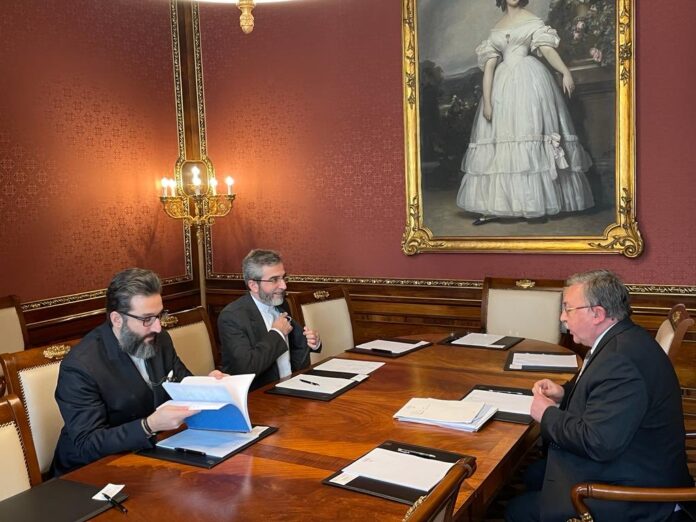
The discussions between Russia and Iran have taken place on the sidelines of formal talks in Vienna between Iran and world powers that are aimed at all parties returning to the 2015 nuclear deal, according to the two US officials, one Congressional official, according to the sources.

Negotiations in Vienna have been complicated by Iran’s insistence that it will not hold direct talks with US officials. Instead, the Americans have had to communicate with their Iranian counterparts via European diplomats. The Biden administration has announced Iran’s stance has slowed down the discussions and it has urged Tehran to reconsider its position.

“We would be in favor of speaking directly with the Iranian delegation and believe it would be more productive, however, Iran has not agreed,” the senior administration official noted.

Iran’s mission to the United Nations said Friday that Iran remains opposed to holding direct talks with the US in Vienna, and that Tehran’s goals of sanctions relief and a guaranteed Washington return to the 2015 agreement “would not be achieved under an interim deal, and therefore any such proposal must be rejected”.

“Iran seeks a reliable but also durable agreement that is consistent with the promises made in the JCPOA, and any agreement that does not meet these two criteria is not on the agenda for us,” the Permanent Mission announced in a statement.

US officials say major differences remain in negotiations on returning to the 2015 nuclear deal and that there’s little time left before Iran’s nuclear program advances to a point where Tehran would have enough fissile material to build an atomic bomb. An interim deal could slow down Iran’s nuclear program while giving negotiators more time to broker a full return to the 2015 agreement. 

Tehran denies seeking nuclear weapons, stressing it wants to master nuclear technology for peaceful purposes.

The US negotiating team in Vienna recently changed, with one key member, Richard Nephew, leaving to return to a different role at the State Department. Two people familiar with the matter said Nephew and US Special Representative for Iran, Robert Malley, had a disagreement over the direction of the talks.

A State Department official stated in a statement, “Richard Nephew made important contributions to the team, where he served for nearly a year. He remains with the Department of State.”               

An interim nuclear agreement with Iran could be a difficult sell in Washington and Tehran.

Some US lawmakers who opposed or had reservations about the 2015 nuclear deal are increasingly concerned about the possibility of an interim deal because while it would impose more limitations on Iran’s nuclear program than are currently in place, it would lack the stricter restrictions in the 2015 agreement, congressional aides noted.

Should the White House insist an interim “arrangement” was merely the first step towards renewing the 2015 deal, Republicans and some moderate Democrats likely would argue that the administration is legally required to submit it to Congress for review. Under a law passed after the 2015 Iran nuclear deal, any new nuclear agreement must be reviewed and approved by Congress before it can be implemented. The law, the Iran Nuclear Agreement Review Act, gives Congress 60 days to do so. 

Rep. Michael McCaul of Texas, the ranking Republican on the House Foreign Affairs Committee, and other GOP lawmakers wrote a letter last year to the administration arguing that even a return to the 2015 nuclear deal would require congressional approval.

One person familiar with the Russian proposal described it as “an interim step towards a full return to compliance” with the 2015 deal.

“It’s not a substitute,” this person continued, adding, “In that sense, it’s not a new agreement. It’s an understanding to go part of the way there.”

For Iran, an interim deal with some limits on its nuclear activity could diminish Tehran’s leverage in broader negotiations, experts and former officials claim. An interim arrangement with only limited sanctions relief also could be politically damaging to Iran’s new government, which has portrayed the previous Iranian president, Hassan Rouhani, as too ready to compromise with the West and failing to deliver economic benefits to Iran.

The International Atomic Energy Agency (IAEA) is due to issue its next report on Iran’s program in February, and Western officials fear it will show yet more advances in Tehran’s nuclear program.

In addition to requiring Iran to stop enriching uranium up to 60 percent, the interim proposal Russia discussed with Iran would also put restrictions on enrichment at 20 percent and Iran’s advanced centrifuges, the US official, Congressional official and four people familiar with the proposal said. The proposal had a six-month duration, with the option to extend after it expired, the sources added.

One person familiar with the proposal stated it stipulates Iran would receive additional sanctions relief for each extension and some $10 billion in sanctions relief from unfrozen assets in South Korea, Japan and Iraq.

The idea of an interim agreement was discussed after Biden took office, but administration officials decided instead to focus on trying to negotiate a full return to the 2015 deal.

Iran insists that the talks must lead to the removal of all American sanctions that were imposed against Tehran following Washington’s unilateral withdrawal from the landmark agreement in May 2018. Tehran has also demanded credible guarantees that Washington will not abandon the deal again.
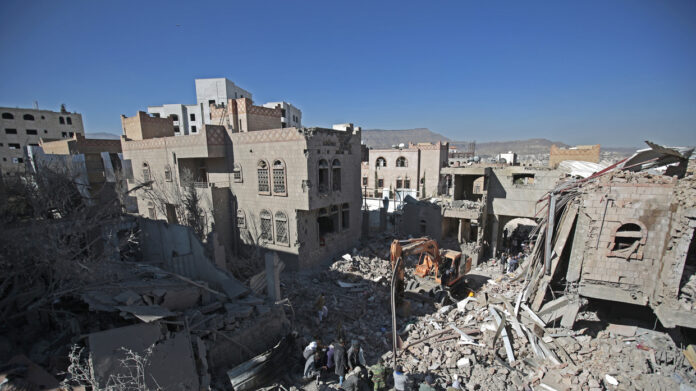
 

Hezbollah condemns Saudi-led deadly air raids on Yemen

In a statement, Hezbollah highlighted that these brutal crimes are a testament to the savagery of the aggressors and indicates they are devoid of any human values.

Hezbollah also denounced the international community’s silence in the face of the atrocities, calling for support for Yemenis.

Warplanes of the Saudi-Emirati coalition bombed a prison in the northern Yemeni city of Sa’ada in the early hours of Friday. Yemeni sources say at least 80 people were killed and scores more wounded in the attack. 

At least three children also died in a separate air raid on telecommunications facilities in the western city of Hudaydah. The attacks led to a nationwide internet blackout.

UN chief condemns Saudi coalition deadly attacks on Yemen

Military aircraft of the Saudi-led military coalition pounded a detention center in Sa’ada in the early hours of Friday, killing tens of people and injuring dozens more, with reports saying that the death toll is expected to rise since many of the wounded were seriously hurt. 

Guterres’ spokesman, Stephane Dujarric, stated further deadly strikes had been reported elsewhere in Yemen with children among those killed. 

“An airstrike on telecommunications facilities in Hodeidah has also significantly disrupted vital internet services across much of the country,” Dujarric announced in a statement. 

“The Secretary-General calls for prompt, effective and transparent investigations into these incidents to ensure accountability,” he added. 

Save the Children announced in a statement that three children were reportedly killed in the western city of Hodeidah. 

Saudi Arabia and its allies launched a war against the Arab world’s most impoverished nation in March 2015. The war has been seeking to restore power in Yemen to Riyadh’s favorite officials. 

The death toll of the war, now in its seventh year, will reach an estimated 377,000 by the end of 2021, according to a recent report from the UN’s Development Programme. 

The fighting has seen some 80 percent of the population, or 24 million people, relying on aid and assistance, including 14.3 million who are in acute need.

Yemen military urges foreign firms to leave UAE

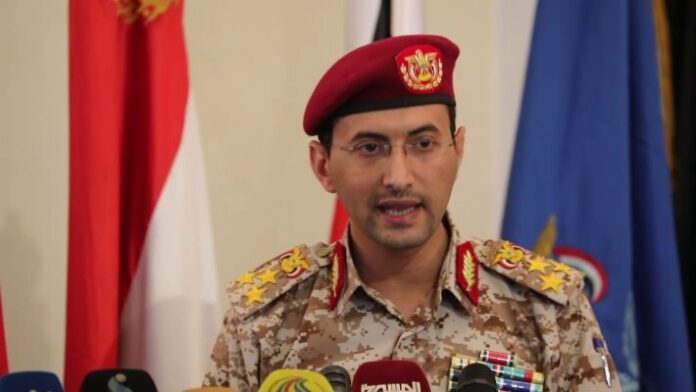
Yahya Saree, the spokesman for the Yemeni Army also recalled the killings of Yemeni people at the hands of the Saudi-led coalition, warning the UAE to stop its aggression against Yemen. 

The recent missile and drone attacks by the Yemeni Army and popular committees on UAE soil caused explosions near the depots of an oil company and another blast at the Abu Dhabi International Airport, leaving at least three people dead and six wounded. 

Saree said the strikes were in response to growing attacks on Yemen by a coalition of the US, Saudi Arabia and the UAE. 

He reiterated the Yemeni military has delivered on its warnings to invading countries about harsh retaliatory attacks, saying the UAE will remain unsafe if the country keeps attacking Yemen. 

Saudi Arabia leading a coalition launched its aggression on Yemen in 2015 following a green light by Washington. 

Riyadh pressed ahead with its assaults in a bid to bring back to power fugitive former Yemeni president Abd Rabbuh Mansour Hadi. 

The war has killed some 130,000 people, including over 13,000 civilians, according to the Armed Conflict Location & Event Project. Yemeni sources say the number is much higher. Millions of people have also been displaces in the Saudi-led aggression. 

People in jolly mood in northern Iran following the recent snowfalls

Iran in Winter

Torrential rain and heavy snow have swept across large parts of the country in recent days.

Although the precipitation wreaked havoc on many areas, destroying homes and infrastructure, it left people in a festive mood in many regions where such high levels of snow and rainfall have been a rare occurrence.


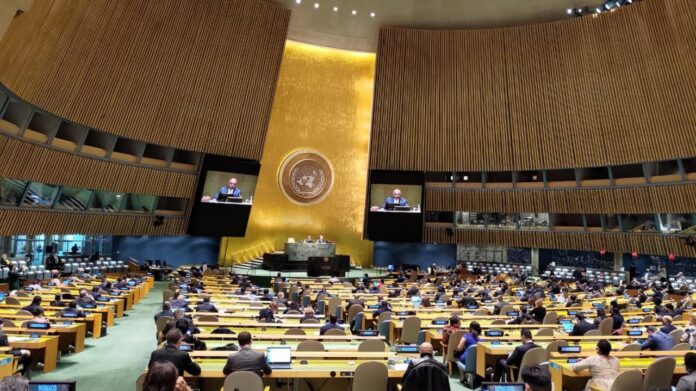
Iran: UNGA Holocaust Resolution abuse of intl. mechanisms by Israel

Iran’s Foreign Ministry said in a statement that a resolution issued on the Holocaust at the United Nations General Assembly and its articles are unrelated to the Islamic Republic, and called it an abuse of international mechanisms by the Zionist regime to cover up its crimes, declaring it completely null.


The statement reads:

As our country’s Permanent Mission to the United Nations in New York has in an explanatory statement officially proclaimed the Islamic Republic of Iran’s stance on the Holocaust resolution, it is reiterated that the racist Zionist regime abuses international bodies to cover up its daily crimes against Palestinians. This move by the Zionist regime is another attempt at abusing international mechanisms to cover up the regime’s daily crimes, which unfortunately have the unconditional support of the West these days.

As is clear to all, the atrocities during the Second World War took place with the two motives of racism and expansionism, two satanic traits inherited and represented now by the Zionist regime. The regime’s racist approach has been affirmed in numerous international documents, and in spite of the solid will of the international community, Israel remains the sole racist regime with an expansionist ideology.

The Islamic Republic of Iran has considered genocide an act to be condemned and unjustifiable under any circumstances, and that is the reason why, during the Second World War, Iran hosted people displaced by the conflict in some European countries. This is while the faux Zionist regime has constantly attempted to exploit victims of the World War II and Jews as justification for its egregious and aggressive acts.

This regime and its leaders have over the past seven decades committed all acts of criminality and specially crimes against humanity against the people of Palestine and the peoples of regional countries by violating international law. Genocide, assassinations, ethnic cleansing, the demolition of houses, and siege are some of the crimes that the Zionist regime is constantly in the process of committing.

The statement concludes: The Islamic Republic of Iran once again stresses that historical research is needed to avoid the repetition of historical catastrophes, which should be conducted without political prejudgments; and thus, such constrictive approaches are not acceptable, and such a resolution is not deemed based on consensus, and is thus null.

Iranian judge denies permission for marriage of 13-year-old girl

Iranian media reported that Hossein Mousavi, who serves at a court in the northern city of Sowme’eh Sara, Gilan Province, ruled that the girl was not allowed to marry her 25-year suitor since she was still a child.

According to the judge, the 13-year-old student is not spiritually ready yet for undertaking the role of a spouse or a mother.

Under Iranian law, the legal age for marriage is full 13 years for girls and 15 years for boys. It is, however, acceptable for children younger to be married with permission from the father or a judge.

US imposes sanctions on Lebanese individuals for Hezbollah ties

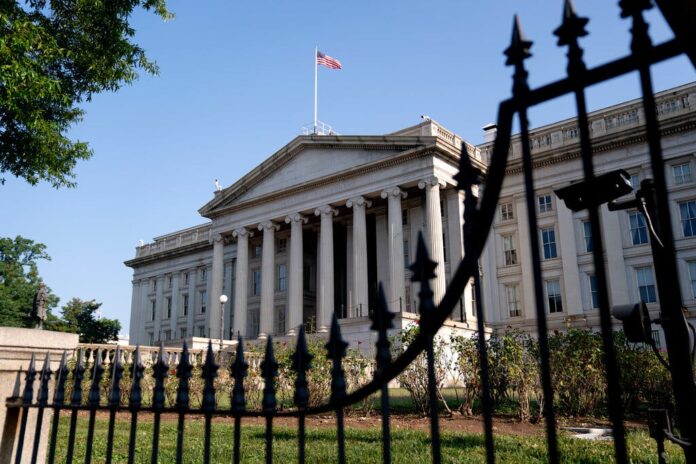
United States Department of the Treasury

Washington’s latest sanctions target Adel Diab, Adnan Ayad and Jihad Adnan Ayad, The US Department of Treasury said in a post on its website on Friday.

“Today’s action exposes and targets Hezbollah’s misuse of the international financial system to raise and launder funds for its destabilizing activities as the Lebanese people suffer during an unprecedented economic crisis in Lebanon,” said Under Secretary of the Treasury for Terrorism and Financial Intelligence Brian Nelson.

“Treasury is committed to disrupting Hezbollah’s illicit activity and attempts to evade sanctions through business networks while the group doubles down on corrupt patronage networks in Lebanon,” Nelson added.

The United States on Tuesday announced sanctions on three businessmen it claimed had ties to Hezbollah.

The move came at a time when Lebanon is facing a financial meltdown with its currency losing more than 90 percent of its value during the past two years.

The US designated Hezbollah as a “terrorist” organization in 1997, but the group has rejected the label and presents itself as a resistance force against Israel.

Hezbollah has blamed US sanctions, including measures against neighboring Syria, for the worsening economic crisis in Lebanon.

Yemenis hold angry protests to slam Saudi-led bloodshed in Sa’ada

The large protests were held in the capital, Sana’a on Friday, hours after Saudi-led warplanes bombarded a temporary detention center in Sa’ada and left over 180 people, including African migrants, dead or injured.

Reports said the fatalities included three children and 60 adults, with the number expected to rise as efforts are still underway to save those trapped under the rubble.

The angry protesters shouted slogans against the “aggressor coalition” and its key parties, namely Saudi Arabia and the United Arab Emirates (UAE), which they say have been committing war crimes in Yemen with the support of the US and their other allies.

The demonstrators also renewed the call for the coalition to lift the crippling siege imposed on the country since the onset of the Saudi-led war in early 2015.

In a statement, Yemen’s INSAN human rights organization slammed the Saudi-led raids as a major human rights violation and war crime, criticizing the international community’s silence in the face of such deadly acts of aggression.

Such double standards applied to the issue of human rights expose the true nature of so-called rights organizations and the countries claiming to be advocates of human rights, it said.

It also called on the international community to adopt a transparent position against the crimes committed by the Riyadh-led military coalition against Yemen.

Iran, Russia seeking to deepen strategic nuclear relations: AEOI spox

Behrouz Kamalvandi said Friday that the construction of new units at the Bushehr nuclear power plant, which is being developed jointly by Tehran and Moscow, was on the agenda of Raisi’s talks with his Russian counterpart, Vladimir Putin.

He said Raisi and Putin discussed how to further promote bilateral strategic cooperation in the nuclear sphere.

Kamalvandi said Iran-Russia nuclear cooperation could be divided into energy-related and non-energy-related issues, in both of which bilateral relations are going well.

Iran uses the radioisotopes supplied by Russia for medical, industrial and agricultural purposes, the atomic official added.

“Cooperation is underway between the two countries for the construction of the second and third units at the Bushehr nuclear plant in line with the Islamic Republic of Iran’s plan to produce at least 10,000 megawatts of electricity using nuclear energy, despite a delay in the payment [to Russia], he said.

“We expect the technical teams of Iran and Russia to begin the required cooperation and exchanges of information in order to start new projects in Iran,” Kamalvandi said.

He said each project at the power plant was worth $5 billion alone and would thus constitute a significant part of economic relations between the two countries.