Saturday, December 27, 2025
Home Blog Page 2107

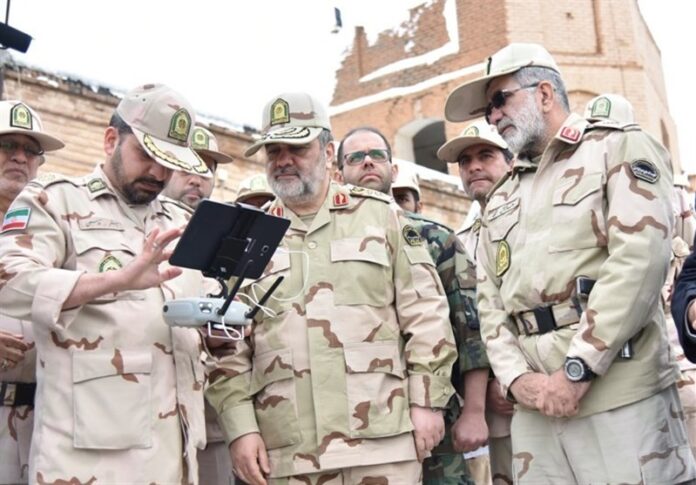
Iranian commander: Sistan and Balouchestan border calm

Brigadier General Hossein Ashtari added that crimes have decreased and security has improved in the region, attributing this to good cooperation by locals, especially the elders and tribal leaders.

He underlined, “Creating security, comfort and calm for people is one of the duties of the police force, which we are trying our best to achieve, and I will not spare any efforts to attain this goal.”

Iran’s leader appoints new advisor on army affairs

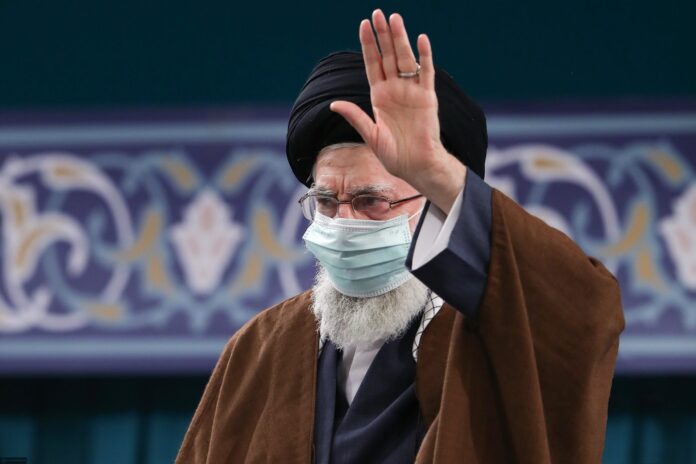
Ayatollah Khamenei, who commands all armed forces of the Islamic Republic of Iran, appointed the former DM to the new post of the Advisor to the Commander-in-Chief of the Armed Forces in Army Affairs.

Prior to this, in addition to the defense minister under former President Hassan Rouhani, Brigadier General Hatami was holding different posts such as deputy minister of defense, deputy chief of staff of the armed forces, deputy commander of Army intelligence and commander of units in the west and northwest regions of the country.

Iranian company produces fire-delayer coating for buildings

Iranian company produces fire-delayer coating for buildings

He said this product is non-flammable during execution and after drying and is completely free of asbestos.

Delaying the fire

Fire-resistant coating is a one-component and cement-based product that is designed to protect the building against fire of metal structures and cellulose fire and it has a low density.

This product is used to protect against inactive fire. When the steel structure reaches a temperature of 550 degrees, the structure loses its compressive and tensile strength and the building collapses. This product delays the time for the temperature of the metal structure to reach a critical degree, that is, one to four hours, which helps the firefighters in this regard.

Preventing currency outflow

The product is manufactured in large volumes. An average building may need 100 tons of these products, which was completely imported before production inside the country.

The domestic product has resulted in high currency savings. At present, 60 people work in this company directly and about 100 people indirectly.

The CEO of Abtik Pooshesh Aria Knowledge-based Company says these Iranian-made products have pushed almost all foreign companies out of the domestic market. Karimi added that the domestic product has the necessary standards and is similar in quality to foreign samples, and also has been made using the mineral grains available in Iran.

Iran dismantles organized fuel smuggling cell in Persian Gulf

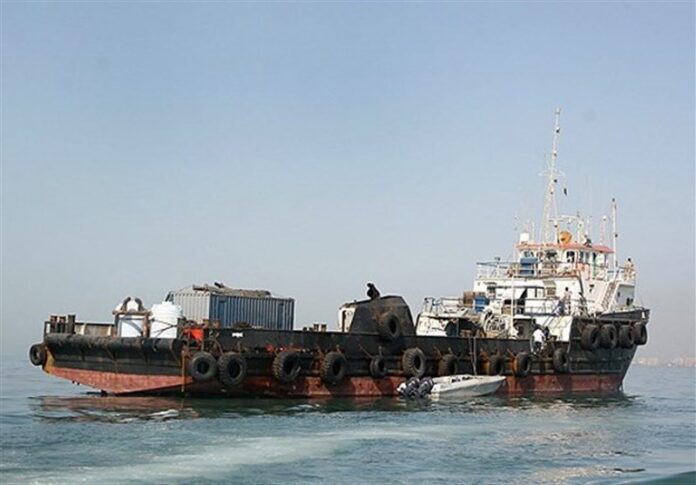
Mojtaba Ghahremani, achief Justice of Hormozgan Province, southern Iran, added that with the coordination of the judicial authority, Qeshm naval officers identified a dinghy carrying 300,000 liters of smuggled fuel and seized the vessel.

He noted that the smugglers intended to transport the large consignment of smuggled diesel to one of the countries in the Persian Gulf.

The Chief Justice of Hormozgan also said 16 smugglers were detained during the raid.

He also noted the perpetrators of organized fuel smuggling, in addition to fines and imprisonment, also face confiscation of property resulting from the crime.

Ghahremani added under the law, vehicles involved in smuggling, including boats and cars or motorcycles will also be seized by the government.

AEOI’s director: Production of nuclear fuel easy task for Iran

Mohammad Eslami

Mohammad Eslami added that under the Iran nuclear deal, the other sides promised to give us nuclear fuel 20% for Tehran’s reactor, but they didn’t keep their word, and Iran did it by itself thanks to relentless efforts by Iranian scientists and specialists in line with standards.

Eslami also noted, “Unfortunately, after the victory of the Islamic Revolution, our country did not fully enjoy its rights, which the International Atomic Energy Agency was obliged to respect due to its selective treatment of countries.”

The director of the IAEO added that Western governments have never been honest with Iran despite their deceptive humanitarian slogans.

He added that Tehran’s reactor is only for civilian purposes like production of medicine, but not only did they not supply fuel to this reactor, but also did not supply its parts.

He also spoke about Iran’s plans to expand its civilian uses of the nuclear energy program.

Eslami said the first step will be developing nuclear technology in all aspects of people’s lives like increasing the effectiveness of this technology through the irradiation of agricultural, food and industrial products.

Eslami also said in the healthcare sector, more than 50 medical and diagnostic radiopharmaceuticals are made in the Atomic Energy Organization, and 200 medical centers benefit from its medicines.

He added that currently, about 1 million people use the AEOI’s drugs and the organization is trying to expand the production of medicines for the treatment of more diseases.

Iran, Finland stress anti-terror fight, bilateral judicial ties

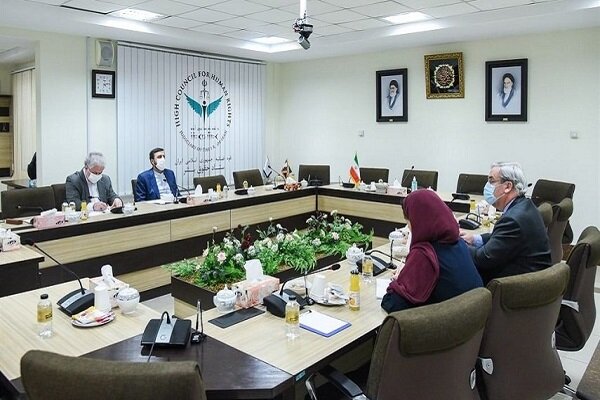
Kazem Gharibabadi, the Iranian Judiciary chief’s deputy for international affairs and secretary of the coutry’s High Council for Human Rights, held a meeting on Wednesday with the visiting director general of the Finnish Foreign Ministry’s Department for Africa and the Middle East, Sofie From-Emmesberger.

In the talks, Gharibabadi outlined Iran’s policies on human rights and the country’s judicial diplomacy, expressing Tehran’s readiness for talks with Helsinki on the issue of human rights and legal-judicial cooperation with the Northern European state.

He criticized the double-standard and selective approach adopted by certain countries vis-à-vis the issue of human rights and said, “Unfortunately some states use human rights as a political tool against others.”

The Iranian official expressed hope that Finland will adopt a “professional and independent” stance during its first full membership (2022-2024) in the UN Human Rights Council.

The two sides also stressed the necessity of countering terrorism, as a threat to global security, and supporting vulnerable groups of people, such as women, children and individuals with disabilities.

The Finnish Foreign Ministry official also thanked Iran for throwing its weight behind Finland’s membership in the Human Rights Council.

She also said her country welcomed the expansion of expert talks in the legal and judicial sectors and an exchange of relevant experience between the two states.

Poll finds majority of Israeli settlers ready to exit WB

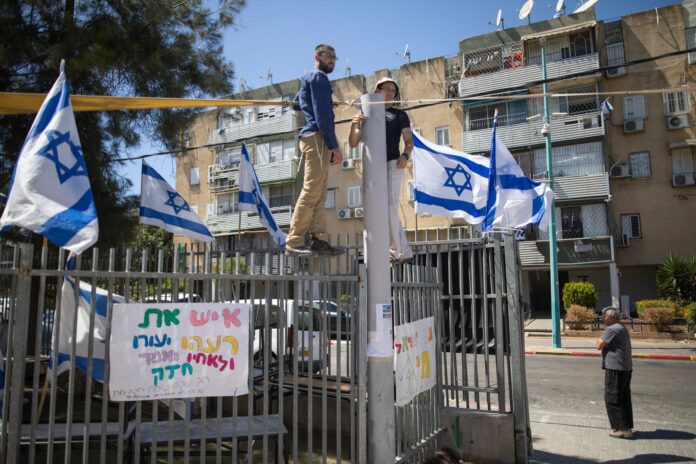
According to their findings, 47 percent of those asked were willing to accept a two-state solution. Seventy-seven percent said they were ready to evacuate their settlements if such a decision was made by Israel’s government.

Those findings did not come as a surprise to David Elhayani, the chairman of the Yesha Council, an umbrella organisation of all local authorities in the Jordan Valley, Judea, and Samaria (the Jewish names for the West Bank).

He says the positive answers of those who participated in the poll can be put down to the majority of settlers being “law-abiding citizens”.

“Of course, there might be passive rejection of the decision, but the majority of citizens will not stir up problems. They will leave, if such a decision is made. But the way I see it, it won’t happen any time soon,” he added.

The reason for this is the weakness of the Israeli coalition and the fact that it is comprised of eight parties with quite conflicting ideologies.

The government of Prime Minister Naftali Bennett that was sworn in in June contains some hawkish elements, including the PM’s party Yamina, New Hope of Justice Minister Gideon Saar, and Israel Beitenu of Finance Minister Avigdor Lieberman.

It also contains some liberal circles like the Labour Party and the left-wing Meretz, and the coalition enjoys the support of Raam, an Islamic faction believed to be linked to the Muslim Brotherhood movement.

With such a constitution, the coalition has so far been struggling to agree on major issues splitting Israeli society. Such was the case with the so-called citizenship bill that bans granting permits to Palestinians who marry Israelis to live with their spouses in Israel.

And Elhayani believes it will also be the case with the issue of Jewish settlements – if it ever reaches the desk of Israeli decision-makers.

“It is unlikely that this government will take any decisions when it comes to Jewish settlements. They won’t evacuate us. But they won’t extend Israel’s sovereignty either. They will simply keep on maintaining the status quo because if they don’t, Bennett knows well enough that this government will not last for long,” Elhayani continued.

Yet, the fragility of the current coalition is far from being the only reason preventing decision-makers from taking a decision on the evacuation of the West Bank’s Jewish settlements. Another factor bogging down progress is public opinion.

The issue of Jewish settlements has always been an apple of discord – ever since the first ones appeared in the area in the 1960s after Israel captured the West Bank from Jordan in the Six-Day War.

But the sentiments around the issue reached a peak in 2005, following the evacuation of 22 Jewish settlements in the Gaza Strip.

“For many Israelis, it was a real shake-up and many have struggled to accept it. Another evacuation of this sort will be hard to contain and it will be difficult to execute,” explained Elhayani.

Today, there are 132 settlements and 140 outposts in the West Bank, housing more than 440,000 Jewish settlers. Uprooting, resetting, and compensating them will be a tough issue for any Israeli government. But what’s also going to be tough is the security threats that such a move could entail.

The evacuation of Jewish settlements in the Gaza Strip is believed to have paved the way for Hamas to take over the area. And since they took over the rocket attacks that started in 2001 have only become stronger.

Since then tens of thousands of rockets have been launched towards Israel, disrupting the lives of the country’s south, and Elhayani believes history might repeat itself if decision-makers in Tel Aviv opt to take a similar move in the West Bank.

“We don’t have the privilege to leave the place and give the Palestinians a chance to establish their own state. We can’t take those risks and hope that Hamas will not take over and wreak havoc on our towns and cities. And this is why we will continue to resist this possibility and will fight any attempts to evacuate us,” Elhayani summed up.

Shamkhani: Divisions in US show lack of unity in Washington over deal in Vienna

Ali Shamkhani

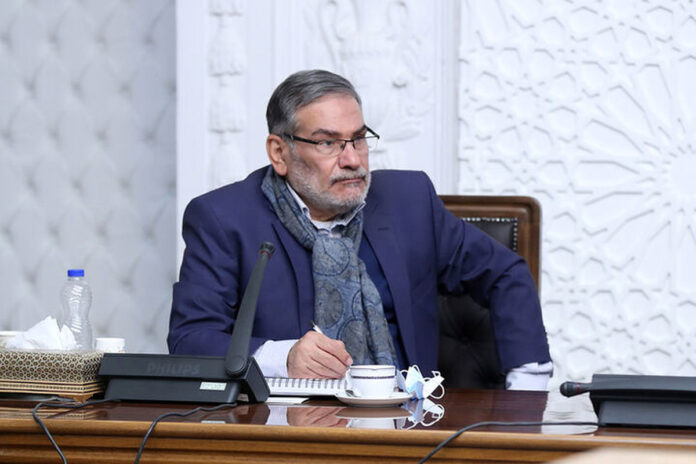
Ali Shamkhani says the different voices coming out of the US show the lack of coherence in the country to make political decisions regarding the Vienna talks.

Shamkhani added in a tweet that Washington cannot pay for its internal disputes by violating the rights of the Iranian people.

Shamkhani’s tweet comes as reports say US Republican Senator Ted Cruz, a member of the Senate Foreign Relations Committee, sent a letter to President Joe Biden co-signed by 32 senators rebuking the administration’s negotiations for a deal with Iran.

In the letter, the lawmakers say a law dubbed “The Iran Nuclear Agreement Review Act (INARA)” requires the president to submit any Iran deal to Congress – and they will block implementation of any deal not submitted.

Talks between Iran and the P4+1 group of countries, Russia, China, France, Britain and Germany, resumed in Vienna on Tuesday.

Iran says it seeks a good and prompt deal in the negotiations, reiterating all anti-Tehran sanctions must be lifted.

Iran unveils new strategic long-range, precision missile

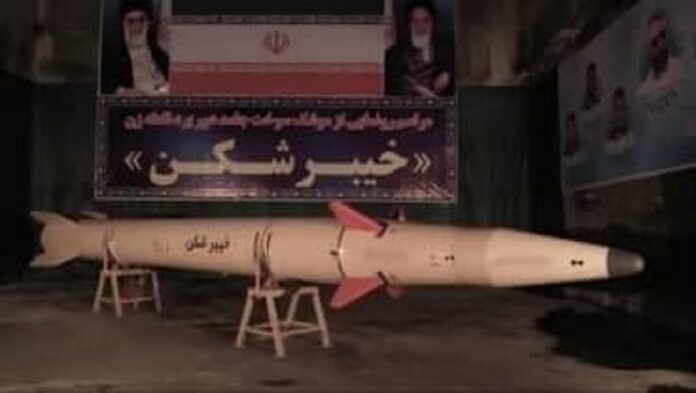
The missile, dubbed Khaybar-Shekan, was unveiled during a visit by Chief of the General Staff of the Iranian Armed Forces Major General Mohammad Baqeri and Brigadier General Amir-Ali Hajizadeh, who is the commander of the Aerospace Division of the Islamic Revolution Guards Corps, at an IRGC missile base.

Hajizadeh explained that Khaybar-Shekan is a third-generation missile whose launch time is one-sixth of similar projectiles.

He said the kind of substance used in its warhead has also increased its explosive power to several times that of T.N.T.

The new missile also runs on solid fuel and is maneuverable at the landing phase, which enables it to evade missile defenses. It is capable of hitting targets at a range of 1,450 kilometers.

The unveiling of the missile comes ahead of ceremonies to mark the 43rd anniversary of the victory of Islamic Revolution of 1979 in Iran.


US says Russian invasion of Ukraine could create instability in ME

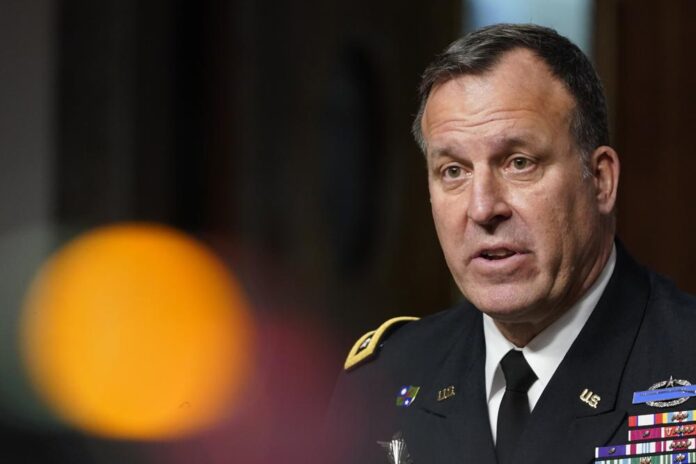
Lt. Gen. Erik Kurilla also told the Senate Armed Services Committee that China is expanding its power and spending in the Central Command region, including in countries needed by the U.S. to gather intelligence on extremist activities in Afghanistan.

“The United States faces a new era of strategic competition with China and Russia that is not confined to one geographical region and extends into the (Central Command) area of responsibility,” said Kurilla during the committee’s hearing on his nomination.

“As the United States rightfully prioritizes competition with China, we must remain engagedrussia in the Middle East and Central and South Asia,” he added.

Kurilla, a combat-hardened officer with extensive experience in the Iraq and Afghanistan wars, got a friendly reception from the panel and was told he would probably be confirmed.

If he gets the job, Kurilla would take over as the Pentagon continues to try to shift its focus to the Indo-Pacific and counter a rising China, and to bolster defenses against Russia in Europe. But, he was clear that Iran remains the key threat to US and allies in the region.

Kurilla would replace Marine Gen. Frank McKenzie, who is retiring after three years leading the command. McKenzie has overseen a tumultuous time in the region, with America’s chaotic withdrawal from Afghanistan, the dismantling of the Islamic State in Iraq and Syria, and escalating threats from Iran and what Washington calls “Tehran-backed proxies”.

Kurilla, who is currently the commander of the 18th Airborne Corps, told the committee that after the hearing he was deploying to Germany as part of the U.S. effort to reassure allies concerned about Russia’s military build-up along Ukraine’s borders.

Asked about the potential for repercussions in the Middle East of a potential Russian invasion of Ukraine, Kurilla stated he believes that it could spill over into Syria, where Russia already has a military base and troops.

“If Russia does invade Ukraine they would not hesitate to be able to act as a spoiler in Syria as well,” said Kurilla, who previously served as a deputy at Central Command.

He added that the U.S. doesn’t believe Russia wants to go to war with the United States.

On China, Kurilla noted 18 of the 21 countries in the Central Command region have signed strategic agreements with Beijing, which has increased its development in the Middle East. The U.S., he added, has to be able to counter China there.

Senators quizzed Kurilla on efforts to monitor al-Qaida and Islamic State extremists in Afghanistan, now that there are no longer U.S. forces in the country. He said efforts continue to work with surrounding nations to set up “over-the-horizon” capabilities.

The U.S., which left Afghanistan at the end of August, has been struggling to negotiate with a number of countries in the region to allow overflights, basing or other intelligence gathering from within their borders. Military leaders say it is difficult to monitor extremist groups from afar because doing so requires long drone flights that allow limited surveillance time.

Asked about working with the Taliban, Kurilla said the U.S. should take a pragmatic approach. He said the Taliban also views the Islamic State group as an enemy, so that may be a potential area of agreement. He also added the U.S. must find ways to deal with the humanitarian crisis in Afghanistan, and that may involve Taliban help with food deliveries.

Kurilla graduated from the United States Military Academy at West Point in 1988, and has served multiple tours in Iraq and Afghanistan, commanding conventional and special operations forces. He commanded a Stryker battalion in Iraq in 2004, and was shot and wounded.