Thursday, December 25, 2025
Home Blog Page 2088

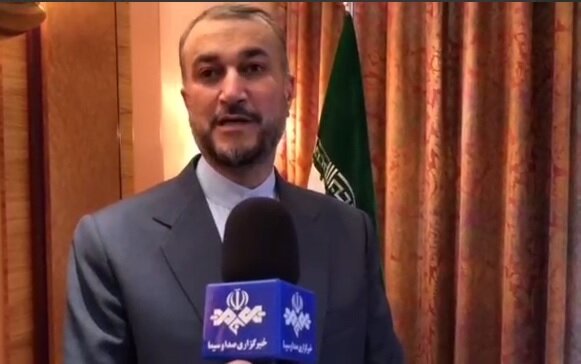
Iranian FM: Good deal within reach if other sides show seriousness

Amir Abdollahian added that the P4+1 group has a decisive role in this regard. The top Iranian diplomat also said some differences between Tehran and the Western parties to the Vienna talks remain unresolved.

Meanwhile, a senior EU official has told news outlets that it’s possible to reach an agreement with Iran in the comping two weeks.
This comes as Amir Abdollahian is in Munich, Germany to attend a security conference there.

Western media say the focus is now shifting to this key transatlantic which will be attended by a high-ranking US delegation.
Organizers of the Munich meeting say the prospects for an agreement with Iran are on the agenda of talks.

Back in Vienna, reports say the number of members of the European troika’s negotiating delegations in the talks has increased significantly.

The Iranian delegation has also enlarged. Iran believes that the sanctions removal talks have now reached a point where their success or failure depends solely on the political decisions of the West.

Marandi: Only some issues remain in Vienna pending US decision

In an interview with Turkey’s TRT television, Mohammad Marandi said if the US and the Europeans make a proper decision, there is a good chance that the 2015 nuclear deal, the Joint Comprehensive Plan of Action (JCPOA), will be restored within the next days.

In case America and the European troika — France, Britain and Germany — recognize Iran’s redlines and avoid attempting in vain to include issues unrelated to the JCPOA, there is an opportunity for achieving a deal in Vienna, he added.

“What is important to Iran is a good deal, not just any agreement,” he said. “Iran is in a hurry for a good deal because the cruel and inhumane sanctions imposed by the Americans and the Europeans are targeting women and children.”

Iran, however, will not make a mistake by entering a bad deal under economic pressure, he said, playing down the deadlines that the Western sides set in the course of the Vienna talks.

He said the Americans have all admitted to the failure of the “maximum pressure” campaign against Iran as well as to the progress in Iran’s peaceful nuclear program.

“It is difficult to set a date [for a final deal]. It could be completely close, but it depends on whether the Americans and the Europeans are ready to take certain decisions. Issues have been resolved, only some of them remain pending a decision in Washington,” he added.

Iran dismisses ‘bogus’ rumors of Chinese military deployment

Iran dismisses ‘bogus’ rumors of Chinese military deployment

“Over the past days, rumors have resurfaced about the deployment 5,000 Chinese security forces to the sidelines of oil and gas projects being implemented by Chinese firms,” the ministry said in a statement on Friday.

The projects are part of the 25-year partnership deal between Iran and China in a variety of sectors. In mid-January, the sides announced the launch of the agreement, which has sharply irked the Western states.

The statement said such “amateurish news fabrication” came earlier from certain businessmen supporting the ex-Iranian administration. This time, the rumors were spread by British media outlets covering oil and gas news, it added.

The ministry rejected the claims as “bogus lies”

“The spread of such rumors are related to the [Iran’s] success in paving the ground for attracting investments in recent months as well as to a remarkable rise in Iran’s oil exports,” the statement added.

It said such rumors are in the first place designed by certain “domineering” countries in order to harm Iran’s relations with other world countries. The rumors then get circulated by currents that seek unconditional submission to the West’s cruel demands, it added.

The rumors may also be aimed at “forcing the administration to expose parts of its measures and plans for increasing oil exports,” said the statement.

“The Petroleum Ministry will never reveal the channels [it uses] to neutralize the sanctions.”

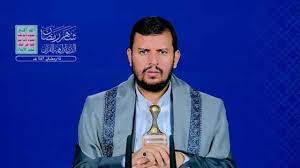
Ansarullah leader: Enemy wants to cause division among Yemenis

Abdul Malik Badruddin Al-Houthi said, “It is our duty to be united so that the country does not surrender.”

He made those comments in a speech to a delegation of tribes in Yemen’s Ma’rib Province.
Houthi added that the Saudi-led war against Yemen is widespread and the enemy in this war uses sanctions, dispersal of the nation and causing enmity among Yemenis.

“The Americans and the Israelis are the real enemies of Muslims,” he said, noting that, “They try to take advantage of the problems within the Islamic Ummah for their own purposes.”

Regarding the all-out Saudi-led siege of Yemen, he said several days ago, the Israeli president traveled to the United Arab Emirate (UAE) and Saudi Arabia opened its airspace to him, but it has banned the Yemeni people from traveling within its airspace.

Houthi added that the blockade on the Yemeni people is a crime because it has caused great suffering and torment for the people of the country.

In March, 2015, Saudi Arabia and its allies including the UAE formed a coalition and, with the help and green light of the United States, launched large-scale attacks against Yemen under the pretext of reinstating ousted and fugitive former President Abd Rabbuh al-Mansour Hadi to power.

The Saudi-led war has killed hundreds of thousands of Yemenis and reduced the country’s infrastructure to rubble. Millions of Yemeni have also been displaced.

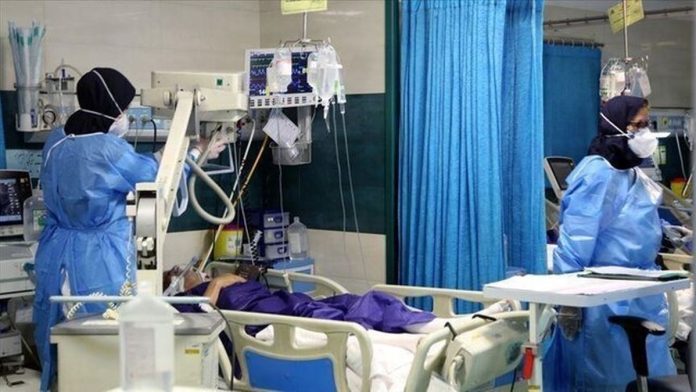
COVID kills 187 as Iran braces for Omicron peak in 2 weeks

According to the figures released by the Health Ministry on Friday, 19,317 more people have been diagnosed with COVID-19 in the past 24 hours, pushing the total number of infections so far to 6,913,427.

With the new death toll taken into account, the coronavirus has left 134,604 dead since it first emerged in the country in early 2020.

The figures showed 2,566 people have also been hospitalized due to the respiratory disease.

Iran has administered at least 138,883,311 doses of COVID vaccines. So far, 54,988,930 have received two doses and 21,945,172 third shots have been administered.

On Thursday, Health Minister Bahram Einollahi urged people to strictly observe the health protocols against the outbreak, warning that the country will reach the Omicron peak in two weeks.

The minister sounded the alarm at a rise in the number of severe cases of infection with Omicron among children.

‘US, Europe must recognize nuclear Iran, set aside failed sanctions’

“The United States is not able to restrict Iran’s nuclear science through failed sanctions because such a knowledge is deeply engraved in the minds of the country’s scientists and elite,” Abbas Golrou, with the Iranian Parliament’s National Security and Foreign Policy Committee, told IRNA.

“The Islamic Republic has made great progress in the area of nuclear science, which is today’s most important science and is widely used in the medical industry and other spheres,” the legislator added.

He said the talks are moving forward in Vienna with the prudence and intelligence of the Iranian negotiating team, adding, “There are of course certain hardships, which stem from the nature of the policies pursued by America and some European countries.”

The lawmaker said the Iranian administration’s agenda of enhanced ties with neighbors will lead to the failure of the American sanctions.

Golrou also praised Tehran for engaging in strong economic diplomacy with China and Russia in recent months, saying, “The country’s diplomacy should not be one-dimensional and the [new] diplomatic apparatus has no intention of pursuing such a policy.”

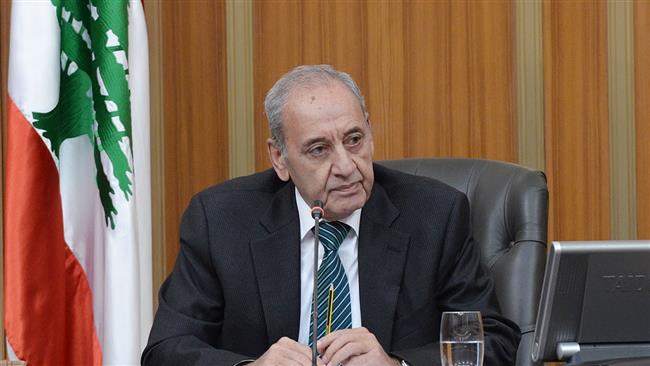
Lebanese parliament speaker: We support Iran-Saudi talks

Lebanese Parliament Speaker Nabih Berri

Speaking at the opening session of the Arabic Parliamentary Union in Cairo, Nabih Berri also thanked Iraq for mediating talks between Tehran and Riyadh.

Iran and Saudi Arabia have so far held three rounds of talks in Baghdad and have yet to kick off the next round.

Berri expressed hope that the negotiations will produce positive results for the interests of both nations and also for the interests of Arab and Muslim countries as well as people of the region.

Berri also spoke about Lebanon’s parliamentary elections. He said the Lebanese people are three months away from the vote and the country is committed to holding the vote in a transparent manner.

He urged the Arabic Parliamentary Union to help Lebanon hold the elections through forming a special committee tasked with monitoring the vote.

The Lebanese parliament speaker noted that Lebanon wants good ties with all Arab countries.

‘Iran won’t accept to sign win-lose deal sought by Israel in Vienna’

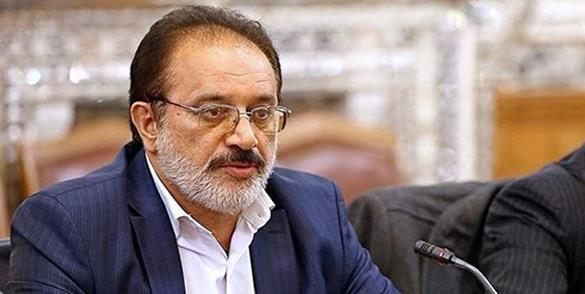
Abolfazl Hassanbeigi told IRNA that the US “has constantly been after getting concessions [from Iran] and is controlled by the Zionist regime.”

Although the Americans are tremendously interested in achieving a deal with Iran, Israel remains concerned of the Islamic Republic’s growing nuclear power, the ex-lawmaker said.
The Israelis, he said, “want a deal to be signed again but in a win-lose form.”

“Any way, on the one hand, the Americans have no other option but to achieve a deal, and on the other, the Islamic Republic will not accept a win-lose deal under any circumstances,” he said.

Meanwhile, Hassanbeigi added, the P4+1 group are also fed up with Washington’s behavior and “all parties, even the Europeans, are severely worried about the prolongation of the negotiations” in Vienna aimed at bringing the US back to the 2015 nuclear agreement.

He said the Iranians are currently seeking to fix the weak points that existed in the 2015 deal, referring to the conditions that allowed the US to easily abandon the multilateral deal.

The former legislator also said the American power is now on the decline, adding, “The world is no longer unipolar and the Islamic Republic will, under no circumstances, accept to sign an agreement that will have no benefits for the Iranian nation.”

Oil prices extend losses as Iran nuclear deal nears

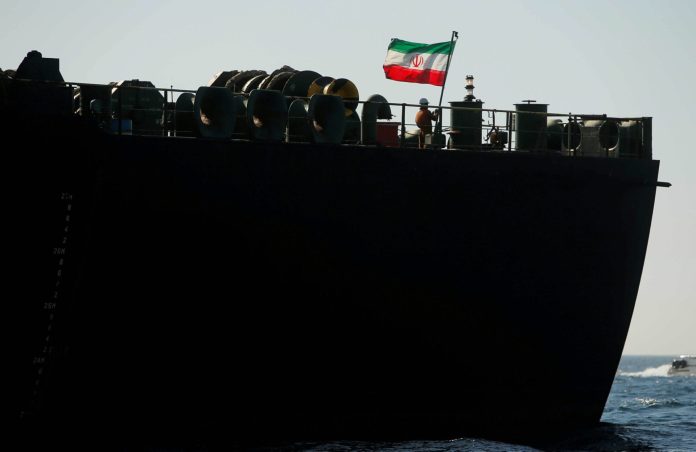
Iran Oil Tanker

Brent crude futures fell 47 cents, or 0.5%, to $92.50 a barrel at 0410 GMT, extending a 1.9% drop from the previous session.

U.S. West Texas Intermediate (WTI) crude futures shed 62 cents, or 0.7%, to $91.14 a barrel, after sliding 2% in the previous session.

Both benchmark contracts hit their highest levels since September 2014 on Monday, but were headed for their first weekly fall in nine weeks amid reports of a deal taking shape to revive Iran’s 2015 nuclear agreement with world powers.

Diplomats say the draft accord outlines a sequence of steps that would eventually lead to granting waivers on oil sanctions. That would bring about 1 million barrels a day of oil back to the market, but the timing is unclear.

“The downward pressure on crude from the prospect of a deal is likely to sustain … unless the parties end the latest round of talks still in a deadlock,” stated Vandana Hari, founder of oil market analysis provider Vanda Insights, in a note.

The Ukraine standoff fear premium in crude is starting to fray at the edges, Hari added.

Still, analysts do not expect prices to fall much in the near term, even with the prospect of more Iranian oil, with the Organization of the Petroleum Exporting Countries and allies, together called OPEC+, struggling to meet their production targets.

“Oil markets are vulnerable to supply disruptions given global oil stockpiles are tracking near seven year lows and as OPEC+ spare capacity comes into question given disappointing OPEC+ supply growth,” Commonwealth Bank (CBA) analyst Vivek Dhar stated in a note.

With oil demand also recovering as air travel and road traffic picks up, CBA sees Brent holding in the $90 to $100 a barrel range in the short term and topping $100 “quite easily” if tensions escalate between Russia and Ukraine.

U.S. President Joe Biden is set to host a call on Friday on the Ukraine crisis with the leaders of Canada, France, Germany, Italy, Poland, Romania, Britain, the European Union and NATO, according to the office of Canada’s Prime Minister Justin Trudeau.

US says deal with Iran possible within days

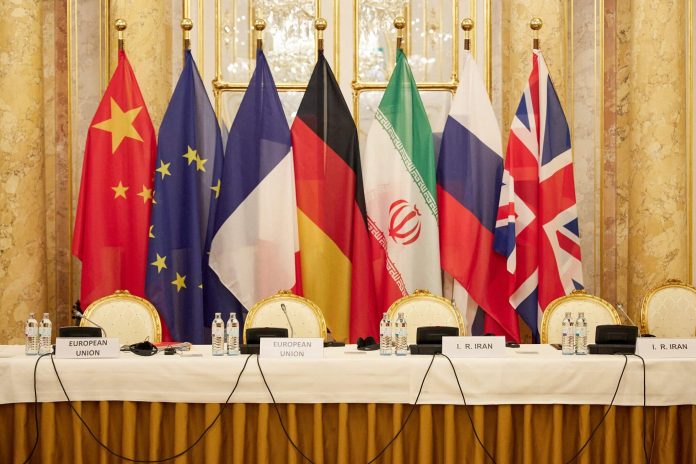
The Vienna talks, which involve Iran as well as Britain, China, France, Germany and Russia directly, and the United States indirectly, resumed in late November with the aim of restoring the landmark deal. Western diplomats say they are now in the final phase of the talks and believe that a deal is within reach.

Stating that “substantial progress has been made in the last week,” a State Department spokesperson told AFP that “if Iran shows seriousness, we can and should reach an understanding on mutual return to full implementation of the JCPOA within days,” using an acronym for the nuclear deal.

But “anything much beyond that would put the possibility of return to the deal at grave risk,” the spokesperson added.

Iran insists that the talks must lead to the removal of all American sanctions that were imposed against Tehran following Washington’s unilateral withdrawal from the agreement in May 2018. Tehran has also demanded credible guarantees that Washington will not abandon the deal again.

Iran’s chief nuclear negotiator has recently stated the involved sides are now closer than ever to an agreement.

“After weeks of intensive talks, we are closer than ever to an agreement; nothing is agreed until everything is agreed, though. Our negotiating partners need to be realistic, avoid intransigence, and heed lessons of past 4yrs. Time for their serious decisions,” Ali Bagheri Kani said in a tweet.

His tweet comes amid speculations and reports over the past days that the Vienna talks are headed toward an agreement with a report claiming 98 percent of the outstanding matters have already been resolved.