Thursday, December 25, 2025
Home Blog Page 2082

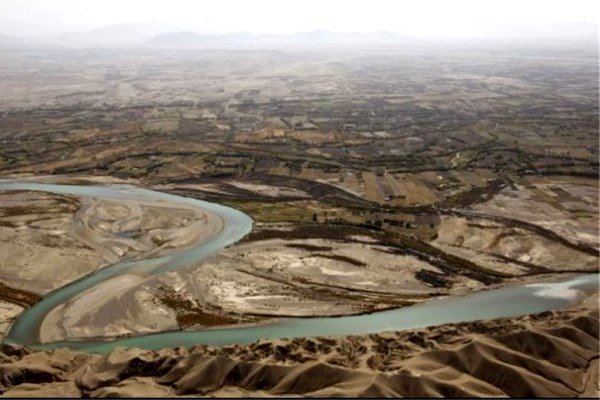
General: Iran pursuing Helmand River water rights

Iran pursuing Helmand River water rights

“Officials…are following the issue of Hirmand water supply from the neighboring country around the clock, and frequent visits are underway, and with God’s help, it will be resolved as soon as possible,” Chief of Staff of Iran’s Armed Forces Major General Mohammad Bagheri said on Monday during a ceremony to launch a water transfer project in Sistan and Baluchestan Province.

Iran has long been complaining that Afghanistan has failed to release enough water from a major dam on the Helmand River to comply with terms of a 1973 treaty.

Based on the treaty, Iran is entitled to more than 800 million cubic meters of water from the river annually.

The Helmand, which is called Hirmand in Iran, originates near Kabul in the western Hindu Kush mountain range, flows south for over 1,000 kilometers before emptying into Lake Hamun on the border with Iran.

Russia says its forces killed 5 Ukrainian soldiers in border clash

Russia says its forces killed 5 Ukrainian soldiers in border clash

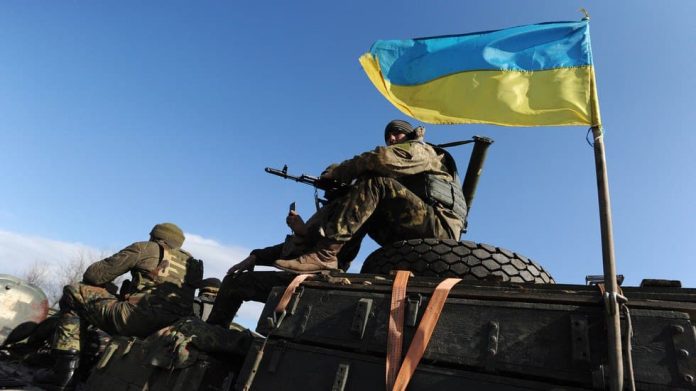
In a statement issued on Monday, military chiefs said that “a unit of the Southern Military District, alongside a border patrol by the Russian Federal Security Service, prevented a sabotage and reconnaissance group from violating the Russian state border from the territory of Ukraine.”

Five Ukrainian soldiers were killed and no Russian servicemen were injured during the firefight, they reported.

The ministry added that during the attack, two combat vehicles belonging to Kiev’s armed forces crossed into Russian territory in an attempt to rescue the alleged saboteurs. Both vehicles are said to have been destroyed.

Responding to the reports of the attack, Ukraine’s military has announced that Moscow’s claims of an attempted incursion by saboteurs are false.

Earlier, the Russian top security agency reported a guard post along the border between Russia and Ukraine has been hit by a projectile launched from across the frontier. It comes amid a worsening military standoff in the neighboring Donbass region.

In a statement released on Monday, officials from the FSB’s press service announced that “on February 21, at 9:50 AM, a shell of an unknown type, fired from Ukrainian territory, completely destroyed the place of work of guards from the border department of Russia’s Federal Security Service in the Rostov region.”

The FSB said that the post is located around 150 meters from the Russian-Ukrainian border. No casualties have been reported, and explosives specialists are said to have been brought in to ensure the site is safe.

A video shared by the agency shows what appears to be a destroyed structure in an isolated area close to the demarcation line, surrounded by trees and fields. No other damage or facilities can be seen in the clip.

The report comes amid claims of a sharp spike in hostilities between the two breakaway self-declared Donbass republics in Donetsk and Lugansk and Kiev’s forces. Both sides have accused each other of heavy shelling, with international observers warning of a worsening crisis.

On Saturday, the Rostov branch of the FSB reported two explosions on the Russian side of the shared border, which neighbors the rebel-held territory.

“One of the shells exploded two kilometers from the Russian-Ukrainian border on the outskirts of the village of Mityakinskaya,” authorities said in a statement.

“Another shell destroyed an outbuilding on the ground of a private home in the Manotsky farming community,” the statement read.

No injuries were reported, and a criminal investigation is said to have been launched.

An unnamed law enforcement source told RIA Novosti that the remains of a shell from a Soviet-era BM-21 Grad rocket launcher have been identified at one of the alleged sites. The system is believed to be used by both Ukraine’s armed forces and separatists in the two breakaway regions.

On Friday, rebel leaders in Ukraine’s Donbass claimed that they have intelligence that Kiev is poised to order an offensive aimed at retaking the two regions, which declared their autonomy after the country’s government was topped following the 2014 Maidan. Neither Russia, Ukraine, nor any other nation recognizes their independence.
However, Kiev has insisted it has no plans to launch an attack. On Friday, Alexey Danilov, the secretary of Ukraine’s’ National Security and Defense Council, noted that “there is an attempt to provoke our forces”

Danilov added that Ukrainian troops “can only open fire if there will be a threat to the lives of our service members.”

In the midst of the fierce fighting, Russian President Vladimir Putin urged for a diplomatic solution to the increasingly tense situation.

“All Kiev needs to do is sit down at the negotiating table with representatives of the Donbass and agree on political, military, economic, and humanitarian measures to end this conflict. The sooner this happens, the better,” Putin said on Friday.

Putin will hold a large meeting of the Russian Security Council on Monday, Kremlin spokesperson Dmitry Peskov stated in a call with journalists on Monday.

When asked if this was an emergency meeting or a regular one, Peskov noted that it is “not regular,” refusing to elaborate further on the agenda of the meeting.

Peskov added the situation at the border remains “extremely tense” and refused to comment on the possibility of Russia providing military assistance to Donbas if requested.

Europe remains poised for a potential Russian invasion and Western leaders have warned that one remains imminent.

Earlier on Monday, Ukraine’s defense minister Oleksii Reznikov announced the country is not witnessing the withdrawal of Russian forces from positions close to the Ukrainian border.

Western officials have been sounding the alarm for months, claiming that Russia is pulling its troops to the demarcation line as a prelude to invading Ukraine. The Kremlin has repeatedly denied that it has any aggressive intentions toward its neighbors and has argued that the movement of its troops in its own territory is an internal matter.

Ex-Iranian ambassador to Baku: U.S. trying to drag Russia into war with Ukraine

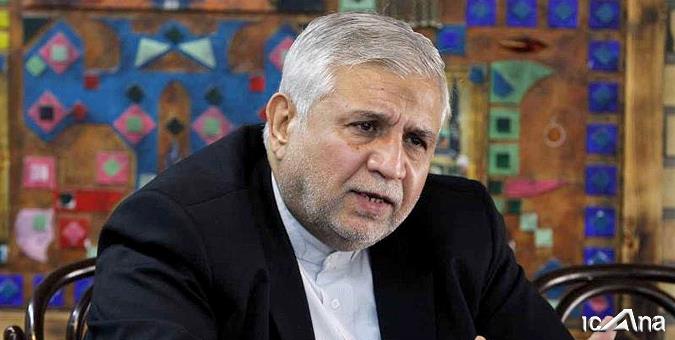
Iran’s former ambassador to Baku says Russian President Vladimir Putin is handling the Ukraine crisis in a wise manner, adding the U.S. tries to force Russia into attacking its neighbor.

Mohsen Pak Aeen says Putin is trying to prevent the crisis from spilling over into the rest of Europe.

Pak Aeen also said multiple players are engaged in the Ukraine crisis, adding the US as number one player, is seeking to provoke Russia into attacking Ukraine.

He noted that Washington’s aim is to get Russia, as a global rival, bogged down in a war in Ukraine, thus weakening Moscow in the Eurasia, West Asia and Europe.

Pak Aeen said the US goal is beyond Ukraine, adding Washington does not want to defend Ukraine and only seeks to drag Russia into a war.

He maintained that the US showed in 2014 after Russia’s annexation of Crimea that it will not stand by Europe. Pak Aeen underlined that Europeans know this and that’s why the German chancellor and the French president travelled to Moscow and held direct talks with Putin.

He said the Europeans, unlike the US, want the crisis to be resolved diplomatically.

The former Iranian ambassador to Thailand, Uzbekistan and Mozambique added that Ukraine which has already lost Crimea does not want to also lose the Luhansk and Donetsk regions where there are many Russian people.

Iranian expert: Western media seeking to force Iran into concessions

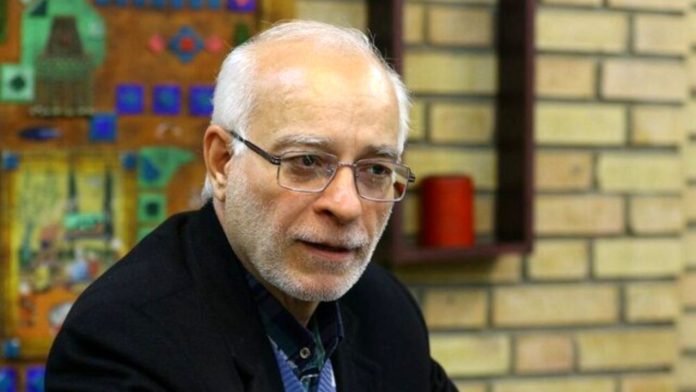
An Iranian political expert

In an exclusive interview with Fars News Agency, Hassan Beheshtipour also referred to Western media claims that the ball is now in Iran’s court regarding a deal, saying such allegations aim to pressure Iran into giving in to the US and the European troika’s demands.

Beheshtipour added that a reason for the prolongation of the Vienna talks is each side tries to gain concessions from the other party.

He also said when the Western side says the ball is in Iran’s court it means to insinuate that the West has given enough concessions and now it’s Iran’s turn to give concessions.

Beheshtipour rejected the US claim that it cannot guarantee that the country’s next administration will stick by Washington’s commitments under a deal in Vienna.

He said that under international law, even in the event of a regime change, the next political establishment is obliged to fulfill the commitments undertaken by its predecessor.
Beheshtipour cited the former Soviet Union as an example, saying after the collapse of the USSR, Russia inherited the Salt 1 and 2 treaties from the Soviets, agreed to stick by them and never reneged on the agreements.

The Iranian political expert said the US believes in some kind of exceptionalism when it comes to its obligations under international treaties, which means Washington does not think of itself as duty bound to abide by the international treaties it has signed.

Beheshtipour also spoke of the possibility of a deal in Vienna. He said an agreement is at hand if the US agrees to deliver on its commitments under the 2015 Iran nuclear deal, JCPOA.

Top security official: No negotiations with U.S. on Iran’s agenda

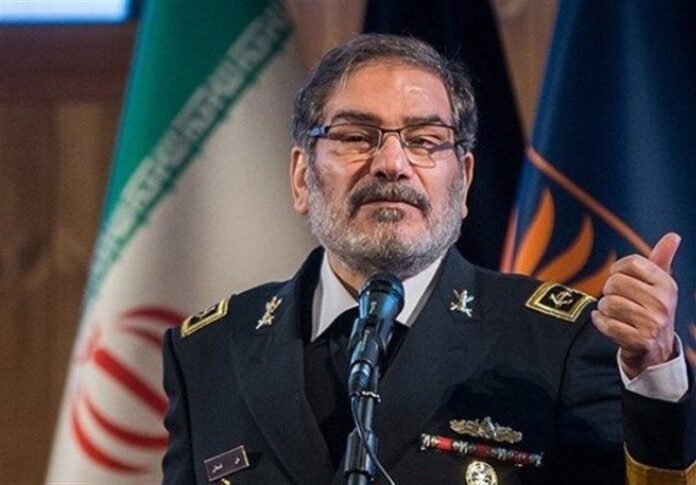
Ali Shamkhani

“Negotiations with the United States are not on the agenda of the Iranian negotiating team because they will not lead to any breakthrough,” Secretary of Iran’s Supreme National Security Council Ali Shamkhani said in a tweet on Monday.

He added that the Vienna talks have been going on among Iran, the P4+1 and representatives of the European Union and that this path will continue unchanged until they reach a result.

The eighth round, which began on December 27, has now become one of the longest rounds of the talks between Iran
and the P4+1.

Iran refuses to sit down directly with American
diplomats, meaning negotiators from Britain, China,
France, Germany and Russia must shuttle between Iranian and American diplomats.

Iran and the P4+1 are completing a draft text of an agreement. Most of the delegations acknowledge that the talks are moving forward, despite the complexity of some issues.

Iran insists that America must remove all sanctions imposed on Tehran after former U.S. president Donald Trump unilaterally pulled out from the hard-earned deal in May 2018 in violation of American commitments. It also says Washington must provide guarantees that it will not leave the JCPOA again.

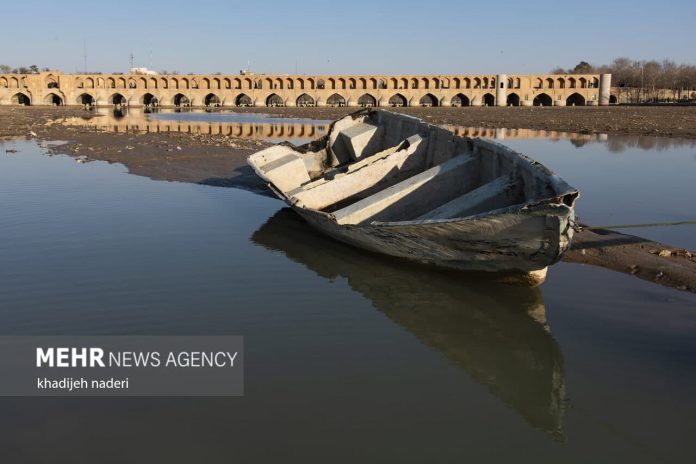
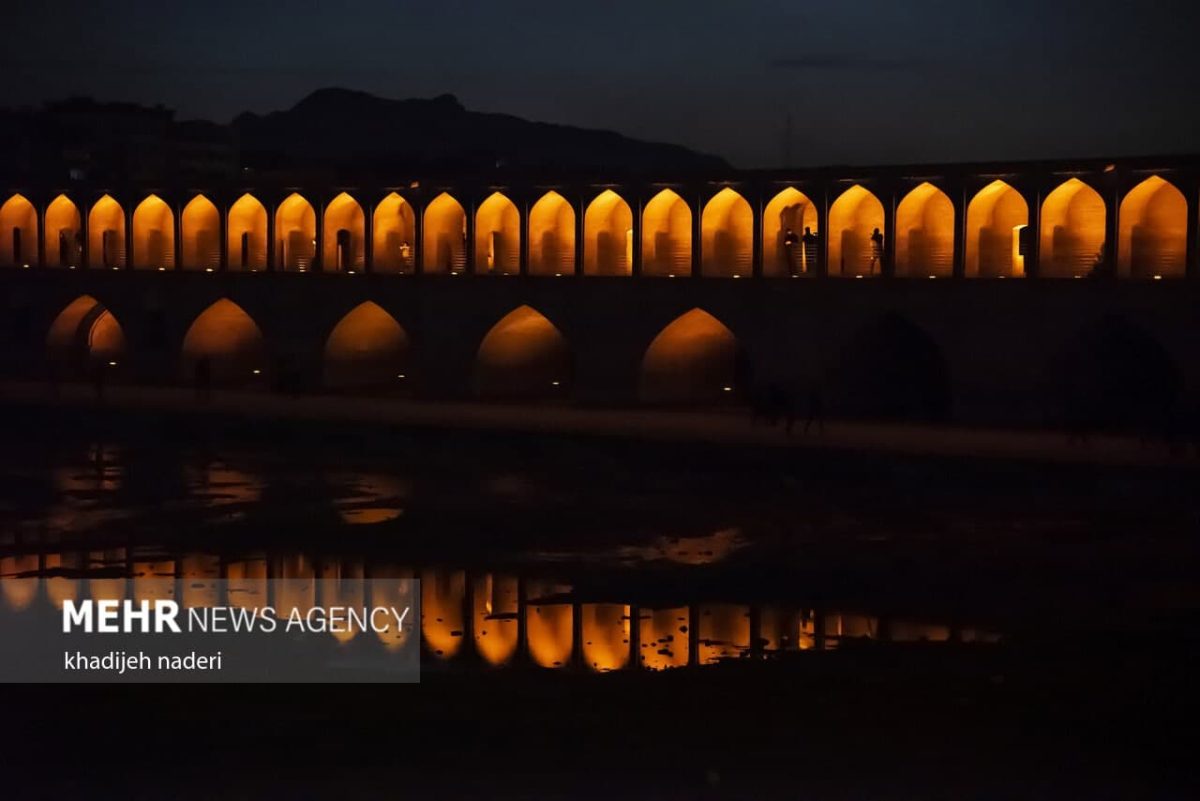
Zayandeh Rud: The last reflection

Zayandeh Rud: The last reflection

These days the flow of water in the river is gradually approaching its final hours, and this reflection is fading out.

Zayandeh Rud: The reflection of water

Covid kills 236 people in 24 hours in Iran

The latest deaths push to 135,276 the total number of people killed by Covid since the pandemic began two years ago.

Meanwhile, 19,110 new cases were logged that include 2,514 hospitalizations. The figures show that now 4,085 people are in ICU wards of hospitals countrywide.

The country began a nationwide vaccination campaign to contain the outbreak. Currently, more than 139 million doses of vaccine have been administered in the country. They include over 22 million triple-vaxxed people.

Meanwhile, 337 cities and towns are marked red in Iran now, which denotes the highest level of danger from Covid. There are no blue cities.

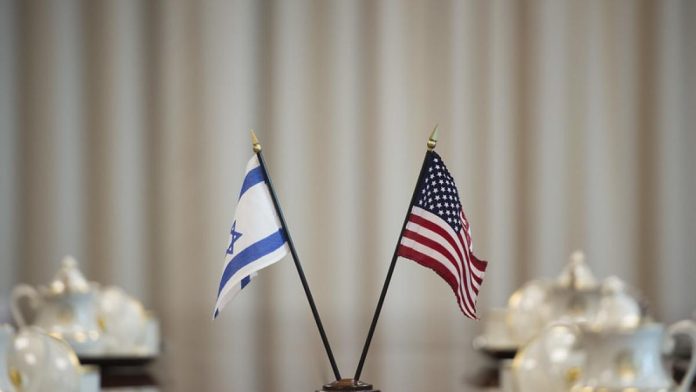
Israel sees bilateral talks with U.S. to ‘complement’ nuclear deal

Israel, which is not a party to nuclear negotiations between Iran and world powers in Vienna, has voiced concern that they could produce a revived deal that “create(s) a more violent, more volatile Middle East”.

Transportation Minister Merav Michaeli, a member of Israel’s decision-making security cabinet, stated that as a center-left opposition lawmaker in 2015 she had supported the then-nuclear deal with Iran – which the Donald Trump administration later withdrew from.

But, she noted, “this (emerging) deal is much shorter, with many more sunsets, with many, many more – I would say – bad opportunities, cracks. And yes, it’s very, very problematic”.

“So we are doing whatever we can to make it as best as possible,” Michaeli, speaking in English, told the Conference of Presidents of Major Jewish Organisations in Jerusalem.

“We will have to work on a complementary agreement between Israel and the U.S.,” she added.

She did not elaborate. Israeli leaders have previously asserted that Tel Aviv would not be bound by any nuclear deal and could take unilateral military action against their arch-foe if they believed it was required to deny it nuclear weapons.

Tehran denies seeking nuclear weapons, stressing it wants to master nuclear technology for peaceful purposes.

In early February, KAN reported a U.S. military official was present during an Israeli simulated drill preparing for an assault on Iranian nuclear facilities using dozens of warplanes.

Iranian officials have stressed the country reserves the right to respond to any adventurism by the United States and Israel. Tehran says Israel is well aware of Iran’s capabilities and capacities and its own limited capabilities as well as the fact that the Islamic Republic does not compromise or joke about its national security.

In late December, Iran simulated an attack on the Zionist regime’s nuclear facilities known as Dimona during extensive military drills.

Iran has stressed that the recent wargames were intended to send a warning to Israel.

Commander of the Islamic Revolution Guards Corps (IRGC) Major General Hossein Salami stated after the exercises that Iran will cut off the hands of enemies if they make a wrong move and that the distance between actual operations and military exercises is only a change in the angle of launching the missiles.

Major General Mohammad Bagheri has also noted the exercise made it clear that Israel’s Iron Dome system can be defeated and penetrated if a barrage of missiles is fired from different directions at a target at once.

The top Iranian general described the drill as one of Iran’s most successful military exercises.

Iran’s ballistic missiles have a range of 2,000 km and the entire occupied Palestine and U.S. bases in the region are within their reach.

Death row convict dies of heart attack after being spared

The man, identified as Akbar, died an hour later after being taken to the hospital.
This happened in the southern Iranian port city of Bandar Abbas.
He and three other defendants were accused of killing a man. After the trial of these 4 people in court, Akbar and another accomplice were found guilty and sentenced to qesas (retribution) for directing the murder.
The two other defendants were sentenced to prison. Akbar committed murder at the age of 37 and died at 55.

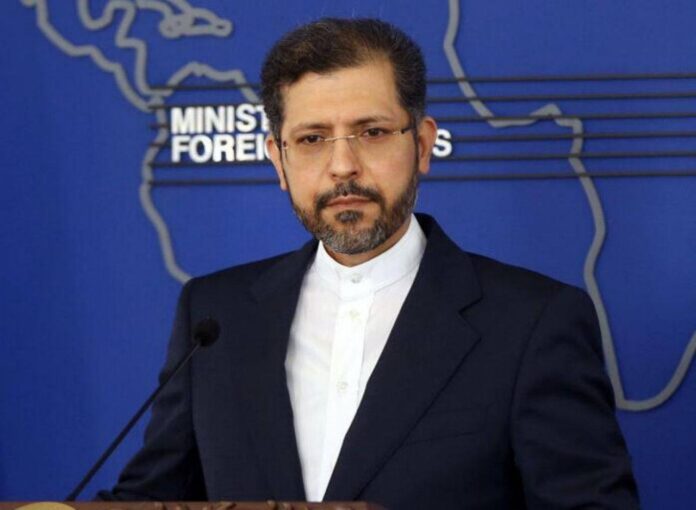
Khatibzadeh: Outstanding progress made in Vienna; US and Europe expected to take steps

“What is certain is that, within the framework of the talks, all sanctions — regardless of their label — that are incompatible with the commitments of the other side and prevent [Iran’s] economic benefits from the Joint Comprehensive Plan of Action, should be removed,” Khatibzadeh said in his weekly presser.
The spokesman added that the remaining topics of the negotiations, are the most difficult, most important and most serious issues that should be resolved.
Khatibzadeh also touched on the comments by the Israeli regime’s prime minister on a possible agreement in Vienna, stressing that his remarks are addressed at Washington and European capitals.
“We neither pay attention to their [Israelis’] remarks, nor they are bases for our judgement,” the spokesman said.
He further noted that one of the key guarantees Iran has been seeking during the negotiations in Vienna is “the quick reversibility of Iran’s programs in case of any agreement in Vienna”.

On the negotiations between Iran and Saudi Arabia, Khatibzadeh said Tehran has always been ready for talks with the Persian Gulf neighbor, “despite difficulties and disagreements”.

He said Iran will take part in the fifth round of the negotiations if a final date is determined.

The spokesman also talked about Australia’s move to insert Hamas resistance movement in its list of terror groups.

He said Hamas now has the largest number of representatives in the Palestinian parliament and Australia’s decision to stand by the “open decades-long oppression of the apartheid [Israeli] regime” is a historic move, which people will never forget.

Khatibzadeh also touched on the visit by the Iranian delegation to South Korea and their consultations for the release of blocked Iranian assets.

He said Iran is witnessing no practical step by South Korea.

“As long as funds belonging to Iranian people are frozen in South Korean banks, we will put no topic beyond this on the agenda of the two countries,” he warned.

“The government of South Korea should know that we will never forget these days.”

The spokesman also addressed Britain’s debt to Iran, saying the British government has repeatedly showed that “one cannot be sure it implements an already-sealed agreement”, even on the eve of the deadline for its implementation.

Khatibzadeh said the British government is under a clear debt that should be paid to the Iranian nation stressing that the long process has become “tiresome beyond limits”.

The spokesman also said Americans have repeatedly called for direct negotiation with Iran.

He said the Donald Trump administration had similar demands from Iran, which Tehran considered a worthless stunt toward his political aims.

“It is not possible that Americans get different results from a single set of policies,” he stressed.

“If they want to see different results, it is natural that they should act differently.”