Thursday, December 25, 2025
Home Blog Page 2059

Iran unveils two new drone, missile bases

Major General Hossein Salami was speaking at a ceremony where two new missile and drone bases of the IRGC were unveiled.

He said in the past, Iran defeated its enemies barehanded but now it has highly effective weapons in addition to strong faith.

The two missile and UAV bases of the IRGC became operational in the presence of Major General Hossein Salami.

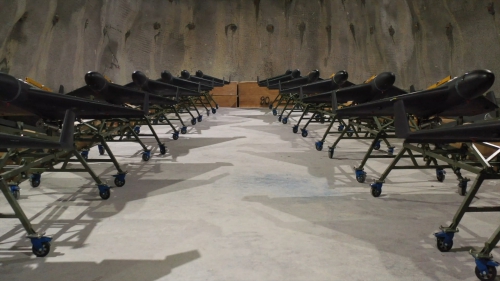
Reports say these tunnel bases have been built in the heart of the high mountains and house ground-to-ground missile systems with advanced equipment, as well as stealth drones capable of infiltrating the enemy’s radar and defense networks.

It’s the first time that the IRGC unveils an underground UAV base. Military experts believe that Iran’s access to UAVs with a range of 2,000 kilometers, launch platforms for dual-projectile missiles, and multi-aircraft launch platforms for precision UAVs all show these bases are effective in defending and protecting Iran against any threat.

Iran has beefed up its military deterrence in recent years amid war threats by the US and Israel.

The key component of Iran’s deterrence is its missile might which a top US general recently described as invincible

Iranian interior minister condemns terror attack in Pakistani mosque

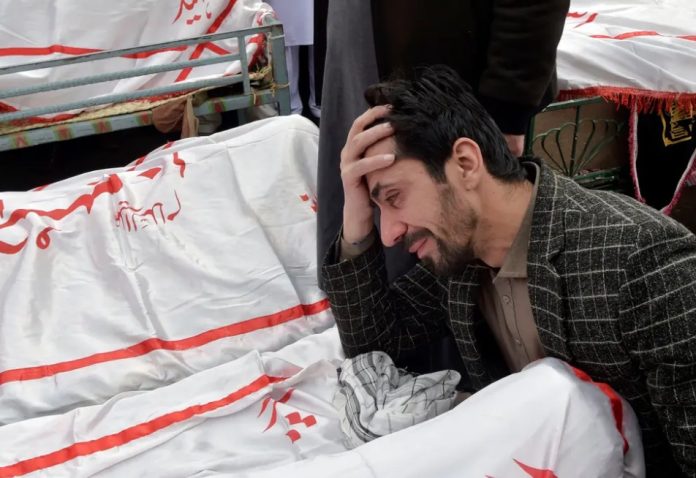
Vahidi condemned the terrorist attack and described those behind it as the enemies of humanity, morality, religion and unity of Muslims.

He said they are cruelly seeking to rob the Muslim nations of the region, of peace and comfort.

The Iranian interior minister noted that solidarity among the nations and officials of regional countries can be an important and a decisive factor in confronting this kind of sinister terrorist acts.

He also expressed hope that the perpetrators of the cowardly act will be brought to justice.

The bombing at the mosque in Peshawar killed over 58 Shia Muslims and wounded many more during the Friday Prayers

Russian envoy hails Iranian delegation for fierce defense of national interests

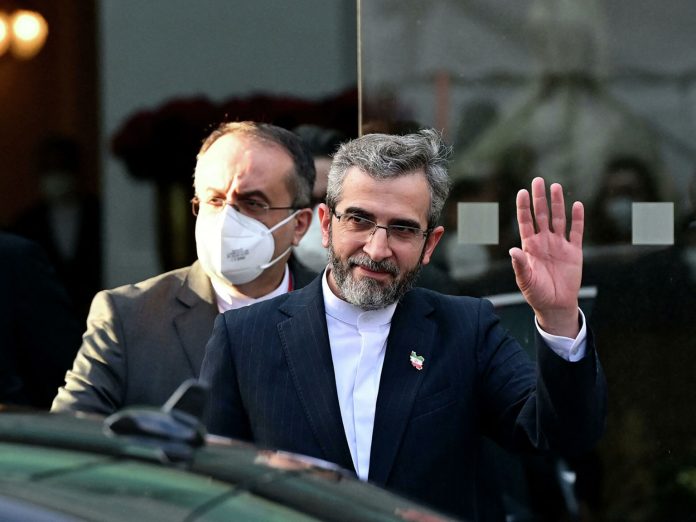
Ali Bagheri

Ulyanov then praised the Iranian negotiating team saying, “The Iranian colleagues are defending Iran’s national interests fiercely.”

He added that the delegations of the three European countries have left Vienna for a minor break and returned to their capitals for a short while.

Ulyanov said, “Apparently, these three colleagues thought they had no place here at this stage of the negotiations and believed they had done their job and that their presence was no longer necessary.”

The Russian envoy said Iran, Russia, China and the United States are trying to finalize issues that are of interest to them and negotiations are continuing but on a smaller scale.

Elsewhere in his remarks, Ulyanov spoke about how the Iranian team interacts with the Russian and Chinese delegations and about claims that other teams are united against Iran.

He said he had repeatedly told his Western colleagues that there was a united front but there is nothing against Iran.

The Russian envoy noted that at least Russia is out of such a front, so is China. “I have always said that we all have a common goal and we must work together” Ulyanov underlined.

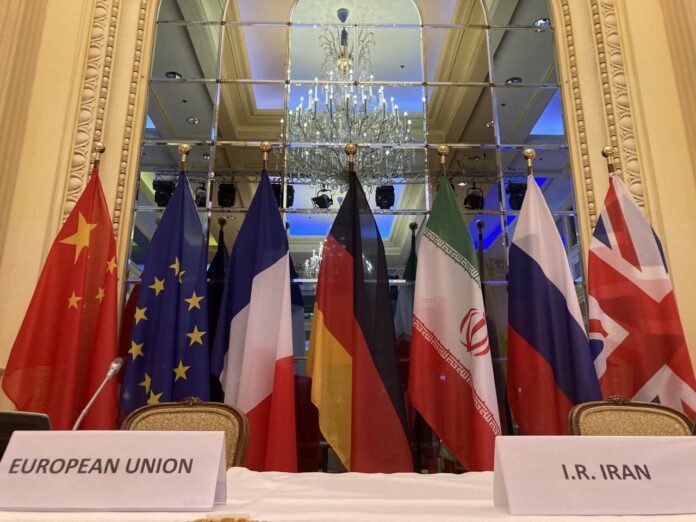
Iran and the P4+1 group say they are on the verge of signing a deal to revive the 2015 nuclear agreement known as the JCPOA.

Taliban secretive Haqqani Network leader finally shows face for 1st time

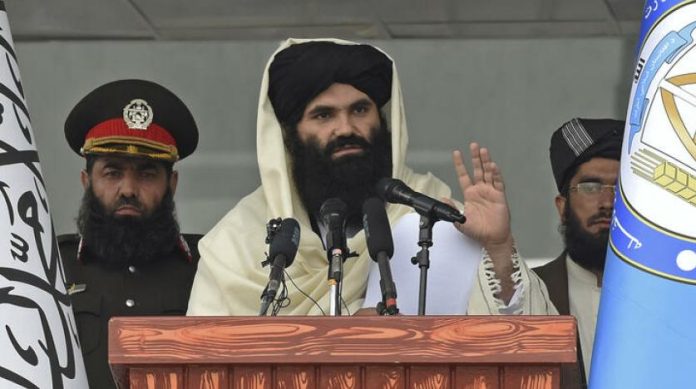
Interior Minister Sirajuddin Haqqani, who also heads the feared Haqqani Network, has previously only been photographed clearly from behind — even since the hardline group seized power last August.

“For your satisfaction and for building your trust… I am appearing in the media in a public meeting with you,” he said in a speech at the parade, AFP reported.

The United States has offered a reward of up to $10 million for information leading to his arrest, saying he was responsible for a string of terror attacks.

Pictures of Haqqani were being widely shared on social media Saturday by Taliban officials who had previously only posted photographs that didn’t show his face, or if it had been digitally blurred.

At the police parade Saturday, Haqqani was dressed like many of the senior Taliban officials — very heavily bearded and wearing a black turban and white shawl.

He stated he was showing his face so “you could know how much value we have with our leadership”.

Haqqani’s appearance also suggests the Taliban have grown even more confident of their hold on the country since seizing power on August 15, two weeks before the last US-led foreign forces left.

Several diplomats were in the crowd — including Pakistan’s ambassador — even though no country has officially recognized the new Taliban regime.

The Haqqani Network, founded in the 1970s by Jalaluddin Haqqani, was heavily supported by the CIA during the Mujahideen war against the Soviet occupation of Afghanistan.

Sirajuddin Haqqani, who is believed to be in his 40s, is his son, and succeeded him following his death in 2018.

The latter was blamed for the deadly 2008 attack on Kabul’s Serena Hotel that killed six people, as well as at least one assassination attempt against former Afghan President Hamid Karzai.

The FBI Rewards for Justice program says he maintains “close ties” to Al Qaeda, and “is a specially designated global terrorist”.

He is reported to have been the target of several US drone strikes — in Afghanistan, Pakistan, and in the rugged terrain between them that is the heartland of the Haqqani Network.

He was also credited as the author of a New York Times opinion piece in 2020 titled “What We, the Taliban, Want”, sparking controversy that the newspaper had given “terrorists” a public platform.

Before the Taliban’s return, Haqqani was the most senior of three deputies to leader Hibatullah Akhundzada.

Akhundzada himself hasn’t been seen in public for years, and many Afghan analysts believe he may not even be alive.

Haqqani heads a powerful subset of the Taliban blamed for some of the worst violence of the past 20 years.

Report: Iran says Russia’s demand for US guarantees may harm nuclear talks

The announcement by Russia, which could torpedo months of intensive indirect talks between Tehran and Washington in Vienna, came shortly after Tehran announced it had agreed a roadmap with the UN nuclear watchdog to resolve outstanding issues which could help secure the nuclear pact.

“Russians had put this demand on the table (at the Vienna talks) since two days ago,” said the Iranian official in Tehran

“There is an understanding that by changing its position in Vienna talks Russia wants to secure its interests in other places. This move is not constructive for Vienna nuclear talks,” the official added.

Demanding written US guarantees that Western sanctions imposed on Russia over the conflict in Ukraine would not damage its cooperation with Iran, Russian Foreign Minister Sergei Lavrov stated the limitations had become a stumbling block for the Iran nuclear deal, warning the West that Russian national interests would have to be taken into account.

Lavrov noted the sanctions on Russia over the conflict in Ukraine had created a “problem” from Moscow’s perspective.

When asked whether Russia’s demand would harm 11 months of talks between Tehran and world powers, including Russia, Iran Project Director at International Crisis Group, Ali Vaez said, “Not yet. But it’s impossible to segregate the two crises for much longer.”

“The US can issue waivers for the work related to the transfer of excess fissile material to Russia. But it’s a sign that the commingling of the two issues has started,” Vaez added.

All parties involved in Vienna talks announced on Friday they were close to reaching an agreement.

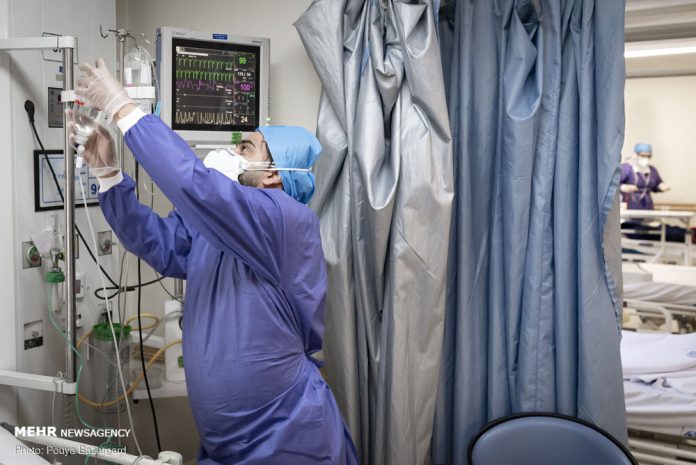
Iran Covid: 154 deaths; infection cases decreasing

The deaths push the total fatalities from the disease to 137,747 since the start of the pandemic in early 2020.

The daily caseload from Friday to Saturday stood at 4,089 including 912 hospitalizations, compared to the 6,470 new cases during the last 24 hours.

Meanwhile, the vaccination campaign against Covid-19 continues in Iran. The number of triple-vaxxed people in the country is inching toward the 24 million mark.

The number of cities marked red, with the highest risk, is slowly decreasing as well. Currently, 148 cities across Iran are red while 196 ones are orange, which are respectively the highest and second highest danger zones.

There are 3 cities marked blue, the lowest risk from Covid.

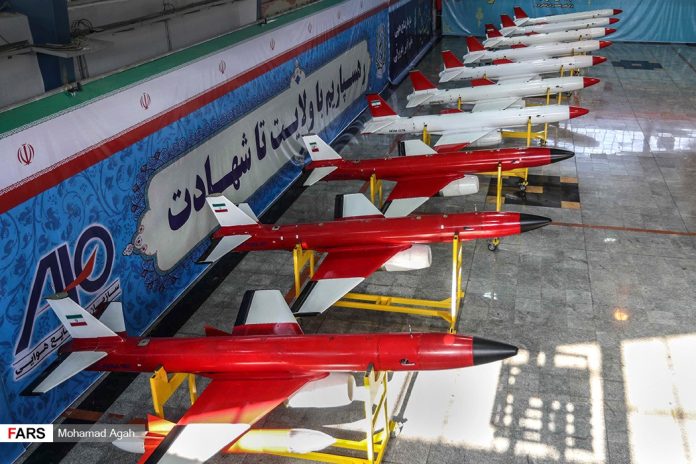
IRGC: Iran capable of launching 60 drones at one time

Iran Drones

Brigadier General Hajizadeh made the announcement at a ceremony where the IRGC unveiled two new missile and drone bases.

He added that Iranian forces do not face any limitations in terms of the number of targets designated to hit because there are so many of the UAVs.

Hajizadeh noted that Iran’s simultaneous hitting firepower has increased 7-fold and the time between preparation of the projectile and firing has drastically decreased.

Iran has beefed up its military might in recent years amid continued threats of war against the country by the US and the Zionist Regime.

The Islamic Republic has carried out many military drills as well.

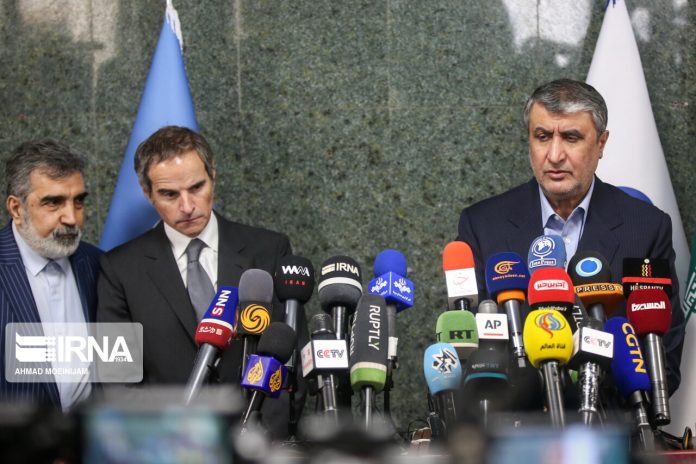
Iran urges IAEA not to be swayed by political considerations

Rafael Grossi and Mohammad Eslami

Mohammad Eslami made the comment in a press conference following his meeting with Secretary General of the International Atomic Energy Agency (IAEA) Rafael Grossi in Tehran on Saturday.

“Today, I and IAEA chief Mr. Grossi reviewed the outstanding issues remaining from his previous trips as well as visits by our colleagues, and we reach a conclusion. We agreed that the necessary documents be exchanged between Iran and the IAEA by the end of spring,” said Eslami.

He urged the IAEA to move on a “completely professional path” and behave within the framework of expert views, adding “there is no room for politicization.”

He said the obstacles created by enemies, namely the Israeli regime, in the way of Iran’s national development have been removed.

“We should lay the foundation for a new path and new engagement with the agency,” he noted.

Grossi, in turn, said he had intense and fruitful talks with Eslami in a bid to settle the existing issues.

The IAEA chief added efforts have been made to adopt a “pragmatic” approach.

He also said if Iran and the IAEA “do not see eye to eye” on issues pertaining to the Safeguards Agreement, then it will be unlikely for negotiators in Vienna to reach an agreement on the revival of the 2015 Iran nuclear deal known as the Joint Comprehensive Plan of Action (JCPOA).

So, he added, it is important to reach a mutual understanding in that regard.

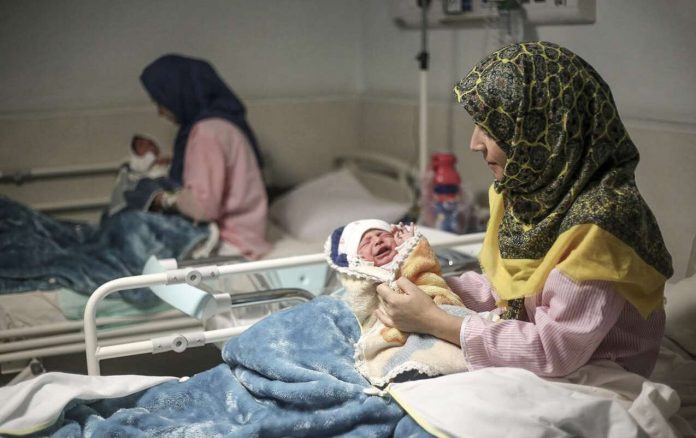
Iran health minister warns about ‘lowest ever’ fertility rate

Iran’s population growth is unfortunately in a critical situation, the minister said on Saturday adding that the fertility rate is at its lowest level.

“At the Ministry of Health, we have to provide services for population growth, we promise to pay for the health expenses of pregnant mothers, and if a pregnant mother does not have insurance coverage, she will be covered for free,” Einollahi stated.

The Iranian health minister said earlier this week that free maternity services will be offered to all pregnant women in a bid to encourage childbirth.

According to the Statistical Center of Iran, childbirth rate fell to 1.6 per woman in the year ending March 2021, which is one of its lowest in decades.

The Iranian government has been working on a package of incentives to prevent population decline. Authorities are offering low interest loans for each newly-born baby among other incentives.

The current population of Iran is more than 85.000.000 as of last March.

Iran, Armenia agree to reduce transit duty

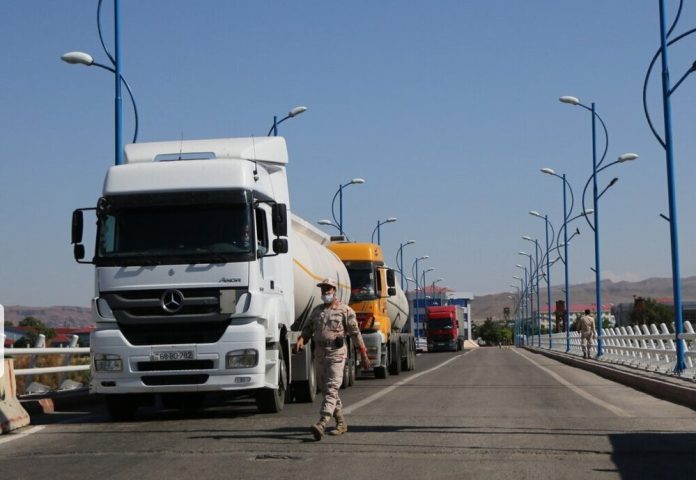
“We had two agreements with Armenia regarding the transportation and transit of goods. One is to reduce the transit tax for trucks in both countries in the short term and to base the amount of duty on the distance traveled,” Iranian Minister of Industry, Mines, and Trade Reza Fatemi Amin said on the sidelines of his meeting with Armenian Minister for Economy Vahan Kerobyan in Yerevan on Friday.

He also said the two sides have reached an agreement to allow Iranian companies to transfer technology, raw materials or spare parts in the field of medicines and home appliances to Armenia and to jointly manufacture goods in Armenia for export to other countries.

Heading a high-ranking delegation, the Iranian minister arrived in Armenia on Thursday mainly to follow up on the implementation of economic agreements previously reached between the two sides.

The value of Iran-Armenia annual trade volume stands at over $300 million dollars with both sides exploring ways of expanding bilateral trade relations.

Trade ties between the two neighbors have increased considerably since Iran signed a Free Trade Agreement with the Eurasian Economic Union in 2019.