Saturday, December 27, 2025
Home Blog Page 2049

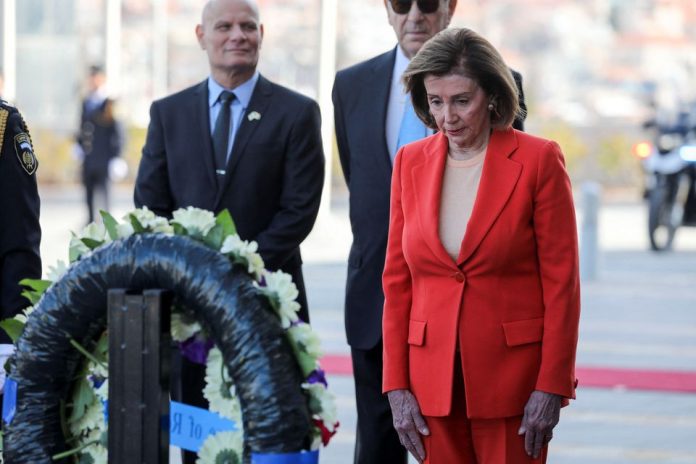
U.S. House leader in Israel, vowing ironclad support for Tel Aviv

Washington support for Tel Aviv remains “ironclad”, Pelosi told members of Israel’s parliament Wednesday, despite deep differences between the nations on Iran, peace with the Palestinians and other issues.

Pelosi stuck to what the U.S. and Israel have in common, particularly on their desires to rein in Iran’s nuclear capabilities and find a path toward peace with the Palestinians.

“The U.S. remains ironclad, I keep using that word, in our support of Israel’s security and its regional stability,” Pelosi said with her counterpart, Knesset Speaker Mickey Levy, standing nearby.

The face-to-face diplomacy came at a tense time in the nations’ relationship as talks about a deal to rein in Iran’s nuclear capabilities drag on in Vienna. U.S. President Joe Biden campaigned on renewing and expanding the Iran nuclear deal after former President Donald Trump, with strong encouragement from then-Prime Minister Benjamin Netanyahu, withdrew the United States in 2018.

Israel has said it will not be bound by any international agreement concerning Iran’s nuclear program, and says it is prepared to take military action if needed to prevent Tehran from obtaining nuclear arms.

Iran denies seeking nuclear weapons, stressing it wants to master nuclear technology for peaceful purposes. Iran has repeatedly warned that any mistake by Israel will be met with Tehran’s crushing response.

Standing before a vibrant mural in the Knesset’s Chagall Hall, Pelosi stated Israel and the U.S. remain concerned about the same threat from Iran and its “proxies”.

“We are together in the fight against terrorism posed by Iran, both in the region and also its nuclear development,” she continued, adding, “The nuclear threat of Iran is a global one…Israel’s proximity to Iran is of concern to all of us.”

In early February, KAN reported a U.S. military official was present during an Israeli simulated drill preparing for an assault on Iranian nuclear facilities using dozens of warplanes.

Iranian officials have also stressed the country reserves the right to respond to any adventurism by the United States and Israel.

Tehran says Israel is well aware of Iran’s capabilities and capacities and its own limited capabilities as well as the fact that the Islamic Republic does not compromise or joke about its national security.

In late December, Iran simulated an attack on the Zionist regime’s nuclear facilities known as Dimona during extensive military drills.

Iran has stressed that the recent wargames were intended to send a warning to Israel.

Commander of the Islamic Revolution Guards Corps (IRGC) Major General Hossein Salami stated after the exercises that Iran will cut off the hands of enemies if they make a wrong move and that the distance between actual operations and military exercises is only a change in the angle of launching the missiles.

Major General Mohammad Bagheri has also noted the exercise made it clear that Israel’s Iron Dome system can be defeated and penetrated if a barrage of missiles is fired from different directions at a target at once.

The top Iranian general described the drill as one of Iran’s most successful military exercises.

Iran’s ballistic missiles have a range of 2,000 km and the entire occupied Palestine and U.S. bases in the region are within their reach.
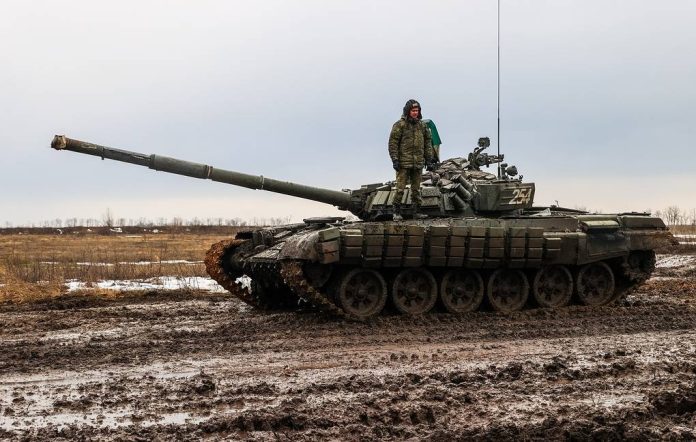
Russian says its troops leaving Ukraine borders

“Units of the Southern Military District, having completed their participation in tactical exercises, are moving to their permanent deployment points,” Moscow’s Defence Ministry said in a statement on Wednesday, as state television showed images of military units crossing a bridge linking the Russian-controlled peninsula to the mainland.

The Russia’s Defence Ministry has also released video footage that it says shows a column of tanks and military vehicles leaving Crimea after drills, adding that some troops would also return to their permanent bases.

“Combat equipment and military personnel will be delivered by military trains to the units’ permanent deployment points,” the ministry said.

“Upon arrival, the equipment will be serviced and prepared for carrying out the next phase of combat training,” it added.

The video showed dozens of military vehicles crossing a railway bridge at night.

Russian armed forces have also started returning to permanent military bases after loading tanks and other military vehicles onto railway wagons, the country’s western military district says.

Russia’s southern military district had earlier said more forces surrounding Ukraine were withdrawing.

Despite Russia announcing a pullback of some of its troops stationed around Ukraine’s borders and welcoming further talks with the West, the United States and its allies have announced they need evidence of the troop movements and warned that the threat of a Russian invasion still looms.

President Joe Biden said Washington had not verified Moscow’s withdrawal of forces.

“Our analysts indicate that they remain very much in a threatening position,” he stated, adding, however, there was still room for diplomacy to solve the crisis.

Canadian Defence Minister Anita Anand has said she hopes to see evidence of a Russian troop withdrawal from around Ukraine’s borders but warned that for the moment, numbers were increasing.

“The escalation of Russian troops at the Ukrainian border, including in Belarus, is increasingly significant,” Anand told reporters as she arrived for the meeting of NATO defence ministers.

“We look forward to seeing evidence of the withdrawal of troops on Russia’s part. But we need to prepare for any eventuality with that significant escalation of Russian troops that we have seen over the last weeks,” she noted, adding the situation was at a pivotal moment.

Defence Secretary Ben Wallace has said the United Kingdom is yet to seen any evidence that Russia is withdrawing troops from positions near the Ukrainian border.

“We haven’t seen any evidence at the moment of that withdrawal,” Wallace told the UK’s Times Radio.

“We’ll take Russia at its word, but we will judge them on their actions,” he added.

NATO Secretary-General Jens Stoltenberg has also urged Russia to prove that it is pulling back troops from near Ukraine’s borders.

“It remains to be seen whether there is a Russian withdrawal … What we see is that they have increased the number of troops, and more troops are on the way,” Stoltenberg told reporters at the start of a two-day meeting of NATO defence ministers at the US-led alliance’s headquarters in Brussels.

“If they really start to withdraw forces, that’s something we will welcome … They have always moved forces back and forth so just that we see movement of forces, of battle tanks, doesn’t confirm a real withdrawal,” he continued.

Meanwhile, Ukrainian President Volodymyr Zelenskyy has declared Wednesday – the day some US reports suggested an incursion could be launched – “a day of unity”. He has called on Ukraine’s citizens to display national flags and don blue and yellow ribbons in order to demonstrate the country’s “unity to the whole world”.

Zelenskyy has also noted he does not yet see any Russian troop withdrawal from positions near to the Ukrainian border.

“To be honest, we react to the reality we have, and we don’t see any withdrawal yet,” the BBC quoted the Ukrainian president as saying during a visit in western Ukraine.

Ukrainians are raising national flags and playing the country’s anthem to mark the country’s “day of unity”.

The yellow and blue banner fluttered outside schools, hospitals and many shops, while a loudspeaker at a local government office in the capital, Kyiv, blared patriotic songs. National television and government Youtube channels also broadcast speeches and rousing reminders of Ukraine’s nationhood.

Oleksii Reznikov has said the latest threat assessments did not contain “anything unexpected” and were consistent with earlier views.

In a televised statement, Ukraine’s defence minister said his country’s armed forces were keeping up a nationwide military drill, one of which would be attended by the military attache of Belarus.

Russian President Vladimir Putin has said Moscow does not want war and would rely on diplomatic efforts to eliminate any chance that Ukraine could one day join NATO – his key demand in the crisis. At the same time, he did not commit to a full military pullback, warning Russia’s next moves in the standoff will depend on how the situation evolves.

On Wednesday, the Kyodo news agency has also reported G7 foreign ministers are planning an emergency meeting in Germany this week. Presumably, the meeting of G7 top diplomats will be held on the sidelines of the Munich Security Conference (MSC). According to the news agency’s sources in the government, the situation around Ukraine will be the main subject of this meeting.

Expert: Iran can’t benefit from Ukraine crisis for gas exports

Iran can’t benefit from Ukraine crisis for gas exports

Speaking in an interview with Entekhab News Website, Alireza Soltani also said the Russians will use all tools at their disposal to prevent Europe from ending its dependence on Russian gas.

Meanwhile, Soltani underlined that Iran is also incapable of selling gas to Europe due to economic, technical and political difficulties.

According to the analyst, politically, Iran’s presence in the European gas market is opposed by the big powers; economically it costs too much, and technically it requires the presence of world-class companies, and it is certainly very difficult to provide such economic, political and technical conditions for Iran’s presence in the European gas market.

He added that Iran itself is not willing to antagonize Russia by trying to make inroads in the European gas market, it wants to position Russia as a strategic partner.

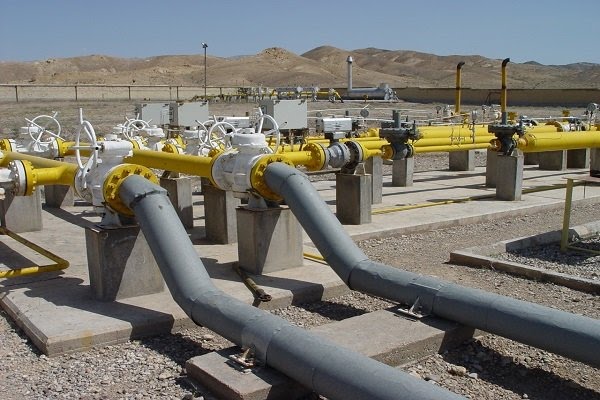
Soltani also maintained that Iran can only compensate for part of the shortage of Russian gas exports to Europe by activating a pipeline to Russia that was built under the previous regime and sending gas to the Russian transmission network.

He said in this way, it may be possible to encourage the Russians to take action on Iranian gas.

Elsehwre, Soltani spoke of the prospects of the military tension between Russia and Ukraine backed by its allies. He said chances of a Russian invasion of Ukraine is very low as the age of such conflicts is over and that Russia and the West have reached enough political maturity to not get themselves bogged down in such a costly war.

Soltani added that Russian President Vladimir Putin aims to stop NATO’s eastward expansion and the West is trying to check Putin’s expansionist moves.

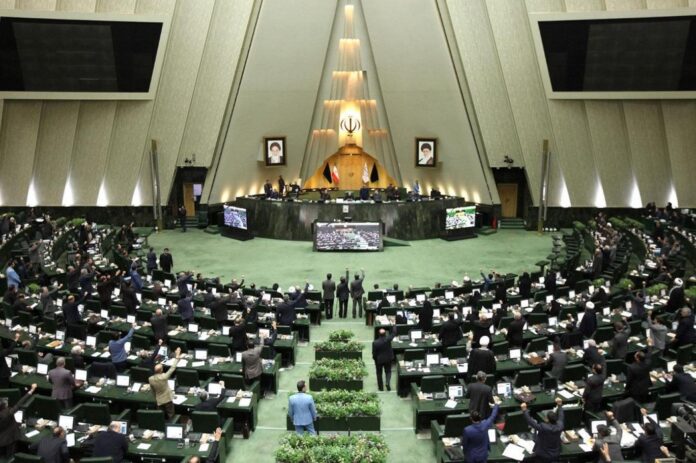
Lawmakers approve budget on tar and natural gas for underprivileged areas

This was announced by the commission’s spokesman Rahim Zare. He said part of the funding for natural gas pipelines covers incomplete projects with a focus on projects in villages and cities in the southeastern province of Sistan and Balouchestan, southern oil and natural gas producing provinces, cold areas of the provinces that lie on Zagros mountain chain as well as other mountainous and remote villages along with areas with urban and rural access to natural gas at a level below the national average.
The lawmaker added that the free tar will be distributed among the Housing Foundation of the Islamic Revolution for asphalt pavement of roads, to the Ministry of Roads and Urban Development for asphalt pavement of byways and rural routes as well as other road links and the Education Ministry for renovation of schools, among others.

He also stressed that the commission authorized the Oil Ministry to construct a petrochemical plant for heavy crude processing with an input capacity of 300,000 barrels of oil per day, using the cooperation of the private sector and through foreign investment, or investment in exchange for oil.

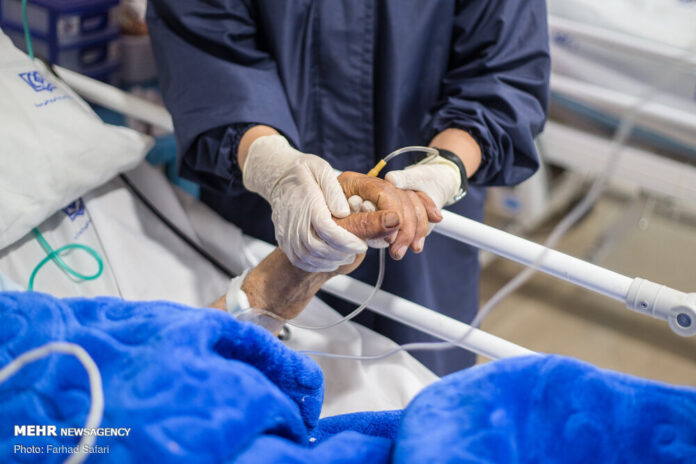
Official: Number of Covid deaths, infections doubled in Iran

Ali Nasiri added that projections show the new wave of Covid driven by the variant will reach its peak on March 1.

Nasiri also said hospitals will be overwhelmed in the coming weeks.

The director of Tehran’s Crisis Prevention and Management Organization warned against underestimating Omicron, saying all people should give up the false notion that the strain is harmless.

Nasiri also spoke of the vaccination campaign in Iran, saying, “Unfortunately, so far less than 30 people of people have got their boosters (third dose of Covid vaccine)”.

He noted that Omicron does not differentiate between different age groups and even infants and kids are vulnerable to the variant.

Meanwhile, Iranian Health Ministry figures give credence to Nasiri’s remarks. The figures on Wednesday showed that 185 people died of the disease in the past 24 hours.

The total death toll now stands at 134,238. The daily caseload on Wednesday was 16,310 including 2,275 hospitalizations.

The Health Ministry says so far 21,689,655 people have been triple-vaxxed in Iran. Officials urge people to get their boosters because it considerably decreases the likelihood of death after contracting Omicron or weakens the strain in the event of infection.

Hospital data shows Omicron can infect lungs: Iranian official

Alireza Zali, the director of the Tehran Coronavirus Taskforce, said Wednesday that there are currently cases among the hospitalized COVID-19 patients that are suffering from infection in the lungs as a result of Omicron.

He said Omicron usually manifests itself by flu-like symptoms since the virus replicates primarily in the upper part of the respiratory system and tends to be less sticky in the lung tissue compared to the previous variants.

The assumptions, however, that Omicron does not affect the lungs at all are wrong, said the official.

Studies abroad and at home suggest that the lungs could be infected in the course of infection with Omicron, especially if there is a heavy load of virus in the airways, Zali said.

The Omicron variant spreads more easily than the original virus that causes COVID-19 and the Delta variant.

Preliminary data suggests that Omicron may cause more mild disease, although some people may still have severe disease, need hospitalization, and could die from the infection with this variant.

In Iran and many other countries around the world, Omicron has rapidly surged past other variants to become the dominant strain.

IAEA chief says helping Saudi Arabia and Egypt with nuclear power

IAEA head Rafael Grossi told a conference in Saudi Arabia on Wednesday that the organization is working with Saudi Arabia and Egypt to help them to develop nuclear power.

In January, Saudi Energy Minister Prince Abdulaziz bin Salman Al Saud revealed Riyadh aims to take advantage of its uranium resources to develop its nuclear power program.

Saudi Arabia’s nuclear ambitions have prompted worries in the global community over the past few years, especially after Saudi Crown Prince Mohammed bin Salman hinted in 2018 that the kingdom may go for nukes.

Citing Western officials, The Wall Street Journal reported that Saudi Arabia, with Chinese help, has built a facility for extraction of yellowcake from uranium ore near the remote town of al-Ula.

The New York Times also reported American intelligence agencies had spotted what appeared to be an undeclared nuclear site not too far from the Saudi town of al-Uyaynah.

Iran has warned that Saudi Arabia’s opposition to the UN nuclear watchdog’s access to its nuclear facilities reinvigorates speculations that the Arab country intends to develop atomic weapons.

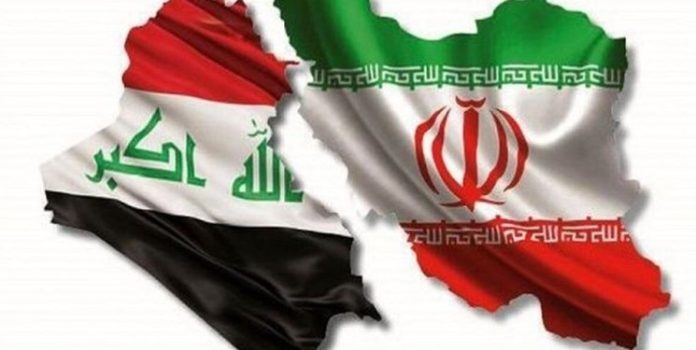
Iranian exports to Iraq increase 15% compared to last year

Hamid Hosseini said for the first time, during that period, Iraq exported $920 million worth of goods to Iran, showing a 15 percent rise compared to last year. 

According to the official, the imports from Iraq were done out of the frozen Iranian assets in the neighboring country.

He said that before this, Iraq’s exports to Iran were about $ 100 million a year, adding with this amount of imports by Iran, Iraq’s rank was raised from the twenty-sixth importer to the sixth place.

Hoseini noted that importing goods from Iraq means that trade is not one-sided and Iraq also benefits from establishing trade relations with Iran, and this will help develop trade ties between the two countries. 

He said the recent decrease in Covid cases and the increase in commodity prices have been conducive to the rise in exports, but there are still problems for exporting technical and engineering projects and participating in tenders in Iraq. 

Hosseini expressed hope Iran will be able to use the current possibilities to develop trade with Iraq.

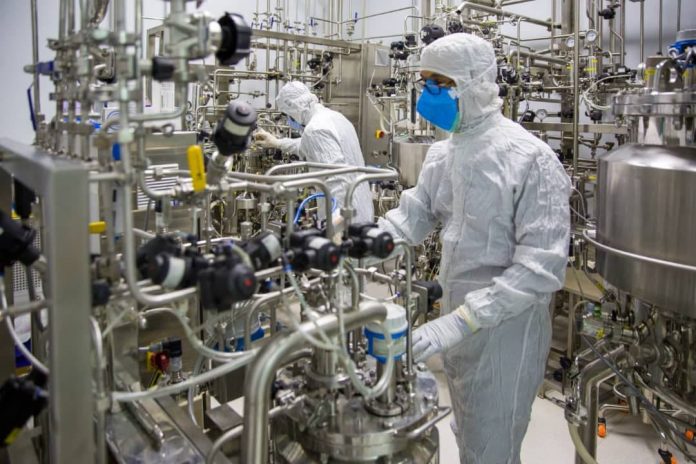
Iran develops new vaccine against Omicron variant of coronavirus

In a statement, Iran’s Shifa Pharmed Biotechnology Company said it began work to develop the vaccine, named Barekat Plus, after scientific findings suggested that the antibody produced by earlier versions of COVID-19 vaccines do not effectively work against Omicron.

A month into Omicron’s detection, Shifa Pharmed began producing the vaccine on the back of monitoring relevant scientific findings and consulting with experts in the field and conducted experiments on animals, the statement said.

The preliminary results of the studies indicate the 100% effectiveness against the Omicron strain and safety in animal experiments, it added.

Shifa Pharmed, the statement said, has started mass production of the vaccine amid the speedy spread of Omicron in the country and following the promising results of animal studies.

To get the necessary permit, Shifa Pharmed has submitted “proposed protocols” for clinical studies needed for decision-making to the Food and Drug Administration of the Ministry of Health and the Ethics Committee, it added.

Shifa Pharmed is the developer of the COVIran Barekat against COVID-19.

The country has sped up its vaccination campaign over the past weeks as it grapples with a sixth wave of infections with COVID-19, triggered by the fast-spreading Omicron variant.

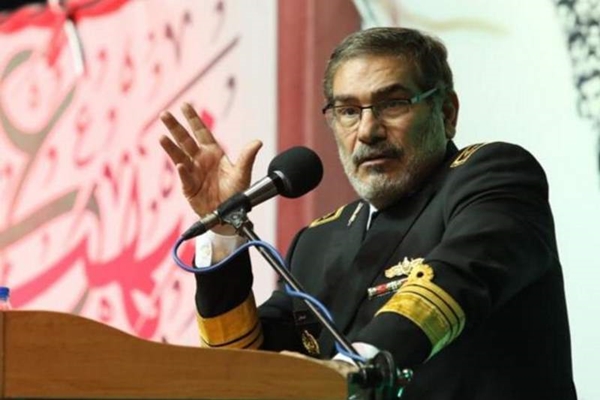
Shamkhani: US, Europe failed test of fulfilling commitments

commitments under the 2015 nuclear deal, officially known as the Joint Comprehensive Plan of Action, JCPOA. 

Ali Shamkhan said in a tweet that the JCPOA is now an empty nutshell in terms of economic benefits and sanctions removal. He promised that Iran will not hold any negotiations with the “unfaithful” US and Europe beyond the JCPOA. 

By Europe, Shamkhani means the European Union and the EU’s troika that are parties to the Vienna talks aimed at reviving the nuclear deal. 

His comments come as efforts are continuing in the Austrian capital to resuscitate the agreement and get the anti-Iran sanctions terminated. 

Iran says it will be difficult to enter into a deal if the US does not lift all sanctions and does not commit to not violate or leave the deal again. 

Former US President Donal Trump withdrew Washington from JCPOA in 2018 leaving the internationally-recognized agreement in disarray.