Friday, December 26, 2025
Home Blog Page 2027

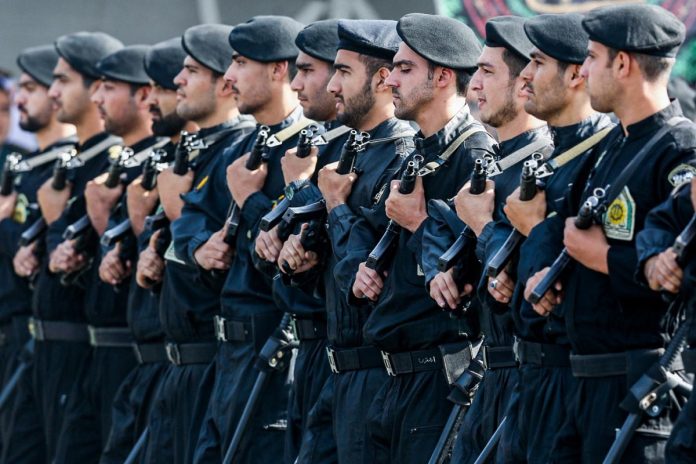
Policeman shot dead in southeastern Iran

Iran police

The commander of Sistan and Balouchestan’s Law Enforcement General Ahmad Taheri said the attackers were riding in a silver sedan and fled the scene after opening fire on police who were there following a tipoff about violence in a wedding.

Taheri added that two other policemen were wounded in the shooting.

He identified the martyred policeman as Mansour Bazi Saket.

The commander of Sistan and Balouchestan’s Law Enforcement said Bazi Saket was also wounded but later succumbed to his injuries.

Taheri noted that the two other policemen’s injuries are not life-threatening.

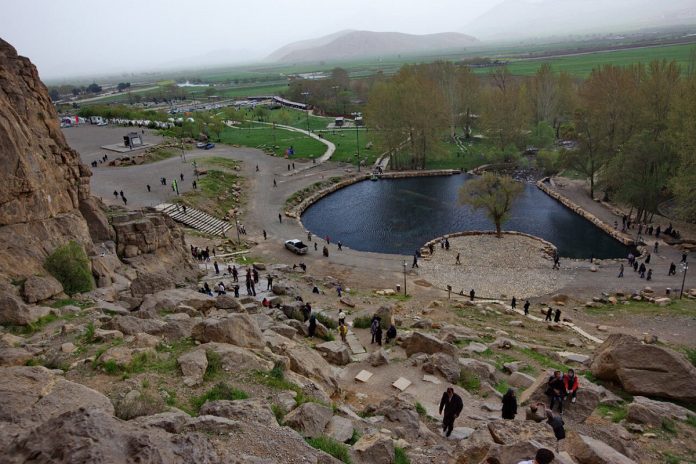
Harsin, a tourist destination as old as history in western Iran

Harsin Kermanshah

Bistoun Inscription

The Bistoun Inscription is one of the most historical landmarks in Harsin. The inscription was declared a UNESCO World Heritage site in 2006 and is visited by many domestic and foreign tourists each year. The Bistoun Inscription counts as one of the most important documents of world history. Other historical monuments of Harsin are the Stone Pond, the Stone Arc, the Stone Staircase, the Throne of Shirin and the Sassanid Wall.  An Iranian archaeologist says Harsin has been a human habitat for 6,500 years.

Delicious Foods

There are a wide range of foods in Harsin that are all delicious including sliced ​​almond stew, curd and eggplant soup, meatballs, dandeh (rib) kebab and doogh soup. The key characteristic of Harsin’s foods is that they are healthy and do not contain too much fat and salt.

Magic Forests

Some of the most amazing oak forests are located 30 kilometers from Harsin. The Seymareh River originates here and enters Lorestan Province after passing through northern Ilam Province.

 Harsin’s World Famous Kilims

This is Harsin’s most important handicraft. It’s unique due to its beautiful patterns and high quality. There are up to 2,500 kilim weavers in Harsin.

Iran tourism: Hamoun, unique beauty and historical significance

Shahr-e Sukhteh (Burnt City)

Being in the north of Sistan and Balouchestan, Hamun is one of the richest cities as it has a huge potential for natural and historical tourism. The other historicalvcities in the province are Zabol, Hirmand, Zahak and Nirmouz. But given its novel ancient and historical monuments and other tourism capacities, Hamun can be described as the heart of tourism in Sistan and Balouchestan Province.

Here is a number of tourism attractions of the province.

Hamun Lake

One tourist destination is Hamun International Wetland that began drying some 20 years ago. The wetland used to be the heart of Sistan and surrounding regions when it was filled with water. When it is inundated with water, many reeds grow in the wetland, making the wetland beautiful and creating a pleasant draught for nearby areas.

Kahjeh Mountain

Khajeh Mountain is in the center of Hamun Lake. It has long been known as a Zoroastrian convent. There are buildings of an old city at the foot of the mountain. This is where the remains of a fire temple are also visible.

Shahr-e Sukhteh (Burnt City)

Shahr-e Sukhteh is the main tourist hub of Sistan and Balouchestan.  This ancient site is 5,000-year-old where many of the first of mankind have been discovered. Shahr-e Sukhteh is at the entrance of Sistan. It is a token of the region’s ancient civilization. The Burnt City was founded in 3,200 B.C. and its people lived in four periods between 3,200 and 1,800 B.C. It has been put on the UNESCO’s World Heritage List.

The other historical monuments of Sistan and Balouchestan are Rostam Castle and the Windmills.

Downtrend trend in Iran’s Covid deaths holds

COVID in Iran

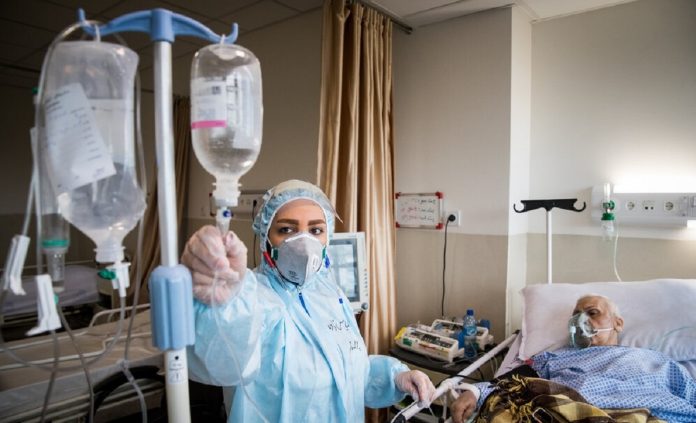
Meanwhile, 1,345 new infections were logged too, including 261 hospitalizations.

The total death toll from Covid in Iran now stands at 139,865.

Meanwhile, more than 146 million doses of vaccine have been administered to Iranians since the start of a nationwide inoculation campaign in the country last year.

Nearly 26 million people are also triple-vaxxed.

The vaccination campaign has been credited with the decline in the number of Covid deaths and infections.

The number of Iranian cities marked red, the highest level of risk from Covid, is also on the decline. Now less than 30 cities are red. Most cities are yellow, the third level of risk from Covid. Over a dozen cities are blue, which denotes the lowest level of danger.

Iran has fought against Covid very effectively, using imported jabs and domestically developed vaccines.

US: Progress on Iran nuclear talks, but issues remain

Iran US Flags

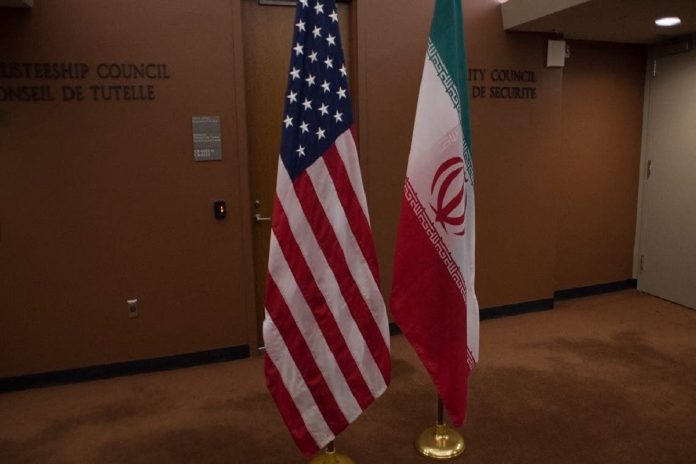
“We’ve made progress over the course of the last several weeks. There are still some issues left,” Sulllivan told reporters aboard Air Force One as President Joe Biden flew to Brussels.

He added it is “unclear if this will come to closure or not” but the allies are trying to use diplomacy to put Iran’s nuclear program “back in a box.”

On Wednesday, Iran’s foreign minister said it is up to the Americans to decide whether they want to act realistically so as to help finalize an agreement on the restoration of a US-abandoned agreement in the Austrian capital, Vienna.

“If the American side acts realistically, we are ready to finalize an agreement in the near future in the presence of the foreign ministers of the member states of the Joint Commission of the Joint Comprehensive Plan of Action (JCPOA),” Amir Abdollahian added.

The Vienna talks began almost a year ago with the aim of bringing the US into full compliance with the JCPOA, commonly known as the Iran deal. The US left the JCPOA in 2018 under former president Donald Trump and re-imposed the sanctions that the deal had lifted.

The administration of Joe Biden has rebuked Trump’s withdrawal from the accord and insisted on re-entering the deal, all while dragging the talks via its failure to provide Iran with guarantees that Washington will not exit the JCPOA again.

Throughout the talks, Iran has pressed the US for the guarantees as well as the establishment of a verification mechanism on the removal of sanctions.

“We have explicitly stated to the American side that we will not [abandon] our red lines,” Amir Abdollahian stated.

However, he voiced optimism about the prospects of reaching a deal.

“We believe that today, more than ever, we are closer to reaching and finalizing an agreement in Vienna,” he continued, noting, “We offered our last proposals to the US through the EU coordinator to reach a definite point on [finalizing] the agreement.”

Price said on Monday that “an agreement is neither imminent nor is it certain.”

Repeating those words on Tuesday, Price added that “we’ve always discussed – or we’ve long discussed, I should say – alternatives with our partners in the region.”

He also stated “the onus is on Tehran to make decisions” on reviving the JCPOA.

Likewise, Iran has blamed the US for the protraction of the talks, urging Washington to make the necessary “political decisions” to finalize a deal.

Iran MP: Vienna talks should lead to removal of sanctions

Nuclear Negotiations in Vienna

“The negotiations are in a special situation. I should say they are very complicated now. Different options are being tabled by the western sides during the talks. The stance of the Islamic Republic of Iran in the negotiations is fully clear and its red lines must be definitely observed,” Fadahossein Maleki, a member of the National Security and Foreign Policy Commission says.

“Our main demand is that the western sides must removal all sanctions against the Islamic Republic of Iran. But, currently, there are many ifs and buts about removal of the sanctions.”

Maleki added that the demand for removal of the sanctions is a requirement by the parliamentary legislation for strategic steps toward lifting of the bans.

He further stressed that the parliament is making sure the negotiations move toward ending people’s economic problems.

“Surely, timing is also very important for us and our desired results must be achieved in the shortest possible time. If the negotiations take time and linger on, we will face the same challenge we previously had. This should not happen,” he said.

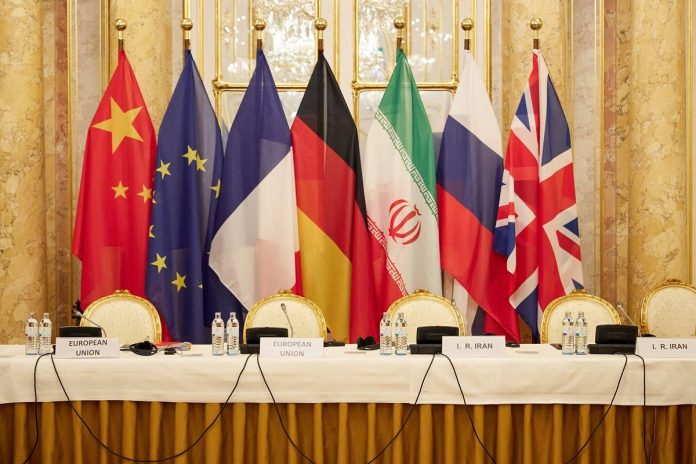
Iran and the P4+1 group have paused their talks in Vienna and representatives of all sides are back in their own countries.

Iran’s foreign ministry says Tehran is ready to go to Vienna to get a deal, but only if the US is ready to make the political decisions to remove the last obstacles to an agreement.

Iran envoy: Israel life lies on creating instability

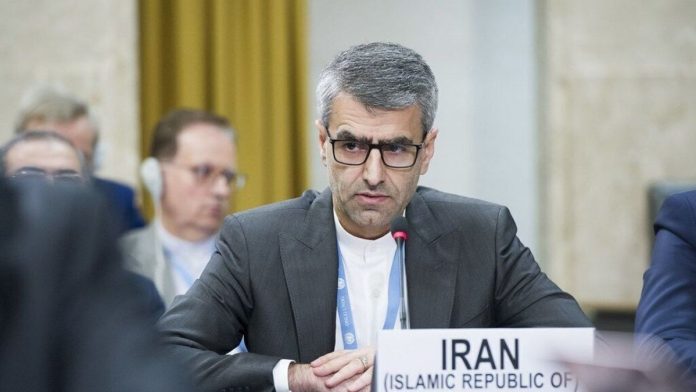
Esmaeil Baghaei Hamaneh

Representative of Zionist regime to the UN Human Rights Council (UNHRC), in a speech that had nothing to do with the agenda of the summit, pointed to IRGC’s action in launching a missile attack on Mossad center in Iraq’s Erbil and accused IRGC of destabilizing the region.

Esmaeil Baghaei Hamaneh, Iran’s Permanent Representative to the UN Office in Geneva, in reaction to insulting remarks of Zionist regime’s envoy, reiterated that Zionism essentially relies on “destabilizing” its surroundings for preservation and development, and this is what one famous scholar, Mohammad Shahid Alam, calls “logic of Zionist stabilization.”

Referring to recent reports by international organizations and the Human Rights Council rapporteur on the introduction of Zionist regime as an apartheid and racist regime, Hamaneh stated that logic and ideology of Zionism is necessarily promoter of a racist structure that sees itself as justified in massacring innocent Palestinians, seizing their lands, and destroying their homes.

He reminded the truth raised in Resolution 3379 of November 10, 1975, which considered Zionism ‘racism and apartheid’.

According to some unofficial sources, a number of Israeli spy agents were killed or wounded following attack launched by IRGC against Mossad Center in Iraq’s Erbil.

Former Iran Intel. Minister Mohammadi Rayshahri laid to rest

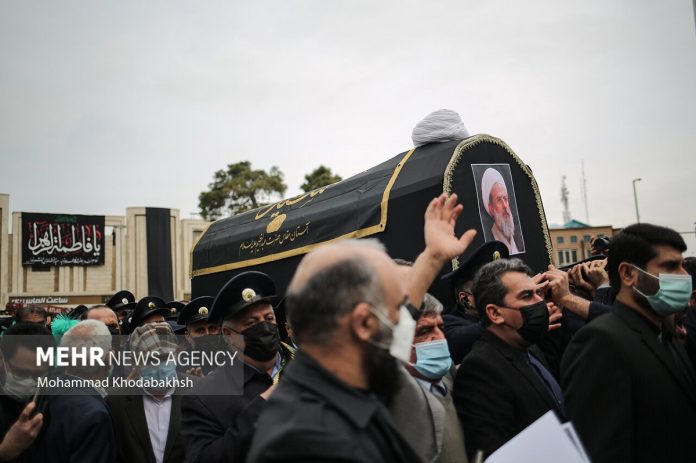
Ayatollah Mohammad Mohammadi Rayshahri Funeral

The ceremony was attended by government and military officials as well as religious scholars and clerics, besides ordinary people.

Rayshahri was born in 1946 and was actively involved in Iran’s Islamic revolution of 1979 and held several senior positions in the country after the revolution.

Among his most important positions were Iran’s Prosecutor General and Prosecutor of the Special Court for Clerics before appointment as Iran’s first intelligence minister in 1984.

In his later years, he served as the caretaker of Shah Abdolazim Shrine and was elected in the Assembly of Experts.

He was also a member of the Expediency council and served as the leader’s representative in Hajj affairs, among others.

He passed away after a period of illness and hospitalization on March 21.

Chinese FM in Afghanistan ahead of neighbors meeting

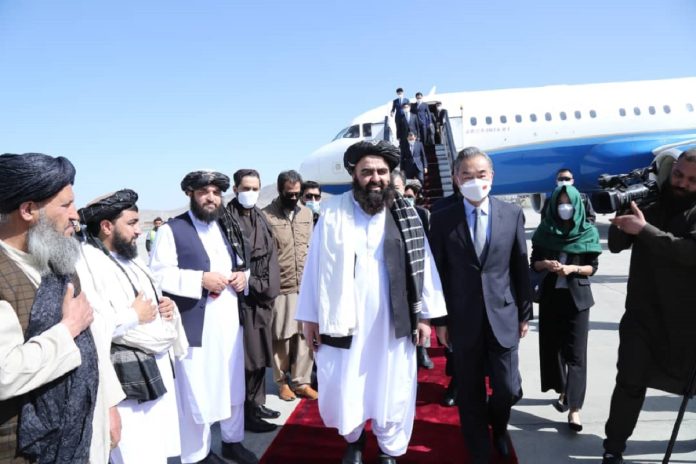
China FM in Afghanistan

“Chinese Foreign Minister arrives in Kabul for talks with Islamic Emirate leaders,” stated Ahmad Yasir, a top Taliban government official.

Yi arrived in Kabul from Islamabad where he attended a two-day meeting of the Organisation of Islamic Cooperation (OIC).

China shares a rugged 76-kilometre (47 mile) sliver of a border with Afghanistan, but Beijing has long feared its neighbour could become a staging point for minority Muslim Uyghur separatists from Xinjiang.

Even before the August 15 takeover of Afghanistan by the Taliban, Beijing sought to maintain ties with the group as US-led forces withdrew.

Iran calls for Yemen truce, UN-centered initiative to end war

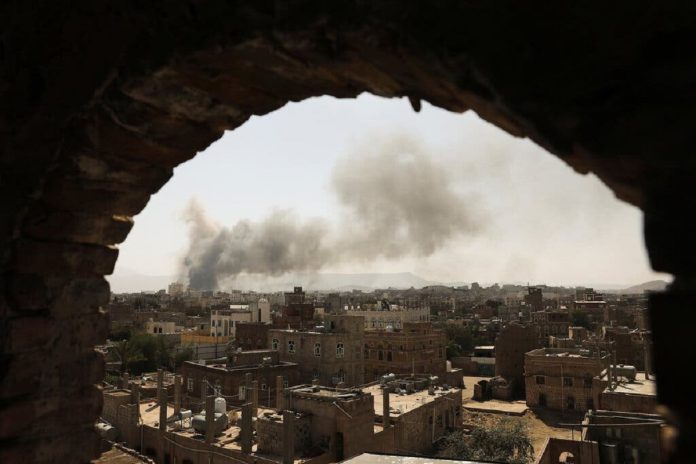
Yemen War

In a statement on the 7th anniversary of the Saudi-led military aggression against Yemen, the foreign ministry of the Islamic Republic of Iran rapped the double standards of the Western countries regarding the catastrophic humanitarian situation in Yemen.

The full statement is as follows:

The destructive war and the cruel blockade of the coalition against the people of Yemen is entering its eighth year as it has led to this resilient country facing the worst humanitarian catastrophe of the century and the direct and indirect consequences of this war has, more than anyone, affected innocent civilians, women and children and has led to the destruction of vital infrastructure and health, livelihood, economic and educational facilities of Yemen.

The invading coalition, over the past seven years, has not settled for bombing and missile strikes, and has used an inhuman and illegal blockade as leverage to score political and military points, while imposing the worst economic war and the most severe blockade on Yemen by blocking land, air and sea access points and barring the entry of food, fuel and other necessities of the people.

These inhuman crimes by the invading coalition, in the light of arms sales by its western and American backers and their double standards and partial approach in the United Nations Security Council, has led to persistent violation of all international and humanitarian laws concerning Yemen’s crisis.

The Islamic Republic of Iran, just as in the past, supports any sort of fair and practical effort and initiative for the removal of the blockade, establishment of truce and beginning of Yemeni-Yemeni negotiations, away from foreign interference, in the light of efforts by the United Nations’ special envoy, and considers a political solution, led by the Yemenis, as the only way out of the crisis in Yemen.