Sunday, December 21, 2025
Home Blog Page 2001

Cleric stabbed to death in in Mashhad; two inured

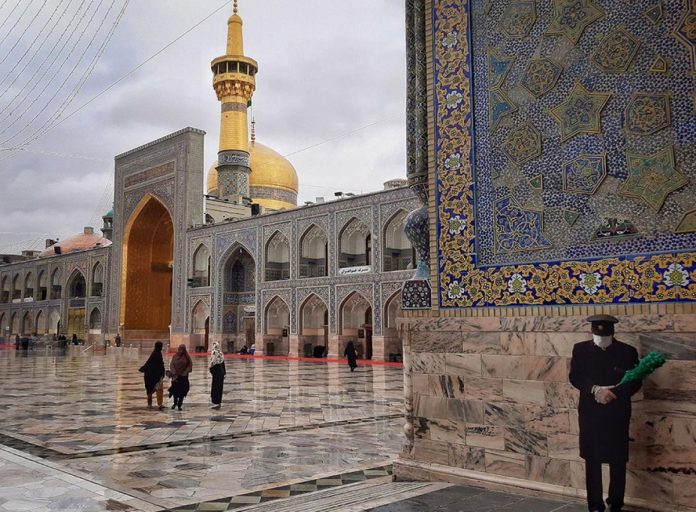
Iran Mashhad Shrine of Imam Reza (PBUH)

The stabbing happened inside the shrine of Imam Reza (PBUH), the eight Shia Imam in Mashhad.

The cleric who died was initially wounded but soon succumbed to his injuries.

The two injured clerics underwent surgery at a hospital in Mashhad and they are reportedly on the mend.

The attacker was taken into custody after the stabbing spree. His identity has yet to be announced. No motive is known for the attack.

Meanwhile, four more people, in addition to the attacker, have been arrested in connection with the stabbing spree in the shrine of Imam Reza. They are accused of aiding the attacker. The stabber is said to be a foreign national. Authorities are continuing their investigation into the incident.

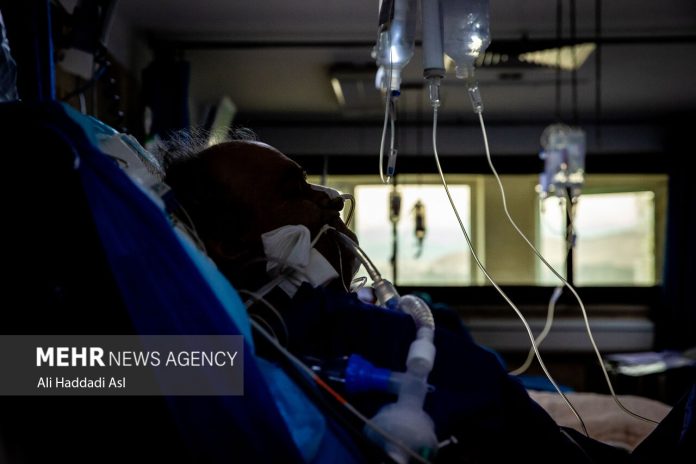
Covid kills 39 in Iran over 24 hours

COVID in Iran

The daily death toll shows a decrease compared to Monday’s tally which was 53.

The daily caseload on Tuesday was 4,615, over 1000 cases up compared to Monday. The new infections include 477 hospitalizations.

The total deaths from Covid in Iran now stand at 140,407. T

There has been no change in the number of red and blue cities in terms of risk from the disease though. Currently, 36 cities are red and 58 are blue. In red cities, people face the highest level of risk form Covid. In blue ones, things have returned to normal.

The downward trend in the Covid deaths has been mainly attributed to the nationwide vaccination campaign that has been going on since last year. The inoculation process has seen over 147 million doses of vaccine administered to people in the country. Over 26 million booster shots have also been given.

53% of Afghans desiring to leave country: Gallup poll

Afghan People
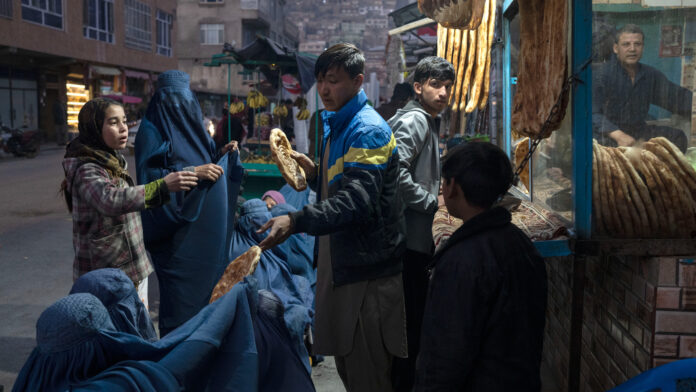
A man distributes bread to Burka-wearing Afghan women outside a bakery in Kabul, Afghanistan, Thursday, Dec, 2, 2021. According to U.N. figures from early November, almost 24 million people in Afghanistan, around 60% percent of the population, suffer from acute hunger, including 8.7 million living in near famine. Increasing numbers of malnourished children have filled hospital wards. (AP Photo/Petros Giannakouris)

Gallup survey that was conducted in August and September last year showed 53% of Afghans willing to leave the country was a record-high but the percentage is believed to be higher now as more people are suffering from poverty and a crippled economy.

According to the survey, men are among the most willing people who would like to leave with 56% in 2021 compared to 35% in 2018 while the percentage of outgoing women rose only three percent from 47% in 2018.

Turkey, Canada, Germany, and the US remained top of the countries where Afghans are most willing to move.

The survey has also asked people about their economic situation and if it is getting better or worse. The polling has found that 89% of Afghans responded that their economic situation getting worse whereas only one percent responded positively.

In the meantime, 75% of the Afghan population was found not to be able to find enough food with 58% being unable to find shelter.

Afghanistan turned into the world’s worst humanitarian disaster after the US withdrew, foreign aid stalled, the economy got closer to collapse, banking and financial systems were crippled, and millions of Afghans left jobless.

US says ‘onus now on Iran’ for concluding nuclear deal

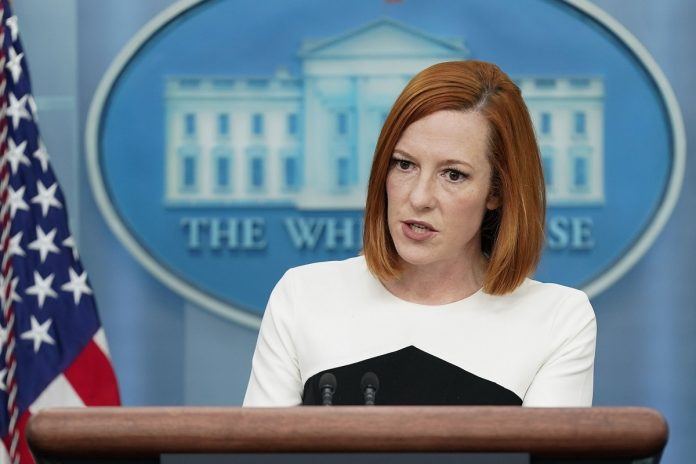
White House press secretary Jen Psaki

“Well, our assessment is that the onus for concluding this deal is squarely on Iran,” White House press secretary Jen Psaki said Monday.

“Together with our European allies, the United States has negotiated the roadmap for a mutual return to compliance through the Vienna talks. The President will reenter the deal if it’s in our national security interests. And both ourselves and our allies are prepared to conclude a strong agreement if Iran is prepared to do the same,” she added.

“What we’ve seen, however, is that Iran has raised a number of issues that has nothing to do with the mutual compliance under the nuclear deal. And that is where our focus and our objective is. So, we would encourage Iran to focus on the deal negotiated in Vienna, rather than seeking to open issues outside the Vienna context or casting blame, of course, on others for a pause in the talks,” Psaki claimed.

Iranian Foreign Minister Hossein Amir Abdollahian has said the Islamic Republic will never give in to excessive demands of the US in the Vienna talks.

Amir Abdollahian wrote on a tweet if the US acts realistically, a deal is at hand. The top Iranian diplomat added if there’s a pause in the Vienna negotiations, that’s because of excessive demands by the US side.

Amir Abdollahian reiterated that the Iranian Foreign Ministry will act forcefully and rationally in line with the best interests of the Iranian people and the red lines of the nation.

In recent months, Tehran has cited Washington’s indecisiveness as the reason behind the protraction of the talks, as a number of key issues remain unresolved, ranging from the removal of all post-JCPOA sanctions to the provision of guarantees by the American side that it will not leave the deal again.

The other parties to the talks – Russia, China, France, the UK, and Germany – have also noted that the negotiators are close to finalizing an agreement.

Iran MPs urge President Raisi to secure strong guarantees from US in Vienna talks

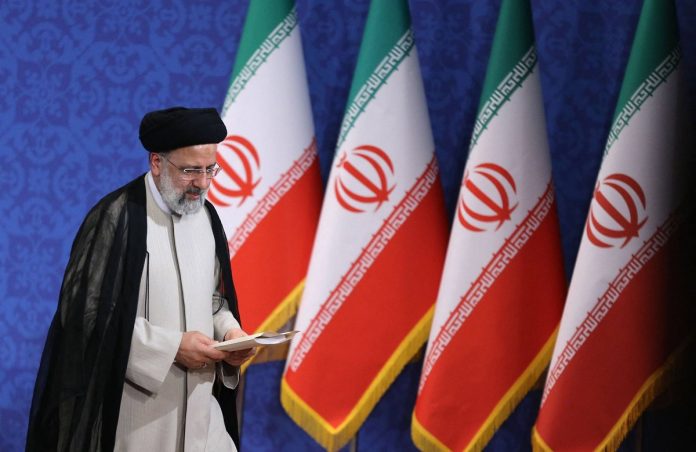
Iran President Ebrahim Raisi

190 MPs have so far signed the letter that calls for respect for Iran’s previously-announced redlines and securing of national interests in the nuclear talks.

Talks in Vienna for the revival of the 2015 nuclear deal were suspended last month.

Iranian Foreign Minister Hossein Amir Abdollahian says involved parties are close to an agreement, but the ball is in the US’s court to make the required political decisions.

The full removal of anti-Iran sanctions and the guarantees, Tehran has sought to ensure Washington does not unilaterally walk out of the accord again, reportedly remain the sticking points.

The US under former President Donald Trump withdrew from the Iran nuclear deal, JCPOA, in 2018 leaving the internationally recognized accord in tatters. Until recently, Iran and the P4+1 group of countries, namely Russia, China, France, Britain and Germany, have been in intensive talks in Vienna to revitalize the deal and pave the way for the possible US return to the JCPOA.

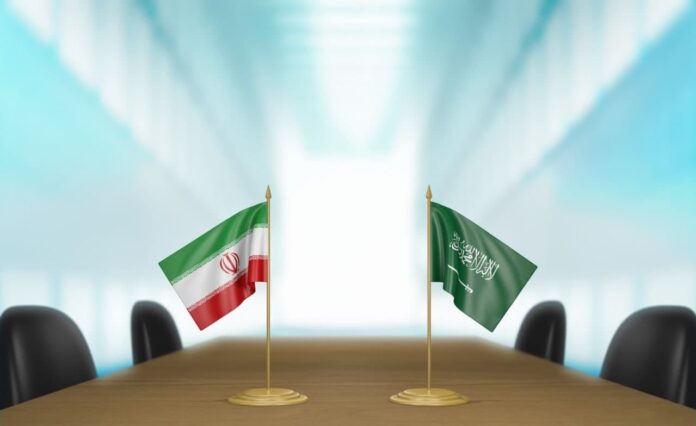
Iraqi official says steps resumed to kick start Tehran-Riyadh talks

Iran Saudi Flags

The unnamed official told The New Arab news website that three government officials have been tasked with getting a new timetable for the talks agreed by Iran and Saudi Arabia.

“So far, no timing has been proposed. Iranians are not willing to repeat the [process in the] four past rounds. They want agreements and discussions on specified issues. Iraq’s mission is now conveying the viewpoints of both sides,” the New Arab cited the unnamed official as saying.

“It is too early to respond to the question that whether the result of the moves and negotiations between Saudis and Iranians have been good, or to be optimistic about that, as many sticking points remain.”

The Iraqi official reportedly said that the fifth round was earlier cancelled after Riyadh snubbed Tehran’s demand to halt execution of Shias in the country. The official was referring to the execution of 81 of people including Shias by Saudi Arabia earlier this month.

A fifth round of talks between Iran and Saudi Arabia was announced by Iraqi Foreign Minister Fuad Hussein in a presser in Turkey’s Antalya. He said the talks will be hosted by Baghdad.

However, the report says, Iran unilaterally exited the talks after the executions by Saudi Arabia.

The Iranian Foreign Ministry Spokesman Saeed Khatibzadeh said on Monday Tehran is ready to set a date for negotiations with Saudis and wants the talks to continue. He added that the discussions with Riyadh need a clear agenda.

Khatibzadeh said Iran conveyed its views to the Saudis in writing, stressing, “We need to normalize our ties because the whole region and the two nations will benefit from normalization of relations.”

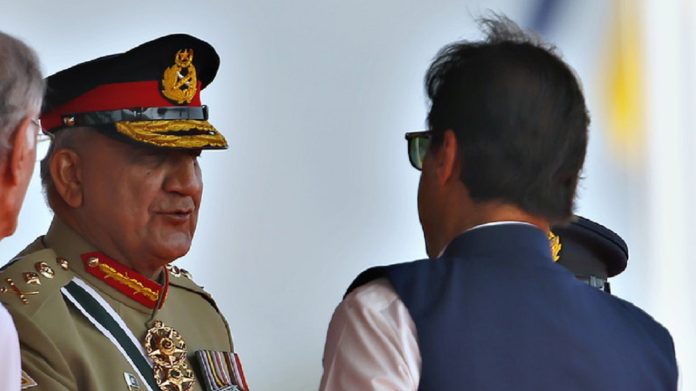
Former Iran diplomat: Pakistani army likely to stage new coup

Pakistan Army

Former deputy director of Iran’s Foreign Ministry’s Political and International Studies and a former charge d’affaires in Pakistan, Mohsen Rouhi, says the Pakistani military has always tried to overturn the parliamentary system in the country and replace it with a presidential system.

“In Pakistan, the parliamentary system has been overturned and changed into a presidential system several times in the past. This is because the army is the most powerful and well-established institution in the country that wields significance influence both in the domestic and foreign affairs, and in some cases prefers to take action independently,” he told the Iranian Sudents News Agency (ISNA).

Rouhi noted that Pakistan’s caretaker Prime Minister Imran Khan also took power with the secret support of the army as it wanted to end the dominion of the People’s Party and the Muslim League on power in Pakistan.

He said Imran Khan’s Tehreek-e-Insaf and the army had a short-lived honeymoon, but disagreements over the army’s demands are growing.

The former Iranian charge d’affaires in Pakistan further stressed that the army has been trying to impose certain appointments on Imran Khan, which he has refused, including by his pick for the director of the military intelligence.

“Pakistan also faces the possibility of a series of street riots and developments similar to what took place in Afghanistan,” he said.

“It is possible that, following the street clashes and political unrest in Pakistan, the army takes action under the pretext of establishing peace and stability, and stages a sort of a coup.”

Rouhi also said the issue of Ukraine and the pressure from both Russia and China on the one hand and the US, on the other hand, to ensure Islamabad takes their side is fueling the crisis in Pakistan.

Pakistan’s Supreme Court is now in deliberation to decide whether Imran Khan’s move to dissolve the parliament was legal. Khan lost his parliamentary majority last week, which led to the opposition calling a no-confidence vote. But the vote was blocked by the parliament’s deputy speaker, saying the motion was unconstitutional. The crisis deepened after Khan asked the president to dissolve the national assembly and called a snap election.

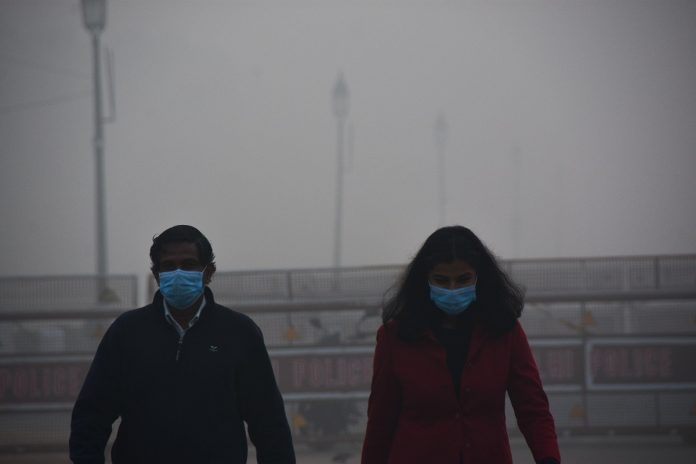
WHO warns almost entire world population breathing substandard air

Air Pollution

The World Health Organization, about six months after tightening its guidelines on air quality, on Monday issued an update to its database on air quality that draws on information from a growing number of cities, towns, and villages across the globe — now totaling over 6,000 municipalities.

WHO said 99 percent of the global population breathes air that exceeds its air-quality limits and is often rife with particles that can penetrate deep into the lungs, enter the veins and arteries, and cause disease.

Air quality is poorest in WHO’s Eastern Mediterranean and Southeast Asia regions, followed by Africa, it added.

“After surviving a pandemic, it is unacceptable to still have 7 million preventable deaths and countless preventable lost years of good health due to air pollution,” stated Dr. Maria Neira, head of WHO’s department of environment, climate change and health.

“Yet too many investments are still being sunk into a polluted environment rather than in clean, healthy air,” Neira added.

The database, which has traditionally considered two types of particulate matter known as PM2.5 and PM10, for the first time has included ground measurements of nitrogen dioxide. The last version of the database was issued in 2018.

Nitrogen dioxide originates mainly from human-generated burning of fuel, such as through automobile traffic, and is most common in urban areas.

Exposure can bring respiratory disease like asthma and symptoms like coughing, wheezing and difficulty in breathing, and more hospital and emergency-room admissions, WHO said. The highest concentrations were found in the eastern Mediterranean region. Particulate matter has many sources, such as transportation, power plants, agriculture, the burning of waste and industry — as well as from natural sources like desert dust.

The developing world is particularly hard hit: India had high levels of PM10, while China showed high levels of PM2.5, the database showed.

“Particulate matter, especially PM2.5, is capable of penetrating deep into the lungs and entering the bloodstream, causing cardiovascular, cerebrovascular (stroke) and respiratory impacts,” WHO said, adding, “There is emerging evidence that particulate matter impacts other organs and causes other diseases as well.”

The findings highlight the sheer scale of the changes needed to combat air pollution, stated Anumita Roychowdhury, an air pollution expert at Center for Science and Environment, a research and advocacy organization in New Delhi.

India and the world need to brace for major changes to try to curb air pollution: electric vehicles; a shift away from fossil fuels; a massive scaling-up of green energy; and households separating their types of waste, she added.

The Council on Energy, Environment and Water, a New Delhi-based think tank, found in a study that more than 60 percent of India’s PM2.5 loads are from households and industries.

Tanushree Ganguly, who heads the council’s program on air quality, called for action toward reducing emissions from industries, automobiles, biomass burning and domestic energy.

“We need to prioritize clean energy access for households that need it the most, and take active measures to clean up our industrial sector,” she stated.

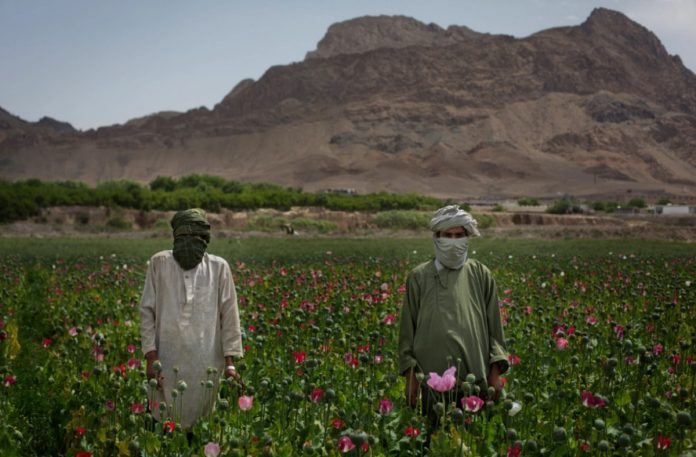
Iran says welcomes ban on production of narcotics in Afghanistan

production of narcotics in Afghanistan

Eskandar Momeni made the comment in reference to the announcement of the ban on poppy cultivation in Afghanistan.

Momeni said Iran will wait to see whether the ban comes into practice.

“Based on the UN figures, in 2000 production of narcotics in Afghanistan was less than 200 tons and some 7,000 hectares of land was used to cultivate poppy. But, with the presence of the US and NATO countries and their support, the production of narcotics surged 50-fold to more than 9,000 tons in less than two decades,” he said.

“Americans left a great chaos in Afghanistan. Based on existing evidence, Americans and NATO aircraft smuggled drugs and fueled the cultivation [of poppy]. Not only they backed and promoted cultivation of poppy, they also offered technical and technological assistance and supplied high-yielding and improved seeds that led to the production of a huge amount of narcotics in Afghanistan.”

He said the US used narcotics as a means to create insecurity in the region leading to the current situation where the UN and Taliban figures show Afghanistan now accounts for more than 90 percent of opium production in the world.

Iraq: We will need Iranian natural gas for coming years

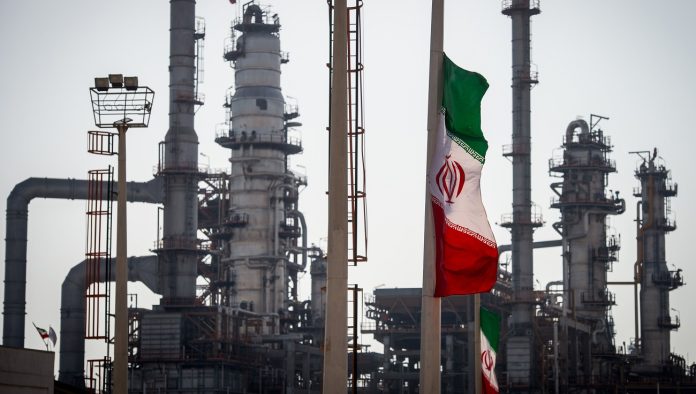
Iran Gas

“We do not accept their [Persian gulf countries’] prices. Iranian natural gas is appropriate for Iraq and its price is also acceptable,” Adel Karim said in an interview.

The official also pledged a “different summer” for Iraq in terms of electricity supply this year.

He said this would be possible if power plants have access to their needed fuel.

Karim also touched on the agreements Baghdad is seeking to sign with Qatar, Turkey and Saudi Arabia.

He said Iraq wants to import natural gas from Qatar for the cold seasons of the year, connect its power grid with Saudi Arabia – which he said takes 38 months to implement – and complete its power grid connection with Turkey to supply electricity to Mosul.

He stressed, however, that the energy prices they are offering is so far too high and unacceptable.

Meanwhile, a spokesman for Iraq’s Electricity Ministry says the improved supply over the past months is due to Iran providing 25 million cubic meters of natural gas for Iraqi power plants, which is a more than three-fold increase compared to the past.

Iran is the main supplier of electricity and natural gas to Iraq.

Top Iranian and Iraqi energy officials have held several meetings over the past months to discuss exports of energy to Iraq and the country’s relevant debt to Iran.