Ukraine claims 14,000 Russian personnel killed
The Ukrainian Ministry of Foreign Affairs claimed nearly 14,400 Russian personnel have been killed in Ukraine as of Saturday, with thousands of pieces of Russian equipment also lost since the Russian invasion into Ukraine.
According to a post from the ministry’s official Twitter account, there have also been 95 Russian aircraft, 115 helicopters, 1,470 armored vehicles, 213 artillery pieces, and several other pieces of equipment items lost from the Russian Armed Forces since the invasion.
China calls sanctions on Russia increasingly ‘outrageous’
A senior Chinese government official stated on Saturday that sanctions imposed by Western nations on Russia over Ukraine are increasingly “outrageous”.
Vice Foreign Minister Le Yucheng also acknowledged Moscow’s point of view on NATO, saying the alliance should not further expand eastwards, forcing a nuclear power like Russia “into a corner”.
China has yet to condemn Russia’s action in Ukraine or call it an invasion, though it has expressed deep concern about the war. Beijing has also opposed economic sanctions on Russia over Ukraine, which it says are unilateral and are not authorised by the UN Security Council.
“The sanctions against Russia are getting more and more outrageous,” Le noted at security forum in Beijing, adding that Russian citizens were being deprived of overseas assets “for no reason”.
“History has proven time and again that sanctions cannot solve problems. Sanctions will only harm ordinary people, impact the economic and financial system… and worsen the global economy,” he continued.
“This pursuit of absolute security (by NATO) precisely leads to absolute non-security,” Le said, adding, “The consequences of forcing a major power, especially a nuclear power, into a corner are even more unimaginable.”
Medvedev expects Russian economy to withstand western sanctions
There will be no collapse of the Russian economy due to new sanctions imposed by Western countries as the country has learned to function under restrictions since 2008, Russian Security Council Deputy Chairman Dmitry Medvedev said on Saturday.
“In general, there will be no collapse in the economy,” Medvedev stated on Telegram.
Western companies that have suspended their activities in Russia over Ukraine do not want to lose this market, Medvedev added.
“Western companies, many of which have loudly announced their withdrawal from our market, from the very beginning thought only about returning, they preserved their staff, payed salaries, made other payments to the [Russian] budget,” Medvedev said, adding that the companies “tell us quietly” that they want to return, but they are afraid.
According to Medvedev, Russia has many reliable partners, not only in the post-Soviet space, but also in China, Southeast Asia and Africa.
Russia’s opponents have always come back with a request to return to the negotiating table, and this is exactly what is happening now, Medvedev noted.
“We have been through crises, sanctions, threats and political pressure more than once – in 2008, 2014, 2018. And I’m not talking about the fact that various sanctions were imposed on the Soviet Union more than a dozen times. We have long ceased to be afraid. And then, very quickly, our opponents themselves come to us with a request to return to the negotiating table on all issues,” Medvedev stressed.
Medvedev also mentioned that the situation with energy prices in the United States and Europe is bad, and Western politicians are trying to blame Russia for this, but the peoples of these countries understand everything and will “bill their government for being forced to pay for their sanctions.”
Russian invasion shut down 30 percent of Ukraine’s economy
The Russian invasion has forced 30% of Ukraine’s economy to stop working, Finance Minister Serhiy Marchenko has said in a televised interview.
“Our tax revenues do not allow us to cover our needs, (therefore) the main revenue stream is borrowing,” Marchenko added.
Russia: Ukrainian mines in Black Sea
Russia has warned that mines that Ukrainians had deployed in the Black Sea against its “military operation” could drift as far as the Straits of Bosphrous and the Mediterranean Sea.
“After the start of the Russian special military operation, Ukrainian naval forces had deployed barriers of mines around the ports of Odessa, Ochakov, Chernomorsk and Yuzhny,” the FSB security service said in a statement, adding that the mines were “dilapidated” and made in the first half of the 20th century.
Storms have cut cables to some of those mines that are now floating freely in the western Black Sea, pushed along by wind and the currents, it announced.
Ukraine says 190,000 people have been evacuated since invasion
Ukraine has evacuated 190,000 civilians from frontline areas via humanitarian corridors since the start of Russia’s invasion of Ukraine, Reuters reports.
The country’s deputy prime minister, Iryna Vereshchuk, stated corridors in the Kyiv and Luhansk regions were functioning on Saturday, but a planned corridor to the besieged eastern port city of Mariupol was only partially operational, with Russian troops not allowing buses through.
Ukraine refugee exodus tops 3.3 million
More than 3.3 million refugees have now fled Ukraine since the Russian invasion, the United Nations said on Saturday, while nearly 6.5 million are thought to be internally displaced within the country.
UNHCR, the UN refugee agency, reported 3,328,692 Ukrainians had left since the war began on February 24, with another 58,030 joining the exodus since Friday’s update.
“People continue to flee because they are afraid of bombs, airstrikes and indiscriminate destruction,” stated UNHCR chief Filippo Grandi.
“Aid is vital but can’t stop fear. Only stopping the war can,” Grandi added.
UN: Nearly 850 civilians have been killed in Ukraine since Russian invasion began
As of Friday, at least 847 civilians — including 64 children — have been killed in Ukraine since the Russian invasion began on Feb. 24, according to the latest update from the United Nations Human Rights Office on Saturday.
This is an increase of 31 deaths compared to the previous daily update published on Friday.
The OHCHR said 1,399 civilians have been injured, including 78 children, mostly caused by shelling and airstrikes. The actual toll is believed to be much higher, it added.
“Most of the civilian casualties recorded were caused by the use of explosive weapons with a wide impact area, including shelling from heavy artillery and multiple-launch rocket systems, and missile and air strikes,” the OHCHR announced.
Russians push deeper into Mariupol as locals plead for help
Russian forces pushed deeper into Ukraine’s besieged and battered port city of Mariupol on Saturday, where heavy fighting shut down a major steel plant and local authorities pleaded for more Western help.
The fall of Mariupol, the scene of some of the war’s worst suffering, would mark a major battlefield advance for the Russians, who are largely bogged down outside major cities.
“Children, elderly people are dying. The city is destroyed and it is wiped off the face of the earth,” Mariupol police officer Michail Vershnin stated from a rubble-strewn street in a video addressed to Western leaders.
Russian forces have already cut the city off from the Sea of Azov, and its fall would link Crimea, which Russia annexed in 2014, to territories controlled by Moscow-backed separatists in the east.
Ukrainian and Russian forces have battled over the Azovstal steel plant in Mariupol. “One of the largest metallurgical plants in Europe is actually being destroyed,” Vadym Denysenko, an adivser to Ukraine’s interior minister, said in televised remarks.
UNICEF estimates 1.5m children have fled Ukraine since start of Russia invasion
Approximately 1.5 million children have fled Ukraine since Russia’s invasion began and are at risk of being trafficked, according to UNICEF, the United Nations’ children’s agency.
“Countless others” are displaced inside the country as the war wages on, the agency said in a Saturday news release.
“The war in Ukraine is leading to massive displacement and refugee flows – conditions that could lead to a significant spike in human trafficking and an acute child protection crisis,” stated Afshan Khan, UNICEF’s regional director for Europe and Central Asia.
“Displaced children are extremely vulnerable to being separated from their families, exploited, and trafficked,” Khan continued, adding, “They need governments in the region to step up and put measures in place to keep them safe.”
Between Feb. 24 and March 7, UNICEF said they identified more than 500 unaccompanied children crossing from Ukraine into Romania. The overall figure of unaccompanied children spilling over neighboring borders is “likely much higher,” the statement added.
To scale up protection, the UN and civil society partners have set up information hubs in neighboring countries such as Poland, identified as “Blue Dots” to provide essential services for families.
UNICEF also urges Ukraine’s neighboring governments to scale up child protection screenings at the borders and at key areas, such as train stations, where refugees pass through.
“In addition, UNICEF is calling on governments to improve cross-border collaboration and knowledge exchange between and among border control, law enforcement and child protection authorities and to quickly identify separated children, implement family tracing and reunification procedures for children deprived of parental care,” according to the statement.
Ukraine calls on China to ‘condemn Russian barbarism’
Ukraine has urged China to join the West in condemning “Russian barbarism”, after the US warned Beijing of consequences if it backed Moscow’s attack on the country.
“China can be the global security system’s important element if it makes a right decision to support the civilised countries’ coalition and condemn Russian barbarism,” presidential aide Mikhailo Podolyak wrote on Twitter.
Up to 100 feared dead after Russia strikes Ukrainian barracks
A rescue mission is under way after Russian troops struck a Ukrainian military barracks in the southern city of Mykolaiv, with witnesses reporting dozens of bodies being pulled from the rubble.
“No fewer than 200 soldiers were sleeping in the barracks” when Russian troops struck early Friday, a Ukrainian serviceman on the ground, 22-year-old Maxim, told AFP without providing his last name.
“At least 50 bodies have been recovered, but we do not know how many others are in the rubble,” he continued.
Another soldier estimated that the bombing could have killed around 100 people, although authorities have not yet released an official death toll.
“Yesterday orcs hit our sleeping soldiers with a rocket in a cowardly manner,” Vitaly Kim, head of the regional administration, stated in a video on Saturday, using the Ukrainian nickname for Russian forces.
Aid agencies struggle to reach Ukraine’s ‘besieged’ cities
Aid agencies are been prevented from reaching people trapped in Ukrainian cities surrounded by Russian forces, the World Food Programme has announced.
The UN agency’s emergency coordinator, Jakob Kern, told AFP that “the challenge is to get to the cities that are encircled or about to be encircled”, describing the situation as dire.
He said it has been almost impossible to deliver emergency supplies to the besieged port city of Mariupol or the north-eastern cities of Kharkiv and Sumy. He added it was a tactic that was unacceptable in the 21st century.
Replacing broken food supply chains amid fighting is a “mammoth task”, he said.
The WFP is aiming to reach 3.1 million people in Ukraine, but efforts have been hindered by difficulties in finding willing truck drivers. Hundreds of thousands of women and children are among those trapped.
“The closer you go to these cities, the more worried they are about their safety,” Kern continued, adding, “And that means we’re not able to reach these people in Mariupol, Sumy, Kharkiv, in the cities that are almost encircled by now – or completely in the case of Mariupol.”
Ukraine: People in Mariupol risking their lives each time they leave shelter
People sheltering in Mariupol from some of the most intense fighting anywhere in Ukraine are risking their lives each time they step foot outside their underground bunkers, a Ukrainian army commander stationed in the city has told CNN.
With Russia’s assault in its fourth week, Major Denis Prokopenko of the National Guard Azov Regiment said the besieged city was now under almost constant bombardment.
“Usually, Mariupol is under fire during the whole day and night. Sometimes there is 30 minutes of silence, but then the city is again under attack [from] tanks, artillery, multiple rockets, and [aircraft] like bombers and helicopters,” he added.
People are reluctant to leave their underground shelters even to get hold of essentials, meaning they were trying to drink less water and eat less food. One of the few times people did leave the shelter was to prepare hot food, he said.
“People are cooking food in the streets, risking their lives under the continuous shelling and bombing. The temperature is minus 5 degree Celsius in the street,” Prokopenko told CNN.
Basic services like gas, electricity and water are all out.
Bodies are left lying in the street because there is either no one left to collect them or it is simply too dangerous to try.
Prokopenko added no one knew the exact number of people killed.
“Some people are buried under ruined buildings, buried alive,” he stated.
Seven killed in mortar attack near Ukrainian capital
Local police in the town of Makarviv near Kyiv claim at least seven people were killed and five others injured following a mortar attack by Russian forces.
“As a result of enemy shelling of Makariv, seven civilians were killed,” local police announced in a statement.
Russia denies targeting civilians.
Johnson: Putin made a “catastrophic mistake” in invading Ukraine
Speaking at the Conservative party conference in Blackpool, the UK prime minister said the country stood with the people of Ukraine.
“With every day that Ukraine’s heroic resistance continues, it is clear that Putin has made a catastrophic mistake,” Boris Johnson stated.
Johnson questioned why Russian President Vladimir Putin had launched a full-scale invasion of Ukraine, rejecting the idea that it was over concerns about the country joining NATO.
“He was frightened of Ukraine, because in Ukraine, they have a free press. And in Ukraine, they had free elections and with every year Ukraine has progressed, not always easily, towards freedom and democracy and open markets, he feared the Ukrainian example, and he feared the implicit reproach to himself,” Johnson noted.
The prime minister contrasted this with the situation in Russia.
“In Putin’s Russia, you get jailed for 15 years just for calling an invasion an invasion. And if you stand against Putin in an election, you get poisoned or shot,” he continued.
He added Putin felt threatened by Ukraine because the two countries had been “so historically close”.
It is vital that Moscow’s invasion fails, Johnson said, because “a victorious Putin will not stop in Ukraine”.
Johnson has also rejected normalising relations with Putin, even after the end of his invasion of Ukraine.
Putin is in a “total panic” about the prospect of a revolution in Moscow, Johnson said.
“He has been in a total panic about a so-called colour revolution in Moscow itself and that is why he is trying so brutally to snuff out the flame of freedom in Ukraine and that’s why it is so vital that he fails,” he added.
“A victorious Putin will not stop in Ukraine, and the end of freedom in Ukraine will mean the extinction of any hope of freedom in Georgia and then Moldova, it will mean the beginning of a new age of intimidation across eastern Europe from the Baltic to the Black Sea,” the PM noted.
Poland calls for EU to impose total ban on trade with Russia
Poland has proposed that the European Union implement a total ban on trade with Russia, the Polish Prime Minister, Mateusz Morawiecki, has said in a statement reported by Reuters.
“Poland is proposing to add a trade blockade to this package of sanctions as soon as possible, [including] both of its seaports … but also a ban on land trade. Fully cutting off Russia’s trade would further force Russia to consider whether it would be better to stop this cruel war,” Morawiecki added.
Poland’s call for Moscow to face tougher economic repercussions for its invasion of Ukraine comes after EU member states agreed on a fourth package of sanctions against Russia this week. Details were not disclosed, but the French presidency announced Russia’s “most-favoured nation” trade status would be revoked.
UN: One in five Ukrainians have fled their homes
More than a fifth of the 44 million people who were living in Ukraine before Russia invaded the country last month have been internally displaced or have fled to other countries, according to estimates from the United Nations.
And for those who remain in the country, millions face a daily struggle for survival as cities hard hit by fighting run low on food, lack clean water, have no access to medical care and operate in many places without heat and electricity.
Russian FM: Moscow, Beijing cooperation will only get stronger
Cooperation between Russia and China will only become stronger in the current circumstances, the Interfax news agency quoted Russian Foreign Minister Sergei Lavrov as saying.
“This cooperation will get stronger, because at a time when the West is blatantly undermining all the foundations on which the international system is based, of course we – as two great powers – need to think how to carry on in this world,” Lavrov added.
Moscow had no other choice but to launch a military operation in order to disrupt Kiev’s policies growing increasingly hostile to Russia and Russian people, including those in Ukraine, Lavrov stated.
Shelling kills nine in outskirts of Zaporizhzhia
Nine people were killed and 17 wounded in shelling of the suburbs of the city of Zaporizhzhia in southern Ukraine on Friday, deputy mayor Anatoliy Kurtiev said on Saturday.
The military has since declared a 38-hour curfew in Zaporizhzhia, which was being attacked by Russian forces with mortars, tanks, helicopters and rocket systems, Kurtiev added.
Ukraine claims Russian troops captured city council secretary
Ukraine has claimed that Russian forces have captured a secretary to the city council of Nova Kakhovka in the Kherson region.
In a tweet, Ukraine’s parliament announced that Dmytro Vasyliev is being “tortured in a local detention facility.”
UK DM: ‘Arrogant’ Putin responsible for deaths of Russians
British Defence secretary Ben Wallace has slammed Russian President Vladimir Putin for being “arrogant”.
“Putin’s arrogant assumptions have directly led to the casualties and attrition among the Russian army,” he said.
“The Kremlin assumed the Ukrainians would not fight. they were wrong. The Kremlin assumed their army was invincible. They were wrong. They assumed the international community would splinter. And they’ve been proven wrong,” he added.
Battle rages for control of huge steel plant in Mariupol
There are conflicting reports over the status of one of Ukraine’s key industrial facilities – the Azov Steel plant in Mariupol.
Late Friday, a government advisor reported the plant was in Russian hands after ongoing battles with Ukrainian troops for control of the seafront site.
But in an update Saturday, the Azov battalion, which has a large presence in Mariupol, claimed the plant remained in their hands.
“The enemy has not reached this far into the city. The [Ukrainian] navy, along with the Azov battalion, along with the police, continue defending the city and its civilians,” battalion member Vladislav Sobolievskyi told Ukrainian television.
“Today the Azov Steel plant is under our control. Air strikes hit the whole city, including the plant, but the enemy has not laid his hands on our plant,” Sobolievskyi added.
The giant steelworks lies immediately to the east of Mariupol city centre. Losing control of the facility to Russian forces would be a huge setback to Ukrainian efforts to hang on to the city.
Street fighting in Mariupol city centre is hampering efforts to rescue civilians trapped beneath a theatre ‘bombed’ by Russia, the city’s mayor has said.
Vadym Boychenko told the BBC: “There are tanks… and artillery shelling, and all kinds of weapons fired in the area.
“Our forces are doing everything they can to hold their position in the city, but the forces of the enemy are larger than ours, unfortunately,” he added.
Russia denies shelling the building on Wednesday, from which 130 people have managed to escape so far.
Rescue operations continue in Mykolaiv where dozens reported killed in strike on Ukrainian barracks
Rescue operations were still underway in Mykolaiv Saturday morning at the scene of a missile strike on a barracks housing soldiers, regional boss Vitalli Kim said.
Dozens of troops are reported to have been killed in the attack by Russian forces.
Speaking on his Telegram channel Saturday, Kim stated he was not yet able to provide information on fatalities, as he was waiting for official data.
Rescuers at the scene have been using shovels and their bare hands to free survivors from the rubble of the buildings.
Mykolaiv, a southern city that sits along the Black Sea, has been a frequent target of Russian attacks.
UK fears ‘more extreme’ Russian actions in Ukraine
Peace talks to end the Ukraine conflict could be a “smokescreen” for more extreme Russian military manoeuvres, British Foreign Secretary Liz Truss warned.
“I’m very sceptical,” Truss told The Times newspaper in an interview.
“What we’ve seen is an attempt to create space for the Russians to regroup. Their invasion isn’t going according to plan. I fear the negotiation is yet another attempt to create a diversion and create a smokescreen. I don’t think we’re yet at a point for negotiation,” she continued.
Truss echoed comments by British intelligence that President Vladimir Putin could turn to “more and more extreme actions”, adding “we’ve seen appalling atrocities already”.
American troops will not engage in the conflict in Ukraine, US Secretary of Defense Lloyd Austin said in an interview with CNN.
According to him, US President Joe Biden has “been very clear about the fact that we won’t have troops engaged in combat with Russia in Ukraine.”
He pointed out that establishing a no-fly zone over Ukraine would require “controlling the skies, engaging Russian aircraft, and taking out aircraft systems in Ukraine, Belarus and Russia.”
“So that would mean that we’re in combat with Russia. These are two nuclear powered countries that nobody wants to see engage in the conflict. It’s not good for the region. It’s not good for the world,” Austin added.
The United States has made it clear to China that extending support to Russia’s military operation in Ukraine would be a “bad choice,” Austin said.
“I would hope that China would not support this despicable act by [Russian President Vladimir] Putin, I would hope that they would recognise a need to respect sovereign territory,” Austin told CNN, adding that, “we’ve been clear that if they do that, we think that’s a bad choice”.
Belarusian President Alexander Lukashenko on Saturday said Western countries were pushing the Ukrainian government to start a war.
“The West pushed them toward this war,” he stated in an interview with Japan’s TBS television that was posted on the Belarus-1 YouTube channel.
The Belarusian leader added Kiev imposed sanctions on Belarus even before the West did.
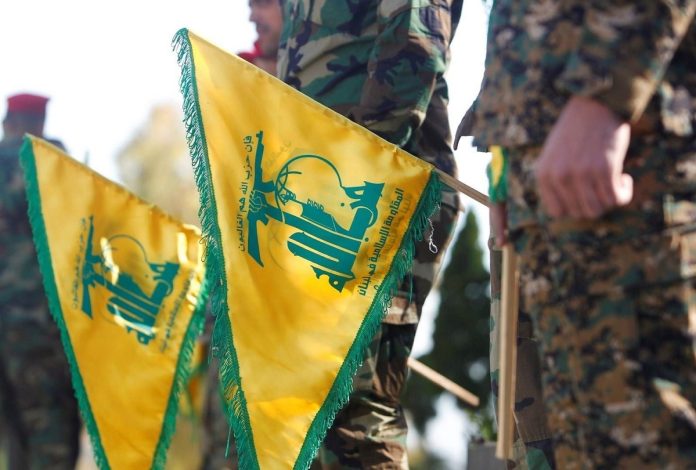
Hezbollah denies deploying troops to Ukraine
The leader of Lebanese resistance movement Hezbollah has denied claims that the group has deployed forces to Ukraine.
Sayyed Hassan Nasrallah stated he strongly dismisses reports that Hezbollah has sent fighters and experts to Ukraine to fight on the side of Russia.
US claims Russia used “savage techniques”
Russia continues to make “incremental gains” in Ukraine’s south and has used “brutal, savage techniques” in the way it has targeted civilians, US Secretary of Defense Lloyd Austin said Saturday.
“In terms of Russians’ progress in the south, I would say that they continue to make incremental gains. I would also say that they’ve used some brutal, savage techniques in terms of the way that they’ve been targeting civilian populations,” Austin stated during a joint press conference with Bulgaria’s Prime Minister Kiril Petkov in Sofia.
“And again, we would hope that they [Russia] would choose a different path,” Austin added.
The amount of pain that the civilians have endured “has been hard to watch,” he continued.
No survivors as plane crashes during NATO drills
All four crew members on board an MV-22B Osprey aircraft belonging to the US Marine Corps that crashed in Norway on Friday died in the accident, local police reported on Saturday.
The aircraft, which is a cross between a regular helicopter and a turboprop plane, was taking part in NATO’s Cold Response military exercise in the Scandinavian country.
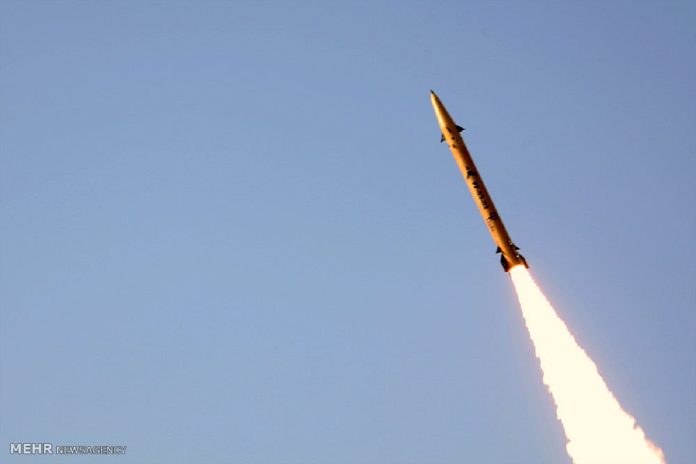
Russia: Hypersonic missiles used in Ukraine
Russia’s defence ministry says it has destroyed a large underground depot for missiles and aircraft ammunition in Ukraine’s Ivano-Frankivsk region using hypersonic missiles, the Interfax news agency reported.
The ministry added it has also destroyed Ukrainian military radio and reconnaissance centres near the port city of Odessa using a coastal missile system.
Prosecutor office claims 112 children killed in war in Ukraine
The Ukrainian prosecutor general’s office said on Saturday that 112 children have been killed so far in the war in Ukraine.
It also added 140 children had been wounded.
UK: Russia has been “surprised by scale & ferocity” of Ukrainian resistance
Russia has so far been “surprised by the scale and ferocity” of Ukrainian resistance and has been “forced to change its operational approach,” the UK Ministry of Defence said in its latest intelligence update on Saturday.
“The Kremlin has so far failed to achieve its original objectives” and “is now pursuing a strategy of attrition,” the ministry announced.
“This is likely to involve the indiscriminate use of firepower resulting in increased civilian casualties, destruction of Ukrainian infrastructure, and intensify the humanitarian crisis,” it added.
US think tank: war will push 40 million toward extreme poverty
More than 40 million people will be pushed into extreme poverty as a result of rises in food and energy prices caused by the war, according to a US think tank.
“Russia’s invasion of Ukraine has sparked significant rises in energy and food prices. Our analysis suggests the scale of price spike will push over 40 million into extreme poverty,” said the Center for Global Development.
Russia and Ukraine export 19 percent and 10 percent, respectively, of globally traded wheat, added the Center.
“Amongst importers, vulnerability to the impacts of rising global grain prices will largely depend upon poverty. Households from poorer countries spend much more of their income on food, with families in low-income countries allocating almost half (45 percent) of their budgets to food,” it continued.
The Center advised the G20 and other grain producers to keep markets open and avoid sanctions on food, even if further disruptions arise, to avoid artificially exacerbating the impacts.
White House: Biden to discuss China’s Russia alignment in Europe
The White House has announced President Joe Biden will discuss China’s moves to align with Russia when he travels to Europe next week.
On Friday, Biden told Chinese President Xi Jinping that there would be consequences if Beijing backs Russia’s military operations in Ukraine.
Biden will participate in meetings with allies in Brussels next Thursday.
Truss believes sanctions against Russian businessmen will not be lifted
UK Foreign Secretary Liz Truss believes that the sanctions against Russian businessmen imposed over the military operation in Ukraine will not be lifted.
“It’s extremely difficult. These oligarchs have enabled Vladimir Putin to do what he’s doing. There is blood on his hands,” Truss told the Times newspaper when asked if the sanctions against the Russian businessman will be lifted.
She added that Russian businessman Roman Abramovich, who owned FC Chelsea, was unlikely to return to the United Kingdom.
Blinken: US sanctions to remain in place until Russia changes its course
US sanctions against Russia will remain in place until Moscow changes its political course, US Secretary of State Antony Blinken said during a roundtable with journalists.
“Of course, the purpose of all of this is not to have these things [sanctions] in perpetuity. The purpose of the sanctions is to change their [Russia’s] conduct, along with everything else that we’re doing,” he added.
The US top diplomat told the public to “be prepared for this to go on for some time,” because the intended result will not be immediately achieved.
EU officials mull using sanctioned Russians’ assets for Ukraine
European Union officials are discussing the possibility of using the assets of sanctioned Russian tycoons to help fund Ukraine’s war recovery efforts, according to three people familiar with the matter, Bloomberg reported.
The idea is at a very early stage and no decision has been taken, the people said. One possibility would be to use the assets to fund war reparations, the people added.
Any decision over how to handle the assets would ultimately need to be made by member states.
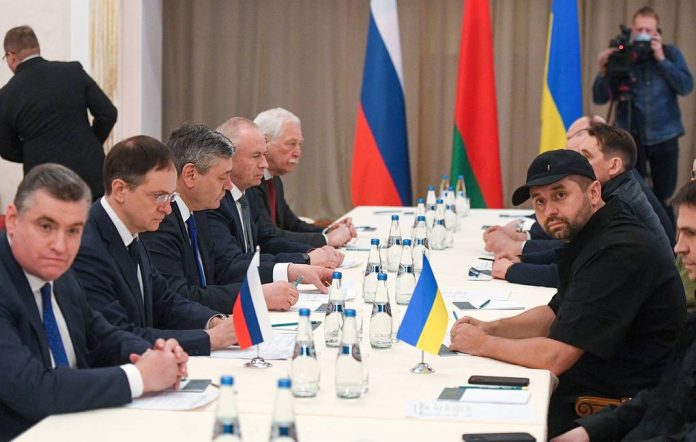
The talks between Moscow and Kiev may last a few more weeks, Ukrainian Presidential Office Adviser Mikhail Podolyak has told Bloomberg TV.
“The negotiations may last several weeks or even longer, due to some legal issues that are incompatible with each other,” said Podolyak, whose words were translated into English.
He added Ukraine’s main demands were “ceasefire, troop pullback and political settlement regarding the disputed territories.”
Zelensky tells Russia time for serious talks
Ukrainian President Volodymyr Zelenskyy has released another video address to the Ukrainian people.
“I want everyone to hear me now, especially in Moscow. The time has come for a meeting, it is time to talk,” he said in the address released in the early hours of Saturday.
“The time has come to restore territorial integrity and justice for Ukraine. Otherwise, Russia’s losses will be such that it will take you several generations to recover,” he added.
Zelensky also accused Russian forces of deliberately blocking the supply of humanitarian supplies to cities under attack.
“This is a deliberate tactic … This is a war crime and they will answer for it, 100 percent,” he noted.
“War must be stopped,” Zelensky stated, adding, “The Ukrainian proposal is on the table.”
Ukraine says it will take years to defuse unexploded bombs
It will take years for Ukraine to defuse unexploded bombs after the Russian invasion, its interior minister has said.
Speaking to The Associated Press news agency in the besieged Ukrainian capital, Denys Monastyrsky stated that the country will need Western assistance to cope with the enormous task once the war is over.
“A huge number of shells and mines have been fired at Ukraine and a large part haven’t exploded, they remain under the rubble and pose a real threat,” Monastyrsky continued, adding, “It will take years, not months, to defuse them.”
Satellite images show Russia constructing earthen berms to protect military positions northwest of Kyiv
The Russian military is quite literally digging in, constructing earthen berms around its military equipment northwest of the Ukrainian capital of Kyiv, according to Maxar Technologies’ analysis and satellite images.
The new satellite images show the protective berms around Russian military equipment near Ozera and the Antonov Air Base.
Additional Russian military equipment, and some berm construction, are also seen in the villages of Zdvyzhivka and Berestyanka, further northwest.
Ukraine says ‘temporarily’ lost access to Sea of Azov
Ukraine’s Defence Ministry has announced it lost access to the Sea of Azov “temporarily” as Russian forces tightened their grip around the besieged port city of Mariupol.
“The occupiers have partially succeeded in the Donetsk operational district, temporarily depriving Ukraine of access to the Sea of Azov,” according to Ukraine’s defence ministry.
The ministry did not say whether or when Ukraine’s forces had regained access to the sea.
Ukraine: China ‘should put some pressure on Russia’
An adviser to Ukrainian President Volodymyr Zelenskyy has said Ukraine hopes China will realise that it “should put some pressure on Russia” to end the war.
Alexander Rodnyansky told Al Jazeera that doing so would help China “establish a more viable relationship with the rest of the world” in the long term.
“And that’s clearly more important to them than supporting Russia, which has isolated itself and is clearly in decline at this point,” he added.
US: Russian forces launched “over 1,080 missiles” since beginning of invasion
Russian forces have launched “more than 1,080 missiles” since the beginning of their invasion of Ukraine, a senior US defense official said Friday.
Reports of missile strikes in the western part of Ukraine “in the vicinity of the Lviv International Airport appear to be accurate,” the official continued.
The official did not have additional information on where the origin of the missile strikes in the western part of Ukraine were from or how much damage they caused at this time.
The airspace over Ukraine “remains contested,” the official added.
Russia calls Council of Europe a ‘Russophobic’ tool of West
A spokeswoman for Russia’s Foreign Ministry has accused the Council of Europe, which expelled Moscow from its ranks earlier this week, of being a “Russophobic” instrument serving Western interests.
“Due to the Westerners’ Russophobic activity”, the Council of Europe is losing its reason for being, Maria Zakharova said in a statement.
“By placing the service of the bloc’s interests above its own statutory objectives, the Council of Europe has been turned into an obedient instrument of the European Union, NATO and their satellites,” she added.
The pan-European rights body expelled Russia on Wednesday after more than a quarter of a century of membership.
UNSC: West dismisses Russian claims of bioweapons in Ukraine
Russia has renewed accusations of a US-backed biological weapons programme in Ukraine, allegations that were dismissed as “disinformation” by most members of the UN Security Council.
Representatives of the US and the UK – among others – rebuked Russia for requesting a Security Council meeting on Friday for the purpose of discussing its claims.
Last week, the Security Council also held a session at Russia’s request to hear similar allegations.
US attempts to accuse Russia of intent to use biological and chemical weapons in Ukraine is utmost cynicism, Russian Permanent Representative to the UN Vasily Nebenzya said during the UN Security Council meeting Friday.
“If you can debunk this [information about US projects in Ukrainian biological laboratories] – then do it. But not with groundless claims about Russian propaganda, but with answers to our questions. You, however, refuse to do it simply because you have nothing to say,” Nebenzya noted.
“Instead, you seek to accuse us of intent to use biological and chemical weapons in Ukraine. This is utmost cynicism,” the envoy said, adding, “We have warned already, that we know and we have information about Ukrainian nationalists transporting poisonous chemicals to certain areas, in order to carry out a provocation and accuse Russia of it. This is a so-called false flag operation.”
“I’ve said it already, and you didn’t listen closely, the US in particular. We did not say, as the US representative said, that Ukraine itself has a military biological program,” the diplomat noted.
“We’ve said that it is the US that has such program, and Ukraine was used ‘blindly’,” he continued.
According to the envoy, Russia provided facts about a mysterious spike of dangerous infections in Ukraine that could not be explained by natural factors.
“We will not take this issue from the agenda. New facts will most likely be revealed shortly, and we will inform the UN Security Council and the international community about them,” Nebenzya stated.
States involved in biological programs in Ukraine must provide responses to questions raised by Russia, Chinese Permanent Representative to the UN Zhang Jun said during the UN Security Council meeting Friday.
“Any information about military biological activities must raise concerns and draw attention of the international community, so that irreparable damage could be avoided. In this regard, the sides must display a responsible approach. Russia presented new, just discovered documents on this issue. The interested sides must answer questions and provide timely and comprehensive explanations in order to alleviate doubts of the international community,” he added.
At the beginning of the meeting, Russian Permanent Representative Vasily Nebenzya stated that Russia obtained new information on Ukrainian biological laboratories’ operations with dangerous viruses. The US managed these activities and funded them.