Friday, December 26, 2025
Home Blog Page 1930

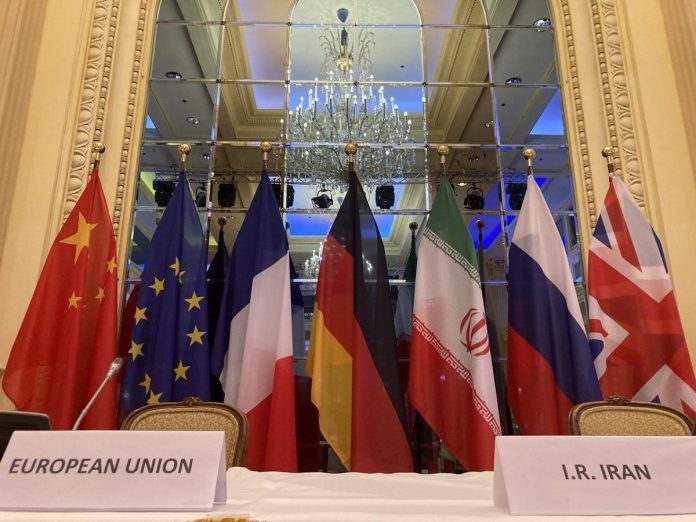
Iranian MP: Western sides return to Vienna as they need a deal more than Iran

Vienna Talks

Abbaszadeh Meshkini said Iran’s top negotiator in Vienna Ali Bagheri Kani attended a meeting at the commission on Sunday morning.

He said, “Our understanding is that more than 80 percent of differences with the Western sides were resolved through verbal agreement during the negotiations.”

Abbaszadeh Meshkini maintained that the Western parties, especially the US, need a deal in Vienna more than Iran does and that’s why “I think we will leave this stage behind.” According to the Iranian lawmaker, an agreement is not far-fetched.

Abbaszadeh Meshkini said Iran seeks a better deal provided that the other sides are serious and have transparency, what they have failed to prove.

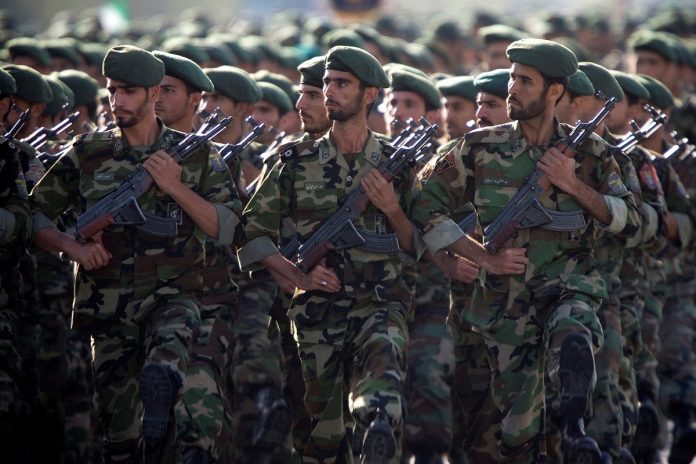
The Vienna talks have paused because the US insists on keeping the Islamic Revolution Guards Corps on its so-called terrorist blacklist. Iran says it will never accept this as the IRGC is a redline for the Islamic Republic of Iran.

Iranian court hears case of 2 clerics stabbed to death at holy shrine

Mashhad Stabbing attack

The open session at Mashhad’s Islamic Revolution Court was chaired by Judge Hadi Mansour and attended by the families of the victims of the knife attack, the defendant and their lawyers on Sunday.

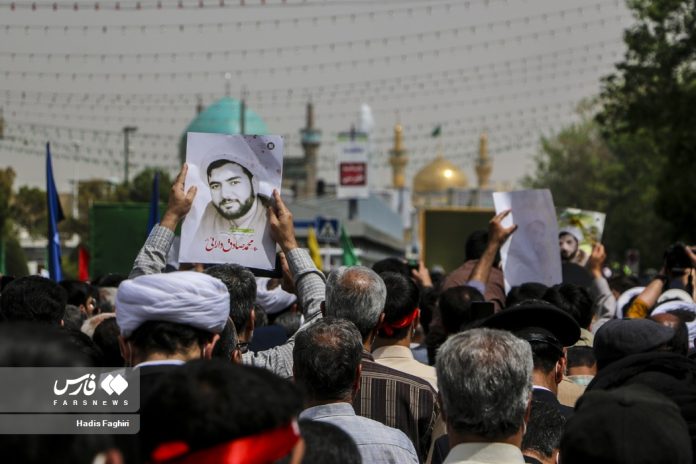
On April 5, an attacker stabbed to death an Iranian cleric and seriously wounded two others at the courtyard of Imam Reza’s holy shrine, the eight Shia Imam. One of the two injured clerics later succumbed to his injuries.

During the session, the prosecutor identified the attacker as Afghan national Abdollatif Moradi and said he was inspired by the Takfiri ideology and had illegally entered Iran.

The prosecutor said the defendant faces charges of Hirabah, an Arabic term that means ‘unlawful warfare,’ by using a knife, murder and terror.

The relatives of the martyrs and lawyers of the two sides took the podium at the hearing to present the court with their complaints and arguments.

Witnesses also told the session of their observations at the crime scene.

The defendant was finally summoned to the podium by the judge. He confessed to his terrorist crimes. He said, however, that he did not hold any grudge against the Iranian people, who treated him nicely.

The defendant said he had undergone Takfiri training “in one of the neighboring countries.”

IRGC, Iran intelligence ministry bust network of thugs tied to Israeli spy services

Iran’s Islamic Revolution Guards Corps (IRGC)

In a statement on Sunday, the IRGC’s Public Relations Department said that the busted network, directed by Israeli spy services, was involved in theft, acts of vandalism targeting public and private property, kidnapping, and getting fake concessions.

The statement said the members of the network had been arrested by staff members of the IRGC and the Intelligence Ministry, without giving further detail.

In early April, Iran’s Intelligence Ministry arrested three agents working for the Israeli Mossad spy agency in the southeastern province of Sistan and Baluchestan.

The spies were involved in disseminating classified information and documents, the ministry said.

Iranian General and defender of shrine killed by gunmen in Tehran

Crime Scene

The assassination happened at nearly 4 pm on Mojahedin Eslam Street in downtown Tehran. The gunmen riding two motorbikes opened fire on him while he was entering his house.

Reports say the victim is Brigadier General Hassan Khodaie and that the attackers emptied three bullets into his head.

The Islamic Revolution Guards Corps confirmed the assassination of General Khodaei, describing it as a “criminal act of terror” by “counter-revolutionary elements and lackeys of global arrogance”.

Security forces have started a manhunt for the assailants.

The Iranian combatants who fought against terrorists in Syria are known in Iran as “defenders of the shrine”.

The majority of Iranians view the defenders of the shrine positively, arguing that had they not fought the Takfiris in Syria, Iran would have had to fight the terrorists on its own soil.

Health Ministry official: No cases of monkeypox discovered in Iran

Monkeypox

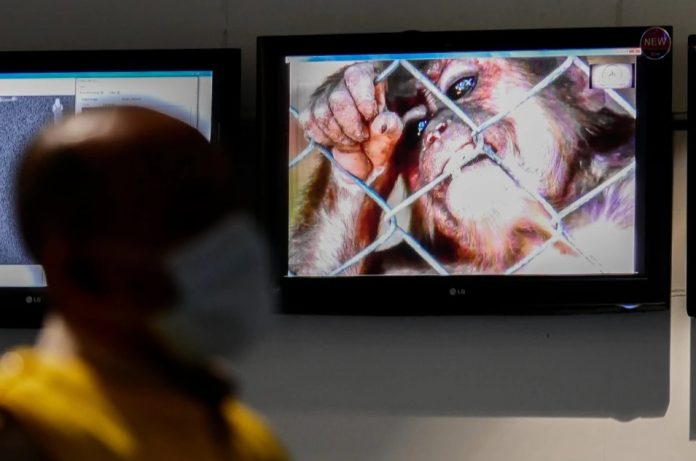
Pedram Paakain head of the public Relations office of the Iranian Health Ministry announced the monkeypox is a viral disease and 15 world countries have so far reported 197 suspected cases that include 108 ones that are definitely monkeypox.

He noted that Iran has faced no problem in this regard and any suspected case will be monitored to make sure they are not monkeypox.

The head of the public Relations office of the Iranian Health Ministry noted that a manual will soon be prepared outlining ways of preventing and treating the disease.

Paakain maintained that people could contract monkeypox by way of contacting an infected animal or getting exposed to breath of an infected person or their coughing.

He further said the disease is not highly contagious and it is highly unlikely it will turn into a pandemic.

World’s most water-rich aqueduct dries up in Iran

The Ghanbarabad Aqueduct in the Iranian city of Bam

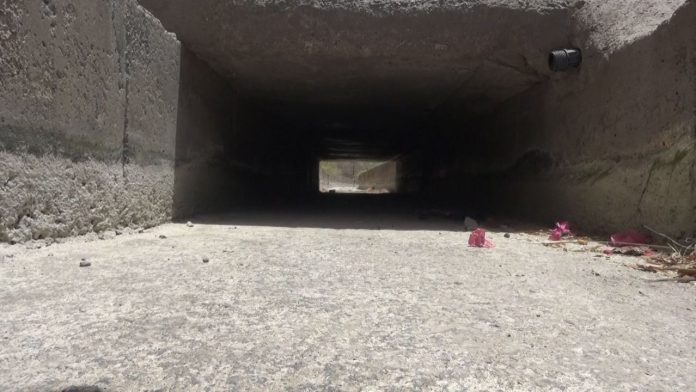
This is the most water-rich aqueduct of the world.

An agricultural department official said that 1000 farmers used the Ghanbarabad Aqueduct with a flow rate of 360 liters per second.

He added that it dried up due to carelessness on part of the contractor who entered the area of the aqueduct and dried it up with heavy machinery and rollers.

The official also said now 6 teams including 40 specialized personnel are dredging the aqueduct so that they can rehabilitate it in as short a time as possible.

He noted that 4,000 hectares of agricultural land are in dire need of irrigation, and that officials hope that the water of the Ghanbarabad Aqueduct will flow again soon.

The governor of Bam also noted that 7 wells of this aqueduct have been blocked and voiced hope that the contractor will be able to restore these wells and the surrounding oases as soon as possible.

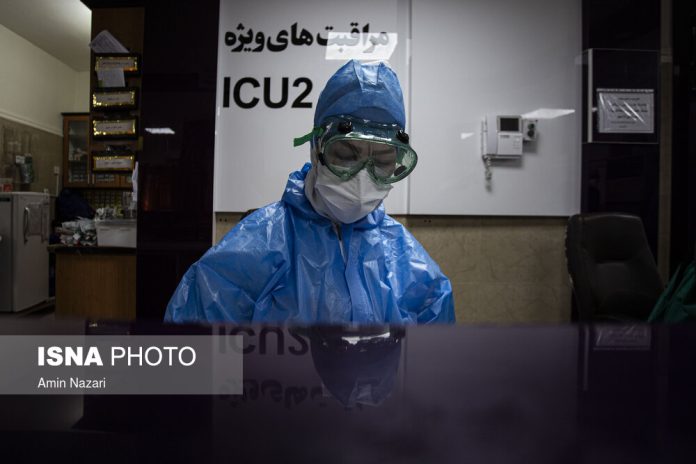
Covid kills 3 across Iran with 312 new infections

COVID in Iran

Saturday’s death toll was 9. The number of new Covid infections on Sunday was 312. The new cases include 52 hospitalizations.

This is while the pace of a nationwide vaccination in Iran has slowed with over 149 million doses already administered to people.

The number of triple-vaxxed people is more than 27 million out of the population of about 85 million people.

There are some people who have received a fourth shot of Covid vaccine as well. But they are mostly the elderly. Authorities are urging all Iranians to get their next dose of the Covid jab, be it the third or fourth.

The downward trend in the Coronavirus deaths and infections has been attributed to the vaccination campaign and people’s strict adherence to health protocols during the peak of Covid’s 6th wave that killed hundreds daily countrywide.

Govt. rejects reports on fuel prices rise

Iran petrol station

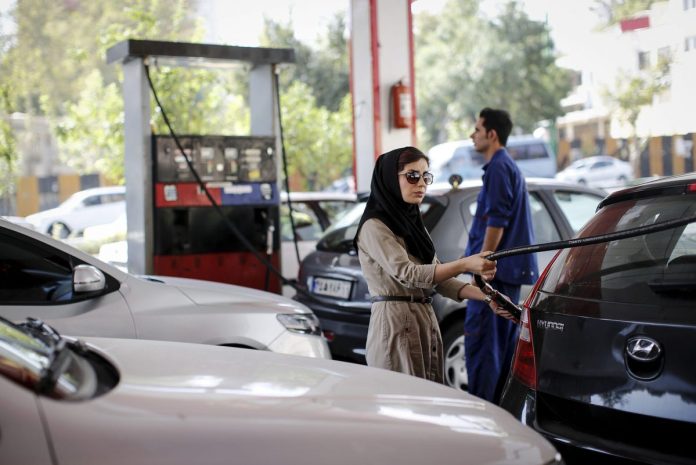
“What the president meant by making difficult economic decisions was privatization and fighting rent-seeking and not a rise in the prices of gasoline or other energy carriers,” Ali Bahadori Jahromi said.

“The government has made no decision on raising the prices of gasoline or other petroleum products, and is not even planning to do so.”

The speculation on fuel prices is also fed by the government’s recent decision to end allocation of foreign currency at the so-called preferential exchange rate to a host of necessities, including wheat flour, dairies and sugar.

The move that multiplied the exchange rate tripled the prices of certain basic goods and led to a surge in the price of others.

There are concerns that a wave of inflation in the cost of people’s livelihood will follow as different sectors react by increasing the price of their own products.

A potential rise in fuel prices could further worsen the situation as any change in the price of energy carriers traditionally leads to inflation in other sectors.

Iran Air Force says F-14 fighter jet restored thanks to domestic expertise

Iran F-14 fighter jet

Brigadier General Hamid Vahedi says the restoration work on the aircraft was conducted in the Air Force’s base in the central city of Isfahan over a period of three years.

“Our enemies never thought we could restore this aircraft and use it after years, seeing its very complicated maintenance,” general Vahedi said.

He added that thousands of parts of the fighter plane were replaced or repaired during the restoration process.

“From a to z of the repair and maintenance process was carried out by domestic experts and we needed [the help of] no foreign company,” he said.

Iran has dozens of the US-made aircraft but many of them are not operational due to Washington’s unilateral sanctions that prevent any supply of parts to Iran.

Over the past years, Iran has significantly upgraded its capabilities in the field of design and production of aircraft and has led a campaign of restoring foreign aircraft, grounded in the country due to lack of parts.

US envoy raises Afghan women’s rights with Taliban FM

Afghanistan Taliban

“Girls must be back in school, women free to move & work w/o restrictions for progress to normalised relations,” US Special Representative on Afghanistan Thomas West wrote on Twitter on Saturday after meeting Amir Khan Mutaqi.

Since returning to power last August, the Taliban has imposed a slew of restrictions on civil society, many focused on reining in the rights of women and girls, that are reminiscent of their last rule in the 1990s.

Girls’ schools are yet to open, more than eight months since the Taliban came to power. The group has insisted that it wants girls to get back to school, but justified the delay on reasons ranging from infrastructure to lack of resources due to the economic crisis.

When the Taliban took power in August, the armed group promised to uphold the rights of girls and women. But its actions since have worried the international community.

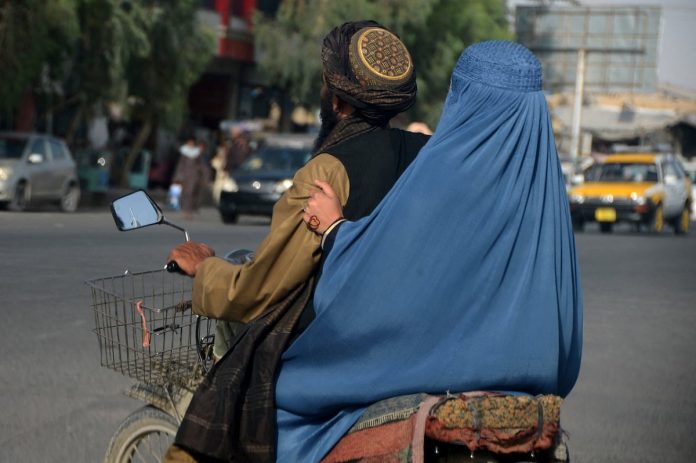
Earlier this month, Afghanistan’s supreme leader ordered women to cover up fully in public, including their faces, ideally with the traditional burqa.

During the last few months, Taliban leaders, particularly from the Ministry of Propagation of Virtue and the Prevention of Vice, have announced many new restrictions, even as criticism and international pressure mounts against them.

In December, the ministry, which replaced the Afghan Ministry of Women Affairs, imposed restrictions on women from travelling further than 72km (45 miles) without a close male relative.

This restriction was further expanded to include travelling abroad, and several solo women travellers were reportedly stopped from boarding flights. Similar bans were also introduced in several healthcare centres across the country, forbidding women to access healthcare without a mahram (male chaperone).

In January, a group of 36 UN human rights experts announced that Taliban leaders in Afghanistan are institutionalising large-scale and systematic gender-based discrimination and violence against women and girls.

A surprise U-turn in March, in which the group shuttered girls’ high schools on the morning they were due to open, drew the ire of the international community and prompted the US to cancel planned meetings on easing the country’s financial crisis.

A Ministry of Education notice said on March 23 that schools for girls would be closed until a plan was drawn up in accordance with Islamic law and Afghan culture, according to Bakhtar News Agency, a government news agency.

West also added that the two discussed economic stabilisation in Afghanistan and concerns about attacks on civilians.

The country is teetering on the verge of economic disaster after the West froze Afghanistan’s assets held abroad and cut off aid.

“Dialogue will continue in support of Afghan people and our national interests,” West, the US envoy, stated in his post.

The country has been reeling from a humanitarian crisis with more than half of the population facing hunger. The Taliban has struggled to revive the aid-dependent economy, which is in freefall due to sanctions and exclusion from international financial institutions.

In December, the Joe Biden administration issued what it called “broad authorisations” to ensure that the United Nations, American government agencies and aid groups can provide humanitarian relief to Afghanistan without running foul of sanctions against the Taliban.