India says Quad countries understand its position on Ukraine
India’s foreign minister says that the leaders of the other members of the Quad group of countries understood its position on Russia when they met in Tokyo.
“There was a general and good appreciation of the position that India has taken with regard to Ukraine,” Vinay Mohan Kwatra told reporters in the Japanese capital.
Kwatra added India wants an immediate end to hostilities and diplomacy and dialogue to resolve the crisis.
India is the only member of the Quad – which also includes the United States, Japan and Australia – to not have condemned the actions of Russia.
NATO chief confident alliance will accept Finland and Sweden
NATO’s chief has said he is confident it will succeed in addressing Turkey’s concerns over Finland’s and Sweden’s applications to join the alliance.
Speaking at the World Economic Forum in Davos, NATO Secretary General Jens Stoltenberg added he was optimistic that NATO would welcome the two countries as members.
He warned business leaders gathered at the forum against trading security for short-term economic gains, as the war in Ukraine has highlighted the perils of dependence on “authoritarian regimes.”
Stoltenberg cited overreliance on Russia for energy and on China for technology infrastructure, such as the 5G network.
“Freedom is more important than free trade,” he stated.
Stoltenberg’s comments come as Spanish Prime Minister Pedro Sanchez said on Tuesday that Finland and Sweden will attend the NATO summit taking place in Madrid in June.
“We are going to welcome two new countries in NATO and I think this is very important for European Union stability and for the NATO future,” Sanchez noted during a question and answer session in Davos.
Madrid will host the NATO summit from June 28 to June 30. Expanding the military alliance, which currently has 30 member states, will be a key topic.
Finland and Sweden have recently set aside decades of neutrality and requested membership in NATO, a dramatic evolution in European security and geopolitics sparked by Russia’s invasion of Ukraine.
The entry of the Finland and Sweden would be the most significant geopolitical outcome of the Ukraine war, transforming the strategic security picture in northeastern Europe and adding hundreds of miles of direct NATO borders with Russia.
EU: Russia “weaponizing” food supplies
Russia is employing a similar tactic with food supplies as it is with energy, and “weaponizing” the sector with global repercussions, Ursula von der Leyen told the World Economic Forum Tuesday.
The European Commission President said Russia’s invasion of Ukraine — “the bread basket” of the world — and the sanctions imposed against it in response has pushed up global prices of grain and fertilizer, triggering a food crisis.
The Russian army is confiscating grain suppliers and machinery in areas of Ukraine and blocking exports from ports in the Black Sea, von der Leyen said.
She urged the international community to come together to counter what she called Moscow’s “blackmail.”
Her comments come hours after UK Transport Secretary Grant Shapps noted deaths from food shortages due to Russia’s invasion of Ukraine “could be even greater than the lives lost in the war directly.”
Shapps stated in a television interview Tuesday that he met with his Ukrainian counterpart Oleksandr Kubrakov last week in Germany to discuss how infrastructure could be put in place to ensure the grain leaves Ukraine.
Supplies from Russia and Ukraine account for nearly 30% of global wheat trade.
Ukrainian official claims 200 bodies found in Mariupol
An adviser to Mariupol’s mayor claimed workers digging through rubble in the ruined southeastern port city have discovered 200 bodies.
The bodies were found in the basement of a collapsed apartment building and were in a state of decomposition, Petro Andryushchenko stated.
Mariupol, which Moscow has now claimed full control over, has witnessed some of the most intense fighting of the war. Ukrainian fighters holed up in the city’s sprawling, Soviet-era Azovstal steelworks recently surrendered after months of stiff resistance against Russia’s offensive.
There was no immediate response to Andryushchenko’s claim from Moscow.
Scholz says it is ‘unacceptable’ to side with Russia over war
German Chancellor Olaf Scholz has said during a visit to South Africa that it is “unacceptable” that some countries have sided with Russia over its offensive in Ukraine.
“There are some countries that have voted on the side of Russia. That I cannot accept and it is unacceptable,” Scholz told a joint news conference with South African President Cyril Ramaphosa in Pretoria.
South Africa abstained in March from a UN resolution condemning Russia over its invasion of Ukraine and Ramaphosa has blamed NATO for not heeding warnings from Moscow about its eastward expansion prior to the Kremlin launching the offensive.
Russia claims it is slowing offensive to allow for evacuations
Russia’s RIA Novosti news agency has quoted the country’s defence minister as saying that Moscow is deliberately slowing its offensive in Ukraine in order to allow civilians to evacuate.
“Ceasefires are being declared and humanitarian corridors are being created in order to get people out of the surrounded settlements. Of course, this slows down the pace of the offensive, but this is done deliberately to avoid casualties among the civilian population,” RIA quoted Sergei Shoigu as saying.
Speaking at a meeting of the Collective Security Treaty Organisation (CSTO), a military alliance of Russia and five other former Soviet republics, Shoigu also claimed that Russian forces had not attacked civilian infrastructure in Ukraine.
Kyiv has repeatedly accused Moscow of targeting non-combatants during the conflict.
Ukrainian deputy PM says decision on EU candidacy expected next month
Ukraine’s deputy prime minister stated the decision on her country’s status as a candidate for membership in the European Union should be made next month.
“As politicians, we must find a way for Ukraine to truly become part of this family, both economically and politically,” Olga Stefanishyna told reporters in Paris.
Stefanishyna met with French Secretary of State for European Affairs Clement Beaune to discuss sanctions against Russia, military and humanitarian aid as well as further steps on the formalisation of Ukraine’s application to join the 27-member bloc.
Russian DM warns of threat of Ukrainian nuclear weapons development
Russian Defence Minister Sergei Shoigu stated during a meeting of the ministers of the Collective Security Treaty Organisation (CSTO) member-states that there was a real threat of Ukraine manufacturing nuclear weapons and the means of their delivery.
The minister added that Moscow had already obtained evidence proving that Kiev violated international agreements by taking part in the development of another type of weapon of mass destruction.
“A network of more than 30 biological laboratories involved in the US military biological programme was created [in Ukraine]. Documents show that the research [in these laboratories] was carried out secretly in violation of international obligations,” he stated.
Shoigu further said that components of biological weapons had been manufactured near Russian borders. According to him, methods of destabilising epidemiological situation in Russia were also studied in these biolabs.
The Russian defence minister stressed during the CSTO meeting that Western countries have urgently organised supplies of lethal weapons, as well as a massive global disinformation campaign fearing the imminent defeat of Ukrainian forces. He shared that as many as 6,000 mercenaries had arrived in Ukraine for the same purposes.
Shoigu accused NATO of trying to turn Ukraine into a state that was hostile towards Russia, using it as a tool to pressure Moscow. He noted that at the same time, Western countries turn a blind eye to the existence of neo-Nazism in Ukraine and receive the leaders of the nationalist units, which had committed atrocities, with honours.
The minister stated that Russia will continue the special military operation in Ukraine, which had been launched three months ago, until all of its goals are achieved. He noted that West’s aid to Kiev’s regime will not affect it. Shoigu also elaborated that the recent reduction in the tempo of the special operation was voluntary as Russia wanted to give the residents of settlements and cities near the frontlines the opportunity to evacuate through the humanitarian corridors.
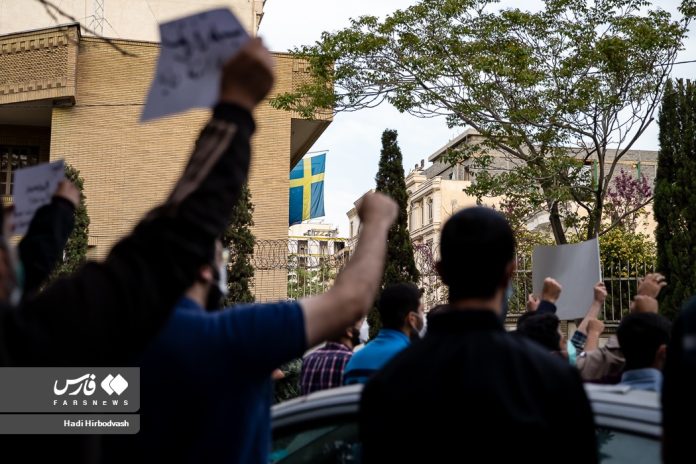
Sweden, Finland to attend upcoming NATO summit in Madrid: Spanish PM
Sweden and Finland will attend the NATO summit in Madrid next month, Spanish Prime Minister Pedro Sanchez has told the WEF’s Davos gathering.
US ‘confident’ Finland, Sweden will resolve Turkey’s NATO concerns
The United States is confident that Finland and Sweden will be able to resolve Turkish concerns over the Nordic countries’ NATO membership bids, deputy US defence secretary Kathleen Hicks stated.
“[We are] confident that Finland and Sweden will be able to resolve those [concerns] with the Turks directly,” Hicks noted while speaking alongside her Norwegian counterpart in Oslo.
Russia not ‘chasing deadlines’ in Ukraine: Official
The secretary of Russia’s Security Council announced the country will achieve its objectives in Ukraine and is not “chasing deadlines” there.
“All the goals set by the president will be fulfilled. It cannot be otherwise, because truth, including historical truth, is on our side,” Nikolai Patrushev told Russian newspaper Argumenty i Fakty.
He also alleged Ukraine was being used by the West to contain Russia, echoing charges laid out by President Vladimir Putin.
“The ideal scenario for the whole of NATO, led by the United States, seems to be an endless simmering conflict,” Patrushev continued.
Finland and Sweden will be admitted to NATO despite opposition from Turkey and Croatia, “because Washington decided so,” Patrushev said.
“Finland and Sweden were convinced to join NATO allegedly for the sake of their security. Turkey and Croatia objected to the plan though, yet Helsinki and Stockholm will be admitted to the bloc anyway, because Washington and Brussels that’s been under its sway decided so,” Patrushev stated, adding, “The will of other nations is of no interest to the United States, and most residents of those countries do not realize what a risky scheme they are getting ensnared into.”
NATO is “not a defensive alliance, but a clearly aggressive, offensive military bloc,” whereupon entry to the club means the automatic transfer of part of a country’s sovereignty to Washington,” Patrushev pointed out.
“Russia will consider any expansion of the bloc’s military infrastructure to Finland and Sweden to be a direct threat to its own security and will have to respond,” he warned.
EU chief: Putin must suffer a ‘strategic failure’ in Ukraine
European Commission President Ursula von der Leyen stated Ukraine must win the war it is fighting against Russia, making President Vladimir Putin’s decision to invade a “strategic failure”.
Moscow is “treating millions of people not as human beings but as faceless populations to be moved or controlled or set as a buffer between military forces, trying to trample the aspirations of an entire nation with tanks,” von der Leyen told the WEF conference in Davos.
“Ukraine must win this war, and Putin’s aggression must be a strategic failure,” she added.
Finland and Sweden to send delegations to Ankara: Finnish FM
Finland and Sweden will send delegations to Ankara on Wednesday to try to resolve Turkish opposition to their applications for membership of the NATO military alliance, Finland’s foreign minister says.
“We are sending our delegations to visit Ankara, actually both Sweden and Finland. This will happen tomorrow so the dialogue is continuing,” Pekka Haavisto said during a panel discussion at the annual meeting of the World Economic Forum (WEF) in Davos.
EU keeps buying Russian oil to deny Putin a bigger war chest: Von der Leyen
The president of the European Commission said EU nations continue to buy Russian oil despite pledging to fully cut energy dependence on Russia to prevent it from selling crude elsewhere at a steeper price.
The explanation came after MSNBC host Mika Brzezinski pressured Ursula von der Leyen on why the EU didn’t impose a full embargo, during an interview on Monday.
Von der Leyen assured Brzezinski that the long-term goal of the bloc was to stop buying Russian fossil fuels and replace them with alternatives like renewables or US-supplied liquified natural gas. She noted Russian President Vladimir Putin had made a blunder when he ordered an attack against Ukraine, since he “lost his best client, Europe.”
“We will never come back,” she added.
The TV host wondered if a full embargo on oil trade with Russia would be “the most effective way to impose upon [Putin] that he has committed a strategic failure”. Von der Leyen said the EU had to find “the right balance” between hurting Putin with sanctions and not hurting itself too much in the process.
“If we immediately cut – as if today – off the oil, he might be able to take the oil that he does not sell to the European Union to the world market, where the prices will increase, and sell it for more, and fill his war chest,” von der Leyen explained.
She acknowledged that “the rest of the world” had to join the US and its allies in shunning Russia for the same scenario not to work in the future. So far, a large portion of the global economy, including big energy consumers like China and India, refused to support anti-Russian sanctions.
The MSNBC host suggested the EU should be thinking now about applying the same decoupling strategy to China, suggesting Beijing may “weaponize” trade with the EU.
Von der Leyen added EU-Russia energy ties were “unique” and statde “others were watching very closely whether we will win” the economic fight against Russia.
“So is the China issue a little bit down the road, but more clear now?” Brzezinski pressed on, adding, “What can and should the US and the EU be doing together to more effectively manage China’s expansionist goals both economically and militarily?”
Von der Leyen would not commit to becoming more confrontational with China than the EU already is, saying Europe will oppose Beijing on human rights, cooperate on climate change and compete economically.
Ukraine needs more weapons for ‘ruthless’ Donbas battle: FM
Ukraine’s foreign minister has said that the country still doesn’t have all the weapons it needs and that “the Russian offensive in the Donbas is a ruthless battle.”
“I urge partners to speed up the supply of weapons and ammunition, especially MLRS, long-range artillery, APCs [armoured personnel carriers],” Dmytro Kulebo wrote on Twitter.
Quad countries, including India, shared Ukraine concerns: Japan’s PM
Leaders of the Quad grouping of countries, including India’s Modi, shared concerns over the situation in Ukraine at their meeting in Tokyo, the Japanese prime minister has stated.
‘Strong views’ on Russia at Quad: Australia’s PM
Australia’s Prime Minister Antony Albanese has said that “strong views” were expressed on Russia in the Quad leaders meeting.
Speaking to reporters after the meeting, Albanese stated Russia’s “unilateral” attack on the people of Ukraine was an outrage.
“Strong views were expressed in the meeting,” he added.
Russia may face further logistical difficulties in battle for Severodonetsk: UK
While the capture of Severdonetsk in the Luhansk region may be Russia’s main effort at the moment, it is only one part of its campaign to seize the Donbas, the UK’s defence ministry has announced.
In its latest intelligence briefing, the ministry said that Russia has intensified efforts to encircle Severodonetsk, Lyschansk and Rubizhne, adding that the “northern and southern axes of this operation are separated by approximately 25 km of Ukrainian-held territory.”
“If the Donbas front line moves further west, this will extend Russian lines of communication and likely see its forces face further logistic resupply difficulties,” the ministry added.
Nationalist Russian groups call for mobilisation: Think-Tank
Russian nationalist figures are increasingly criticising the failures of Moscow’s “special military operation” in Ukraine and calling for further mobilisation, the Institute for the Study of War has said.
The institute announced that the All-Russian Officers Assembly, an independent pro-Russian veterans’ association that seeks to reform Russian military strategy, called for Vladimir Putin to declare war on Ukraine and introduce partial mobilisation in Russia on May 19.
The assembly added that Russia’s operation had failed to achieve its goals in three months. It also appealed on Putin “to recognise that Russian forces are no longer only ‘denazifying’ Ukraine but are fighting a war for Russia’s historic territories and existence in the world order,” the institute said.
The institute added that while these calls could help set conditions for partial mobilisation, the Kremlin had so far declined to take this step “likely due to concerns over domestic backlash and flaws in Russia’s mobilisation systems.”
Ukraine crisis is a ‘global issue’: Biden
President Joe Biden has stated that the crisis in Ukraine is a global issue which heightens the importance of maintaining international order, territorial integrity and sovereignty.
Biden’s comments delivered at the opening of the “Quad” meeting of Indo-Pacific leaders in Tokyo came a day after he broke with convention and volunteered US military support for Taiwan, the self-governed island claimed by China.
“This is more than just a European issue. It’s a global issue,” Biden said of the crisis in Ukraine at the Quad meeting of the United States, Japan, India and Australia.
He stressed Washington would stand with its allies and push for a free and open Indo-Pacific region.
“International law, human rights must always be defended regardless of where they’re violated in the world,” he added.
Ukraine claims it has ‘liberated’ 24 settlements in Kharkiv region
The commander-in-chief of Ukraine’s armed forces has claimed 24 settlements in the Kharkiv region have been “liberated”.
Valerii Zaluzhnyi said the village of Kutuzovka was among them.
“About 170 local residents lived in the basement of the kindergarten for more than two months. Among them, 40 children aged from three months to 12 years. The Ukrainian military, who liberated the village, provided first aid to the locals, shared with them everything they needed – water, food, clothing,” Zaluzhnyi added.
Kyiv ready for prisoner exchange with Moscow: Zelensky
Kyiv is ready for an exchange of prisoners with Russia, President Volodymyr Zelensky has stated as he called on his allies to put pressure on Moscow.
“The exchange of people – this is a humanitarian matter today and a very political decision that depends on the support of many states,” Zelensky said.
He added that Ukraine has involved the United Nations, Switzerland, Israel and “many, many countries”, but the process was very complicated.
“It is important … to pressure politically on any level, through powerful business, through the closure of businesses, oil embargo … and through these threats actively intensify the exchange of our people for Russian servicemen,” he continued.
“We do not need the Russian servicemen, we only need ours,” Zelensky said, adding, “We are ready for an exchange even tomorrow.”
Zelensky has also said that if Ukraine had all the weapons it needed, many people would not have died.
“Every time we tell our partners that we need modern anti-missile weapons, modern combat aircraft, we are not just making a formal request. We say that our request is the real lives of many people who would not have died if we had received all the weapons we are asking for,” he added
“All our partners agree that Ukraine’s struggle in the war against Russia is the protection of the common values of all countries in the free world … And if so, then we have the right to count on full and urgent assistance, especially weapons,” he noted.
Zelensky has said Russia is waging “total war” on Ukraine that includes inflicting as many casualties and as much infrastructure destruction as possible.
Zelensky made the comments in his nightly address on the eve of the three-month anniversary of the Russian invasion. He noted that since February 24, the Russian army has launched 1,474 missile attacks on Ukraine, using 2,275 different missiles. He said the vast majority hit civilian targets.
“Indeed, there has not been such a war on the European continent for 77 years,” he added.
“The occupiers want to take away from us not just something, but everything we have. Including the right to life for Ukrainians,” he stated.
Moscow not sure it needs resumed ties with West: Lavrov
Russian Foreign Minister Sergey Lavrov has said Moscow will consider offers of re-establishing ties with the West and think whether that is needed, but will focus on developing ties with China.
“If they (the West) want to offer something in terms of resuming relations, then we will seriously consider whether we will need it or not,” Lavrov stated in a speech, according to a transcript on the foreign ministry’s website.
“Now that the West has taken a ‘dictator’s position’, our economic ties with China will grow even faster,” he added.
Kherson’s schools and universities will be run in Russian: Moscow-backed official
Russian will become the state language of Kherson, alongside Ukrainian, the Moscow-backed self-proclaimed leader of the regional military administration has said, the Russian state-owned RIA news agency reports.
Kirill Stremousov stated schools and universities will be run in Russian but Ukrainian classes could also be formed at the request of parents.
“We will not infringe on anyone’s rights. Plus, we have a large community of Crimean Tatars living in our region. The expediency of giving the status of the state language to the Crimean Tatar language, as is done in Crimea, we will discuss in detail at a meeting with the community,” he added.
Ukraine says 580 foreign companies still doing business in Russia
Ukraine’s foreign minister has said that 580 foreign companies remain in Russia, continuing to do business “as usual”.
“That is, they pretend that nothing happened,” Dmytro Kuleba stated on Instagram on Monday.
He added Ukraine’s foreign affairs ministry sent a request to eight of the largest international corporations to stop working in Russia but had not received a response.
“We cannot order them to come out. But we need to work from different angles,” Kuleba continued.
Russian-backed officials plan to install military base in Kherson
Kherson’s Moscow-backed, self-proclaimed authorities plan to install a Russian military base in the region to “guarantee security”, RIA has reported.
“The Russian army has become the guarantor of peace and security in our region,” noted Kirill Stremousov.
Russia claims that Ukrainian troops are shelling the region from the direction of the port city of Mykolaiv and that Ukraine’s government has stopped paying pensions to Kherson’s residents.
Russian occupants have previously announced they plan to incorporate the region into Russia.
Putin trying to ‘erase Ukrainian identity’: Blinken
“Part of Vladimir Putin’s war is an attempt to erase Ukrainian identity,” the US Secretary of State has stated.
Antony Blinken told the Ukrainian Institute for America that Ukraine’s identity is “powerfully manifested through its culture”.
“And the vibrancy of that culture, the strength of that identity, makes it crystal clear that there again, President Putin’s war will not succeed,” he said in a video posted on Twitter.
US weighing how to wean India off Russian supplies
A key question for US President Joe Biden going into the Quad meetings this week is how to wean India off Russian-supplied military equipment and whether to provide defence aid and other support to India to accelerate that transition.
“The president is very aware that countries have their own histories, they have their own interests, they have their own outlooks, and the idea is to build on commonalities,” said a US official who briefed reporters and declined to be named, the Reuters news agency reports.
India frustrated the US with what Washington regarded as a lack of support for sanctions and condemnation of Russia’s invasion of Ukraine. India abstained in US Security Council votes on the issue, though it did raise concerns about some killings of civilians in Ukraine.
India has a longstanding relationship with Moscow, which remains a major supplier of its defence equipment and oil supplies.
German economy minister expects EU embargo on Russian oil ‘within days’
The EU will likely agree an embargo on Russian oil imports “within days”, German Economy Minister Robert Habeck has told broadcaster ZDF.
Habeck warned, however, that an embargo would not automatically weaken the Kremlin as rising prices were enabling it to rake in more income while selling lower volumes of oil.
Therefore, one consideration was to no longer pay “any price” for oil, but to agree on upper limits, he added. For that to work, however, many countries would have to get on board.
Zelensky would meet Putin on end to war
Ukraine President Volodymyr Zelensky has said that President Vladimir Putin was the only Russian official he was willing to meet with a single issue on the agenda – to stop the war.
Zelensky stated that arranging any sort of talks with Russia was becoming more difficult in the light of what he noted was evidence Russian actions against civilians under occupation.
He also added that any notion of recovering by force the Crimea peninsula, annexed by Russia in 2014 would cause hundreds of thousands of casualties.
Some 20 countries commit new security aid for Ukraine: Pentagon chief
US Defense Secretary Lloyd Austin has said that some 20 countries had announced new security assistance packages for Ukraine during a virtual meeting with allies aimed at coordinating arms for Kyiv.
Those who announced new packages included Italy, Denmark, Greece, Norway and Poland, Austin told reporters. Denmark would provide a harpoon launcher and missiles to defend Ukraine’s coast, he said.
“Today was a very successful meeting,” Austin stated, adding, “Many countries are donating critically needed artillery ammunition, coastal defence systems and tanks and other armoured vehicles.”