Saturday, December 27, 2025
Home Blog Page 191

US sanctions more ICC judges over cases against Israel

The International Criminal Court (ICC)

“The Court is a national security threat that has been an instrument for lawfare against the United States and our close ally Israel,” Secretary of State Marco Rubio said in a statement, using a term popular with President Donald Trump’s supporters.

Rubio said that the four people targeted from the tribunal based in The Hague had sought to investigate or prosecute nationals from the United States or Israel “without the consent of either nation.”

The four include Judge Nicolas Guillou of France, who is presiding over a case in which an arrest warrant was issued for Israeli Prime Minister Benjamin Netanyahu.

The case was brought forward by the State of Palestine, which is not recognized by Washington but, unlike Israel or the United States, has acceded to the statute that set up the tribunal in The Hague.

Guillou, a veteran jurist, had worked for several years in the United States assisting the Justice Department with judicial cooperation during Barack Obama’s presidency.

Also targeted in the latest US sanctions was a Canadian judge, Kimberly Prost, who was involved in a case that authorized an investigation into alleged crimes committed during the war in Afghanistan, including by US forces.

Under the sanctions, the United States will bar entry of the ICC judges to the United States and block any property they have in the world’s largest economy — measures more often taken against US adversaries than individuals from close allies.

Rubio also slapped sanctions on two deputy prosecutors — Nazhat Shameem Khan of Fiji and Mame Mandiaye Niang of Senegal.

The State Department said the two were punished by the United States for supporting “illegitimate ICC actions against Israel,” including by supporting the arrest warrants against Netanyahu and former defense minister Yoav Gallant.

The Trump administration has roundly rejected the authority of the court, which is backed by almost all European democracies and was set up as a court of last resort when national systems do not allow for justice.

Trump on Friday welcomed Russian President Vladimir Putin to Alaska even though Putin faces an ICC arrest warrant, a factor that has stopped him from traveling more widely since he ordered the invasion of Ukraine.

Rubio slapped sanctions on four other ICC judges in June.

The International Criminal Court on Wednesday denounced new US sanctions against two more of its judges and two prosecutors, calling them a “flagrant attack” on its independence.

“These sanctions are a flagrant attack against the independence of an impartial judicial institution,” the court said in a statement.

The ICC noted it stood “firmly behind its personnel and victims of unimaginable atrocities”.

It added it would “continue fulfilling its mandates, undeterred” and “without regard to any restriction, pressure or threat”.

Iran launches major missile drill Eghtedar 1404

Iranian Navy

The two-day exercise aims to enhance combat readiness, test advanced weaponry, and demonstrate Iran’s defensive and deterrent capabilities.

According to senior commanders, the exercise features simultaneous launches of long-range cruise missiles from both naval vessels and coastal batteries, as well as the operational deployment of the domestically developed Bavar-5 drone.

The unmanned system, introduced two years ago in Tehran and showcased at Russia’s Army-2024 exhibition, is designed for precision strikes.

Various naval units, including surface and subsurface vessels, electronic warfare divisions, and special diving teams, are also taking part in coordinated operations.

Among the missiles to be tested is the Qader, known for its low-altitude sea-skimming capabilities and versatility for ship- or air-based launches, enhancing radar evasion.

Military analysts say the drill underscores Iran’s progress in indigenous missile and drone technologies, achieved despite years of international sanctions.

The drill comes two months after Israel launched an invasion against Iran, which faced retaliatory missile and drone strikes by Iranian forces.

Poll finds most Americans oppose Russia seizing Ukrainian land

Russia Ukraine War

When asked in The Economist/YouGov poll about “how much of Ukraine’s territory” they want Russia to have at the end of the war, 68 percent of respondents said “none of it.”

Twenty-one percent of survey participants said they were “not sure” how much territory Russia should get, 5 percent said they wanted Russia to have “some of” Ukraine’s territory, 2 percent said they wanted Russia to get “half of” Ukrainian territory and 1 percent said they wanted Russia to have “most of it.”

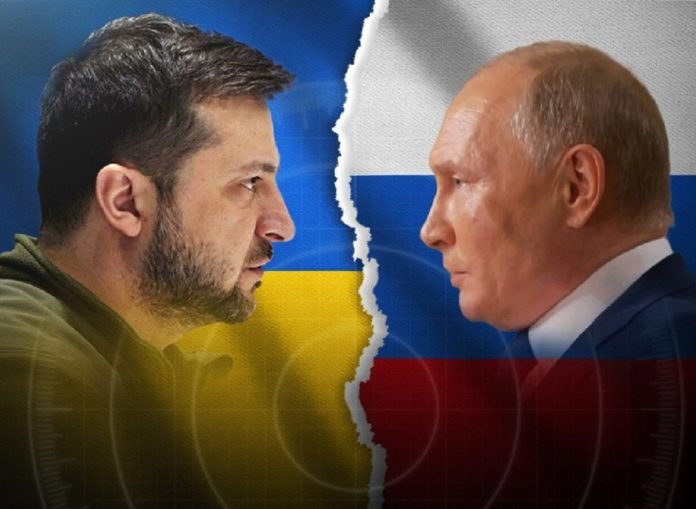
President Trump separately met with Ukrainian President Volodymyr Zelensky and Russian President Vladimir Putin on U.S. soil within the past week. Putin reportedly wants most of the eastern Donbas region as part of a deal, while Ukraine has rejected ceding territory.

Trump is now pushing for Zelensky and Putin to meet face-to-face, as they remain far apart on the terms for peace. Ukraine has demanded a ceasefire before any formal negotiations, a request that Trump previously backed but dropped after meeting Putin in Alaska last week.

Russia has sent signals this week that it’s in no hurry to have Putin meet with Zelensky.

Moscow also announced Wednesday that talks between NATO allies and Ukraine about postwar security guarantees were a “road to nowhere” unless Moscow takes part in the discussions.

The Economist/YouGov poll took place from Aug. 15 to 18, with 1,568 respondents and and a margin of error of 3.5 percentage points.

Most Americans believe countries should recognize Palestinian state: Poll

Some 33% of respondents did not agree that U.N. members should recognize a Palestinian state and 9% did not answer.
The six-day poll, which closed on Monday, found a pronounced partisan divide on the issue, with 78% of Democrats supporting the idea, far more than the 41% of President Donald Trump’s Republicans who agreed.
A narrow 53% majority of Republicans did not agree that all U.N. member nations should recognize a Palestinian state.
Israel has long counted on the U.S., its most powerful ally, for billions of dollars a year in military aid and international diplomatic support. An erosion of U.S. public support would be a worrisome sign for Israel as it faces not only Hamas fighters in Gaza but unresolved conflict with Iran, its regional arch-foe.
A widely condemned Israeli settlement plan that would cut across occupied West Bank land which the Palestinians seek for a state received final approval on Wednesday, according to an Israeli government statement.
The poll was taken within weeks of three countries, close U.S. allies Canada, Britain and France, announcing they intend to recognize a Palestinian state. This ratcheted up pressure on Israel as starvation spreads in Gaza.
The survey was taken amid hopes that Israel and Hamas would agree on a ceasefire to provide a break in the fighting, free some hostages and ease shipments of humanitarian assistance into the Gaza Strip.
Britain, Canada, Australia and several of their European allies said last week that the humanitarian crisis in the war-torn Palestinian enclave has reached “unimaginable levels,” as aid groups warned that Gazans are on the verge of famine.
The United Nations human rights office announced on Tuesday Israel was not letting enough supplies into the Gaza Strip to avert widespread starvation.
Some 65% of the Reuters/Ipsos poll respondents said the U.S. should take action in Gaza to help people facing starvation, with 28% disagreeing. The number disagreeing included 41% of Republicans.
Trump and many of his fellow Republicans take an “America First” approach to international relations, backing steep cuts to the country’s international food and medical assistance programs in the belief that U.S. funds should assist Americans, not those outside its borders.
The war in Gaza began when Hamas-led fighters stormed into Israel on October 7, 2023, killing 1,200 people and taking 251 hostages, according to Israeli figures. Israel’s offensive has since killed more than 62,000 Palestinians, plunged Gaza into humanitarian crisis and displaced most of its population, according to Gaza health authorities.
The Reuters/Ipsos poll also showed that 59% of Americans believe Israel’s military response in Gaza has been excessive. Thirty-three percent of respondents disagreed.
In a similar Reuters/Ipsos poll conducted in February 2024, 53% of respondents agreed that Israel’s response had been excessive, and 42% disagreed.
Officials at the Israeli embassy in Washington and mission to the United Nations did not immediately respond to requests for comment on the poll.
The latest Reuters/Ipsos survey, conducted online, gathered responses from 4,446 U.S. adults nationwide and had a margin of error of about 2 percentage points.

China reiterates opposition to Snapback trigger against Iran

Water facility at Arak

The move would automatically reimpose sanctions against Iran under UN Security Council Resolution 2231.

In an explanatory note circulated at the UN Security Council, China stressed that the current difficulties in implementing the 2015 Iran nuclear, JCPOA, and Resolution 2231 stem not from Iran’s actions, but from the disruption caused by the US and three European countries.

Beijing added that this cannot serve as justification for reinstating previously lifted sanctions.

China warned that attempts to invoke the snapback mechanism could lead to unpredictable and catastrophic consequences, undermining years of diplomatic achievements.

The note underlined that the JCPOA and Resolution 2231 are inseparably linked, and any unilateral effort to trigger snapback outside of the legal framework would constitute an abuse of Security Council powers and would carry no legitimacy.

The Chinese mission further defended Iran’s right as a member of the NPT to peacefully use nuclear energy.

“Retreat of Caspian Sea could lead to desertification of coastal areas”

Caspian Sea

Mojtahedi said water levels along the Caspian coast of Iran have dropped to around 300 meters, warning that a further decline to 500–600 meters could transform coastal areas into arid zones dominated by sand and salt.

Mojtahedi underlined that while the Caspian has historically experienced fluctuations, rising in the 1970s and falling in the 1950s, the current retreat, combined with global warming, poses unprecedented challenges.

He further explained that unlike open seas, where melting polar ice raises water levels, closed basins like the Caspian Sea are more vulnerable to evaporation-induced declines.

The drop in water levels also threatens critical wetlands, including Anzali and Miankaleh, and contributes to wind erosion along the Iranian coast.

He urged the planting of native salt-tolerant species to stabilize soils and called for continuous monitoring of the Caspian Sea’s water levels by scientific institutions.

Reduced snowfall and rainfall in the basin, partly due to warming winters, are further stressing river inflows, intensifying the risk of desertification along the southern coast. A study conducted by the Caspian Sea Studies and Research Center also shows the declining trend in Caspian Sea water levels began in 1996.

Factors such as water management practices, high evaporation rates, and climate change are potential contributors to decreased water flow into the Caspian Sea.

Iran, Belarus sign 12 collaboration documents

Iranian President Masoud Pezeshkian and his Belarusian counterpart, Alexander Lukashenko, signed the joint statement in Minsk on Wednesday.

The documents cover a wide range of sectors, including political relations, international law, tourism, arts, media, health, pharmaceuticals, industrial cooperation, environmental protection, free zones, special economic zones, and investment.

The joint statement and cooperation documents mark a significant step in strengthening bilateral ties between Iran and Belarus.

This collaborative effort reflects the commitment of both nations to enhance cooperation across multiple fields and further solidify their partnership on the international stage.

Israeli military to call up 60,000 reservist soldiers for Gaza occupation plan: Report

Israeli Army

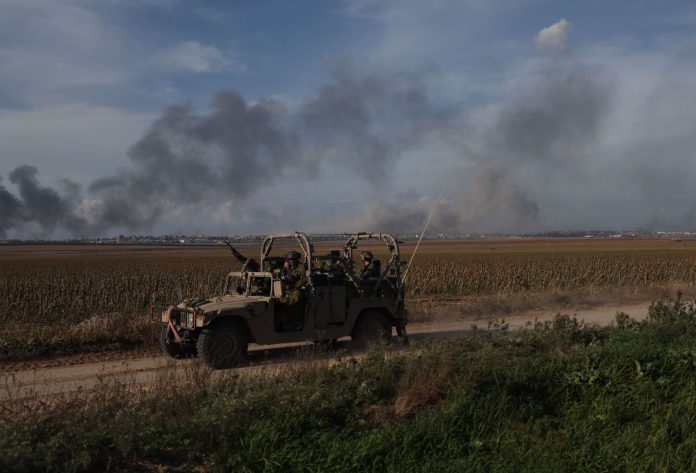
The army’s decision came after Defense Minister Israel Katz approved a plan to occupy Gaza City, Israeli public broadcaster KAN reported Wednesday.

The broadcaster added that the regular troops operating in the Gaza Strip will also be extended.

According to Israeli army radio, the number of reservists within the army will rise to 130,000 in total in preparation for “a prolonged operation that will last several months” until mid-2026.

Channel 12 reported earlier on Tuesday that emergency draft orders, known as Order 8, have already been issued by the army.

The mobilization of the soldiers will begin on Sept. 2, with the occupation plan to be discussed in the Cabinet in the coming days, Yedioth Ahronoth daily said.

On Aug. 8, Israel’s Cabinet approved a plan by Prime Minister Benjamin Netanyahu to gradually reoccupy the Gaza Strip, beginning with Gaza City.

The plan has been met with an international chorus of criticism and condemnation.

Iran’s Navy to launch large-scale missile drill in Indian Ocean

Iran Navy

Rear Admiral Abbas Hassani, spokesperson for the drill, said the operational phase of the exercise will start with the code phrase “Oh Muhammad, Messenger of God” and last two days. It will take place across the northern Indian Ocean and the Sea of Oman.

According to the announcement, surface and subsurface vessels, naval aviation units, coastal and sea-based missile sites, and electronic warfare divisions will participate. The exercise will also feature drone operations and missile launches in line with updated procedures and lessons learned from past maneuvers.

Hassani confirmed that a wide range of precision-guided cruise missiles with short, medium, and long ranges will be tested to strike and destroy surface targets.

He added that the exercise aims to strengthen combat readiness, enhance planning and command capabilities, and demonstrate deterrence. “This drill also seeks to inspire confidence among the Iranian people while relying entirely on domestic expertise,” the spokesman said.

The Navy has staged regular war games in recent years, highlighting its emphasis on expanding missile and drone capabilities.

Iran minister: Oil exports planned according to market conditions

Iran Oil Tanker

“We do not have a single barrel of oil that we cannot sell,” Paknejad said, stressing that all exports are planned according to market conditions.

He also highlighted the inauguration of a $1.6 billion gas recovery project in western province of Ilam, expected to generate $700 million annually by capturing 240 million cubic feet of flare gas.

Paknejad also said the recent decision to allow imports of super gasoline will not affect existing fuel quotas or prices for ordinary consumers.

Speaking on the sidelines of a cabinet meeting on Wednesday, Paknejad clarified that fuel subsidies remain unchanged.

He explained that the private sector, not the government, has been authorized to import super gasoline, referred to as “special gasoline” in cabinet documents, and offer it as a premium service to consumers willing to pay higher costs.