Sunday, December 28, 2025
Home Blog Page 1861

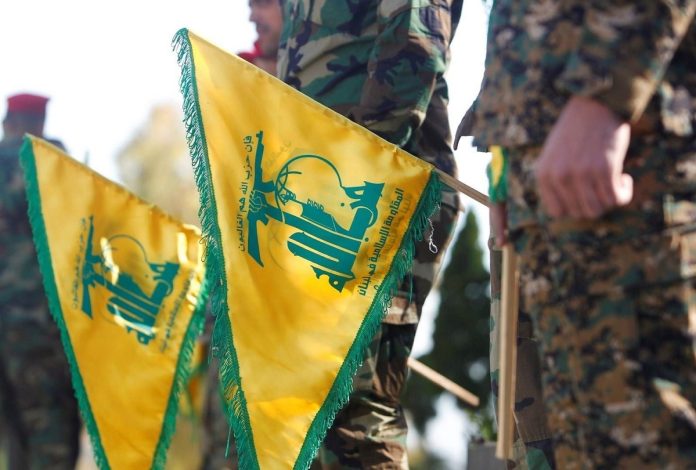
Hezbollah says launched drones towards disputed field with Israel

Hezbollah

“On Saturday afternoon, 7/2/2020, three unarmed drones of different sizes were launched towards the disputed area at the Karish field to carry out reconnaissance missions,” Hezbollah said in a statement on Saturday.

“The mission has been accomplished, and the message delivered,” the resistance movement added.

This came after earlier on Saturday, the Israeli military alleged that its air defense forces had intercepted “three hostile UAVs (unmanned aerial vehicles), which approached the airspace over,” what it described as, “Israel’s economic waters.”

An Israeli “security source” also claimed that the regime had shot down three unarmed “hostile drones,” which had been flying from the direction of Lebanon towards gas rigs in the disputed field.

Hezbollah had warned in early June that the movement is “ready” to take action if the Lebanese government confirms that Israel is violating the maritime rights of the country, after a gas drilling ship arrived in disputed Mediterranean waters to conduct hydrocarbon exploration for Israel.

Hezbollah Deputy Secretary General Sheikh Naim Qassem told Reuters at that time that Hezbollah is ready to take action, “including by force,” against Israeli gas operations in the disputed waters once Beirut adopts a clearer policy.

“When the Lebanese state says that the Israelis are attacking our waters and our oil, then we are ready to do our part in terms of pressure, deterrence and the use of appropriate means – including force,” Qassem stated.

The Tel Aviv regime and the international hydrocarbon exploration and production company that operated the vessel equally claimed the field in question falls within Israel’s so-called exclusive economic zone. Beirut rejects the claim.

“The issue requires a decisive decision by the Lebanese state,” the Hezbollah deputy secretary-general said, adding that the resistance movement has “urged the government to hurry, to set a deadline.”

Qassem also noted that Hezbollah would act on this issue “regardless of the responses,” that it may elicit from Israel, even if it led to a wider conflict.

Lebanon’s President Michel Aoun also condemned the move by Israel, warning that any activity in the disputed waters would amount to an act of aggression and a provocation.

Hezbollah’s Secretary-General Sayyed Hassan Nasrallah had, in the past, asserted clearly that all options were on the table to protect Lebanon’s soil and resources from Israeli infringement.

“The resistance cannot stay silent in the face of plunder of Lebanon’s resources. The resistance’s essential duty is to protect Lebanon’s land, waters, oil, gas and dignity,” Nasrallah said during an address last month.

Lebanon and the Israeli regime are technically at war due to the latter’s 1967-present occupation of the country’s Shebaa Farms.

The occupying regime launched two wars against Lebanon in the 2000s. In both cases, it was forced to retreat after suffering a humiliating defeat at the hands of Hezbollah.

Kayhan: Pro-West camp in Iran spares US, blames own negotiators for JCPOA deadlock

Nuclear Talks Vienna

In an article, the paper said the Iranian negotiating team’s insistence on the main conditions set by Tehran for a restoration of the 2015 deal made it clear to the US that the current Iranian administration was not tying the country’s issues to the fate of the troubled agreement.

The outcome of the indirect talks between Iran and the US proved to the public that the US was not ready to provide guarantees and could easily withdraw from the nuclear agreement again without paying any price, the principlist daily said.

It added that while the US keeps throwing a wrench in the diplomatic process, “some lackeys of the West at home are trying to make the public opinion imagine that Iran’s negotiating team is a rookie and should back down on its demands in order to [enable] a resolution of the country’s economic problems.”

While it was the US that abandoned the deal and is not willing to return to it, “those claiming to be seeking reforms [in Iran]…have spared the US, the main party responsible for the current situation of the Joint Comprehensive Plan of Action (JCPOA), and are directing their attacks on the country’s negotiation team,” the daily wrote.

Iranian health official warns of new Omicron surge possibility

COVID in Iran

The committee’s secretary for epidemiology and research says the number of referrals to hospitals for Covid infection has tripled over the past days and there is a high possibility that coronavirus cases begin a rising trend in the coming weeks.

Masoud Younesian says the more prevalent cases are now Omicron’s 4BA and 5BA sub-variants that are more resistant to vaccines.

He added that Iran is also facing the threat of rising Covid cases in the neighboring countries including Kuwait, Saudi Arabia, Emirates, Iraq, Bahrain and Turkey, that have seen surges in new covid cases over the past weeks.

“In other locations in the world, where things were similar to ours, they saw peaks with a fifth or a sixth of their highest Omicron peaks. This means if we reach a daily peak of 20,000 Omicron infections, it will not be difficult to imagine new four-digit infection figures and two-digit death figures,” he said.

Younesian added that face masks should be used in closed spaces with little ventilation and people who have not received vaccines should be banned from public spaces.

“Based on official national figures, some 20 to 25 percent of eligible people have not received coronavirus vaccines and 30 to 35 percent has received just one dose,” he said.

The Iranian health ministry logged no deaths from Covid-19 on Saturday over the past 24 hours.

The daily caseload as per the ministry‘s figures was 251 including 65 hospitalizations.

Iran movie Leila’s Brothers wins Honorable Mention in Munich Film Festival

Leila's Brothers

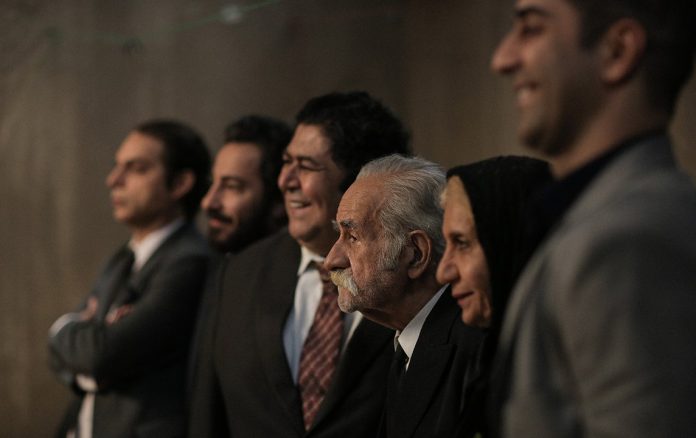
The festival’s jury commended Saeed Roustayi’s latest feature film as a “family portrait which is at the same time tragic and comic”.

“[This is] a work on the heavy burden of tradition and inescapable family ties. Roustayi beautifully portrays moments that bring us together when it seems that everything seeks to break us apart,” the jury said in their opinion on the movie.

“This film artistically demonstrates how a family can be both a blessing and a curse. In this work we are witnessing a constant shuttling between conceit and self-sacrifice. Part of the movie is a social critique while another part is a finely-crafted drama and a comedy on the human vice, in which we wonderfully found ourselves moving from laughter to crying.”

Roustayi’s Leila’s Brothers, which is banned in Iran for his failure to get a permit before screening the film in the international festivals, was also nominated for Cannes festival’s most prestigious award – Palme d’Or.

The director has already won the Fipresci prize of the International Federation of Film Critics for Leila’s Brothers.

Analyst: Bagheri Russia visit ‘didn’t look good’

Ali Bagheri

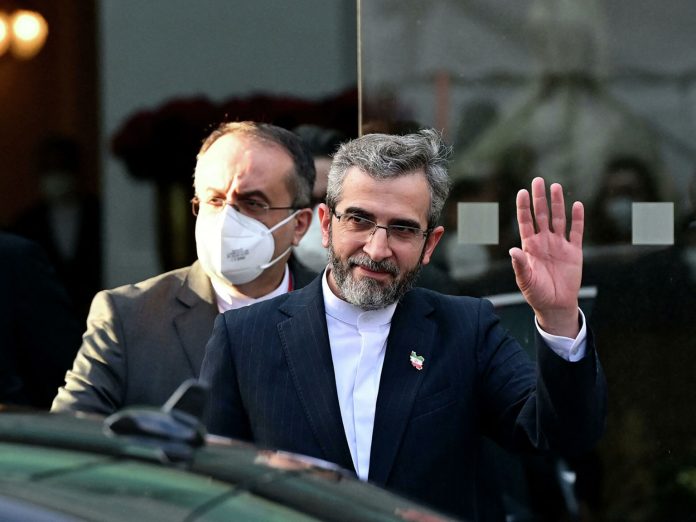
Ali Bigdeli made the comment in an interview with ILNA news agency in reaction to the official announcement of the visit by the twitter account of Russia’s permanent representative to the international organizations in Vienna.

“The visit did not look good at all and indicated that we planned the visit to ask Russia what to do next and implied Tehran’s dependence on Moscow,” he said.

“Definitely, this visit was in line with Russia’s interests because it was pretended that we should provide a briefing to the Russian side on the Doha negotiations so that they decide which path Iran should take.”

Bigdeli added that Russians, through publication of the report on Bagheri’s visit, put on a show of power against the US and the west to pretend that Tehran will take no decision before consulting them and that Moscow continues to weigh in on the issue of the nuclear deal.

The analyst also added that Tehran seems to have demanded that no more talks be held in Vienna.

“Russia wants to show that it has formed a triangle of power among Russia, China and Iran in the east and that Iran is also happy with presence in the triangle,” he said.

“But we should know that such a visit and the publication of its report is not in the interest of Iran and puts a question mark next to the independence of our foreign policy apparatus.”

Military chief: Lasting security in region fruit of efforts by Iran forces

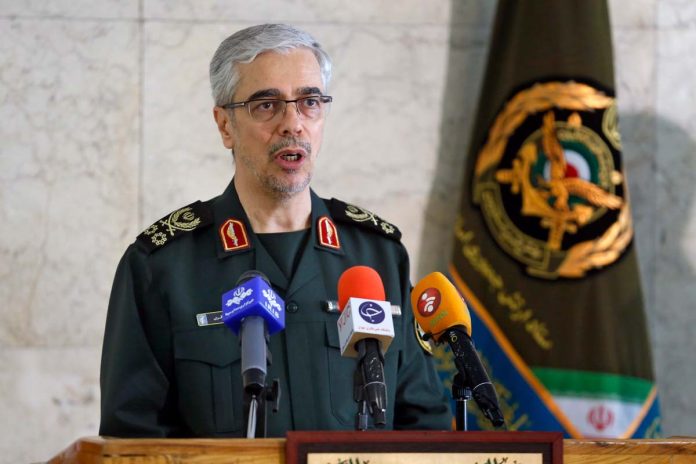
Major General Mohammad Bagheri

Chief of General Staff of the Armed Forces of Iran Major General Mohammad Bagheri made the comments on Sunday during an inspection of the military staff based in Iran’s western province of Korestan, which borders Iraq.

“There is lasting security in the region, and that is the fruit of efforts exerted by the Armed Forces, the Border Guard Force, the Law Enforcement Force, and the Islamic Revolution Guards Corps (IRGC),” the top general told reporters.

Commenting on the security situation in Kordestan Province, Major General Bagheri said the province’s border with Iraq has excellent security despite some “sporadic acts of mischief” there.

The province has, on many occasions, been the scene of clashes between Iranian security forces and terrorist elements, who infiltrate into the country through the borders of Iraq’s semi-autonomous Kurdistan region.

Iran’s Armed forces have disbanded several terror groups, which planned to carry out acts of violence in the country, in Iraqi Kurdistan region.

Closer Iran-Egypt ties to trigger fresh developments in region: Expert

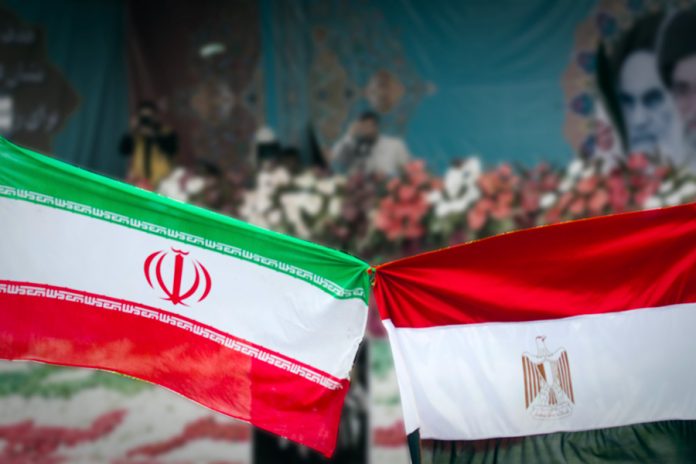
Iran Egypt Flags

“Iran-Egypt relations will naturally move toward a profitable future only when the people of both countries are able to interact with one another and when travelling between the two countries are facilitated for people,” said Ja’far Qannadbashi in an interview with ISNA.

He also weighed in on reports suggesting that intelligence talks hosted by Baghdad have been held between Iran and Egypt, and that Tehran officials have expressed their willingness to expand relations with Cairo.

“If Egypt can distance itself from the special circumstances imposed by the West and the costs created by the Israeli regime and reactionary Arab states in order to drive a wedge between Iran and Egypt, and if Egypt can make decisions based on its national interests, naturally relations between the two countries can expand,” the commentator added.

He said the history of the region shows that Iran-Egypt relations are without precedent.

“The people of Egypt are strongly against Zionists and also distance themselves from terrorist and extremist groups such as the Wahabbi ones.

The expert underscored that the West and some reactionary Arab countries have misgivings over the amelioration of ties between Iran and Egypt because such improvement of relations will promote unity among Muslims.

‘Iranian oil tanker reaches eastern Syrian port’ as FM visits Damascus

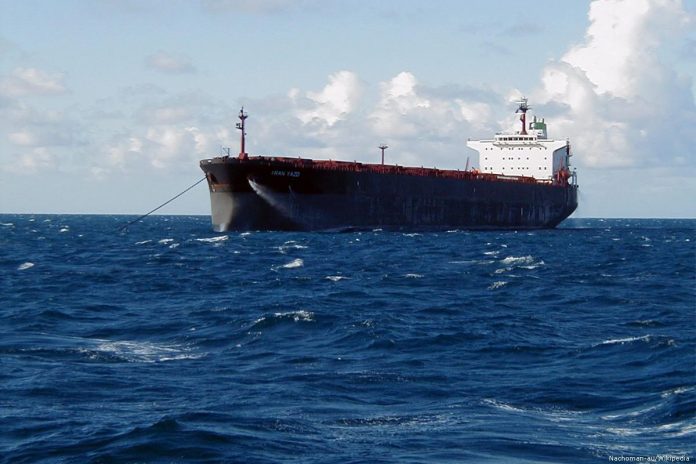
Iran Oil Tanker

Lebanon’s al-Ahd news portal reported on Saturday that the delivery of petrochemicals to Syria’s Baniyas Port was a fruit of the credit line activated between Tehran and Damascus.

Via the credit line, the Syrian government fulfills the needs of its ministries, including production lines, basic items and industrial goods, through Iran, an opportunity that paves the way for the Islamic Republic and its firms to bolster presence in the Syrian market.

This is the third Iranian oil tanker that reaches Syria in the past weeks. The vessel’s arrival coincided with a trip by Foreign Minister Hossein Amirabdollahian of Iran to Damascus.

In Damascus, the chief Iranian diplomat held talks with high-ranking Syrian officials, including President Bashar al-Assad, with the two sides calling for efforts to broaden economic ties, a few years after they joined forces and defeated Takfiri terror groups in the Arab state.

Both nations have been the target of draconian American sanctions, which they believe have been designed to deal a blow to their independence-seeking agendas.

Palestinians to hand bullet that killed Al Jazeera correspondent to US

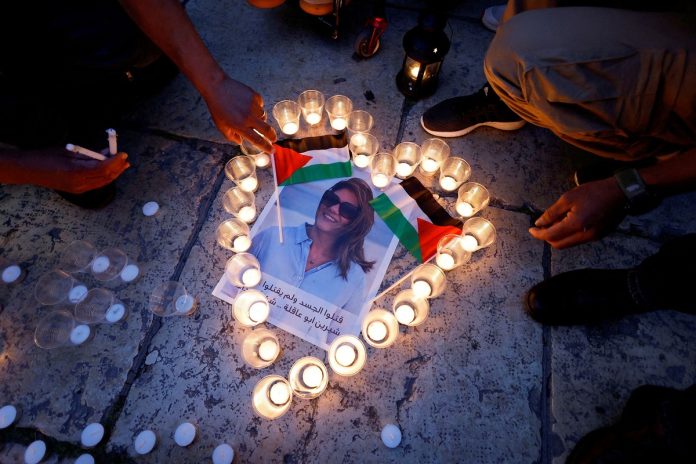
Shireen Abu Akleh

“We agreed to transfer the bullet to the Americans for examination,” Akram al-Khatib, general prosecutor for the Palestinian Authority, told the Reuters news agency on Saturday without providing further details.

Palestinian officials, and many rights groups and media outlets, have reached the conclusion that Abu Akleh was killed by the Israeli military.

The United Nations human rights office last month said that information it had gathered showed that the bullet that killed Abu Akleh on May 11 was fired by Israeli forces.

Several witnesses said Israeli forces killed the Jerusalem-born Abu Akleh.

According to ballistic and forensic experts, the green-tipped bullet was designed to pierce armour and is used in an M4 rifle. The round was extracted from her head.

The bullet was analysed using 3D models and, according to experts, it was 5.56mm calibre – the same used by Israeli forces. The round was designed and manufactured in the United States, experts said.

Israeli officials initially said Palestinian fighters could have killed Abu Akleh.

However, Israel later backtracked and said it could not rule out the possibility that an Israeli soldier had fired the shot. Palestinian leaders have rejected proposals for a joint probe with Israel, saying such a probe would not be transparent.

Al Jazeera Media Network announced on May 26 that it had assigned a legal team to refer the killing to the International Criminal Court (ICC) in The Hague. The case was recently handed over to the ICC prosecutor. However, the current status of the investigation remains unclear.

Lawyers working on a case filed to the ICC about the targeting of Palestinian journalists by Israeli forces have also said they will add Abu Akleh’s killing to the case.

Russia’s “Special Operation” in Ukraine; Day 130: Russia says in full control of Ukraine’s Luhansk Province

Russia Ukraine War

Ukraine says Russian ship carrying Ukrainian grain detained by Turkey

Turkish customs authorities have detained a Russian cargo ship carrying grain which Ukraine says is stolen, Ukraine’s ambassador to Turkey said on Sunday.

Ukraine had previously asked Turkey to detain the Russian-flagged Zhibek Zholy cargo ship, according to an official and documents viewed by Reuters.

Reuters reporters saw the Zhibek Zholy ship anchored about 1 km from shore and outside of the Karasu port on Sunday, with no obvious signs of movement aboard or by other vessels nearby.

“We have full co-operation. The ship is currently standing at the entrance to the port, it has been detained by the customs authorities of Turkey,” Ambassador Vasyl Bodnar stated on Ukrainian national television.

Bodnar added the ship’s fate would be decided by a meeting of investigators on Monday and that Ukraine was hoping for the confiscation of the grain.

Ukraine has accused Russia of stealing grain from the territories that Russian forces have seized since Moscow’s invasion began in late February. The Kremlin has previously denied that Russia has stolen any Ukrainian grain.

A Ukrainian foreign ministry official, citing information from Ukraine’s maritime administration, told Reuters on Friday the 7,146 dwt Zhibek Zholy had loaded the first cargo of some 4,500 tonnes of Ukrainian grain from Berdyansk, a Russian-occupied port in south Ukraine.


Kremlin: West still betting on continuing war, not allowing Kiev to talk about peace

The West is currently betting on continuing the war, Washington does not allow Kiev to think or talk about peace, Russian presidential spokesman Dmitry Peskov stated on Sunday.

“Now is the moment when Western countries are betting on the continuation of the war. This means that the moment continues when Western countries, under the leadership of Washington, do not allow Ukrainians to think or talk about peace,” Peskov said in an interview with Rossiya-1 TV channel.

At the same time, he is convinced that sooner or later common sense in the West will prevail and negotiations on Ukraine will resume.

“Now the demand for initiatives to pacify the situation has declined. But we have no doubt that sooner or later common sense will prevail and once again the turn of negotiations will come,” Peskov added.

He also noted that before the negotiation process resumes, Ukraine will have to “once again understand Moscow’s conditions”. “Agree to them. Sit down at the table. And just formalize the document that has already been agreed in many respects,” Peskov concluded.

European leaders most often lack the strength to be guided only by the interests of their countries, they have to follow the collective West, Russian presidential spokesman continued.

“European leaders, they still have their own countries with their own interests. And they actually can have varying points of view. We see this very well,” Peskov stated, commenting on the differences between countries in the G20.


EU eyes anti-Russia sanctions authority

Lawmakers in the European Union are seeking a new authority to enforce sanctions against Moscow over the conflict in Ukraine, Mairead McGuinness, European Commissioner for Financial Services, told the Financial Times on Sunday.

According to the official, the bloc is considering an EU version of the Office of Foreign Assets Control (OFAC), a financial intelligence agency of the US Treasury Department, which spearheads enforcement of penalties.

“Anything that would help member states implement [sanctions], and where we see European oversight and co-ordination… would be a plus,” McGuinness said, noting, “The idea of having an overarching view of sanctions and their implementation is one I would support.”

She added that as an alternative, Brussels could authorise its planned Anti-Money Laundering Authority (AMLA) to oversee sanctions, by amending legislation currently being thrashed out by the European Parliament and member states.

EU sanctions policy has faced criticism over uneven enforcement, with all measures proposed by the European Commission and approved by EU capitals being implemented by national authorities across the 27-nation bloc.

McGuinness claimed Brussels had made “extraordinary progress” in drafting the sanctions and co-ordinating them with international partners, and that there was “strong implementation across 27 different ways of doing business.”

“In some countries there’s a strong infrastructure on sanctions implementation and others not so,” she stated.

Russia was hit with a wide range of Western sanctions over the conflict in Eastern Ukraine and reunification with Crimea back in 2014. The penalties have been substantially reinforced since February 24, when Moscow started its military offensive, turning the nation into one of the world’s most sanctioned countries, along with Iran, Cuba and North Korea.


Shelling hits Sloviansk, ‘many killed’

The eastern Ukrainian city of Sloviansk is hit by powerful shelling from multiple rocket launchers and many people are killed and wounded, according to the city’s Mayor Vadim Lyakh.

“There are 15 fires. Many killed and wounded,” Lyakh wrote on Telegram, stating it was the most powerful shelling of the city recently.


Russia: UK tries to create conditions for using its fleet in Black Sea

The UK authorities are trying to find pretexts and create conditions to introduce their fleet into the Black Sea and establish control over the grain export from Ukraine, Russian Foreign Minister Sergey Lavrov said on Sanday.

“For example, if you listen to the statement of [UK Prime Minister] Boris Johnson and his Foreign Secretary [Liz Truss] – they are clearly trying to create conditions, to find pretexts for the Royal Navy to infiltrate the Black Sea and manage almost all the processes of liberating grain from the ports that were mined by Ukrainians and which Ukrainians have to clear from mines,” he stated.

Lavrov added that Western countries are trying to use the global food crisis for a variety of purposes, including propaganda.


Australia PM visits Irpin

Australian Prime Minister Anthony Albanese visited Irpin on Sunday saying it was “devastating” to see residential buildings destroyed from the result of shelling. it “a war crime.”

“And here we have what – clearly a residential building. Another one just behind it. Brutally assaulted. You know, this is a war crime, “he added.


Moscow takes full control of Luhansk region: Russian DM

Russian Defense Minister Sergei Shoigu has briefed President Vladimir Putin on the complete liberation of the Luhansk People’s Republic (LPR), which Moscow recognized earlier this year, from Ukrainian forces.

According to the Russian Defense Ministry, the LPR’s liberation was completed with the fall of the city of Lysychansk, as well as several nearby towns, such as Belogorovka, Novodruzhesk, Maloryazantsevo and Belaya Gora, which are now under the control of the Russian and LPR Armed Forces.

The two states’ troops liberated 182 square kilometers of LPR lands from Kiev-controlled forces, the ministry added.


Lysychansk ‘completely’ encircled: Russia-backed separatists

Ukrainian separatists backed by Russia say they had “completely” encircled the key city of Lysychansk in the eastern Luhansk region.

“Today the Luhansk popular militia and Russian forces occupied the last strategic heights, which allows us to confirm that Lysychansk is completely encircled,” Andrei Marotchko, a spokesman for the separatist forces, told the TASS news agency.

The Ukrainian army, however, rejects the claims that Lysychansk has been surrounded, but says heavy fighting was ongoing on its edges.

“Fighting rages around Lysychansk. (But) luckily the city has not been encircled and is under control of the Ukrainian army,” Ruslan Muzytchuk, a spokesman for the Ukrainian National Guard, stated on Ukrainian television.

“The Russians are entrenching themselves in a district of Lysychansk, the city is on fire,” Sergei Gaidai, governor of the Luhansk region, adds on Telegram.

 “They attacked the city with inexplicably brutal tactics,” he says.


Three dead after suspected shelling in Russian city near Ukraine

Three people have been killed, four injured, and several houses damaged in powerful explosion in Belgorod, a Russian city 40km from the border with Ukraine, according to the regional governor.

“We currently have information about three fatalities,” Vyacheslav Gladkov wrote on his Telegram channel on Sunday morning, adding that the city’s air defenses may have been activated overnight.

Russian news outlet Baza later reported that two more bodies were discovered, raising the death toll to five. This has not been confirmed by officials.


Zelensky: 2,610 Ukrainian cities, towns remain under Russian occupation

Ukrainian President Volodymyr Zelensky said more than 2,600 cities and towns remain under Russian occupation as the war carries on.

Zelensky stated Ukrainian forces have liberated more than 1,000 cities and towns, but they still need to free 2,610.

He added most of those locations impacted by the conflict need to be reconstructed, and hundreds of them were “completely destroyed by the Russian army.”


Ukraine adviser concedes Lysychansk could fall

An adviser to President Volodymyr Zelensky has conceded that the city of Lysychansk, Ukraine’s last big bastion in the eastern province of Luhansk, could fall to the Russians.

“This is indeed a threat. We shall see. I do not rule out any one of a number of outcomes here. Things will become much more clear within a day or two,” said Oleksiy Arestovych.

“If Lysychansk is taken, strategically it becomes more difficult for the Russians to continue their offensive. The front lines will be flatter and there will be a frontal attack rather than from the flanks,” he added.

He said the Russians would have to focus on taking six major cities in the industrialised eastern Donbas region and with each their forces would be more and more thinly spread.

“The more Western weapons come to the front, the more the picture changes in favour of Ukraine,” he added.


Explosions reported in the Russian city of Belgorod

A Russian official says blasts in the city of Belgorod, near the border with Ukraine, resulted in a fire in a residential building.

Vyacheslav Gladkov, the governor of Belgorod, stated three wounded people were taken to a hospital.

“Reasons for the incident are being investigated,” he wrote on the Telegram messaging app, adding, “Presumably, the air defence system worked.”


‘Colossal investments’ required to rebuild Ukraine: Zelenskyy

Ukrainian President Volodymyr Zelenskyy has called for international aid to help rebuild his devastated country once the war is over, sounding a rare hopeful note after four months of brutal conflict.

“It is necessary not only to repair everything the occupiers have destroyed, but also to create a new foundation for our lives: safe, modern, comfortable, accessible,” he said in his night time address.

This would require “colossal investments, billions, new technologies, best practices, new institutions and, of course, reforms,” he continued, adding, “No matter how difficult it is for us today, we must remember that there will be a tomorrow.”

On Monday, a meeting of some 40 potential donor countries is due to take place in Lugano, Switzerland, where the Ukrainian government intends to present its priorities for the reconstruction of the war-ravaged country for the first time.

Zelensky also used his video address to remind Ukrainians that the war was far from over.

“Its cruelty is increasing in some places, and it cannot be forgotten,” he noted, appealing to his compatriots to offer assistance to victims of the brutal conflict.


Lukashenko says Ukraine fired missiles on Belarus

Belarusian President Alexander Lukashenko claimed his army had shot down missiles fired into their territory from Ukraine and vowed to respond “instantly” to any enemy strike.

“We are being provoked,” Lukashenko was quoted as saying by state news agency Belta.

“I must tell you that around three days ago, maybe more, they tried to strike military targets in Belarus from Ukraine,” he stated, adding, “Thank God, our Pantsir anti-air systems intercepted all the missiles fired by the Ukrainian forces.”

Ukraine last week announced missiles fired from Belarus had struck a border region inside its territory.

Lukashenko denied his country was seeking to intervene in the conflict between Russia and Ukraine, but issued a warning aimed at Kyiv and its Western allies.

“As I said more than a year ago, we do not intend to fight in Ukraine,” he said.

“We will only fight in one case. If you… enter our land, if you kill our people, then we will respond,” he added, warning that Belarus would reply “instantly” to an enemy strike on its soil.


EU works on emergency plan to help cut imports of Russian energy

The European Union is preparing an emergency plan to help member states cut back on Russian energy.

“We need a good, common plan that the energy flows, or the gas flows, where it is needed most,” European Commission President Ursula von der Leyen stated.

The new measures — due by mid-July — will build on May’s REPowerEU plan to abandon Russian energy sources because of the Russian invasion of Ukraine. That plan allotted nearly $312bn to promote energy efficiency and increased use of renewables.

At the end of May, the EU agreed to halt seaborne imports of Russian oil within months, with some exceptions. The bloc imported 35 percent of its oil from Russia in 2020, and the import ban “will effectively cut around 90 percent of oil imports” from Russia by the end of 2022, according to von der Leyen.