Tuesday, December 30, 2025
Home Blog Page 1855

Iranian FM: We will not retreat an iota from Iran’s rights

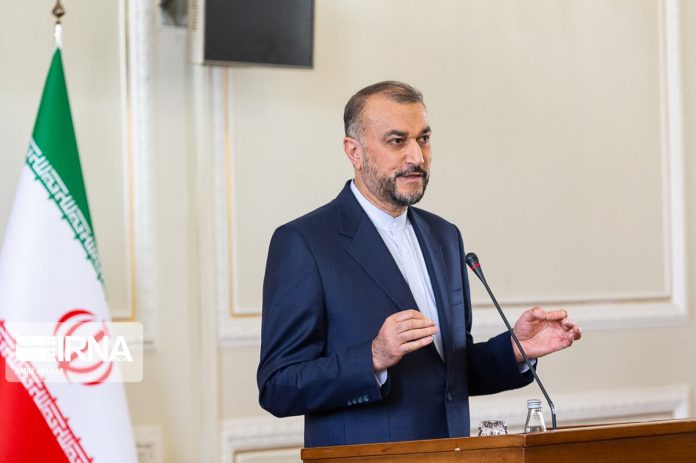
Iran FM Hossein Amirabdolahian

Amir Abdollahian made the pledge at the Iranian parliament’s national security and foreign policy commission. He attended a session of the body to give a report to the MPs on the latest state of the Vienna talks over the lifting of anti-Iran sanctions.

Amirabdollahian also briefed the commission on his latest consultations and contacts with the EU foreign policy chief and his counterparts from some other countries participating in the Vienna talks.

He said if the US acts realistically, the Iranian Foreign Ministry will continue to stick to the diplomatic path to remove the sanctions on the Iranian people and will spare no efforts to this end.

At the meeting, the Iranian lawmakers described the performance of the UN atomic agency’s director general as non-technical and unprofessional and condemned the recent IAEA’s resolution against Iran as political and unconstructive.

They called for a firm and uncompromising response by Iran and active pursuit of the full implementation of parliament’s Strategic Action Law aimed at lifting the sanctions and achieving the legal rights of Iran.

The MPs also called for defending Iran’s nuclear advancements.

In the end, the Iranian foreign minister thanked the members of the Iranian parliament’s national security and foreign policy commission for their viewpoints and called for the continuation of close cooperation between the Foreign Ministry and parliament to defend the rights of the Iranian people.
Iran Covid: Daily death toll remains single-digit

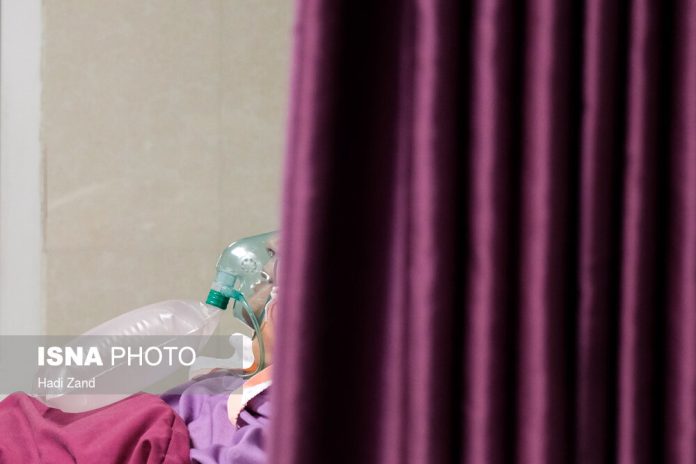
COVID in Iran

Iranian Health Ministry figures on Thursday showed that the virus had killed 3 people in the previous 24 hours.

The daily caseload was 146. This figure included 30 hospitalizations.

Over the past two weeks, Iran has experienced two days of no Coronavirus deaths, which happened two years after the pandemic reached the country.

Authorities have welcomed the low number of deaths and infections from Covid, but they are doing their best to reduce the daily fatalities to zero including through vaccination.

Iran’s single-digit deaths come as the country witnessed hundreds of deaths daily during the peak of the pandemic’s last wave a few months ago.

More than 50,000 infections were also registered during that time.

Currently, there are no red or orange cities in Iran in terms of danger form Covid. The number of blue cities where things have returned to normal is 335. There are also 113 yellow cities.

Iranian officials are urging citizens to keep observing the health protocols to prevent a resurgence of Covid in the country.

They say easing health protocols would be a big mistake.

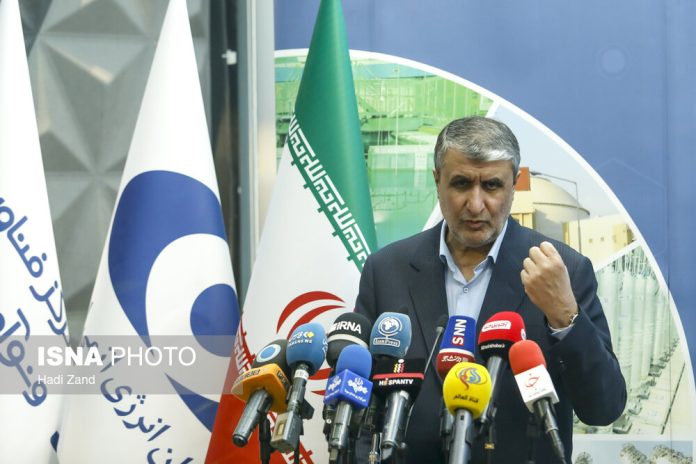
Iranian nuclear chief says Natanz and Badroud nuclear projects will be completed soon

Mohammad Eslami

Both Natanz and Badroud cities are located in Isfahan Province.

Moahmmad Eslami noted that the Iranian people can quickly witness the results of the two projects.

He was speaking on Thursday and during the 25th provincial visit of President Ebrahim Raisi to Isfahan Province in central Iran.

Eslami said during the visit, Raisi and other officials including the director of the AEOI will visit the capacities and capabilities of Natanz.

Iran has been expanding its peaceful nuclear energy program despite US sanctions in recent years.

Iranian foreign minister says talks with Saudis positive

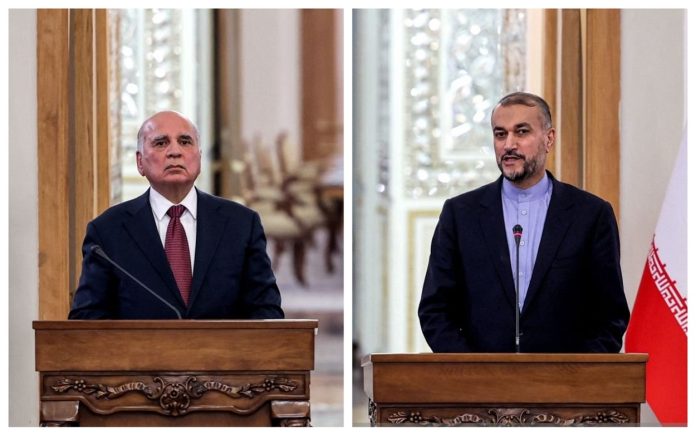
Iran and Iraq FMs Hossein Amirabdolahian & Fuad Hussein

Hossein Amirabdollahian made the remark in a telephone conversation with his Iraqi counterpart Fuad Hossein on Thursday.

Amirabdollahian reiterated, “Our assessment of the latest round of negotiations in Baghdad is positive. Tehran welcomes the implementation of the results of talks with Saudi Arabia.”

Iraqi Foreign Minister Fuad Hossein also expressed pleasure at the trend of talks between Iran and Saudi Arabia. He underlined the Iraqi government’s determination to continue its efforts aimed at direct talks between the foreign ministers of Iran and Saudi Arabia and the return of their bilateral ties to normal.

As for the Vienna talks aimed at removing anti-Iran sanctions, Amirabdollahian said Iran and the US were exchanging messages through the EU representative but the White House suddenly put forth the idea of issuing an anti-Iran resolution at the IAEA.

He added that Washington is after extracting political concessions from Iran at the negotiating table through the IAEA resolution.

Amirabdollahian noted that Iran has always invited the West to the path of diplomacy and Tehran even put a political initiative on the table several days before the agency’s recent meeting for the purpose of continuing talks until a final deal is reached.

He added that in the face of the US’s unconstructive behavior at the agency, Iran’s countermeasure was to increase its peaceful nuclear activities within the framework of a parliamentary law.

The foreign minister said Iran views diplomacy as the best path to reaching a good, robust and lasting deal, but in the face of bullying, Tehran’s response with be based on strength.

Qalibaf: Joint borders offer opportunity to Iran, Turkmenistan for closer ties

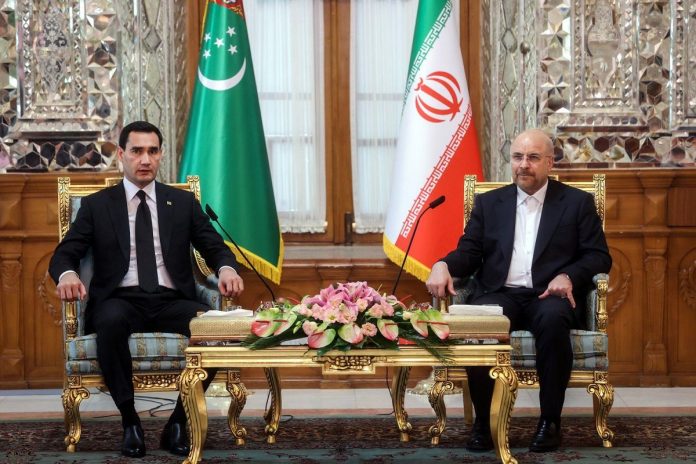
Qalibaf and Berdimuhamedow

In a meeting on Wednesday, Qalibaf and Turkmen President Serdar Berdimuhamedow explored ways to promote bilateral ties and discussed regional developments.

Qalibaf said a swift implementation of the agreements struck between the two neighbors would help them activate their potential for enhanced economic cooperation, adding that the Turkmen president’s trip to Iran would be the start of a serious change in Tehran-Ashgabat ties.

The “definitive” policy of the Iranian administration and legislative branch is to deepen relations with neighborly and friendly states in various sectors, he added.

Besides expanding bilateral ties, Qalibaf said, the two countries need to step up their cooperation against the terror groups active in Afghanistan and drug trafficking.

He said continued insecurity in Afghanistan would deal a blow to ties among the country’s neighbors.

The parliament chief also warned against attempts by the Israeli regime to interfere in the affairs of the region.

In turn, the Turkmen president expressed hope that the agreements signed with Iran would facilitate the expansion of relations between the two sides.

He praised growing humanitarian relations between the two sides as well, emphasizing the significant role that the parliaments of the two countries can play in that field.

‘Iran’s natural gas exports witnessed 2-percent growth last year’

South Pars gas field

In a report on Thursday, IRNA said the country’s natural gas sales rose by 2 percent during the last Persian calendar year, which ended on March 20, compared to the previous year, despite the sanctions and a record gas consumption rate inside the country.

The report attributed the achievement to proper management by the administration of President Ebrahim Raisi.

The exports, it said, did not hamper the distribution of natural gas among households and in the industrial sector, despite freezing temperatures in the winter, during which a record volume of 690 million cubic meters of gas was consumed.

Iran president meets Armenian parliament speaker

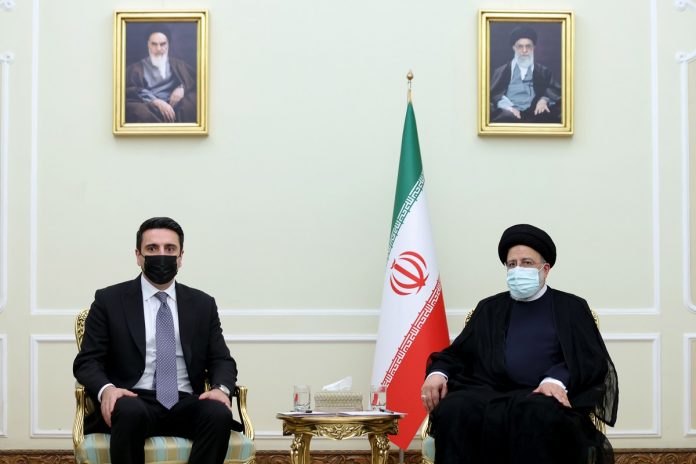
Ebrahim Raisi & Alen Simonyan

Raisi said Iran seeks to develop ties with neighboring and friendly nations, including Armenia, adding the Islamic Republic backs the territorial integrity of all countries in the region and lends its support to any plan, interaction and dialogue that ensures peace.

The Iranian president also said both countries have high capacities to expand cooperation in transportation, energy, industry, technical and engineering services exports and agriculture among others.

For his part, Simonyan praised Iran for its “constructive” role in the developments in the region and noted that Yerevan attaches great significance to the economic and transit ties with Tehran.

The Armenian parliament speaker is in Tehran at the invitation of his Iranian counterpart Mohammad Bagher Ghalibaf.

Earlier on Tuesday, he met with Ghalibaf to highlight the agenda to boost bilateral relations.

Raisi inspects major river, wetland in central Iran amid water crisis

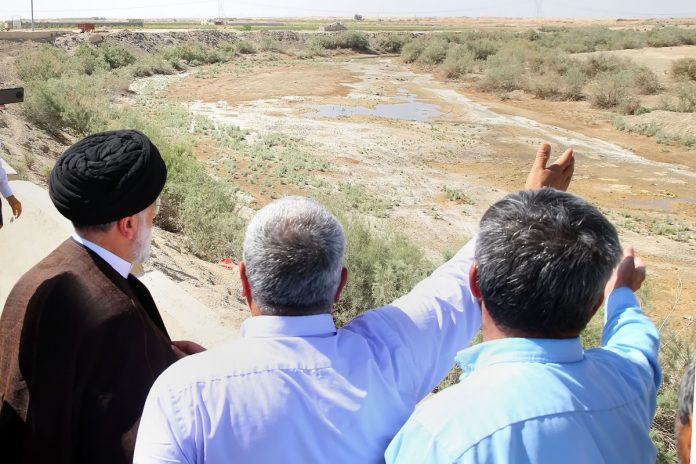
President Ebrahim Raisi

The aerial tour was part of the president’s visit to the central province of Isfahan, where he met with people, including farmers, and local officials to hear and try to address the woes of the region, particularly water scarcity.

He said while some authorities have attempted to sideline the issue of water shortages in the country, his administration would get to the “core” of the problems and work to resolve them.

The president said the cabinet has placed a “comprehensive water plan” on agenda with the aim of ensuring a fair distribution of the country’s water resources and protecting the people’s relevant rights.

A semi-arid country, Iran — along with other states in the Middle East and North Africa — is grappling with a worsening shortage of water.

Iran’s water reservoirs face a number of threats, including climate change, population growth, drought, and mass migration.

Rainfall levels have sharply plummeted in Iran over the past years, leaving many regions suffering from drought.

Late last year, Isfahan and some provinces in the country’s southern half were the scene of protests, largely joined by farmers, in criticism of what they described as the administration’s mismanagement of water resources.

Iran says won’t allow Israel to legitimize Iranophobia

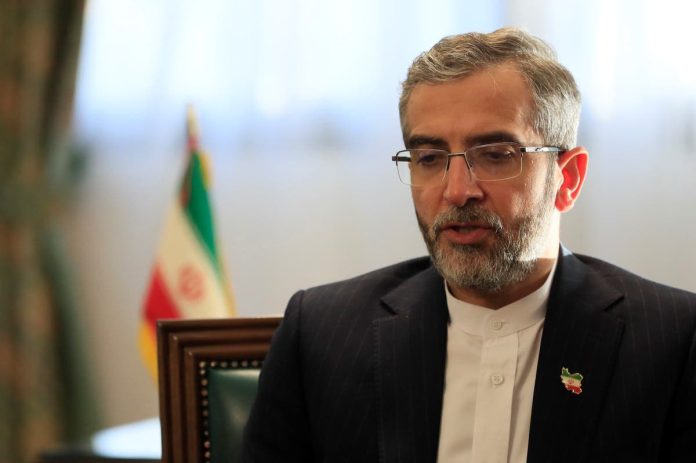
Ali Bagheri Kani

In a ceremony at Tehran University on Thursday, Iran’s Deputy Foreign Minister Ali Bagheri Kani said, “Foiling threats and grabbing opportunities are two sides of Iran’s diplomatic coin in the fast-paced regional and global developments,” according to Iran’s Students’ News Agency ISNA.

Iran has slammed Israel’s efforts to scupper the Islamic Republic’s nuclear talks with the West, which have been stalled for several months.

The International Atomic Energy Agency (IAEA)’s Director General Rafael Grossi made a visit to Israel last week to meet with Israeli officials prior to the agency’s Board of Governors meeting.

Following the controversial trip, the board adopted a resolution, drafted by the US and three of its European allies, against Iran’s nuclear program.

Tehran slammed the move as “politically motivated” and said the UN atomic agency and the West are responsible for the consequences.

Bagheri, who is also the top Iranian nuclear negotiator, said, “Iran has not put all of its foreign policy eggs in the basket of negotiations,” so the outcome would not deal a serious blow to the government’s diplomatic apparatus in its efforts to push forward its agenda.

He also noted that the maximum pressure campaign spearheaded by Washington against Iran has failed, as admitted by US officials.

IRGC’s intel forces dismantle subsidized fuel smuggling network

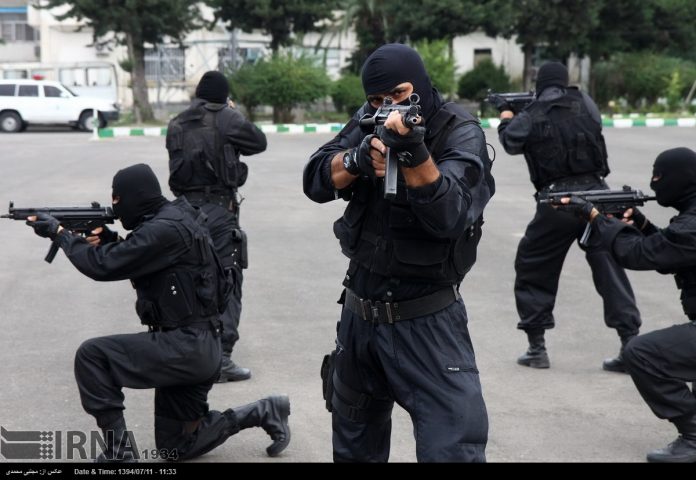
Iran Security Forces

In a statement issued on Thursday, the IRGC’s division in Iran’s central Markazi Province said one of the largest “organized networks” of subsidized fuel smugglers had been intercepted and busted following an “accurate and professional intelligence operation.”

The network, which was active in eight provinces, acted to smuggle “over 200 million liters of petrochemical products” under the guise of petrochemical byproducts meant for export by “exploiting official documents,” it said.

The statement added that the major destinations of the smuggled fuel had been countries on the southern shores of the Persian Gulf, Afghanistan, Pakistan, and Iraq.

After being taken into custody, members of the network were handed over to judicial officials for legal proceedings related to economic corruption, it said.

In a similar operation, the IRGC said in mid-April that it had confiscated a vessel carrying 250,000 liters of smuggled fuel in the Persian Gulf, the second such seizure in less than a week.