Severodonetsk on verge of humanitarian catastrophe
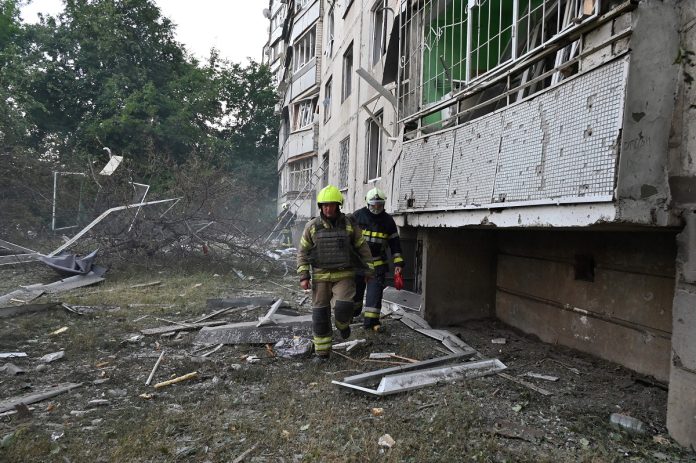
A Ukrainian regional official has warned of deteriorating living conditions in Severodonetsk, which was captured by Russian forces two weeks ago, saying is without water, power or a working sewage system while the bodies of the dead decompose in hot apartment buildings.
Gov. Serhiy Haidai said the Russians were unleashing indiscriminate artillery barrages as they try to secure their gains in eastern Ukraine’s Luhansk province. Moscow this week claimed full control of Luhansk, but the governor and other Ukrainian officials said their troops retained a small part of the province.
“Luhansk hasn’t been fully captured even though the Russians have engaged all their arsenal to achieve that goal,” Haidai told The Associated Press, adding, “Fierce battles are going on in several villages on the region’s border. The Russians are relying on tanks and artillery to advance, leaving scorched earth.”
Occupied Severodonetsk, meanwhile, “is on the verge of a humanitarian catastrophe,” the governor wrote on social media.
“The Russians have completely destroyed all the critical infrastructure, and they are unable to repair anything,” he noted.
Western ‘economic blitzkrieg’ has failed: Putin
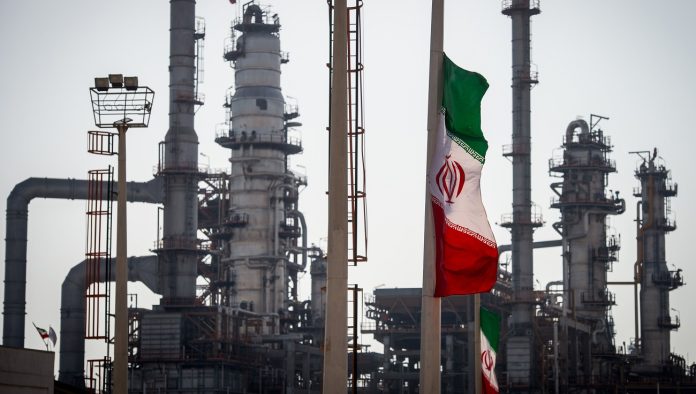
Western nations have failed in their attempts to destabilize the Russian economy with sanctions, President Vladimir Putin said at a government meeting on economic issues on Friday.
“As a result of the actions of the Central Bank, as a result of the measures that were taken in a timely manner by the government … a lot was done. And the so-called blitzkrieg that our ill-wishers attempted in relation to Russia, the economic blitzkrieg, of course, has failed,” he stated.
The president, nevertheless, acknowledged that the restrictions have hurt the country’s economy and “many risks still remain.”
Putin has urged that in response to the current challenges associated with Western sanctions, Russian energy companies should work for the long-term perspective. Gasification of the country’s regions and diversification of exports should be the key tasks for the government, he stressed.
According to the Russian leader, the government is already considering options for developing railway, sea and pipeline infrastructure for the supply of Russian oil and oil products to friendly countries, as well as gas transportation infrastructure to increase gas supplies to Asia and the domestic market.
Talking about the general economic situation, he pointed out that the world markets “are still in disarray due to the West’s calls to abandon Russian energy resources.”
Putin recalled that the price of Brent oil surged to $130 per barrel amid fears of a possible shortage, but in recent days prices have fallen by $20-$30 due to projections of a global economic slowdown.
The Russian president reminded his audience that he had repeatedly warned European leaders about the current situation on the global energy market, but no one listened.
“They treated our warnings so dismissively. This is exactly the situation that we have warned about, this is happening today,” he noted.
Putin also indicated that if Western countries continue their sanctions policy it could lead to catastrophic consequences for the global energy market. Anti-Russia sanctions cause much more damage to those who introduce them, he continued.
At the same time, the situation on the Russian energy market is stable despite the sanctions regime, the president explained. According to him, oil and gas condensate production in June reached 10.7 million barrels per day, which is 500,000 barrels more than in the previous month. Overall, Russia’s oil output jumped 3.5% since the start of the year. Gas production for the period from January to May decreased slightly, by merely 2%, the president added.
Canada announces fresh sanctions on Russia
Canada has announced new sanctions against Russia over its invasion of Ukraine, targeting the leader of the Russian Orthodox Church, Patriarch Kirill, and other individuals accused of spreading disinformation.
The new package targets 29 individuals accused of being “state-sponsored disinformation and propaganda agents” and 15 Russian government-controlled entities “involved in disinformation efforts”, according to a statement by Canadian foreign minister, Mélanie Joly.
Sumbatovich Gasparyan, the head of the international department of the Russian state-owned media outlet RT, is among those newly sanctioned.
The latest announcement brings to more than 1,150 the total number of individuals and entities in Russia, Ukraine and Belarus that Canada has sanctioned since the beginning of the war.
Russia threatens ‘harsh measures’ over Kaliningrad transit
Russia warned Lithuania and the EU on Friday that it could adopt “harsh measures” against them if the transit of some goods to and from the Russian exclave of Kaliningrad did not resume.
In a statement, Russian foreign ministry spokeswoman Maria Zakharova said: “If the situation does not stabilise in the coming days, then Russia will take harsh measures against Lithuania and the European Union.”
The issue has taken “too long to resolve”, she added.
Lithuania has banned the transit of goods subject to EU sanctions across its territory to Kalingrad, on the Baltic sea.
Western plan to isolate Russia at G20 failed: Moscow
The West’s plan to isolate Russia at the G20 summit over Russia’s military offensive in Ukraine did not work out, the foreign ministry has announced.
“The G-7’s plan to boycott Russia at the G-20 has failed,” foreign ministry spokeswoman Maria Zakharova said on messaging app Telegram.
She also accused Germany’s foreign minister of “lying” after Annalena Baerbock criticised Moscow for blocking dialogue with international partners.
Russian military warehouses in Kherson struck by Ukrainian forces
Ukrainian forces continue to target Russian military supplies and warehouses far behind the front lines in the southern region of Kherson, according to regional officials.
Ukrainian fire destroyed “the warehouses [and] rear reserves of the occupiers,” Serhii Khlan, adviser to the head of the Kherson military administration, told Ukrainian television.
Khlan added that before dawn on Friday, there was “a powerful explosion” in Nova Kakhovka, a town occupied by Russian forces in Kherson.
Their warehouses are placed “far from the front line” as they think it will protect the rear, “but we see hits,” Khlan said, noting, “In recent days we have been constantly hearing about explosions at the warehouses of the occupiers — in Kherson, in Nova Kakhovka, in Chernobaivka.”
Khlan claimed that there had been three attacks on warehouses in Nova Kakhovka. A video from the area soon after dawn Friday showed thick smoke rising from an unknown location.
The pro-Russian authorities now in control of Kherson say that Ukrainian saboteurs have been detained.
Kirill Stremousov, deputy head of the Russian-backed military-civilian administration, said “Russian special services detained three saboteurs who were planning assassination attempts on the leaders of the region and military personnel of the [Russian] Armed Forces.”
Stremousov claimed that authorities had uncovered the command structure of “agent networks organized in the Kherson region by the SBU [Security Service of Ukraine] and Ukrainian military intelligence.”
In recent days, Ukraine has stepped up attacks in both Donetsk and Kherson against Russian supply lines and storage depots as it tries to hinder Russian operations.
The US director of national intelligence, Avril Haines, stated the Kremlin “faces rising partisan activity in southern Ukraine” during a conference in Washington DC last month.
US officials added that they believe Russia does not have enough forces in Kherson to effectively occupy and control the region, with three assassination attempts against pro-Russian officials in June suggesting a burgeoning resistance movement among the Ukrainians.
Russia says it destroyed two British-supplied anti-ship missile systems
Russian forces have destroyed two British-supplied Harpoon anti-ship missile systems in Ukraine’s Odesa region overnight, Russia’s defence ministry has said in a briefing.
The US-designed missile systems are one of several weapons supplied to Ukraine by NATO countries since Russia invaded Ukraine in February.
Kremlin spokesman Dmitry Peskov told reporters that Russia has used only a small portion of its potential in what it calls a “special military operation” in Ukraine.
‘Russia is global challenge number one’: Ukraine FM
Ukraine’s Foreign Minister Dmytro Kuleba calls for a “resolute global response” to Russia’s invasion of Ukraine as he spoke at the G20.
“Putting Russia in its place is the global challenge number one and the meeting today proved it,” he wrote on Twitter.
US calls on Russia to let Ukrainian grain out
US Secretary of State Antony Blinken addressed Russia directly at a G20 foreign ministers meeting in Bali on Friday and called on Moscow to let Ukrainian grain out to the world, a Western offical said.
Blinken spoke at a plenary session of the meeting, which was focused on food and energy insecurity, stated the official, who did not want to be otherwise identified.
“He addressed Russia directly, saying: ‘To our Russian colleagues: Ukraine is not your country. Its grain is not your grain. Why are you blocking the ports? You should let the grain out,’” the official added.
Moscow: Nothing to say to west if they want Russian defeat on battlefield
Speaking outside the G20 summit in Bali, Russian Foreign Minister Sergey Lavrov attacked Western countries’ bellicose rhetoric claiming it made negotiations futile.
“If Western countries want to ‘defeat Russia on the battlefield’ in the situation around Ukraine, then there is nothing to talk about with them,” he said.
“If the West wants to withdraw Ukrainian grain, it is only necessary to force Kiev to de-mine ports,” he added.
Russia is ready to negotiate with Ukraine and Turkey about grain but it is unclear when such talks might take place, Lavrov continued.
“The US is forcing Europe and the rest of the world to abandon cheap energy resources and switch to much more expensive ones,” the foreign minister stressed.
Lavrov has also dismissed what he cast as the West’s “frenzied” criticism of the war in Ukraine at the G20 meeting, scolding Russia’s rivals for scuppering a chance to tackle global economic issues.
“During the discussion, Western partners avoided following the mandate of the G20, from dealing with issues of the world economy,” Lavrov stated.
He added the West’s discussion “strayed almost immediately, as soon as they took the floor, to the frenzied criticism of the Russian Federation in connection with the situation in Ukraine. ‘Aggressors’, ‘invaders’, ‘occupiers’ – we heard a lot of things today.”
Russia plans for attack on town of Siversk: UK
While Russia’s operative goal in Ukraine’s Donbas has shifted to capturing Sloviansk and Kramatorsk, Moscow’s more immediate “tactical objective” is likely to be the town of Siversk, the United Kingdom’s defence ministry has announced.
“Russia is likely concentrating equipment on the front line in the direction of Siversk, approximately 8km west of the current Russian front line,” the ministry said.
“Its forces are likely pausing to replenish before undertaking new offensive operations in Donetsk Oblast,” it added, in line with what other Western analysts have said in recent days.
“There is a realistic possibility that Russia’s immediate tactical objective will be Siversk, as its forces attempt to advance towards its most likely operational goal of the Sloviansk-Kramatorsk urban area,” the UK announced.
Zelensky says Ukraine is unwilling to cede any of its territories to Russia
President Volodymyr Zelensky told CNN that Ukraine is unwilling to cede any of its land to Russia, standing firm that a concession of Ukrainian territory won’t be part of any diplomatic negotiations to end the war.
“Ukrainians are not ready to give away their land, to accept that these territories belong to Russia. This is our land,” Zelensky said in an exclusive interview aired Thursday on CNN’s “The Situation Room.”
“We always talk about that, and we are intending to prove it,” he added.
Russia’s war with Ukraine has now lasted for more than four months, with no sign of either side backing down soon. Ukraine’s early successes forced Russia to scale back its initial aims of toppling Kyiv, and Moscow’s forces have now focused on taking territory in eastern Ukraine. Russian forces have now occupied most of the Luhansk region, outside of a few pockets of resistance, and are pressing toward cities in Donetsk.
CNN reported last week that White House officials are losing confidence Ukraine will ever be able to take back all of the land it has lost to Russia since the war began, even with the aid of heavier and more sophisticated weaponry that the US and its allies plan to provide Kyiv.
Zelensky acknowledged that Russia controls “almost all the Luhansk region,” saying that his forces are now “fighting on the outskirts of this region.”
He said that Kyiv retreated to avoid mass losses of troops.
“I don’t even understand what exactly they’re controlling there. They ruined towns, school. They are the occupiers of the rubble?” Zelensky added.
Japan FM skips G20 reception
Japan’s foreign minister Yoshimasa Hayashiis stayed away from the G20 reception in view of the international community’s opposition to Russia’s invasion of Ukraine, a government spokesperson has announced Friday.
Hayashi is attending a gathering of G20 foreign ministers in Bali, while Russian foreign minister Sergei Lavrov is also participating in the event.
‘Our world is in big trouble’: UN chief
Secretary-General of the United Nations Antonio Guterres has called for “multilateralism” between nations and blocs around the world to deal with ongoing issues including the coronavirus pandemic, climate change and Russia’s invasion of Ukraine.
“Our world is in big trouble. We still have the COVID among us,” Guterres said.
“Conflicts are multiplying and we have now the dramatic impact of the Russian invasion in Ukraine that has led to, independently of the suffering of the Ukrainian people, to a terrible crisis, both in food, in energy and in finance,” he added.
“No country can solve these problems alone. We need more than ever, multilateralism, but not any kind of multilateralism, because no organisation can also solve the problems of this world alone. We need the networked multilateralism and the partnership between the EU and the UN is a fundamental pillar of this networked multilateralism,” he stated in New York.
Black Sea blockade ‘must stop’: EU
European Commission President Ursula von der Leyen has said that the world is “in a defining moment”, and decried Russia’s “senseless” war.
“Indeed, we are in a defining moment. We just barely recovered from COVID, the pandemic, when Russia started the senseless and atrocious invasion in Ukraine with terrible knock on effects not only for the people in Ukraine that are horribly suffering, but also with enormous knock on effects globally of this senseless war,” von der Leyen stated alongside UN chief Antonio Guterres in New York.
“Russia is blocking the export of grain from Ukraine and thus bringing hunger to millions of people. The blockade of the Black Sea must stop and I’m very grateful, Secretary General, for your tireless work to try to create a solution for the export of Ukraine grain via the Black Sea,” she added.
China’s relationship with Russia shows ‘strong resilience’: FM
China and Russia have maintained normal exchanges and promoted cooperation in various fields and cast aside any “interference”, showing the “strong resilience” and “strategic resolve” of their relations, Chinese Foreign Minister Wang Yi stated on Thursday.
China will also support all efforts conducive to the peaceful resolution of the Ukraine crisis, Wang told Russian Foreign Minister Sergei Lavrov in a meeting on the sidelines of a G20 summit in Bali, Indonesia, according to a statement from the Chinese foreign ministry.
Brazil’s president: Western sanctions against Russia failed
Brazil’s president has said that the economic sanctions imposed by the West against Russia had not worked.
“The economic barriers that the United States and Europe imposed against Russia did not work,” Jair Bolsonaro told supporters, adding that his position towards President Vladimir Putin and the war “was one of balance”.
Bolsonaro stated that stance had allowed him to acquire fertilisers, a key input for Brazil’s vast agricultural sector, from Russia. He also noted Russia shared Brazil’s concerns over “sovereignty” of the Amazon. The president has often described criticism by other nations of his stewardship of the rainforest as an infringement on Brazil’s sovereignty.
Bolsonaro’s comments are likely to go down badly with the United States and many European countries, which have previously criticised Brazil’s engagement with Russia. In June, Bolsonaro and Putin discussed global food security in a phone call, and confirmed their intention to strengthen their strategic partnership.
Zelensky says additional aid from US would be helpful to win war, calls for Biden to visit Kyiv
Ukrainian President Volodymyr Zelensky told CNN that he is grateful for the military support that Ukraine has received from the United States, which has provided weapons with greater capability as the war has dragged on, while urging the West to continue providing military support to help Ukraine keep up its fight.
“(The) United States are helping Ukraine, helping a lot, but it’s not enough in order to win. I hope my trust will speed up this help to Ukraine,” Zelensky said during an interview on CNN’s “The Situation Room” on Thursday.
He added, “We want the increment of this help — we’re fighting for our land, we don’t want people from different countries fight for our territory. But the US are a world economy and can help us with both arms and finances.”
Zelensky highlighted the US’s influence over European nations and how that can further be leveraged in support of Ukraine.
“And also, the US can influence the decisions of the European countries — this is also the political support. I have to be honest, some countries in Europe want a balance between Russia and Ukraine. But owing to the US help they started supporting us. So, when I talk about the volume and speed of the arms support, I’m not appealing only (to) the United States, I appeal to all the world leaders and saying that the faster help, the increment of help, will save the lives of Ukrainians and help us to regain territories occupied by Russia,” he explained.
Asked whether the war could be over before the end of the year, Zelensky said, “Our country will stay united and unified. If the powerful weaponry from our partners will be coming to us on-time, and if good luck and God will be on our side, we can achieve a lot of things before the end of the year and we can stop this war. We can stop the military part, at least, of this war.”
Zelensky also reiterated his call for US President Joe Biden to visit Kyiv, saying it would send a message to Russia and the world.
“We would love to see President Biden in Ukraine. I heard that he supported the idea. There are some security moments, which stand in the way of his visit, we understand that,” Zelensky stated.
“I truly think this would help the Ukrainians. Ukrainians support (the) United States, the trust of the Ukrainians to the United States is very high, same as to the UK and Poland and the Baltic states,” he continued.
Zelensky noted, “So, visits of the world leaders who are not just partners but real friends — they give a signal, a sign, that the United States support Ukraine because they believe in Ukrainian victory and are not afraid of Russia. They come despite the rockets flying in. They are not afraid of Putin because the world is much bigger than one leader of one country.”
Western Balkans face ‘no imminent threat’: NATO
A senior NATO official has said Western Balkan countries don’t face an “imminent threat” from the war in Ukraine, and are of strategic interest to the Western alliance.
“We have a strategic interest … in the Western Balkans. I want to send a message of hope for all the people to the Western Balkans that ultimately all of us will find ourselves in the European and Euro-Atlantic family,” NATO’s Deputy Secretary General Mircea Geoana told The Associated Press news agency in Pristina, Kosovo.
UK assures Ukraine of support: Zelensky
The United Kingdom has assured Ukraine its support for the embattled country will not change, regardless the leader, President Volodymyr Zelensky has said, after thanking Boris Johnson for his support.
“Britain’s role in protecting freedom is truly global. And although this is a reflection of the position of British society, the leadership and charisma of the head of state are always of special importance. Especially at such a time – the time of Russia’s full-scale anti-European war, which started its attack on Europe precisely from our state. So it is not surprising that Ukrainians feel personal gratitude to Boris,” Zelensky said in his nighttime address.
“But let’s not forget that we are building relations between states. Great Britain’s support for Ukraine should not change, no matter what happens in London’s power circles, both Boris and all our friends in the United Kingdom assured me of this,” he added.
Germany will continue to help Ukraine: Scholz
German Chancellor Olaf Scholz has said he is determined that Germany will keep supporting Ukraine despite growing economic problems at home.
“I believe that you can only ever act with the support of citizens,” he told television broadcaster ZDF.
“But I think that it will be possible for a long time, and necessary for a long time, to maintain solidarity with Ukraine through Germany’s efforts,” he added.
Ukraine’s negotiator dismisses Putin’s comments
Ukraine’s chief negotiator, Mykhailo Podolyak, has dismissed President Vladimir Putin’s comments in which the Russian leader warned that if the West wanted to attempt to beat Russia on the battlefield, “the the last Ukrainian”, it was welcome to try, but this would bring tragedy for Ukraine.
“There is no ‘collective West’ plan,” Podolyak said, blaming only the Russian army “which entered sovereign Ukraine, shelling cities and killing civilians”.
“Everything else is a primitive propaganda. That’s why Mr Putin’s mantra of the ‘war to the last Ukrainian’ is yet another proof of deliberate genocide,” he added.