Monday, December 29, 2025
Home Blog Page 1852

Iranian deputy FM meets with top Omani diplomat in Muscat

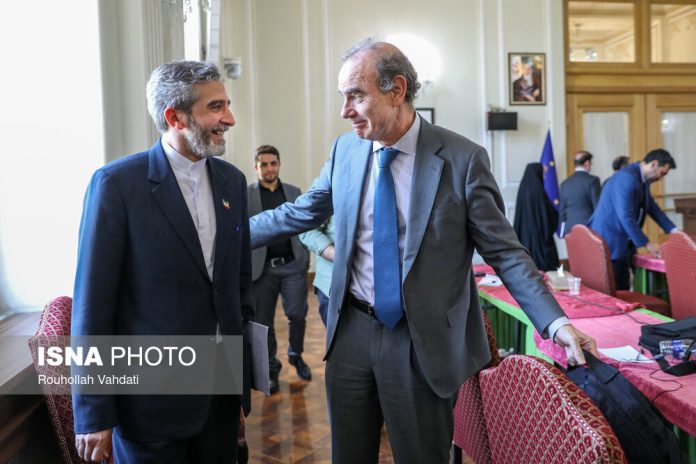
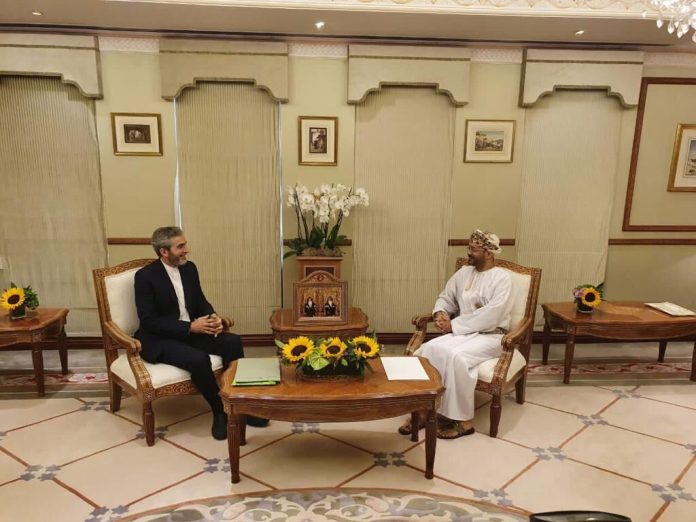
Iranian Deputy Foreign Minister for Political Affairs Ali Bagheri Kani and Oman’s Foreign Minister Badr bin Hamad al-Busaidi

Bagheri and Busaidi discussed the state of bilateral ties including the pursuit of agreements between the two countries as well as regional and international developments.

The Iranian deputy foreign minister then referred to the mutual political trust between Tehran and Muscat.

Bagheri added Iran and Oman are determined to translate this precious political asset into expansion of lasting economic cooperation and extension of this cooperation to joint work toward stabilizing the region.

The Omani foreign minister for his part described as important the implementation of agreements signed by the two sides during the recent visit of the Iranian president to Muscat.

Covid infects 1,775 people in Iran, 7 killed

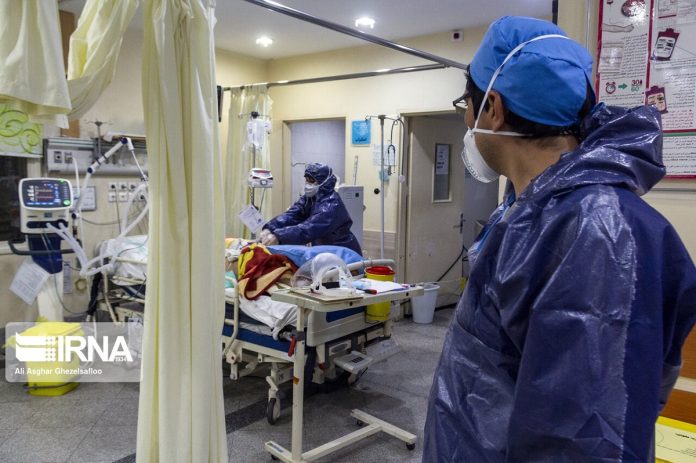
COVID in Iran

The ministry also logged 7 deaths over the last 24 hours.

Authorities had already warned of a resurgence of Covid due to people’s refusal to get their booster shots of vaccine and also their failure to stick to health protocols.

Iran began inoculating its population over 1.5 years ago. The pace of the vaccination process was slow initially. It grew in speed after several months. But now it’s lost steam.

The total number of vaccine shots administered has been more than 150 million for several months.

The number of people showing up at vaccination places is way lower than expected. The reason for this is unknown. But some observers think people in Iran mostly think the disease is gone or at least will not return soon.

But officials have repeatedly warned them against underestimating Covid as it is highly likely the virus will return with a vengeance.

On Wednesday, Iranian Health Minister Bahram Einollahi said all people over the age of 12 must get their boosters.

Covid has so far killed 141,413 people in Iran.

In Iran, there are currently no red cities or towns in terms of danger from the Coronavirus. But experts are warning things could change soon with the death toll and infections soaring in the country.

Iran, Iraq boosting security for Arbaeen

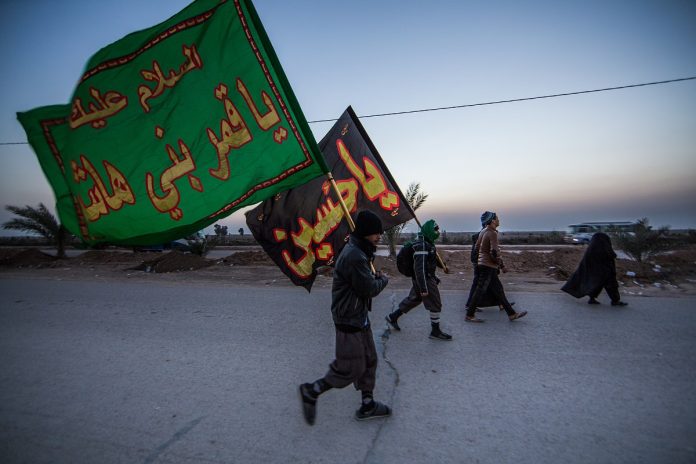
Iranian pilgrims in Iraq

Iranian Deputy Interior Minister for Security and Law Enforcement Seyyed Majid Mir Ahmadi, in a meeting with Iraq’s Minister of Interior Othman al-Ghanimi on Wednesday in the Iraqi capital Baghdad, signed two memoranda of understanding on border security cooperation.

Iraq has removed visa requirements for Iranian pilgrims who have received at least two doses of the coronavirus vaccine.

The Arbaeen mourning ceremony, which commemorates the fortieth day after the martyrdom of the grandson of Prophet Muhammad (PBUH), Imam Hussein (AS) over 14 centuries ago, is one of the largest religious gatherings in the world.

Every year, millions of Muslims from Iran, Iraq and many other countries set out on an 80-kilometer-long walk from the holy city of Najaf, where Imam Hussein’s father Imam Ali (AS)’s shrine is located, to Imam Hussein’s shrine in Karbala.

Covid-19 pandemic had put a damper on the mourning ceremony for the past two years but the event is expected to reach its peak after Coronavirus-related restrictions have been eased.

Iran: Kabul backs implementation of 1973 treaty on Helmand water share

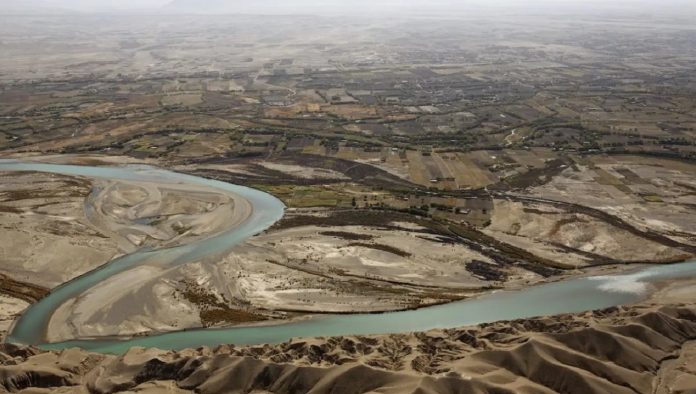
Helmand river

Hassan Kazemi Qomi said following negotiations, the Afghan side released water from the Kamal Khan dam built over the border river, but most of the water strayed into the salt marshes of the neighboring country due to “mistakes” made by Afghan authorities.

The mistakes, he said, deprived not only the residents of Iran’s Sistan and Balouchestan Province but those living in Afghanistan’s western Zaranj Province of the much-needed water.

“Now, the water is not behind the Kamal Khan Dam, but behind the Kajaki Dam, which is about 500 kilometers away from our borders. However, we are negotiating with Kabul to implement the treaty,” the diplomat added.

Helmand has been at the center of a long-running political dispute between the two neighbors.

The river flows some 1,150 kilometers from the Hindu Kush mountains, west of Kabul, before reaching the Sistan wetlands in southwestern Afghanistan and eastern Iran.

Iran has long been complaining that Afghanistan has failed to release enough water from Kamal Khan Dam to comply with terms of the 1973 treaty.

Based on the treaty, Iran is entitled to more than 800 million cubic meters of water from the river annually.

Shamkhani: Stable regional security tied to stability in Caucasia

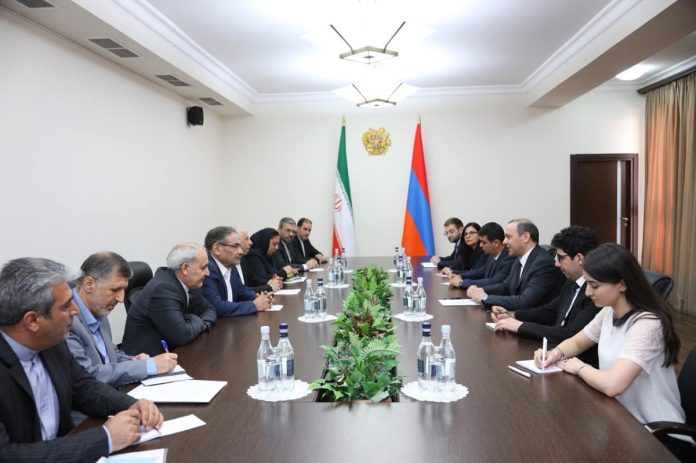
Secretary of Iran’s Supreme National Security Council (SNSC) Rear Admiral Ali Shamkhani and Secretary of the Security Council of Armenia Armen Grigoryan

In a meeting with Secretary of the Security Council of Armenia Armen Grigoryan on Thursday, Shamkhani highlighted the deep and long-standing historical and cultural relations between Iran and Armenia, saying the current conditions have provided the grounds for further strengthening and expansion of bilateral ties.

Shamkhani arrived in Armenia on Thursday morning as part of his Caucasian tour. Bolstering relations in various fields and cooperation to boost regional stability and security are top on the agenda for his trip.

Upon his arrival in the Armenian capital Yerevan, Shamkhani stressed that Iran is against any action that would lead to a geopolitical change in the region.

Grigoryan for this part praised Iran for its “active role in creating peace and stability in the region which is necessary in strengthening the stable security.”

The two sides also stressed expansion of ties in various fields, including in electricity supply to Armenia and facilitating a deal for the gas swap from Turkmenistan to Armenia.

Shamkhani is scheduled to hold talks with Armenian Prime Minister Nikol Pashinyan later in the day.

Iran could have worked better in Doha talks: Iranian MP

Iran's Bagheri and EU's Mora

“We could have worked better in Doha,” said Mahmoud Abbaszadeh Meshkini, the spokesman for the National Security and Foreign Policy Commission of Parliament told Entekhab news outlet.

“We did not enter into the Doha talks with a calculated plan and a road map,” he explained.

“The reason is that our foreign diplomacy apparatus does not have a well-prepared road map in this regard,” said the MP.

He made the comments as US Special Envoy for Iran Robert Malley described the talks as a “waste of time” while Iranian Foreign Minister Hossein Amirabdollahian praised them as positive.

“I believe that our foreign policy apparatus needs a major overhaul, and as long as this overhaul has not taken place, the Islamic Republic [of Iran]’s strategy on foreign policy will be difficult and probably costly to materialize,” said the lawmaker.

“Given the concessions and the upper hand that we had along with the developments which have unfolded in the region, we need a strategic plan in order for Iran to be able to utilize these developments in the best way,” he noted.

He added Iran should also have a plan to gain concessions at any point and in any stage.

Analyst: No prospect of close Iran-Egypt ties despite claims of détente

Iran Egypt Flags

In an interview with ILNA, Ahmad Barvayeh, an expert in North Africa affairs, reacted to recent reports by Qatari media that claimed Iran and Egypt had held a high-level meeting and agreed to improve their relations.

“If the level of ties sees a rise, we cannot be optimistic that the two [Iran and Egypt] will turn into aligned countries or establish broad relations,” he said.

Egypt, he said, maintains close ties with Israel and is dependent on the US and Saudi Arabia, which pressure the North African state to join an Arab alliance in the region that could provoke tensions with Iran.

The analyst said, “Egypt seeks to balance its choices and create a balance between joining regional coalitions, [on the one side,] and Iran, [on the other].”

The Al Araby Al Jadeed recently cited sources as saying that the “meeting” between Iranian and Egyptian officials “was of a security nature in general, and touched upon the situation in the Gaza Strip and Syria.”

The daily reported the existence of what it described as a powerful movement within the Egyptian security entities and army which strongly oppose Egypt’s participation in any military coalition against Iran.

Barvayeh said he did not believe that any future cooperation between Iran and Egypt would go beyond such regional issues.

Iranian MP: US must abandon pertinacity in nuclear talks

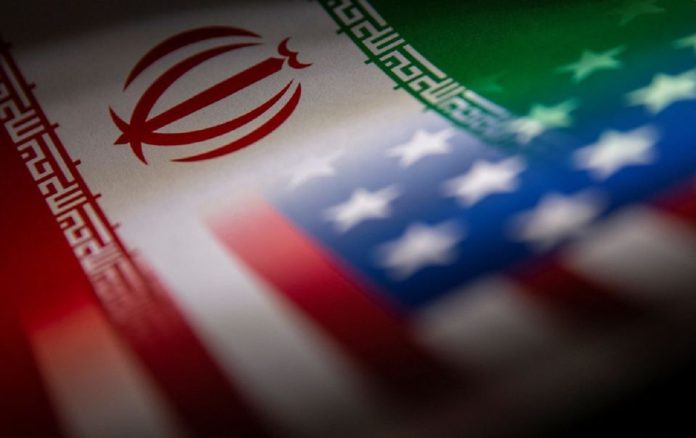
Iran US Flags

In an interview with ISNA, Mohammad Hassan Asafari touched on the current stalemate in negotiations between Iran and the Western parties to revive the nuclear deal, also known as the Joint Comprehensive Plan of Action (JCPOA), saying the talks would end in an agreement only when the US lifts sanctions on Iran.

Iran and the P 4+1 group of countries, Russia, China, Britain, France and Germany have held several rounds of talks in Austria and most recently in Qatar in bid to revive the 2015 deal, paving the way for a possible US return to the agreement after Washington unilaterally withdrew from the deal in 2018.

The Iranian MP called on the US to “get off its high horse and realize its past mistakes”, warning insisting on the current path would be a waste of time for all sides.

Asafari denounced the Americans for raising “unfounded allegations” against Iran at the International Atomic Energy Agency (IAEA)’s Board of Governors.

He stressed that Iran is after a lasting agreement to break the current standoff, but expects its goodwill gestures – by voluntarily rolling back parts of its nuclear activities – be reciprocated, otherwise the Islamic Republic would continue its nuclear activities at full capacity.

Biden to rescind designation of Afghanistan as non-NATO ally

President Joe Biden

Biden is “providing notice of the intent to rescind the designation of Afghanistan as a Major Non-NATO Ally,” the statement read.

In 2012, the United States named Afghanistan a major non-NATO ally, which cleared the way for the two countries to maintain a defense and economic relationship.

Unlike NATO allies of the United States, who are bound together by a joint defense pact, there is no mutual defense guarantee as a non-NATO ally. These allies are eligible to receive material and supply loans, as well as serve as a location for US-owned war reserve stockpiles. Additionally, private companies from the designated country can bid on contracts to maintain, repair or overhaul US military equipment overseas.

The ally status had made Afghanistan eligible to receive military training and assistance, including expediting the sale and leasing of military equipment even after NATO troops left the country.

With Afghanistan’s status rescinded, the US will have 18 major non-NATO allies, according to the State Department. They are: Argentina, Australia, Bahrain, Brazil, Colombia, Egypt, Israel, Japan, Jordan, Kuwait, Morocco, New Zealand, Pakistan, the Philippines, Qatar, South Korea, Thailand and Tunisia. The US designated Colombia and Qatar as non-NATO allies earlier this year.

After the US administration had announced the end of Washington’s 20-year-long military operation in Afghanistan and the launch of its troop pullout, the Taliban embarked on an offensive against Afghan government forces. On August 15, 2021, Taliban fighters swept into Kabul without encountering any resistance, and gained full control over the Afghan capital within a few hours. Afghanistan’s President Ashraf Ghani said he had stepped down to prevent any bloodshed and fled the country. On September 6, the Taliban declared a complete victory in Afghanistan and on September 7 formed an interim government, which hasn’t yet been officially recognized by any country.

‘Iran Army’s Ground Force equipped with precision-guided, smart weapons’

Iran Army

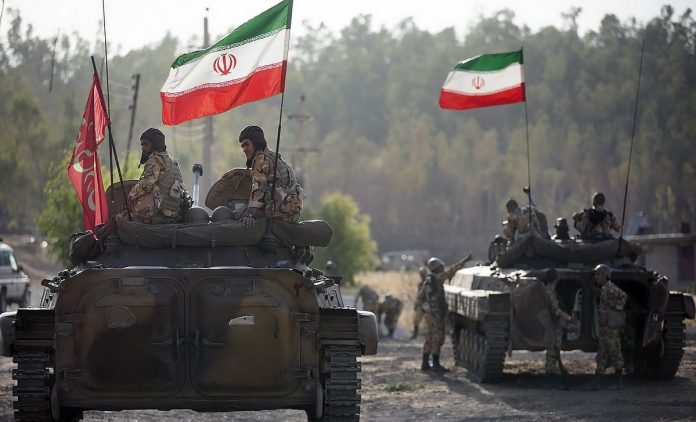
Major General Kioumars Ahmadi made the remarks while inspecting a unit of the Army’s Ground Force on Thursday.

He praised the preparedness and morale of his forces and said they had been making efforts “day and night” to safeguard the country.

Iran’s brave soldiers “have mobilized all in their power to ensure the nation’s stability and peace and will spare no effort on this path,” the senior Army commander said.