Thursday, January 15, 2026
Home Blog Page 1810

Iranian minister in Kabul for Hirmand water right talks

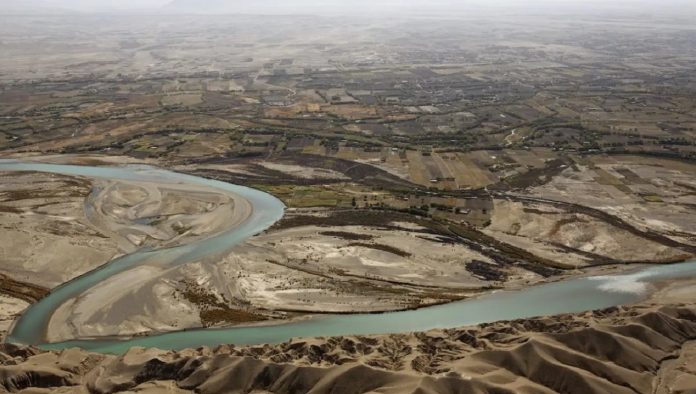
Helmand river

Ali Akbra Mehrabian was speaking during a visit to the Afghan capital Kabul.

He met with his Afghan counterpart Abdol Latif Mansur and also the country’s Foreign Minister Amir Khan Mottaqi.

Mehrabian held talks with Afghan officials over the woes faced by Afghan refugees and businesspeople as well as order and transit issues.

The Afghan foreign minister said the two sides in the meetings underlined the need to strengthen bilateral ties and resolve diplomatic and order disputes.

Iranian media say Mehrabian travelled to Afghanistan for talks over Iran’s right to Hirmand water.

Under the Hirmand treaty between Iran and Afghanistan, Iran’s right to Hirmand water equals 820 million cubic meters per year or 26 cubic meters per second depending on months and seasons of the year.

Newest COVID wave in Iran may have reached peak: Health official

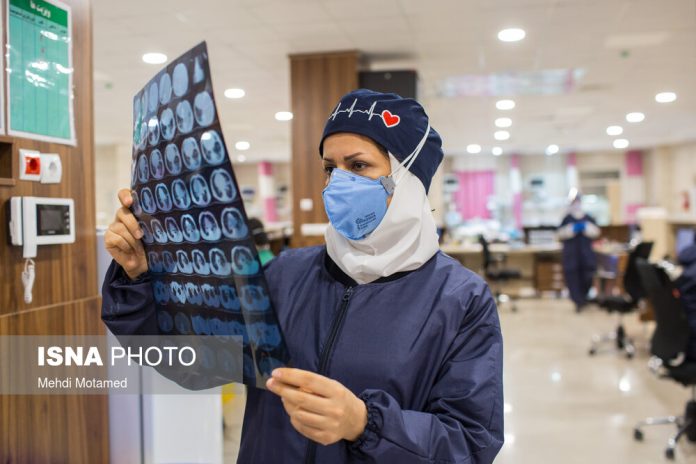
COVID in Iran

Abbas Shir-Ojan, a spokesman for the National Taskforce to Combat the Coronavirus, said on Thursday that while red and orange alert levels had been issued for most areas in Iran Corona-wise, the latest wave could hopefully be on a downward trajectory.

Another Iranian health official contradicted those remarks by saying that the contagion would deepen over the next two weeks in the country.

Mohsen Farhadi, technical deputy at the Health Ministry’s Center for Environmental and Workplace Health, said the BA-5 subvariant of Omicron, itself a variant of the coronavirus, was spreading quickly in Iran and would in two weeks become the dominant variant in the country.

He said those Iranians planning to travel to Iraq for the Islamic rituals of Arba’een in the city of Karbala, must have received four doses of COVID vaccinations to be allowed abroad.

He said medical experts would examine pilgrims along the way during the ritual.

Meanwhile, according to the updates released by the Health Ministry on Thursday, 7,396 people have been diagnosed with COVID-19 over the past 24 hours, raising the total count to 7,459,175.

The figures said 84 patients also lost their lives to the virus, bringing the death toll to 142,738.

Iran FM urges US to accept Tehran’s ‘legitimate demands’

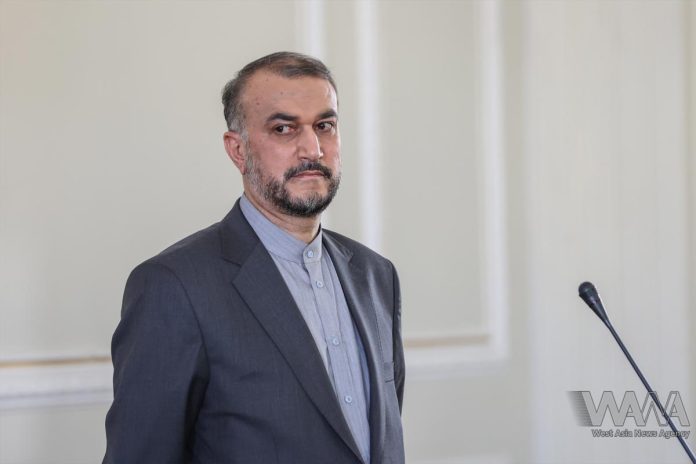
Iranian Foreign Minister Hossein Amirabdollahian

The top Iranian diplomat made the remark during a phone conversation with his Turkish counterpart Mevlut Cavusoglu on Wednesday.

Amirabdollahian said that the country has conveyed its message to the US through Europe regarding talks held in Vienna to remove sanctions on the Islamic Republic.

He expressed hope that the US takes a realistic approach and accept Iran’s rightful and legal demands in order to pave the way for an agreement over a final text.

He spoke with the Turkish foreign minister three days after the latest round of talks wrapped up in Vienna over the revival of the 2015 Iran nuclear deal and the removal of the sanctions that the US reinstated following its withdrawal from the deal in May 2018.

The top Turkish diplomat expressed hope that the Vienna negotiations bear results very soon and protect the Iranian nation’s rights and safeguard the common interests of all sides.

During their conversation, the two foreign ministers discussed Tehran-Ankara ties as well.

They also discussed the latest Zionist regime’s aggression against the Gaza Strip where at least 46 people, including women and children were killed.

Amirabdollahian strongly condemned the Israeli onslaught, and Cavusoglu called the civilians’ killing an inhumane act.

Oman’s FM praises Iran’s constructive role in nuclear talks

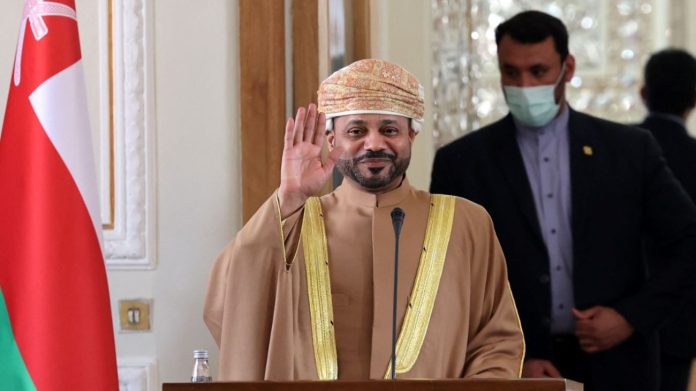
Oman's Foreign Minister Sayyid Badr al Busaidi

Badr Albusaidi and Iran’s Foreign Minister Hossein Amirabdollahian discussed a host of issues on the phone, including the latest round of talks on the removal of anti-Iran sanctions.

The two foreign ministers held their conversation on Wednesday, with the top Iranian diplomat expressing gratitude to Oman over its stance on the talks the latest round of which wrapped up in Vienna on Sunday.

Badr Albusaidi said that Iran has played a constructive role in the Vienna negotiations, adding that Oman believes the success of the talks will benefit all parties.

The two foreign ministers also discussed Palestine.

Amirabdollahian denounced the latest Zionist regime’s aggression against the besieged Gaza Strip, which left nearly four dozen people dead, including women and children.

Badr Albusaidi noted that Oman will always stand by the Palestinian people and support upholding their rights.

Expert: Two scenarios possible for US’s green light to Iran nuclear deal

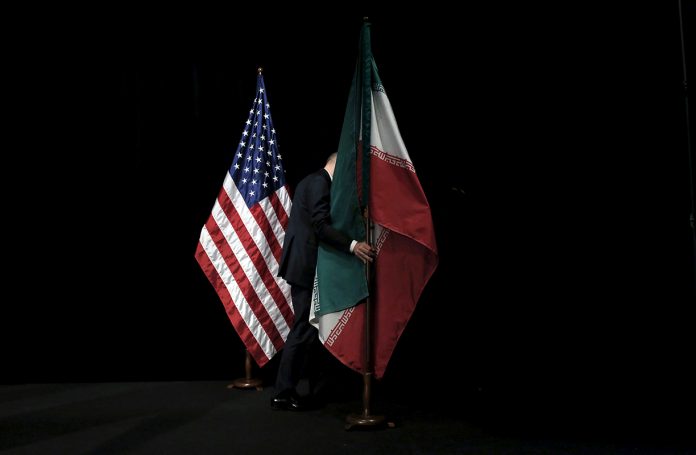
Iran US Flags

In an interview with ILNA, political affairs expert Diako Hosseini said there are two scenarios explaining Washington’s swift approval of the text, saying, “First, the text was prepared in coordination with the United States and they were already aware of the details… The second scenario is that the US may not find the European proposal entirely to its liking, but at the same time predicts Iran will reject the plan, so they have preemptively accepted it to throw the ball in Iran’s court.”

He suggested that the Iranian negotiating team change course as the United States has so far had the upper hand in the blame game to paint a bleak picture of Iran at home and abroad.

Hosseini also said the Iranian team has to back down from its demand that US provide guarantees any US administration will remain committed to the agreement, saying such “guarantees are practically impossible.”

The political analyst also rejected claims that Russia has acted as an obstacle to block clinching a final agreement, saying Moscow will also be a loser in case the talks end in failure as it has to take sides with either Iran or the US and Israel in any future conflict.

‘EU advancing US anti-Iran agenda in Vienna instead of facilitating talks’

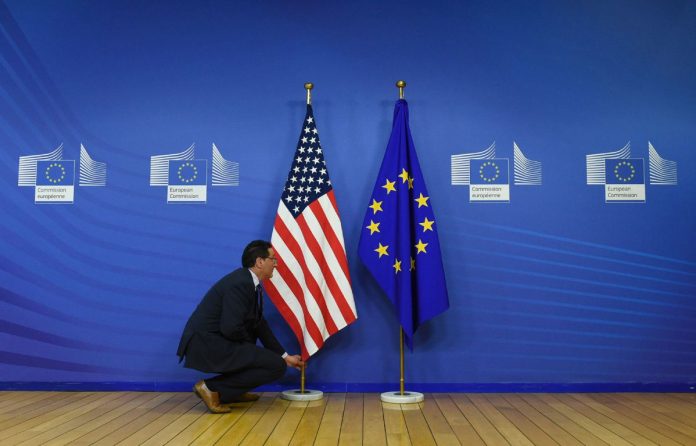
US & EU Flags Iran Nuclear Talks

IRNA added the move comes while the US administration appears to lack the power for decision-making on a return to the multilateral deal.

In an analysis piece, IRNA said the EU’s announcement at the end of the talks came regardless of the fact that there were still certain outstanding issues to be resolved during the Vienna negotiations, adding that such a move only works to complicate the process of saving the troubled nuclear deal.

There is no need to say that the weak administration of US President Joe Biden lacks the power to take a decision regarding Washington’s return to the Joint Compressive Plan of Action (JCPOA), as the deal is officially called, given the upcoming elections in Congress which could lead to a return of the Republicans to power, it said.

Such election results would further undermine the Biden administration and make it even more difficult for it to rejoin the Iran deal, and that is why the White House has currently adopted the strategy of playing a blame game and fueling a propaganda campaign against Iran in the lead-up to the congressional elections, IRNA added.

It criticized the Europeans for “trying to advance Washington’s narrative against Iran instead of making efforts to facilitate the diplomatic process.”

Marandi: No progress possible in Vienna unless Iran-IAEA issues resolved

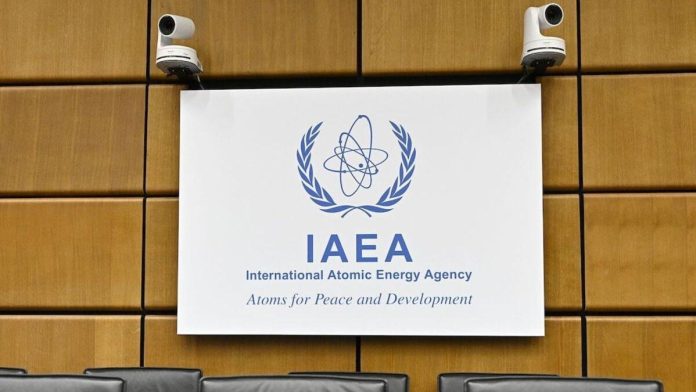
IAEA

In an interview with RT, Seyyed Mohmmad Marandi said Iran had so far managed to get many concessions from the Western parties to the Vienna talks, but the issue with the IAEA surrounding the “fake claims” against Iran must first be resolved so that the talks could move forward.

It should be noted that the IAEA’s Board of Governors is not a technical body but a political one, and that it has adopted a hostile approach vis-à-vis the Islamic Republic under Western pressure, said Marandi, adding that the Board now needs to take a political decision to enable the closure of the dossier.

The Board of Governors has, in the past, accused Iran of withholding cooperation with the IAEA, an allegation roundly dismissed by Tehran.

Also commenting on the latest round of the negotiations held in Vienna, Marandi said relative progress was made in some issues during the talks, adding that the EU coordinator, Enrique Mora, has put forward new proposals, which need to be fully studied in Tehran.

Iranian MP optimistic about nuclear deal revival

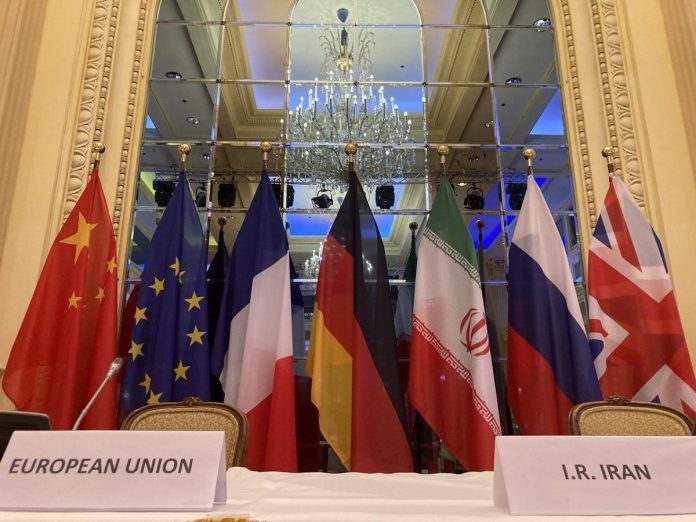
Vienna Talks

Yaghoub Rezazadeh, a member of the Iranian Parliament’s Foreign Policy and National Security Committee, told Entekhab news website, “We’ve had progress in up to 70 to 80 percent of the points we’ve proposed to the European parties during the negotiations. There are a few remaining issues that are being resolved.”

The remarks came days after negotiating teams of the latest round of talks held in the Austrian capital Vienna to restore the Joint Comprehensive Plan of Action (JCPOA) headed back home for consultations on a text presented by the European Union’s coordinator Enrique Mora after four days of intensive talks.

The talks have been held to lift sanctions against Iran and bring the United States back to the fold after its unilateral pullout from the deal in 2018 under former US president Donald Trump.

Iran presented its views regarding the sticking points to revive the agreement during the talks, but says the final decision on the text will be made after a thorough review of the text.

Rezazadeh said, “The other parties have asked for some time to decide on the proposals we have presented and announce the results.”

One of the last remaining points of contention to strike a deal and restore the JCPOA is the removal of sanctions on Iran’s Islamic Revolution Guards Corps (IRGC), as “the main foundation of our armed forces and a source of power in the world,” according the lawmaker.

He said the West would eventually have to accept the IRGC as part of Iran’s armed forces and backtrack on its stance.

Analyst rejects ‘concerns’ over Iran-Russia cooperation as propaganda

Iran Khayyam satellite

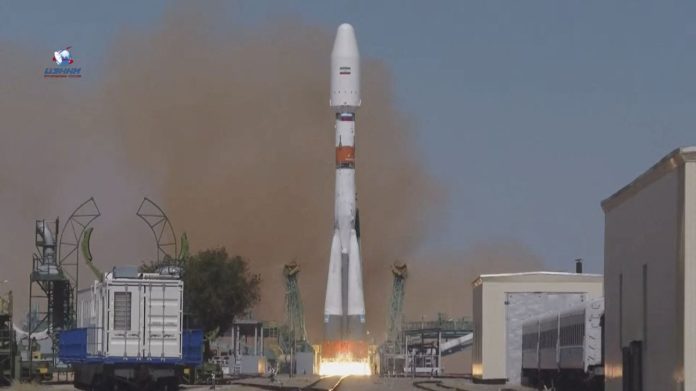
Sabah Zanganeh, in an interview with Tehran-based Nameh News website, refused claims that Iran’s Khayyam satellite launched on Tuesday in cooperation with Russia is for ‘spying’ purposes, saying the West and particularly the United States try to tarnish Tehran-Moscow cooperation as a ‘cause of concern’.

He said placing the remote sensing Khayyam satellite in orbit by the Russian Soyuz satellite carrier to fulfill many of Iran’s needs that require high-precision data was a transparent cooperation which can be monitored from all across the world.

The top analyst also played down Washington’s reaction on Russia’s purchase of Iranian drones, saying, “Drones are primarily a reconnaissance device. Secondly, they’re a means of defense against all the facilities and devices available in the world.”

Zanganeh said technological cooperation between countries is nothing new, noting the United States itself has always had close aerospace cooperation with Russia.

He stressed, “If cooperation between countries in technological fields, especially in military technology, is a cause of concern, the whole world should be constantly worried about the US and the West, as they have always shown that they have no regard for anything and act according to their own interests.”

Report: Saudi coalition carries out fresh rounds of strikes on Yemen in violations of truce

Saudi Fighter Jets

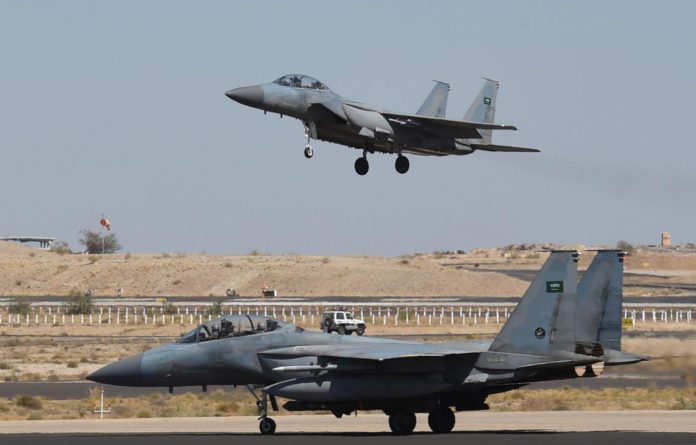
The violations included reconnaissance missions over the provinces of Ma’rib, Ta’izz, Hajjah, Jawf, Sa’ada, al-Hadidah, and border areas, Yemen’s Arabic-language al-Masirah television network reported on Thursday.

The report added that the armed reconnaissance aircrafts belonging to the Saudi-led coalition also targeted residential neighborhoods and positions of the army and Popular Committees in Ma’rib, Ta’izz, Najran, and al-Hadidah provinces.

Artillery shells and rockets were also heavily fired at residential areas and positions of the Yemeni army and Popular Committees in Ma’rib, Ta’izz, Hajjah, Sa’ada, Jizan, al-Hadidah, Dhale, and al-Bayda, it said.

Also on Wednesday, the Yemen Petroleum Company (YPC) announced the Saudi-led coalition has seized another Yemen-bound ship carrying fuel in blatant violation of the recently-extended ceasefire brokered by the UN.

The fuel ship, Symphony, was seized while carrying tens of thousands of tons of diesel oil, Yemen’s official Saba news agency reported, citing a statement by the YPC spokesman Essam al-Mutawakel.

The company added that the ship was impounded despite being inspected and cleared for the port call by the United Nations.

The UN-brokered truce between the coalition and Ansarullah first came into effect in April. The truce has since been extended twice.

Earlier this month, the United Nations’ special envoy for Yemen, Hans Grundberg, stated that the extension, running from August 2 to October 2, included a commitment from the parties to intensify negotiations to reach an expanded truce agreement as soon as possible.

Under the terms of the truce, commercial flights have resumed from the Yemeni capital of Sana’a to Jordan and Egypt, while oil tankers have been able to dock in the lifeline port city of al-Hudaydah.

Moreover, in line with the agreement, the coalition agreed to end its attacks on Yemeni soil and end a simultaneous siege that it has been enforcing against Yemen.

Yemen has, however, reported many violations of the truce by the Saudi-led forces.

Saudi Arabia and the United Arab Emirates — the closest allies of the US in the region after the Israeli regime — have been waging the war on Yemen since March 2015.

The invasion has been seeking to change Yemen’s ruling structure in favor of the impoverished country’s former Riyadh- and Washington-friendly rulers and crush the Ansarullah resistance movement. The Saudi-led coalition has failed to meet any of its objectives.

The war, which has been enjoying unstinting arms, logistical, and political support on the part of the United States, has killed tens of thousands of Yemenis and turned the entire country into the scene of the world’s worst humanitarian crisis.

Yemen’s defense forces, which feature the country’s army and its allied Popular Committees, have, however, vowed not to lay down their arms until the country’s complete liberation from the scourge of the aggression.