Thursday, January 1, 2026
Home Blog Page 178

Erdogan says Putin, Zelensky not ready for face-to-face meeting

Putin and Zelensky

Erdogan made the remarks after meeting with Putin in China and speaking with Zelensky by phone.

Erdogan told journalists that while negotiations between Russian and Ukrainian officials in Istanbul show the path to peace remains open, conditions for a leaders’ summit have not yet been created.

Yet, Turkey supports “raising the level of negotiations gradually,” the Turkish president added.

After the Aug. 15 summit with Putin in Alaska, U.S. President Donald Trump stated he was working to broker a meeting between the Russian and Ukrainian leaders.

Following Aug. 18 talks at the White House with European leaders and Trump, Zelensky said Kyiv is ready to enter unconditional high-level negotiations with Moscow.

The Ukrainian president has repeatedly voiced readiness for a direct meeting with Putin, urging the U.S. to impose tougher measures if Russia continues to avoid such talks.

Russian Foreign Minister Sergey Lavrov has noted that a Zelensky-Putin meeting was “not ready at all,” accusing Ukraine of rejecting several preconditions and questioning Zelensky’s legitimacy.

A source in Ukraine’s President’s Office told the Kyiv Independent earlier that a face-to-face meeting between Zelensky and Putin will not happen unless the U.S. ups its pressure on the Russian leader.

Trump has stated that Putin avoids meeting Zelensky because “he doesn’t like him.”

France issues arrest warrant for Bashar Assad over 2012 journalist killings in Syria

Bashar Assad

Marie Colvin, 56, an American working for The Sunday Times of Britain, and French photographer Remi Ochlik, 28, were killed on February 22, 2012 by the explosion in the eastern city of Homs, which is being investigated by the French judiciary as a potential crime against humanity as well as a war crime.

British photographer Paul Conroy, French reporter Edith Bouvier and Syrian translator Wael Omar were wounded in the attack on the informal press centre where they had been working.

Assad escaped with his family to Russia after being ousted by rebels at the end of 2024 although his precise whereabouts have not been confirmed.

Other than Assad, the warrants notably target his brother Maher al-Assad who was the de facto head of the 4th Syrian armoured division at the time, intelligence chief Ali Mamlouk, and then-army chief of staff Ali Ayoub.

“The issuing of the seven arrest warrants is a decisive step that paves the way for a trial in France for war crimes and crimes against humanity committed by Bashar al-Assad’s regime,” said Clemence Bectarte, lawyer for the Paris-based International Federation for Human Rights (FIDH) and Ochlik’s parents.

The FIDH announced that the journalists had clandestinely entered the besieged city to “document the crimes committed by Bashar al-Assad’s regime” and were victims of a “targeted bombing”.

“The investigation clearly established that the attack on the informal press centre was part of the Syrian regime’s explicit intention to target foreign journalists in order to limit media coverage of its crimes and force them to leave the city and the country,” stated Mazen Darwish, lawyer and director of the Syrian Center for Media and Freedom of Expression (SCM).

Municipal worker in Iran’s Gorgan returns bag full of gold to owner

The worker, Mohammad Teimouri, 23, said he found the bag during his shift near in late August.
Upon opening the bag to find identification, he discovered a significant amount of gold coins and jewelry.

“About half an hour later, the owner called, very upset, saying all his life savings were in that bag,” Teimouri told local reporters.
“I gave him my location and told him not to worry. When he arrived, I returned everything to him safely.”

Teimouri, who works as a cleaner and construction laborer, said he never considered keeping the valuables.

“What belongs to someone else should be returned. If I ever lost something, I’d hope someone would do the same for me,” he said.

Iranian armed forces “fully prepared” to respond to any aggression

Iran National Army Day

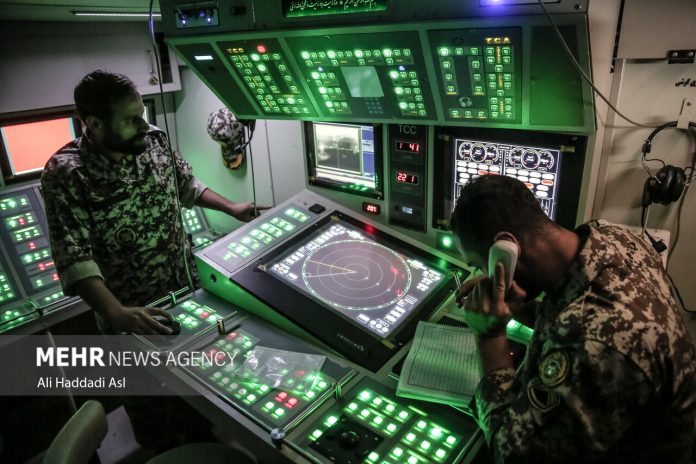
Ebrahim Rezaei, speaking after a meeting between members of the commission and Major General Mousavi, Chief of the General Staff of the Armed Forces, as well as his deputies, said the session focused on the latest defensive preparedness and recent military operations during the 12-day war, including the strikes carried out against the Zionist regime.

According to Rezaei, General Mousavi stressed that Iran will stand firmly and powerfully against its enemies and defend the nation with full strength. His deputies also presented reports highlighting that the Armed Forces are in complete readiness, both defensively and operationally, and capable of delivering a stronger and harsher response than in previous confrontations.

Members of the parliamentary commission expressed gratitude for the sacrifices and dedication of the Armed Forces in defending the nation.
They reiterated the full support of both the Parliament and the Commission for strengthening Iran’s defense capabilities, as well as for improving the living conditions and meeting the needs of military personnel.

Pres. Pezeshkian raps double standards in nuclear dispute, global governance

Pezeshkian praised China’s development model as purposeful, expert-driven, and well-planned, noting significant improvements in Beijing since his last visit a decade ago.

He described President Xi Jinping’s proposal for global governance reform as a comprehensive package that can only succeed if implemented in full.

The Iranian president said the initiative promotes multilateralism and justice-based international order, countering double standards that allow the Zionist regime and its backers to disregard legal norms while claiming to defend human rights.

On the revival of the 2015 nuclear deal, Pezeshkian argued that those who violated the agreement now accuse Iran of failing to meet its commitments, calling this the clearest example of double standards.

He added that Iran does not seek war but has proven its ability to defend itself decisively.

Pezeshkian further criticized the International Atomic Energy Agency, saying it has not acted honestly toward Iran, though he affirmed Tehran’s readiness to cooperate within internationally accepted frameworks, free from bias and discriminatory standards.

China reaffirms support for Iran’s nuclear rights, sovereignty

Xi praised Iran’s repeated emphasis on compliance with nuclear non-proliferation obligations and underscored Beijing’s recognition of Tehran’s right to pursue peaceful nuclear development.
He further stated that China “supports Iran in safeguarding its national sovereignty, territorial integrity, and national dignity, as well as defending its legitimate rights and interests through dialogue.”

Xi highlighted that relations between Tehran and Beijing have been tested in a turbulent international environment and continue to grow steadily and successfully.
He emphasized China’s commitment to upholding justice, advancing a comprehensive and balanced solution to the Iranian nuclear issue, and supporting efforts toward lasting peace in the Middle East.

President Pezeshkian is in China to attend the Shanghai Cooperation Organization (SCO) summit held in Tianjin from August 31 to September 31. He is also scheduled to participate in China’s military parade on September 3.

EU defence spending to hit record 380bn Euros this year: Report

The 10-percent rise comes as European members of NATO have committed to massively ramp up spending under pressure from US President Donald Trump.

“Europe is spending record amounts on defence to keep our people safe, and we will not stop there,” EU foreign policy chief Kaja Kallas said.

The European Defence Agency (EDA) said that of the money being spent this year, close to 130 billion euros was being spent on investments such as new weaponry.

European countries have stepped up spending sharply since Russia invaded Ukraine in 2022.

A 150-billion-euro EU loan scheme intended to help countries ramp up defence spending has been fully subscribed, the European Commission said last week, with 19 of 27 member states applying for funds.

The SAFE plan enables member states to get cheaper loans backed by the EU’s central budget.

Numerous Western militaries and intelligence services have warned that Moscow could be ready to attack a NATO country within three to five years if the war in Ukraine ends.

But the return of Trump — who has long railed against the continent for underspending — to power this year has given Europe a fresh shove.

The mercurial US leader extracted a commitment from NATO allies to cough up five percent of their GDPs on security-related spending at a summit in July.

That headline figure breaks down as 3.5 percent on core defence spending and 1.5 percent on a looser range of areas such as infrastructure and cyber security.

“Meeting the new NATO target of 3.5 percent of GDP will require even more effort, spending a total of more than 630 billion euros a year,” EDA head Andre Denk said.

EU considers tighter rules to block Russian gas: Bloomberg

Denmark, which currently holds the EU’s rotating presidency, has circulated a proposal requiring gas importers to provide national authorities with proof that their supplies do not originate in Russia, according to a document seen by Bloomberg.

The plan specifically raises concerns over gas shipped through TurkStream, the pipeline linking Russia with Southeast Europe.

“Natural gas entering the Union through borders or interconnection points between the Union and Russia or Belarus and through the interconnection point Strandzha 2 / Malkoclar (TurkStream) shall be presumed to be exported, directly or indirectly, from the Russian Federation, unless unambiguous evidence,” the Danish compromise proposal states.

The draft rules reflect fears that Russian supplies could still be blended with other gas and re-exported to Europe, a process that is difficult to track as fuel often changes hands before reaching end consumers. If adopted, the measures would also prevent future swap deals that could disguise Russian deliveries as non-Russian shipments.

Under the current phaseout plan, gas imported under short-term contracts of less than one year must stop by June 17, 2026, with exemptions for landlocked countries such as Hungary and Slovakia. Longer-term agreements will be prohibited entirely by the end of 2027.

Denmark hopes to secure backing from EU member states for the gas ban proposal by October. It would then enter negotiations with the European Parliament, with the goal of finalizing legislation before the end of the year.

Spokesman says US seeking unlawful pressure against Iran

Esmail Baghaei

Esmail Baqaei said the US backing of the three European states demonstrates that, from the very beginning of the new administration, Washington’s agenda was to undermine the JCPOA and impose illegal pressure on Iran.

In reaction to the move by the three European countries to invoke the snapback, Baqaei said: “When the three European states talk about the JCPOA, one must ask—which JCPOA are you talking about? They accuse Iran of failing to fulfill its commitments, but this claim is made in bad faith. Those who failed to honor their obligations are in no position to accuse Iran.”

He added that the European Union and the three European countries, who once acted as intermediaries leading to the JCPOA, have now downgraded their role to simply pushing Iran into negotiations with the United States.

Regarding Washington’s declared readiness to negotiate with Iran while simultaneously increasing pressure, he said: “Such preconditions are essentially a sign of bad faith toward a diplomatic approach.”

He continued, saying the US has disrupted diplomatic processes over the past ten years.

“The US unilaterally withdrew from the JCPOA without any justification, and most recently, during an ongoing diplomatic process, the Zionist regime, with US support, carried out aggression against Iran. From the outset, it was clear that Washington lacked goodwill.”

According to Baqaei, reports indicate that the three European countries initiated the sanctions reactivation process at the request of the Zionist regime and the United States.

Kremlin says Putin and Trump did not agree on summit with Zelensky

Putin Zelensky

Speculation of a possible Putin-Zelensky meeting arose in light of Trump’s talks with Putin in Alaska, after which the US leader claimed he had “begun the arrangements” for such a meeting, which might later expand into a three-way summit.

Speaking on the sidelines of the Shanghai Cooperation Organization (SCO) summit in China on Monday, Ushakov confirmed that Putin and Trump had discussed raising the level of the negotiating team for direct talks between Moscow and Kiev, but stressed that no decision has been finalized.

“What the press reports is not what we agreed on. They often talk about a trilateral meeting, about a meeting between Putin and Zelensky, but there was no agreement on this between Putin and Trump,” Ushakov said.

He added that while the US delegation promised specific proposals on such meetings after Alaska, none have yet been made. The issue, he noted, remains under discussion.

According to Ushakov, the Ukraine conflict was a key topic in Putin’s talks with Chinese President Xi Jinping and Indian Prime Minister Narendra Modi during the SCO summit on Monday. He did not disclose details of those conversations.

Speaking earlier in the day, Putin said Moscow values the efforts of its strategic partners to end the hostilities, and promised to brief colleagues on his conversations with Trump during bilateral talks. The Russian leader stressed that any potential Ukraine peace deal would only hold if “the root causes of the crisis… [are] eliminated.” He reiterated that one of the main causes of the conflict was the West’s “attempts to drag Ukraine into NATO, which represent a direct threat to Russia’s security.”