Sunday, December 28, 2025
Home Blog Page 178

Iranian CrossFit champion killed at wedding in Mashhad

Crime Scene

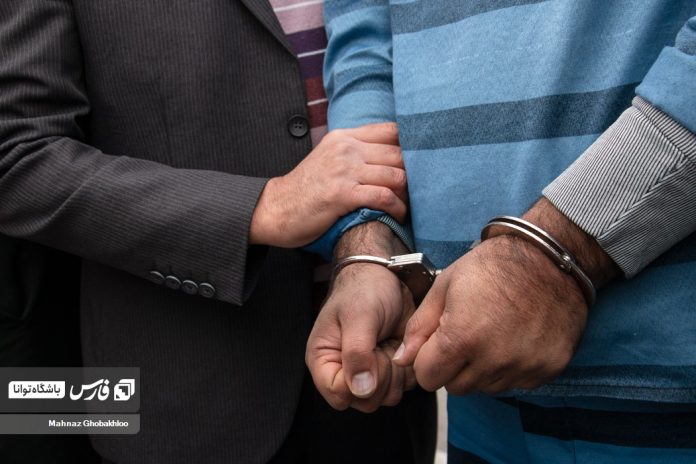
The incident also injured several other guests. According to Judge Sadegh Safari, the suspect, also a local athlete, has been identified through rapid legal procedures and a manhunt has started to find him.

Authorities say the assailant fired multiple rounds using a handgun.

No motive is known for the killing. But witnesses suggest that a family dispute may have been the primary motive. Asadi was 36.

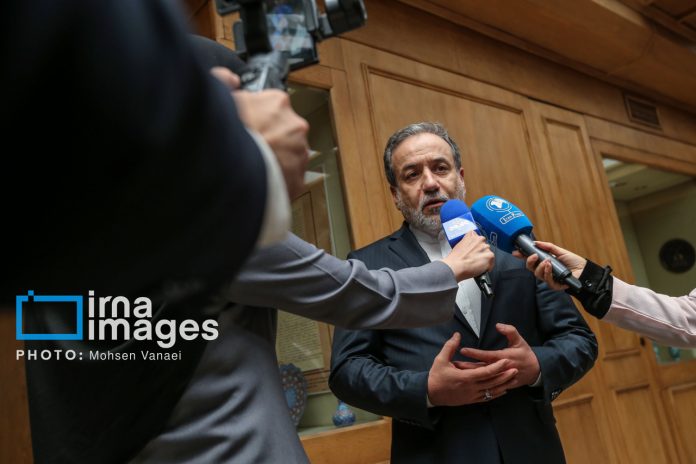
“Economic normalization with West almost impossible after snapback”

Speaking on the “snapback” mechanism under UN Security Council Resolution 2231, Negahdari explained that this process begins when any JCPOA participant declares a significant violation on part of Iran, automatically reactivating six previous UN sanctions without the need for a new resolution.

He stressed that the snapback primarily enforces Iran’s obligations, not those of other parties. Even if Iran raises a complaint, the mechanism ultimately leads to reinstated sanctions, he noted.

According to Negahdari, the UN Security Council must vote on a draft resolution to maintain sanctions relief, and a failure to approve it results in automatic reactivation of prior sanctions, making vetoes largely ineffective.

Negahdari also said while Russia and China cannot prevent snapback, they could weaken its implementation, especially in monitoring sanctions. As a result, international consensus against Iran would diminish, and any new UN sanctions would be difficult to pass, while meaningful economic normalization with the West becomes nearly unattainable.

Iran defeat USA to reach Final of U21 Volleyball World Championship

The defending champions left little chance for the opposing side, bringing the US team to its knees.

With this win, Iran moves one step closer to retaining its world title.
In the championship final, Iran will face Italy.

President Pezeshkian: No foreign power allowed to undermine Iran-Armenia friendship   

He was speaking on Saturday during a meeting with Secretary of Armenia’s National Security Council Armen Grigoryan.

Pezeshkian said no foreign power should be allowed to undermine the close and strategic friendship between Tehran and Yerevan.

Referring to the positive outcomes of his recent visit to Armenia, Pezeshkian welcomed progress on the North–South Corridor project, describing it as a major step toward enhancing economic and political ties.

The Iranian president further called for swift implementation of bilateral agreements.

For his part, the secretary of Armenia’s National Security Council praised Iran’s commitment to deepening ties.

Grigoryan noted that Armenia is ready to finalize a comprehensive strategic cooperation agreement with Iran.

He also welcomed greater involvement of Iranian companies in Armenia’s infrastructure and development projects and voiced hope for a significant boost in economic exchanges.

Iranian president to visit China for SCO summit and Victory Day Parade

Masoud Pezeshkian

Abdolreza Rahmani Fazli said the visit will focus on participation in the Shanghai Cooperation Organization (SCO) summit as well as the “Shanghai Plus” gathering, which brings together member states, observer countries, and representatives of regional and international organizations, including the UN secretary general.

The Iranian president will also attend China’s grand military parade marking the 80th anniversary of its victory in World War II.

Rahmani Fazli described Pezeshkian’s presence at the parade as a sign of the close and constructive relationship between Tehran and Beijing.

The ambassador referred to Iran’s active role in the SCO, noting that the country has taken part in over 100 meetings and committees during China’s chairmanship, with participation at ministerial and even top state levels.

He also cited recent visits to China by Iran’s judiciary chief and several cabinet ministers as evidence of strong engagement.

Rahmani Fazli underlined that Iran’s participation underscores opposition to unilateralism and commitment to multilateral cooperation for peace, security, and development at both regional and global levels.

EU says ‘not optimistic’ on sanctioning Israel over Gaza war

Gaza War

Foreign ministers meeting in Denmark will discuss a proposal to suspend EU funding to Israeli start-ups as initial punishment for the situation in Gaza.

But the bloc has so far failed to garner the majority needed to take that step — let alone move ahead with more forceful measures against Israel.

“I’m not very optimistic, and today we are definitely not going to adopt decisions,” Kallas told journalists at the start of the Denmark meeting.

“It sends a signal that we are divided.”

Splits within the European Union between countries backing Israel and those favouring the Palestinians have seen the 27-nation bloc often left hamstrung in the face of the dire humanitarian crisis in the besieged and bombardment enclave.

A string of EU countries are pushing for more far-reaching punishment for Israel, but have been frustrated.

Denmark’s foreign minister Lars Lokke Rasmussen, whose country holds the EU’s rotating presidency, insisted the bloc “must change words into action”.

He stated that Copenhagen backed suspending trade cooperation with Israel, sanctioning far-right Israeli ministers, and banning imports from illegal settlements.

Israel is facing pressure at home and abroad to end its offensive in Gaza, where the vast majority of the population has been displaced at least once and the United Nations has declared a famine.

The war in Gaza has killed at least 63,000 Palestinians, most of them civilians, according to figures from the health ministry in Gaza that the UN considers reliable.

Iran faces severe drought amid poor water management, environment chief warns

Iran drought

She said the crisis is partly driven by climate change, but also by mismanagement of water resources.

Speaking on Saturday, Ansari criticized years of planning that ignored the country’s ecological capacities, citing examples such as the establishment of water-intensive industries in arid cities and unregulated urban expansion.

“To supply these areas, inter-basin water transfers were carried out, creating new environmental and social challenges,” she noted.

Ansari also pointed to unsustainable agricultural practices, including water-intensive crops and outdated irrigation methods, as major contributors to the crisis.

She urged a comprehensive review of water policies, emphasizing the need for better consumption management in agriculture, industry, and urban areas.

Proposed solutions include expanding wastewater treatment systems, reusing reclaimed water, and adopting sustainable consumption models.

On transboundary water issues, Ansari stressed the importance of environmental diplomacy, particularly in managing shared resources like the Hoor al-Azim wetland along the Iran-Iraq border, which suffers from seasonal drying and fires.

She called for stronger regional and international engagement to secure Iran’s environmental water rights.

US backing ‘Chinese peacekeepers’ in Ukraine: FT

According to four FT sources, Trump suggested that China station troops in a prospective neutral zone along the 1,300km front line as part of a peace settlement with Russia. The proposal was reportedly made during a meeting at the White House last week involving European leaders and Ukraine’s President Volodymyr Zelensky.

However, a senior Trump administration official dismissed the report as “false,” stressing that there has been no discussion on the matter.

The idea has reportedly met with resistance from EU nations and was previously rejected by Zelensky, who cited what he called Beijing’s failure to prevent the conflict both in 2014 and 2022.

Previous reports claimed that US, Ukrainian, and European officials have discussed the concept of a demilitarized zone patrolled by neutral peacekeepers as the first layer of a peace settlement. Other reports suggest that another idea is to deploy Western troops for this purpose – which Moscow is vehemently opposed to.

Earlier this month, the Chinese Foreign Ministry denied reports that Beijing had expressed willingness to join a potential international peacekeeping force in Ukraine. Since the start of the Ukraine conflict, Beijing has positioned itself as a neutral actor, calling on both belligerents to end the hostilities and stressing that it is essential to promote a sustainable political settlement of the Ukraine crisis.

While Russia has indicated in principle that it does not oppose Western security guarantees for Ukraine, it insists that any arrangement be supported by UN Security Council permanent members, including China. It has stressed that guarantees should not be “one-sided” and aimed at containing Russia.

Moscow has opposed the deployment of NATO troops to Ukraine in any form, arguing that the expansion of the bloc’s military infrastructure towards Russia’s borders was one of the key reasons for the conflict.

Renowned Iranian composer Ahmad Pejman dies in Los Angeles

Born in July 1935 in Iran, Pejman began his musical journey in high school, studying violin under Heshmat Sanjari and music theory with Hossein Naseri.

In 1964, he received a scholarship to study composition at the Vienna Academy of Music. Upon returning to Iran, he became a composer for Tehran’s Roudaki Hall and a music professor at the University of Tehran.

During this period, Pejman composed notable operas, including The Farmer’s Celebration, The Hero of Sahand, and The Phoenix.

In 1975, he moved to the US to pursue a doctorate in composition at Columbia University, studying under prominent composers such as Vladimir Ussachevsky and Jack Beeson.

Pejman’s prolific career spanned classical works, orchestral compositions, and memorable scores for Iranian cinema. His innovative style and dedication to both performance and research cemented his legacy as one of Iran’s most influential music figures.

Iran, Armenia discuss security and regional stability

Iran Armenia Flags

The visit, made at Larijani’s official invitation, focused on expanding bilateral relations and addressing regional security concerns.

Larijani emphasized Iran’s opposition to any geopolitical changes in the South Caucasus and reaffirmed Tehran’s support for Armenia’s sovereignty and regional stability.

He also highlighted the importance of cooperation in completing the North-South Transport Corridor, which would link the Persian Gulf to the Black Sea, describing it as a key economic and strategic project.

“Iran has always supported the independence and strength of regional countries to ensure lasting security,” Larijani stated, expressing satisfaction with the current level of political, economic, security, and defense relations between Tehran and Yerevan.

Grigoryan described bilateral ties as “unprecedented” and expressed Armenia’s readiness to sign a comprehensive strategic partnership agreement with Iran in the near future.

He reiterated Yerevan’s adherence to five key principles, including national sovereignty, respect for territorial integrity, judicial authority, inviolability of borders, and reciprocity, and assured Tehran that Armenia remains firmly opposed to any attempt to alter the region’s geopolitical landscape.

The Armenian official also underscored that recent peace negotiations with the Republic of Azerbaijan have preserved Armenia’s exclusive control over its security, military, and customs affairs, providing reassurances to Iran about its regional position.