Sunday, December 28, 2025
Home Blog Page 177

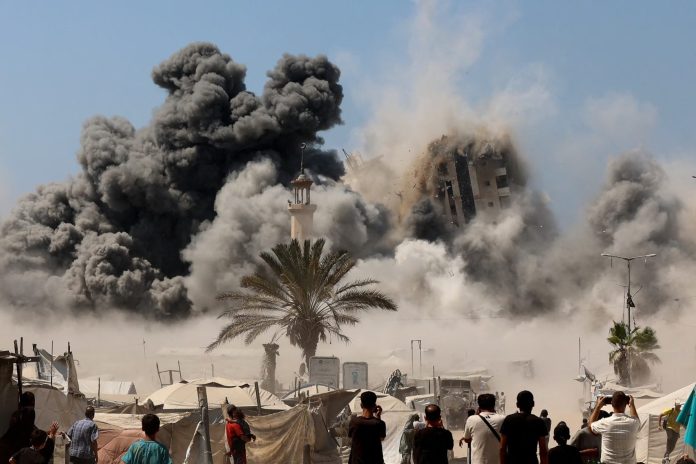
Hamas confirms death of Mohammed Sinwar

Gaza War

Pictures released by the Palestinian group on Saturday showed him alongside other political and military leaders described as “martyrs of the military council”.

Mohammed Sinwar was the younger brother of Yahya Sinwar, accused by Israel of masterminding the October 7, 2023 attack on the occupied territories that sparked the ongoing war in the Gaza Strip.

He reportedly led the Al-Qassam Brigades’ military council after the death of commander Mohammed Deif.

Israel announced it had identified Mohammed Sinwar’s body in June in a tunnel beneath the European Hospital in Khan Yunis, central Gaza. The military added it had “eliminated” him on May 13.

Hamas’s October 2023 attack on southern Israel resulted in the deaths of 1,200 people.

Of the 251 hostages seized during the attack, 47 are still being held in Gaza, around 20 of whom are believed to be alive.

Israel’s retaliatory offensive has killed at least 63,300 Palestinians, most of them civilians, according to figures from the health ministry in Gaza.

Interior ministry: Over 1.8mn undocumented Afghan migrants exited Iran since July last year

Nader Yarahmadi, advisor to the interior minister and head of the office, said on Sunday that the government’s new migration policies, introduced over the past year, have focused on distinguishing legal residents from illicit migrants and creating conditions for voluntary returns.

“Since the beginning of this administration until August 6, a total of 1,833,636 undocumented individuals have exited the country, including 1.2 million departures this year alone,” Yarahmadi said.

He added that more than 70 percent of those who left did so along with their families, noting that policies now allow for potential legal re-entry for individuals with needed skills or employment opportunities.

Authorities estimate that at least 800,000 additional undocumented migrants will need to leave in the next phase to manage pressures on infrastructure and public services.

Yarahmadi also highlighted progress on a national migration law, aimed at streamlining services, building a centralized migrant database, and issuing unique identification documents for foreign nationals.

Iran denies Azerbaijan’s allegations against ambassador to Armenia

Armenia Azerbaijan

In a statement sent to Axar, the embassy rejected reports accusing Ambassador Mehdi Sobhani of supporting separatist movements in Nagorno-Karabakh or providing military assistance to the Armenian government. The statement stressed that such allegations are “completely unfounded.”

The embassy also reiterated Iran’s “principled stance” on supporting a peaceful resolution to the Nagorno-Karabakh conflict and respecting the territorial integrity of the Republic of Azerbaijan.

It added that the remarks published by the Azerbaijani outlet were “fabrications and personal speculations of the author.”

Axar had recently published a report about Ambassador Sobhani, claiming “as his diplomatic mission in Yerevan nears its end, he allegedly backed separatist forces in Karabakh and fueled anti-Azerbaijani sentiments.”

The outlet also alleged that “Iran provided Armenia with military support, including weapons supplies.”

Diplomatic relations between Iran, Armenia, and the Republic of Azerbaijan have become sensitive, especially as a US-brokered ceasefire between Baku and Yerevan is feared to cut off Iran’s access to Armenia.

Iran to add two new national days to calendar next year

Iran Flag

The first proposal designates December 1 (Azar 10 in the Persian calendar) as “National Day of Iran’s Three Islands in the Persian Gulf,” marking the historic sovereignty of Iran over Greater Tunb, Lesser Tunb, and Abu Musa islands.

The move gained momentum last year after renewed claims by the United Arab Emirates and a joint statement by the Persian Gulf Cooperation Council and the European Union describing the historically Iranian islands as “occupied,” sparking widespread public and online reactions in Iran.

The second proposal seeks to dedicate a day to commemorate the 12-day conflict with the US-Israeli alliance earlier this year, which included direct attacks on Iranian soil. Officials have not yet announced an official title for this day.

Qader Ashena, Secretary of the Public Culture Council, said the initiatives will be presented to the Supreme Council of the Cultural Revolution for approval in the coming weeks. If passed by October, the two days will be included in Iran’s national calendar.

US accuses Europe of prolonging Ukraine war: Axios

Trump and Putin

According to Axios, U.S. officials have grown increasingly impatient with European leaders, whom they allege are pushing Ukraine to hold out for a “better deal.”

“The Europeans don’t get to prolong this war and backdoor unreasonable expectations, while also expecting America to bear the cost,” a senior White House official told Axios.

“If Europe wants to escalate this war, that will be up to them. But they will be hopelessly snatching defeat from the jaws of victory.”

Trump is also considering whether to step back from diplomatic efforts until one or both sides demonstrates greater flexibility, a White House official told Axios.

“We are going to sit back and watch. Let them fight it out for a while and see what happens,” the official added.

While U.S. officials reportedly “sit back and watch,” Moscow has unrelented in its attacks on Ukraine. Just two days prior, Russia launched a large-scale aerial strike on Ukrainian cities on Aug. 28. Twenty-five people, including four children, were killed in Kyiv.

The Trump administration has increasingly taken a “both sides” approach in its rhetoric regarding Russia’s invasion of Ukraine. Most recently, White House Press Secretary Karoline Leavitt drew a comparison between Russia’s attacks on civilians with Ukraine’s strikes on legitimate military targets.

Despite months of U.S.-led diplomatic efforts, Trump has not taken any concrete steps to pressure Moscow to stop fighting, while his administration paused military aid and intelligence sharing to Ukraine at various points. Trump himself publicly criticized President Volodymyr Zelensky but welcomed Russian President Vladimir Putin to American shores, rolling out the red carpet for him in Anchorage, Alaska just earlier this month.

The White House has also asked the U.S. Treasury Department to prepare a list of sanctions that Europe could impose on Russia, Axios reported. The list includes a total ban on Russian oil and gas purchases and EU tariffs on India and China, similar to those already levied by the U.S.

The European Union is already preparing more sanctions against Russia, however, and has imposed 18 sanctions packages since the start of Russia’s full-scale invasion of Ukraine in February 2022.

The Trump administration, on the other hand, has yet to impose sanctions on Russia and even temporarily lifted sanctions to facilitate the Trump-Putin meeting in Alaska on Aug. 15.

Trump considers sending US private military companies to secure Ukraine peace accord: Telegraph

Russia Ukraine War

The potential deal is an attempt to keep a pledge not to send the U.S. military to Ukraine, while also serving as a deterrent against potential future Russian aggression.

Since taking office, Trump has pledged to broker a swift peace agreement in Ukraine while reducing the scope of U.S. involvement in the war.

The focus for such U.S. contractors appears to be on helping to build new defenses and securing U.S. business interests in Ukraine, such as those that the much-vaunted mineral deal aims to facilitate.

The deal in progress also entails the deployment of European soldiers in a buffer zone near the Russian border. Another 30,000 European soldiers may be deeper in Ukraine as a further deterrent force.

European soldiers would also likely take part by coming to western Ukraine to train Ukrainian soldiers. Turkey would participate in the deal as envisioned by providing a naval security force in the Black Sea, critical to Ukrainian exports like grain and sunflower oil, the Telegraph reported.

Russia seems unlikely to sign off on any such security guarantee, as it has repeatedly ruled out the presence of NATO troops in Ukraine as part of a potential peace accord.

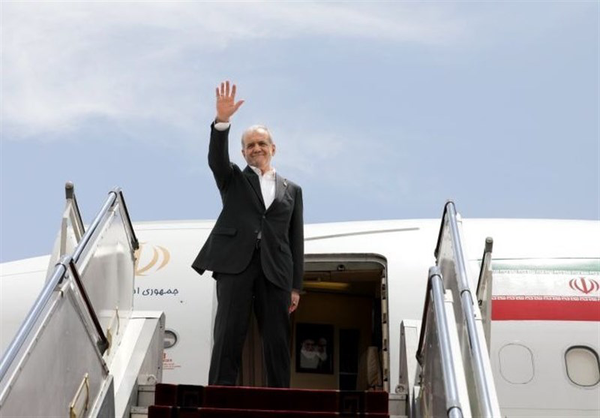
Iran president: Shanghai summit key to boosting multilateralism, regional cooperation

Speaking at Tehran’s Mehrabad Airport, Pezeshkian emphasized that the SCO represents nearly 2.5 billion people and accounts for over 40 percent of the global economy, underlining its strategic importance.

“This summit is an important platform for reinforcing multilateral cooperation and countering the unilateralism and hegemonic approaches promoted by the US and some European countries,” the president stated.

He noted that the event will bring together both full and observer members of the organization, offering opportunities for high-level discussions with presidents and prime ministers aimed at strengthening political, economic, cultural, and security ties.

Pezeshkian added that planned meetings with Chinese President Xi Jinping and other participating leaders would focus on advancing bilateral and regional partnerships.

Expressing optimism about the summit’s outcomes, the president said he hopes the talks will contribute to regional and global peace and stability, as well as promote cooperation for the prosperity and well-being of people in the region and beyond.

Presence of foreign powers in West Asia a source of concern: Chief of Staff of Iran’s Armed Forces

Secretary of the Security Council of Armenia, Armen Grigoryan, visited Tehran at the invitation of his Iranian counterpart. During his trip, he held discussions with Major General Mousavi at the General Staff of the Armed Forces in Iran’s capital on Saturday.

In their meeting, Major General Mousavi highlighted the historical and cultural ties between Armenia and Iran, emphasizing that the peace agreement between Armenia and Azerbaijan could foster peace and security in the region.

Mousavi said, “The Islamic Republic of Iran has always welcomed these processes. However, the presence of extra-regional powers, including the United States, is a source of concern for the region.”

He added, “Historical facts demonstrate the longstanding friendship and mutual goodwill between our two countries, while also confirming the negative role that the United States plays in the region. It is essential to develop mechanisms to address these concerns.”

Grigoryan, for his part, stressed the increasing trend of relations and cooperation between the two countries, emphasizing the need to further strengthen the foundations of these ties and expand security collaboration.

During the meeting, bilateral military relations were also briefly reviewed, and the necessity of further developing the cooperation was emphasized.

Yemen’s Houthis confirm prime minister killed in Israeli attack on Sanaa

Israel Yemen

Ahmed al-Rahawi was killed in a Thursday strike on Sanaa along with “several” other ministers, the Houthis said in a statement on Saturday.

Al-Rahawi, who served as prime minister in areas of the divided country that the group controls, was targeted along with other members of the Houthi-led government during a workshop, the statement added.

The Houthis did not specify how many other ministers were also killed in the Israeli attack.

“We shall take vengeance, and we shall forge from the depths of wounds a victory,” Mahdi al-Mashat, a Yemeni politician and military officer who serves as the chairman of the Supreme Political Council of the Houthis, stated in a video message later in the day.

Israel’s attack on Sanaa, which the Israeli military had claimed struck “a Houthi terrorist regime military target”, came as tensions in the region continue to escalate amid Israel’s war on Gaza.

Tel Aviv has repeatedly targeted Houthi positions in recent months as the Yemeni group has launched attacks on Israel and on Western vessels in the Red Sea and Gulf of Aden, in what it says is a show of support for Palestinians in Gaza.

The group has repeatedly stressed that Israeli attacks will not deter its military operations.

In its statement on Saturday, the Houthi presidency announced its government and institutions would still be capable of carrying out their duties after the deadly Israeli attack.

“The blood of the great martyrs will be fuel and a motivator to continue on the same path,” it added.

Al-Mashat also said the Houthis will “continue the path of building our armed forces and developing their capabilities”.

“To our people in Gaza, our stance is steadfast, and will remain so until the aggression ceases and the siege is lifted, no matter the scale of the challenge,” he added.

It remains unclear how many people were killed in Thursday’s air strike on Sanaa.

Quoting unnamed sources, Israeli media reported on Friday that the Israeli army attacked the entire Houthi cabinet, including the prime minister and 12 other ministers.

The attack came days after Israeli strikes on the Yemeni capital killed 10 people and wounded more than 90, according to health officials.

The Israeli military announced it had targeted Houthi military sites and the presidential palace in that attack.

Palestinian Authority calls on US to reinstate Abbas’s visa before UNGA

White House

The Palestinian presidency expressed “astonishment” at Washington’s decision to rescind the visas for Abbas and 80 other Palestinian officials before next month’s high-level meetings at UN headquarters.

Abbas has addressed the General Assembly for many years and generally leads the Palestinian delegation.

“We call upon the American administration to reverse its decision,” Abbas’s spokesperson spokesperson Nabil Abu Rudeineh told The Associated Press on Saturday, warning that the move “will only increase tension and escalation”.

“We have been in contact since yesterday with Arab and foreign countries, especially those directly concerned with this issue. This effort will continue around the clock,” Abu Rudeineh added.

The spokesperson also urged other countries to put pressure on US President Donald Trump’s administration to reverse its decision, including most notably those that have organised a high-level conference about reviving the two-state solution.

Set for September 22, the conference is being co-hosted by France and Saudi Arabia.

The Trump administration’s visa curbs come amid growing condemnation of Israel’s devastating war on Palestinians in the Gaza Strip and a wave of Israeli settler and military violence in the occupied West Bank.

The deadly attacks have prompted a growing number of countries to announce plans to recognise an independent Palestinian state at the UN in September.

US Secretary of State Marco Rubio justified the revocations on Friday by accusing the Palestinian Authority (PA) and the Palestine Liberation Organization (PLO) of “not complying with their commitments” and “undermining the prospects for peace”.

Rubio also accused the PA of taking part in “lawfare campaigns”, including appeals to the International Court of Justice and the International Criminal Court to hold Israeli accountable for abuses in Gaza and the occupied West Bank.

The European Union’s foreign policy chief said the bloc is calling on Washington to reconsider its visa denials.

“In the light of the existing agreements between the UN and its host state, we all urge for this decision to be reconsidered,” Kaja Kallas stated on Saturday following a meeting of EU foreign ministers in Copenhagen.