Thursday, January 1, 2026
Home Blog Page 168

E3 has no ‘legal, moral right’ to activate snapback mechanism against Iran: Russia

Iran Nuclear Program

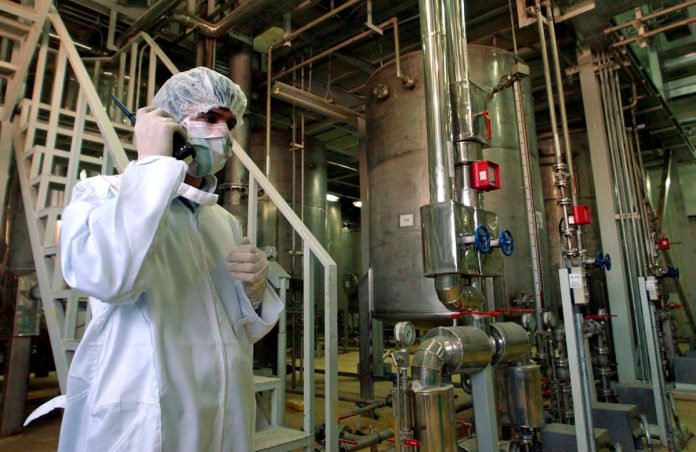
Russia’s Permanent Representative to International Organizations in Vienna, Mikhail Ulyanov, made the remarks in an exclusive interview with Press TV on Sunday, where he discussed the upcoming IAEA Board of Governors meeting in Vienna, focusing on Iran’s nuclear program and recent snapback sanctions triggered by the E3.

“It was not occasional that the snapback mechanism was launched by three European states who formally still remain participants in the JCPOA. They don’t have a legal, procedural, or even moral right to do that because they are violators,” the Russian diplomat said.

“They violated the JCPOA very significantly as well as Resolution 2231, and according to the legal opinion of the International Court of Justice of 1971, if a party violates an agreement, it has no right to refer to the same agreement for blaming another counterpart,” he added.

Ulyanov pointed out that the European trio and the US have been actively contributing to the politicization of the IAEA’s activities, citing an example where the Secretariat of the Agency and Iran were engaged in discussions regarding potential future agency activities, only for the E3 to trigger the snapback mechanism in New York when progress was being made in the negotiations.

This pattern of behavior by the European nations has led to repeated disruptions in the sphere concerning Iran’s nuclear dossier, he said, describing it as ‘irrational and inexplicable’.

“The Europeans time and again create problems in the sphere that relates to the nuclear dossier of Iran. It’s very irrational. It’s very strange. It has no plausible explanation, but this is a matter of fact,” he said.

According to Ulyanov, discussions within the IAEA’s Board of Governors have increasingly taken on a politicized nature, especially regarding Iran, evolving beyond technical matters and becoming intertwined with political considerations.

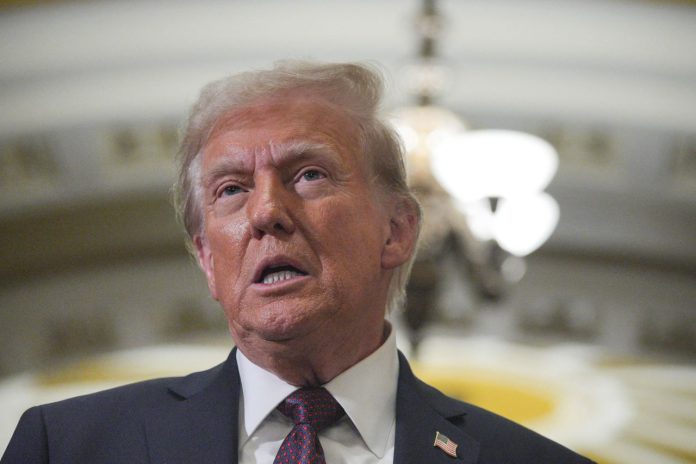
Furthermore, the Russian official emphasized that Washington’s involvement in the snapback process is nonexistent, as President Donald Trump withdrew from the nuclear deal, JCPOA, and President Joe Biden did not rejoin the deal.

He also stressed that France, Germany, and Britain do not have the “legal, procedural, or even moral right” to trigger the snapback mechanism because “they are violators”.

Ulyanov further noted that the E3 had significantly violated the JCPOA as well as Resolution 2231, stressing that, according to the 1971 Advisory Opinion of the International Court of Justice, a party that violates an agreement forfeits its right to reference the same agreement to blame another party.

He also raised concerns about the West’s exit strategy following the implementation of the snapback mechanism and the re-imposition of all UN Security Council sanctions by the end of September, emphasizing Russia’s preference for diplomatic solutions and collective discussions involving all JCPOA participants.

Ulyanov also highlighted that Russia and China have collaborated on a draft resolution to extend Resolution 2231 and the JCPOA for six months, aiming to provide more time for diplomatic efforts without resorting to snapback.

He further cautioned about the potential negative consequences of Iran’s withdrawal from the NPT, underscoring the extensive inspections carried out in the country as one of the most inspected nations.

Ulyanov agreed with the assessment that the nuclear issue is being utilized as a geopolitical tool to contain Iran, Russia, and China.

The Russian top envoy also commented on the increasing politicization and confrontation within international organizations like the UN and IAEA, noting a departure from earlier years’ cooperation and consensus.

He also expressed regret over the erosion of the ‘Vienna spirit’ of consensus in international organizations due to geopolitical tensions, pointing out Russia’s efforts to counterbalance Western dominance in multilateral forums.

Iran witnesses longest lunar eclipse of century

Known as the “blood moon,” the event was visible to the naked eye from every region of Iran.

In Tehran and surrounding cities, including Rey, Damavand, and Varamin, the eclipse began at 18:58 local time and lasted until 00:25, making it one of the deepest and most prolonged eclipses of 2025.

Despite occasional light pollution, favorable weather conditions allowed large numbers of people to witness the phenomenon.

During the eclipse, the moon took on a coppery-red hue as Earth’s shadow fully covered its surface.

According to the Iranian Astronomical Society, the color change occurs when sunlight passes through Earth’s atmosphere, scattering shorter wavelengths and leaving only red light to illuminate the moon.

Amateur and professional astronomers set up telescopes in parks, mountains, and observatories, welcoming crowds eager to experience the celestial display.

Photographers also seized the opportunity to capture striking images of the crimson moon above Tehran’s skyline and natural landscapes.

Experts say the event was one of the most significant astronomical highlights of the year.

Muslims must cut off ties with Israel to confront its ‘catastrophic crimes’ in Gaza: Iran’s Leader

Ayatollah Khamenei made the remarks in a meeting with President Masoud Pezeshkian and his cabinet ministers in Tehran on Sunday.

The Leader said the Zionist entity is committing numerous crimes and astonishing catastrophes without any sense of shame.

“Although these crimes are carried out with the support of a power like the United States but the way to confront this situation is not closed,” Ayatollah Khamenei added.

“The protesting countries, particularly the Muslim states, must completely cut off their trade and even political relations with the Zionist regime and isolate it,” the Leader emphasized.

The Leader described Israel as the “most isolated and hated” regime in the world and stated that one of the main lines of Iran’s diplomacy should be urging other nations to cut political and commercial ties with the criminal regime.

Elsewhere in his remarks, Ayatollah Khamenei stated the government in Iran is duty-bound to strengthen the components of national power and dignity.

The Leader noted that the most important of these components are the nation’s spirit, motivation, unity, and hope, which must be created and reinforced both in words and actions.

Efforts should be made to prevent their weakening, Ayatollah Khamenei stressed.

Ayatollah Khamenei also urged the administration to prioritize improving the economy and living conditions of the Iranian people.

He highlighted the need for the spirit of work, effort, and hope to prevail over a state of “neither war nor peace.”

FM warns “E3’s gambit on Iran bound to backfire”

Nuclear Negotiations in Vienna

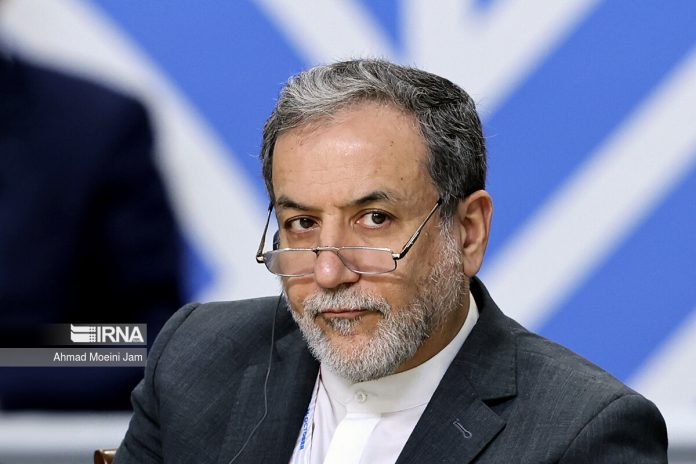
“The E3’s gambit lacks any legal standing, chiefly because it ignores the sequence of events that led Iran to adopt lawful remedial measures under the nuclear deal,” the top diplomat wrote in an article.

What follows is the article written by Araqchi, published by The Guardian on Sunday, September 7:

A message from Tehran for Britain, France and Germany: You made a big mistake reimposing sanctions – pull back

For more than two decades, Europe has been at the heart of the ongoing, manufactured crisis over my country’s peaceful nuclear programme. In many ways, the European role has reflected the state of broader international power relations. Once a moderating force aspiring to restrain a belligerent America with maximalist aims in our region, Europe is today enabling the excesses of Washington.

Last week, Britain, France and Germany – or the E3 – said they had activated the process to “snap back” UN sanctions on Iran. The mechanism was set up to penalize significant non-performance under the 2015 nuclear deal signed by Iran, the E3, the US, China and Russia.

The E3’s gambit lacks any legal standing, chiefly because it ignores the sequence of events that led Iran to adopt lawful remedial measures under the nuclear deal.

The three countries want the world to forget that it was the US, and not Iran, that unilaterally ended participation in the joint comprehensive plan of action (JCOPA), the formal name of the deal. The E3 are additionally omitting how they failed to uphold their part of the bargain, not to mention their outrageous welcoming of the bombing of Iran in June.

Britain, France and Germany may appear to act out of spite. But the truth is that they are intently pursuing a reckless course of action based on the logic that it may provide them with a seat at the table on other issues. This is a grave miscalculation that is bound to backfire. President Trump has made clear that he views the E3 as tangential actors. This is evident in the way Europe is sidelined from issues that are vital to its future – including the Russia-Ukraine conflict. The message from Washington is loud and clear: to gain relevance, the E3 must exhibit undying fealty. The recent images of European leaders sat in the Oval Office before President Trump vividly underscore this dynamic.

Things were not always like this. When the E3 was formed in 2003, to rein in the George W Bush administration after its invasions of Afghanistan and Iraq, Iran welcomed the endeavor. But talks collapsed when Europe could neither offer anything substantial nor stand up to Washington. At the time, my colleagues wanted Iran to keep 200 centrifuges for small-scale uranium enrichment, only to be met with American maximalism channeled through the E3. War did not erupt partly because the US woke up to the heavy price tag – in both blood and treasure – of illegally occupying Iran’s neighbors to the east and west.

Following an eight-year race of sanctions v centrifuges between Iran and the west, during which my country amassed 20,000 centrifuges – 100 times more than in 2005 – two important dynamics enabled unprecedented dialogue: E3 and US acquiescence to enrichment in Iran, and Iranian recognition of America as a negotiating partner. This fundamental realignment directly led to the signing of the JCPOA. The bargain was straightforward: unprecedented oversight and curbs on Iranian enrichment in exchange for the termination of sanctions. The formula worked.

Yet, one decade later, we are almost back at square one. President Trump initiated an avoidable cascade of events when he ceased US participation in the JCPOA in 2018 and reimposed all sanctions.

Initially distraught with the sabotage of a landmark agreement, the E3 pledged remediation, publicly recognizing that “the lifting of nuclear-related sanctions and normalization of trade and economic relations with Iran constitute essential parts of the agreement”. The French finance minister, Bruno Le Maire, thundered that Europe is not a “vassal” while other European leaders insisted that their “strategic autonomy” would ensure continuation of trade with Iran and that the dividends pledged to my people, including the sale of oil and gas along with effective banking transactions, would follow. None of it materialized.

While failing to uphold its own obligations, Europe has expected Iran to unilaterally accept all restrictions. Exhibiting this mentality, Britain, France and Germany declined to condemn the US attack on my country in June – on the eve of diplomatic talks – and yet are now demanding UN sanctions on Iranians for supposedly rejecting dialogue.

As I have cautioned my E3 counterparts, their gambit will not achieve the result they seek. On the contrary, it will only further sideline them by eliminating it from future diplomacy, with broad negative consequences for all of Europe in terms of its global credibility and standing.

There is still time – and a dire need – for an honest conversation.

It does not make any sense for the E3 to claim participation in a deal pillared on uranium enrichment in Iran while demanding that Iran must disavow those very capabilities. Openly cheerleading illegal military strikes on Iranian nuclear facilities protected by international law – as Germany’s chancellor has done – does not constitute “participation”.

While this lawless behavior is fueling calls for action to ensure “never again”, Iran remains open to diplomacy.

It is ready to forge a realistic and lasting bargain that entails ironclad oversight and curbs on enrichment in exchange for the termination of sanctions. Failing to seize on this fleeting window of opportunity may have consequences destructive for the region and beyond on a whole new level.

Israel may be pitching itself as capable of conducting war on behalf of the west. But as in June, the truth is that the powerful armed forces of Iran are ready and able to once again pummel Israel into running to “daddy” to be bailed out. The failed Israeli gambit this summer cost American taxpayers billions of dollars, robbed the United States of vital hardware that is now missing from its inventories, and projected Washington as a reckless actor dragged into a rogue regime’s wars of choice.

If Europe truly wants a diplomatic solution, and if President Trump wants the bandwidth to focus on real issues that are not manufactured in Tel Aviv, they need to give diplomacy the time and space that it needs to succeed. The alternative is not likely to be pretty.

Record Russian drone, missile attack kills at least 3, injures dozens in Ukraine

In Kyiv, a woman and her newborn child were killed and 20 people were injured, according to local officials.

The death toll rose to three as of 12:50 pm local time, Tymur Tkachenko, the head of the Kyiv City Military Administration, reported. Tkachenko did not provide further details.

Multiple Ukrainian regions, as well as the capital, came under attack. The overnight strikes damaged multiple residential buildings and civilian infrastructure, causing power outages in some regions, and struck the Cabinet of Ministers building in central Kyiv.

Ukraine’s Air Force announced that Russia launched 810 Shahed-type drones during the attack, making it the largest such attack of the full-scale invasion. Thirteen cruise and ballistic missiles were also launched.

“Such killings, especially now when genuine diplomacy could have started long ago, are deliberate crimes that only prolong the war. Washington has repeatedly warned that sanctions will follow if talks are refused. We must fully implement all agreements made in Paris,” President Volodymyr Zelensky stated, reacting to the recent Russian strikes.

NASA images show Iran’s Lake Urmia has completely dried up after thousands of years

Lake Urmia

The new photos show no trace of the once-vast body of water, long known as the “blue jewel” of Iran.

Experts had warned earlier this summer that the lake faced total desiccation by the end of the season, citing prolonged drought, overuse of water resources, and climate change as key factors.

Local environmental officials had already reported that Urmia was 100 percent dry in parts of its basin.

Lake Urmia, estimated to have existed for around 13,000 years, was once a thriving ecosystem supporting migratory birds, brine shrimp, and surrounding agriculture.

At its peak, it stretched over 5,000 square kilometers, attracting tourism and sustaining local communities.

The disappearance of the lake has raised serious concerns about ecological collapse, loss of biodiversity, and worsening dust storms in the region.

Environmental advocates had repeatedly urged stronger measures to restore water inflows, though years of government projects failed to halt the decline.

Iran finishes runner-up at Asian Karate Championships with 22 medals

On the final day of competition, held Sunday, Iranian athletes claimed four golds. Yalda Naqi Beiranvand (–50kg), Mehrnegar Ahmadi (–61kg), Hananeh Salehi (+68kg), and Hossein Vafa (–67kg) all captured continental titles after strong performances in their respective finals.

Iran also added three silver medals through Mohammad Javad Safari (–75kg), Abolfazl Hamdamjoo (–60kg), and Fatemeh Zahra Saeedabadi (–55kg). Mahan Mirzaei secured a bronze in the +84kg category.

Overall, Japan dominated the tournament with 12 golds, two silvers, and five bronzes to claim the championship.
Iran followed with its 22-medal tally, while Kazakhstan placed third with four golds, three silvers, and 10 bronzes.

Among the highlights, Ahmadi delivered an emphatic 8-0 semifinal win over India’s Hanf Ali before edging Kazakhstan’s Bakirova 2-1 in the final. Salehi also impressed, defeating Kyrgyzstan’s Orzalieva 6-1 to clinch gold.

Despite narrow losses in several finals, Iran’s consistent performances across weight categories ensured a strong overall result, cementing its position as one of Asia’s leading karate nations.

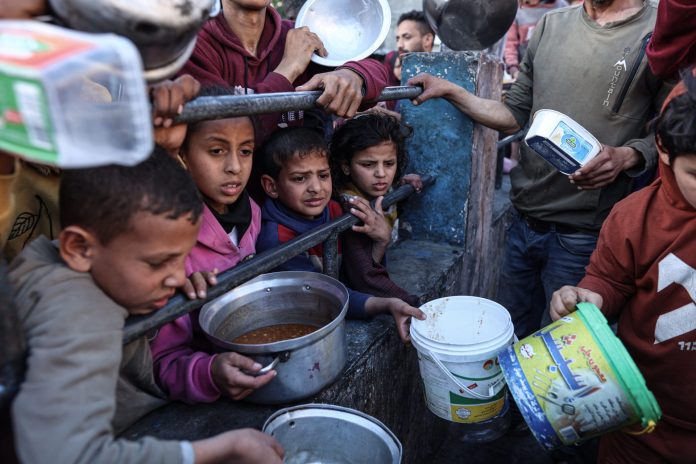
5 more Gazans die of malnutrition, death toll rises to 387

Gaza War

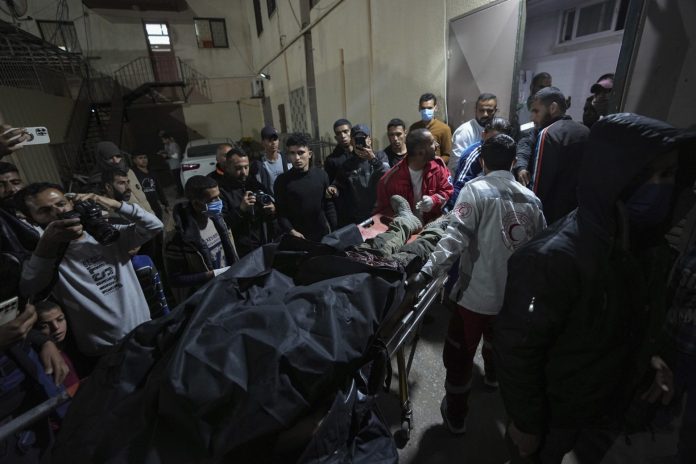
The new deaths brought the famine-linked fatalities in Gaza since October 2023 to 387, including 138 children, the ministry said in a statement.

Famine has been confirmed in northern Gaza, and is projected to expand to Deir al-Balah and Khan Younis in central and southern Gaza by the end of September, according to the Integrated Food Security Phase Classification (IPC).

Since IPC declared famine in Gaza, 109 people have starved to death. including 23 children, the ministry added.

Last November, the International Criminal Court issued arrest warrants for Israeli Prime Minister Benjamin Netanyahu and his former Defense Minister Yoav Gallant for war crimes and crimes against humanity in Gaza.

Israel also faces a genocide case at the International Court of Justice for its war on the enclave.


Moscow sets conditions for return of Western companies to Russia

Kremlin

In an interview with TASS on the sidelines of the Eastern Economic Forum in Vladivostok released on Saturday, Peskov outlined Moscow’s approach to foreign companies that left the Russian market after the escalation of the Ukraine conflict in 2022 and Western sanctions. He stated that “it would be wrong to say we are not interested in these companies returning.”

According to Peskov, many companies that left “reserved the right to return, fulfilling all their obligations to employees and to Russian regions… With them, of course, we need to conduct a very careful, respectful dialogue, observing our interests.”

Other companies, however, abandoned their employees without paying out salaries or fulfilling their social obligations, Peskov said. He added that they will still be allowed to return as long as they make amends.

“Everyone should be allowed back. It will just be very expensive for them to return.”

The Kremlin spokesman stressed that the only companies that are not welcome are those that have supported the Ukrainian military.

“These companies have already become enemies, and that is how they should be treated,” he added.

As Western companies exited the Russian market, they lost billions of dollars in assets. A Reuters analysis earlier this year estimated that foreign companies exiting the country lost more than $107 billion.

According to Russian President Vladimir Putin, Moscow remains “open to cooperation, particularly with our friends,” and has never “turned away or pushed anyone out.” He added that many Western companies “are eagerly waiting for all these political restrictions to be lifted,” while some continue to operate in Russia.