Thursday, April 23, 2026
Home Blog Page 169

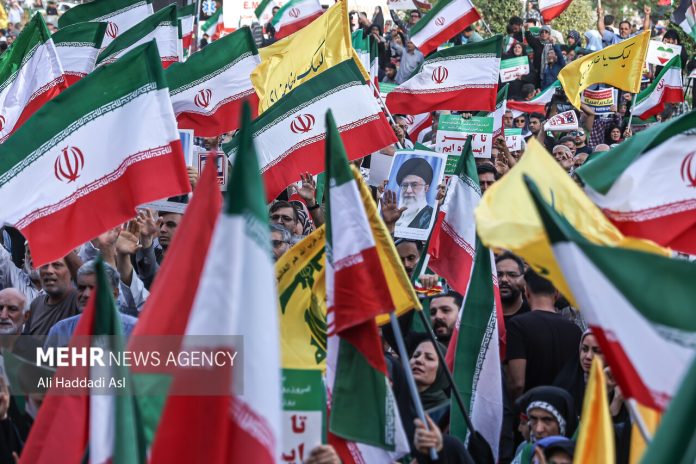
935 killed, over 5,600 injured in 12-day US-Israeli conflict, Iranian gov’t says

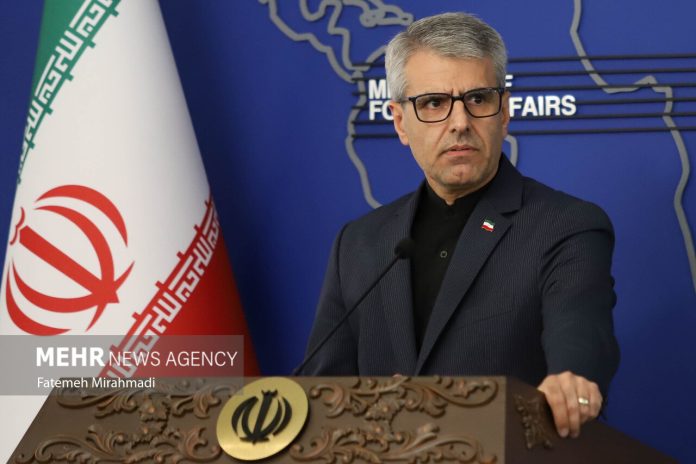
Speaking at a press conference on Tuesday morning, Mohajerani condemned attacks on civilian infrastructure, stating, “We witnessed assaults on national television headquarters, university housing, Evin prison, hospitals, and aid units. Who could carry out such acts? Those were dark days, but our nation remains resilient.”

Mohajerani highlighted that the government responded immediately after the attacks began on June 13. “The Minister of Health was among the first to act, coordinating emergency operations with medical universities across the country,” she said.

She explained an emergency cabinet session was held early Friday, June 13, chaired by Vice President Mohammad Reza Aref. Four specialized task forces were formed to address key issues including public security, medical treatment, distribution of essential goods, the repatriation of pilgrims, and economic stability.

“The health system managed an overwhelming number of casualties, even as hospitals faced capacity challenges,” Mohajerani added.

She expressed condolences to the families of the victims.

Iranian FM: US must assure no military action before new nuclear talks resume

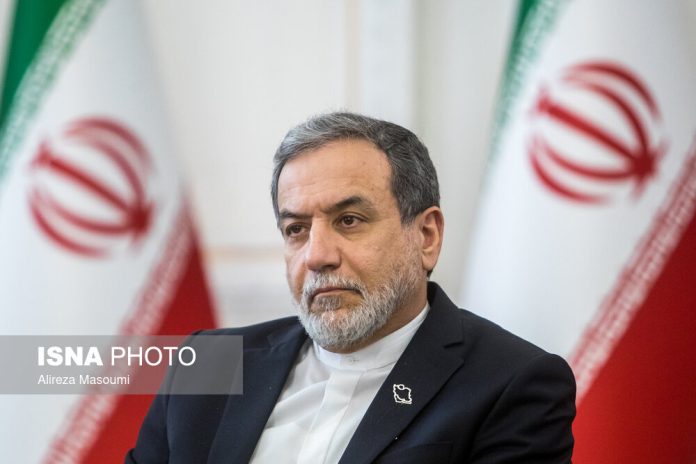
Abbas Araghchi

In an interview with CBS News aired early Tuesday, Araghchi stressed Iran’s right to enrich uranium and underscored the resilience of its nuclear program.

“Before we decide to return to the negotiating table, we must be sure that Washington will not resume military strikes during the negotiations,” he said.

He noted that talks would not restart quickly, citing the need for more time and assurance. “Despite all concerns, diplomacy is not off the table. The doors to dialogue remain open,” he added.

Araghchi emphasized that while nuclear facilities can be targeted, the knowledge and technology behind uranium enrichment cannot be eliminated by bombing. He described Iran’s peaceful nuclear program as a source of national pride.

Recalling Iran’s endurance during the eight-year Iran-Iraq war in the ‘80s, Araghchi said, “Our people will not easily give up enrichment. We have demonstrated our ability to defend ourselves, and if attacked, we will continue to do so.”

US formally orders lifting of Syria sanctions

Trump’s decree on Monday offers sanction relief to “entities critical to Syria’s development, the operation of its government, and the rebuilding of the country’s social fabric”, the US Treasury announced in a statement.

The Syrian government has been under heavy US financial penalties that predate the outbreak of the civil war in the country in 2011.

In a statement posted on X, Syrian Foreign Minister Asaad Al Shaibani welcomed the decision of Trump, saying it “will open the door of long-awaited reconstruction and development.”

“It will lift the obstacle against economic recovery and open the country to the international community,” he added.

The sprawling sanction programme, which included provisions related to the former government’s human rights abuses, has derailed reconstruction efforts in the country. It has also contributed to driving the Syrian economy under Bashar al-Assad to the verge of collapse.

Trump promised sanctions relief for Syria during his visit to the Middle East in May.

“The United States is committed to supporting a Syria that is stable, unified, and at peace with itself and its neighbours,” the US president said in a statement on Monday.

“A united Syria that does not offer a safe haven for terrorist organisations and ensures the security of its religious and ethnic minorities will support regional security and prosperity.”

The US administration announced that Syria-related sanctions against al-Assad and his associates, ISIL (ISIS) and Iran and its allies will remain in place.

While the US Treasury noted it already removed 518 Syrian individuals and entities from its list of sanctions, some Syria penalties may not be revoked immediately.

For example, Trump directs US agencies to determine whether the conditions are met to remove sanctions imposed under the Caesar Act, which enabled heavy penalties against the Syrian economy for alleged war crimes against civilians.

As part of Trump’s order, the US president ordered Secretary of State Marco Rubio to review the designation of interim Syrian President Ahmed al-Sharaa as a “Specially Designated Global Terrorist”.

Moreover, the US president ordered a review of the status of al-Sharaa’s group, al-Nusra Front – now Hayat Tahrir al-Sham (HTS) – as a designated “foreign terrorist” organisation. Al-Nusra was al-Qaeda’s branch in Syria, but al-Sharaa severed ties with the group in 2016.

Al-Nusra later became known as Jabhat Fath al-Sham before merging with other rebel groups as HTS.

Al-Sharaa was the de facto leader of a rebel enclave in Idlib in northwest Syria for years before leading the offensive that overthrew al-Assad in December 2024.

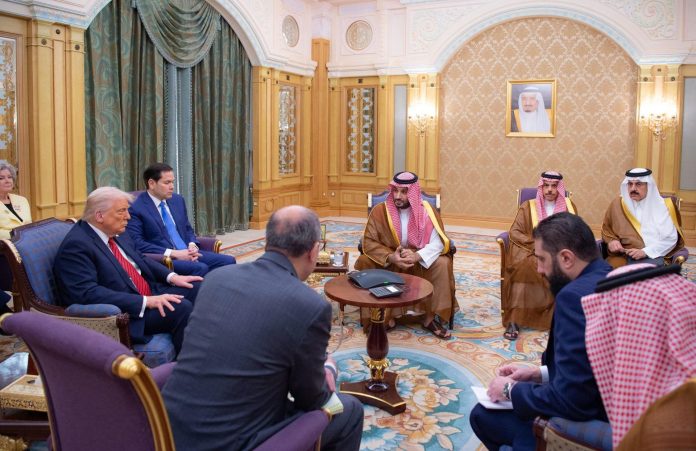
Trump met with al-Sharaa in Saudi Arabia in May and praised the Syrian president as “attractive” and “tough”.

The interim Syrian president – who was previously known by his nom de guerre Abu Mohammed al-Julani – has promised inclusive governance to allay concerns about his past ties to al-Qaeda.

But violence and kidnappings against members of al-Assad’s Alawite sect by former rebel fighters over the past months have raised concerns among some rights advocates.

Al-Sharaa has also pledged that Syria would not pose a threat to its neighbours, including Israel, which has been advancing in Syrian territory beyond the occupied Golan Heights and regularly bombing the country.

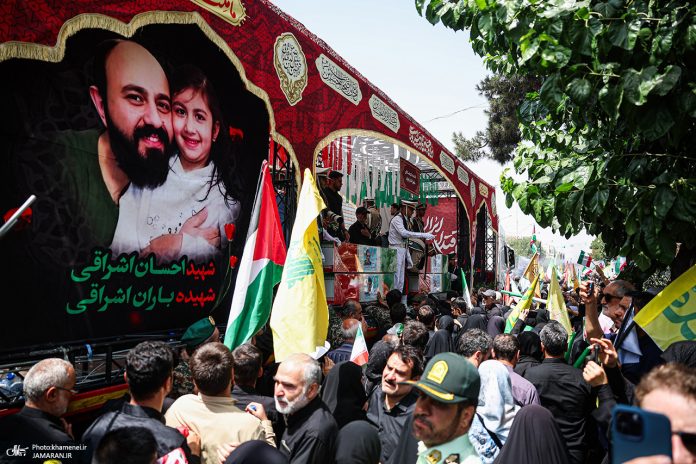
Iranian Armed Forces spokesman: Ceasefire was never an option

Shekarchi was spekaing about the situation after the cessation of the Zionist regime’s aggression against Iran.

He noted that the Zionist regime is never trustworthy, neither for the world, nor for Iran.

Shekarchi also spoke about the high level of preparedness of Iran’s armed forces, saying, “Our military is more ready than ever before, and in the event of any renewed aggression by the Zionist regime, the act will be met with a crushing and decisive response”.

Iranian musician Bamdad Bayat dies at 40

The news was shared by lyricist and director Babak Sahraei on social media

He said, “Bamdad Bayat took flight. Where did you go, my dearest, my little brother? ” Born on August 4, 1985, in Tehran, Bamdad was the twin brother of Barbod Bayat and began learning music at an early age under the guidance of his father.

At 11, he entered Tehran’s Music Conservatory and later continued his studies in Canada, where he received a diploma in jazz music from the University of Toronto. Bamdad specialized in film music and composed scores for short films such as Where Is the House? (1997) and Rebellion (1999).

He also collaborated with his father on soundtracks for many feature films and TV series.

Bamdad Bayat’s untimely death marks a great loss for Iran’s music and cinema communities.

Poll: Iranians see ceasefire agreement with Israel as strategic victory

The national survey, conducted by the Research Institute of Studies and Investigations of the Islamic Revolution University, reveals that an overwhelming majority of Iranians consider the recent ceasefire in the war with the Zionist regime to be a strategic victory for the country.

The poll was conducted in recent days with the participation of 626 citizens over the age of 18 across provincial capitals in Iran.

The findings indicate that IRIB (state broadcaster) and domestic messaging platforms remain the main sources of news for citizens during crises.

61% of respondents believe Iran had the upper hand militarily prior to the ceasefire, while only 17.3% saw the Zionist regime and the US as superior. Additionally, 53.3% rated Iran’s diplomatic and foreign policy performance as “good” or “very good.”

51.3% of people considered the timing of the ceasefire decision appropriate, while 30.5% opposed it. 80% of respondents said they would support resuming the war if the Zionist regime violated the ceasefire.

54.5% reported feeling a strong or significant sense of victory after the ceasefire was announced. Furthermore, 62.9% believed that the Zionist regime failed to achieve its objectives.

68.4% of respondents said they do not trust the Zionist regime to honor the ceasefire at all.

Iran says IAEA should avoid political approaches

Speaking at a press conference on Monday, Baqaei commented on a recent bill passed by the Iranian Parliament on the suspension of Tehran’s cooperation with the UN nuclear agency.

He said the IAEA is an international organization with clearly-defined duties and its director general has specified duties as well.

“What we have demanded is that the (IAEA) director general act within the framework of his technical duties without being influenced by certain members of the agency,” Baqaei added.

Deploring the brazen policy of the European troika during the past two decades to exert pressure on Iran, the spokesman said Tehran has always called on the UN nuclear agency to avoid political attitudes.

He noted that the latest “inappropriate” report by the IAEA chief about Iran provided a basis for a politicized resolution against the Islamic Republic by the IAEA Board of Governors.

Baqaei also condemned the subsequent illegal military strikes by the US and the Zionist regime against Iran, stating, “What happened was an act of aggression. Our main request at present is the recognition of the aggressor. The aggressor is clearly known and the UN Security Council must admit it.”

His comments came after the Iranian Parliament passed a bill that obligates the administration to put its cooperation with the International Atomic Energy Agency on hold.

The decision to suspend cooperation with the UN nuclear agency came in response to IAEA Chief Rafael Grossi whose biased report against Iran paved the way for a resolution that subsequently encouraged the Israeli regime to launch a war of aggression on Iran and also prompted the US to bomb three main nuclear sites of Iran in Isfahan, Fordow and Natanz.

Iran demands end to aggression as precondition for nuclear talks with US

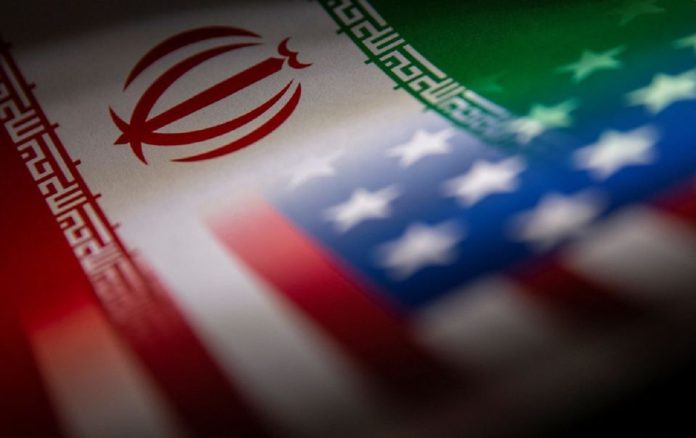
Iran US Flags

Deputy Foreign Minister Majid Takht-Ravanchi told the BBC that such a commitment is essential for rebuilding trust and continuing diplomacy.

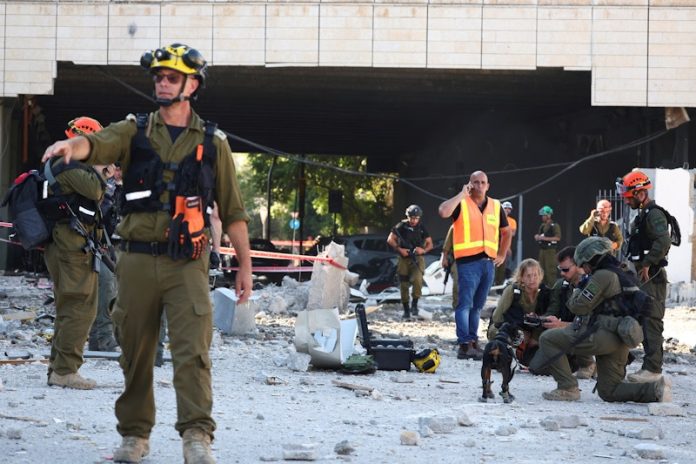
On June 13, Israeli strikes targeted multiple Iranian sites, including nuclear facilities and civilian areas, killing senior military officials and civilians. Days later, the US directly attacked Iran’s Fordow, Isfahan, and Natanz nuclear sites using bunker-buster bombs, causing major damage but no radiation leaks.

A ceasefire halted hostilities on June 23, just as indirect talks between Tehran and Washington were to begin under Omani mediation.

Takht-Ravanchi stressed Iran’s right to enrich uranium for peaceful purposes and dismissed suggestions of weaponization.

He warned against pressure tactics, asserting, “Saying ‘zero enrichment or be bombed’ is the law of the jungle.”

While confirming messages from Washington disavowing regime change, he said no timeline has been agreed for talks.

“We seek dialogue, not war, but must remain vigilant,” he said.

US Senator says Congress will soon vote on new Russian sanctions after talks with Trump

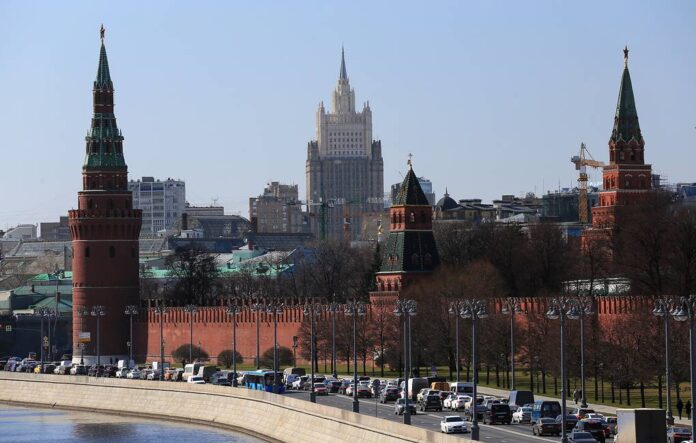
Kremlin

Voting on the bill is expected to begin following the end of the July congressional break, Graham said.

“For the first time yesterday the president told me… he says, ‘it’s time to move your bill’,” Graham said in an interview with ABC News, stressing that it would be Trump’s purview as to whether the bill would ultimately be signed into law.

When asked if Graham expected Trump to sign the bill, the senator responded: “Yes, I think we’re in good shape… But he has a waiver. It’s up to him how to impose it.”

Graham said he held the talk with Trump during a round of golf on June 28. No specific timeline was provided as to when the bill can be expected to be moved, although Congress is set to reconvene on July 9.

Signed by 84 co-sponsors, Senators Lindsey Graham (R-S.C.) and Richard Blumenthal (D-Conn.) have been working on a revised version of their bill that would impose secondary sanctions on Russian trading partners, while shielding Ukraine’s allies from penalties and making technical adjustments.

“So what does this bill do? If you’re buying products from Russia and you’re not helping Ukraine, then there’s a 500 percent tariff on your products coming into the United States. India and China buy 70 percent of Putin’s oil. They keep his war machine going,” Graham explained.

Despite pressure, Trump has thus far refused to impose additional sanction against on his own accord. Amid discussion around the Senate bill, Trump has reportedly asked Graham to to soften his proposed sanctions, having previously postponed a vote on the bipartisan measure.

Amid the slow process of moving the proposed bill, Graham described the move as a “big breakthrough.”

Ukraine has repeatedly urged the United States to impose additional sanctions on Russia as Moscow continues increase the frequency and magnitude of its attacks on Ukrainian cities.

Graham’s comments come just hours after Hungarian Foreign Minister Peter Szijjarto claimed that Washington lifted sanctions that hindered the expansion of the Paks Nuclear Power Plant, where Russia’s state-owned energy company Rosatom is to build two new reactors.

US planning to pressure Israeli Strategic Affairs chief to end Gaza war: Report

Gaza War

The Times of Israel cited sources as saying that the remaining sticking points in achieving a ceasefire include the Palestinian group Hamas’s demand for a permanent end to the war, as opposed to Israel’s efforts to secure a temporary ceasefire that leaves open the option for it to resume fighting.

They also added that Hamas is demanding a return to old mechanisms for distributing humanitarian aid or the establishment of a new system to replace the current one managed by the Gaza Humanitarian Foundation (GHF), a proposition backed by Arab mediators.

Israel announced GHF, an Israeli- and US-backed private mechanism, is essential in preventing the diversion of aid by Hamas, but it has forced Gazans to walk long distances in order to pick up food while also crossing Israeli army lines, coming under deadly fire on a near-daily basis, the Times of Israel reported.

Israel’s Haaretz newspaper, citing senior White House officials, reported that senior officials from US President Donald Trump’s team will pressure Dermer to reach an agreement on “ending the attacks on Gaza and returning the remaining prisoners.”

It was also reported that US officials would tell Dermer that Israel’s insistence on “eliminating Hamas” would be left for the future.

The Yedioth Ahronoth daily also reported that Israeli Prime Minister Benjamin Netanyahu’s recent statement that the rescue of Israeli hostages in Gaza had become a primary focus rather than repeating his goal of “eliminating Hamas” suggested a shift in his priorities.

Channel 12, citing Israeli sources, reported that the army has asked the government to determine the next step in the war.

The report added the next step could be either completing control over Gaza or reaching a prisoner exchange agreement and claimed that the army prefers the second option.

The report emphasized that Dermer’s trip was also planned in preparation for Netanyahu’s visit to Washington, expected to take place in the next two weeks, and said the US wanted an agreement to be reached before Netanyahu’s trip.

Channel 13 also reported that the army had informed the government that there were no significant targets left in Gaza that could be reached without endangering the lives of the remaining hostages after nearly 19 months of ground attacks.

Trump, who announced an end to the Israel-Iran conflict on June 23 with a ceasefire that began on June 24 after 12 days of fighting, shared a message saying: “Make a deal in Gaza, bring back the (Israeli) hostages,” which was interpreted as a message to Netanyahu.