Thursday, April 23, 2026
Home Blog Page 170

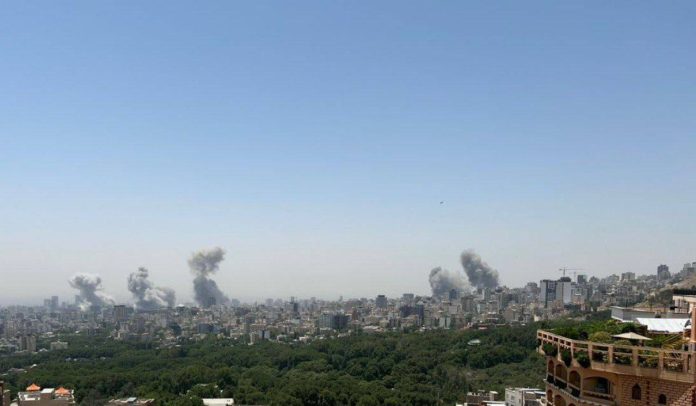
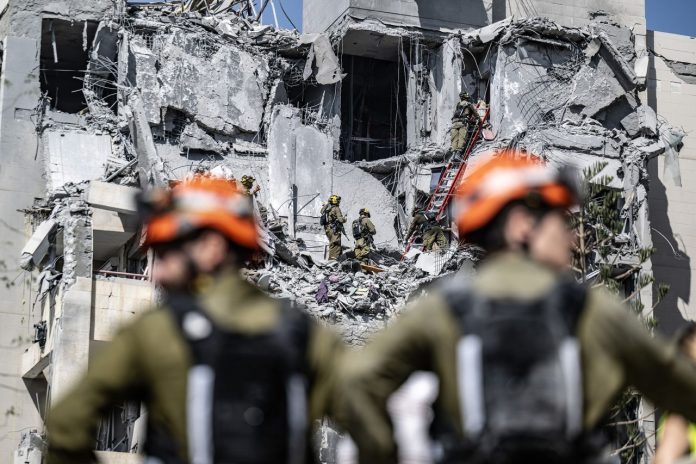
Over 1,500 explosion-induced earthquakes recorded amid 12-day US-Israeli strikes on Iran

Zare confirmed that seismic monitoring stations across Iran and neighboring countries logged all ground tremors linked to missile and drone strikes, which reportedly involved over 3,400 projectiles targeting sites in 24 Iranian provinces.

These explosions, especially near nuclear facilities in Fordow, Natanz, and Isfahan, generated earthquakes of up to magnitude 2.

While such quakes are considered small, Zare warned that if explosions had occurred directly on active fault lines, the consequences could have been far more destructive.

He also raised concerns over secondary risks, especially in Tehran, where sinkhole-prone urban areas could collapse due to repeated underground shockwaves.

Artificial quakes from military or mining activity are distinguishable from natural ones, Zare said, citing global seismic data sharing.

He stressed that while Iran has seen no unconventional blasts in 30 years, standard military tests and mining explosions frequently cause minor quakes with magnitudes under 4.

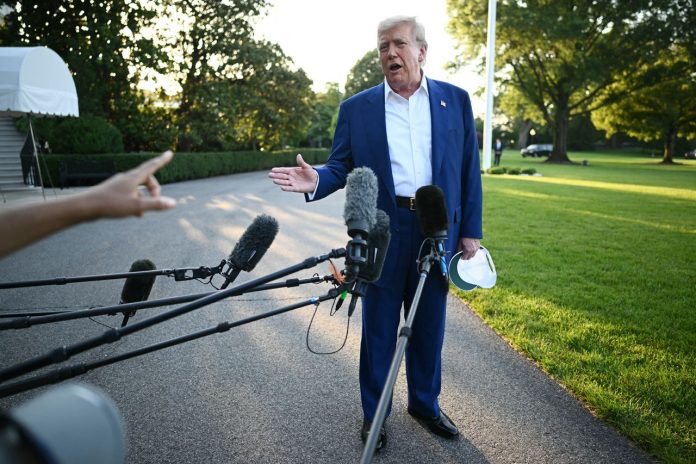
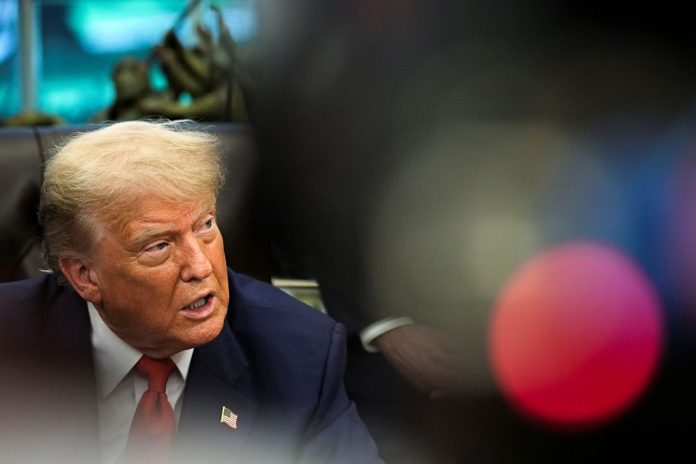
Iran condemns Trump’s rhetoric, insulting remarks

In a statement the Iranian Foreign Ministry said such insolent remarks and undiplomatic behavior not only constitute a flagrant violation of universally shared moral principles and the provisions of the Charter of the United Nations, but also represent a blatant affront to a dignified nation with an ancient civilization, and deeply wound the sentiments of hundreds of millions of Muslims across the region and the world.

It added, undoubtedly, insulting and bullying rhetoric directed at Iran and at political and religious figures revered by the Iranian people and Muslims worldwide serves only to deepen the global revulsion and indignation toward the United States’ short-sighted policies, while further discrediting its purported desire for dialogue and engagement.

The Ministry of Foreign Affairs of the Islamic Republic of Iran advised American officials to refrain from resorting to insulting rhetoric and inconsistent posturing, and instead be held accountable for their government’s blatant violations of international law—particularly its unlawful attack on Iran’s peaceful nuclear facilities and its continued support for the Zionist regime’s atrocities against the Iranian people and the broader region.

Moscow says US, Russian spy chiefs agree to keep direct line open

“I had a phone call with my American counterpart, and we reserved for each other the possibility to call each other at any time and discuss issues of interest to us,” Naryshkin said.

He did not specify when the conversation took place, and Ratcliffe has not publicly confirmed the call.

Russian state media claimed the last known exchange between the two intelligence chiefs occurred in March.

The remarks come amid broader efforts by the administration of U.S. President Donald Trump to normalize relations between Washington and Moscow. During a phone call on Feb. 12, Presidents Trump and Vladimir Putin agreed to reset U.S.-Russia ties and revive dialogue on “topics of mutual interest,” including a potential resolution to the war in Ukraine.

That call was followed by the first round of bilateral talks, held on Feb. 18 in Saudi Arabia—the first official meeting between U.S. and Russian officials in over three years. Both sides pledged to begin restoring diplomatic relations and to appoint senior teams tasked with negotiating a Ukraine peace agreement.

Despite these efforts, progress on peace has been limited.

Two earlier rounds of talks between Moscow and Kyiv in Istanbul failed to produce a ceasefire. On June 5, Trump declined to say when or if further sanctions on Russia might be imposed, stating only that there is a deadline “in (his) brain.”

U.S. Secretary of State Marco Rubio later told Politico that Trump would resist European pressure to toughen sanctions, arguing that doing so could jeopardize the fragile window for negotiations with the Kremlin.

Iran writes to UN on Israeli attacks against medical sector

The letter includes the initial report from the Ministry of Health and Medical Education covering casualties and damages inflicted between 13 and 22 June 2025.

According to the report, the Israeli regime’s “large-scale, unprovoked, and premeditated” aggression resulted in the martyrdom and injury of a considerable number of civilians, including medical personnel, and caused widespread destruction to healthcare infrastructure.

Iravani condemned the attacks as “inhumane” and “in flagrant violation” of international humanitarian and human rights law, as well as conventions protecting medical workers and facilities during armed conflict.

The letter specifically highlights the deliberate targeting of hospitals and health workers, warning of the severe consequences for the civilian population.

Iran described the document as a preliminary submission, noting that a full report would be provided once further verified data becomes available.

Tehran called on the UN to take immediate action in response to the continued Israeli violations.

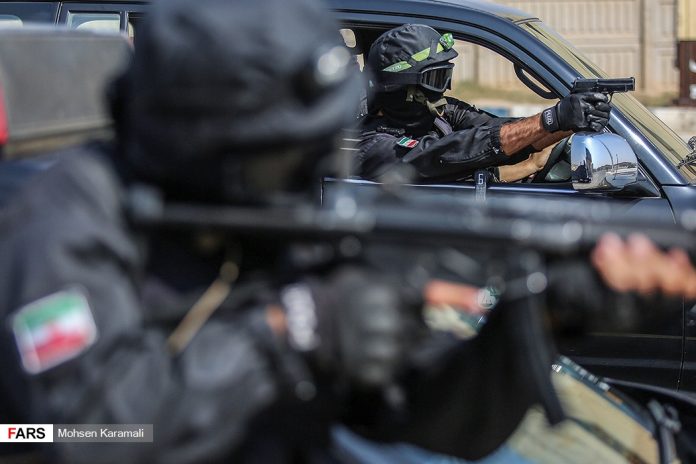
Police say Mossad agent captured in Tehran Metro

Iran Police

Brigadier General Saeed Montazerolmahdi stated that the Mossad spy was apprehended at Imam Khomeini Metro Station in Southern Tehran.

The police spokesperson added that the arrested individual had been involved in manufacturing drones and micro UAVs in Western Tehran province and was reporting on the performance of Iran’s air defense system through contact with an internal handler.

He also noted that the individual had been sending highly detailed and accurate location data of sensitive sites.

Among other discoveries by police forces are: The arrest of individuals who sent the locations of the national broadcaster’s facilities and a senior official’s residence in exchange for $2,000.

The arrest of a suspect in Ashkhaneh, North Khorasan province, for photographing a grain silo, flour factory, and other sensitive sites.

The apprehension of operatives working for the Zionist regime using micro UAVs and explosive-laden quadcopters in the deserts around Tehran, along with their control equipment, bombs, and drones.These individuals were detained by the Intelligence Division of Tehran Police.

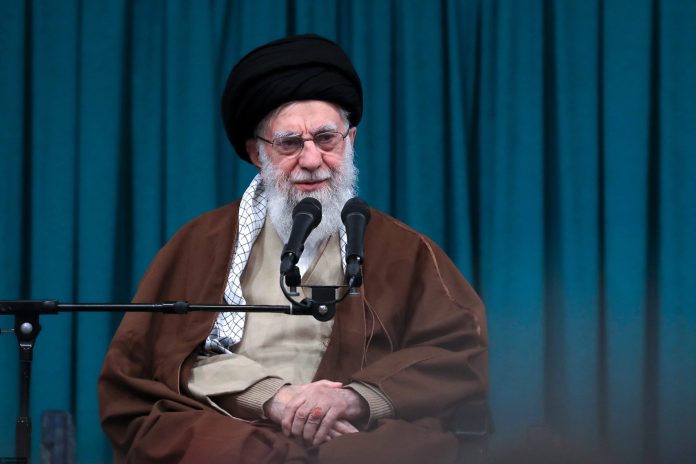
Shia religious authority: Anyone threatening Leadership, religious authority considered mohareb

Ayatollah Seyyed Ali Khamenei

He added that any form of cooperation with or support for such a person or regime by Muslims or Islamic governments is forbidden (haram).

In response to a religious inquiry (istifta’) submitted by a group of Muslims regarding their duties in the face of such threats, Ayatollah Makarem emphasized that Muslims around the world must make these enemies regret their words and actions.

This religious ruling was issued following threats made by the US President and leaders of the Zionist regime against the Supreme Leader of the Islamic Republic and Shia religious authority.

Ayatollah Makarem Shirazi’s fatwa also states that if Muslims suffer hardship or losses in confronting these enemies, they will receive the reward of those who strive in the path of God (mujahid fi sabilillah).

According to Iran’s Islamic Penal Code, a criminal who is proven to be a mohareb (one who wages war against God) is subject to one of four punishments: execution, crucifixion, amputation of the right hand and left foot, or exile.

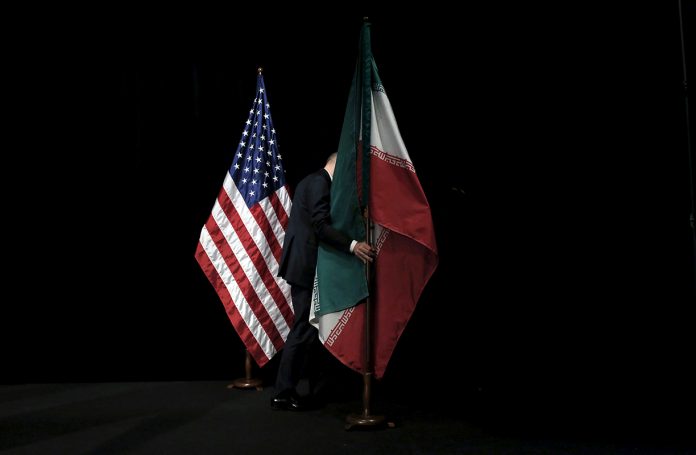
Iran: No scheduled talks with U.S., American claims false

Iran US Flags

He dismissed recent claims by American officials as inaccurate and misleading.

Speaking to members of the Iranian Parliament’s National Security and Foreign Policy Commission, Takht-Ravanchi clarified, “There are no meetings planned with American officials, and the statements made by the U.S. side are simply not true.”

He reiterated: “The things the Americans say are incorrect. Nothing has been arranged regarding what they claim.”

His comments come in response to remarks by U.S. President Donald Trump, who claimed that a negotiation and possible agreement with Iran could take place this week.

White House Press Secretary Karoline Leavitt later added, “We will announce when the time for negotiations is set.” Meanwhile, Steve Witkoff, the U.S. Special Envoy for Middle East Affairs, expressed optimism, saying he “feels strongly that Iran is ready for an agreement” and hopes for a comprehensive peace deal.

Takht-Ravanchi also emphasized that Iran remains committed to its national laws, including the parliamentary legislation requiring the suspension of cooperation with the International Atomic Energy Agency (IAEA).

Parliament speaker condemns Trump’s anti-Iran rhetoric

“The allegations of [US] disputes with the apartheid Zionist regime, the use of insolent language towards prominent and distinguished Iranian figures as well as other rhetoric are all meant to draw public attention, and disrupt our decision-making,” Qalibaf said at an open parliament session in Tehran on Sunday.

“The stances of this gambler president (Donald Trump) lack any value and credibility,” he noted.

Qalibaf further highlighted that Trump’s statements are part of a psychological strategy intended to promote disillusionment and fear among the Iranian people while hindering the critical insight required by Iranian officials for political decision-making.

The top Iranian legislator also pointed out contradictory statements and fake news from high-ranking Western officials, notably the “disrespectful” US president, as evidence supporting his assertion.

“One day, he lifts the [anti-Iran] sanctions in his own imaginary world without having issued a decree simply to deceive the public.”

“Hours later, he reimposes the sanctions that have not been lifted under the pretext of such-and-such a position of Iranian officials to suggest that Iranian officials are to blame for the imposition of the sanctions,” Qalibaf added.

The Iranian parliament speaker went on to note that questions remain unanswered as to how Washington initiated the war of aggression against Iran while it was engaged in indirect nuclear negotiations with Tehran.

Qalibaf stressed that Iranians will never back off from protecting their homeland, saying the traitors and mercenaries will be consigned to the dustbin of history.

“Now that the zealous Iranian youths have disappointed the enemies, the ill-wishers are attempting to wreck the unified front of Iranians in confronting the enemy through psychological warfare, sending contradictory and meaningless messages, and disrupting the nation’s decision-making, and to complete their unfinished project of plunging Iran into chaos,” he stated.

Israel launched an unprovoked war of aggression against Iran on June 13, assassinating senior military commanders and top nuclear scientists in targeted strikes before attacking nuclear and military sites and residential areas.

The Iranian Armed Forces responded with 22 waves of missile strikes as part of Operation True Promise III, which targeted numerous strategic sites across the Israeli-occupied territories.

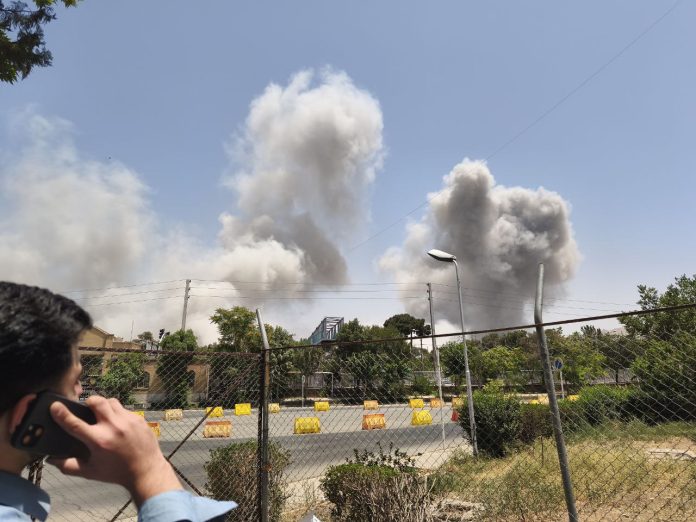
Iran says doubts ceasefire durability, warns of response to any further attacks

In a phone call with Saudi Defense Minister Prince Khalid bin Salman, General Mousavi stated that the recent military assault on Iranian territory by the US and Israel occurred despite Iran’s restraint and while indirect negotiations with Washington were underway.

“These two regimes have once again proven their disregard for international norms,” Mousavi said, referring to the 12-day conflict as further evidence of “unlawful aggression.”

“We were not the ones to start this war, but we responded with full force. Given our doubts about the enemy’s commitment to any ceasefire, we are prepared to deliver a firm response to any renewed violations.”

The Saudi defense minister expressed condolences over the loss of Iranian military commanders in the conflict.

He emphasized that Saudi Arabia has not merely condemned the aggression but has actively worked to help end the hostilities.

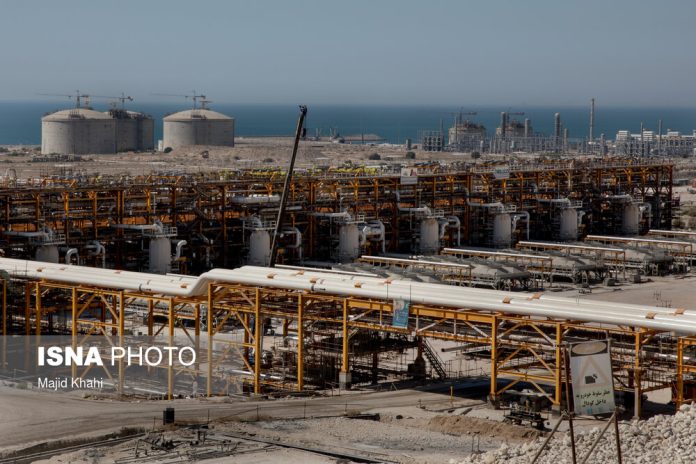
Iran begins gas exports from third train of South Pars Phase 14 refinery

South Pars

Hamidreza Saghafi, CEO of Petropars Group, announced the successful launch of the third processing unit, which follows the recent commissioning of the fourth train.

He described the achievement as a clear demonstration of Iranian engineering capability and a step forward in expanding the nation’s production and export capacity amid ongoing regional challenges.

“The commissioning of the third gas sweetening train enabled the start of exports from Phase 14. This accomplishment reflects not only technical expertise but also the strong organizational cooperation and national commitment of Petropars personnel,” Saghafi said.

He expressed gratitude for the efforts of project staff, including contractors, engineers, workers, and the Petropars Operation and Management Company (POMC), highlighting their dedication to securing the country’s energy future.

Saghafi emphasized the importance of human capital in advancing Iran’s energy sector, especially under current economic and geopolitical pressures.

The South Pars Gas Filed in the Persian Gulf contains the largest of gas reserves in the world, shared by Iran and Qatar.