Wednesday, April 22, 2026
Home Blog Page 160

Sá Pinto: I’ve been waiting 3 years to return to Esteghlal FC

Speaking at his unveiling ceremony on Wednesday, Sá Pinto expressed his joy at being back in Iran, calling the country “beautiful” and Esteghlal “one of the few places that truly felt like home”.

“It wasn’t easy to come back, but thanks to the board members, it happened”, he said.

“The fans have shown incredible support and loyalty to me, the club, and the players.”

Sá Pinto acknowledged the difficult conditions in Iran but voiced hope for lasting peace.

“I came to finish the dream I couldn’t complete last time”, he added,.

The Portugese football coach further underlined the need for unity and for strengthening the team, saying, “If we stay united, we will win…and win everything”.

Iranian lawmakers introduce urgent bill to sue US and Zionist regime over recent attacks

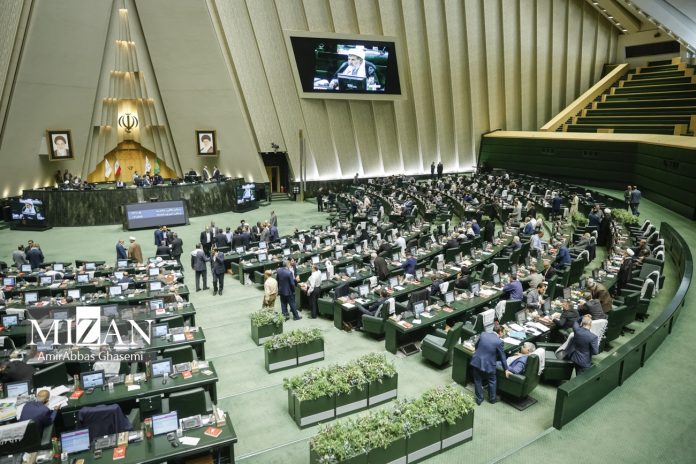
Iranian Parliament

In an interview with Tasnim News Agency, Goudarzi said the legislation aims to uphold the rights of the Iranian people by mandating the government to file formal complaints with international courts and legal bodies against the Zionist regime and the US.

According to the bill, the Islamic Republic of Iran would be obligated to seek compensation from Washington and Tel Aviv for the damage caused by their attacks during the recent 12-day war.

Goudarzi underscored that the legislation is designed to strengthen Iran’s legal diplomacy and assert the country’s right to defend itself against blatant foreign aggression.

“This initiative can raise the legal and political costs for aggressors and enhance Iran’s international standing in defending its sovereignty and territorial integrity”, he noted. The bill is expected to be reviewed on parliament’s floor in the coming days.

Iran restores domestic, int’l flights with limited night restrictions

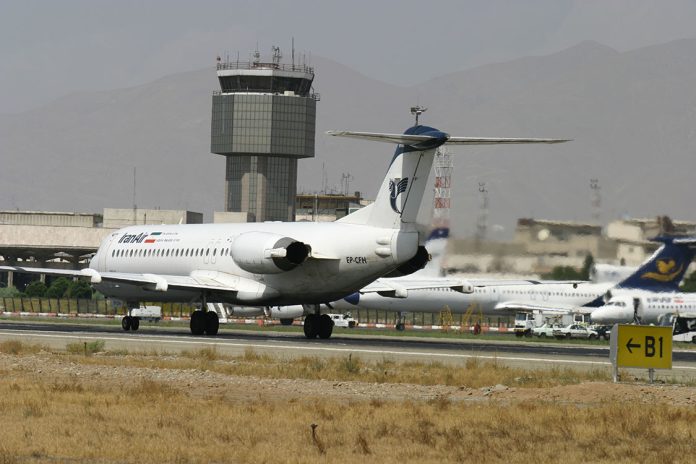
Mehrabad Airport

According to Iran’s Civil Aviation Organization, all airports are currently active except Isfahan Airport, which sustained significant damage during recent attacks. Restoration efforts are nearly complete, and the airport is expected to rejoin the national network soon.

Eastern airports are now operating 24/7, while airports in central and western regions are open from 5 a.m. to 6 p.m. Authorities cited national airspace security and night-time freedom for air defense systems as reasons for the partial curfew.

Domestic carriers are operating without disruptions. Turkish Airlines has resumed flights to Iran, and FlyDubai continues regular service. Other international airlines have either restarted operations or are in the process of rescheduling flights to fit within the designated daytime window.

However, the United Arab Emirates has delayed some flights due to their usual overnight scheduling.

Civil aviation officials explained that larger airlines with complex schedules face challenges adjusting to the new time constraints, while smaller or budget carriers have been more flexible in restoring connections to Iran.

Israel targeted civilian airports during 12-day conflict, Iranian official says

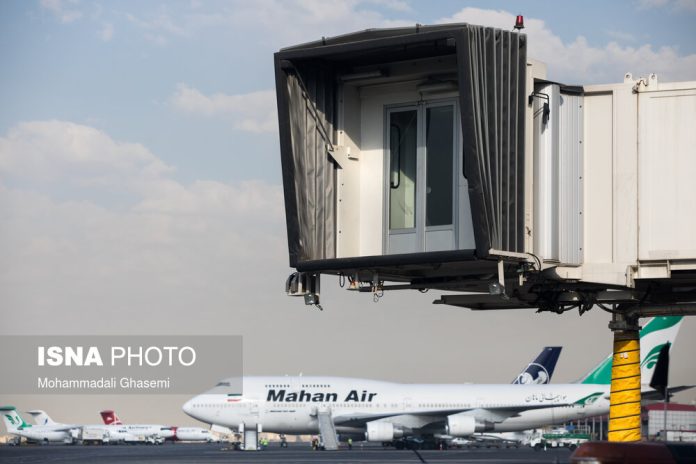
Iran Airport

Speaking to state media on Wednesday, Sane’i confirmed that the attacks violated international aviation protocols and have been officially reported to the International Civil Aviation Organization (ICAO).
“These must be recorded as unlawful interventions by a hostile regime,” he said.

Among the hardest hit was Tabriz Airport, where two runways were severely damaged following direct bombardment. Isfahan Airport also sustained infrastructure damage, including the loss of a radar system. The seaplane base in Qazvin, used by private operators and housing numerous light aircraft, was reportedly nearly destroyed, suffering an estimated loss of over $10 million.

Sane’i condemned the attacks, saying Israel ignored all international aviation norms and targeted infrastructure symbols vital to the public.

He added that while most strikes were aimed at civilian aviation facilities, a military aircraft stationed at Mashhad Airport was also damaged during the hostilities.

Iranian officials have called for international accountability over the attacks, describing them as part of broader unlawful aggression during the 12-day conflict that ended in a ceasefire.

Iranian FM calls for collective regional action against Israeli aggression

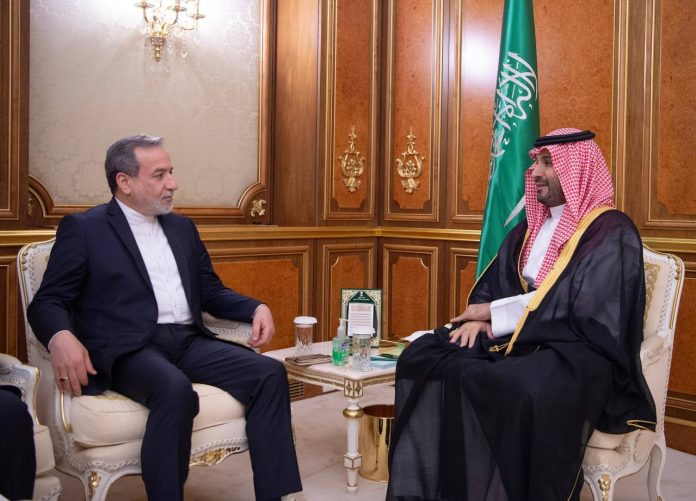
During the meeting which happened on Tuesday evening in Jeddah, Araghchi referred to the recent Israeli aggression against Iran, adding the unified and firm position adopted by regional countries in response to these actions reflects a regional consensus on the urgent need for collective action to confront the expansionism and warmongering of the Zionist apartheid regime.

The Iranian foreign minister also thanked Saudi Arabia for its responsible stance in condemning the recent acts of aggression against Iran. He outlined the Islamic Republic of Iran’s perspective on the regional security situation following the criminal military attacks by the Zionist regime and the United States.

Araghchi emphasized that these acts, which openly violated the UN Charter, international law, and the Non-Proliferation Treaty, have put the entire West Asia region at unprecedented risk.

Araghchi also reiterated the Islamic Republic of Iran’s commitment to strengthening ties with Saudi Arabia and other neighboring countries based on good neighborliness and mutual interests. He expressed Iran’s readiness to expand cooperation across various sectors, including economic, trade, and cultural fields.

Crown Prince Mohammed bin Salman in turn expressed satisfaction with the improving understanding and cooperation between the two major Islamic countries.

He affirmed Saudi Arabia’s determination to continue this path and to deepen bilateral relations across all fields.

The Crown Prince reiterated Saudi Arabia’s condemnation of military aggression against Iran’s territorial integrity and sovereignty.

He emphasized that safeguarding regional stability requires collaboration and mutual understanding among regional countries.

Trump claims he threatened Putin to ‘bomb sh*t out of Moscow’ if Russia attacked Ukraine: CNN

Putin and Trump

“With Putin I said, ‘If you go into Ukraine, I’m going to bomb the sh*t out of Moscow. I’m telling you I have no choice,'” Trump told a group of donors in 2024, according to CNN.

It was not immediately clear at what time the alleged conversation between the two leaders took place.

“And then (Putin) goes, like, ‘I don’t believe you.’ But he believed me 10%.”

Trump claimed he issued a similar warning to Chinese President Xi Jinping if he attempted to invade Taiwan.

Trump has repeatedly claimed during his campaign trail that Russia’s all-out invasion of Ukraine in 2022 would have never happened if he were president at the time, laying the blame on ex-President Joe Biden.

Trump previously served as president from 2017 to 2021, during which time Russia was already occupying Crimea and waging war against Ukraine in Donbas.

While initially pledging to broker a swift peace deal between Kyiv and Moscow and boasting of warm ties with Putin, Trump has more recently adopted a more critical tone toward the Russian leader as peace talks stall and Russian aerial strikes escalate.

“We get a lot of bullsh*t thrown at us by Putin,” Trump stated during a cabinet meeting.

The U.S. president also signaled support for a major Senate sanctions bill against Russia and, reportedly, air defense supplies for Ukraine.

These developments contrast with a recent pause by the Pentagon on military aid shipments, including Patriot interceptors, heading for Ukraine, and with Trump’s earlier reluctance to exert additional pressure on Moscow.

Russian forces continue to escalate aerial strikes on Ukrainian cities. Kyiv has urged its Western partners to step up support, namely in terms of sanctions and the provision of new air defenses.

Iran reports heavy medical infrastructure damage during 12-day war with Israel

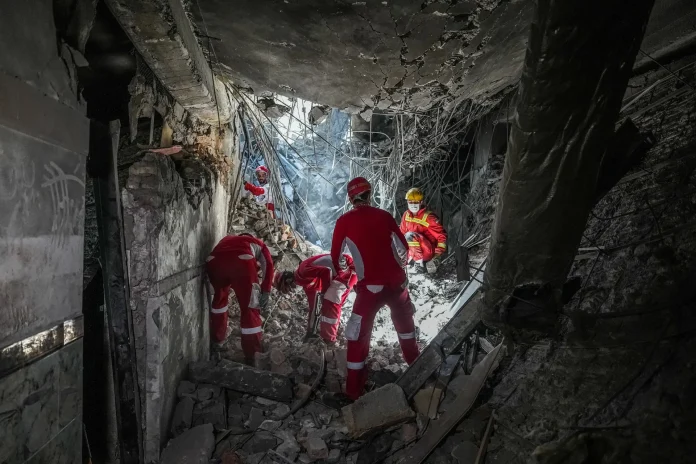
Kolivand said on Wednesday Red Crescent staff worked tirelessly under dangerous conditions, describing Israeli attacks as “criminal.”

He praised the dedication of aid workers and emphasized the group’s simultaneous focus on public training and international advocacy during the conflict.

Kolivand detailed the launch of community support initiatives like the “Khadem” plan, which addressed public health, crisis resilience, and neighborhood-based assistance. A post-war volunteer campaign, “Your Home Rebuilt,” is also underway to aid recovery.

Secretary-General Meysam Afshar highlighted the deployment of 70,000 trained responders and activation of emergency call center 4030, which handled over 100,000 calls. He said over half of the civilian casualties occurred in Tehran.

Afshar noted that despite targeted attacks, less than 15% of Red Crescent capacity was used. Internationally, the organization received solidarity messages from 70 national societies.

Analyst: Iranian president challenges dominant narrative in interview with Tucker Carlson

Masoud Pezeshkian

According to Reza Nasri’s post on X social media, with US President Donald Trump’s rise to power, Israeli officials and affiliated lobbies took charge of shaping the narrative on Iran, especially targeting the so-called Make America Great Again (MAGA) movement.

This narrative, Nasri argues, emphasized claims such as Iran’s intent to assassinate Trump, its alleged aggression and nuclear threat, and its hostility toward the West, using slogans like “Death to America” to justify US military and financial support for Israel.

Nasri contends that Israel and its supporters have mainstreamed this view, even influencing Trump-era promises of peace. Statements by unofficial Iranian figures have unintentionally reinforced the narrative, he added.

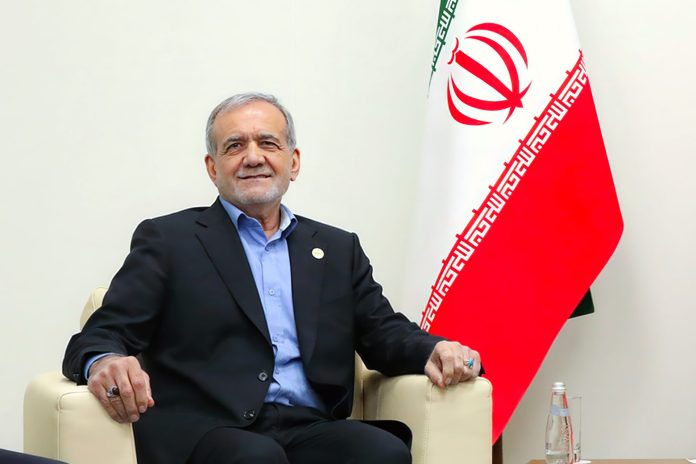
In this context, President Pezeshkian’s interview sought to disrupt that narrative by directly addressing its components and emphasizing Israel’s destabilizing role.

The interview’s timing, coinciding with the Israeli regime’s premier Benjamin Netanyahu’s visit to Washington, added to its relevance.

Nasri also criticized internal opponents who misrepresented the interview for political gain, calling such actions regrettable amid escalating regional tensions.

IRGC kills, captures 6 terrorists in Sistan, Baluchestan prov.

Iran Police

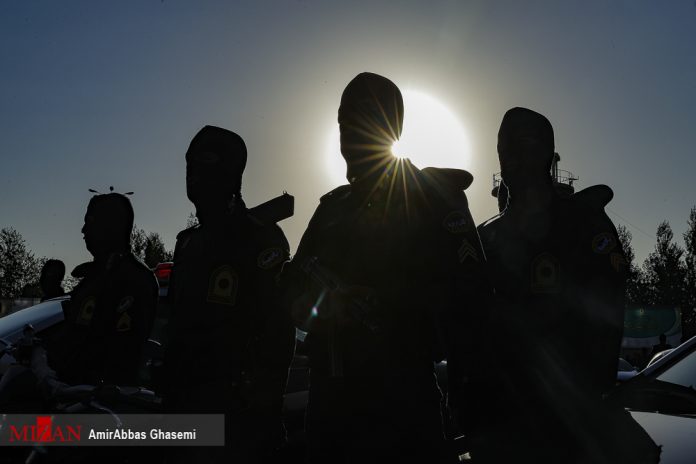
According to a statement from the IRGC Ground Forces, the successful raid followed local tip-offs to the IRGC intelligence.
It adds citizens’ cooperation enabled security forces to locate the hideout of a terrorist group preparing attacks on public sites.

Authorities seized light and heavy weapons along with a significant cache of explosives.

The group, reportedly affiliated with hostile terrorist outfits, had been planning a series of attacks in high-traffic areas.

The IRGC has urged residents to remain alert and report any suspicious activity via national security hotlines.

US has only %25 of Patriot interceptors needed for military operations globally: Report

According to the report, deputy defence secretary Stephen Feinberg was so alarmed by the dwindling reserves that he ordered transfers to be halted while the Pentagon reviewed deliveries to US partners.

Middle East Eye was the first to reveal during the recent Israel-Iran conflict that US officials were concerned about the pace at which they were using interceptors to defend Israel from ballistic missile attacks.

A US official told MEE at the time that there were concerns a direct US strike on Iran could lead to bigger retaliation from the Islamic Republic, which would drain the US’s stockpile to a “horrendous” level.

The conflict between Israel and Iran culminated in limited US strikes on Iran’s Natanz, Fordow and Isfahan nuclear sites. Iran responded by informing the US via Qatar that it would fire 14 ballistic missiles at al-Udeid air base, southwest of Doha.

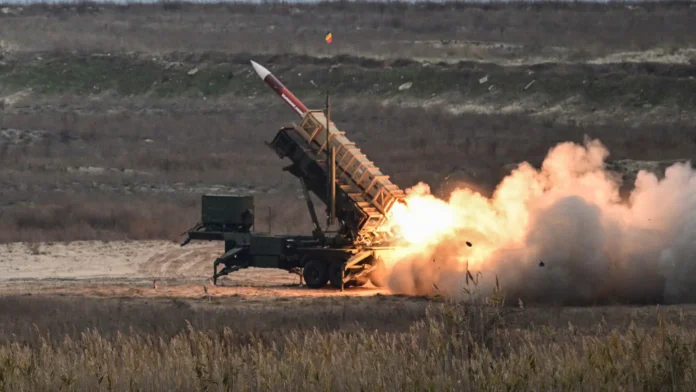
According to open-source defence analysts, the US was expected to fire two to four interceptors for each missile fired. The Guardian reported that the US fired close to 30 patriot interceptors, or PAC-3s, to down the Iranian barrage. Even this relatively low number exacerbated the stockpile shortages, according to the report.

Dan Caine, US Air Force general and chairman of the joint chiefs of staff, told The War Zone news site that the operation to defend al-Udeid from Iran’s symbolic attack was the “largest single Patriot engagement in US military history”.

The relatively low numbers involved underscore just how precious a commodity Patriot missiles are, particularly at a time of increasing ballistic missile use in Eastern Europe and the Middle East.

In 2024, Lockheed Martin reported that it produced and delivered 500 interceptors, a 30 percent increase from the previous year.

In addition to firing Patriots during the conflict, the US joined in Israel’s defence, using at least one Terminal High-Altitude Area Defence antimissile battery in the region and ship-mounted SM-3 interceptors.

Roughly a week after the Israel-Iran conflict, the Donald Trump administration confirmed reports that it had suspended the delivery of air defence interceptors and other weapons to Ukraine as it faced massive Russian air strikes.

The shipments to Ukraine were halted when they were in Poland, The Wall Street Journal reported, and included Patriot air defence interceptors, air-to-air missiles, artillery rounds, Stinger surface-to-air missiles and Hellfire air-to-ground missiles.

The suspension of Hellfire missiles to Ukraine is notable because just days before Israel launched its surprise attack on Iran in June, the US delivered hundreds of Hellfire missiles to Israel. MEE exclusively reported on the delivery.

President Trump has reversed the decision to halt shipments, stating that the US would send additional defensive supplies to Ukraine. However, he did not provide details on the weapons systems or numbers.