Wednesday, December 31, 2025
Home Blog Page 161

US pledges to defend ‘every inch’ of NATO territory after Russian drone incursion into Poland

“The United States stands by our NATO allies in the face of these alarming airspace violations,” said acting U.S. Ambassador to the U.N. Dorothy Shea, addressing the 15-member Security Council.

Her remarks appeared aimed at reassuring allies after U.S. President Donald Trump drew criticism for suggesting the incursion “could’ve been a mistake.”

Shea added that Russia had escalated its bombing campaign in Ukraine since Trump met with Russian President Vladimir Putin in Alaska on Aug. 15.

“These actions, now with the addition of violating the airspace of a U.S. ally – intentionally or otherwise – show immense disrespect for good-faith U.S. efforts to bring an end to this conflict,” she stated.

Poland earlier confirmed that it had shot down Russian drones over its territory with support from NATO aircraft. Warsaw described the incident as a deliberate violation of its sovereignty.

“We know, and I repeat, we know that it was not a mistake,” said Polish Secretary of State Marcin Bosacki during the session, displaying photos of the wreckage and pointing to Russian markings on the drone.

“Poland will not be intimidated.”

Russian Ambassador to the U.N. Vassily Nebenzia rejected the accusations, insisting that Russian forces had been targeting Ukraine at the time and had no intention of striking Polish territory.

“There were no targets marked on Polish territory,” he said, stating, “The maximum range of the drones used in this strike did not exceed 700 kilometers, which makes it physically impossible for them to have reached Polish territory.”

Nebenzia added that Moscow was open to dialogue if Warsaw was “indeed interested in reducing tensions rather than fomenting tensions.”

Ahead of the Security Council meeting, Bosacki read a joint statement signed by 43 countries, including the U.S., which condemned the drone incursion and accused Russia of violating international law and the U.N. Charter. The statement called on Moscow to halt “its war of aggression against Ukraine” and refrain from further provocations.

Iran and Iraq Sign MoU on Fighting Narcotics 

The MoU includes measures such as tighter border controls, capacity building for law enforcement through joint training workshops, scientific collaboration on demand reduction, and expanded programs for prevention, treatment, and rehabilitation.

It also emphasizes stricter monitoring of psychotropic substances and chemical precursors under international oversight to prevent their illicit use.

The agreement was signed during the second meeting of the Iran-Iraq Joint Committee on Counter-Narcotics.

Veteran Iranian daf player Alaeddin Yassini dies at 58

Yassini, a prominent figure in the musical tradition of Kurdistan, died of a heart attack at a hospital in Bijar, said Mansour Moradi, a fellow daf player.

His body will be transferred to Sanandaj and laid to rest in the city’s artists’ cemetery.

Born in 1967, Yassini was the son of the renowned musician Sediq Yassini and a distinguished student of master Khalifeh Karim Safvati.

Over the decades, he became widely respected for his command of Sufi and devotional rhythms, as well as for his dedication to teaching the daf voluntarily to younger generations.

His efforts helped train hundreds of new players and expanded the presence of Kurdish percussion in Iran’s musical landscape.

Yassini performed in numerous concerts inside and outside Iran, served as a juror in the Daf Navaye Rahmat festival, and most recently judged the daf category at the 18th National Youth Music Festival.

The Iranian Music Association expressed condolences, calling his death “a painful loss” for the nation’s music community.

Iran’s President to Attend Emergency Doha Summit Following Israel Qatar Raid

The meeting — organized by the Organization of Islamic Cooperation (OIC) and the Arab League — aims to support Qatar’s government and condemn the crimes of the Israeli regime.
It will be held in the Qatari capital on Sunday and Monday, with the Iranian delegation among the high-level participants.

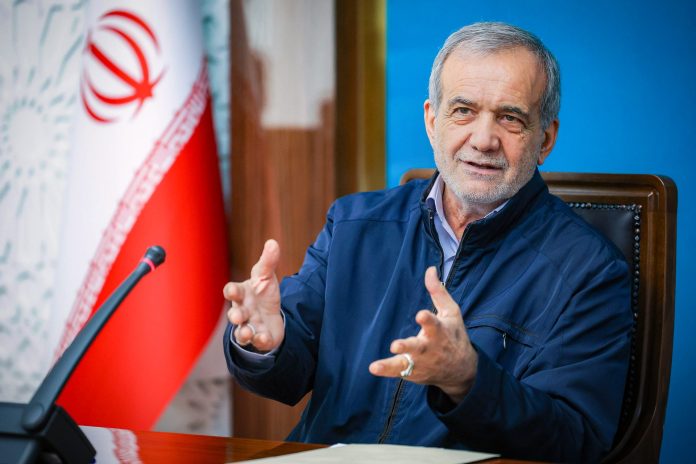
President Pezeshkian is scheduled to deliver a speech at the summit.
Tuesday’s Israeli strikes on Doha left several people dead and injured. The attacks reportedly targeted leaders of Hamas but failed to achieve that goal.

Many countries, including Iran, strongly condemned the strikes as a blatant violation of the UN Charter and Qatar’s territorial integrity.

UN Chief Welcomes Iran–IAEA Understanding

Berlin, Germany - November 04: Antonio Guterres, High Commissioner for Refugees of UNHCR, attends a press conference in german foreign office on November 04, 2015 in Berlin, Germany. (Photo by Michael Gottschalk/Photothek via Getty Images)

In a phone call on Thursday evening with Iranian Foreign Minister Seyed Abbas Araghchi, Guterres affirmed the UN’s backing for continued dialogue and diplomacy regarding Iran’s nuclear program.

Araghchi, for his part, reiterated Iran’s commitment to protecting the rights and interests of its people under the Nuclear Non-Proliferation Treaty (NPT). He stressed the need for the United Nations and all countries to firmly and clearly condemn the illegal attacks on Iran’s peaceful nuclear facilities by Israel and the US.

He criticized the stance of the three European countries (Britain, Germany, and France) for ignoring U.S. and Israeli military attacks on Iran while threatening to revive annulled UN Security Council resolutions—calling this approach baseless and irresponsible, and warning that it would only complicate the situation.

Araghchi also highlighted Iran’s constructive cooperation with the IAEA to clarify how it will meet its safeguards commitments under the new conditions created by these unlawful attacks. He urged European states and UN Security Council members to recognize the importance of this development.

Additionally, Araghchi said the genocide in Occupied Palestine and the Zionist regime’s warmongering are the most urgent global challenges. He condemned Israel’s recent terrorist attack on Qatar and called on the international community, the UN, and the Secretary-General personally to help end the genocide and curb Israel’s expansionism and aggression.

Iran warns snapback activation would void agreement with IAEA

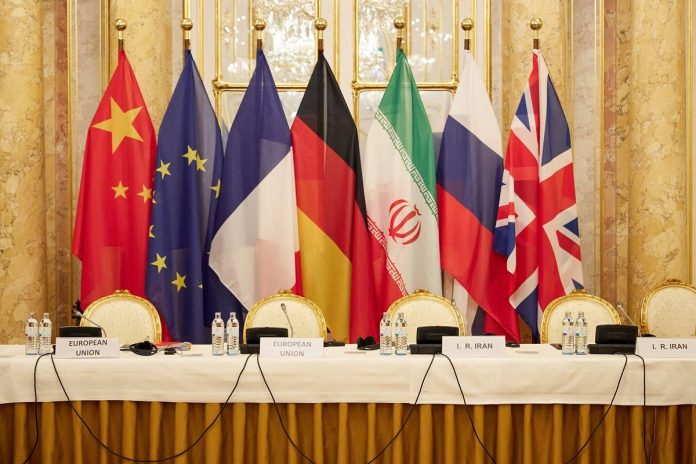
Speaking on state television on Thursday night, Araghchi said the arrangement reached with the agency on Tuesday remains valid only as long as no “hostile action” against Iran, including the reimposition of UN sanctions under snapback, takes place.

He emphasized that Iran and the IAEA have reached a new understanding that takes into account recent attacks on Iranian nuclear facilities, which Tehran denounced as “unlawful and in violation of international law.”

According to Araghchi, the new framework requires that requests for inspections be reviewed by Iran’s Supreme National Security Council in line with parliamentary legislation.

He stressed that no inspections have been granted so far and future access will depend on national security considerations.

The foreign minister reiterated that Tehran rejects conditions set by the three European signatories to the 2015 nuclear deal, saying they are pursuing unrealistic demands.

He also warned that if snapback were triggered, Iran’s response would be “definite” and determined by the Supreme National Security Council.

UN Security Council members condemn Israel over deadly attack on Qatar

Council members issued the statement ahead of the emergency meeting on Thursday, which was convened to discuss Israel’s attacks targeting Hamas leaders in the Qatari capital, as it ramped up its offensive in Gaza City, forcing more than 200,000 to flee.

Five Hamas members were killed, but the Palestinian group announced its leadership survived the assassination bid. A Qatari security force member was also killed in the unprecedented attack, which has sent tensions in the region skyrocketing.

Hamas leaders were meeting to discuss a new deal proposed by US President Donald Trump when the attack happened.

“Council members underscored the importance of de-escalation and expressed their solidarity with Qatar,” said the statement, drafted by France and the United Kingdom, which nonetheless stopped short of explicitly mentioning Israel.

It also emphasised that “releasing the hostages, including those killed by Hamas, and ending the war and suffering in Gaza” were “top priority”. More than 40 captives are still held in Gaza, but only 20 of them are believed to be alive.

The US, which traditionally shields its ally Israel at the United Nations, appeared to deliver a strong rebuke to Israel, reflecting Trump’s purported unhappiness with the attack.

Acting US Ambassador Dorothy Shea stated: “Unilateral bombing inside Qatar, a sovereign nation working very hard and bravely taking risks alongside the United States to broker peace, does not advance Israel’s or America’s goals.”

“That said, it is inappropriate for any member to use this to question Israel’s commitment to bringing their hostages home,” she continued.

After Tuesday’s attack, the White House had announced President Trump was not notified in advance. Upon learning of the attack, the president had allegedly asked his envoy, Steve Witkoff, to warn Qatar immediately, but the attack had already started.

The Security Council statement highlighted “support for the sovereignty and territorial integrity of Qatar”, stressing the country’s crucial role as “a key mediator” in peace talks between Israel and Hamas.

Qatari Prime Minister Sheikh Mohammed bin Abdulrahman bin Jassim Al Thani flew in from Doha for the marathon three-hour session, telling the UNSC that Doha would continue its humanitarian and diplomatic efforts, but would not tolerate further breaches of its security and sovereignty.

Blasting Israel’s leaders as “arrogant”, he said that the timing of the attacks during mediation efforts showed that the country intended to derail them.

“Israel is undermining the stability of the region impetuously,” he added.

UN Under-Secretary-General for Political Affairs Rosemary DiCarlo described Qatar as a “valued partner in advancing peacemaking” and expressed concern over Israel’s recklessness, saying that the strikes represented an “alarming escalation”.

She pointed out that Israel’s war on Gaza had killed tens of thousands of people and almost completely destroyed Gaza, noting that the situation in the occupied West Bank, including occupied East Jerusalem, had “continued to spiral downward”.

She also noted Israel’s other “dangerous escalations” across the region, involving Iran, Lebanon, Syria and Yemen.

“The Israeli attack on Doha potentially opens a new and perilous chapter in this devastating conflict, seriously threatening regional peace and stability,” she continued.

10 Iranian films shortlisted for Oscar 2026 submission

The selected titles include Woman and Child, The Old Bachelor, The Last Snow, Dear, Cause of Death Unknown, Cinema Metropol, Silently, Call Me Ziba, and The Traitor.

From this initial lineup, one will be chosen as Iran’s official submission to the Oscars.

The selection committee, convening for its first meeting, is composed of notable Iranian filmmakers and artists, including Houman Behmanesh, Pantea Panahiha, Abolhassan Davoudi, Farhad Tohidi, Azadeh Mousavi, Mohammadreza Tashakori, and Ali Dehkordi.

Iran has a longstanding presence at the Oscars, with previous submissions such as Asghar Farhadi’s A Separation (2012) and The Salesman (2017) winning the Academy Award for Best International Feature Film.

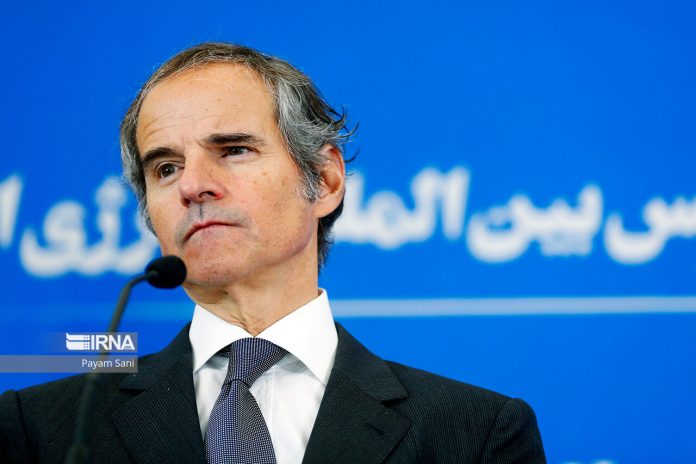
Iran warns IAEA: Any illegal move will endanger new deal

Reza Najafi, who is also Iran’s Permanent Representative to the IAEA, told the Board of Governors that until the unlawful assault on its nuclear facilities, Iran had consistently demonstrated the highest level of transparency and cooperation with the Agency.

Citing official IAEA statistics, he noted that more than 72 percent of the Agency’s verification activities worldwide in states under safeguards took place in Iran, and over 22 percent of all IAEA inspections in 2024 were conducted at Iranian sites, even though Iran’s facilities represent only about three percent of global nuclear capacity.

Najafi stressed that despite this unprecedented oversight, the June 2025 report of the IAEA Director General—issued prior to the recent attacks—contained no indication of diversion of nuclear material or non-compliance by Iran.
He recalled that even U.S. intelligence agencies had acknowledged the peaceful nature of Iran’s nuclear program. Nevertheless, the U.S. and the E3 (France, Germany, UK) adopted what he described as a “politically motivated” resolution against Iran in June.

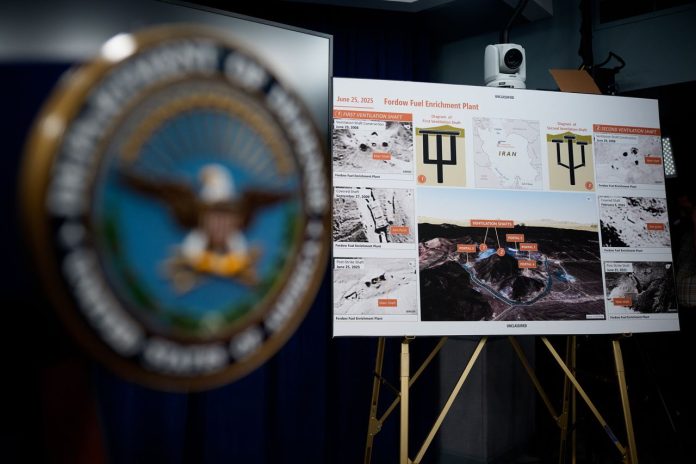
The envoy condemned Washington’s admission of responsibility for the attacks on Iran’s nuclear facilities, calling it a blatant violation of international law and a grave blow to the credibility of the Non-Proliferation Treaty (NPT). “That the so-called guardian of the NPT [the U.S.] not only justifies but even boasts of such attacks undermines the Treaty’s core principle of peaceful use of nuclear energy,” he said.

Najafi also criticized provocative remarks by European leaders, including the German Chancellor, who referred to Israel’s attacks as “dirty work done by others.”
He argued such positions amount to open support for aggression against safeguarded peaceful facilities, while shirking the E3’s legal obligations under the NPT and IAEA General Conference resolutions.

Despite these “exceptional circumstances and continued threats,” Najafi emphasized Iran’s goodwill in negotiating and signing a set of “practical steps” with the IAEA, finalized in Cairo after rounds of technical talks in Tehran and Vienna. Iran, he said, remains prepared to continue cooperation within the framework of parliamentary legislation, provided that its security, rights, and legitimate interests are fully respected.

US says sees no reason to economically isolate Russia outside war in Ukraine

Russia Ukraine War

The statement comes as, despite Trump’s repeated threats, his administration has imposed only limited penalties on Russia and, in some cases, has rolled back restrictions.

“The president’s been very open with the Europeans and the Russians that he doesn’t see any reason why we should economically isolate Russia except for the continuation of the conflict,” Vance said.

The vice president added that Russia remains a resource powerhouse.

“Let’s be honest, whether you like or dislike Russia, whether you agree or disagree with their underlying arguments for the conflict, the simple fact is they’ve got a lot of oil,” Vance stated.

“They’ve got a lot of gas. They’ve got a lot of mineral wealth.”

According to the vice president, once a settlement is reached, Washington could have “a very productive economic relationship” with both Kyiv and Moscow.

His remarks come as Trump’s peace proposals allegedly include lifting sanctions on Moscow, sparking concerns in Kyiv and Brussels that the West might lose leverage over the Kremlin.

U.S. Energy Secretary Chris Wright has noted that Europe must cut purchases of Russian oil and gas if it wants Washington to step up sanctions to push Moscow toward meaningful negotiations.

In August, Washington imposed tariffs on India, one of Russia’s biggest oil buyers, but stopped short of broader action. Indian officials said the tariffs would not halt their imports of Russian crude.

European Council President Antonio Costa has announced that a delegation would travel to Washington to coordinate a new package of joint sanctions.

U.S. Treasury Secretary Scott Bessent said the following day that Washington is ready to expand secondary tariffs on countries buying Russian oil, though no further measures have been announced.