Wednesday, April 8, 2026
Home Blog Page 154

Ukraine rules out territorial concessions to Russia

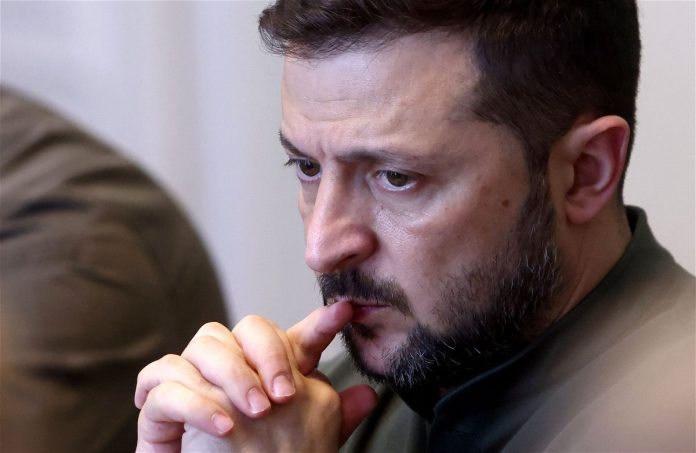
Volodymyr Zelensky

Zelensky made the remarks in an interview with Axios aired on Friday, shortly before he departed the UN General Assembly in New York. The Ukrainian leader reiterated his longstanding position that Kiev would never recognize the loss of territory to Russia.

“We will never recognize these territories that are temporarily occupied by Russia. We cannot do this,” he stated.

Opting for diplomacy to get the territories back instead of sticking to purely military means is regarded as a good “compromise” by the Ukrainian leader.

“If we don’t have power to bring back these territories, so we are ready to speak about it. We are ready to get it back sometime in the future by diplomatic way, not with weapon. And I think this is a good compromise for everybody, is that we have to decide such things now in dialogue and less losses,” Zelensky stressed.

Ukraine lays claims to the Donetsk (DPR) and Lugansk People’s Republics (LPR), Kherson and Zaporozhye regions, as well as the Crimean peninsula. Moscow has repeatedly signaled the status of its new territories is not negotiable and regards them as an integral part of Russia.

Crimea broke away from Ukraine in early 2014 in the aftermath of a Western-backed coup in Kiev that toppled the country’s then president, Viktor Yanukovych, and ultimately triggered a conflict in Donbass. Crimea subsequently joined Russia via a referendum.

The four other regions joined Russia in late 2022 following a series of referendums during which the idea was overwhelmingly backed by locals. While the Russian military has liberated the entirety of the LPR territory, Moscow’s control over other former Ukrainian regions remains partial.
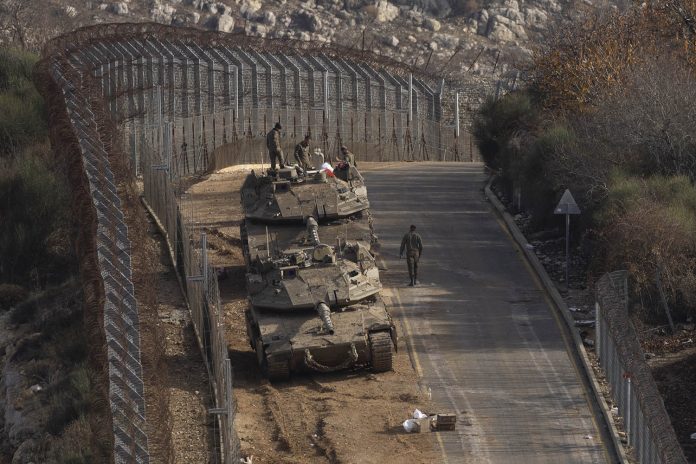
 

Israel-Syria negotiations collapse: Reuters

Israeli Army

Israel had asked to open a “humanitarian corridor” to Sweida province to deliver aid, but Damascus rejected the request as a breach of its sovereignty, Reuters wrote on Friday. Israeli forces invaded southern Syria after the fall of the Bashar Assad government in December.

According to Syrian and US sources, it was Tel Aviv’s demand that derailed the deal.

Earlier on Friday, Israeli Prime Minister Benjamin Netanyahu announced that the two sides had begun talks.

”Israel’s victories over the Iranian terror axis have opened up possibilities of peace that were unthinkable two years ago. Take Syria, today we have begun serious negotiations with the new Syrian government,” the PM stated.

In recent weeks, Damascus and Tel Aviv had come close to agreeing on the broad outlines of a pact after months of US-brokered discussions. US Special Envoy for Syria Tom Barrack said on Tuesday that they were already close to striking a “de-escalation” agreement.

Under the terms, Israel would stop its attacks while Syria would agree not to place any machinery or heavy equipment near the Israeli border. A demilitarized zone would include the province of Sweida, where hundreds of people from the Druze community were killed in recent months.

The talks come as Syria’s interim president, Ahmed al-Sharaa, whose forces ousted Assad, made a landmark visit to New York for the United Nations General Assembly. He voiced hope for a security agreement, adding that Damascus is not “creating problems for Israel.”

“We are scared of Israel, not the other way around,” he claimed.

Sharaa also downplayed prospects for a more historic agreement in which Syria would recognize Israel.

Tel Aviv, which has a 120,000-strong Druze minority whose men serve in the Israeli military, has announced it will protect Druze in Syria and carried out military strikes under the banner of defending them.


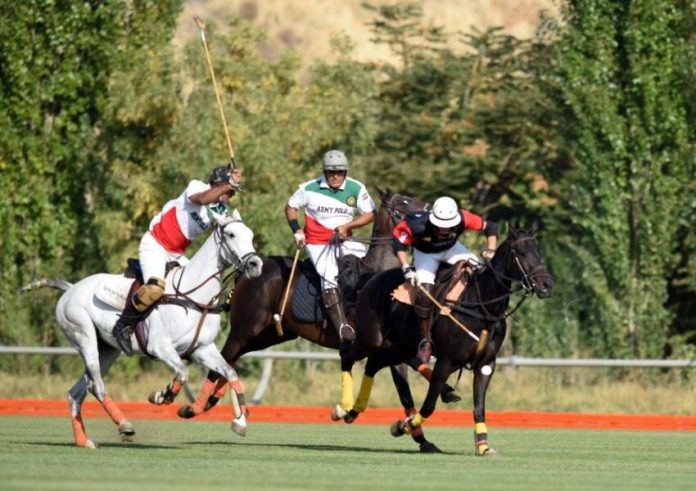
US denies visa to Iran’s polo team

According to Asghar Nazari, President of Iran’s Polo Federation, the team, despite qualifying for the tournament by defeating Pakistan in the preliminary round, has been unable to travel due to the US refusal to fully grant entry visas. “Unfortunately, because of the incomplete issuance of visas for our national polo team, we are unable to take part in the World Cup finals in the US”, Nazari said. Iranian officials described the move as a deliberate obstruction that deprived the country’s athletes of their right to compete on the international stage.

Larijani warns European troika against activating snapback mechanism                  

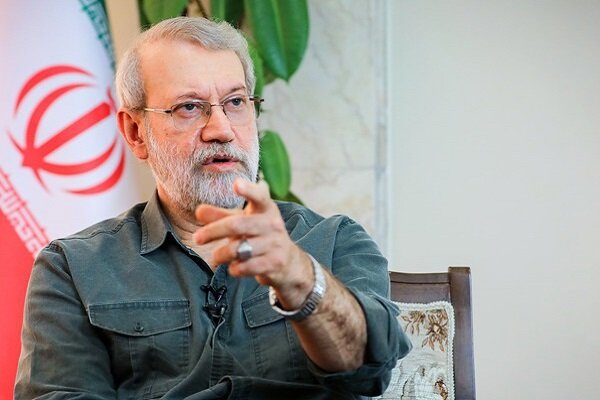
Larijani said Iran has pursued all possible options and mechanisms to resolve the nuclear issue peacefully.

He also cautioned US President Donald Trump against any military action, stressing that Iran will never surrender.

Larijani reiterated that Iran has never sought to build nuclear weapons, but argued that the recent US and Israeli attacks have turned the negotiations into  a “ridiculous spectacle.”

He further underlined that while Iran remains open to dialogue, it will not allow its defensive and missile capabilities to become a bargaining chip in the talks. Iran, he added, will not back down under pressure and will respond firmly to any excessive demands.

Over 2,500 Palestinians killed while seeking food aid in Gaza: Report

Gaza War

The group released a video from the Zikim Crossing, the only entry point through which aid could reach northern Gaza until its closure on Sept. 12. According to B’Tselem, civilians walked for hours in desperate search of food, only to be met with Israeli gunfire.

Witnesses described chaotic scenes of crowds rushing toward aid trucks under fire, with many killed and wounded while rescue teams were unable to reach them.

Among the victims was Ahmad Abu Rukbah. His brother Talal told B’Tselem that after hours of waiting near Zikim, they finally managed to obtain a sack of flour. On their way back, heavy gunfire broke out again, striking Ahmad in the chest. Talal said he tried to stop the bleeding with his shirt, but Ahmad died instantly.

B’Tselem added that since May, more than 2,500 Palestinians have been killed and over 18,500 injured while trying to reach aid convoys. The rights group accused Israel of weaponizing famine as part of its ongoing genocide in Gaza.

In July, B’Tselem and Physicians for Human Rights-Israel accused Israel of committing genocide in Gaza, citing the systematic destruction of Palestinian society and the deliberate dismantling of the enclave’s health care system.

The Israeli army has killed more than 65,500 Palestinians, most of them women and children, in Gaza since October 2023. The relentless bombardment has rendered the enclave uninhabitable and led to starvation and the spread of diseases.

Iran, Russia sign $25bn agreement to build four nuclear power units

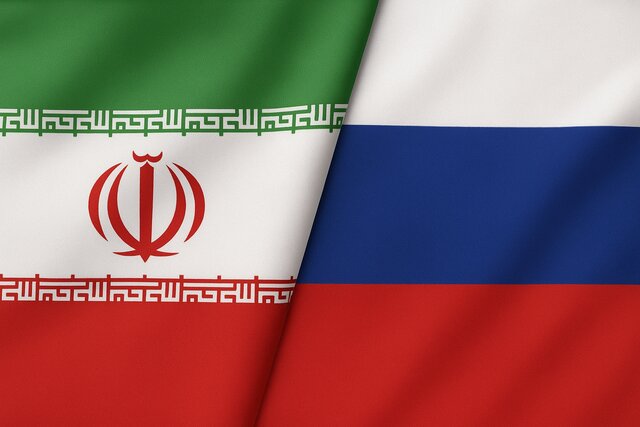
The deal was concluded between Iran Hormoz Company and Russia’s Rosatom Project Company for the development of next-generation reactors in Sirik, Hormozgan Province.

Behrouz Kamalvandi, spokesperson for the Atomic Energy Organization of Iran (AEOI), said the agreement followed a visit to Moscow by AEOI head Mohammad Eslami during the Global Atomic Forum, marking the 80th anniversary of Russia’s nuclear program.

He noted the new facilities would have a combined capacity of nearly 5,000 megawatts, significantly expanding Iran’s nuclear energy output beyond the Bushehr plant.

Kamalvandi emphasized the growing importance of small modular reactors, tipping them as a future trend in global energy.
He said Iran intends to acquire related technology from Russia, with further negotiations expected as a Russian technical team prepares to visit Tehran.

The AEOI official called the Moscow talks “highly successful,” adding that the cooperation would also extend to nuclear fusion research, radiopharmaceuticals, and agricultural applications.

He underlined that the Bushehr plant, jointly developed with Russia, continues to receive top international safety ratings.

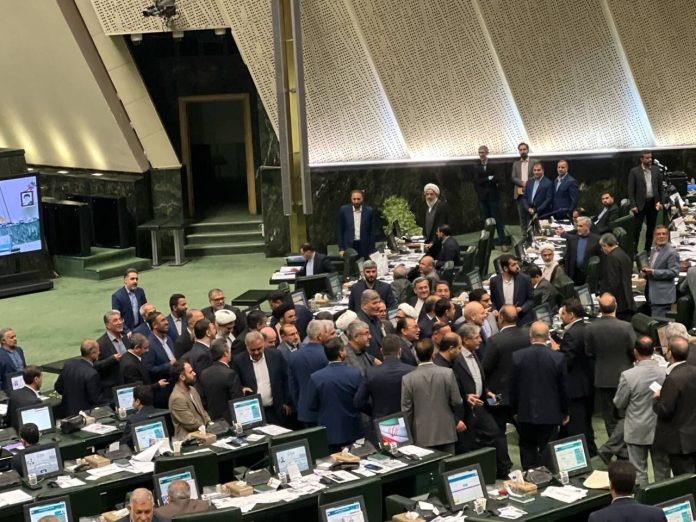
Iranian parliament to debate lawmakers’ call for nuclear strategy shift

Nikzad said the letter has been submitted to the Supreme National Security Council, emphasizing that the proposal seeks to reassess Iran’s nuclear doctrine.

He linked the initiative to recent parliamentary approval of a bill suspending cooperation with the International Atomic Energy Agency (IAEA) following the 12-day conflict with the US and Israel, which he hailed as a “revolutionary move” now enshrined into law.

While reiterating that Iran’s nuclear program remains peaceful, Nikzad stressed its benefits in sectors such as energy, agriculture, medicine, and water management. He rejected claims that Tehran seeks nuclear weapons, saying “such weapons have never been part of the Islamic Republic’s doctrine.”

Criticizing the Nuclear Non-Proliferation Treaty (NPT), Nikzad argued that Iran has not received the expected support from the international community.

He accused nuclear-armed states of hypocrisy, pointing out that countries with thousands of warheads deny others access to nuclear technology.

He concluded that parliament would pursue diplomacy while ensuring Iran’s legitimate rights in the nuclear field are preserved.

Top Iranian diplomat: US, NATO Responsible for Afghanistan’s Challenges

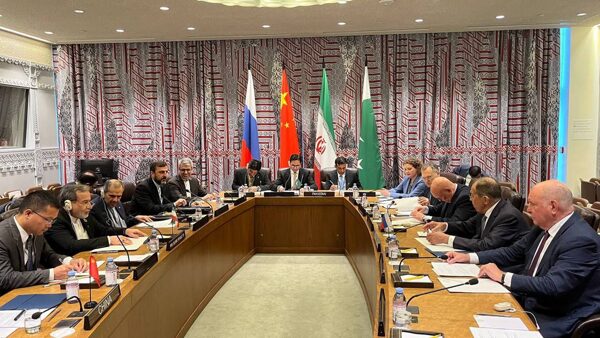
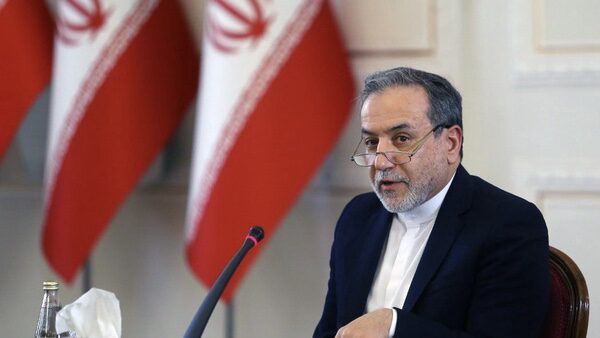
Speaking on Thursday night at a quadrilateral meeting of the foreign ministers of China, Iran, Pakistan, and Russia on Afghanistan — held on the sidelines of the 80th UN General Assembly in New York — Seyed Abbas Araqchi emphasized that the Islamic Republic of Iran firmly upholds the principle of non-interference in the internal affairs of states and supports the Afghan people’s inherent right to determine their own political, economic, and social future in accordance with the UN Charter and the established norms of international law.

Araqchi added that in recent years, despite the efforts of the interim government to improve the situation, Afghanistan continues to face severe challenges in security, humanitarian conditions, and economic stability. “As close neighbors and regional partners, we are directly affected by these developments,” he said.

On the security front, Araqchi noted that despite some progress in the fight against Daesh (ISIS, or ISIL), the continued presence of other extremist and terrorist groups in Afghanistan remains a serious concern for its neighbors and the wider region.

Referring to Iran’s hosting of millions of Afghan nationals and the limited international assistance provided, Araqchi said this situation has imposed billions of dollars in costs on Iran’s economy and security, while the country itself continues to face the most severe unilateral sanctions in violation of international law.

Araqchi stressed that US intervention and two decades of military presence in Afghanistan have brought nothing but misery and insecurity. “This presence has resulted in countless Afghan victims and has fueled terrorism, drug trafficking, corruption, poverty, and displacement,” he concluded.

Iran’s President: Israel, Backed by US, Has Violated Humanitarian Laws

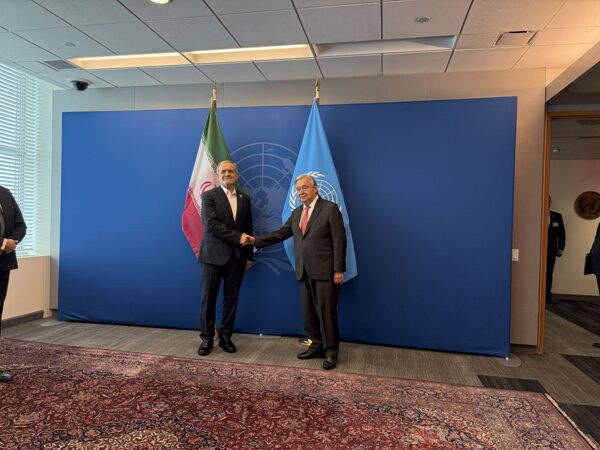
On the sidelines of the 80th session of the UN General Assembly, President Pezeshkian met and held talks with UN Secretary-General António Guterres.

In his note, referring to the presence of the Iranian delegation at the General Assembly, Pezeshkian wrote that the Zionist regime had violated all UN regulations and human rights laws and had ignored the calls and statements of UN officials and relevant organizations.

The note also stressed that the United States has been fully supporting the crimes committed by the Zionist regime.

The Iranian president expressed hope that key members of the United Nations would be able to develop effective mechanisms to enforce international laws and the organization’s own regulations.

Iran says will never compromise on its rights or security

Seyed Abbas Araqchi’s op-ed, titled “Condemning the Three European Countries’ Attempt to Trigger the Snapback Mechanism”, was published in Indonesia’s Jakarta Post newspaper.

The op-ed states that the attempt by the three European countries (the UK, France, and Germany) to activate the snapback mechanism for the automatic reimposition of sanctions will inflict irreparable damage on Europe’s international image and credibility.

He added that the move by the three European states to trigger the snapback mechanism lacks legal and legitimate basis and is considered politically destructive. “Countries that do not fulfill their obligations have no right to benefit from an agreement they themselves have undermined,” Araqchi stressed.

Araqchi noted that it was the United States — not Iran — that violated UN Security Council Resolution 2231 by unilaterally withdrawing from the Joint Comprehensive Plan of Action (JCPOA) in 2018, a destructive move compounded by the European trio’s failure to honor their own commitments under the deal.

The op-ed also condemned the three European states for supporting the United States’ illegal military strikes on Iran’s peaceful nuclear facilities in June 2025, which are protected under international law.

Araqchi further warned that in this game, the three European countries will not emerge victorious and will be sidelined from future diplomatic processes. “If this short window of opportunity to change course is missed, it will result in far-reaching and destructive consequences for West Asia and the international order,” he wrote.

The Iranian foreign minister emphasized that Iran remains committed to the peaceful use of nuclear energy under the Nuclear Non-Proliferation Treaty (NPT), while also reaffirming its readiness to engage in constructive and meaningful dialogue on the matter.