Tuesday, December 30, 2025
Home Blog Page 153

Kayhan chief criticizes Iran’s Security Council statement on IAEA

In an editorial titled “This Statement Makes the Agency More Arrogant,” Hossein Shariatmadari argued that the July parliamentary law requires Iran to suspend all cooperation with the IAEA until two conditions are met: recognition of Iran’s territorial integrity and protection of its nuclear scientists, and acknowledgment of Iran’s right to enrich uranium under the Nuclear Non-Proliferation Treaty (NPT).

According to him, the IAEA has yet to meet or report on these obligations.

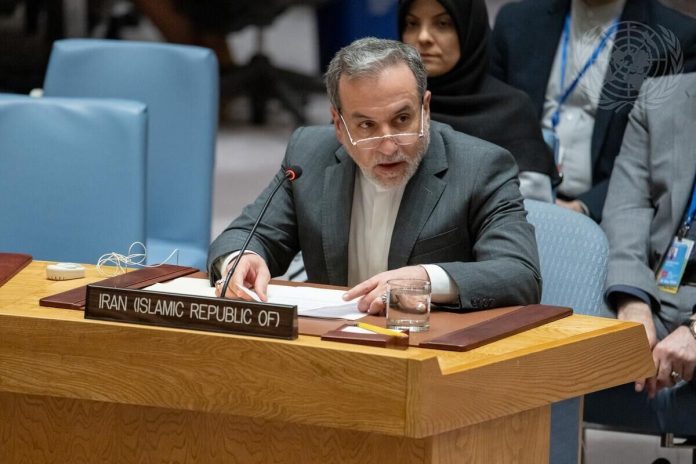
Shariatmadari said the SNSC overstepped by endorsing an agreement recently reached in Cairo between Iranian Foreign Minister Seyed Abbas Araghchi and IAEA Director-General Rafael Grossi.

He maintained that the council’s legal role is not to approve negotiations but to verify whether the agency has fulfilled its commitments as outlined by parliament.

He further claimed Grossi has ties to Israel’s Mossad spy agency and accused the SNSC of weakening Iran’s position instead of adopting a stronger stance.

Iranian daily criticizes “weak” Islamic response to attack on Qatar

The summit was convened after an Israeli strike in Qatar that targeted political figures linked to Hamas resistance movement.

However the editorial noted Islamic governments limited their reaction to issuing statements of condemnation, without taking tangible steps.

The paper pointed to “structural weaknesses” preventing effective action, citing historical divisions fostered by colonial powers, security dependence on the US, and economic ties with the West and Israel.

It also argued that sectarian divides, such as those between Sunni and Shia communities, have long been exploited to prevent collective resistance.

Khorasan further criticized Arab states’ reliance on US military protection, saying Washington prioritizes Israel’s security over its Arab allies.

Economic interests, particularly energy trade and fear of sanctions, were also highlighted as reasons for inaction.

The editorial concluded that Iran possesses independent defensive capabilities and urged regional states to pursue cooperation with Tehran to restore Islamic unity and counter Israeli influence.

Gaza death toll from hunger rises to 428

Gaza War

In its daily update, the ministry confirmed three new fatalities over the past 24 hours, one of them a child, caused by severe malnutrition.

The ministry noted that at least 150 Palestinians, among them 31 children, have died of hunger since August, when the Integrated Food Security Phase Classification (IPC) declared famine in Gaza City.

The IPC also warned that the crisis would spread to Deir al-Balah and Khan Younis in central and southern Gaza by the end of September.

Israel has sealed Gaza’s crossings since early March, preventing food and aid trucks from entering despite hundreds waiting at the border. The move has exacerbated the humanitarian catastrophe in the enclave, leaving residents without access to basic supplies.

The Israeli army has killed nearly 65,000 Palestinians, most of them women and children, in Gaza since October 2023. The relentless bombardment has rendered the enclave uninhabitable, and led to starvation and spread of diseases.


Actual Gaza death toll is ten times as high as officially reported: UN

Gaza War

“65,000 is the number of Palestinians killed [in Gaza], including over 75% of whom are women and children. In fact, we shall start thinking of 680,000 because this is the number that some scholars and scientists claim being the real death toll in Gaza,” she said, adding that it would be hard either “to prove or disprove this number, especially if investigators and others remain banned from entering the occupied Palestinian territory and particularly the Gaza Strip.”

According to Albanese, if this figure is verified, some 380,000 of them are children under five.

Last November, the International Criminal Court issued arrest warrants for Prime Minister Benjamin Netanyahu and his former Defense Minister Yoav Gallant for war crimes and crimes against humanity in Gaza.

Israel also faces a genocide case at the International Court of Justice for its war on the enclave.

Putin trying ‘to trick the US’ and evade sanctions: Zelensky

Volodymyr Zelensky

His remarks come after several deadlines set by U.S. President Donald Trump passed without new U.S. sanctions.

“He (Putin) definitely wants to trick the U.S.,” Zelensky said.

“He’s doing everything he can to avoid sanctions, to prevent the U.S. and Trump from putting sanctions on him.”

“If you keep postponing applying sanctions any further, then the Russians will be better prepared,” he added.

Zelensky called upon Trump to take a “clear position” regarding sanctions against Russia and security guarantees for Ukraine, adding that “Donald Trump has enough force to make Putin afraid of him.”

The Ukrainian president also argued that Trump’s Aug. 15 summit with Putin in Alaska gave the Russian leader a platform to escape political isolation without paying a sufficient price.

“If it was a trilateral meeting (with Ukraine), we would have some result,” Zelensky stressed.

After the summit, Trump pledged to prepare direct talks between the Russian and Ukrainian presidents. Those plans quickly collapsed as Putin invited Zelensky to Moscow, a proposal Kyiv rejected.

Zelensky said a trilateral meeting with Trump remained his preferred option and invited Putin to Kyiv.

Trump has announced that he initially believed the meeting could be arranged easily but added that he would personally lead the possible talks, as the two presidents “are incapable of talking to each other.”

The U.S. president has been reluctant to apply new sanctions to pressure Putin into meaningful negotiations, limiting his actions to new tariffs on India’s purchases of Russian oil. Trump has linked potential new measures against Moscow to a stronger European action.

Trump warns Hamas against using Israeli hostages in Gaza as ‘human shields’

Israel Hamas Hostages

Trump wrote in a social media post on Monday that he had read a news report indicating that Hamas would use the captives as “human shields” amid the relentless Israeli bombardment of Gaza.

“I hope the Leaders of Hamas know what they’re getting into if they do such a thing,” the US president said.

“This is a human atrocity, the likes of which few people have ever seen before. Don’t let this happen or, ALL ‘BETS’ ARE OFF. RELEASE ALL HOSTAGES NOW!”

Trump has regularly posted threats against Hamas. But with most of the group’s leaders already killed, and Israel having destroyed much of Gaza in a campaign that experts and rights groups say is a genocide, it is not clear how the US president can further punish Hamas.

In recent weeks, Israel has been carrying out a systematic campaign to level what remains of Gaza City, targeting residential towers and schools, and forcing a mass evacuation of the area. The United Nations’s special envoy stated on Monday that the offensive is part of a broader campaign of ethnic cleansing.

Trump’s warning on Monday comes less than a week after Israel killed five Hamas members and a Qatari security official while trying to assassinate senior Hamas leaders in the Qatari capital, Doha. Those targeted were involved in negotiating a ceasefire and captives’ proposal put forward by the US president himself.

Hamas announced its top officials survived the strikes, which Trump said he opposed. On Monday, Trump repeated his assertion that Israel would not be striking Qatar again.

Days before the Doha attack, Trump had issued what he called a “last warning” for Hamas.

On Monday, Trump again denied reports that he had advance knowledge of the Israeli attack. He suggested that he learned about it from the media – a claim that contradicts his previous assertion that he was notified about the strikes by the US military shortly before they were launched.

Asked how he found out about the strikes, the US president told reporters, “The same way you did.”

On Sunday, Israel’s public broadcaster, Kan, reported that Hamas was moving Israeli captives to homes and tents to pressure Israel to halt its bombardment campaign in Gaza City.

The Israeli military has long used Palestinians as human shields, both in the occupied West Bank and Gaza, according to numerous media reports, witness testimonies and video footage.

Last year, Al Jazeera obtained footage of Israeli soldiers sending Palestinian prisoners into tunnels and buildings in Gaza to ensure they were not rigged with explosives.

Israeli authorities regularly justify their atrocities in Gaza by claiming that Hamas uses civilians as human shields.

Over the past days, the Israeli military has been stepping up its attacks on the city and across the territory with hundreds of strikes.

On Sunday, Israeli Minister of Defence Israel Katz shared footage of a high-rise building in Gaza being obliterated by an Israeli strike, with the caption: “The house of cards. The skyline of Gaza is changing.”

Israel informed Trump of Qatar attack beforehand: Axios

Netanyahu called Trump around 8 am Washington time (1200GMT) Tuesday to brief him on the impending strike, Israeli officials with direct knowledge told the online outlet. Initial reports of explosions in Doha emerged 51 minutes later.

The White House maintained it was informed after missiles were airborne, claiming Trump had no opportunity to object.

“The US Military informed him (Trump) of Israel’s attack on Hamas leaders in Doha, and he immediately directed his Special Envoy Steve Witkoff to inform Qatar,” White House spokesperson Karoline Leavitt told Axios.

However, acknowledging he had limited time to halt the operation, Israeli officials suggested the White House was aware earlier.

“Trump knew about the strike before the missiles were launched … (and) didn’t say no,” a senior Israeli official claimed.

Another said the US was informed at the political level “well in advance” and “if Trump had wanted to stop it, he could have.”

The officials insisted missiles had not yet been fired during the Trump-Netanyahu conversation and claimed Israel would have canceled the strike if Trump had objected.

American or Israeli officials have neither confirmed nor denied the report.

The strike in Qatar’s capital targeted Hamas leaders discussing a US ceasefire proposal, killing five Hamas members and a Qatari security officer. The attack drew global condemnation, with Trump saying he was “very unhappy” about the operation.

Netanyahu has repeatedly characterized the strike as a unilateral Israeli action, including during a Monday press conference with US Secretary of State Marco Rubio.

Dozens of Israeli economists warn Gaza reoccupation to spark ‘severe economic crisis’

Gaza War

In a statement reported Monday by the Israeli outlet Walla, more than 80 academics and former senior officials at the Finance Ministry and Bank of Israel said the plan would “weaken Israel’s financial foundations” and create a direct threat to national security.

They argued that the cost of administering Gaza, combined with military spending, would require tens of billions of shekels and force tax increases, cuts to public services, and potentially a downgrade of Israel’s credit rating. The statement also cited risks of capital flight, reduced productivity, and a growing debt burden.

“An economy under such pressure cannot sustain the war effort over time,” the economists stated, adding that brain drain and falling investment would further erode Israel’s competitiveness. They warned that European partners and other trading allies could impose sanctions, worsening the downturn.

Among the signatories were Manuel Trajtenberg, a former head of the National Economic Council; Zvi Eckstein, a former deputy governor of the central bank; Avi Ben-Bassat and Yarom Ariav, both former directors-general of the Finance Ministry; and Michel Strawczynski, a former head of research at the Bank of Israel.

The warning comes as Prime Minister Benjamin Netanyahu continues to reject ceasefire proposals that included prisoner exchanges with Hamas. Israeli analysts say his government is steering toward a long-term military administration in Gaza, though it has yet to outline a clear postwar plan.

The Israeli army has continued a brutal offensive on the Gaza Strip, killing nearly 65,000 Palestinians since October 2023. The military campaign has devastated the enclave, which is facing famine.

Last November, the International Criminal Court issued arrest warrants for Netanyahu and his former Defense Minister Yoav Gallant for war crimes and crimes against humanity in Gaza.

Israel also faces a genocide case at the International Court of Justice for its war on the enclave.

Top UN legal investigators conclude Israel committing genocide in Gaza

Gaza War

The 72-page report by the UN commission of inquiry on Palestine and Israel finds Israel has committed four of the five acts prohibited under the 1948 Genocide Convention, and that Israeli leaders had the intent to destroy Palestinians in Gaza as a group.

The finding echoes reports by Palestinian, Israeli and international rights groups that have reached the same conclusion over the past year.

But this is the first comprehensive legal probe by a UN body, serving as an indicator of a judgment by the International Court of Justice (ICJ), which is currently hearing a case by South Africa accusing Israel of genocide. The ICJ case is expected to take several years to be concluded.

“For the finding on Israel’s responsibility for its conduct in Gaza, the commission used the legal standard set forth by the International Court of Justice. This is therefore the most authoritative finding emanating from the United Nations to date,” Navi Pillay, the commission’s chair, told Middle East Eye.

“Reports generated by the United Nations, including by a commission of inquiry, bear particular probative value and can be relied upon by all domestic and international courts.”

Pillay, a prominent jurist who previously served as the UN’s high commissioner for human rights, said all states had an unequivocal legal obligation to prevent the genocide in Gaza. She also urged the UK government to review its stance on the Gaza genocide, including its refusal to label it as such.

“The obligation to prevent genocide arises when states learn of the existence of a serious risk of genocide and thus states, including the UK, must act without the need to wait for a judicial determination to prevent genocide,” she said.

Another member of the commission, Chris Sidoti, told MEE that states must act now to prevent genocide.

“There is no excuse now for not acting,” he stated, adding, “The UN report will remain the most authoritative statement until the International Court of Justice completes and rules on the genocide case brought against Israel.”

The report is due to be presented to the UN General Assembly in October.

It calls on UN member states to take several measures, including halting arms transfers to Israel and imposing sanctions against Israel and individuals or corporations that are involved in or facilitating genocide or incitement to commit the crime.

The report concluded that Israel has committed genocide against Palestinians in Gaza since 7 October 2023, covering the period from that date until 31 July 2025.

It announced that Israel has committed four acts of genocide:

Killing members of the group: Palestinians were killed in large numbers through direct attacks on civilians, protected persons, and vital civilian infrastructure, as well as by the deliberate creation of conditions that led to death.

Causing serious bodily or mental harm: Palestinians suffered torture, rape, sexual assault, forced displacement, and severe mistreatment in detention, alongside widespread attacks on civilians and the environment.

Inflicting conditions of life calculated to destroy the group: Israel deliberately imposed inhumane living conditions in Gaza, including destruction of essential infrastructure, denial of medical care, forced displacement, blocking of food, water, fuel, and electricity, reproductive violence, and starvation as a method of warfare. Children were found to be particularly targeted.

Preventing births within the group: The attack on Gaza’s largest fertility clinic destroyed thousands of embryos, sperm samples, and eggs. Experts told the commission this would prevent thousands of Palestinian children from ever being born.
Genocidal intent

In addition to the genocidal acts, the investigation concluded that the Israeli authorities and security forces have the genocidal intent to destroy, in whole or in part, the Palestinians in the Gaza Strip

Genocidal intent is often the hardest to prove in any genocide case. But the authors of the report have found “fully conclusive evidence” of such intent.

They cited statements made by Israeli authorities, including President Isaac Herzog, Prime Minister Benjamin Netanyahu and Yoav Gallant – who served as defence minister for much of the war – as direct evidence of genocidal intent.

It also found that the three leaders have committed the crime of incitement to genocide, a substantive crime under Article III of the convention, regardless of whether genocide was committed.

Additionally, on the basis of circumstantial evidence, the commission found that genocidal intent was the “only reasonable inference” that could be drawn based on the pattern of conduct of the Israeli authorities. That is the same standard of proof that will be used by the ICJ in its current proceedings against Israel.

The commission noted it identified six patterns of conduct by Israeli forces in Gaza that support an inference of genocidal intent:

Mass killings: Israeli forces have killed and seriously harmed an unprecedented number of Palestinians since 7 October 2023, mostly civilians, using heavy munitions in densely populated areas. By 15 July 2025, 83 percent of those killed were civilians, the report found. Nearly half were women and children.

Cultural destruction: The systematic leveling of homes, schools, mosques, churches, and cultural sites was cited as evidence of an effort to erase Palestinian identity.

Deliberate suffering: Despite three provisional orders from the ICJ and repeated international warnings, Israel continued policies knowing Palestinians were trapped and unable to flee, the commission said.

Collapse of healthcare: Israeli forces targeted Gaza’s healthcare system, attacking hospitals, killing and abusing medical personnel, and blocking vital supplies and patient evacuations.

Sexual violence: Investigators documented sexualised torture, rape, and other forms of gender-based violence, describing them as tools of collective punishment.

Targeting children: Children were shot by snipers and drones, including during evacuations and at shelters, with some killed while carrying white flags.

“Israeli political and military leaders are agents of the State of Israel; therefore, their acts are attributable to the State of Israel,” the report read.

“The State of Israel bears responsibility for the failure to prevent genocide, the commission of genocide and the failure to punish genocide against the Palestinians in the Gaza Strip,” it added.

Who are the UN investigators?

The three-member commission of inquiry was established in May 2021 by the Geneva-based UN Human Rights Council (HRC) with a permanent mandate to investigate international humanitarian and human rights law violations in occupied Palestine and Israel from April 2021.

The commission is mandated to report annually to the HRC and the UN General Assembly. Its members are independent experts, unpaid by the UN, on an open-ended mandate.

The commission’s reports are highly authoritative and are widely cited by international legal bodies, including the ICJ and the International Criminal Court in The Hague.

Over the past four years, it has produced some of the most groundbreaking reports on international law breaches in Israel and Palestine.

Since 7 October 2023, the commission has issued three reports and three papers on international law breaches by different parties.

Previous reports have concluded that Israeli forces have committed crimes against humanity and war crimes in Gaza, including, among others, extermination, torture, rape, sexual violence and starvation as a method of warfare. They also concluded that two acts of genocide had been committed in Gaza.

Its three members are eminent human rights and legal experts.

Pillay served as UN high commissioner for human rights from 2008 to 2014. She previously served as a judge in the ICJ and presided over the UN’s ad hoc tribunal for Rwanda.

Miloon Kothari served as the first UN special rapporteur on adequate housing between 2000 and 2008, while Sidoti is the former Australian human rights commissioner and previously served as a member of the UN Independent International Fact-Finding Mission on Myanmar from 2017 to 2019.


Iran FM stresses ECO’s role in countering unilateralism

Abbas Araghchi

Speaking on Tuesday at the opening ceremony of the Second National Conference on Iran and the Economic Cooperation Organization in Tehran, Araqchi said that ECO “can and must play a leading and effective role in shaping the new regional economic architecture.”

He noted that in recent years, ECO has been receiving growing attention among member states, particularly those that joined the organization in the early 1990s.

Araqchi stressed that an institution with such history and with the membership of key countries from Central, South, and West Asia undoubtedly represents significant added value for all. “What we need now more than ever is a collective and coordinated decision to move toward realizing an ‘ideal ECO,’” he added.

The Iranian top diplomat described ECO as a suitable platform to synergize efforts toward sustainable development, regional security, and shared prosperity in the face of global economic fluctuations, geopolitical challenges, and rapid technological changes.

According to Araqchi, the Islamic Republic of Iran believes ECO can and should take a pioneering role in shaping a new regional economic order based on the principles of partnership, mutual respect, and common interests.

He also recalled the Iranian President’s proposal for establishing an ECO Artificial Intelligence Center, noting that such a mechanism could serve both as a springboard for regional technological cooperation and as a driver of collaboration across all areas of interest among ECO member states.