Sunday, April 19, 2026
Home Blog Page 143

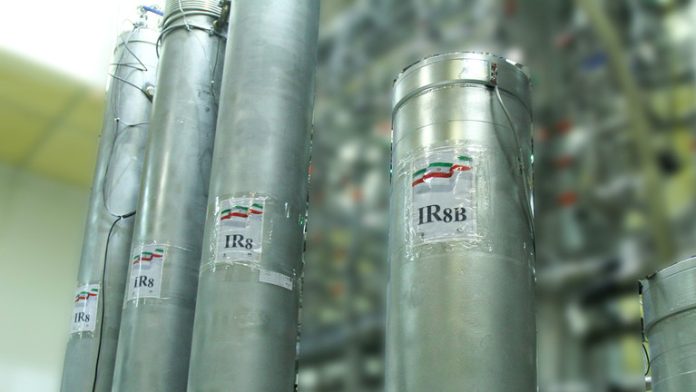
Iranian deputy FM: Uranium enrichment inside Iran non-negotiable

Iran nuclear program

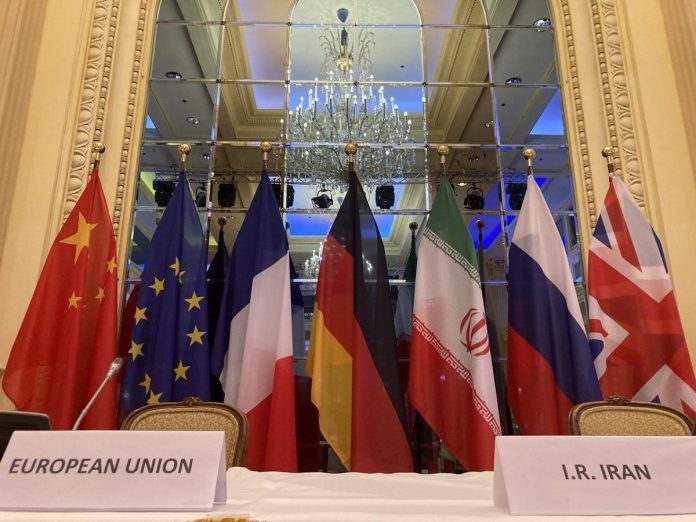
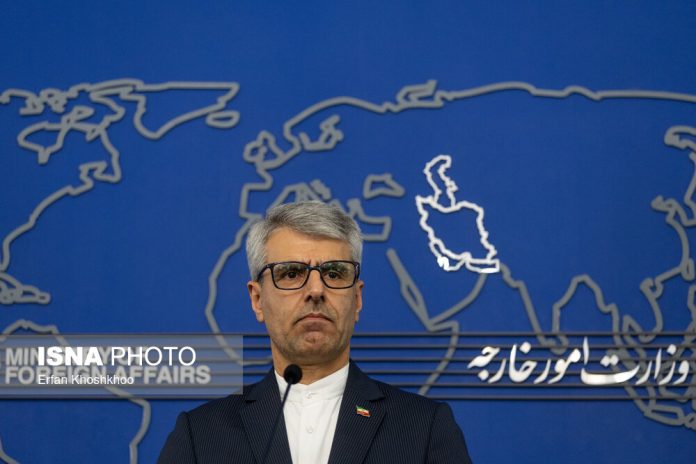
Takhte Ravanchi was speaking after the latest round of talks with the E3 and the EU in Istanbul on Friday.

“We clearly declared that enrichment must continue inside the country”.

He added that enrichment is a fundamental and legitimate right of Iran, and there is no compromise on this issue.

The Iranian delegation met with their European counterparts from the E3 group consisting of the UK, France and Germany to discuss nuclear negotiations.

Takhte Ravanchi noted that the talks took place against the backdrop of aggression by the Zionist regime and the US, which he condemned as violation of international law and the UN Charter.

“We criticized the silence and unbalanced reactions of some European governments regarding this aggression, which constitutes a blatant breach of international norms”, he said.

According to the Iranian deputy foreign minister, another point of contention discussed was the re-imposition of sanctions and the so-called snapback mechanism.
“US responsible for decades of assassinations against Iran”

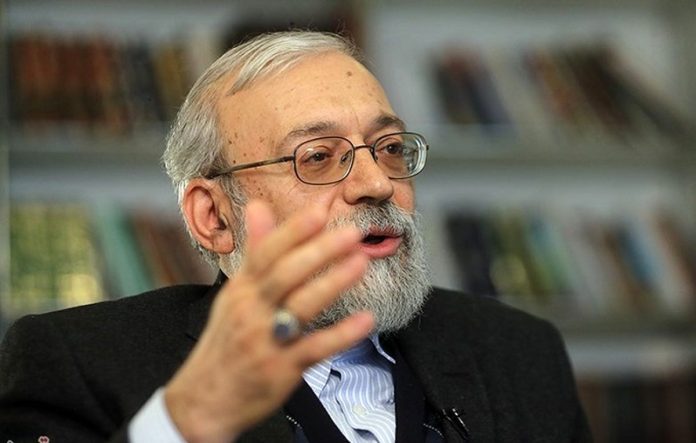
Mohammad Javad Larijani

Larijani stressed that a retaliatory assassination of US President Donald Trump would have legal and moral justification.

Speaking at a memorial ceremony for Dr. Majid Tajan Tajari, a young Iranian AI scientist killed during the Zionist regime’s 12-day aggression against Iran, Larijani condemned the US and Israeli policy of targeting Iran’s elite.

He described these acts as part of a “Western civilization of scientist-killing”.

Larijani also defended the fatwas issued by over 400 Iranian clerics who sanctioned retaliatory actions against Trump, stressing that the US cannot expect impunity for extraterritorial killings while being immune to consequences.

Larijani further criticized the US for its consistent violation of commitments under international agreements, despite Iran’s full compliance.

He urged Iranian negotiators to enter any future talks with the US from a position of strength.

He warned against repeating past diplomatic mistakes, saying Iran’s future negotiations must not be based on blind trust, especially after years of “fabricated US terrorism”.

He honored fallen Iranian scientists and commanders, saying Western powers are seeking to prevent Iran from emerging as a global leader in science and technology.

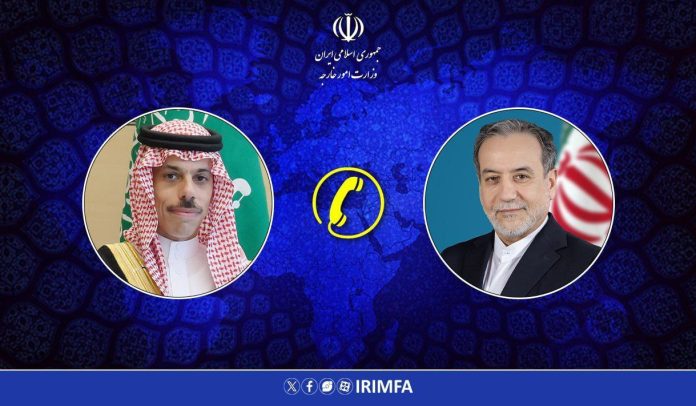
Iranian, Saudi FMs discuss regional developments, Gaza crisis

Araghchi condemned the escalating atrocities by the Israeli regime, particularly the blockade of food and medicine in Gaza, describing it as a form of genocide.

He stressed the urgency of using all available capacities including the Organization of Islamic Cooperation (OIC) and other international bodies to break the siege and deliver essential aid to the people of Gaza.

Araghchi also denounced the recent move by the Israeli Knesset to impose full control over the occupied West Bank, calling it a blatant display of Israel’s expansionist and law-breaking nature.

The top Iranian diplomat warned that this action, amid continued human rights violations and the assault on Gaza, reveals the Zionist regime’s ultimate intent to wipe out Palestine as a nation, land, and identity.

Meanwhile, Araghchi briefed his Saudi counterpart on the latest status of talks between Iran and the three European countries.

Both sides agreed on the urgent need for practical and immediate measures to stop the violence in Palestine and to support the people of Gaza.

They discussed the use of joint Islamic and Arab platforms to address the crisis in the besieged territory.

Iran–E3 Talks Conclude in Istanbul; Sides Agree to Continue Dialogue

Vienna Talks

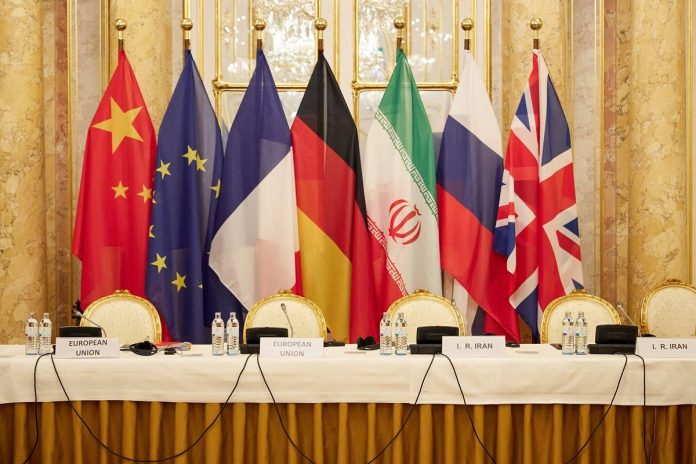
Kazem Gharibabadi, speaking after the sixth round of negotiations between Iran and the three European countries — the UK, France, and Germany — held on Friday in Istanbul, provided details of the discussions.

He stated: “Majid Takht-Ravanchi, Deputy Foreign Minister for Political Affairs, and I had an extensive, frank, and serious exchange with the political directors of the three European countries and the European Union.”

The Deputy Foreign Minister added that the latest developments regarding sanctions relief and nuclear issues were thoroughly discussed.

He continued: “We strongly criticized their positions on the recent aggressive war launched by the United States and the Zionist regime against the Iranian people, and we explained our principled positions, including on the so-called snapback mechanism.”

He noted that both sides came to the meeting with specific ideas, and various aspects of these ideas were examined.

He said that it was agreed to continue consultations on the matter.

The sixth round of negotiations between Iran and the three European countries  along with the Deputy EU Foreign Policy Chief, was held at the level of deputy ministers and political directors.

Istanbul also hosted the fifth round of these negotiations on May 15, which was held at the deputy level as well.

Iran, E3 resume nuclear talks in Istanbul amid rising tensions

Nuclear Negotiations in Vienna

The first face-to-face meeting between Iran and the European parties to the Joint Comprehensive Plan of Action (JCPOA) comes nearly a month after the 12-day military conflict between Iran and Israel stopped with a ceasefire agreement.

The Iranian delegation is led by deputy foreign ministers Kazem Gharibabadi and Majid Takht-Ravanchi.

The meeting also includes the participation of a deputy from the EU’s foreign policy chief.

According to Iranian Foreign Ministry spokesman Esmail Baqaei, the agenda centers on sanctions relief and Iran’s peaceful nuclear program.

He emphasized that Tehran intends to firmly present its demands.

Baqaei criticized the European countries for their failure to condemn US-Israeli military aggression, calling their positions “unjustifiable” and inconsistent with their legal and ethical obligations under UN Security Council Resolution 2231.

“This is a session of accountability,” Baqaei stated, underlining Iran’s intent to seek clear answers and press for commitments related to sanctions and nuclear cooperation.

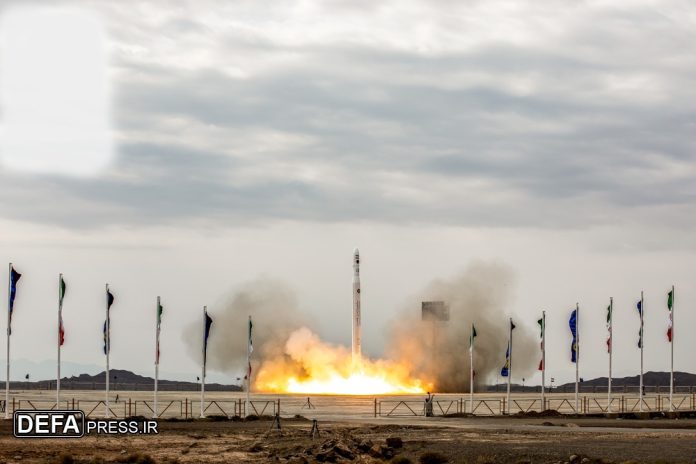
Iran’s Telecommunications Satellite Successfully Placed in Orbit

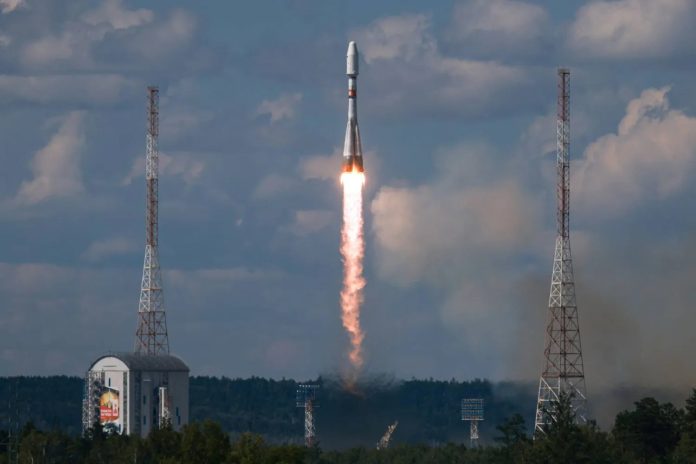
According to data received from the launch site, Nahid-2 successfully reached its designated orbit.

The satellite was launched at 9:24 AM (Iran time) from Russia’s Vostochny Cosmodrome.

Nahid-2, weighing approximately 110 kilograms, was designed and built by the Iranian Space Research Center under the commission of the Iranian Space Agency. It marks a significant step for Iran’s space industry in developing both Low Earth Orbit (LEO) satellite constellations and future high-altitude (GEO) telecommunications satellites.

The launch of Nahid-2 was part of a multi-satellite mission that also included Russia’s Universat-M3 and M4 satellites, as well as 18 other satellites from various countries, including Iran.

The presence of the Iranian Space Agency and Iranian Space Research Center logos on the Soyuz launch vehicle highlighted Iran’s official and active participation in this international mission.

The Soyuz launcher had previously carried other Iranian satellites—such as Khayyam, Pars 1, Kosar, and Hodhod—into space.

Iran urges Europe to reconsider stance on nuclear deal at Istanbul meeting

Esmael baghaei

Speaking to IRNA on Friday, Baqaei said the meeting is a test of Europe’s realism and a chance to correct previous “unconstructive approaches” that undermined Europe’s credibility in the nuclear negotiations.

He reiterated Iran’s objections to European support for military assaults by the US and Israel, saying these positions have turned Europe into justifiers of aggression and international law violations.
He warned that such stances would again be formally protested during the Istanbul talks.

Baqaei rejected any legal or moral basis for Europe’s repeated threats to trigger the JCPOA’s snapback mechanism, asserting that their continued violation of the deal disqualifies them from invoking its provisions.

He also emphasized that Iran’s nuclear steps were lawful countermeasures under the JCPOA following US withdrawal.

Baqaei criticized Europe’s “submission” to Israeli pressure and said any attempt to extend UN Security Council Resolution 2231 would be “baseless and unacceptable.”

He also noted an IAEA deputy director’s visit to Tehran is being planned for further technical discussions.

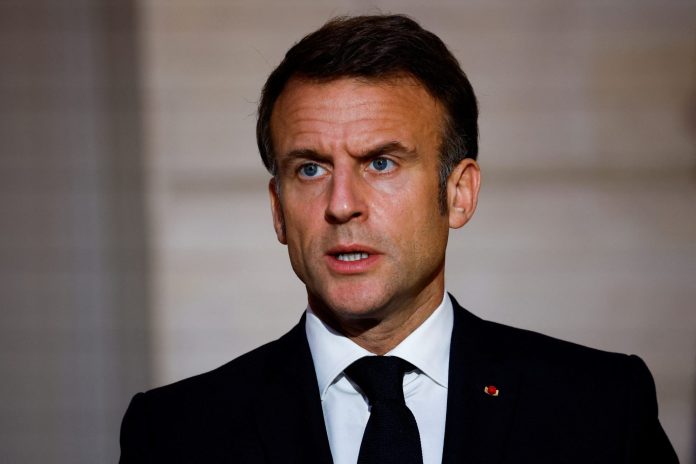
Macron says France to recognize Palestine

French President Emmanuel Macron

In a surprise statement on X on Thursday, Macron said that he would make a formal announcement to this effect at the United Nations General Assembly in September in New York.

“The urgent need today is to end the war in Gaza and to rescue the civilian population,” he added.

While most countries around the world recognize Palestine as a nation, the United States and many of its close allies do not. With President Macron’s decision, France would be the first major country in the G7 – comprised of the US, Britain, Canada, Germany, Japan, and Italy – to officially recognize a Palestinian state.

The move comes as US President Donald Trump’s administration tries to end the hostilities between Israel and Hamas. Earlier on Thursday, US Middle East special envoy Steve Witkoff said that Washington had decided to bring its negotiating team home for consultations “after the latest response from Hamas,” which “clearly shows a lack of desire to reach a ceasefire in Gaza.”

The deal under discussion calls for a 60-day truce during which Hamas would release ten living hostages and the remains of 18 more in phases, in exchange for Palestinian prisoners held by Israel. Humanitarian aid supplies would be increased, and both parties would hold negotiations toward a lasting ceasefire.

The talks have stalled over conflicting demands on how to end the war. Hamas insists it will only release all hostages in exchange for a complete Israeli withdrawal and a cessation of hostilities. On the other hand, Israel refuses to agree to end its campaign until Hamas relinquishes power and disarms, a condition that the militant group rejects.

The conflict started in October 2023 after a Hamas incursion into southern Israel that killed 1,200 people. Since then, over 59,000 Palestinians have been killed, according to the Gaza Health Ministry.

Iran launches Nahid-2 telecommunications satellite aboard Russian Soyuz rocket

Iran Satellite

Commissioned by the Iranian Space Agency (ISA) and developed by the Iranian Space Research Center, the satellite was part of a multi-payload mission that also included Russia’s Unisphere-M3 and M4 satellites, along with 18 other satellites from various countries.

A notable feature of this launch was the display of the Iranian Space Agency’s logo on the Soyuz rocket, marking Iran’s formal participation in an international space mission.

The Soyuz has previously launched other Iranian satellites, including Khayyam, Pars-1, Kosar, and Hodhod.

Nahid-2 is designed to remain in orbit for five years and is equipped with an indigenous propulsion system capable of adjusting its altitude by up to 50 kilometers, crucial for maintaining its orbital position and operational stability.

Iranian engineers selected and developed a hot gas thruster system locally, using advanced components such as composite tanks, high-pressure valves, and control thrusters.

The satellite also features domestically produced lithium-ion batteries and thermal insulation materials, highlighting Iran’s growing capabilities in advanced aerospace technologies and its pursuit of self-reliance in the space sector.

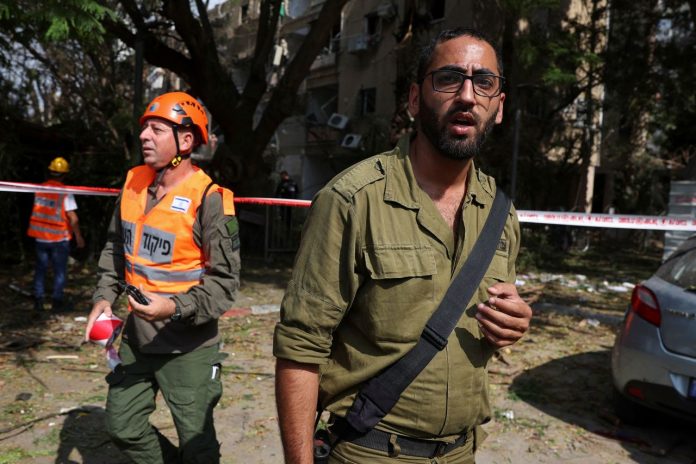
Military spokesman: Israel surrendered on ninth day of war

Speaking at a ceremony marking the 40th day since the martyrdom of those killed in the 12-day war, Brigadier General Abolfazl Shekarchi said Iran’s armed forces showed their full strength, sacrificing their lives in defense of the homeland and standing firmly against aggression.

He added that the Zionist regime brought all of its capabilities to the battlefield with the backing of Western powers—particularly the United States—but these capabilities were no match for the heroic assault of the Islamic fighters.

Shekarchi continued: From the north to the south of the occupied territories, the Zionist entity was under heavy fire and powerful strikes from the Islamic resistance.

He emphasized that in the past 70 years, the Israeli army had never been forced to take shelter in such a manner.

He further noted that today, the enemy’s greatest conspiracy against Iran is the attempt to create division and polarization within Iranian society.

The spokesman concluded that the wise leadership and firm resolve of the Supreme Leader, the unity and cohesion of the Iranian people, and the bravery of Iranian fighters were the key factors behind the Islamic Republic’s victory in the 12-day war.