Tuesday, December 30, 2025
Home Blog Page 144

NATO ‘must respond accordingly, including militarily’ to Russian provocations: Czech President

“In these times, we must act firmly, and if violations occur, we must respond accordingly, including militarily. Russia will very quickly realize it has made a mistake and overstepped its bounds. Unfortunately, this is balancing on the brink of conflict, but giving in to evil is simply impossible,” Pavel said in an interview with public broadcaster Czech Television.

“What happened in recent days in Poland and Estonia, and what has been happening in Ukraine for four years, concerns us all, because if we don’t remain united, sooner or later it will happen to us too,” he added.

Moscow violated Polish airspace on Sept. 10, prompting Warsaw to shoot down Russian drones over its territory in a first for any NATO member in over three years of Russia’s full-scale war against Ukraine.

Russian drones again violated EU and NATO airspace, flying over Romanian territory on Sept. 13 amid a mass aerial attack on Ukraine. Most recently, three Russian jets violated Estonian airspace on Sept. 19 as Moscow continues its provocations.

“This is a significant escalation to European security, for which Russia clearly bears responsibility. I must say that this is just the latest example of Russia’s actions, which have long been behaving in this manner,” Pavel said.

Pavel noted that in the past, Turkey shot down a Russian jet in response to repeated violations of its airspace by Moscow.

“We are now witnessing the same thing: Russia is not only waging an aggressive war against a sovereign state, but is also provoking NATO countries in an unprecedented manner, seeking not only to provoke a response that it can then use for its own interests, but also to test our resolve and ability to defend ourselves,” he added.

Pavel condemned Russia’s airspace violations and called for decisive action so that Russian President Vladimir Putin and the Kremlin “will behave the way we allow them to,” adding that if Europe only responds “verbally,” provocations will continue.

“This is completely irresponsible behavior, since violating airspace is a pretext for activating defense mechanisms, namely, shooting down such an aircraft. And, of course, no one on our side or the Russian side would want that,” he stated.

In response to the Russian escalation, the Baltic nation has requested NATO Article 4 consultations. The measure allows member states to hold discussions with allies if their security is threatened.


NATO was ready to ‘use force’ against Russia: Estonia

The statement follows recent escalations of Russian provocations in NATO airspace.

“We saw on Friday that NATO is functioning very efficiently… even to the point that if we were truly forced to use the last resort, which is the use of force, then there was a readiness for that as well,” he said.

Three Russian MiG-31 fighter jets entered Estonian airspace over the Gulf of Finland on Sept. 19, remaining there for 12 minutes before departing.

Tallinn announced that the warplanes crossed without permission, while Moscow denied any violation.

Following the incursion, Estonia requested consultations under NATO’s Article 4, which allows members to convene allies if they consider their security threatened.

Pevkur stated that Russia’s provocations were aimed at shifting Western focus away from Ukraine.

“This is exactly what Russia wants — to divert our attention away from helping Ukraine, and to focus on our own backyard,” he continued, adding, “That is a key goal behind these kinds of provocations.”

The violations occurred amid rising tensions across NATO’s eastern flank.

On the same day Russian jets violated Estonian airspace, Poland reported that Russian fighter jets had entered the security zone surrounding a Baltic Sea drilling platform.

On Sept. 10, Poland shot down Russian drones that had entered its airspace during an attack on Ukraine, marking the first direct NATO engagement against Russian military assets over alliance territory.

Warsaw responded by placing air defenses on high alert, temporarily closing its main airports, and requesting Article 4 consultations with NATO.

Romania reported a similar breach on Sept. 13, scrambling two F-16s after detecting a Russian drone crossing into its airspace during an attack on Ukrainian border infrastructure.

Romanian Defense Minister Ionut Mosteanu said the country did not shoot down a Russian drone that entered Romanian airspace, as it eventually turned back to bomb Ukraine.

After the incidents, the alliance has launched its defensive Eastern Sentry mission.

President Volodymyr Zelensky earlier stressed that Russia’s goal is to weaken NATO’s resolve to provide Ukraine with additional air defense systems.


Syrian president arrives in US for first visit in nearly 6 decades

Ahmad Al Sharaa

According to the channel, al-Sharaa is accompanied by four ministers. The visit is expected to provide an opportunity to discuss restoring diplomatic relations between Syria and the US, including the reopening of the Syrian embassy in Washington.

On September 24, al-Sharaa will address the UN General Assembly. CBS News senior White House reporter Jennifer Jacobs said this week that plans are being made for a meeting between US President Donald Trump and the Syrian leader on the sidelines of the session.

On May 14, Trump held talks with al-Sharaa in Riyadh, announcing that Washington would begin lifting decades-old sanctions on Damascus. On July 1, he signed an executive order formally ending unilateral sanctions against Syria.


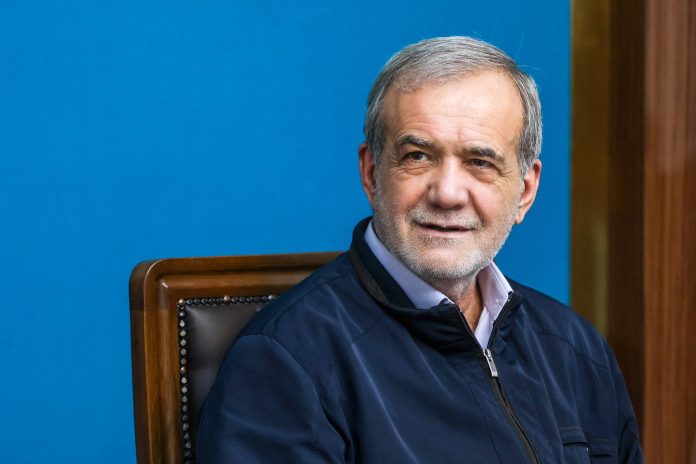
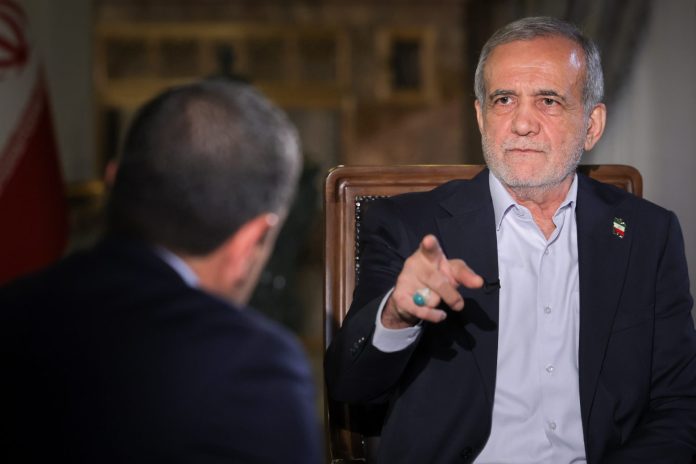
President Pezeshkian to visit New York on Tuesday

Masoud Pezeshkian

Mehdi Sanaei, the President’s political advisor, wrote on the social media platform X that “the President will head to New York on Tuesday after ringing the bell to mark the first day of the new school year. On Wednesday morning local time, he will address the UN General Assembly.”

Sanaei added: “He will also hold meetings and consultations with heads of various countries and the UN Secretary-General, as well as attend sessions with think tanks, certain institutions, and members of the Iranian diaspora.”

US deal on Bagram base ‘not possible’: Taliban

“Recently, some people have said that they have entered negotiations with Afghanistan for taking back Bagram Air base,” said Fasihuddin Fitrat, Chief of Staff of the Ministry of Defense, in comments broadcast by local media.

“A deal over even an inch of Afghanistan’s soil is not possible. We don’t need it,” he added.

Trump has threatened unspecified reprisals if the Taliban government in Afghanistan fails to hand over Bagram Air Base.

American troops hastily evacuated the base in July 2021, a month before Taliban fighters seized Kabul, toppling the UN-backed government and ending the 20-year US occupation of the country.

Trump stated earlier that he is seeking to reestablish control over the airfield, which he has described as being close to China’s nuclear facilities.

“If Afghanistan doesn’t give Bagram Airbase back to those that built it, the United States of America, BAD THINGS ARE GOING TO HAPPEN!!!” the president wrote on his Truth Social platform on Saturday.

The Taliban has ruled out the return of American forces, while China backed Afghanistan’s sovereignty and accused Washington of “stirring up tension and confrontation in the region.”

Although Trump negotiated the withdrawal of his country’s troops during his first term, he went on to blame the collapse of the UN-recognized government and rapid Taliban takeover on former US President Joe Biden, calling the chaotic departure of the last American soldiers “a disgrace.”

Originally built by the Soviet Union, the Bagram airfield was modernized and expanded during the US occupation, serving as America’s largest outpost in Afghanistan. Trump has repeatedly claimed that China is secretly using the base, a charge denied by both Beijing and the Taliban.

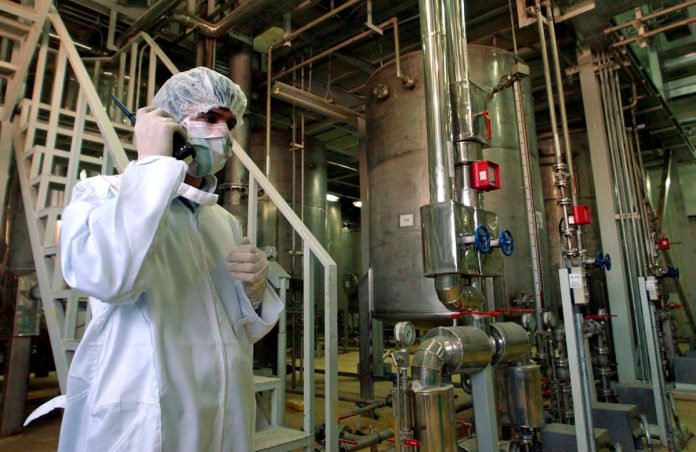
Iranian lawmaker: IAEA inspectors barred from bombed nuclear sites

Esmaeil Kowsari, a member of the parliament’s National Security and Foreign Policy Committee, said on Sunday that the Supreme National Security Council (SNSC) is the body authorized to decide on such matters.

“It has been determined that nuclear facilities which were subjected to aggression and bombardment by the US must under no circumstances be open to IAEA inspections,” he said.

Kowsari stressed that granting inspectors access to facilities damaged in military operations could pose serious risks to Iran’s security, including the potential exposure of sensitive information.

He underlined that the law governing cooperation with the IAEA provides a framework requiring decisions of this nature to be made at the highest national level.

His remarks came amid ongoing tensions between Tehran and international institutions over oversight of Iran’s nuclear activities while the three European parties to the JCPOA deal activated a snapback mechanism that restores UN Security Council sanctions against Iran.

Kowsari added that parliament, particularly its security committee, is responsible for monitoring adherence to the law and ensuring national interests remain protected.

American senators introduce bill to send frozen Russian funds to Ukraine

The Rebuilding Economic Prosperity and Opportunity (REPO) Implementation Act 2.0 is based on previous legislation passed in April 2024, which aimed to provide assistance to Ukraine.

“Given Russia’s brutality against the Ukrainian people, it was only right that Russian government funds in the United States be seized and repurposed to help Ukraine rebuild its country under the REPO Act,” Republican Senator Jim Risch said.

A bipartisan group of U.S. senators also planned to introduce legislation on Sept. 19 to tighten sanctions on Russia’s so-called “shadow fleet” of oil tankers, the Financial Times reported. Moscow uses the vessels to evade sanctions on Russian oil.

“Now, the REPO Implementation Act will encourage our allies to use the Russian assets in their countries to do the same, and ensure that the assets under U.S. control are used pragmatically,” Risch added.

The legislation seeks to transfer all of the $5 billion of frozen Russian assets held in the U.S. to an “interest-bearing account” and have U.S. President Donald Trump repurpose at least $250 million from the account every 90 days to assist Ukraine.

“Repurposing Russia’s frozen sovereign assets is a necessary step to ensure Ukraine has the resources to defend itself and rebuild its communities. Importantly, this approach allows us to continue supporting Ukraine without additional cost to American taxpayers. This legislation demonstrates the strong, bipartisan resolve in Congress to keep standing with Ukraine,” Democratic Senator Jeanne Shaheen stated.

The REPO Act would also encourage the U.S. Secretary of State to work with allies to repurpose at least 5% of the assets or $15 billion to benefit Ukraine every 90 days and require reports on Russian assets held outside the U.S.

About $300 billion in Russian assets are frozen, most of which are held in Europe. The EU has remained cautious over transferring the funds to Ukraine amid concerns it could disparage trust in the bloc’s banking institutions.

In an effort the maintain support for Ukraine, the European Commission is considering a new plan to transfer billions of euros of frozen Russian assets to Ukraine by replacing the funds with EU-backed bonds, Politico reported on Sept. 12, citing multiple officials familiar with the matter.

Meanwhile, Germany, which once opposed transferring the funds to Ukraine, has shifted its position and now supports using frozen Russian assets to fund Ukraine’s needs, Bloomberg reported, citing undisclosed sources familiar with the matter.


Date harvest begins in Ghazavieh, Iran’s Khuzestan province

Ghazavieh, located on the outskirts of the provincial capital Ahvaz, is known for its scenic orchards that produce a significant share of the region’s dates each year.

Khuzestan is among the country’s top three provinces for date production, holding one of the largest shares in national output.

The crop is also an important export commodity for Iran, generating considerable value in foreign markets.

Local farmers and landowners in Ghazavieh cultivate several varieties, including kharak (unripe dates), rutab (semi-ripe dates), and fully ripened dates.

According to agricultural authorities, total production in Khuzestan’s date groves is expected to reach 230,000 tons this year. That figure represents a 23 percent increase compared to last year’s harvest.

More in pictures:

IRGC warns US, Israel against miscalculation

IRGC

The statement stressed that effective deterrence stems from constant readiness, innovative strategy, tactics and operations, and the continuous development of advanced defensive and military technologies — lessons learned from Iran’s past defenses.

It said that if the enemy commits any fresh miscalculation or aggression, the Islamic Republic will hold the initiative on the battlefield.

Reflecting on 37 years since the Iran–Iraq War, the IRGC said Iran’s armed forces—guided by the Supreme Leader’s directives—have achieved a high degree of self-sufficiency, deterrence, and combat readiness, vividly demonstrated during the recent 12-day defense.

The IRGC assured the Iranian people that, alongside other armed forces, it is constantly strengthening its offensive and defensive capabilities and strategic capacities.

Finally, the statement warned that any hostile act by adversaries—especially the Israeli regime and the deceitful, hegemonic US government—against Iran’s national interests, security, or territorial integrity will be met with a decisive, crushing, timely, and regret-inducing response from the country’s armed defenders, particularly the IRGC.


Security guarantees for Ukraine require readiness to fight Russia: Finland

Russia Ukraine War

“Security guarantees in essence are a deterrent. That deterrent has to be plausible and in order for it to be plausible it has to be strong,” Stubb told the Guardian, in an interview in Helsinki before travelling to New York for the UN general assembly.

He said the guarantees would only come into effect after a future deal between Ukraine and Russia, but insisted that Russia would have no veto over their format.

“Russia has absolutely no say in the sovereign decisions of an independent nation state … So for me it’s not an issue will Russia agree or not. Of course they won’t, but that’s not the point,” he added.

After the Paris meeting last month, the French president, Emmanuel Macron, told reporters that 26 nations had committed to be part of a “reassurance force” in Ukraine, with some of them committing to be present “on the ground, in the sea or in the air”.

However, the big question many in Kyiv have is whether the arrangements would come with concrete commitments. When asked if the guarantees would mean European countries were saying they would be ready to engage militarily with Russia in the case of future aggression against Ukraine, Stubb said: “That is the idea of security guarantees by definition.”

It is far from clear that there is political will for this kind of commitment in most European capitals, however, where promises to a postwar Ukraine have usually been framed more as “reassurance” than as firm commitments. Up to now, the policy of most western countries has been to offer support to Ukraine but minimise the risk of a direct conflict with Russia. But Stubb said any guarantees would be meaningless if not backed up with real force.

“Security guarantees in essence are a deterrent and that deterrent has to be plausible, and in order for it to be plausible it has to be strong. And that means also strategic communication, so we’re not making security guarantees into the air, but we’re making real security guarantees and Russia knows that,” stated Stubb.

Stubb has emerged as a key player in peace negotiations in recent months, forging a close relationship with the US President, Donald Trump, including through rounds of golf. The personal connection has meant that Finland, with a population of just 5.6 million, has been able to play an outsized role in communications between Trump and European leaders. Stubb stressed that he and Trump are still in contact regularly, “by phone and other means” and that he expects the pair to have a bilateral meeting this week.

Stubb has said on several occasions this year that the US president was beginning to lose patience with Russia’s President, Vladimir Putin, but so far Trump’s occasional tough words on Putin have not translated into action, and a series of Trump-set deadlines for progress to be made on arriving at a peace deal have passed without much follow-up. Instead, Trump rolled out the red carpet for Putin in Alaska last month.

Stubb noted he thought progress was being made, but “it’s not a big bazooka, it’s step-by-step”.

On the question of whether there is a point when Europe has to accept that the US is not a reliable ally when it comes to Ukraine negotiations, Stubb stated his nation had little option but to try as hard as possible to be friendly with the Trump administration.

“I think it’s the job of the president of Finland to get along with the president of the United States, whoever he is,” Stubb continued, adding, “Foreign policy is always based on three pillars. It’s values, interests and power. Small states only have values and interests … but we can have influence instead of power. Engagement is better than disengagement, come hell or high water,” he added.

Last week, Stubb was in Kyiv where he met the Ukrainian President, Volodymyr Zelenskyy, and said he came away from the trip “confident” that Ukraine could continue fighting a long war if necessary, dismissing suggestions to the contrary as “fake news”.

Stubb said much of the focus at the UN this week will be on Palestine, but that he hopes to have several meetings with Zelenskyy and others related to Ukraine. On security guarantees, he added an “American backstop” would be necessary to give them real force, and conceded that there is not yet a full sense of what the Trump administration is willing to commit.

However, the talk of guarantees may all be purely hypothetical if progress is not made first on a negotiated end to the war. Zelenskyy has said many times he is willing to meet Putin, as demanded by Trump, but Putin has said he would only meet Zelenskyy in Moscow, or if numerous Russian demands are met first.

Stubb conceded that there did not currently appear much chance of bringing Putin to the table. “This war is too big for him to lose. He has made probably the biggest strategic mistake in recent history, certainly since the end of the cold war, and he has failed in all of his strategic aims. It’s a question when he comes to the negotiating table, hopefully sooner rather than later, but right now I’m quite pessimistic,” said Stubb.